Panther Chameleon
Madagascar
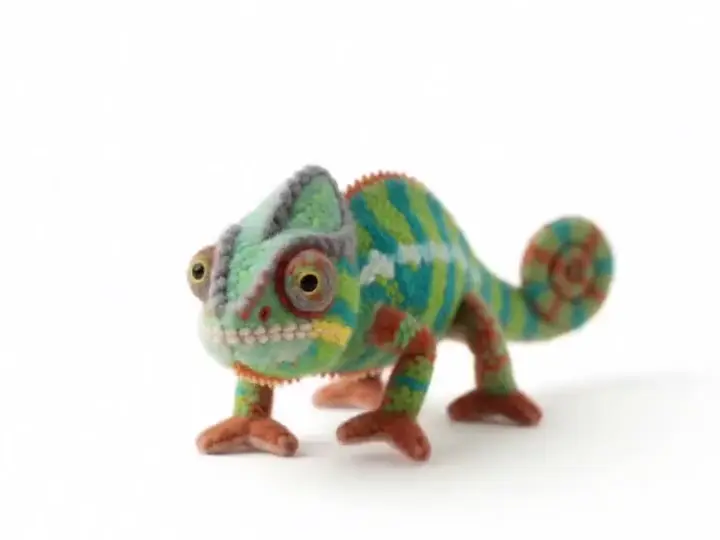
The panther chameleon is a colorful lizard found only in Madagascar. It can change its body color like a rainbow depending on its mood and the temperature, and its eyes move separately so it can look forward and backward at the same time.
Quick facts
- Habitat
- It lives in the tropical forests of eastern and northern Madagascar.
- Diet
- It catches insects with its long tongue.
- Size and weight
- Length 30–50cm.
- Lifespan
- About 4–8 years
- Conservation status
- Least Concern
- Fun facts
- It can shoot out its tongue to 1.5 times the length of its body!
Its colors aren't camouflage. They're a language for showing its feelings.
Learn more
A living, moving rainbow of the forest
Jewel of Madagascar, the panther chameleon
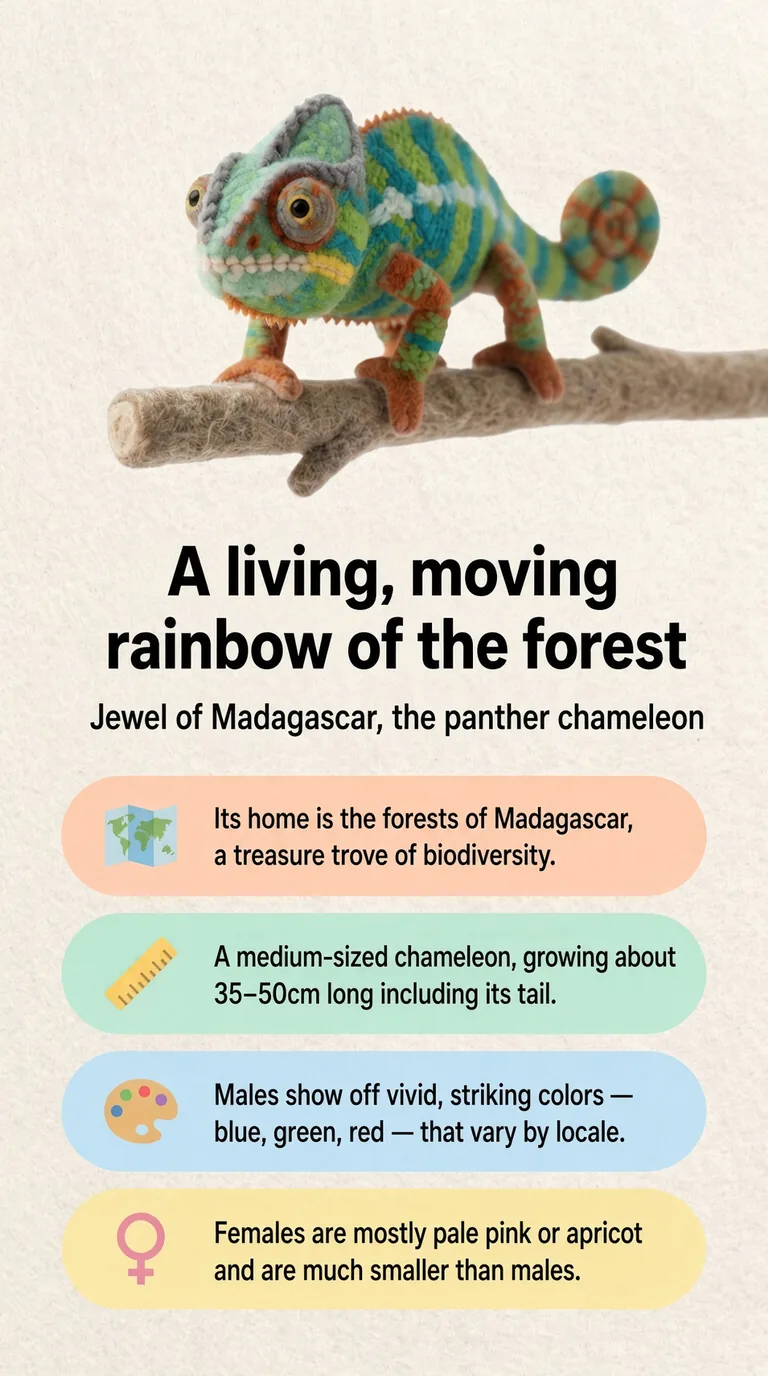
- Its home is the forests of Madagascar, a treasure trove of biodiversity.
- A medium-sized chameleon, growing about 35–50cm long including its tail.
- Males show off vivid, striking colors — blue, green, red — that vary by locale.
- Females are mostly pale pink or apricot and are much smaller than males.
Not hide-and-seek — it's expressing emotion
The real reason it changes skin color
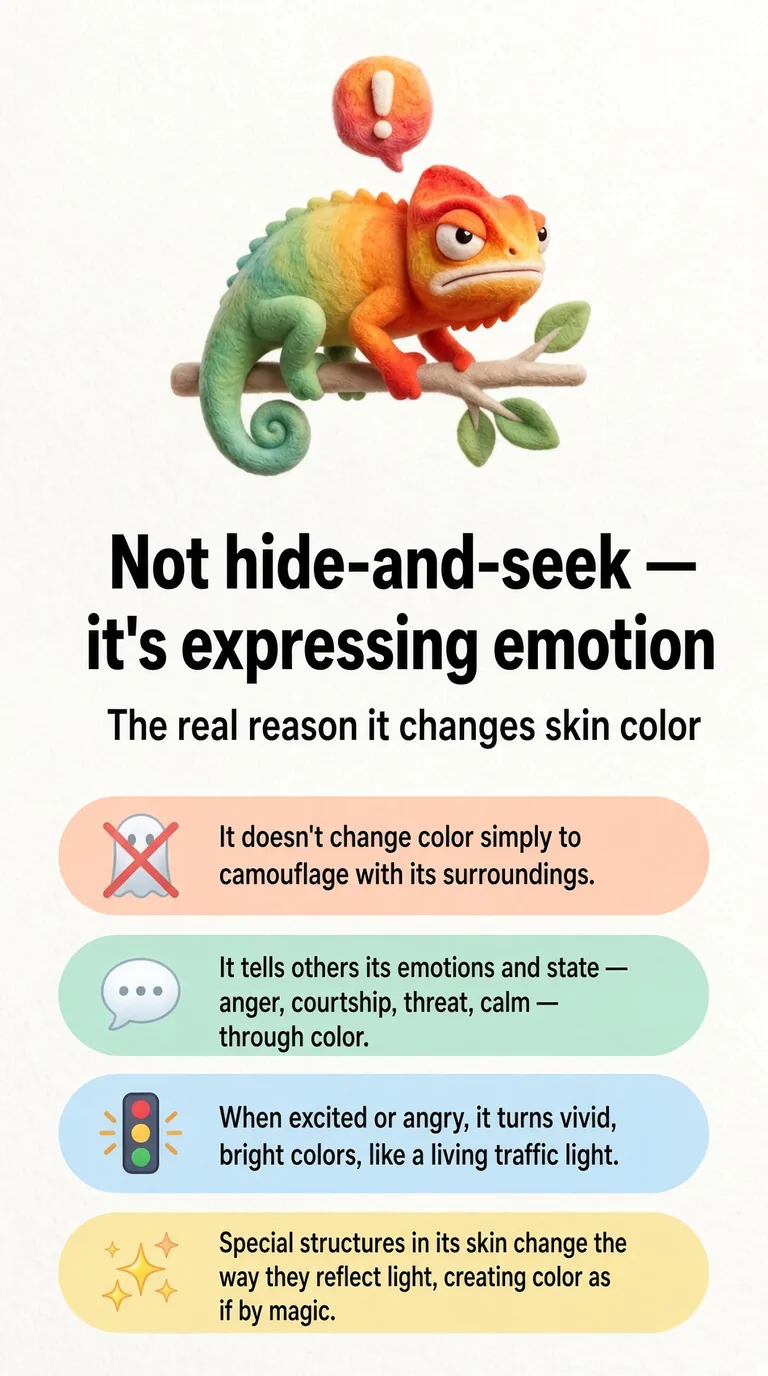
- It doesn't change color simply to camouflage with its surroundings.
- It tells others its emotions and state — anger, courtship, threat, calm — through color.
- When excited or angry, it turns vivid, bright colors, like a living traffic light.
- Special structures in its skin change the way they reflect light, creating color as if by magic.
Two radars watching a full 360 degrees
Remarkable eyes that move independently
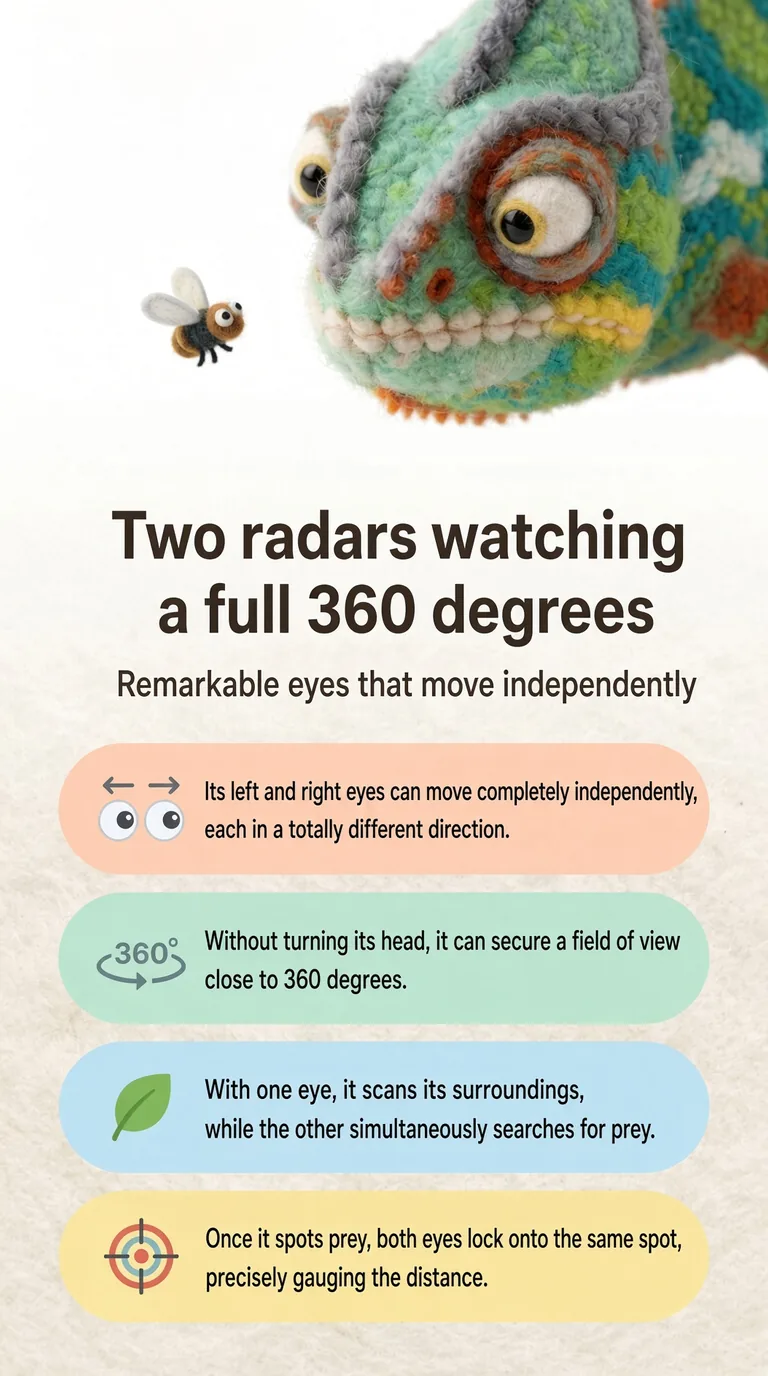
- Its left and right eyes can move completely independently, each in a totally different direction.
- Without turning its head, it can secure a field of view close to 360 degrees.
- With one eye, it scans its surroundings, while the other simultaneously searches for prey.
- Once it spots prey, both eyes lock onto the same spot, precisely gauging the distance.
An ultra-fast spring-loaded tongue longer than its body
Its fastest, most powerful hunting weapon
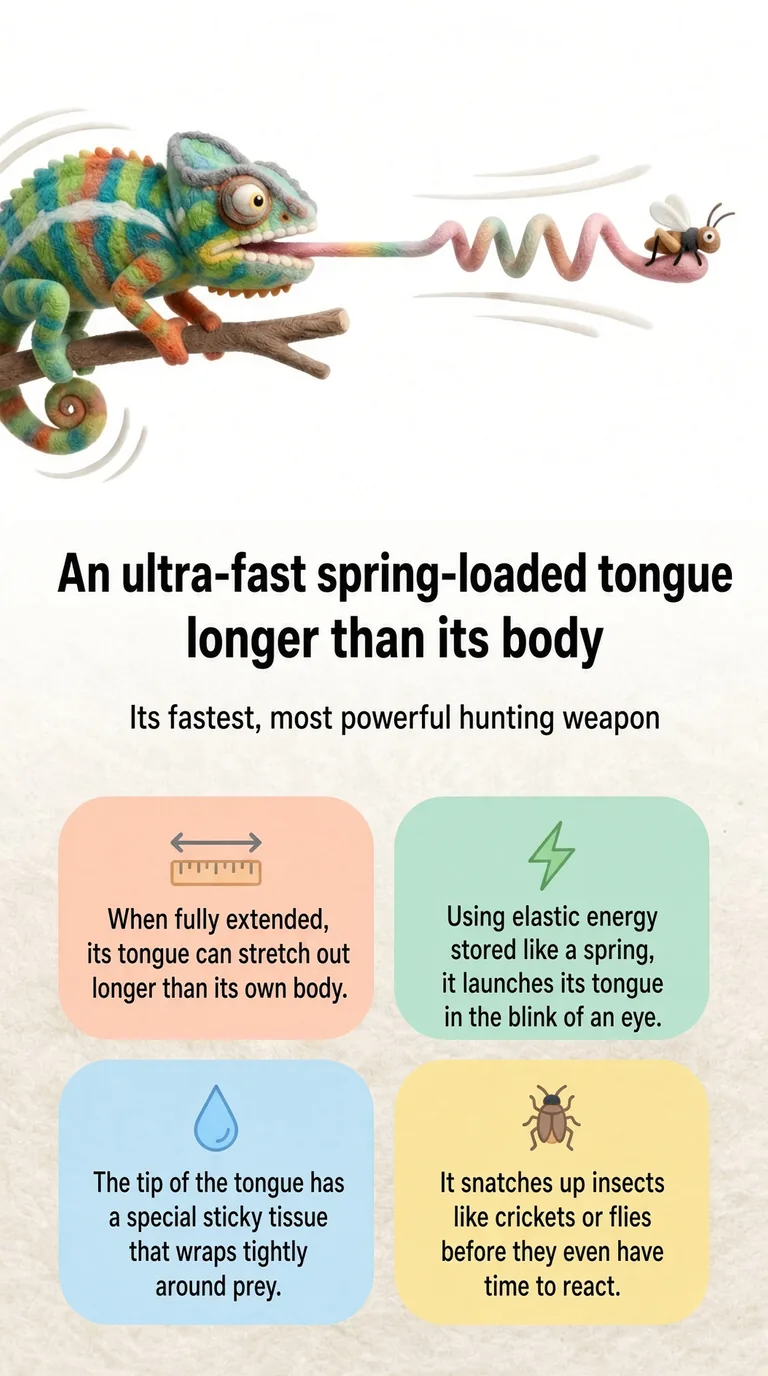
- When fully extended, its tongue can stretch out longer than its own body.
- Using elastic energy stored like a spring, it launches its tongue in the blink of an eye.
- The tip of the tongue has a special sticky tissue that wraps tightly around prey.
- It snatches up insects like crickets or flies before they even have time to react.
Walking like a swaying leaf
A perfect master of tree climbing
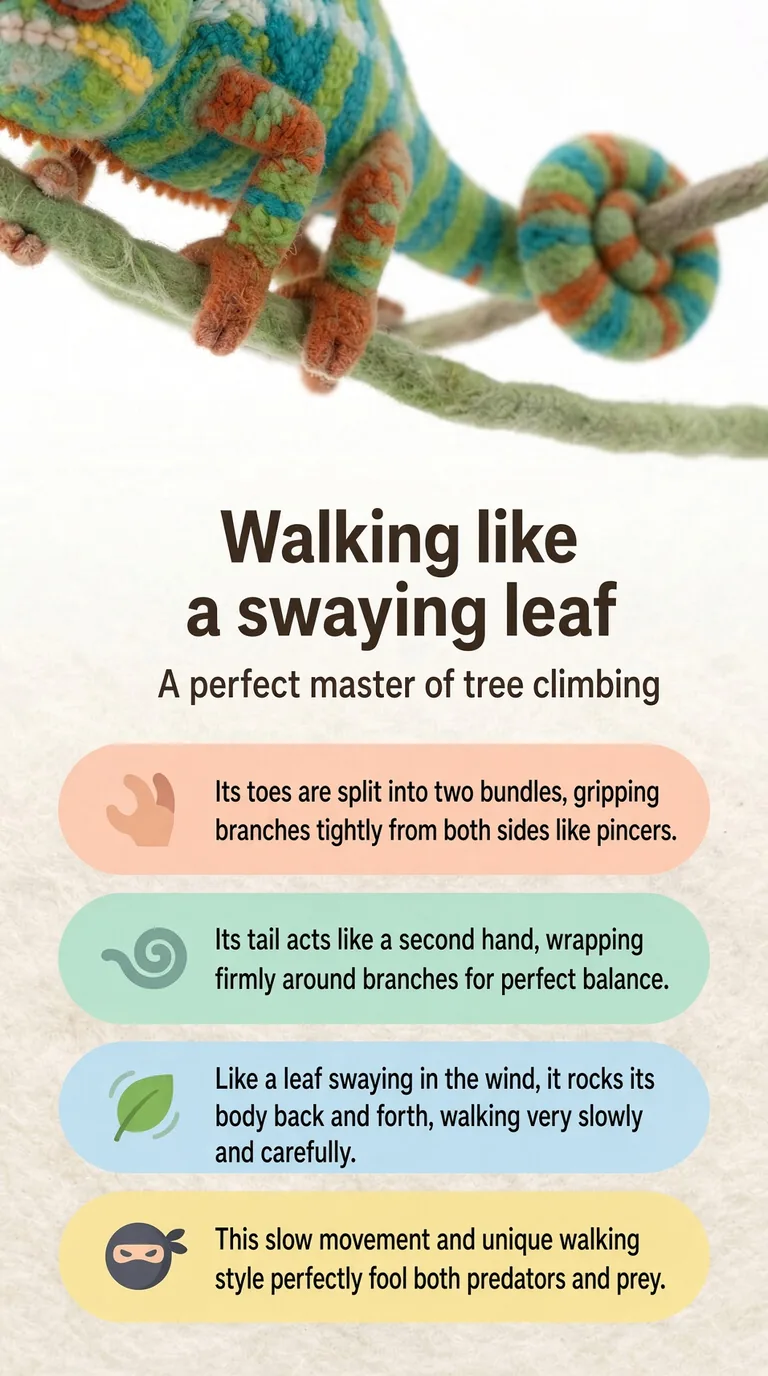
- Its toes are split into two bundles, gripping branches tightly from both sides like pincers.
- Its tail acts like a second hand, wrapping firmly around branches for perfect balance.
- Like a leaf swaying in the wind, it rocks its body back and forth, walking very slowly and carefully.
- This slow movement and unique walking style perfectly fool both predators and prey.
No standing water, please — dew drops are better
A unique way of getting water and staying healthy

- It doesn't drink pooled water on the ground — it only licks fresh droplets clinging to leaves.
- For its health, regular misting or a dripper must be used to simulate rainfall.
- Insufficient water intake can lead to dehydration, which can cause deadly kidney problems.
- Since it dislikes stagnant air, a mesh enclosure with airflow on all sides is essential.
Magic powder for building strong bones
A nutrient-rich diet and UV sunbathing
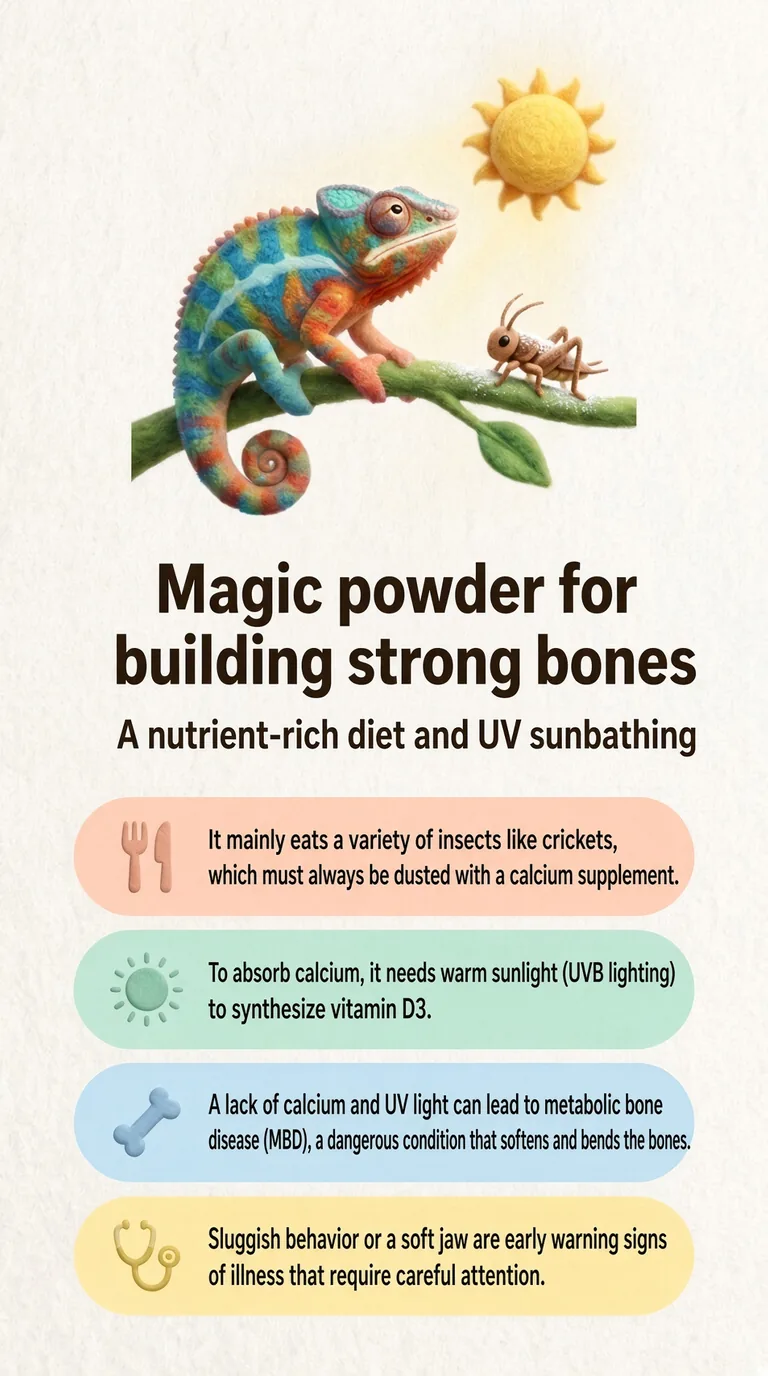
- It mainly eats a variety of insects like crickets, which must always be dusted with a calcium supplement.
- To absorb calcium, it needs warm sunlight (UVB lighting) to synthesize vitamin D3.
- A lack of calcium and UV light can lead to metabolic bone disease (MBD), a dangerous condition that softens and bends the bones.
- Sluggish behavior or a soft jaw are early warning signs of illness that require careful attention.