Fossa
Madagascar
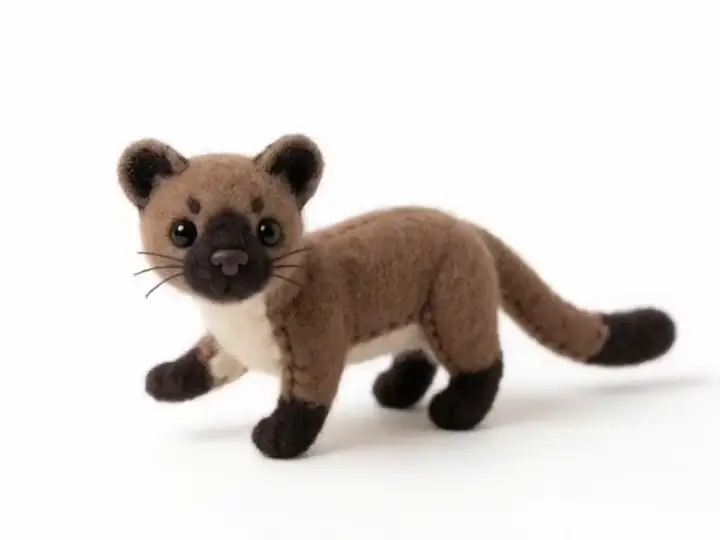
The fossa is Madagascar's top predator, a mysterious animal with features of both a mongoose and a cat. Its feet rotate freely, so it can scramble up and down trees as quickly as a squirrel.
Quick facts
- Habitat
- It lives in the tropical forests of Madagascar.
- Diet
- It hunts lemurs, birds, and reptiles.
- Size and weight
- Body 70–80cm, tail 65–70cm, weight 5–10kg.
- Lifespan
- About 15–20 years
- Conservation status
- Vulnerable
- Fun facts
- Its ankles rotate 180 degrees, so it can climb down trees headfirst!
It's the only natural predator of Madagascar's lemurs.
Learn more
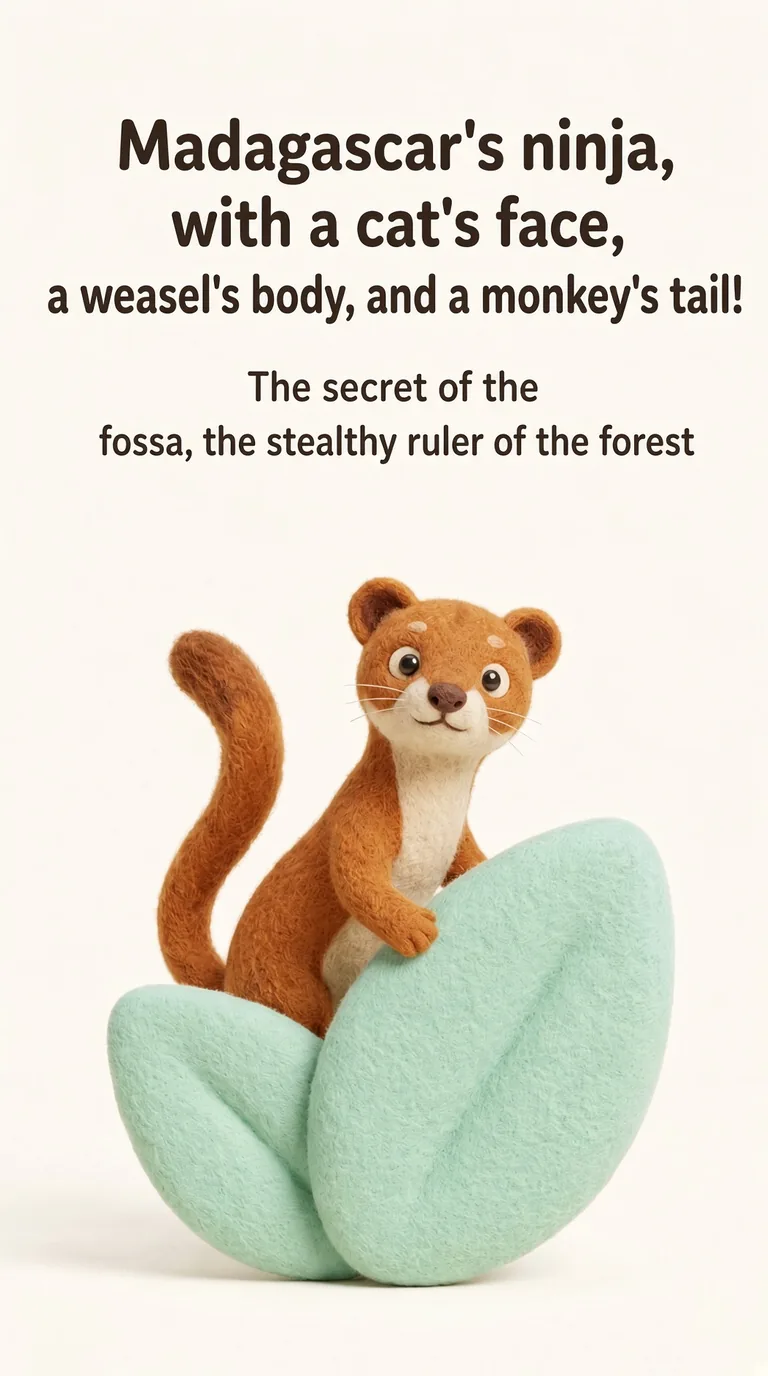
Madagascar's ninja, with a cat's face, a weasel's body, and a monkey's tail!
The secret of the fossa, the stealthy ruler of the forest
Not a cat, not a weasel — an animal unique to Madagascar
It looks like a puma, but it isn't part of the cat family!
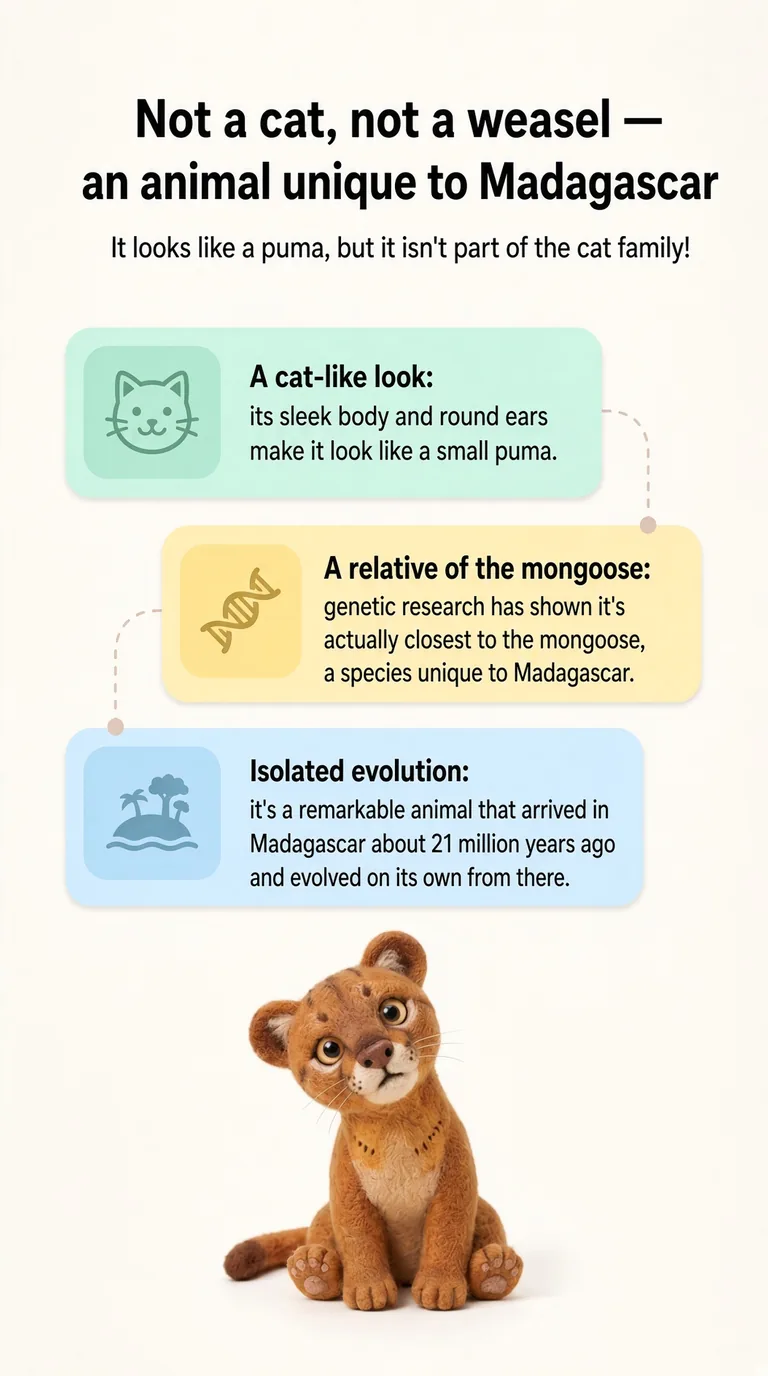
- A cat-like look — its sleek body and round ears make it look like a small puma.
- A relative of the mongoose — genetic research has shown it's actually closest to the mongoose, a species unique to Madagascar.
- Isolated evolution — it's a remarkable animal that arrived in Madagascar about 21 million years ago and evolved on its own from there.
Madagascar's most powerful apex predator
A ruler dominating everything from rainy rainforests to dry forests
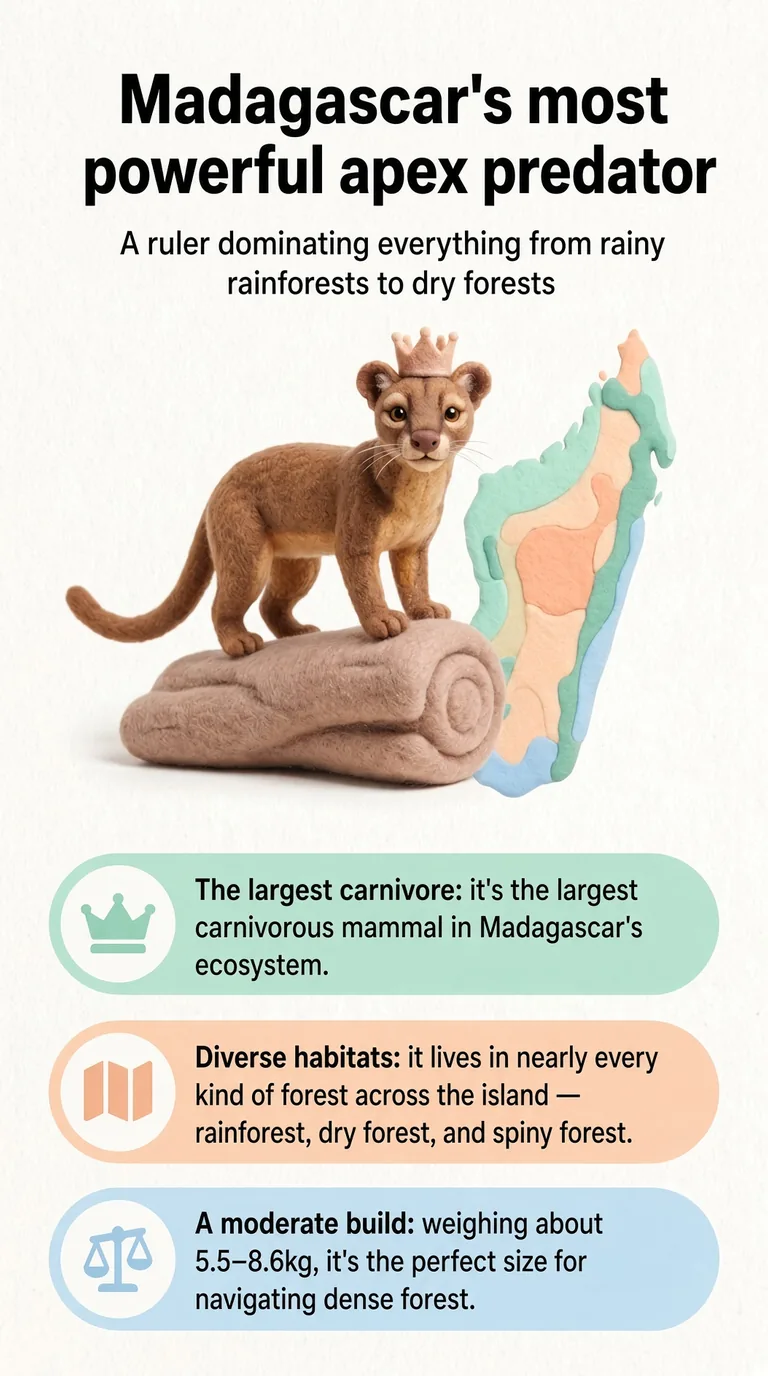
- The largest carnivore — it's the largest carnivorous mammal in Madagascar's ecosystem.
- Diverse habitats — it lives in nearly every kind of forest across the island — rainforest, dry forest, and spiny forest.
- A moderate build — weighing about 5.5–8.6kg, it's the perfect size for navigating dense forest.
A perfect balance from a tail as long as its own body
The ultimate equipment for an acrobat walking through the trees
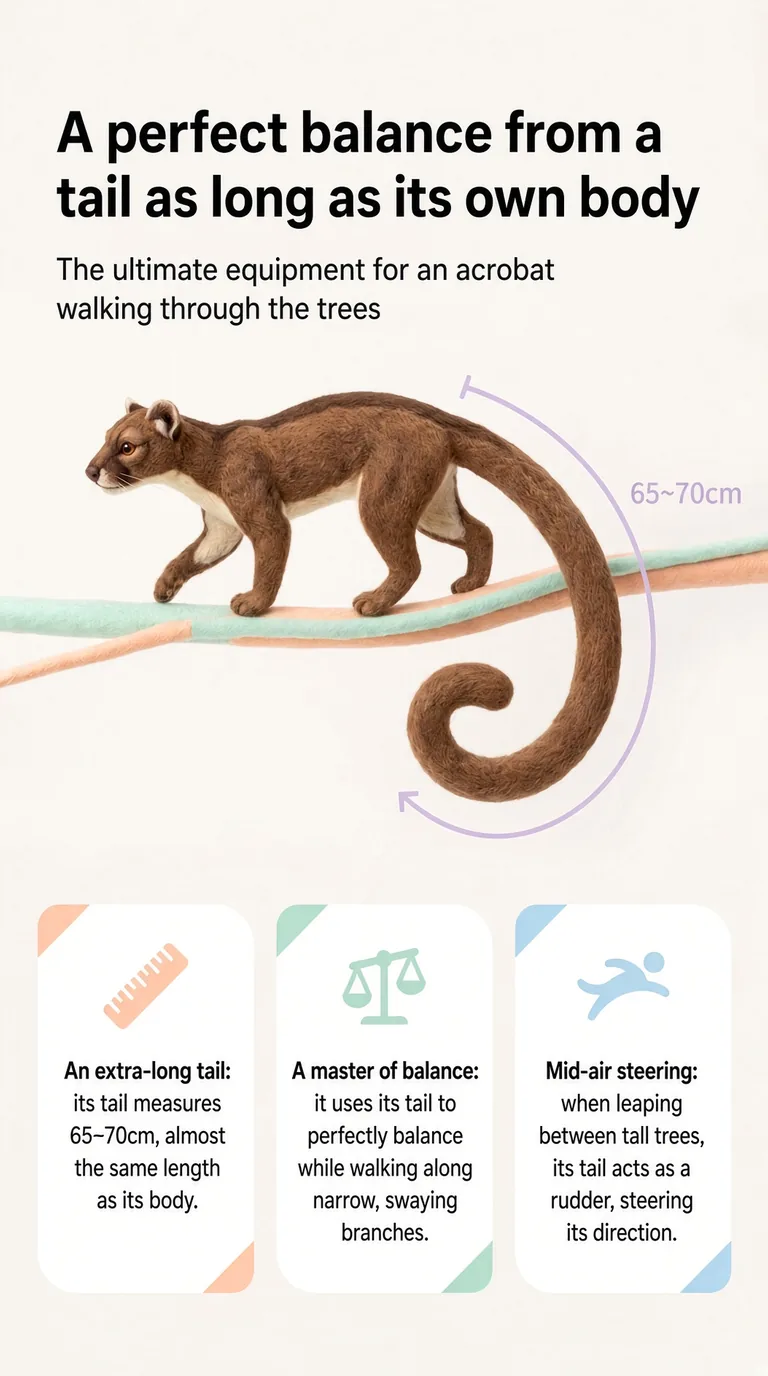
- An extra-long tail — its tail measures 65–70cm, almost the same length as its body.
- A master of balance — it uses its tail to perfectly balance while walking along narrow, swaying branches.
- Mid-air steering — when leaping between tall trees, its tail acts as a rudder, steering its direction.
A magical ankle that lets it climb down trees headfirst
The secret of a joint that rotates 180 degrees
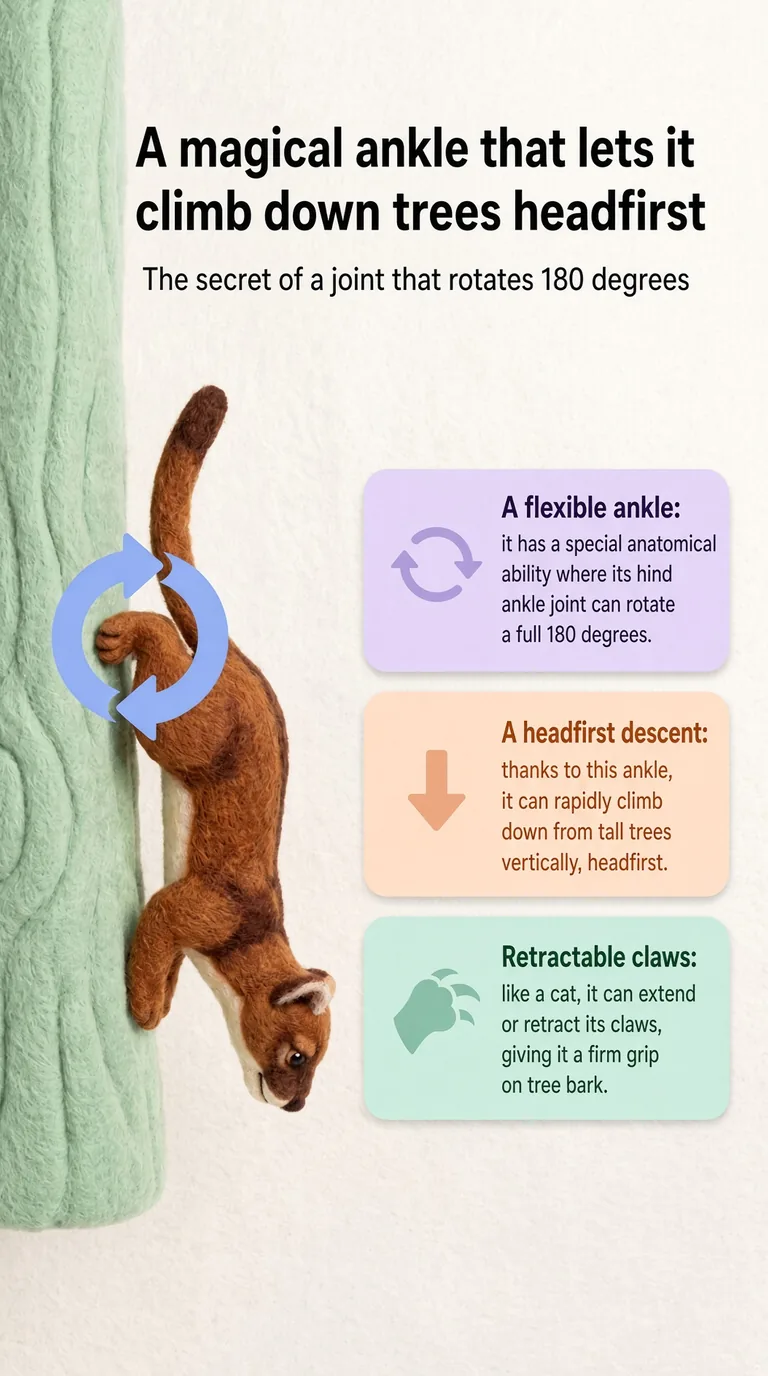
- A flexible ankle — it has a special anatomical ability where its hind ankle joint can rotate a full 180 degrees.
- A headfirst descent — thanks to this ankle, it can rapidly climb down from tall trees vertically, headfirst.
- Retractable claws — like a cat, it can extend or retract its claws, giving it a firm grip on tree bark.
A versatile hunter, equally at home in the trees and on the ground
The most feared predator of the lemur
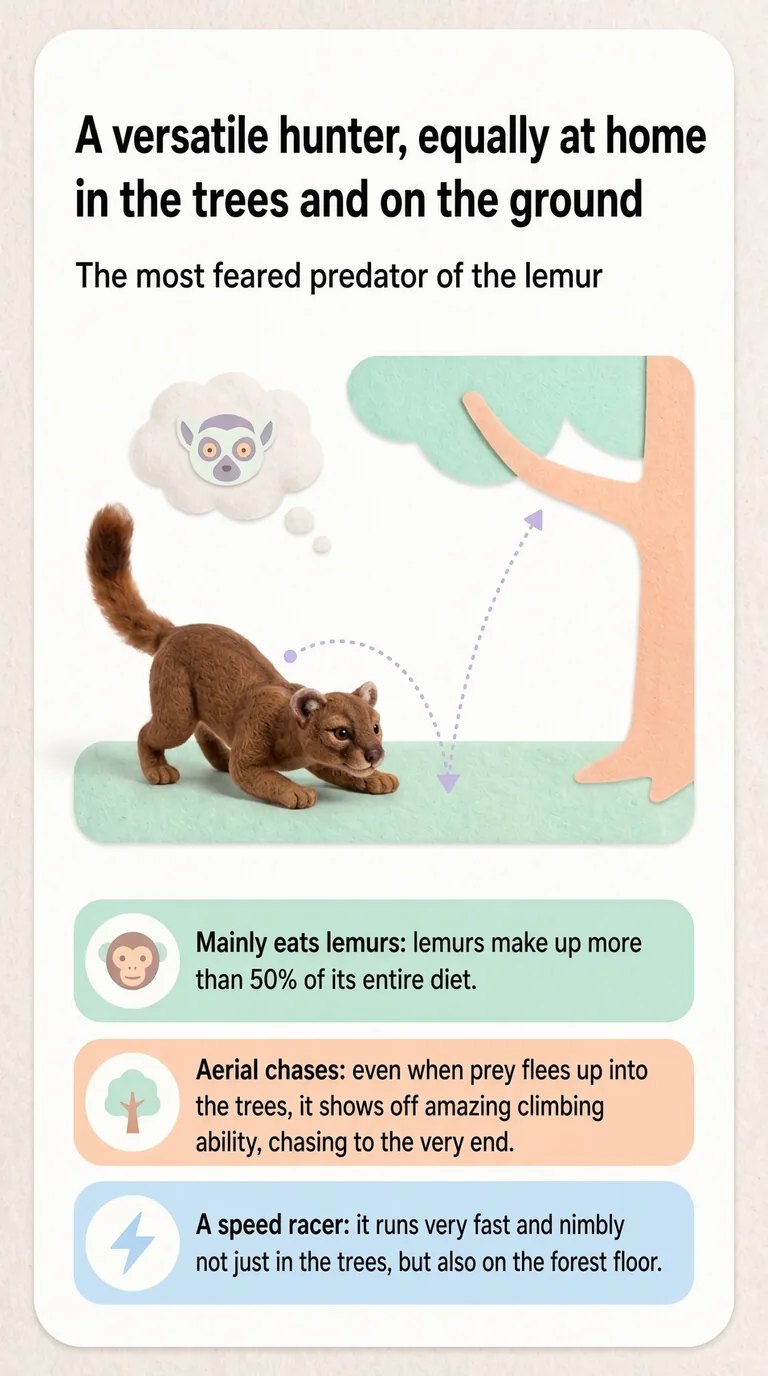
- Mainly eats lemurs — lemurs make up more than 50% of its entire diet.
- Aerial chases — even when prey flees up into the trees, it shows off amazing climbing ability, chasing to the very end.
- A speed racer — it runs very fast and nimbly not just in the trees, but also on the forest floor.
An internal clock active any time, day or night
A "cathemeral" animal that moves according to the situation
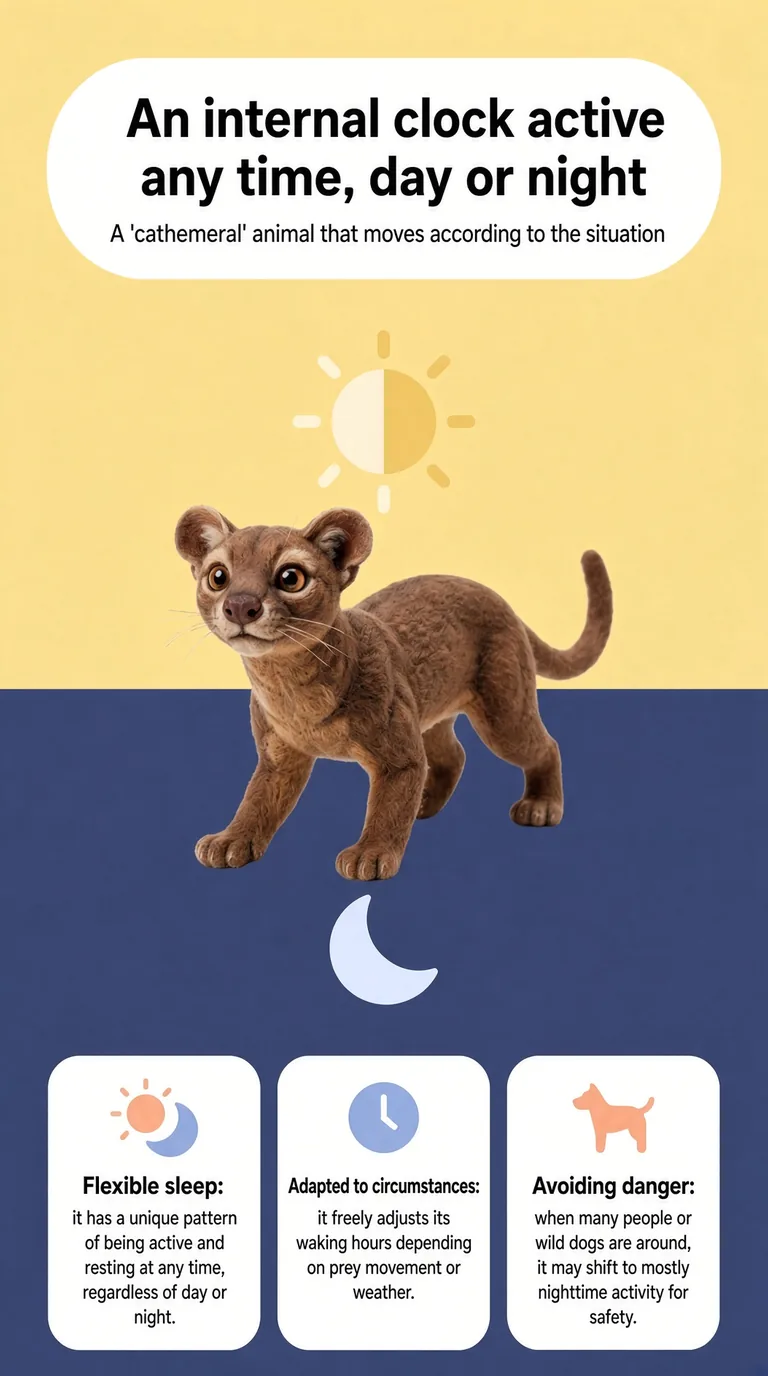
- Flexible sleep — it has a unique pattern of being active and resting at any time, regardless of day or night.
- Adapted to circumstances — it freely adjusts its waking hours depending on prey movement or weather.
- Avoiding danger — when many people or wild dogs are around, it may shift to mostly nighttime activity for safety.
A lonely recluse that "talks" through scent across a vast forest
The fossa's special way of sharing information and feelings
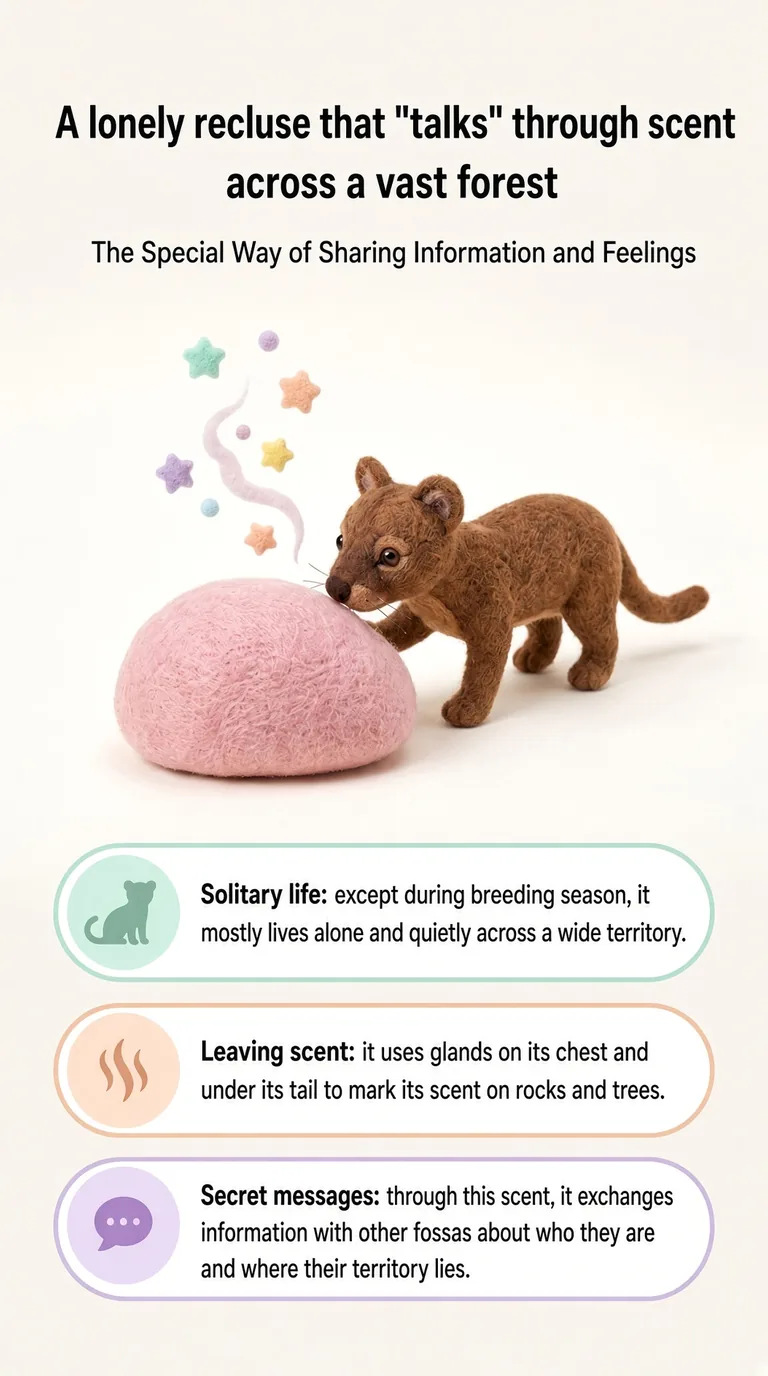
- Solitary life — except during breeding season, it mostly lives alone and quietly across a wide territory.
- Leaving scent — it uses glands on its chest and under its tail to mark its scent on rocks and trees.
- Secret messages — through this scent, it exchanges information with other fossas about who they are and where their territory lies.