Greater Flamingo
Madagascar
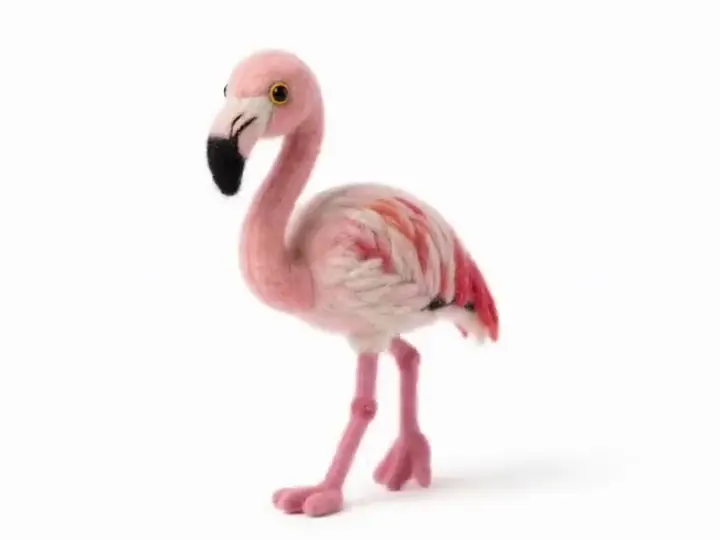
The flamingo turns pink from the red pigment in the shrimp and other food it eats. It even sleeps standing on one leg, which is thought to help it save body heat.
Quick facts
- Habitat
- It lives in the salt lakes and mudflats of western Madagascar.
- Diet
- It eats shrimp, algae, and small crustaceans.
- Size and weight
- Height 1.1–1.5m, weight 2–4kg.
- Lifespan
- About 30–50 years
- Conservation status
- Least Concern
- Fun facts
- It's born gray and turns pink as it grows up!
It flips its beak upside down to filter food from the water.
Learn more
The elegant dancer who drank red paint
The survival secrets hidden behind the flamingo's pink feathers
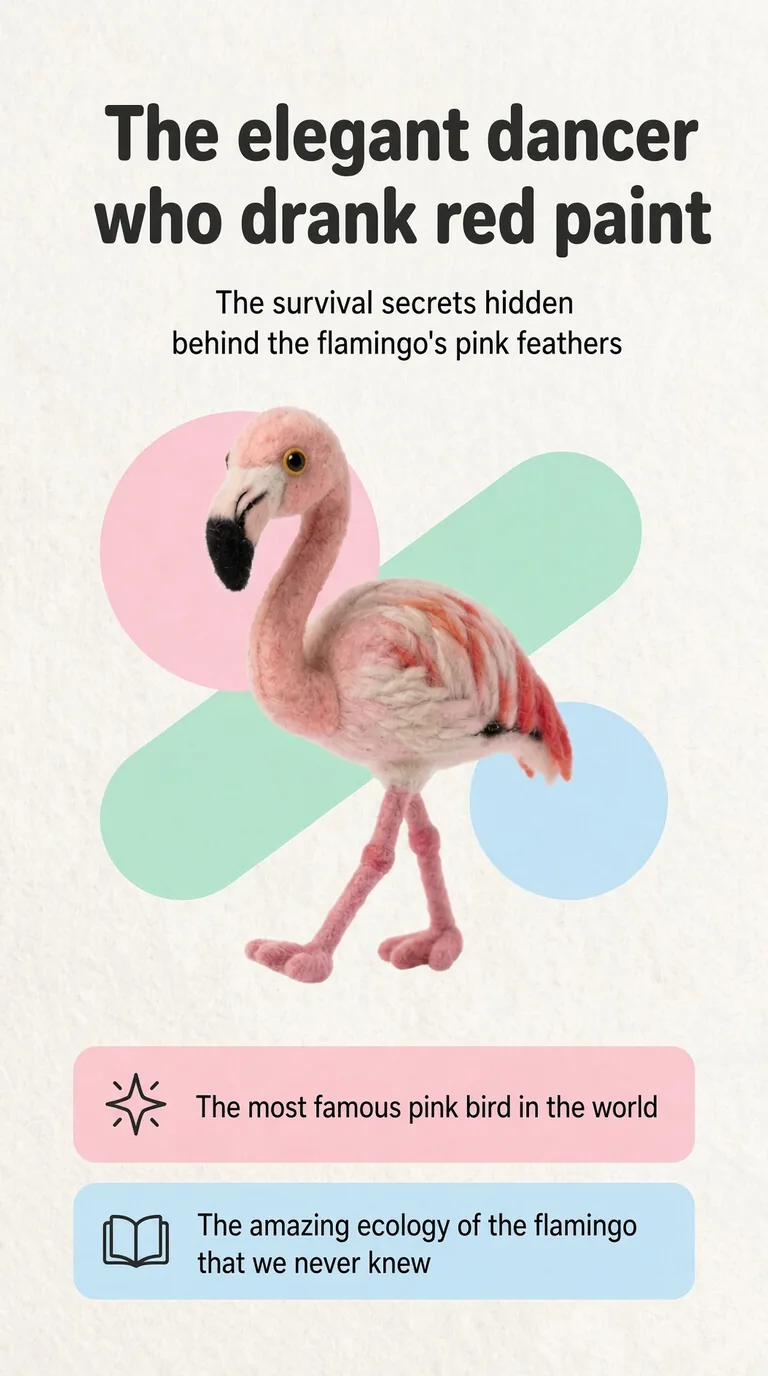
- The most famous pink bird in the world
- The amazing ecology of the flamingo that we never knew
A bird that turns pink from what it eats
It isn't born pink from the start
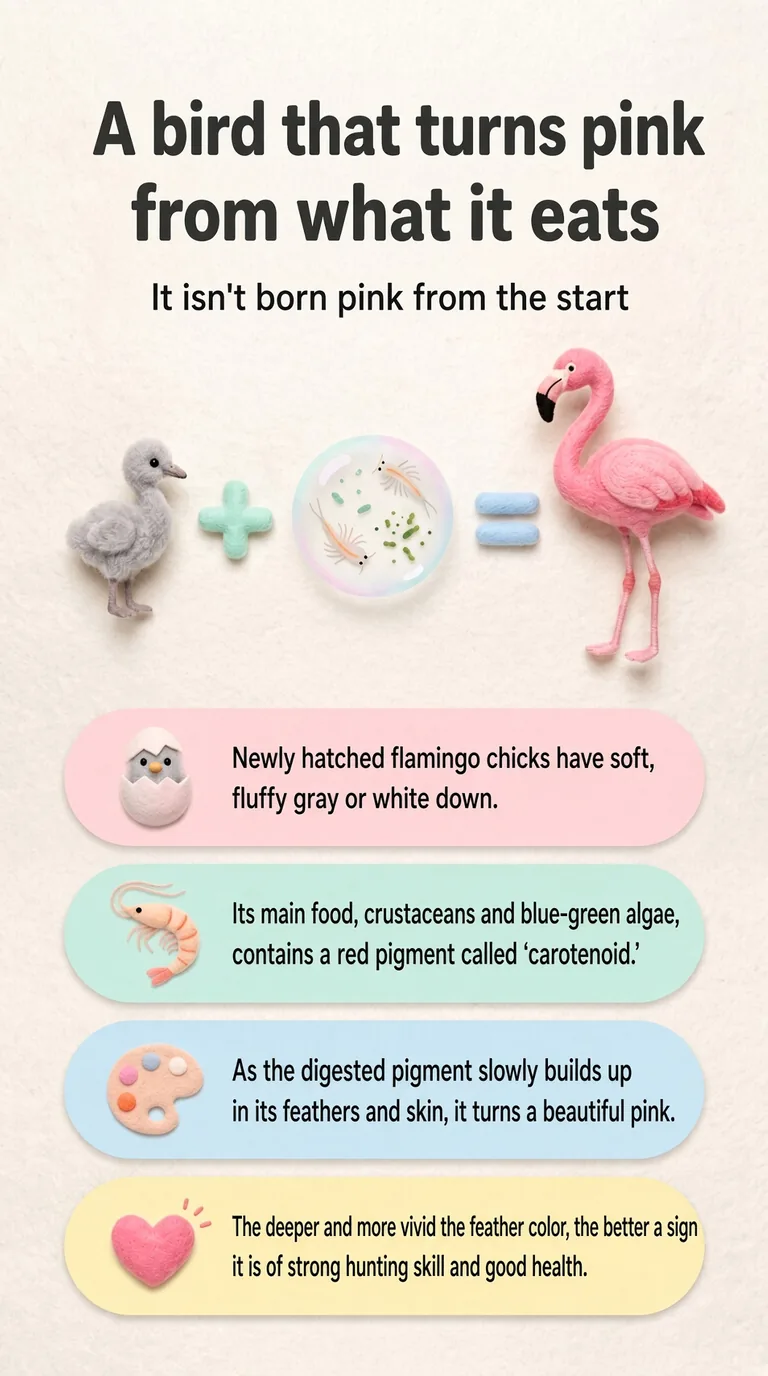
- Newly hatched flamingo chicks have soft, fluffy gray or white down.
- Its main food, crustaceans and blue-green algae, contains a red pigment called 'carotenoid.'
- As the digested pigment slowly builds up in its feathers and skin, it turns a beautiful pink.
- The deeper and more vivid the feather color, the better a sign it is of strong hunting skill and good health.
A miracle color born from an extreme environment
The secret to surviving even in salt-filled lakes
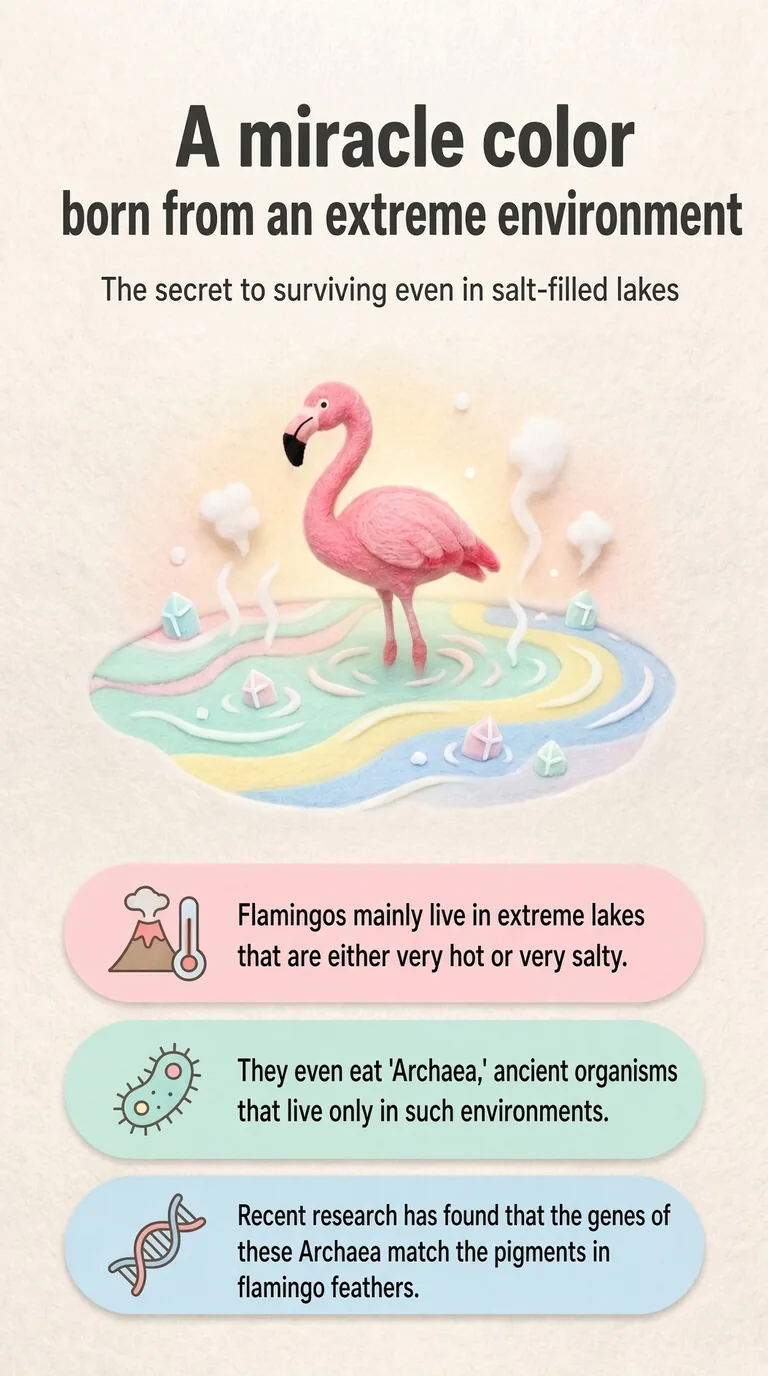
- Flamingos mainly live in extreme lakes that are either very hot or very salty.
- They even eat 'Archaea,' ancient organisms that live only in such environments.
- Recent research has found that the genes of these Archaea match the pigments in flamingo feathers.
A natural makeup routine for breeding season
Their colors become even more vivid when mating season arrives
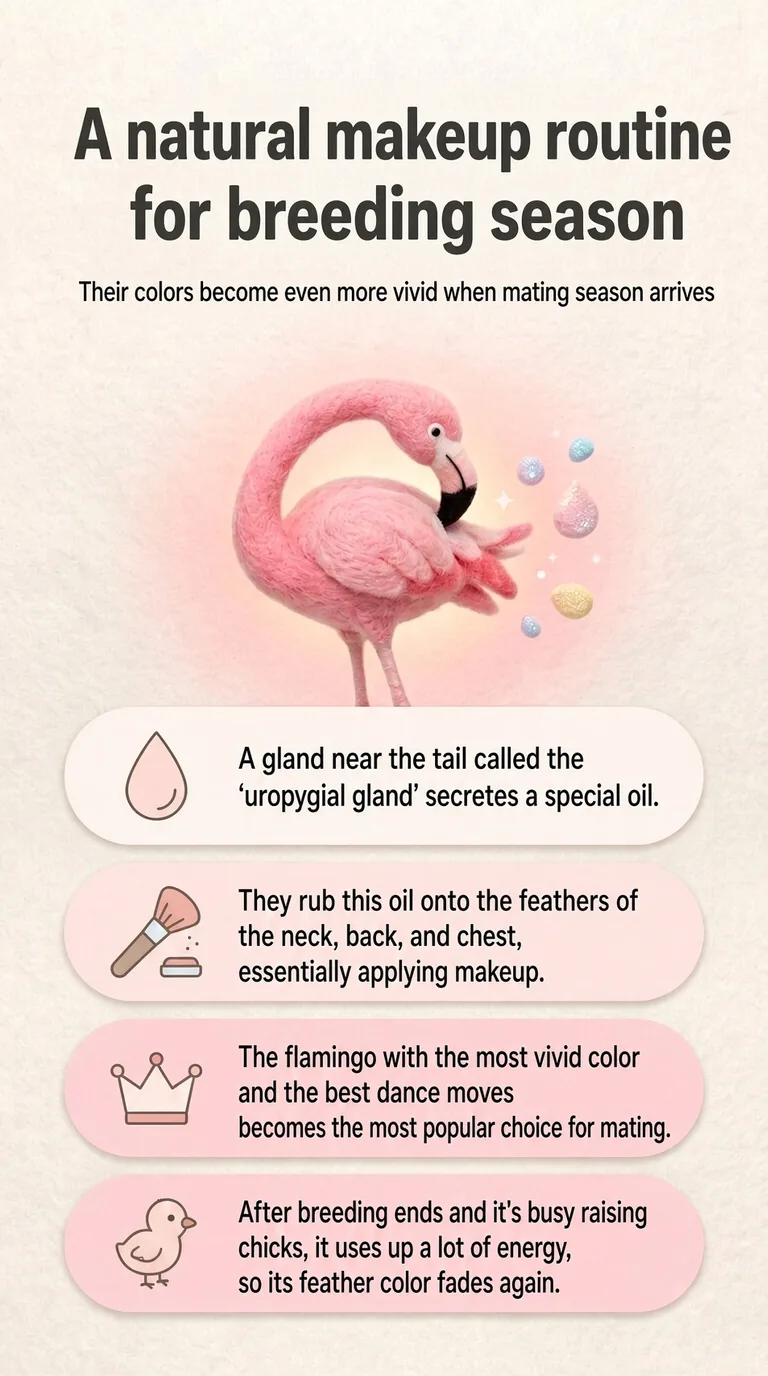
- A gland near the tail called the 'uropygial gland' secretes a special oil.
- They rub this oil onto the feathers of the neck, back, and chest, essentially applying makeup.
- The flamingo with the most vivid color and the best dance moves becomes the most popular choice for mating.
- After breeding ends and it's busy raising chicks, it uses up a lot of energy, so its feather color fades again.
A remarkable beak used upside down
A natural filter system that sifts out only prey from the water
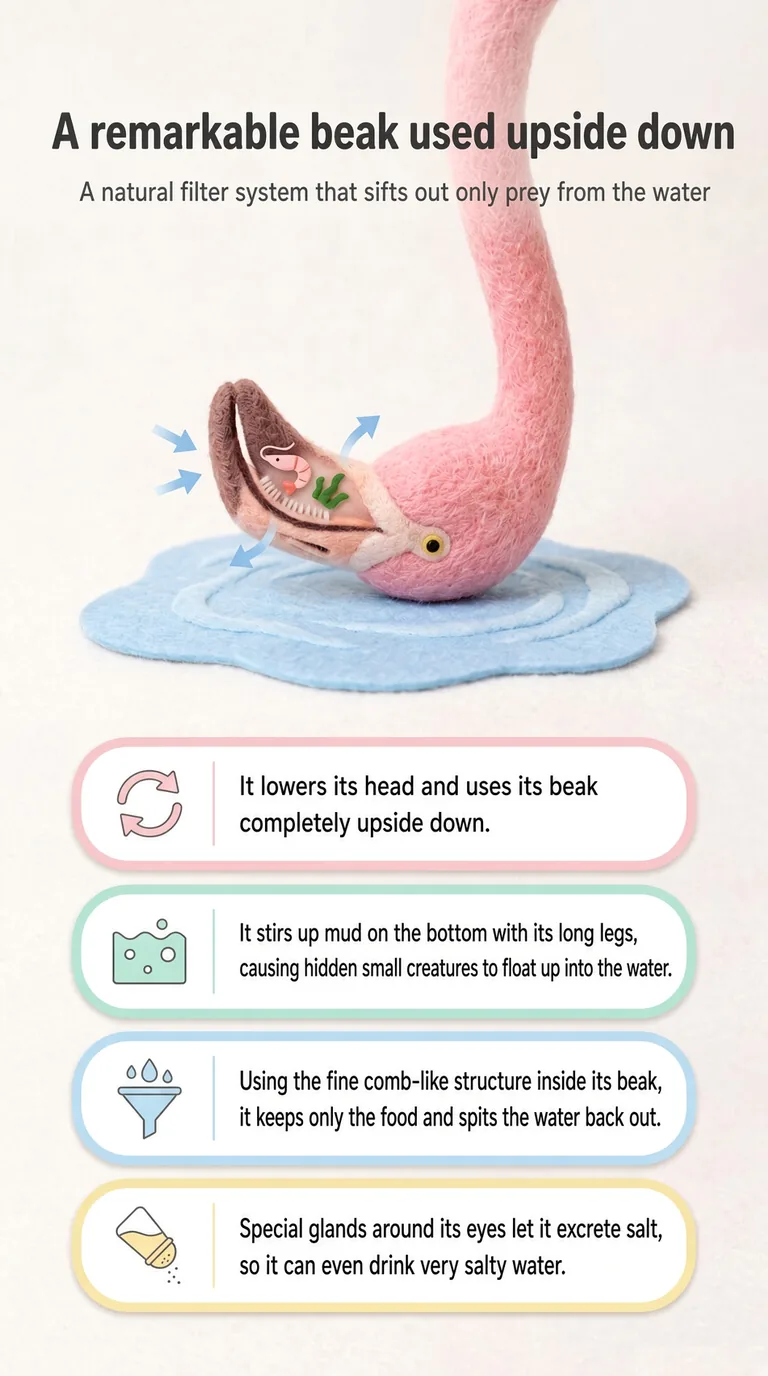
- It lowers its head and uses its beak completely upside down.
- It stirs up mud on the bottom with its long legs, causing hidden small creatures to float up into the water.
- Using the fine comb-like structure inside its beak, it keeps only the food and spits the water back out.
- Special glands around its eyes let it excrete salt, so it can even drink very salty water.
Telling two kinds of flamingos apart
The two friends most commonly found on African lakes
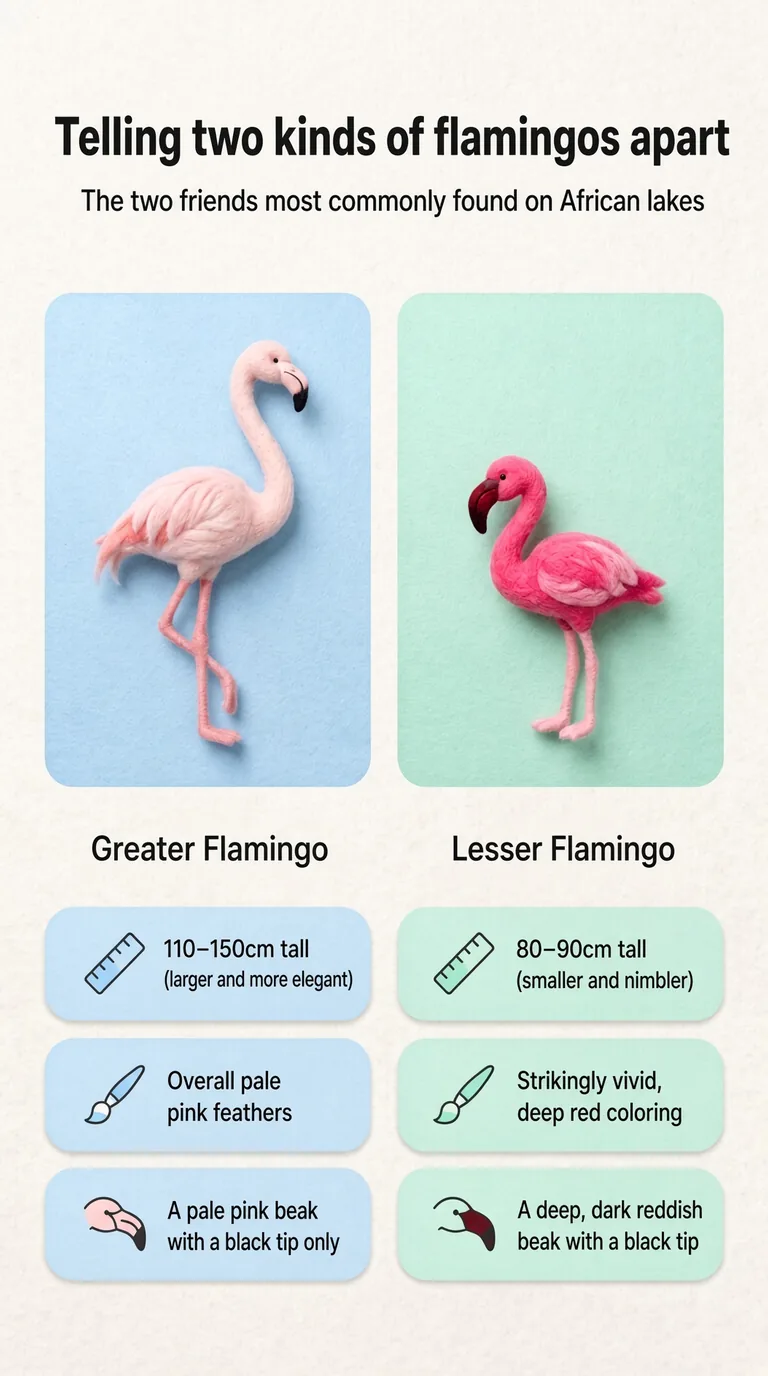
- Greater Flamingo
- 110–150cm tall (larger and more elegant)
- Overall pale pink feathers
- A pale pink beak with a black tip only
- Lesser Flamingo
- 80–90cm tall (smaller and nimbler)
- Strikingly vivid, deep red coloring
- A deep, dark reddish beak with a black tip
Why it sleeps standing on one leg
The most comfortable and scientifically perfect resting posture
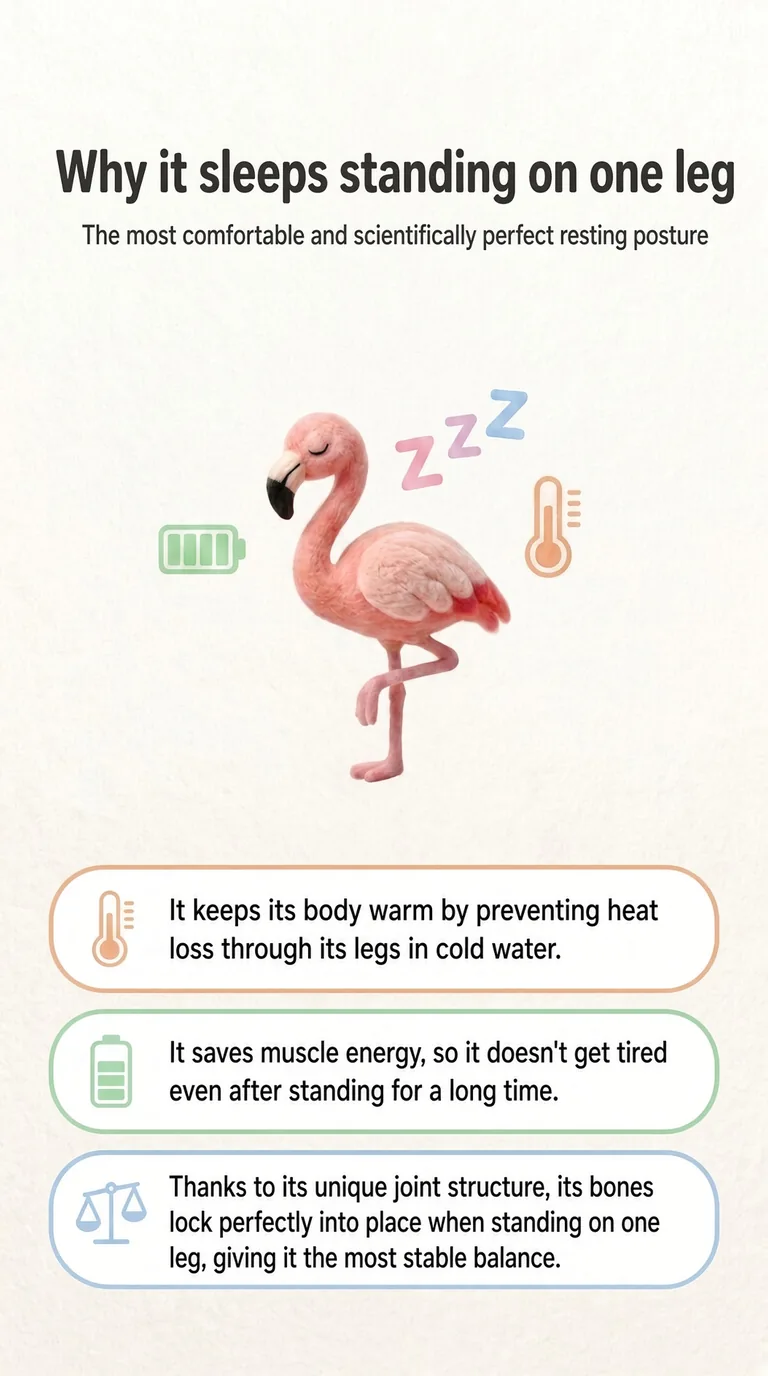
- It keeps its body warm by preventing heat loss through its legs in cold water.
- It saves muscle energy, so it doesn't get tired even after standing for a long time.
- Thanks to its unique joint structure, its bones lock perfectly into place when standing on one leg, giving it the most stable balance.
A running start before takeoff
A special run-up needed to fly
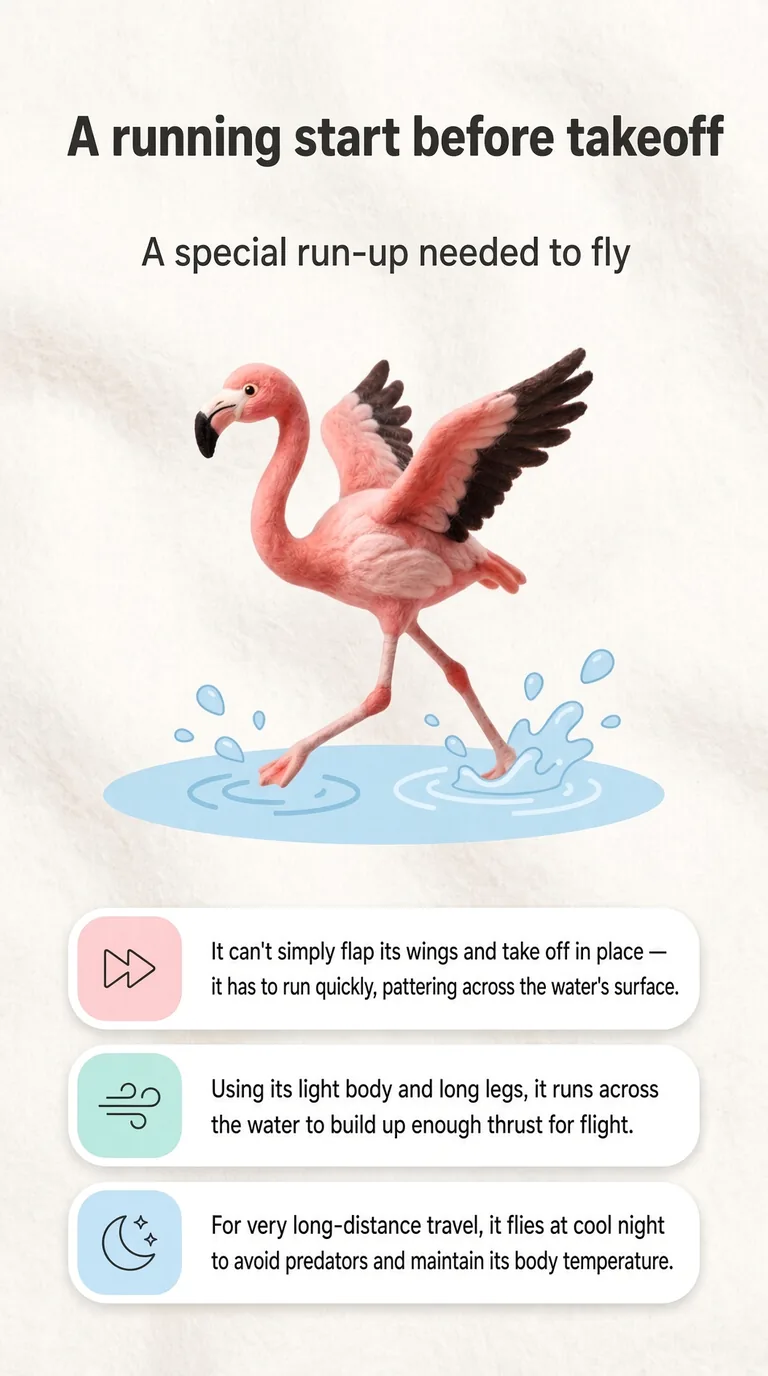
- It can't simply flap its wings and take off in place — it has to run quickly, pattering across the water's surface.
- Using its light body and long legs, it runs across the water to build up enough thrust for flight.
- For very long-distance travel, it flies at cool night to avoid predators and maintain its body temperature.
A pink arrow slicing through the sky
Its flying skill is far better than it looks
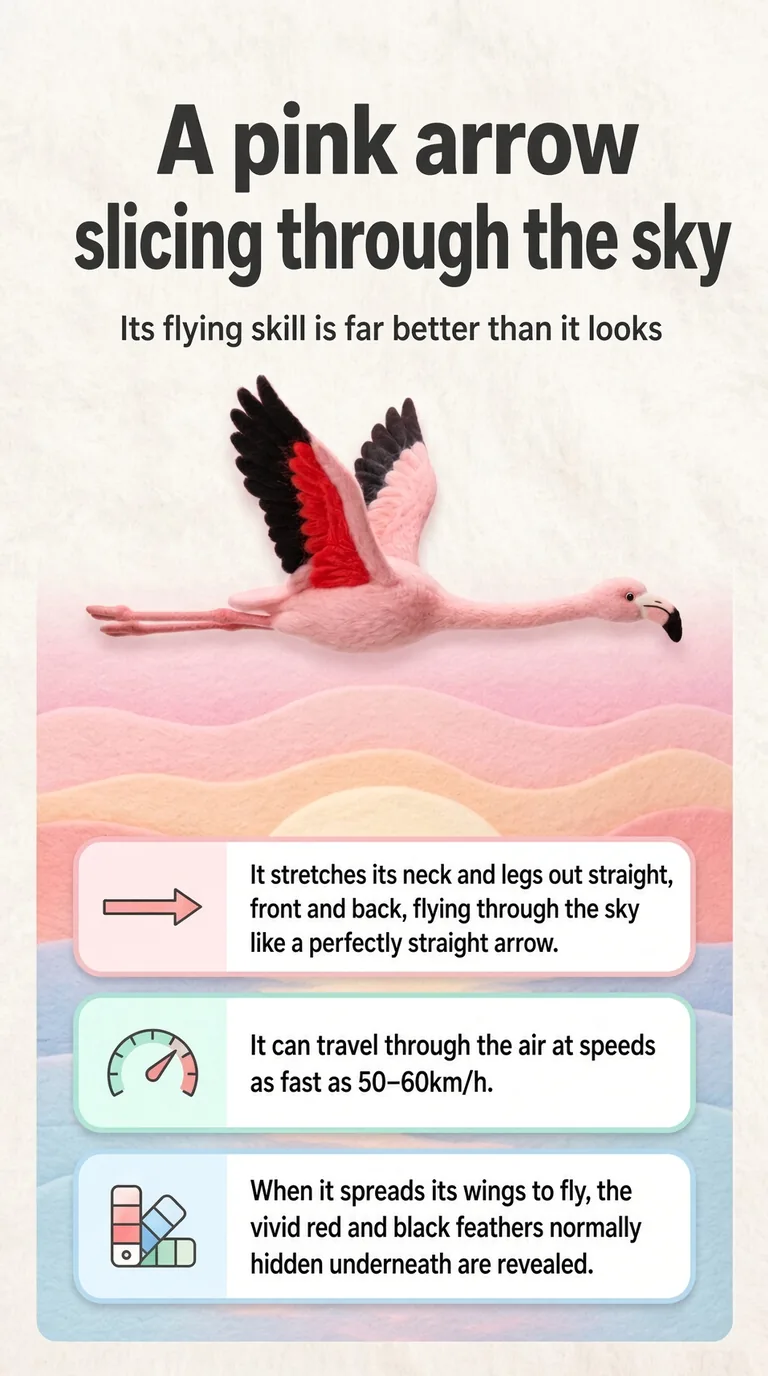
- It stretches its neck and legs out straight, front and back, flying through the sky like a perfectly straight arrow.
- It can travel through the air at speeds as fast as 50–60km/h.
- When it spreads its wings to fly, the vivid red and black feathers normally hidden underneath are revealed.
A spectacular dance of thousands
A synchronized dance party performed by a massive flock
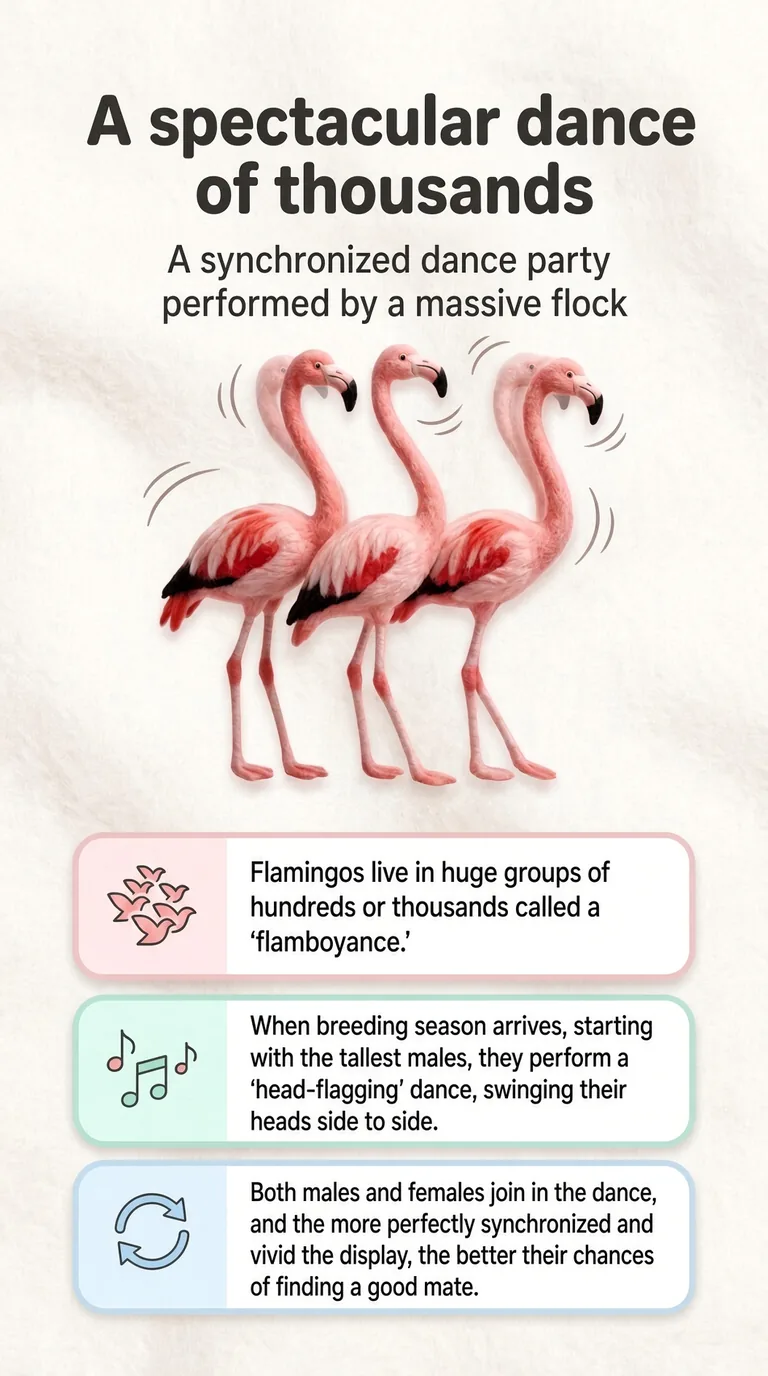
- Flamingos live in huge groups of hundreds or thousands called a 'flamboyance.'
- When breeding season arrives, starting with the tallest males, they perform a 'head-flagging' dance, swinging their heads side to side.
- Both males and females join in the dance, and the more perfectly synchronized and vivid the display, the better their chances of finding a good mate.
Leaving salt lakes for clear water
A flexible adaptability that constantly moves for survival
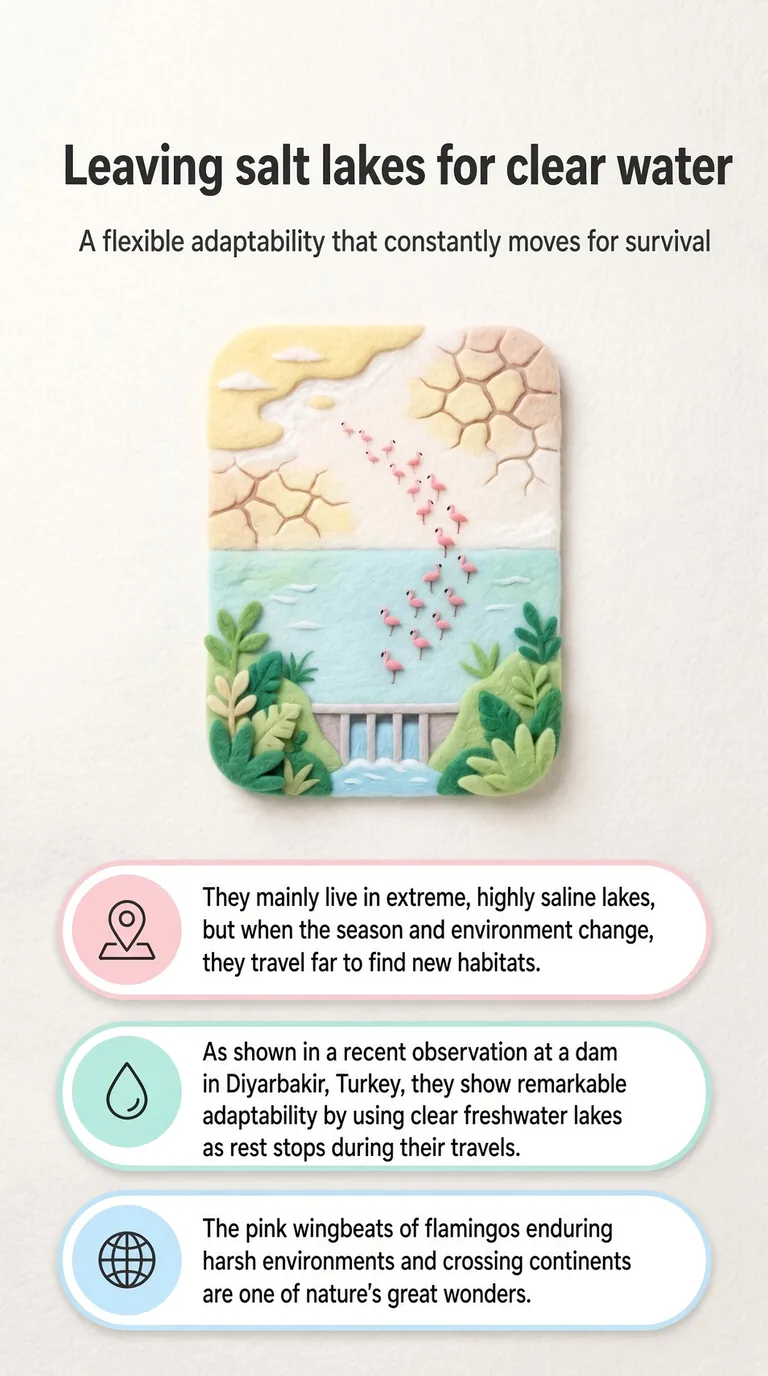
- They mainly live in extreme, highly saline lakes, but when the season and environment change, they travel far to find new habitats.
- As shown in a recent observation at a dam in Diyarbakir, Turkey, they show remarkable adaptability by using clear freshwater lakes as rest stops during their travels.
- The pink wingbeats of flamingos enduring harsh environments and crossing continents are one of nature's great wonders.