Desert Tortoise
Desert
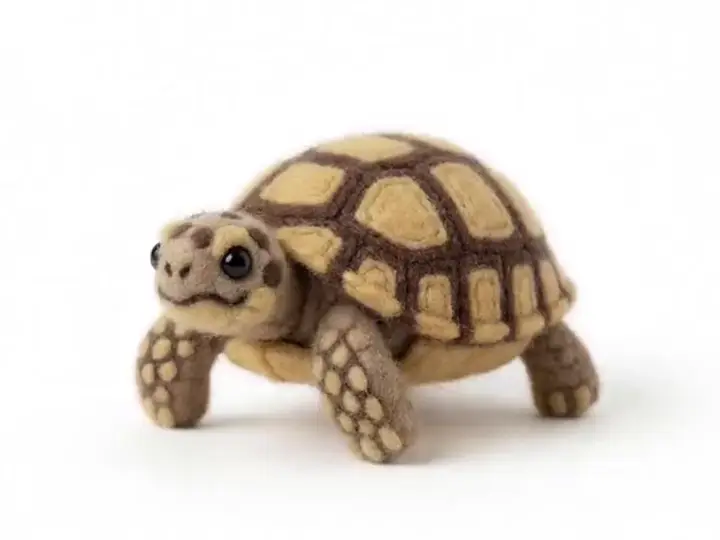
The desert tortoise spends 95% of its life in underground burrows. Inside, it's cool and damp, so it can escape both the scorching days and the freezing nights.
Quick facts
- Habitat
- It lives in the Mojave and Sonoran Deserts of North America.
- Diet
- It eats grass, wildflowers, cacti, and succulents.
- Size and weight
- Shell 25–36cm long, weight 4–7kg.
- Lifespan
- About 50–80 years
- Conservation status
- Vulnerable
- Fun facts
- It stores water in its bladder and can go a whole year without drinking!
Some live for more than 100 years.
Learn more
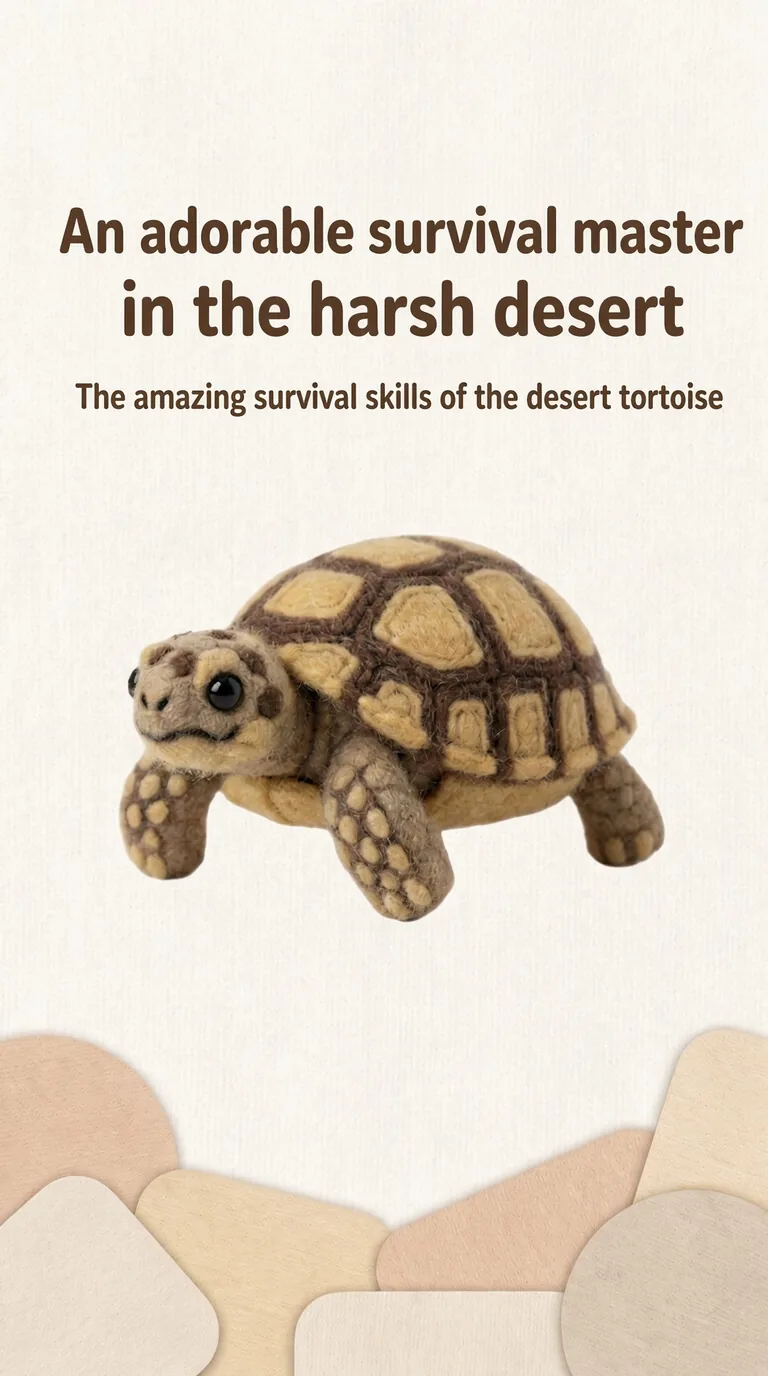
An adorable survival master in the harsh desert
The amazing survival skills of the desert tortoise
How does it survive the scorching desert?
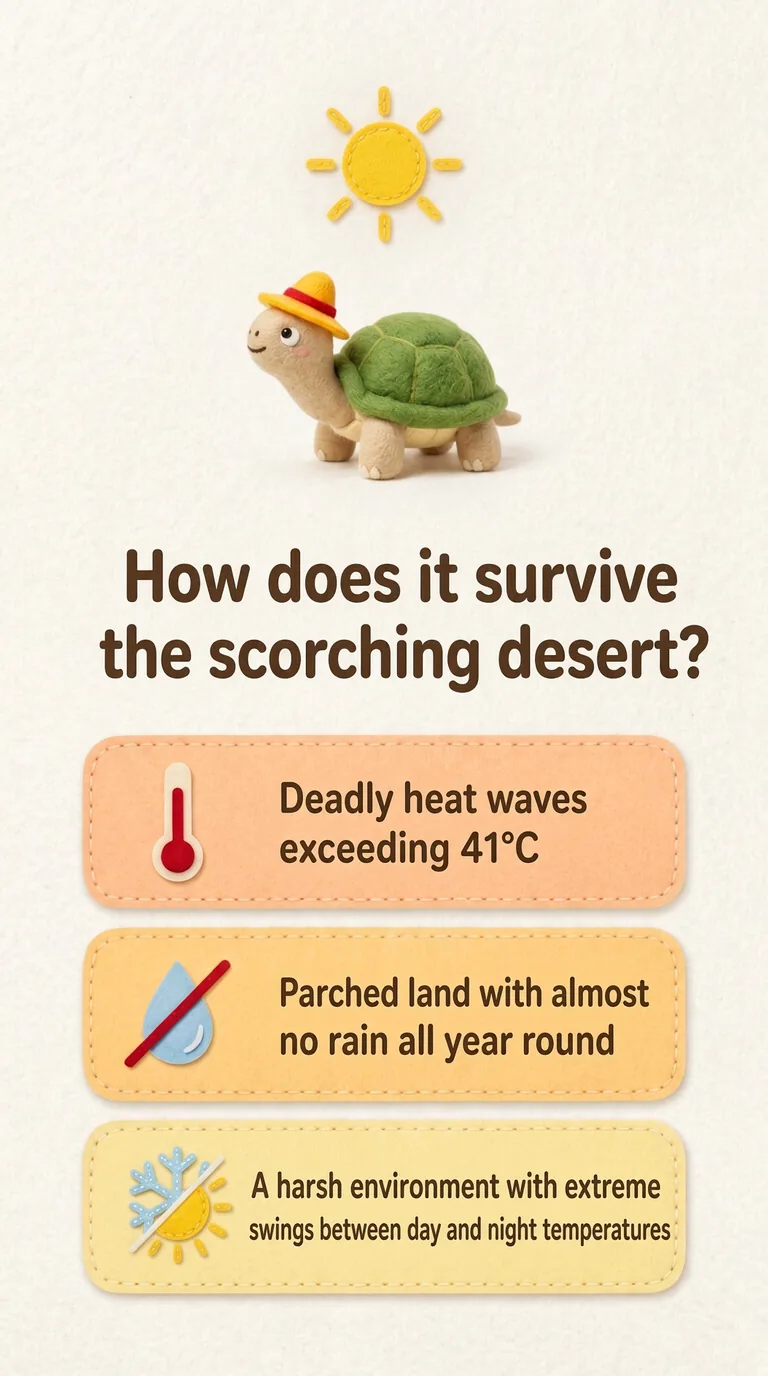
- Deadly heat waves exceeding 41°C
- Parched land with almost no rain all year round
- A harsh environment with extreme swings between day and night temperatures
A living natural water tank
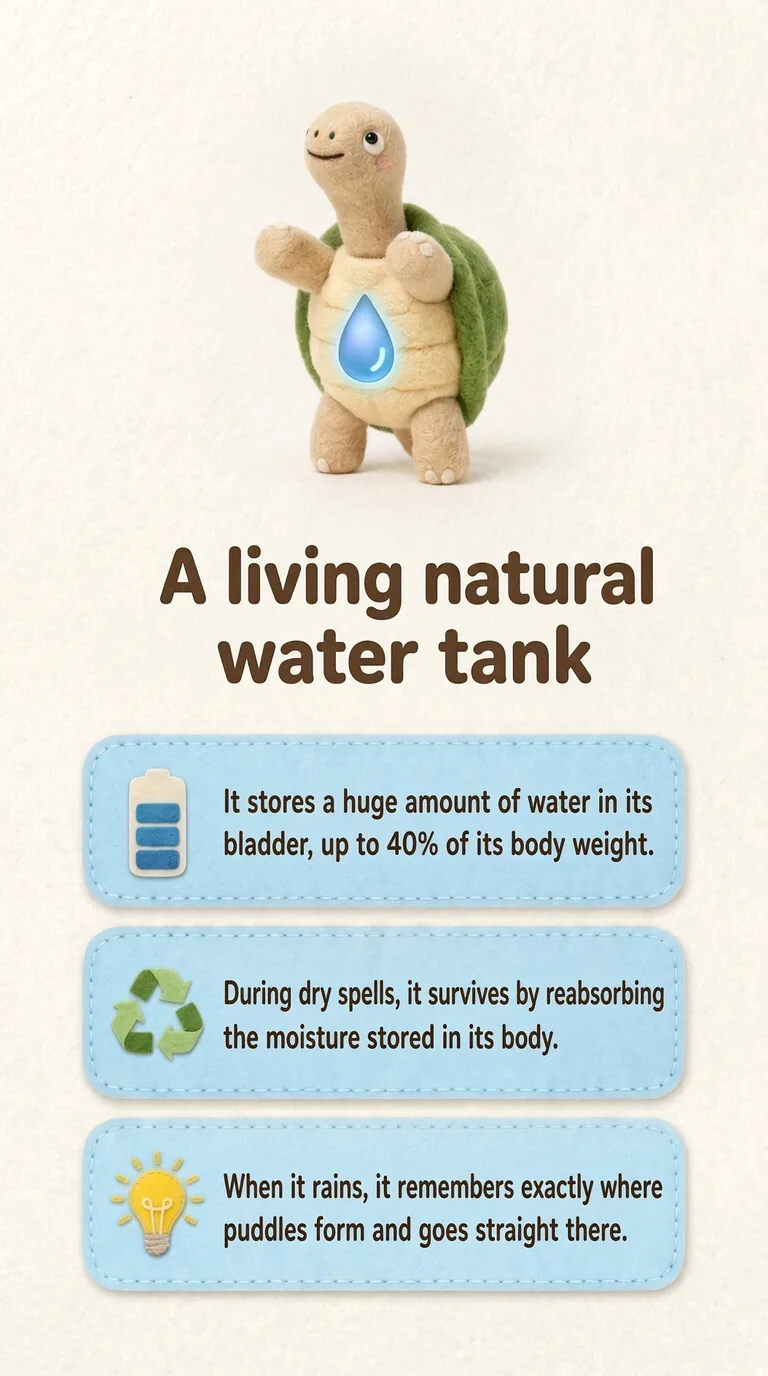
- It stores a huge amount of water in its bladder, up to 40% of its body weight.
- During dry spells, it survives by reabsorbing the moisture stored in its body.
- When it rains, it remembers exactly where puddles form and goes straight there.
A burrow architect digging into the desert
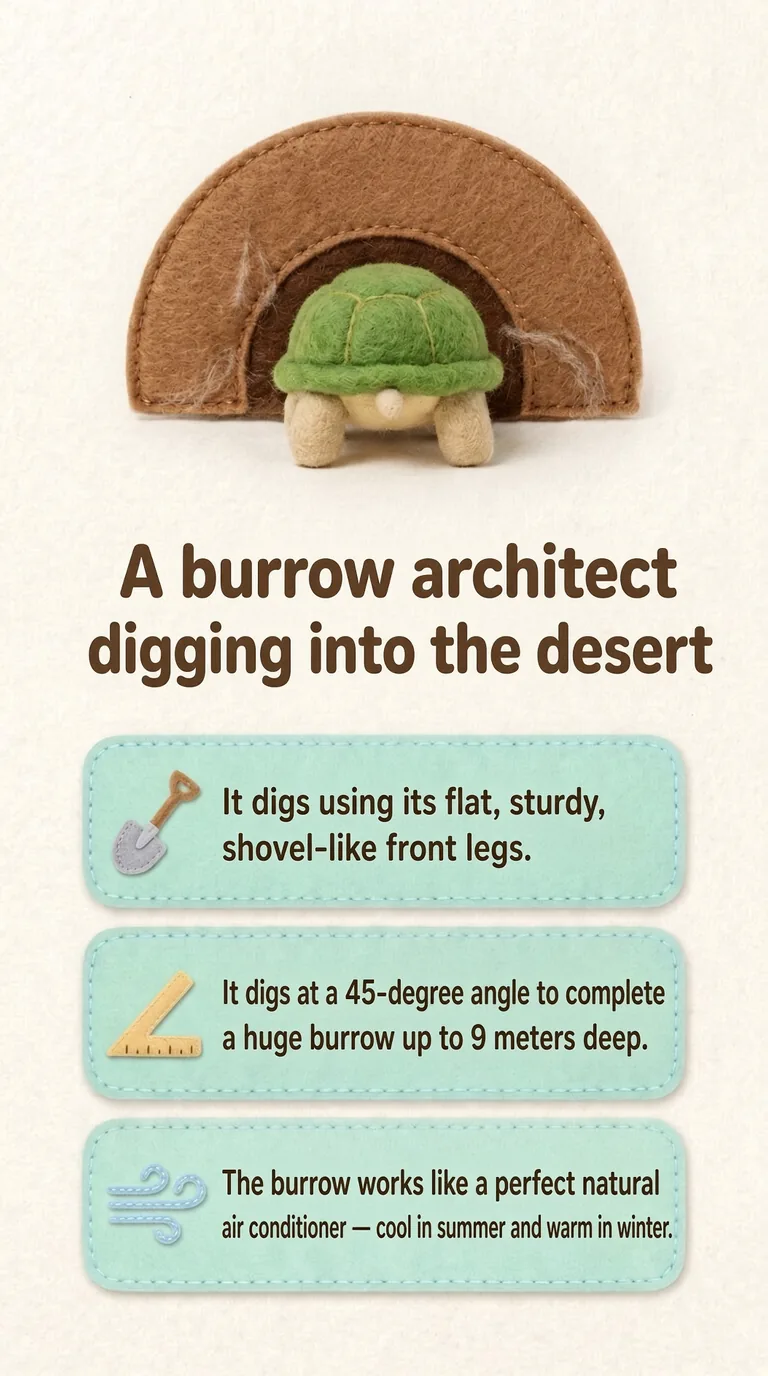
- It digs using its flat, sturdy, shovel-like front legs.
- It digs at a 45-degree angle to complete a huge burrow up to 9 meters deep.
- The burrow works like a perfect natural air conditioner — cool in summer and warm in winter.
A generous desert landlord
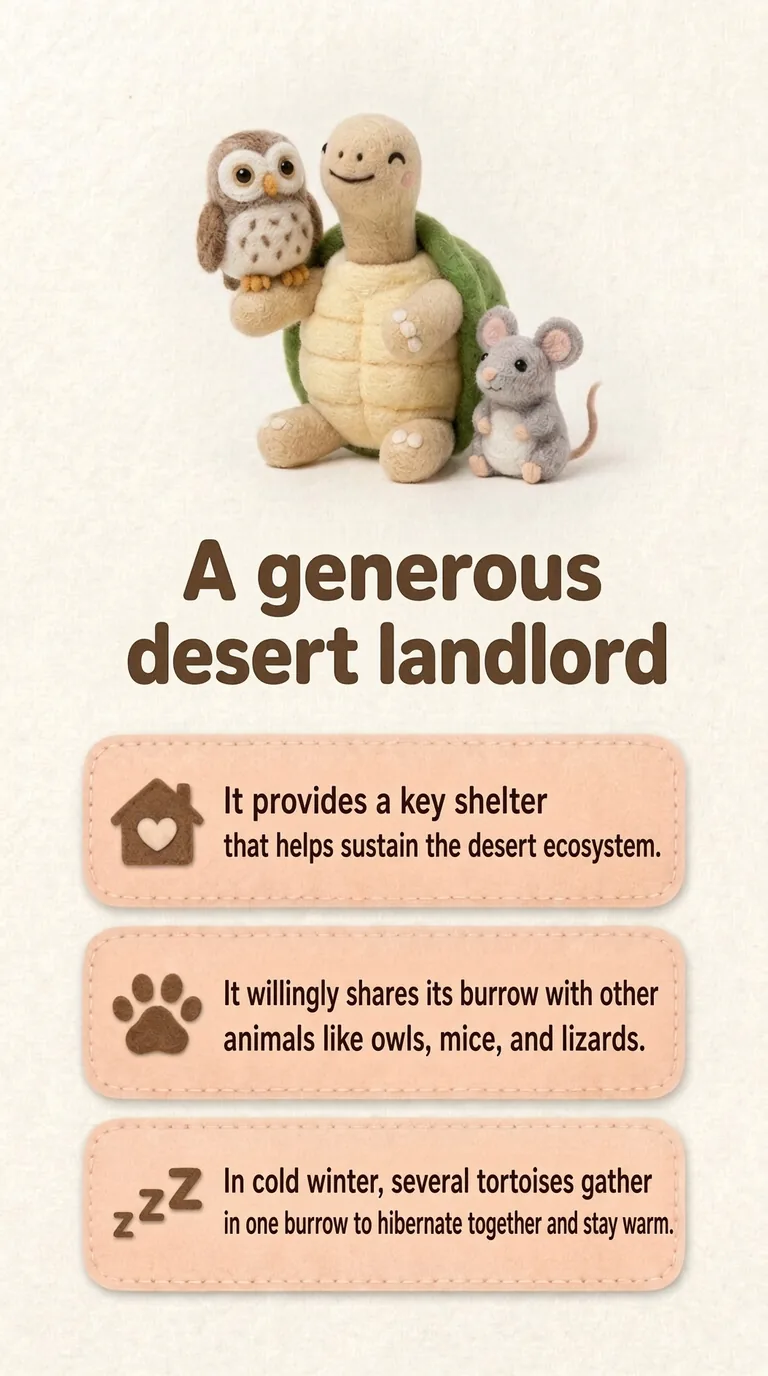
- It provides a key shelter that helps sustain the desert ecosystem.
- It willingly shares its burrow with other animals like owls, mice, and lizards.
- In cold winter, several tortoises gather in one burrow to hibernate together and stay warm.
A rather picky gourmet
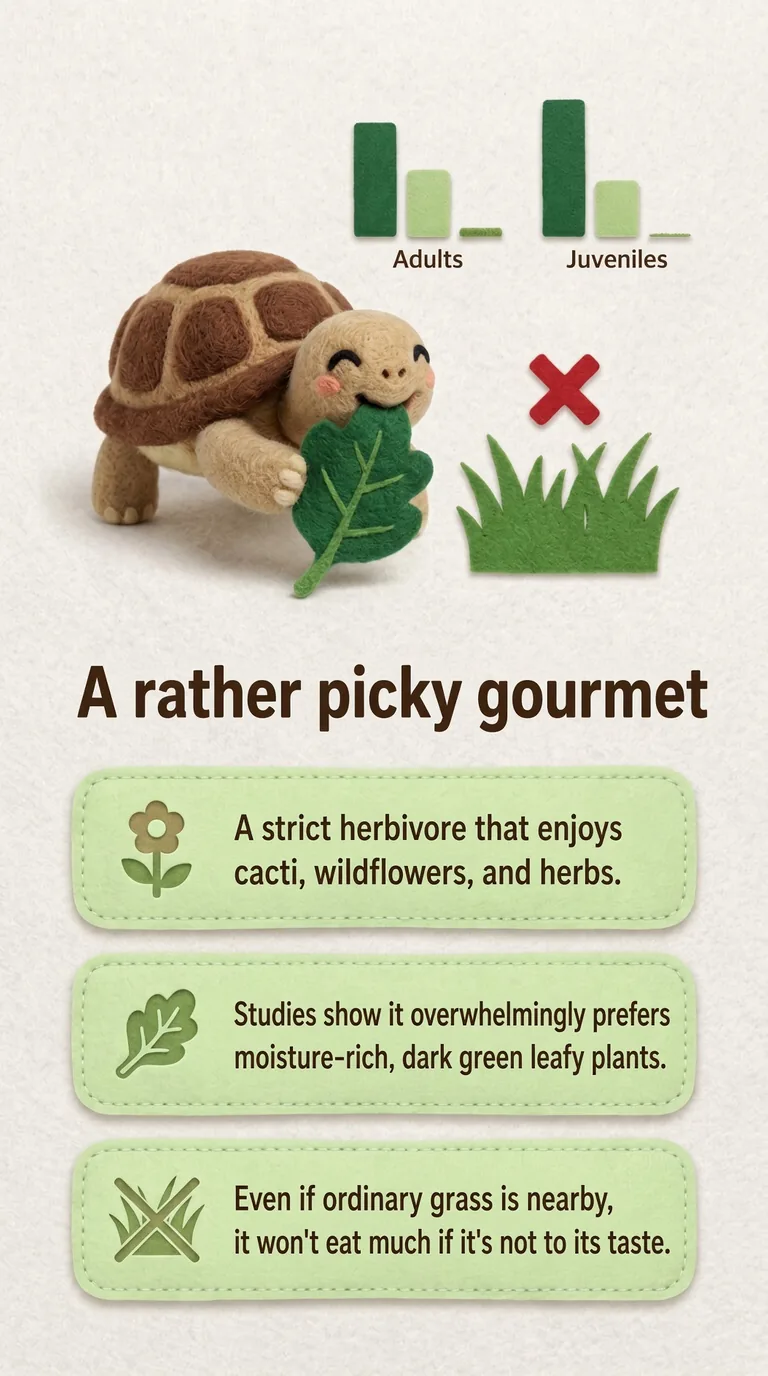
- A strict herbivore that enjoys cacti, wildflowers, and herbs.
- Studies show it overwhelmingly prefers moisture-rich, dark green leafy plants.
- Even if ordinary grass is nearby, it won't eat much if it's not to its taste.
Living armor connected to its bones
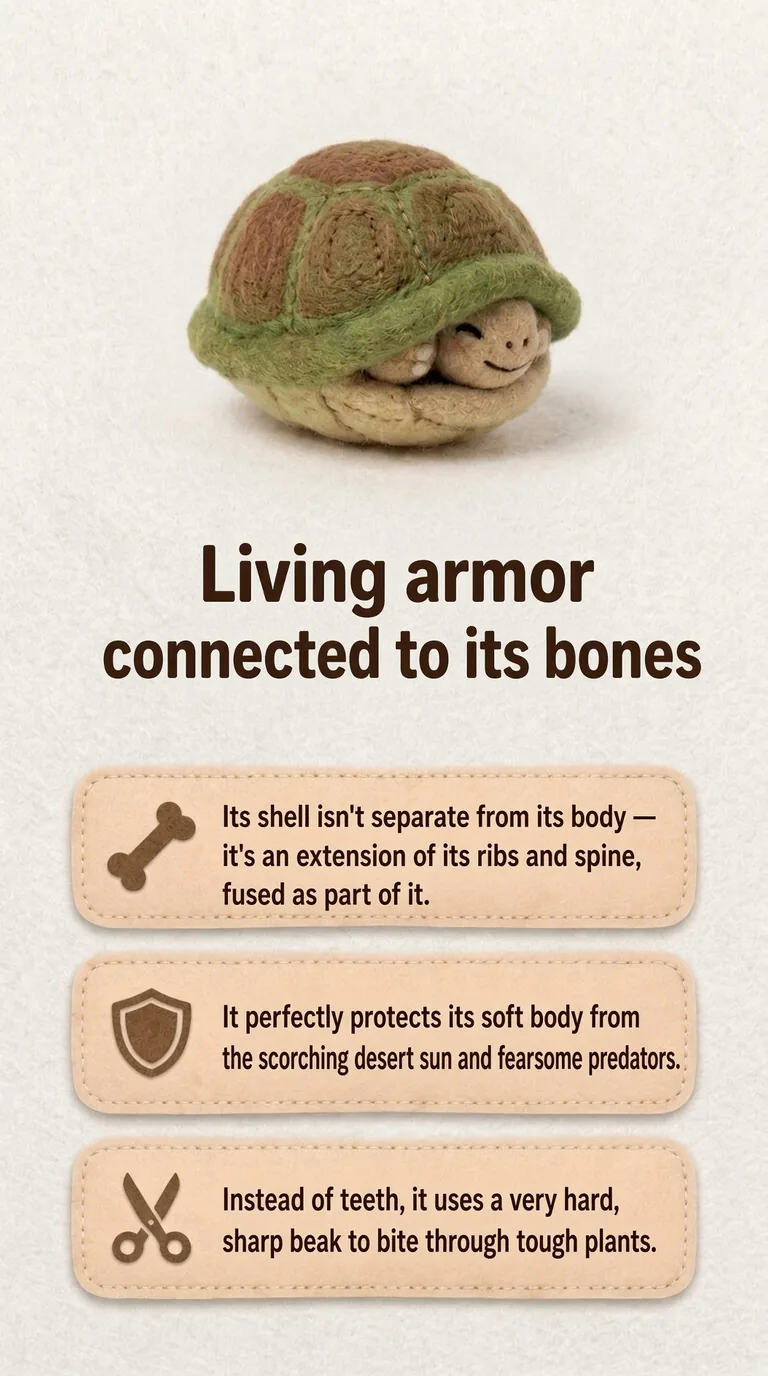
- Its shell isn't separate from its body — it's an extension of its ribs and spine, fused as part of it.
- It perfectly protects its soft body from the scorching desert sun and fearsome predators.
- Instead of teeth, it uses a very hard, sharp beak to bite through tough plants.
The dangerous secret of baby tortoises
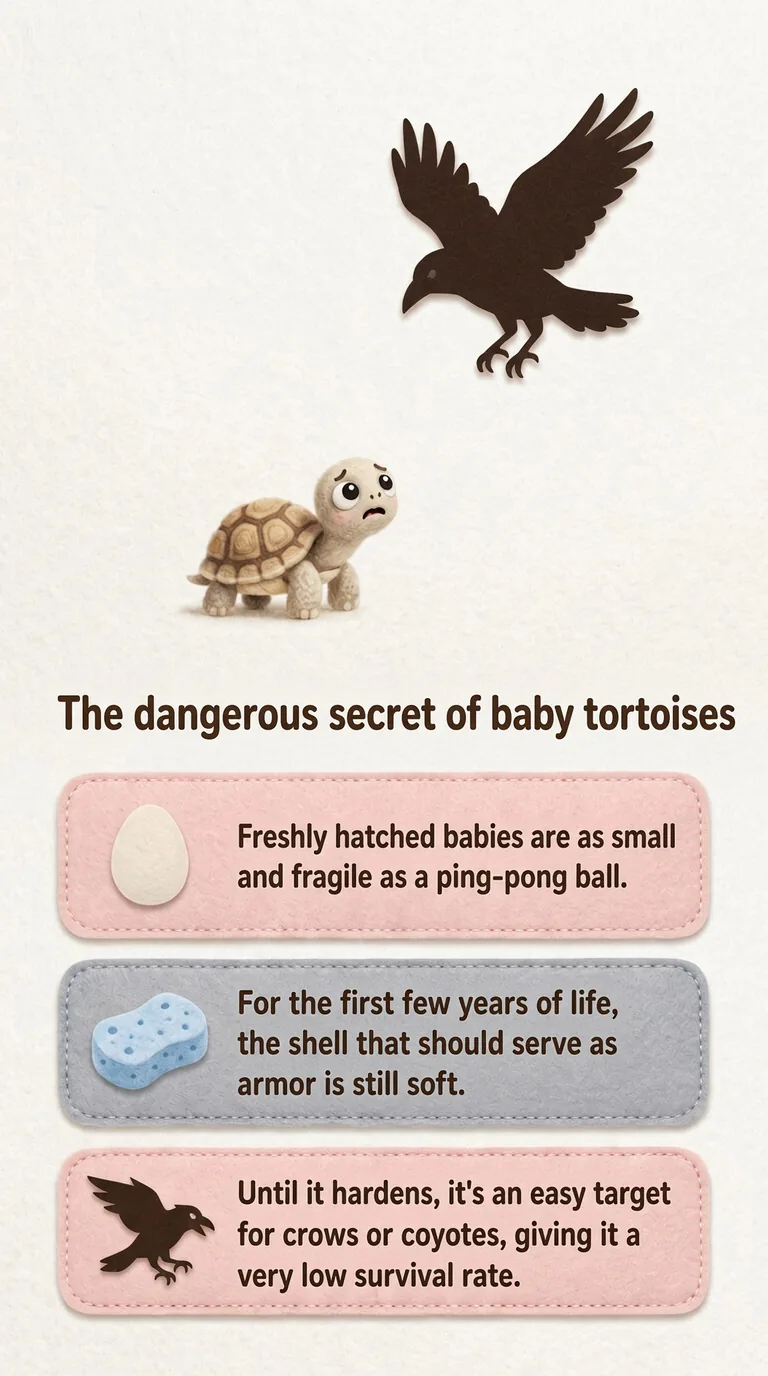
- Freshly hatched babies are as small and fragile as a ping-pong ball.
- For the first few years of life, the shell that should serve as armor is still soft.
- Until it hardens, it's an easy target for crows or coyotes, giving it a very low survival rate.
A slow and steady survival strategy
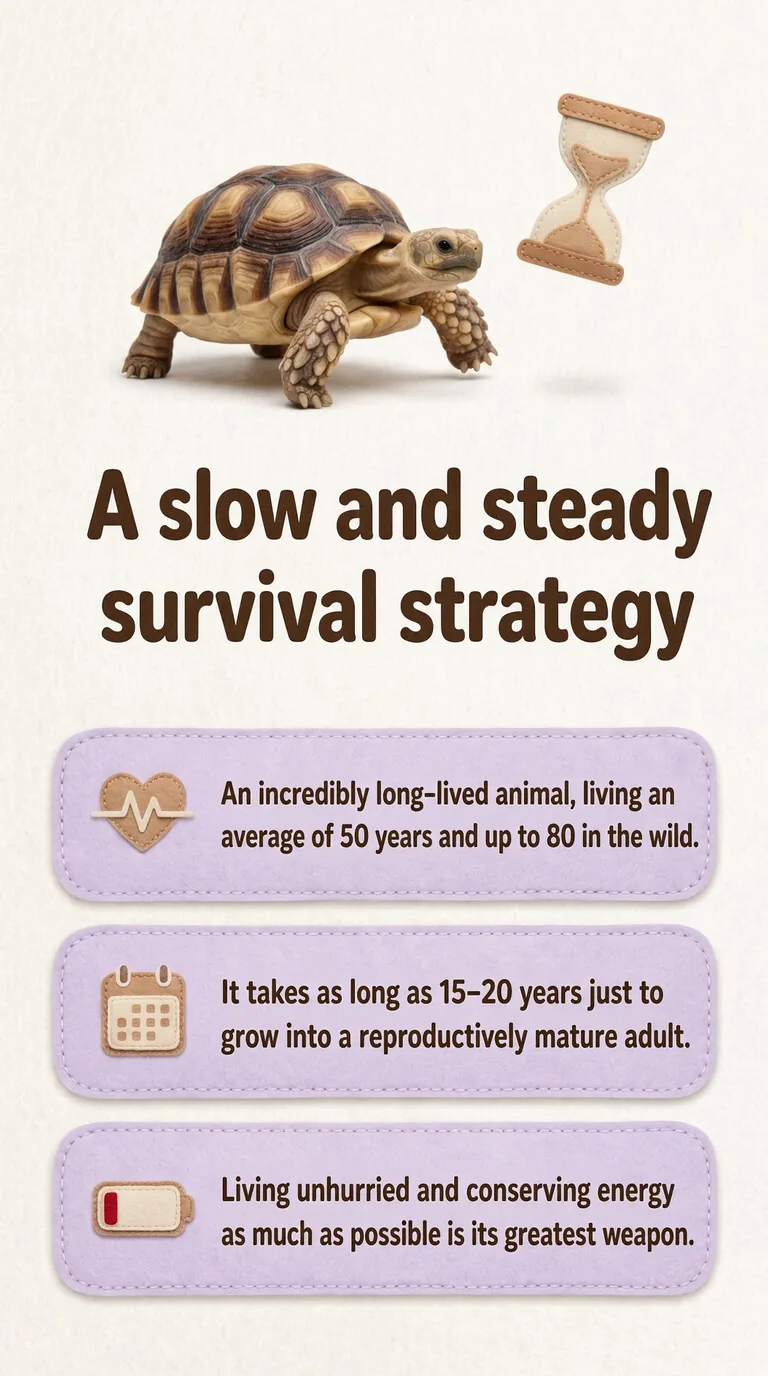
- An incredibly long-lived animal, living an average of 50 years and up to 80 in the wild.
- It takes as long as 15–20 years just to grow into a reproductively mature adult.
- Living unhurried and conserving energy as much as possible is its greatest weapon.