Komodo Dragon
Asia
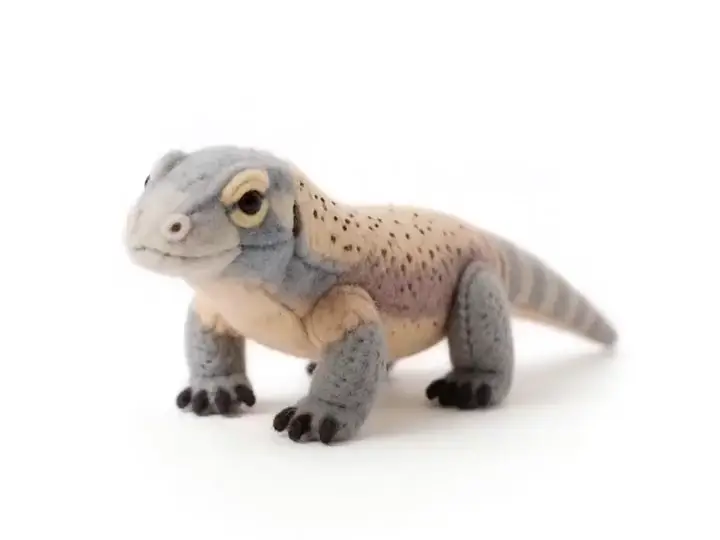
The Komodo dragon is the largest lizard in the world. It looks like a small dinosaur, and it's venomous. It smells the air with its forked tongue and can track down food from far away.
Quick facts
- Habitat
- It lives on only a few islands in Indonesia, including Komodo Island.
- Diet
- It even catches large animals like deer and wild boar.
- Size and weight
- Length 2–3m, weight 70–90kg.
- Lifespan
- About 30 years
- Conservation status
- Endangered
- Fun facts
- The venom in its saliva can bring down animals bigger than itself!
It can smell food from as far as 5km away.
Learn more
The largest lizard on Earth, armed with iron-coated teeth
The amazing secrets of the Komodo dragon
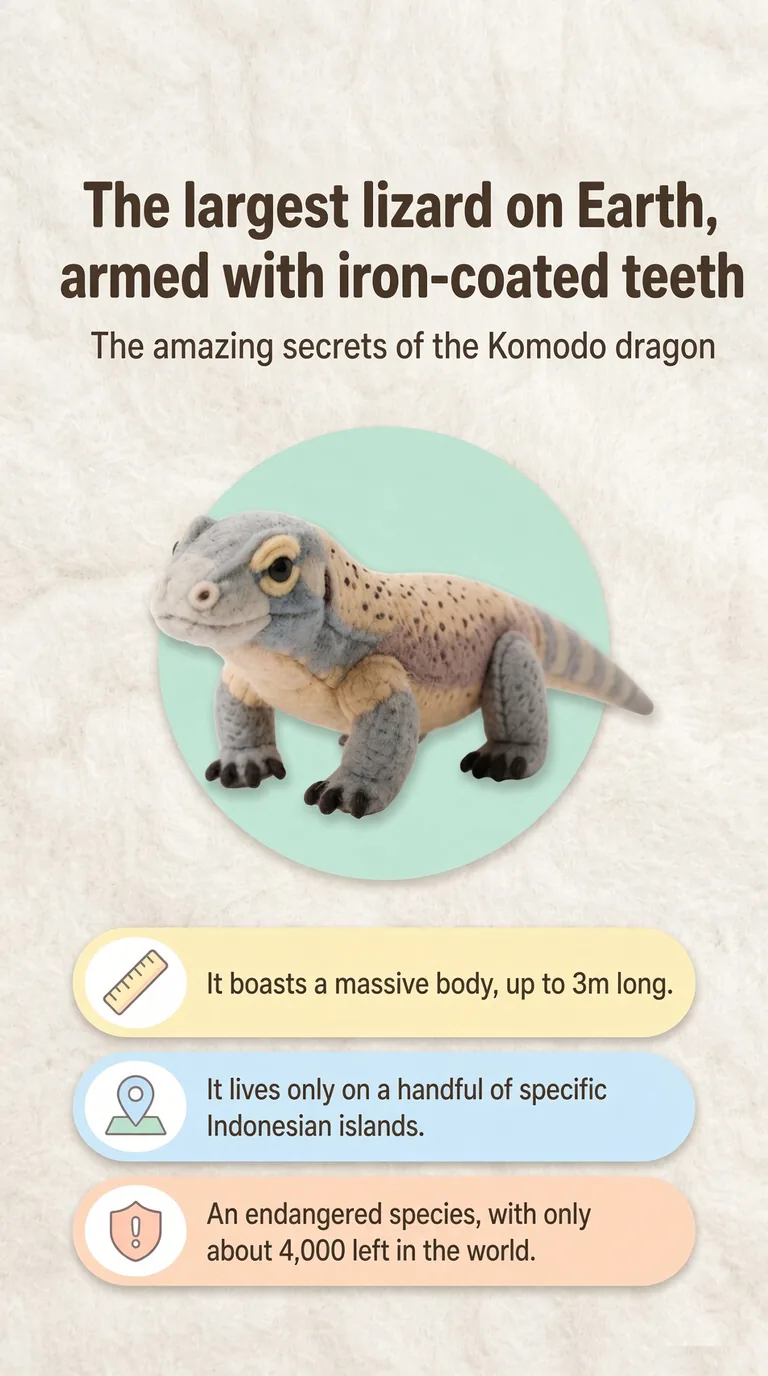
- It boasts a massive body, up to 3m long.
- It lives only on a handful of specific Indonesian islands.
- An endangered species, with only about 4,000 left in the world.
A massive build reminiscent of a dinosaur
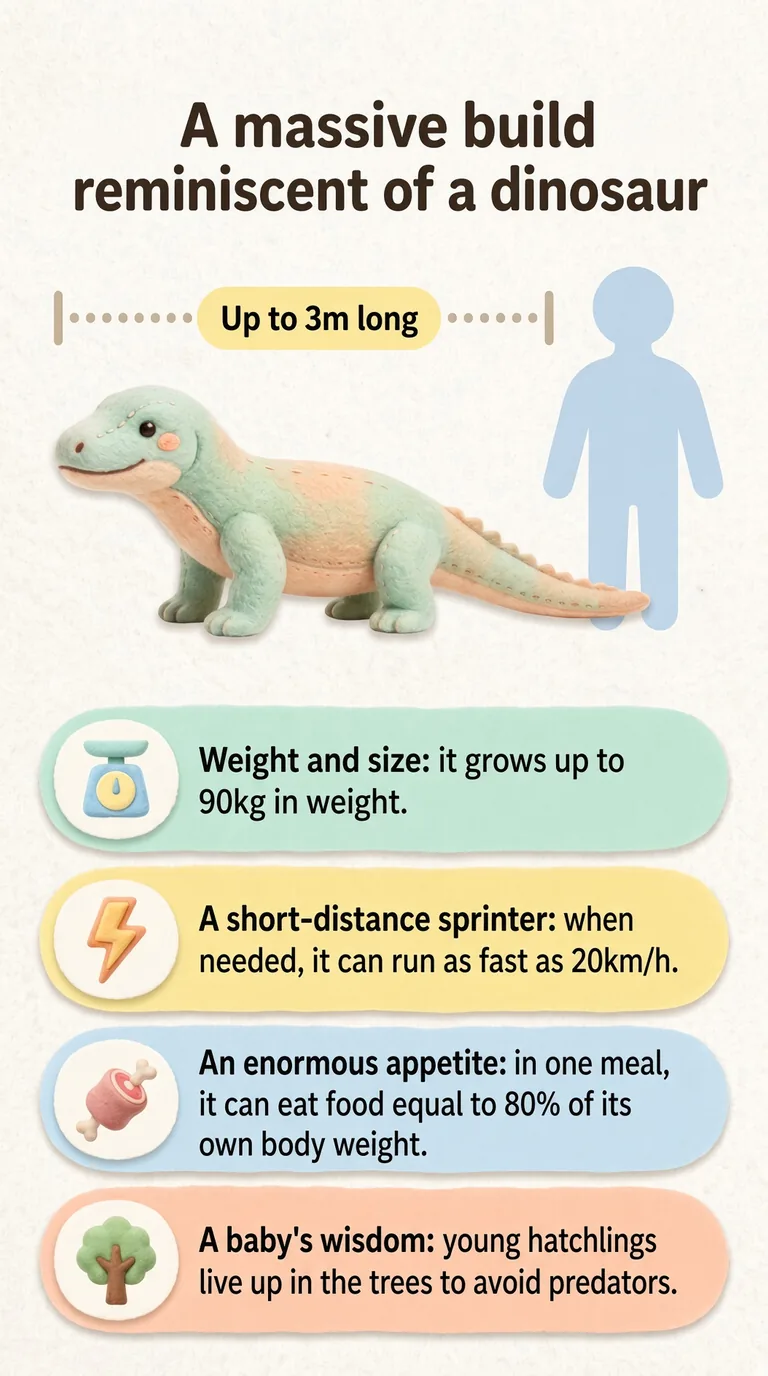
Up to 3m long
- Weight and size — it grows up to 90kg in weight.
- A short-distance sprinter — when needed, it can run as fast as 20km/h.
- An enormous appetite — in one meal, it can eat food equal to 80% of its own body weight.
- A baby's wisdom — young hatchlings live up in the trees to avoid predators.
A super sense of smell that reaches 10km away
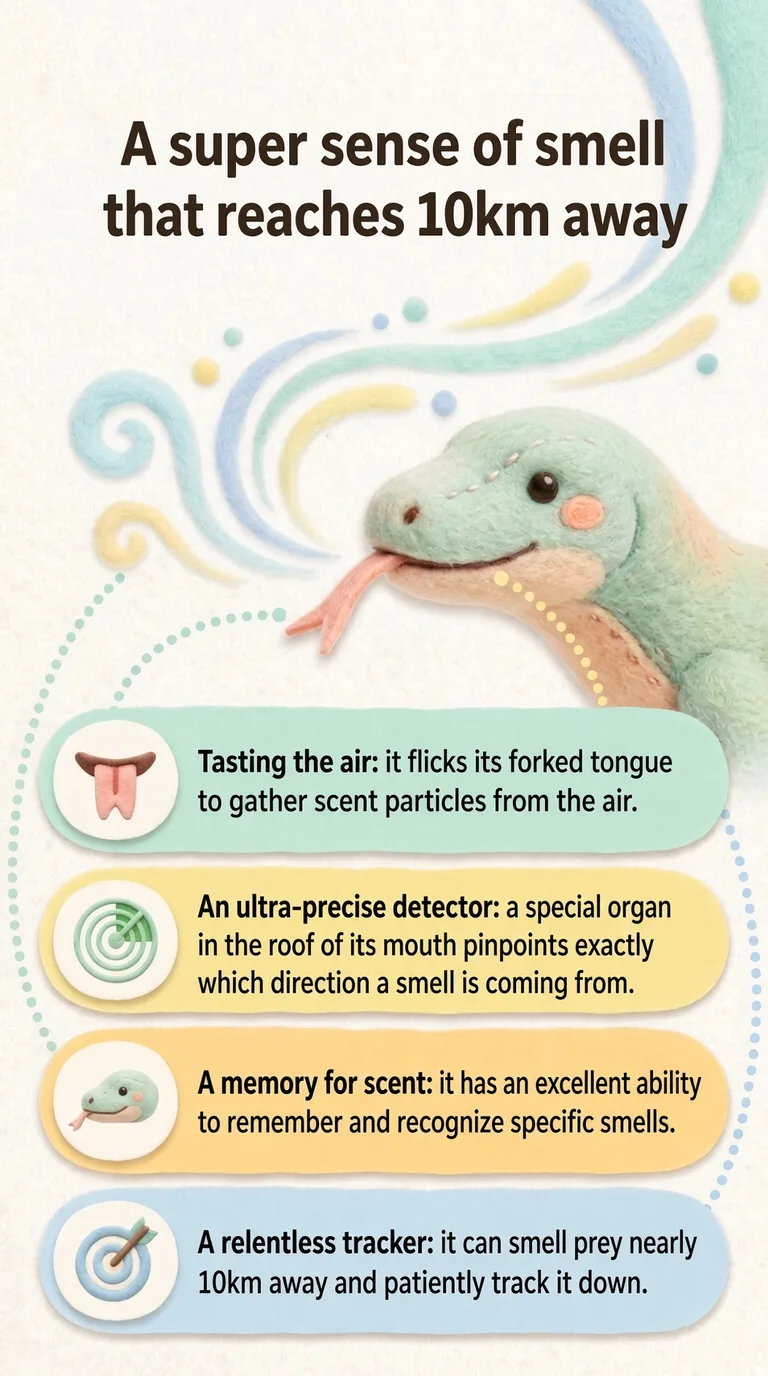
- Tasting the air — it flicks its forked tongue to gather scent particles from the air.
- An ultra-precise detector — a special organ in the roof of its mouth pinpoints exactly which direction a smell is coming from.
- A memory for scent — it has an excellent ability to remember and recognize specific smells.
- A relentless tracker — it can smell prey nearly 10km away and patiently track it down.
Serrated, iron-plated teeth
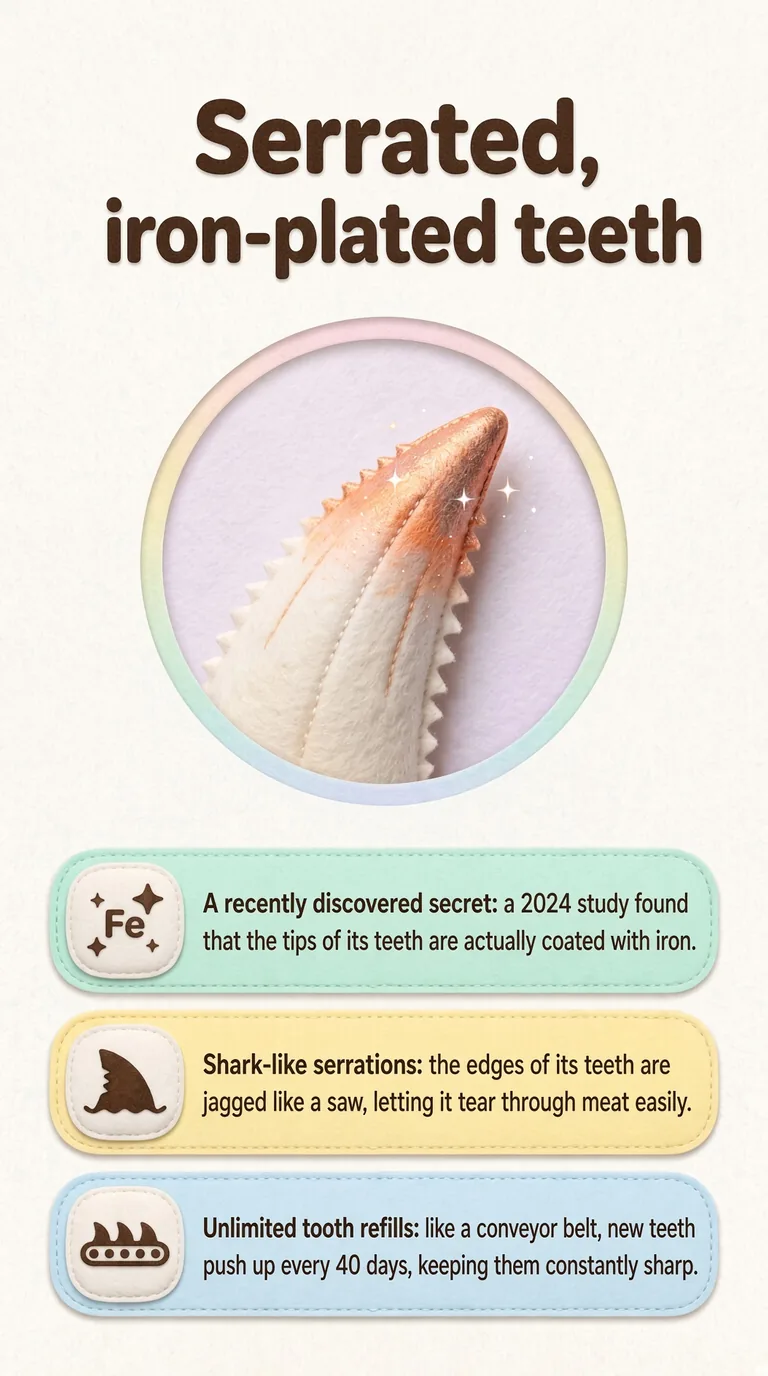
- A recently discovered secret — a 2024 study found that the tips of its teeth are actually coated with iron.
- Shark-like serrations — the edges of its teeth are jagged like a saw, letting it tear through meat easily.
- Unlimited tooth refills — like a conveyor belt, new teeth push up every 40 days, keeping them constantly sharp.
Not bacteria — deadly venom!
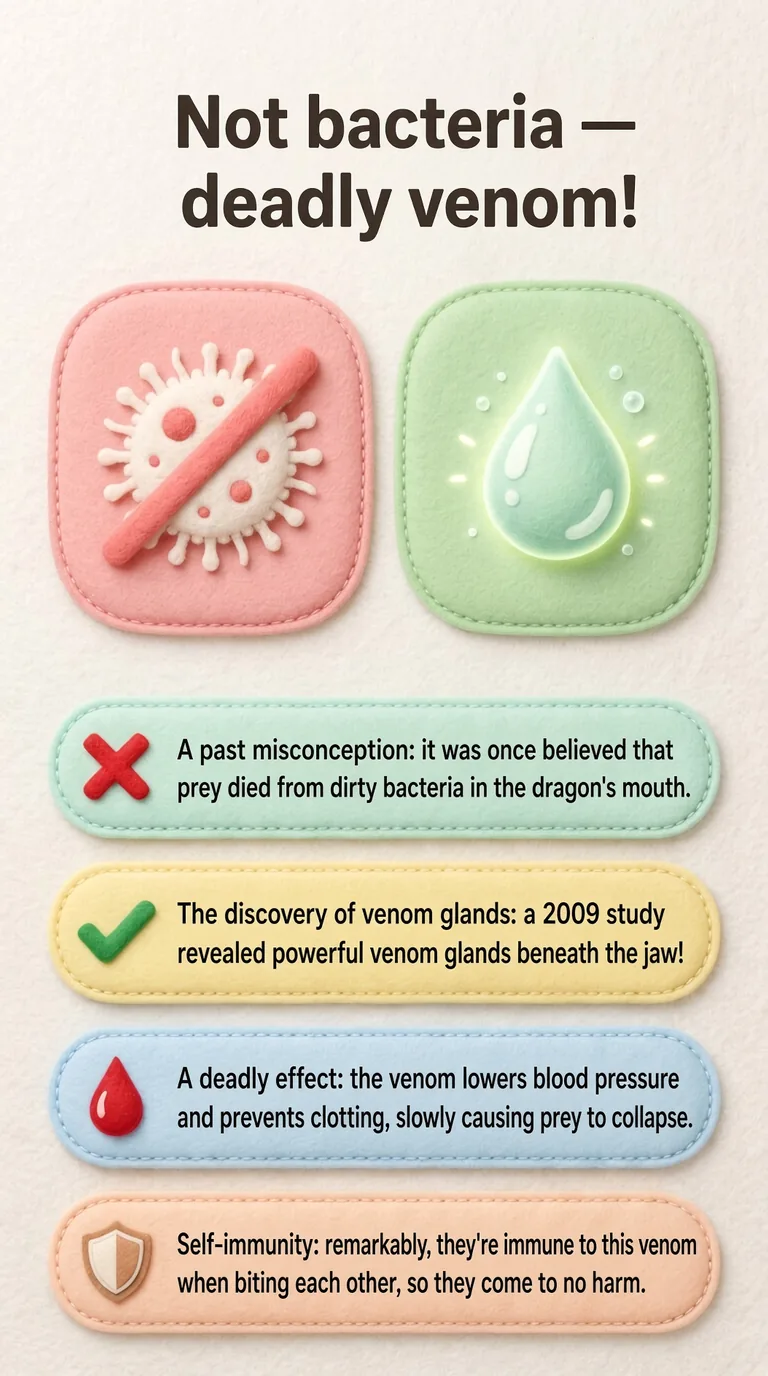
- A past misconception — it was once believed that prey died from dirty bacteria in the dragon's mouth.
- The discovery of venom glands — a 2009 study revealed powerful venom glands beneath the jaw!
- A deadly effect — the venom lowers blood pressure and prevents clotting, slowly causing prey to collapse.
- Self-immunity — remarkably, they're immune to this venom when biting each other, so they come to no harm.
The ability to reproduce without mating
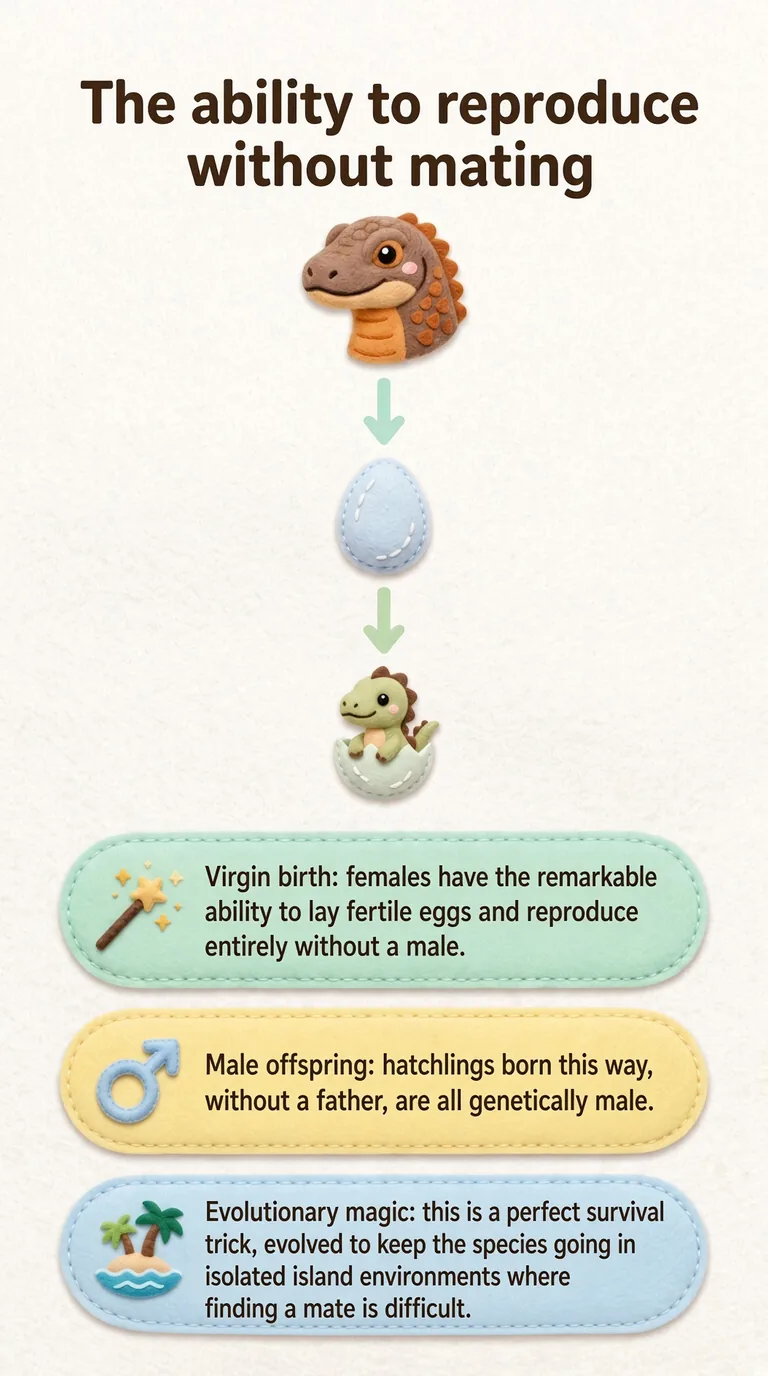
- Virgin birth — females have the remarkable ability to lay fertile eggs and reproduce entirely without a male.
- Male offspring — hatchlings born this way, without a father, are all genetically male.
- Evolutionary magic — this is a perfect survival trick, evolved to keep the species going in isolated island environments where finding a mate is difficult.
Komodo dragon vs. typical monitor lizard
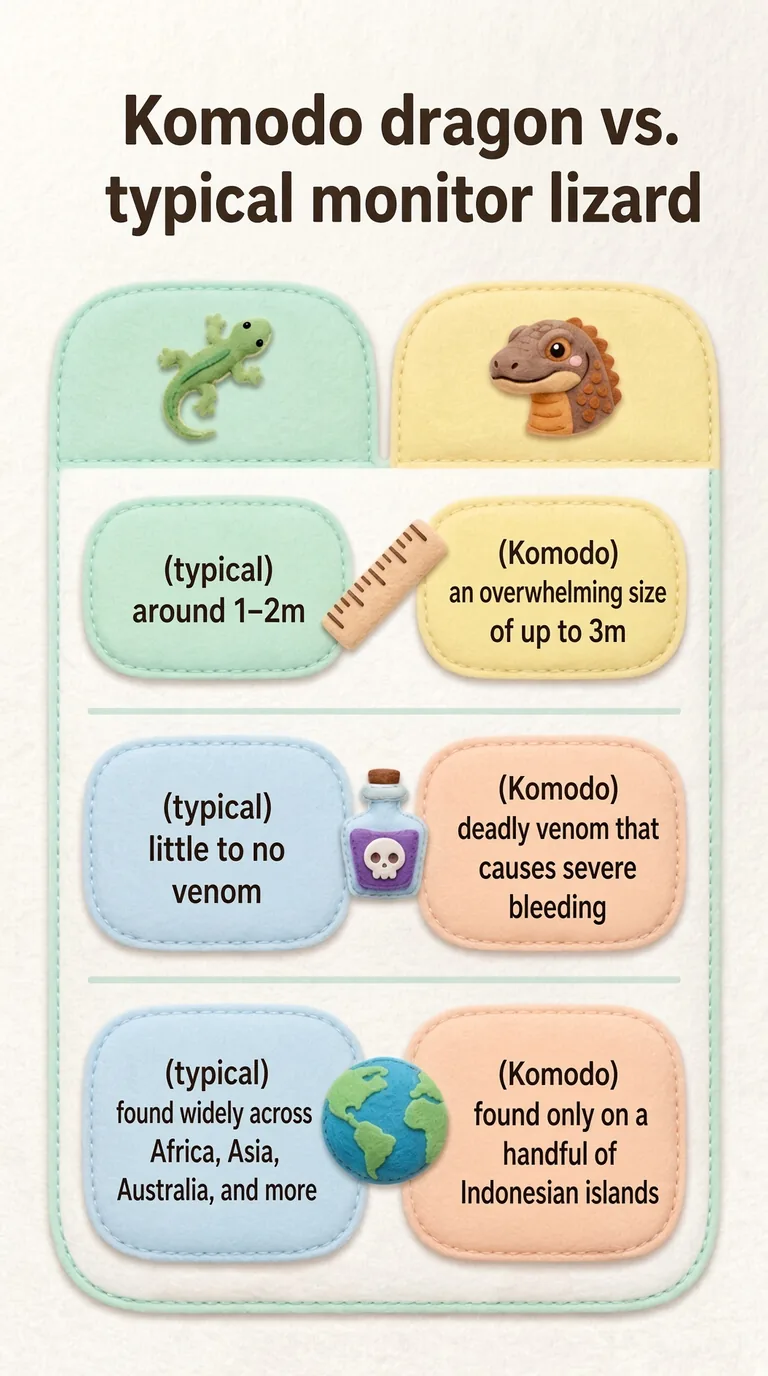
- Komodo dragon
- Size — an overwhelming size of up to 3m
- Venom — deadly venom that causes severe bleeding
- Habitat — found only on a handful of Indonesian islands
- Typical monitor lizard
- Size — around 1–2m
- Venom — little to no venom
- Habitat — found widely across Africa, Asia, Australia, and more