Peacock
Asia
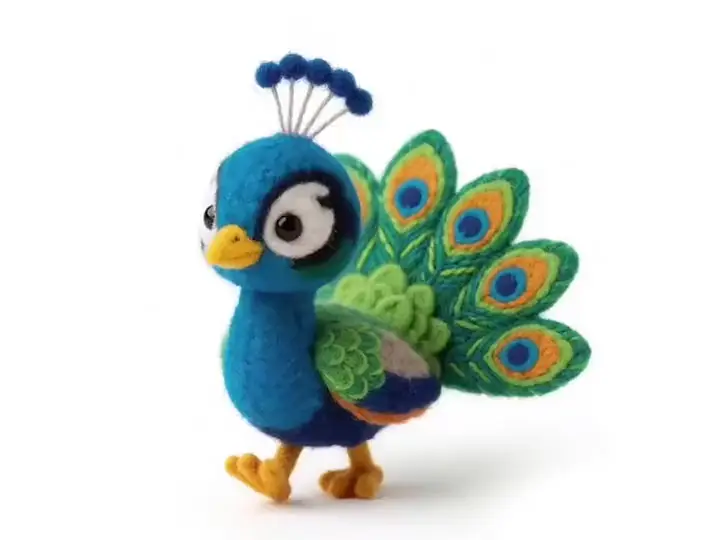
The peacock is a beautiful bird famous for its dazzling tail feathers. The male spreads his feathers like a fan to show off to females. The eye-shaped spots on the feathers shimmer and change color in the light.
Quick facts
- Habitat
- It lives in the forests and farmlands of India and Southeast Asia.
- Diet
- It eats seeds, insects, and small reptiles.
- Size and weight
- Body 1m long, over 2m with the tail spread.
- Lifespan
- 15–20 years
- Conservation status
- Least Concern
- Fun facts
- Its dazzling tail has more than 200 feathers!
It's big, but it can still fly short distances.
Learn more
The forest's fashionista, spreading a dazzling fan
The real story of the peacock, hidden behind its brilliant feathers
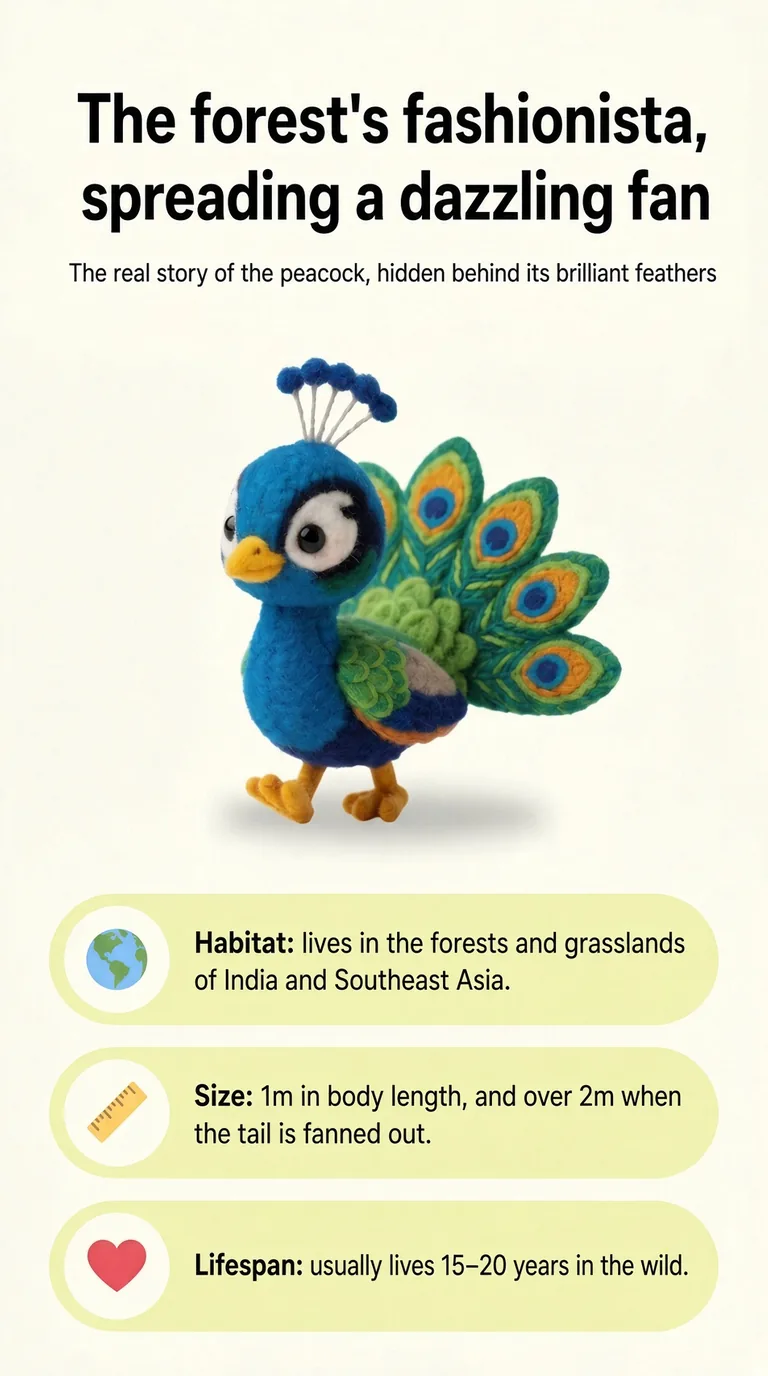
- Habitat — lives in the forests and grasslands of India and Southeast Asia.
- Size — 1m in body length, and over 2m when the tail is fanned out.
- Lifespan — usually lives 15–20 years in the wild.
Its "tail" isn't a real tail?
The hidden truth behind the famous colorful tail
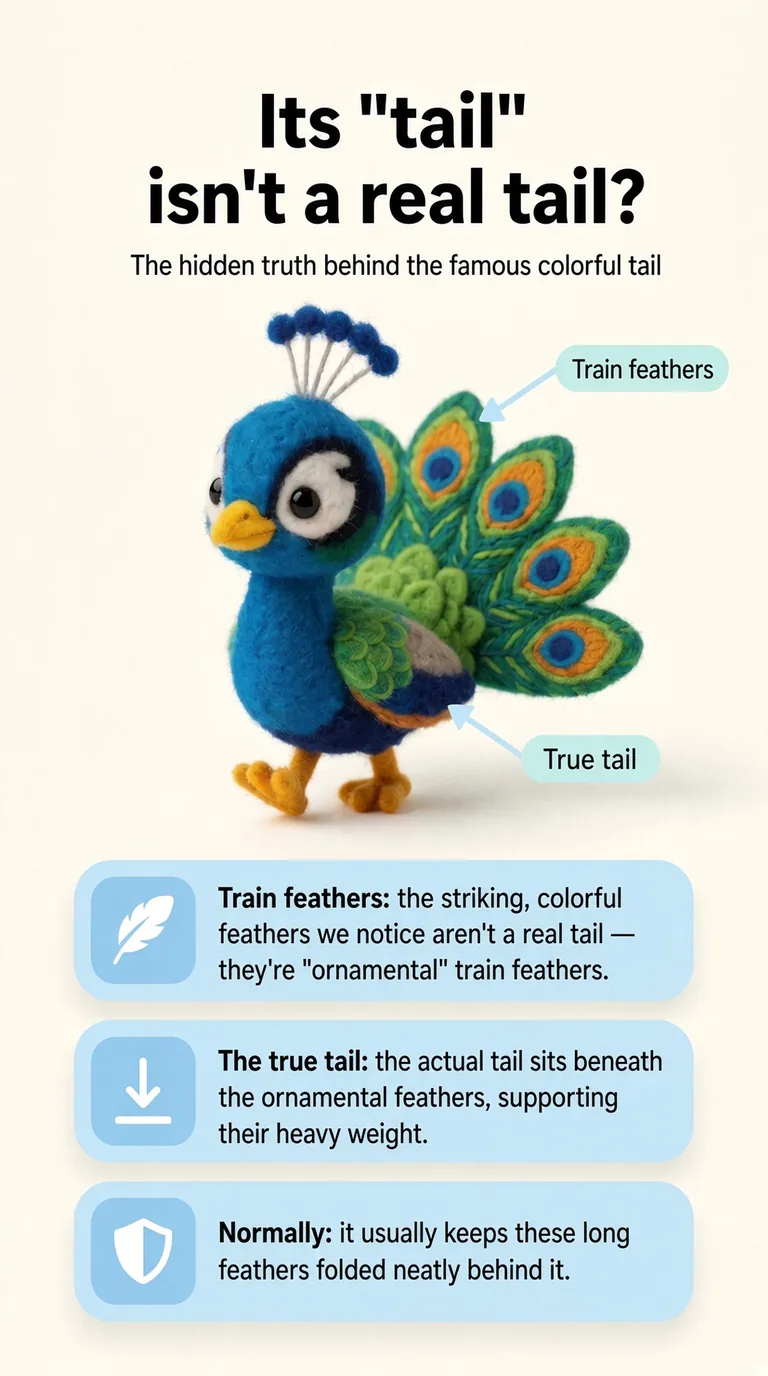
Train feathers vs. the true tail
- Train feathers — the striking, colorful feathers we notice aren't a real tail — they're "ornamental" train feathers.
- The true tail — the actual tail sits beneath the ornamental feathers, supporting their heavy weight.
- Normally — it usually keeps these long feathers folded neatly behind it.
Hundreds of eyes sparkling
The magical dance that captures a female's heart
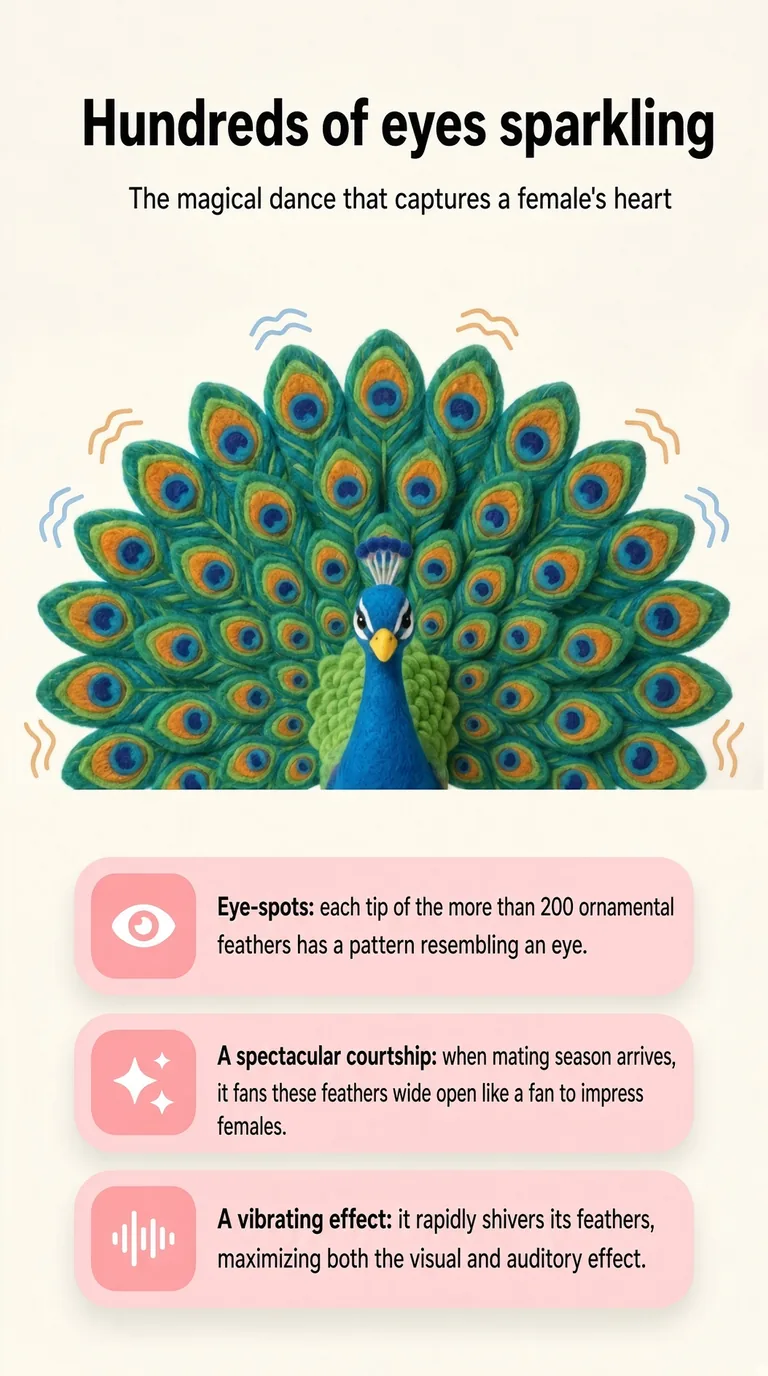
- Eye-spots — each tip of the more than 200 ornamental feathers has a pattern resembling an eye.
- A spectacular courtship — when mating season arrives, it fans these feathers wide open like a fan to impress females.
- A vibrating effect — it rapidly shivers its feathers, maximizing both the visual and auditory effect.
The secret of self-glowing feathers
Colors created by light, not pigment
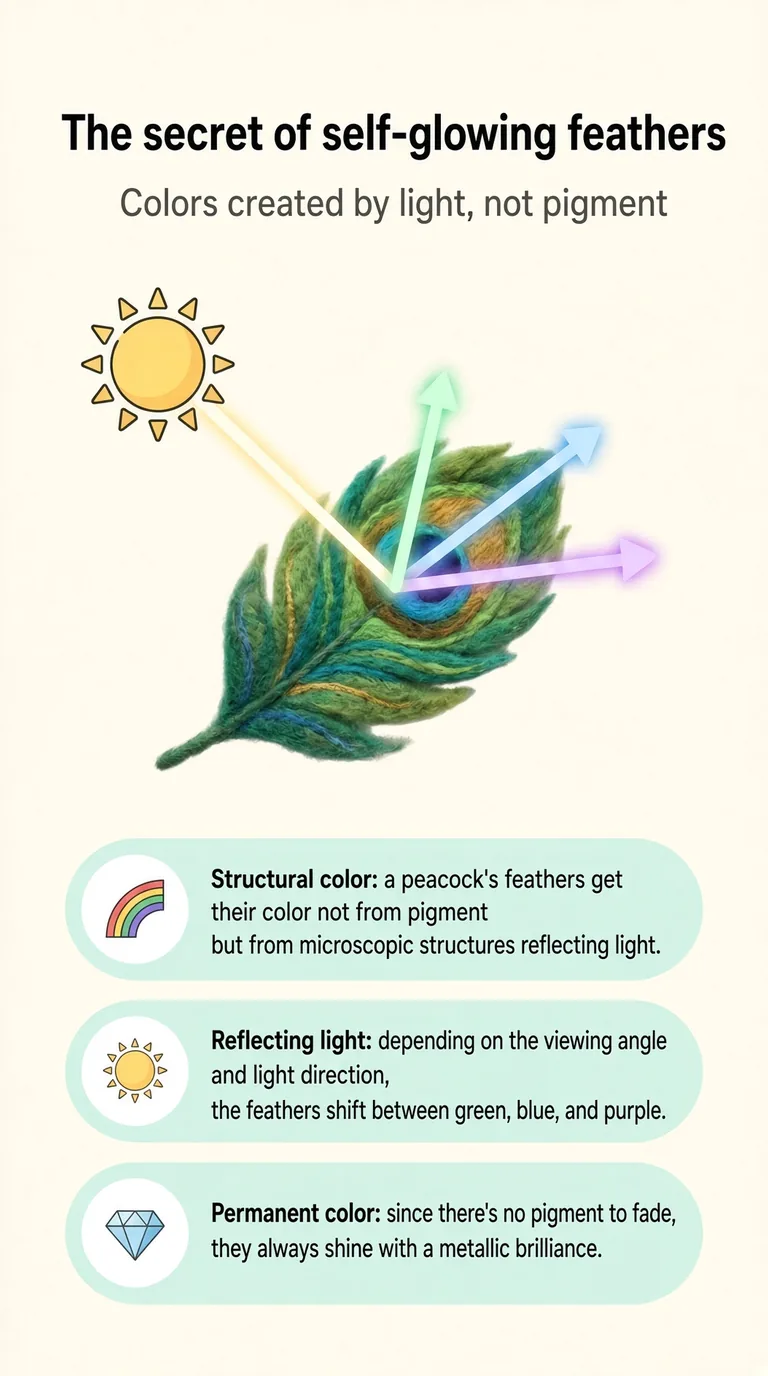
- Structural color — a peacock's feathers get their color not from pigment but from microscopic structures reflecting light.
- Reflecting light — depending on the viewing angle and light direction, the feathers shift between green, blue, and purple.
- Permanent color — since there's no pigment to fade, they always shine with a metallic brilliance.
Why aren't females as colorful?
Each sex chose a different survival strategy — flashiness or safety
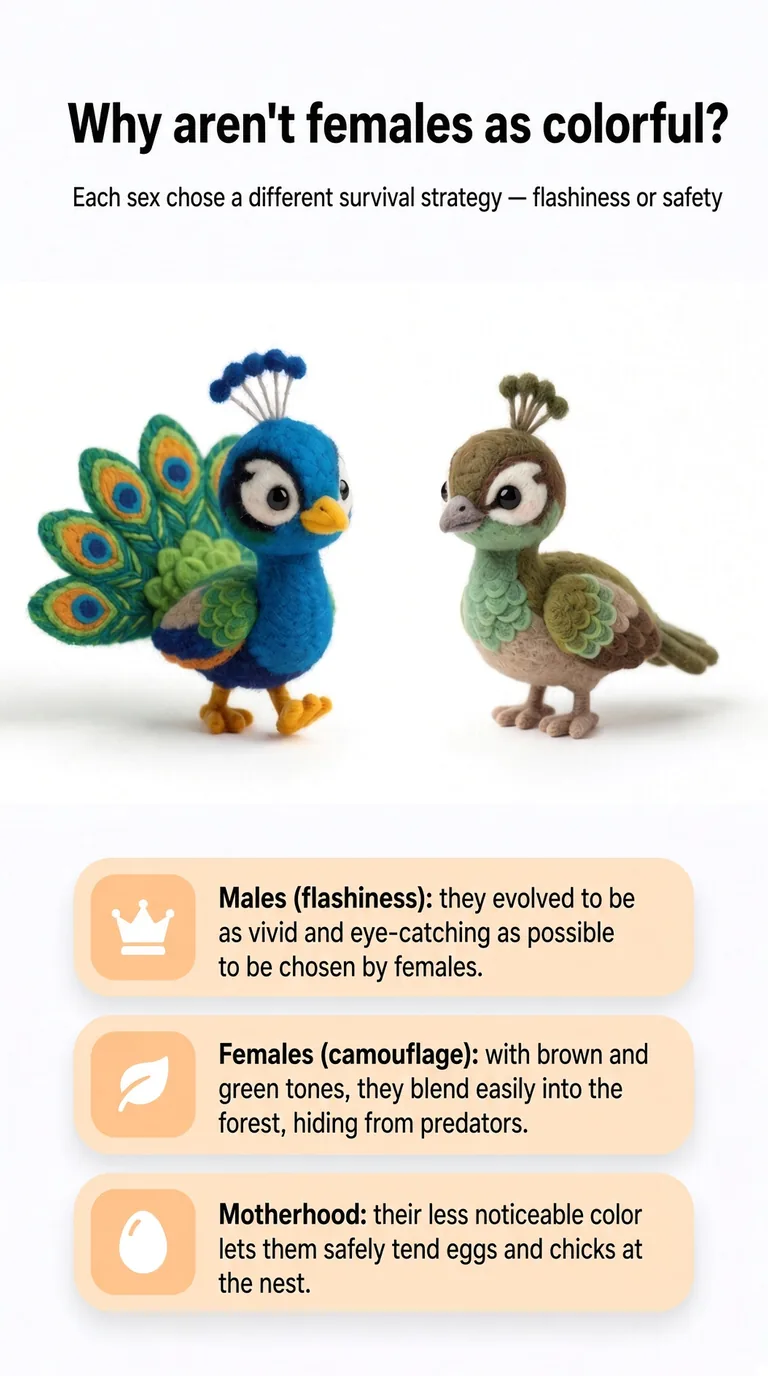
- Males (flashiness) — they evolved to be as vivid and eye-catching as possible to be chosen by females.
- Females (camouflage) — with brown and green tones, they blend easily into the forest, hiding from predators.
- Motherhood — their less noticeable color lets them safely tend eggs and chicks at the nest.
A surprising twist behind a beautiful look
The peacock hunts snakes and sleeps up in the trees
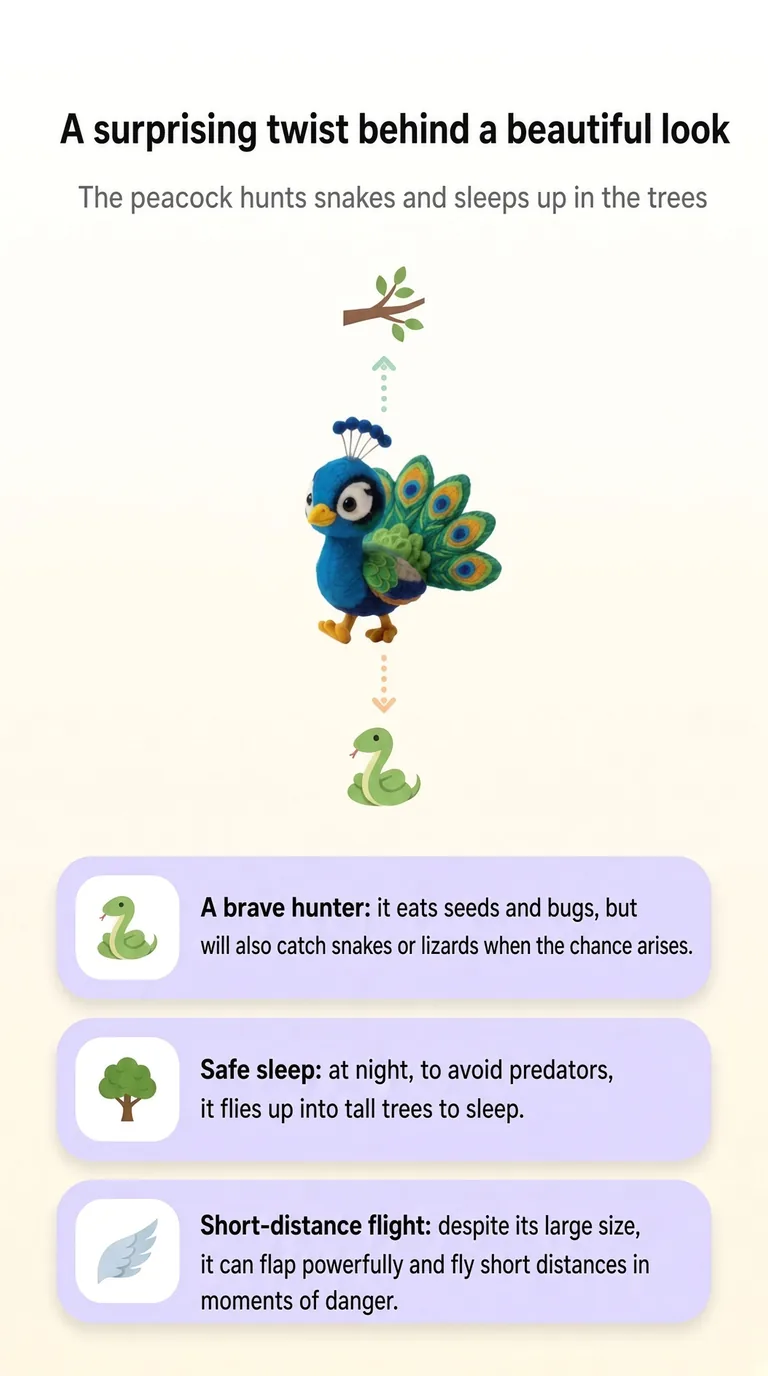
- A brave hunter — it eats seeds and bugs, but will also catch snakes or lizards when the chance arises.
- Safe sleep — at night, to avoid predators, it flies up into tall trees to sleep.
- Short-distance flight — despite its large size, it can flap powerfully and fly short distances in moments of danger.
Nature's rule — the flashier, the more it survives
Darwin's theory of "sexual selection"
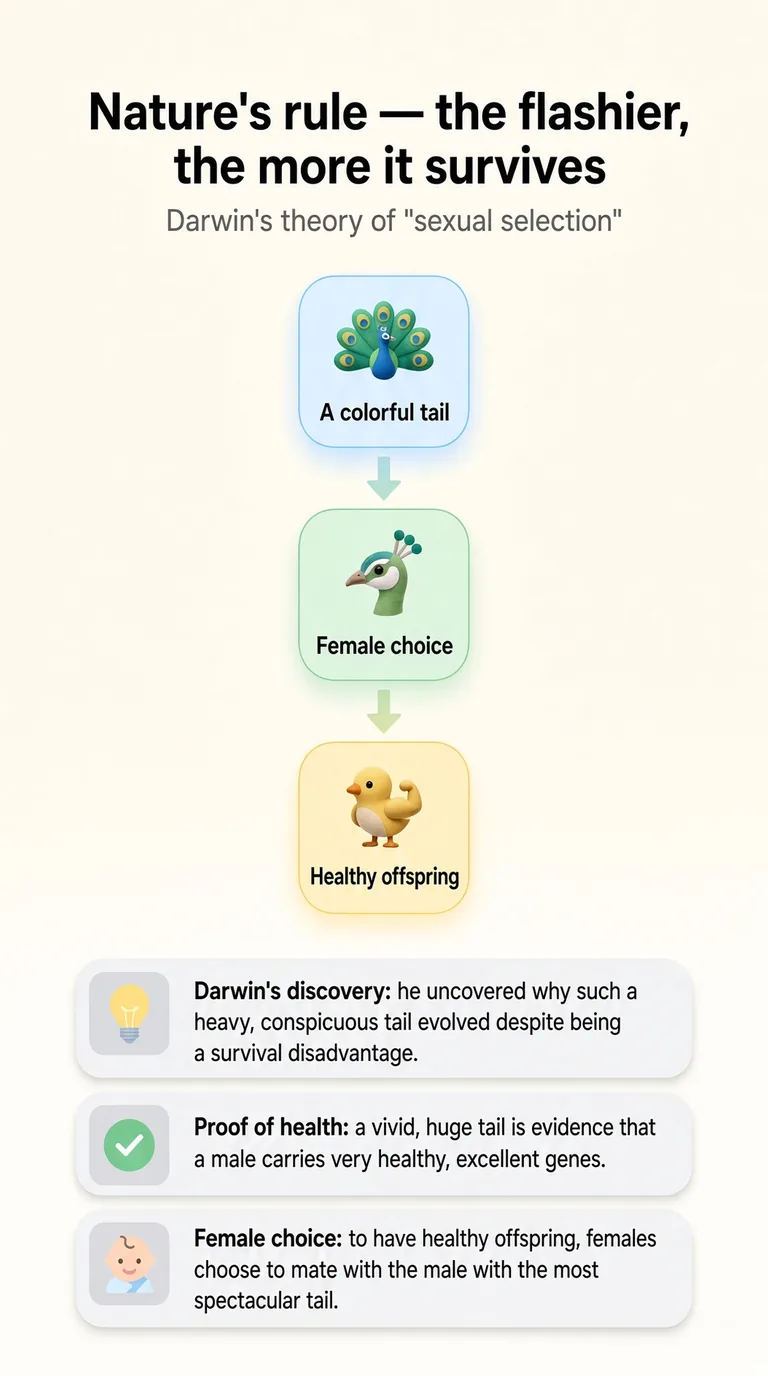
- A colorful tail
- Female choice
- Healthy offspring
- Darwin's discovery — he uncovered why such a heavy, conspicuous tail evolved despite being a survival disadvantage.
- Proof of health — a vivid, huge tail is evidence that a male carries very healthy, excellent genes.
- Female choice — to have healthy offspring, females choose to mate with the male with the most spectacular tail.