Giant Panda
Asia
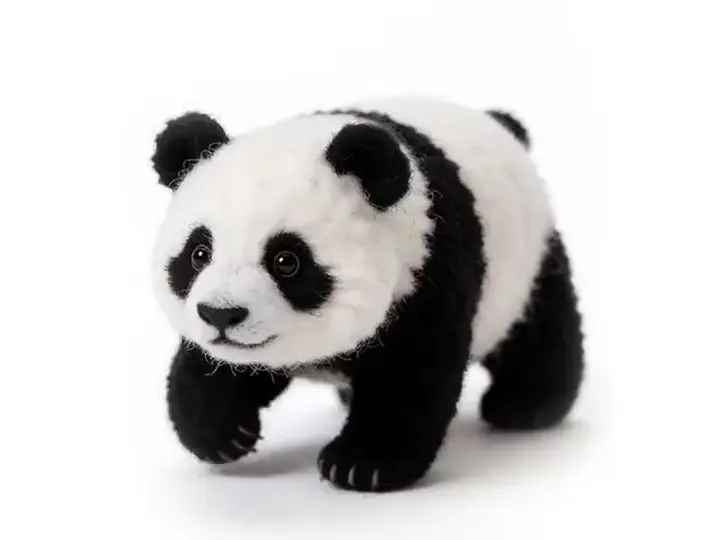
The giant panda is a lovable bear with black-and-white fur. It has a very unusual diet made up almost entirely of bamboo. Even though it's a bear, it's gentle and easygoing, which is why so many people love it.
Quick facts
- Habitat
- It lives in bamboo forests high in the mountains of China.
- Diet
- It eats almost nothing but bamboo, 12–38kg a day!
- Size and weight
- Height 1.2–1.9m, weight 70–150kg.
- Lifespan
- About 20 years in the wild
- Conservation status
- Vulnerable
- Fun facts
- Even though it's a bear, a panda spends 12 hours a day eating bamboo!
A "false thumb" on its front paw lets it grip bamboo like a hand.
Learn more
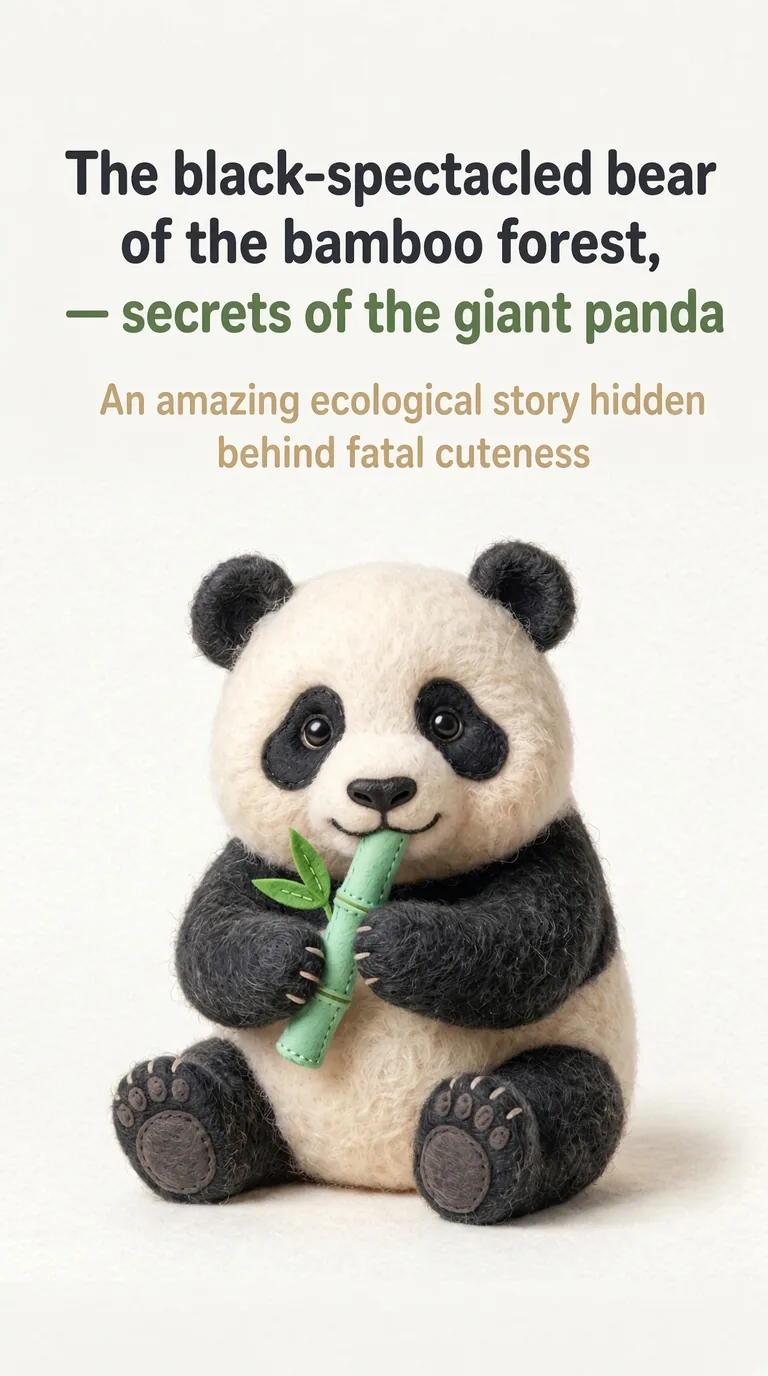
The black-spectacled bear of the bamboo forest — secrets of the giant panda
An amazing ecological story hidden behind fatal cuteness
Actually, I'm a real 'bear'
A true predator (?) belonging to the bear family, order Carnivora
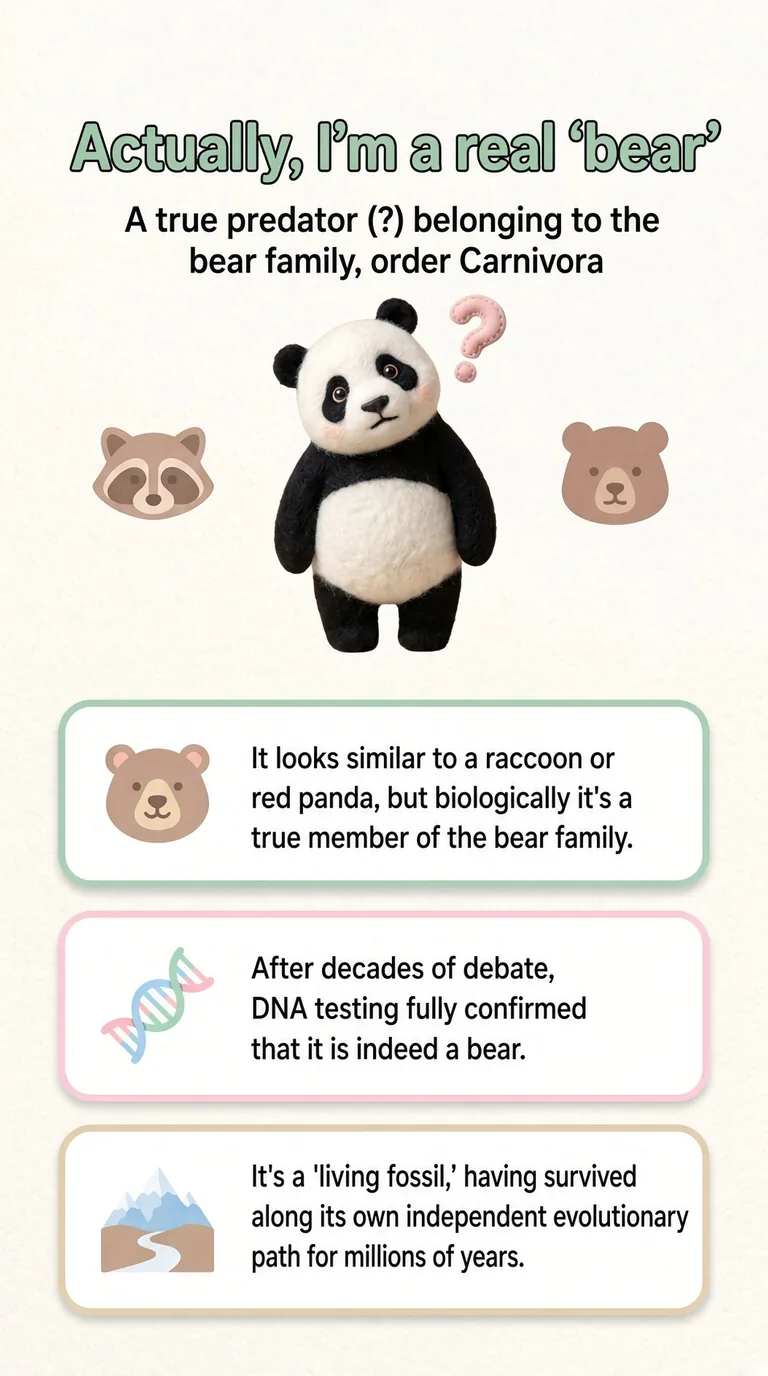
- It looks similar to a raccoon or red panda, but biologically it's a true member of the bear family.
- After decades of debate, DNA testing fully confirmed that it is indeed a bear.
- It's a 'living fossil,' having survived along its own independent evolutionary path for millions of years.
The real reason for its black sunglasses
Protective coloring for survival, not just cuteness
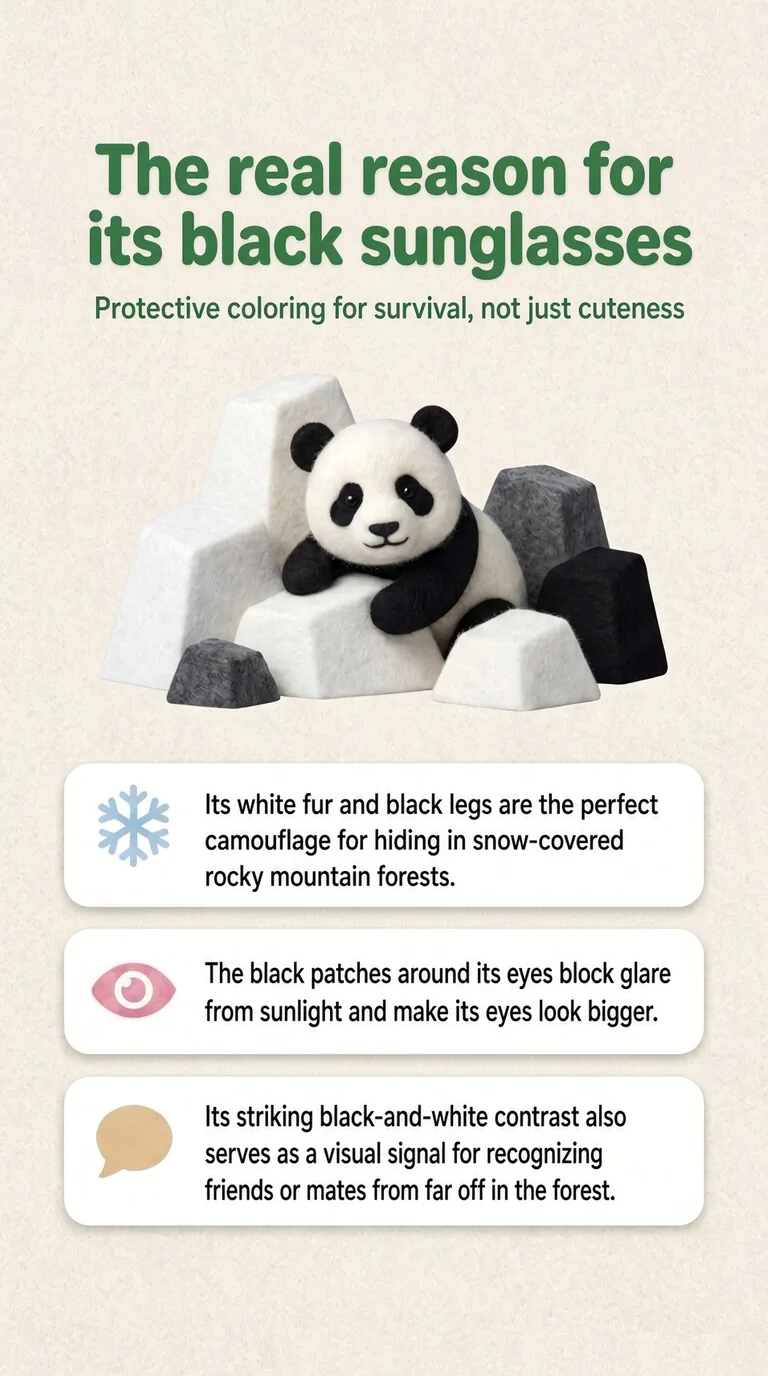
- Its white fur and black legs are the perfect camouflage for hiding in snow-covered rocky mountain forests.
- The black patches around its eyes block glare from sunlight and make its eyes look bigger.
- Its striking black-and-white contrast also serves as a visual signal for recognizing friends or mates from far off in the forest.
A 'sixth finger' made for bamboo
A very special front paw shaped by evolution
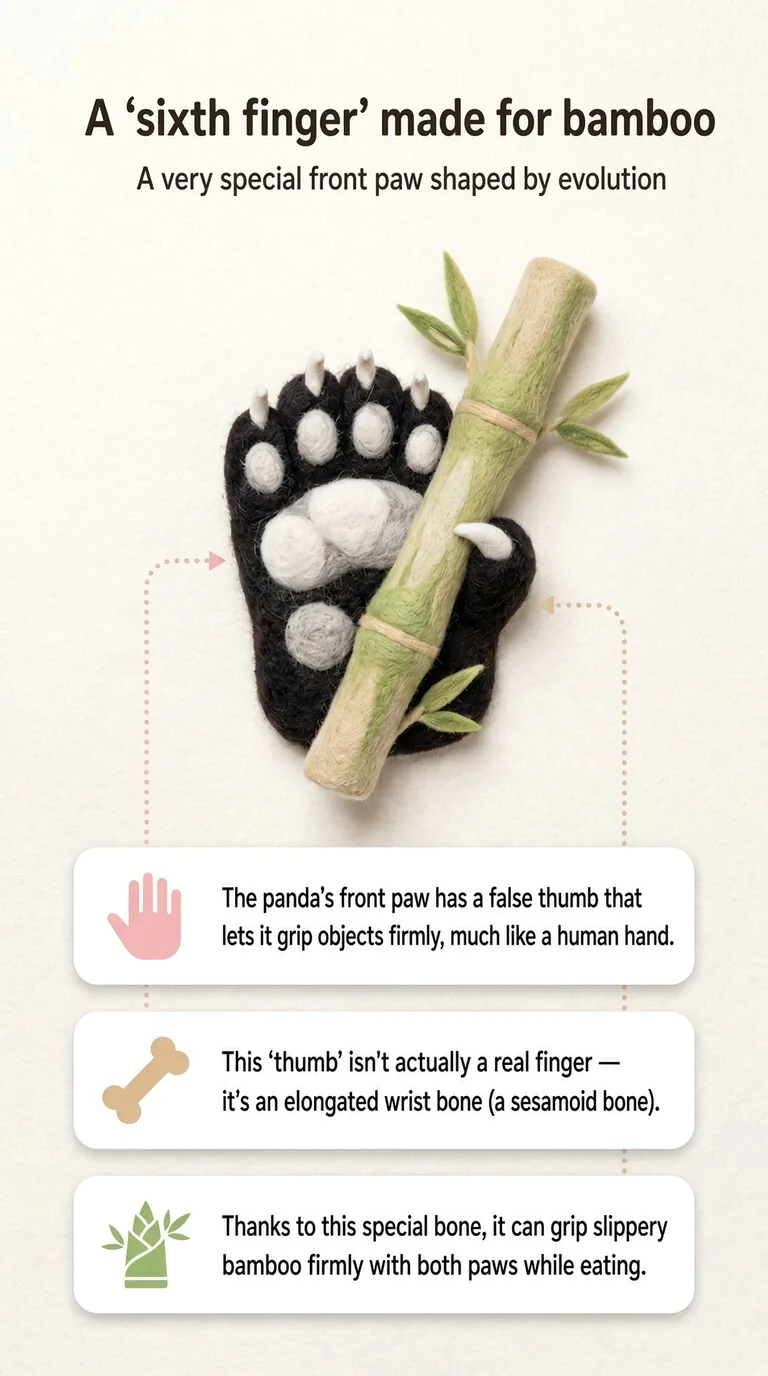
- The panda's front paw has a false thumb that lets it grip objects firmly, much like a human hand.
- This 'thumb' isn't actually a real finger — it's an elongated wrist bone (a sesamoid bone).
- Thanks to this special bone, it can grip slippery bamboo firmly with both paws while eating.
Eating plants with a gut built for meat
A carnivore living as an herbivore
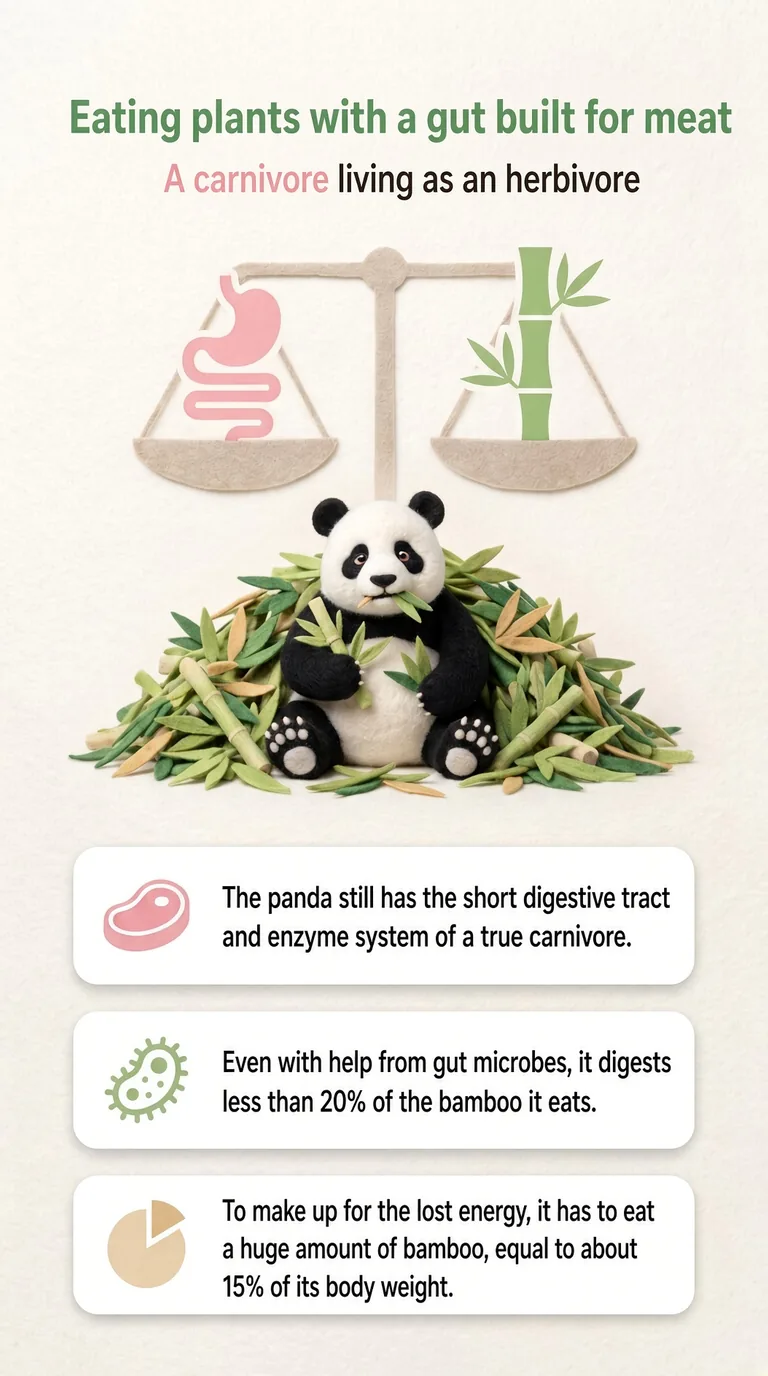
- The panda still has the short digestive tract and enzyme system of a true carnivore.
- Even with help from gut microbes, it digests less than 20% of the bamboo it eats.
- To make up for the lost energy, it has to eat a huge amount of bamboo, equal to about 15% of its body weight.
Why the panda gave up meat
A unique diet shaped by its genes
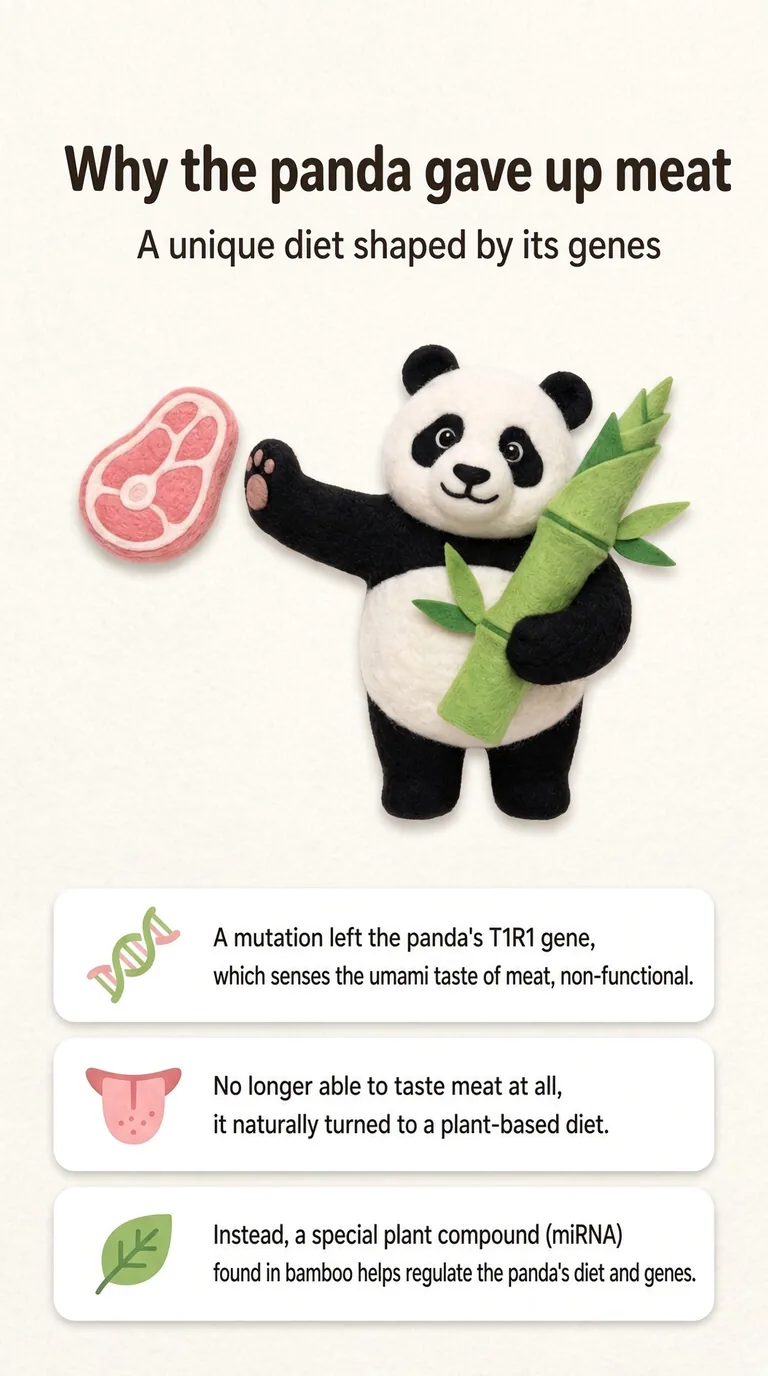
- A mutation left the panda's T1R1 gene, which senses the umami taste of meat, non-functional.
- No longer able to taste meat at all, it naturally turned to a plant-based diet.
- Instead, a special plant compound (miRNA) found in bamboo helps regulate the panda's diet and genes.
A picky gourmet's seasonal menu
The parts it eats change with the seasons
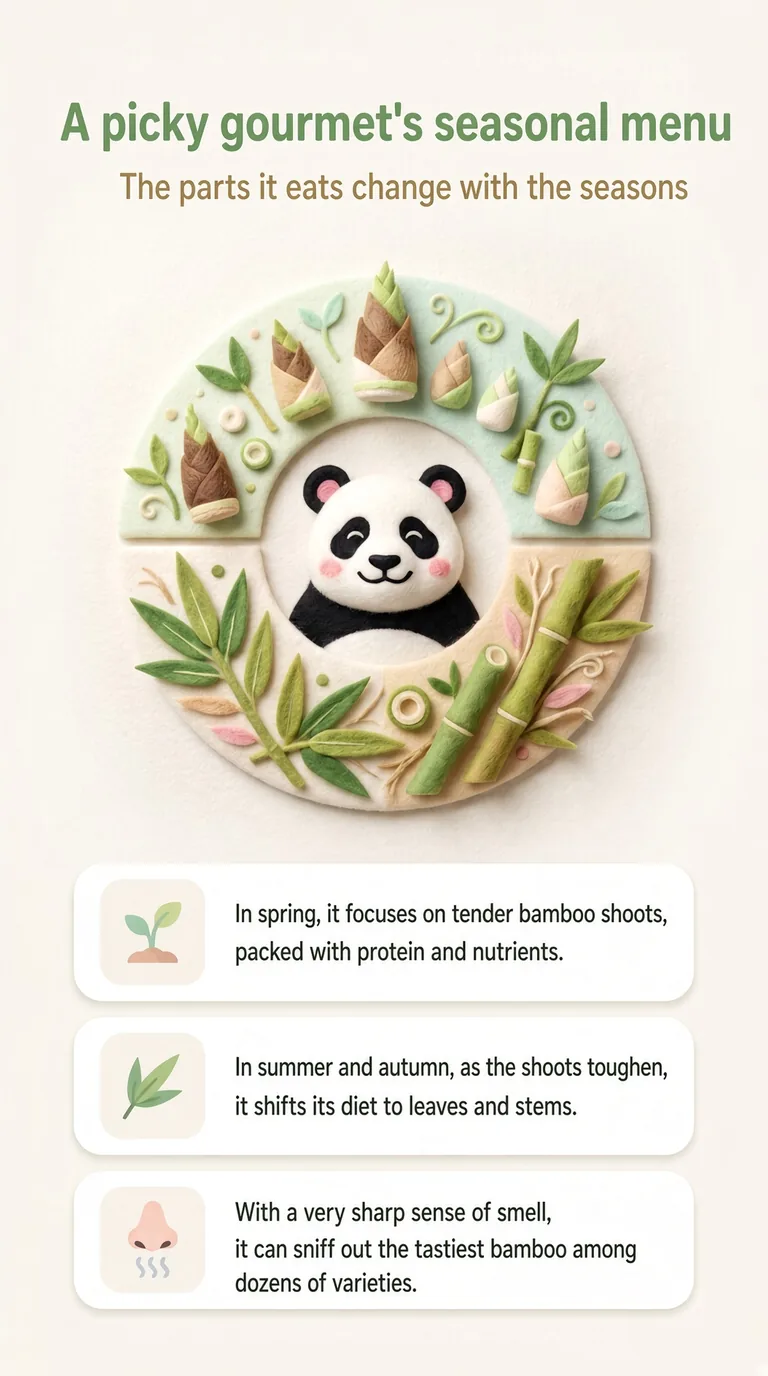
- In spring, it focuses on tender bamboo shoots, packed with protein and nutrients.
- In summer and autumn, as the shoots toughen, it shifts its diet to leaves and stems.
- With a very sharp sense of smell, it can sniff out the tastiest bamboo among dozens of varieties.
A peaceful day of eating, sleeping, and pooping
An optimal lifestyle for conserving energy
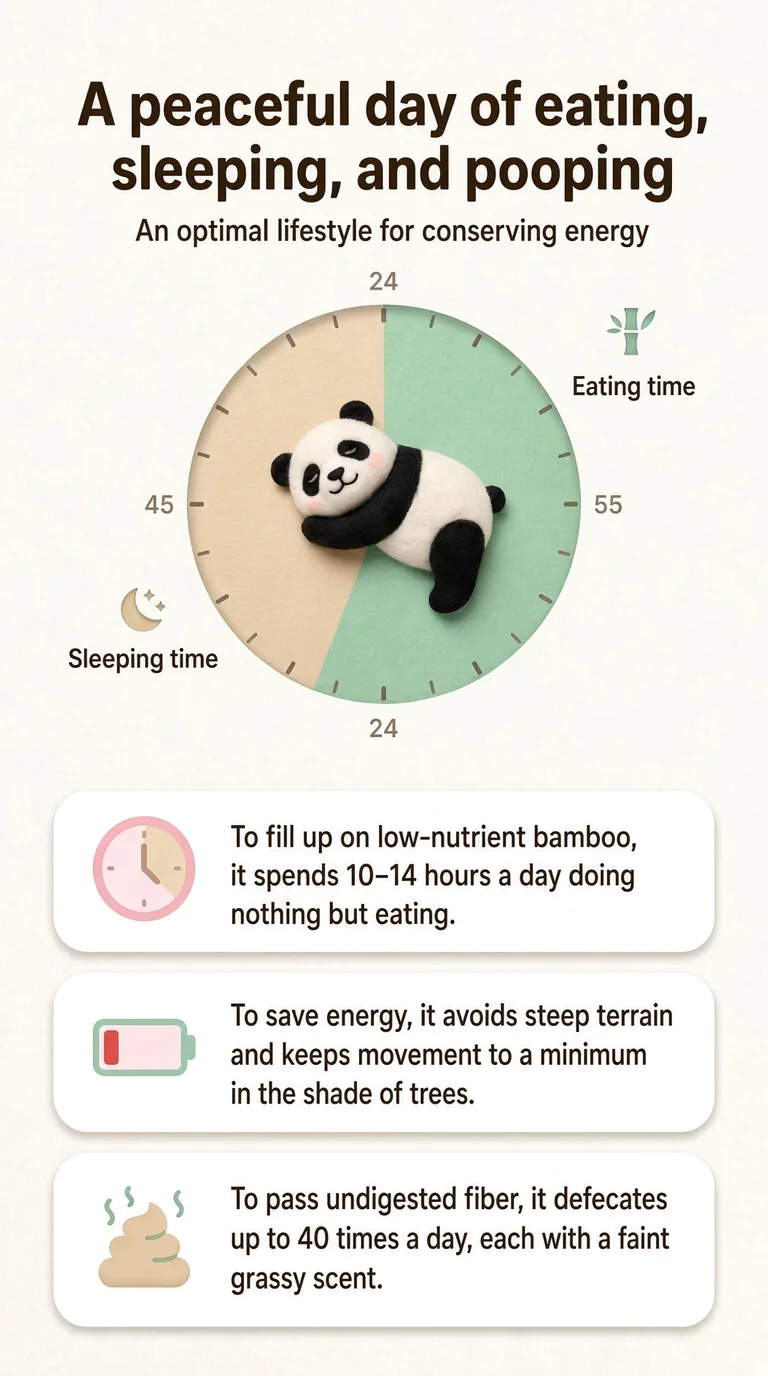
- To fill up on low-nutrient bamboo, it spends 10–14 hours a day doing nothing but eating.
- To save energy, it avoids steep terrain and keeps movement to a minimum in the shade of trees.
- To pass undigested fiber, it defecates up to 40 times a day, each with a faint grassy scent.
Strictly a solitary life
An independent, sensitive recluse of the forest
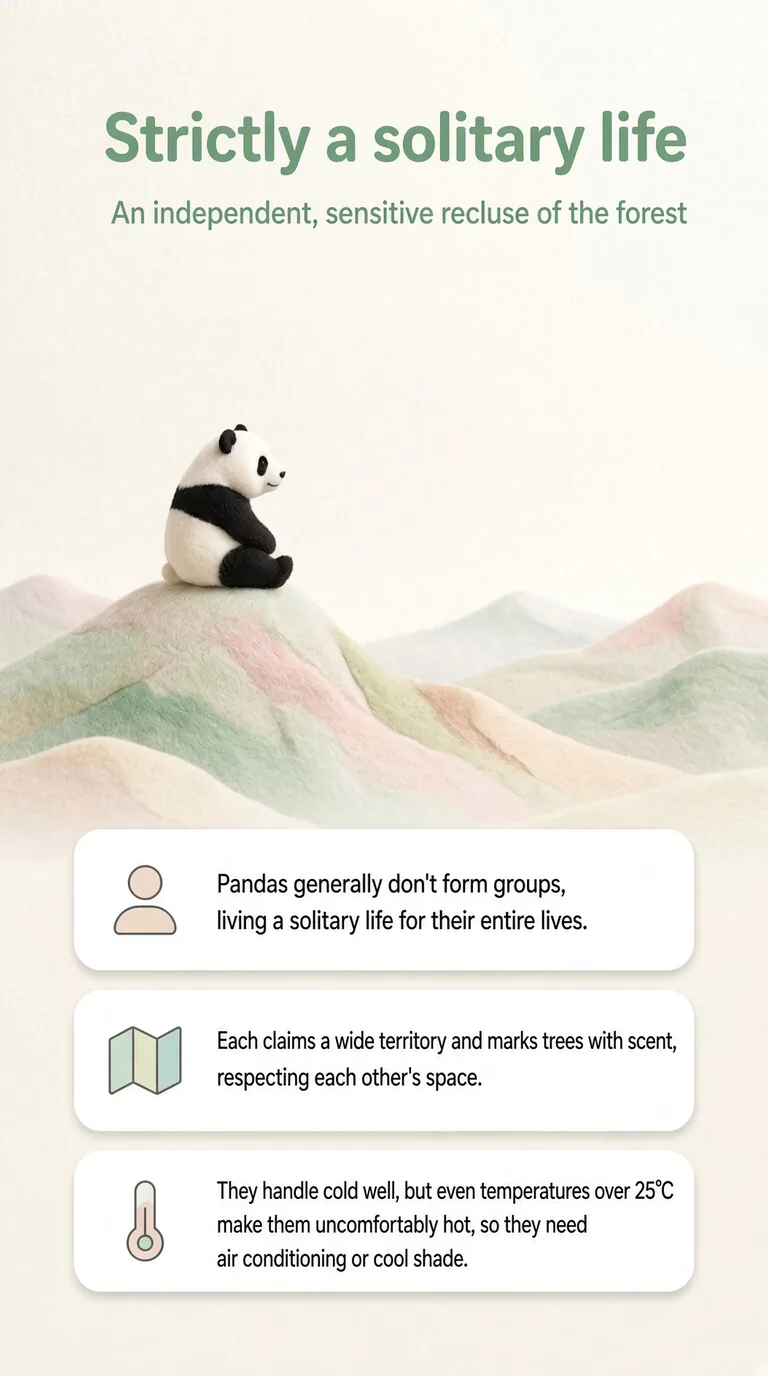
- Pandas generally don't form groups, living a solitary life for their entire lives.
- Each claims a wide territory and marks trees with scent, respecting each other's space.
- They handle cold well, but even temperatures over 25°C make them uncomfortably hot, so they need air conditioning or cool shade.
Why seeing a baby panda is so rare
A brief window of just 3 days a year
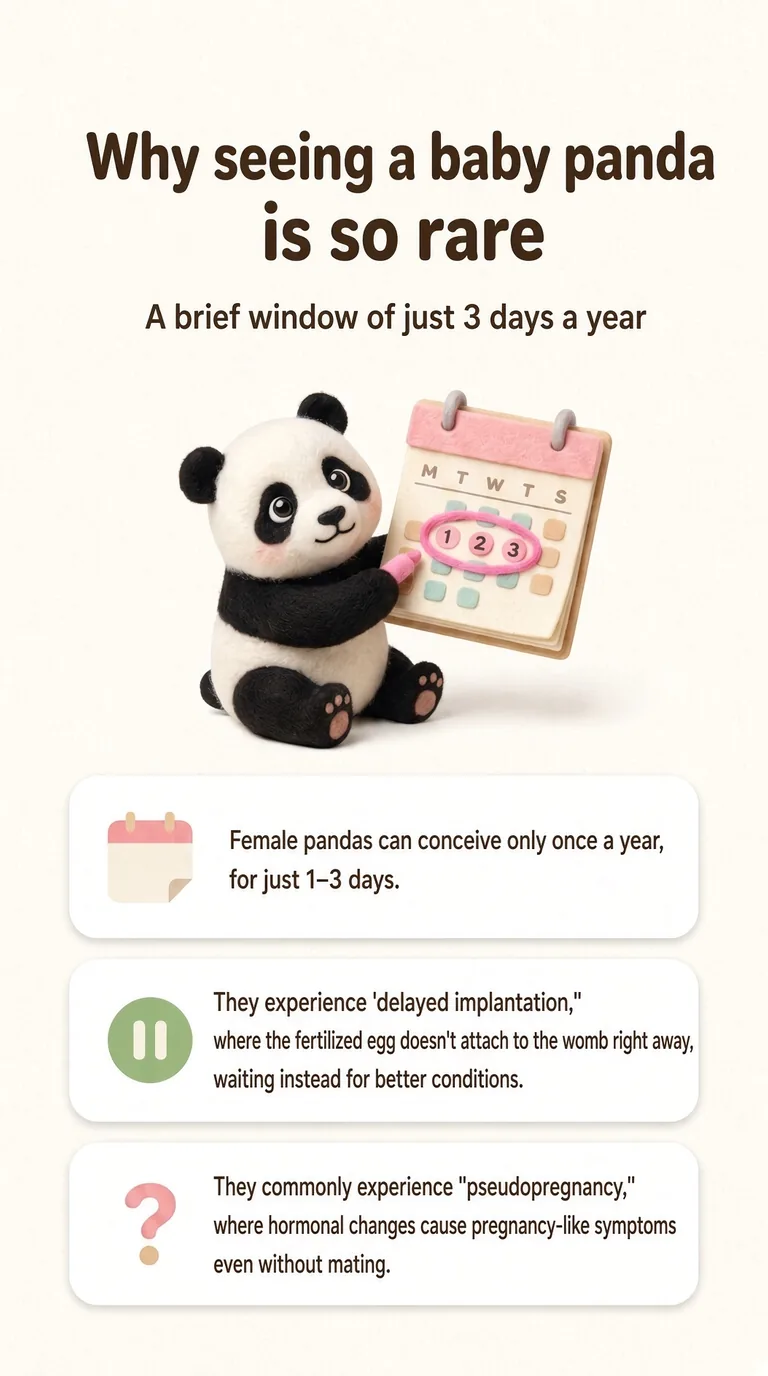
- Female pandas can conceive only once a year, for just 1–3 days.
- They experience 'delayed implantation,' where the fertilized egg doesn't attach to the womb right away, waiting instead for better conditions.
- They commonly experience 'pseudopregnancy,' where hormonal changes cause pregnancy-like symptoms even without mating.
The miracle of a 100g pink jelly
The long journey before it can climb a tree on its own
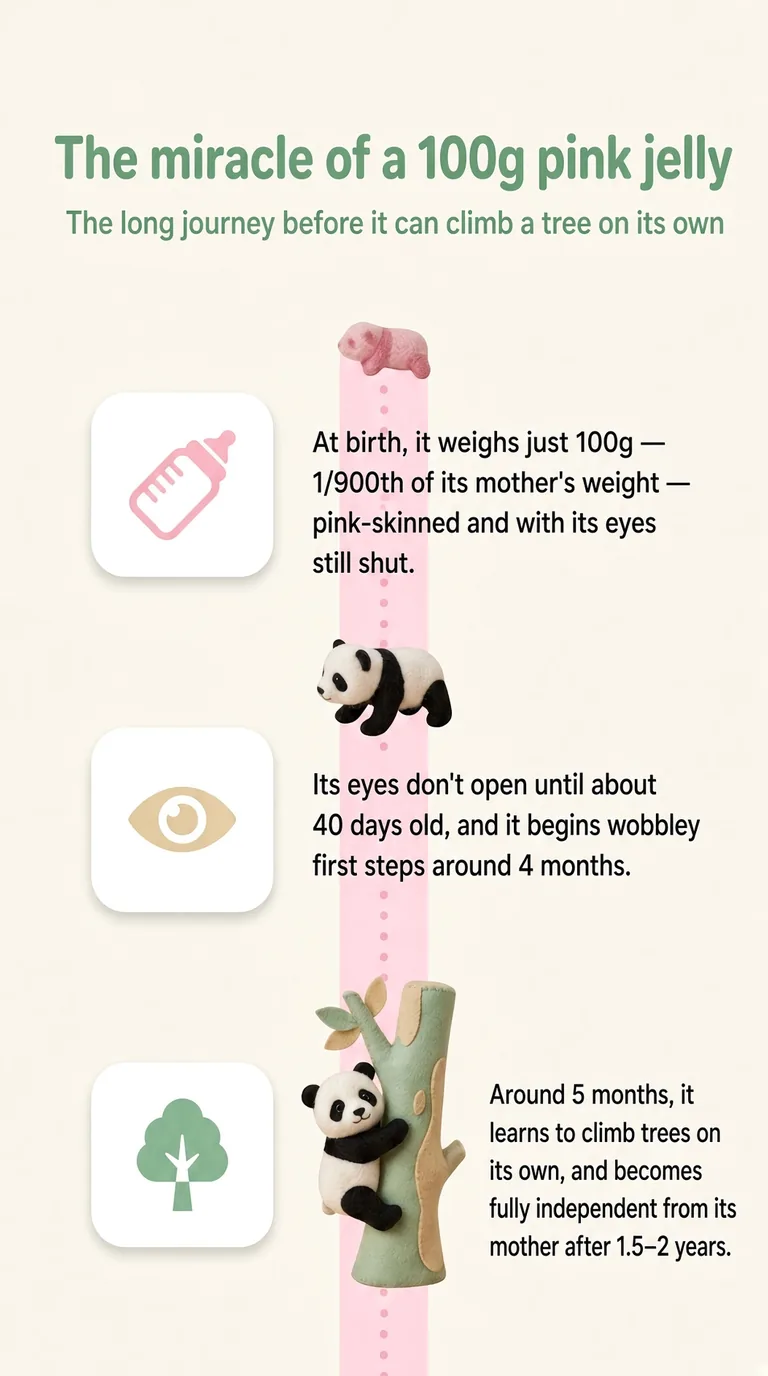
- At birth, it weighs just 100g — 1/900th of its mother's weight — pink-skinned and with its eyes still shut.
- Its eyes don't open until about 40 days old, and it begins wobbly first steps around 4 months.
- Around 5 months, it learns to climb trees on its own, and becomes fully independent from its mother after 1.5–2 years.