Kangaroo
Oceania
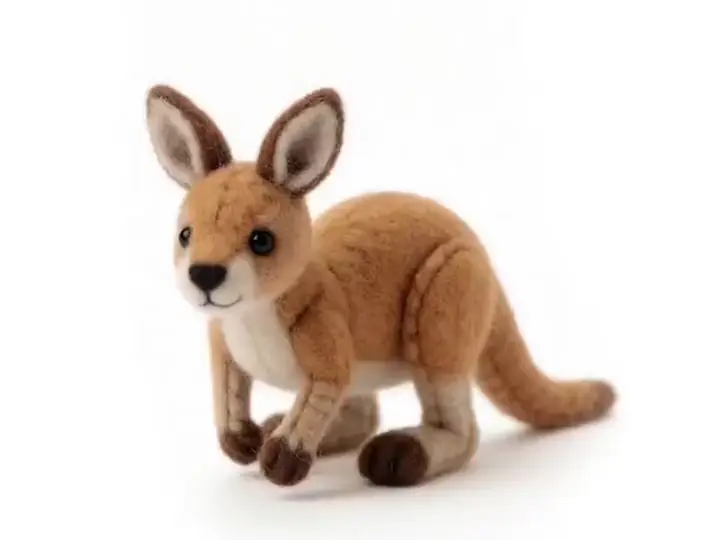
The kangaroo is a symbol of Australia that bounds long distances on its strong back legs. A mother carries and raises her baby in a pouch on her belly. It uses its big tail for balance and even leans on it like a chair.
Quick facts
- Habitat
- It lives on the plains, deserts, and forests of Australia.
- Diet
- It's a plant-eater that eats grass and leaves.
- Size and weight
- Height 1.5–2m, weight 50–90kg.
- Lifespan
- 8–12 years
- Conservation status
- Least Concern
- Fun facts
- It can jump 9m in one leap! That's half the length of a basketball court.
It can't walk backward, so it always moves forward.
Learn more
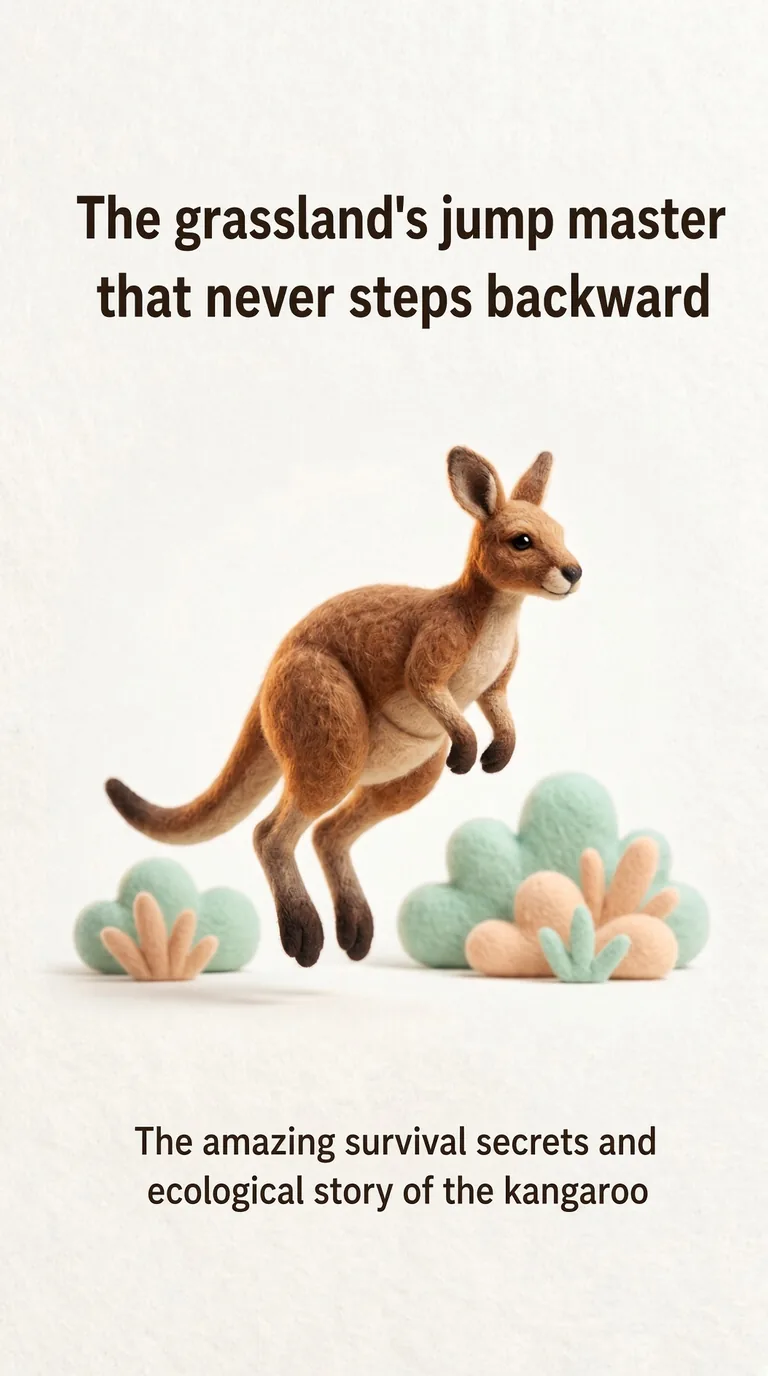
The grassland's jump master that never steps backward
The amazing survival secrets and ecological story of the kangaroo
The myth and truth behind its name
The misconception that "kangaroo" means "I don't know"
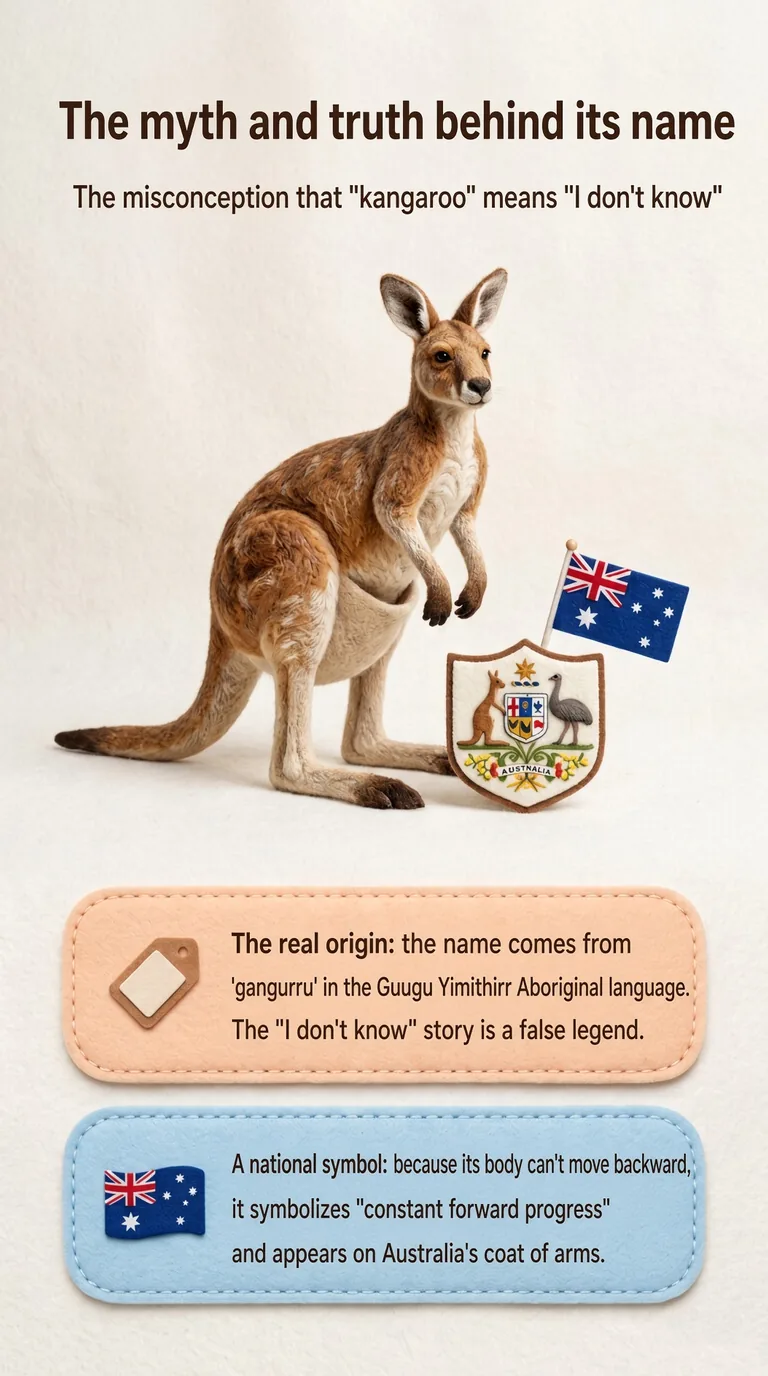
- The real origin — the name comes from 'gangurru' in the Guugu Yimithirr Aboriginal language. The "I don't know" story is a false legend.
- A national symbol — because its body can't move backward, it symbolizes "constant forward progress" and appears on Australia's coat of arms.
9m in one bound! The science of the jump
The faster it goes, the more energy it saves
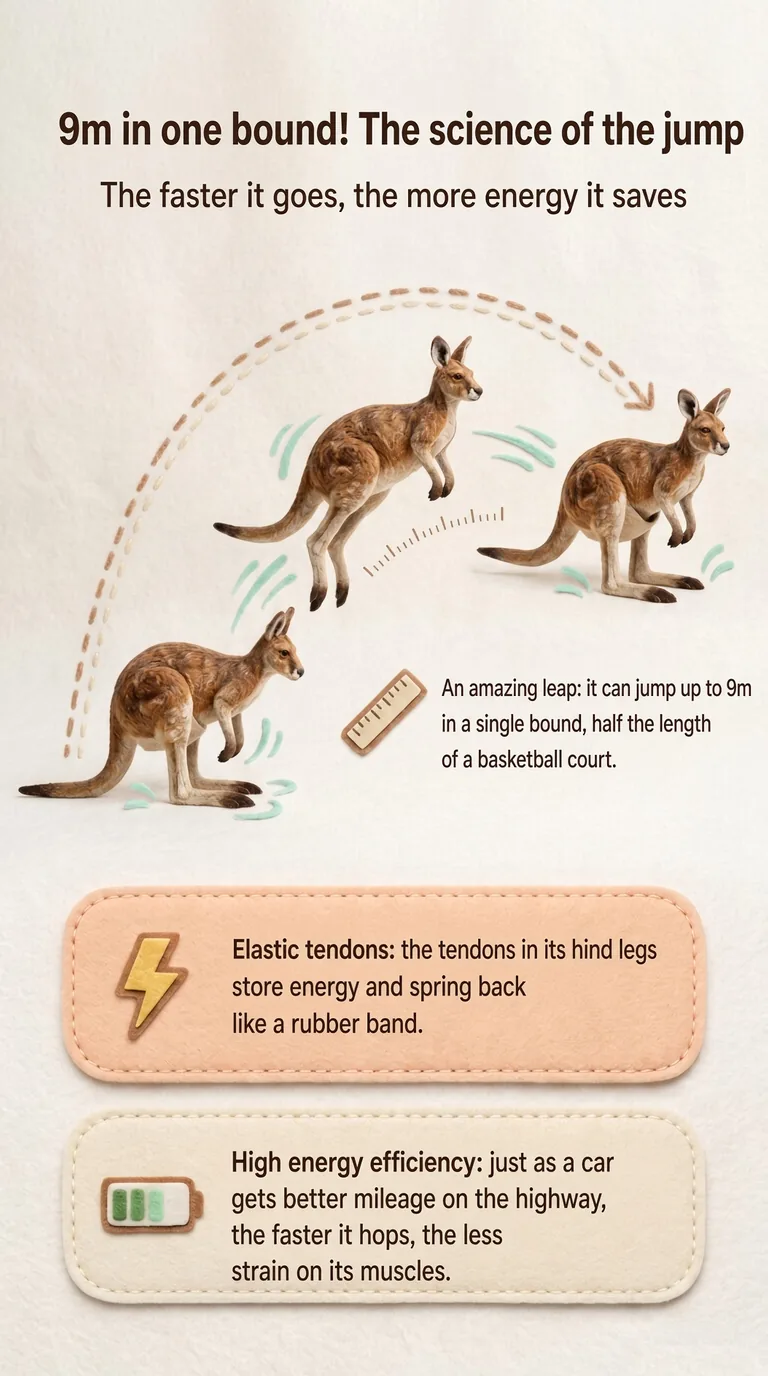
- An amazing leap — it can jump up to 9m in a single bound, half the length of a basketball court.
- Elastic tendons — the tendons in its hind legs store energy and spring back like a rubber band.
- High energy efficiency — just as a car gets better mileage on the highway, the faster it hops, the less strain on its muscles.
The tail as a 'third leg'
Not just decoration — a core muscle
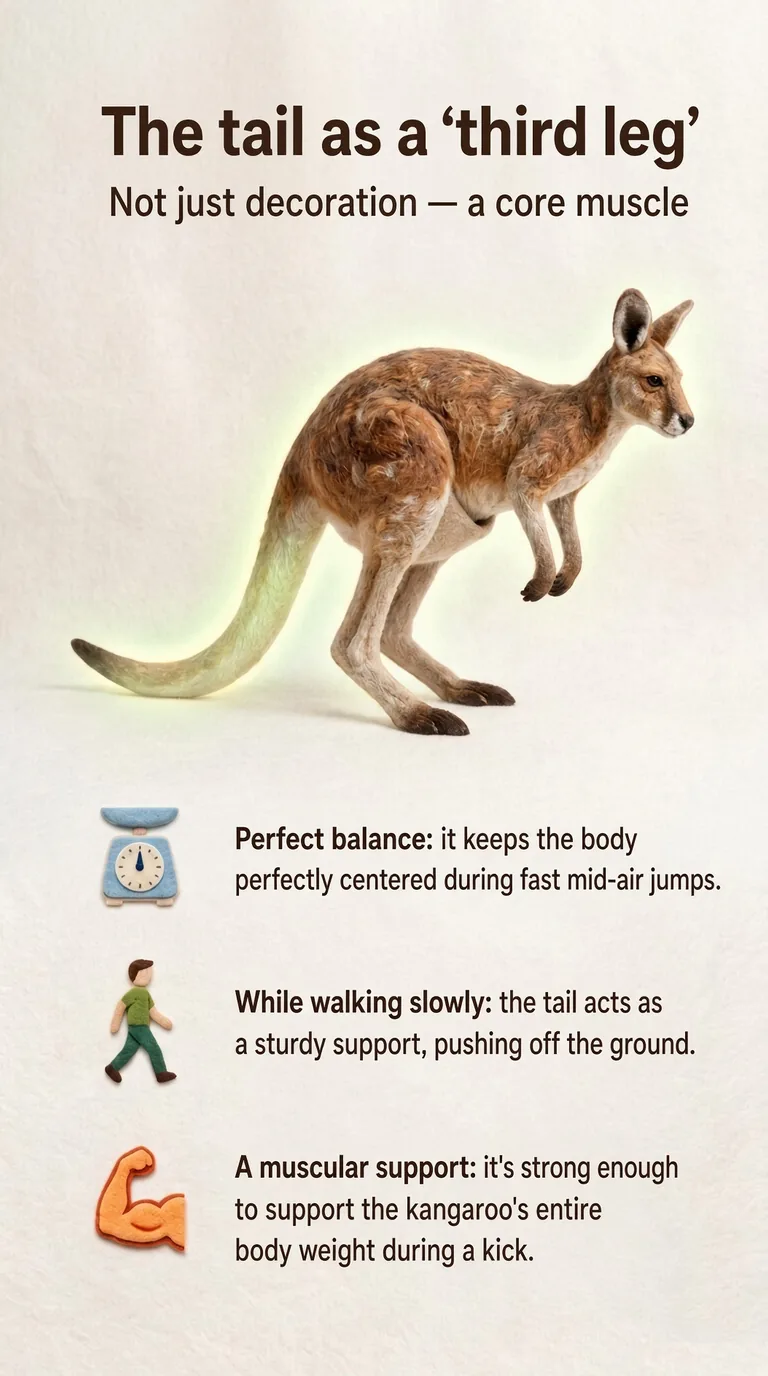
- Perfect balance — it keeps the body perfectly centered during fast mid-air jumps.
- While walking slowly — the tail acts as a sturdy support, pushing off the ground.
- A muscular support — it's strong enough to support the kangaroo's entire body weight during a kick.
Kangaroo vs. wallaby
Similar yet different cousins
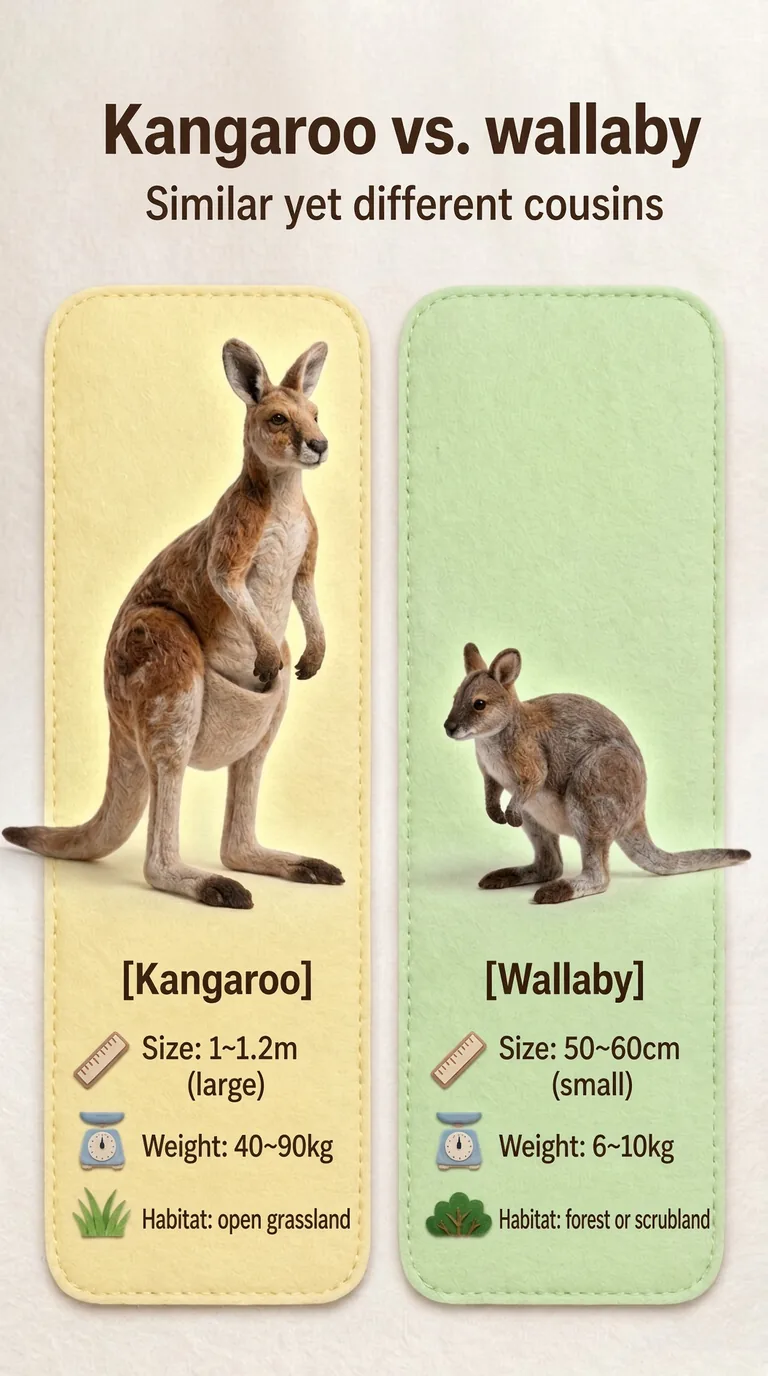
- Kangaroo
- Size — 1–1.2m (large)
- Weight — 40–90kg
- Habitat — open grassland
- Wallaby
- Size — 50–60cm (small)
- Weight — 6–10kg
- Habitat — forest or scrubland
It doesn't only live on the ground
Dozens of diverse kangaroo family species around the world
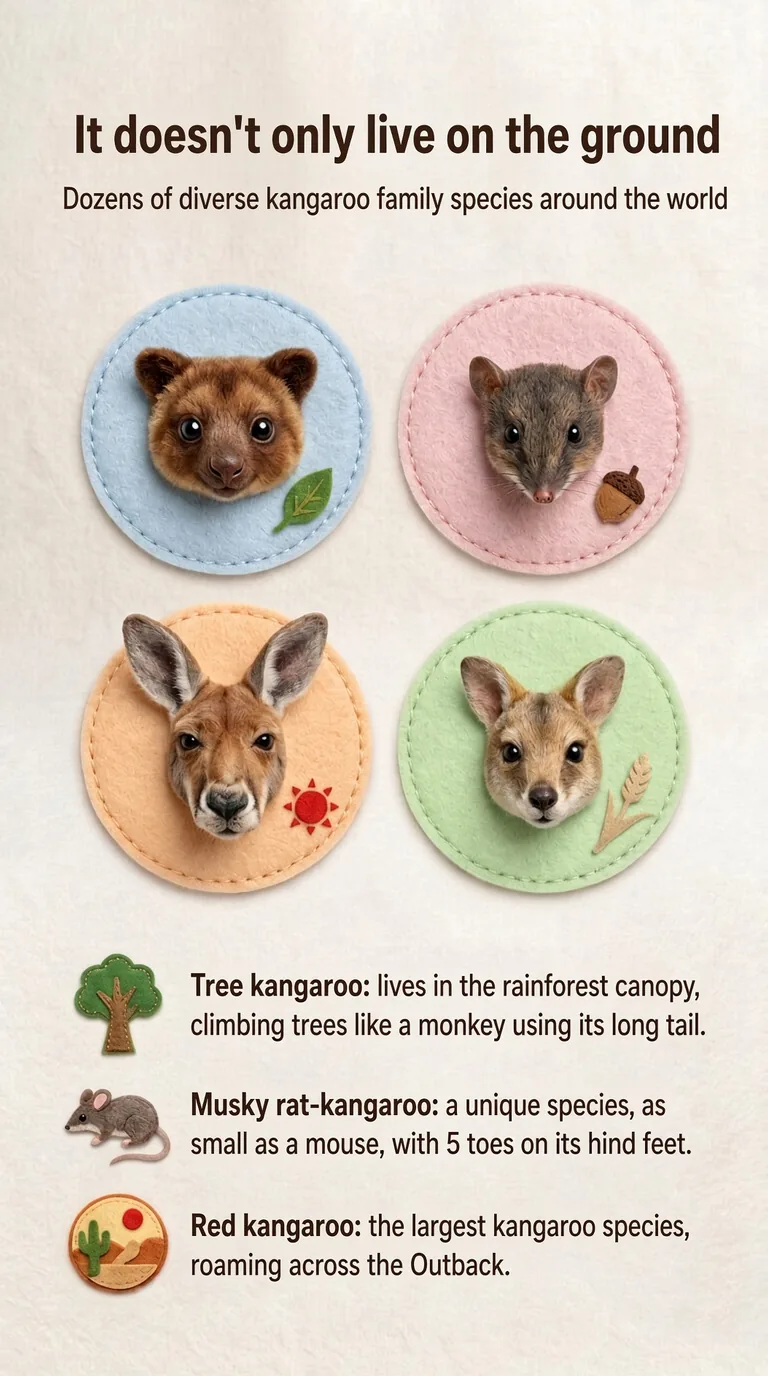
- Tree kangaroo — lives in the rainforest canopy, climbing trees like a monkey using its long tail.
- Musky rat-kangaroo — a unique species, as small as a mouse, with 5 toes on its hind feet.
- Red kangaroo — the largest kangaroo species, roaming across the Outback.
The miracle of 1 gram
A great journey that begins at a microscopic size
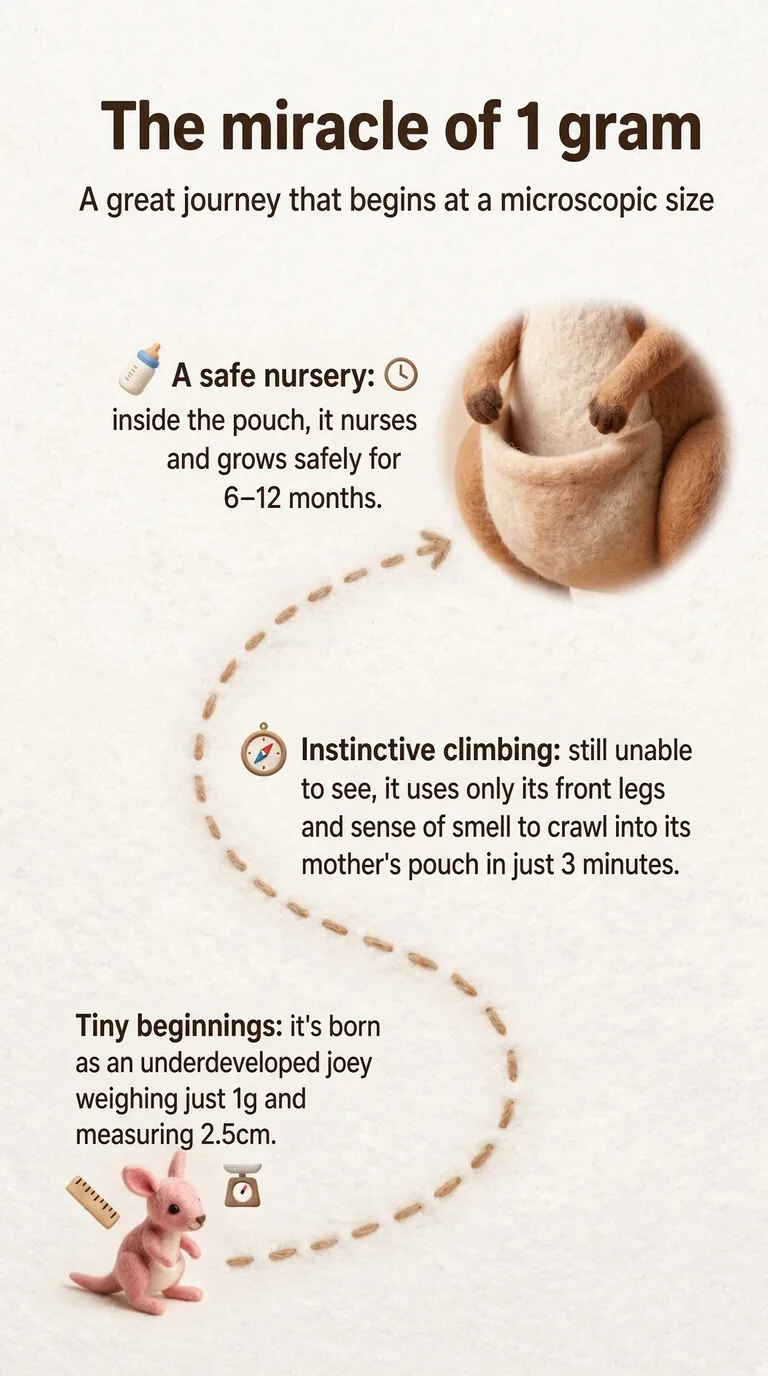
- Tiny beginnings — it's born as an underdeveloped joey weighing just 1g and measuring 2.5cm.
- Instinctive climbing — still unable to see, it uses only its front legs and sense of smell to crawl into its mother's pouch in just 3 minutes.
- A safe nursery — inside the pouch, it nurses and grows safely for 6–12 months.
Magic that pauses pregnancy
The remarkable ability of 'embryonic diapause'
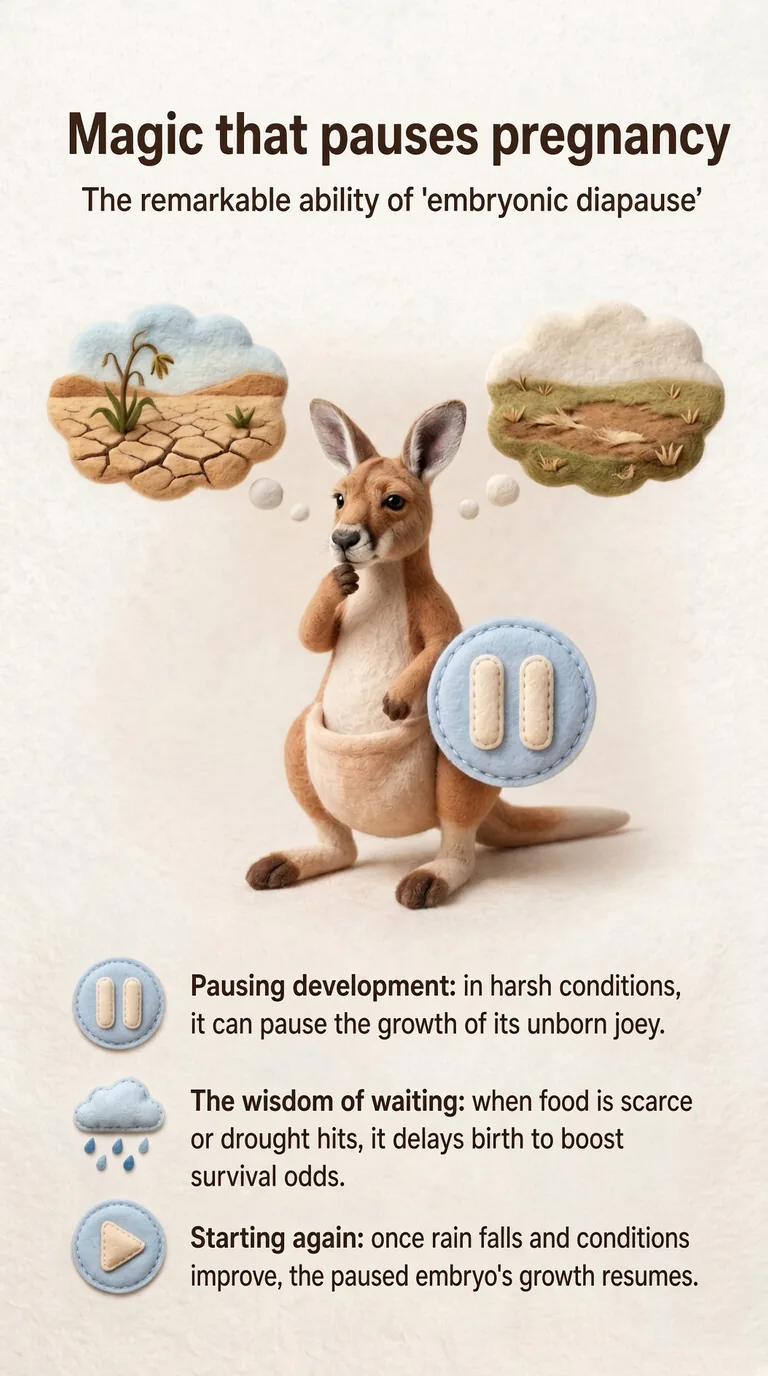
- Pausing development — in harsh conditions, it can pause the growth of its unborn joey.
- The wisdom of waiting — when food is scarce or drought hits, it delays birth to boost survival odds.
- Starting again — once rain falls and conditions improve, the paused embryo's growth resumes.