Koala
Oceania
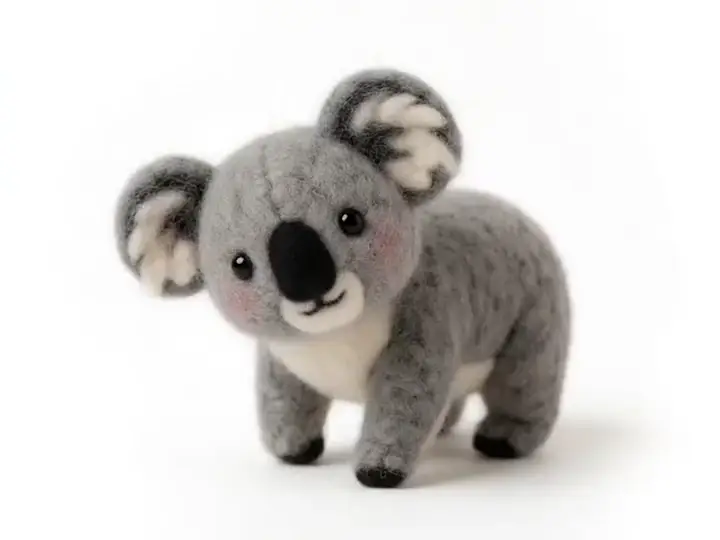
The koala is a cute marsupial from Australia. It looks like a bear, but it isn't one! It spends almost all its time in eucalyptus trees and eats only their leaves. The leaves have very little energy in them, so it sleeps most of the day to save energy.
Quick facts
- Habitat
- It lives in the eucalyptus forests of eastern Australia.
- Diet
- It eats only eucalyptus leaves.
- Size and weight
- Height 60–85cm, weight 4–15kg.
- Lifespan
- 13–18 years
- Conservation status
- Vulnerable
- Fun facts
- It sleeps 18–22 hours a day!
Like humans, it has fingerprints.
Learn more
The forest recluse that eats poison and dozes off all day
An extreme survival strategy hidden behind a cute exterior
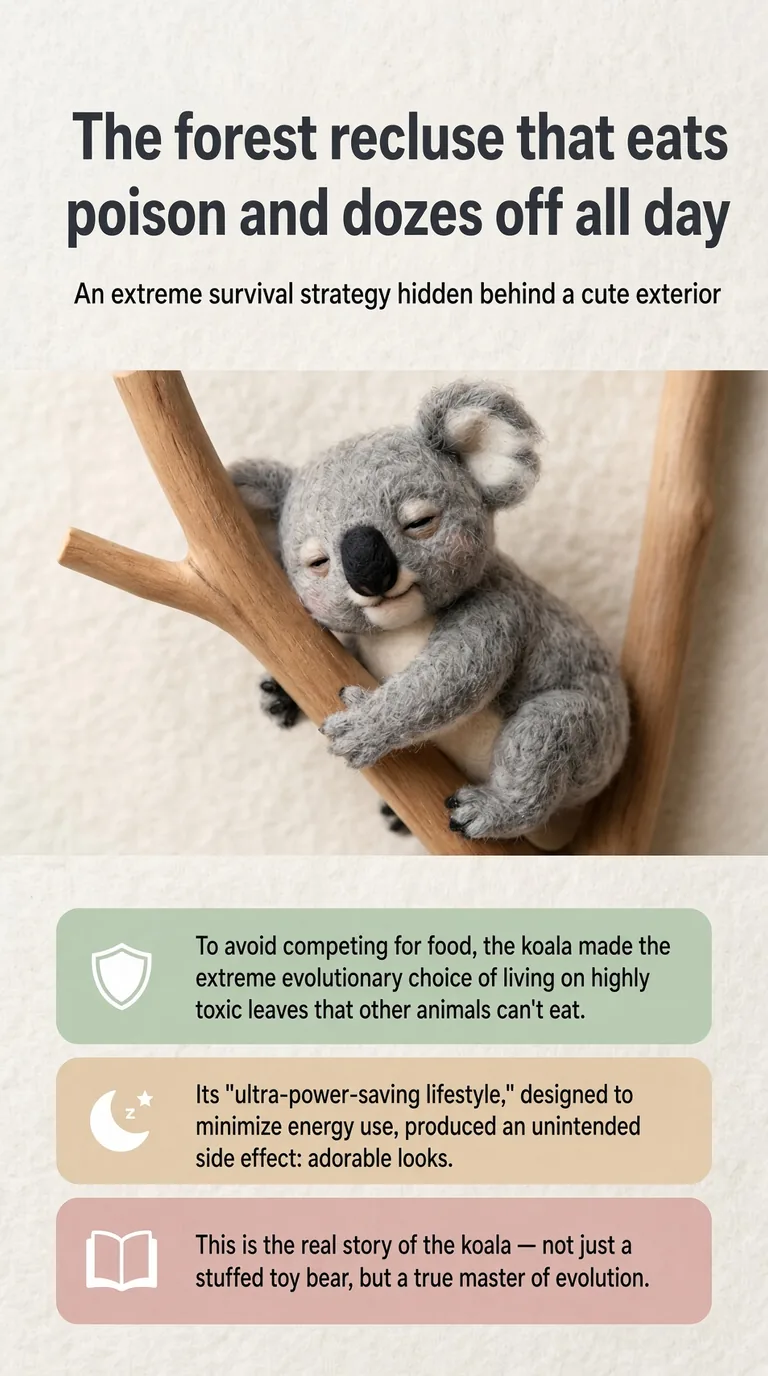
- To avoid competing for food, the koala made the extreme evolutionary choice of living on highly toxic leaves that other animals can't eat.
- Its "ultra-power-saving lifestyle," designed to minimize energy use, produced an unintended side effect: adorable looks.
- This is the real story of the koala — not just a stuffed toy bear, but a true master of evolution.
"Um, actually, I'm not a bear..."
A completely different family tree, "bear" in name only
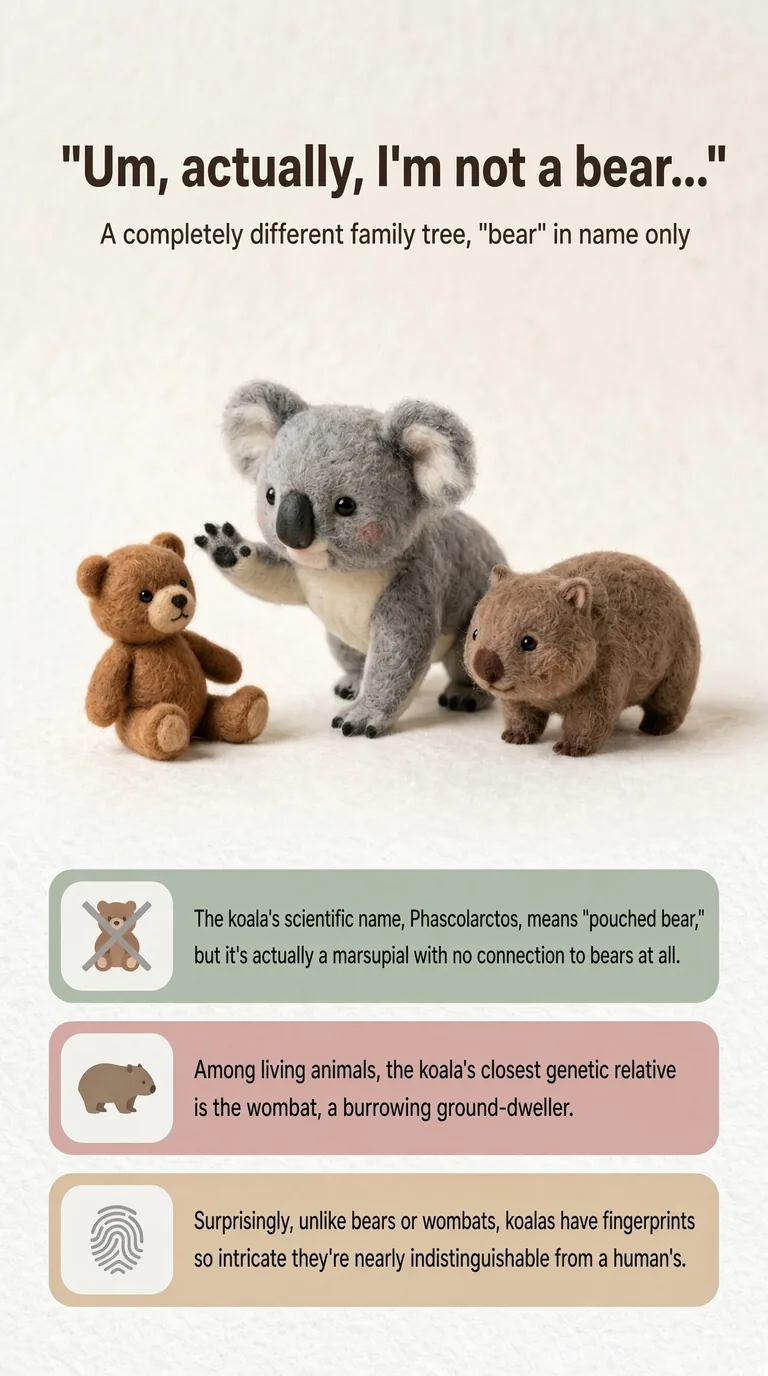
- The koala's scientific name, Phascolarctos, means "pouched bear," but it's actually a marsupial with no connection to bears at all.
- Among living animals, the koala's closest genetic relative is the wombat, a burrowing ground-dweller.
- Surprisingly, unlike bears or wombats, koalas have fingerprints so intricate they're nearly indistinguishable from a human's.
The only gourmet permitted to eat toxic leaves
A stubborn, exclusive diet of only eucalyptus leaves
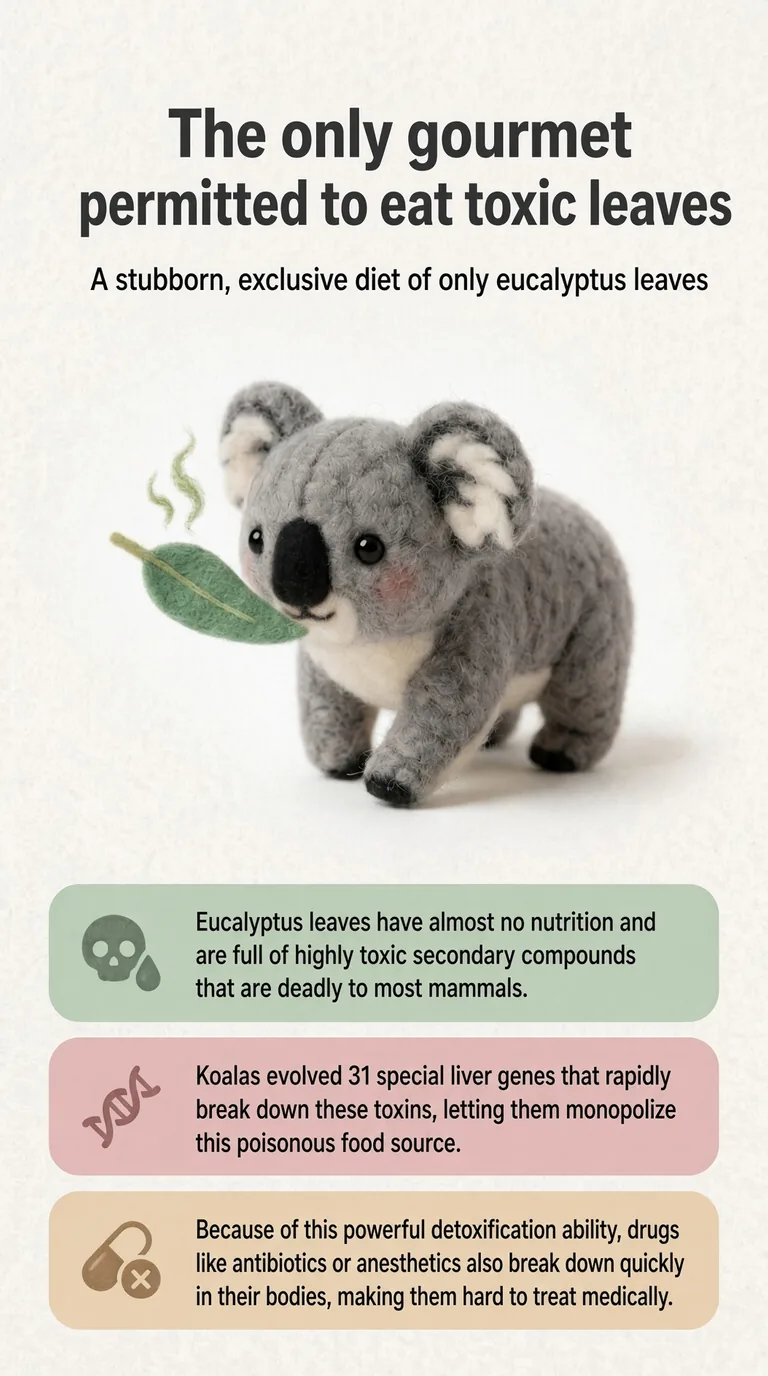
- Eucalyptus leaves have almost no nutrition and are full of highly toxic secondary compounds that are deadly to most mammals.
- Koalas evolved 31 special liver genes that rapidly break down these toxins, letting them monopolize this poisonous food source.
- Because of this powerful detoxification ability, drugs like antibiotics or anesthetics also break down quickly in their bodies, making them hard to treat medically.
Shrinking the brain, choosing sleep
A miraculous trade-off created by a near-zero-energy diet
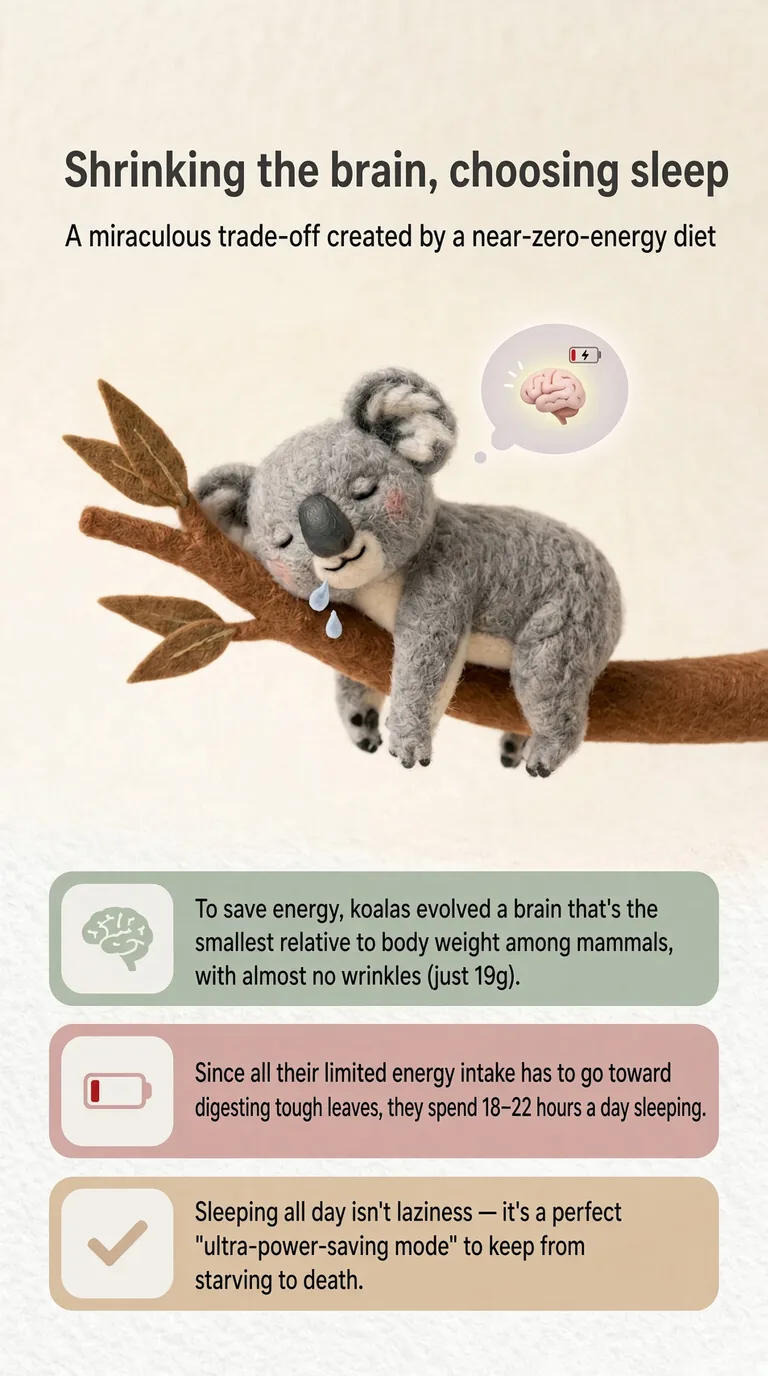
- To save energy, koalas evolved a brain that's the smallest relative to body weight among mammals, with almost no wrinkles (just 19g).
- Since all their limited energy intake has to go toward digesting tough leaves, they spend 18–22 hours a day sleeping.
- Sleeping all day isn't laziness — it's a perfect "ultra-power-saving mode" to keep from starving to death.
The magic detox passed down from mother, "pap"
A 6-month preparation for digesting poison
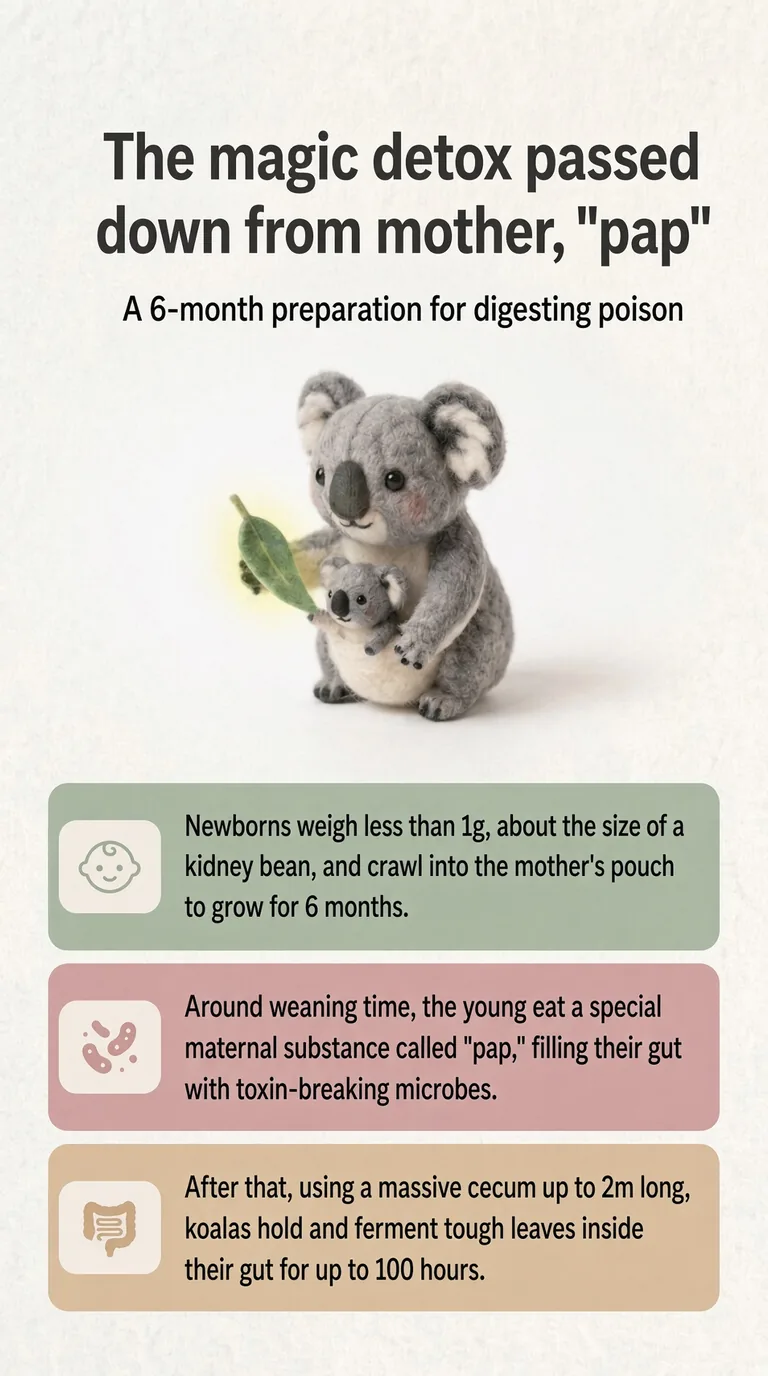
- Newborns weigh less than 1g, about the size of a kidney bean, and crawl into the mother's pouch to grow for 6 months.
- Around weaning time, the young eat a special maternal substance called "pap," filling their gut with toxin-breaking microbes.
- After that, using a massive cecum up to 2m long, koalas hold and ferment tough leaves inside their gut for up to 100 hours.
A body perfectly designed for life in the trees
Custom anatomy that means it never needs to touch the ground
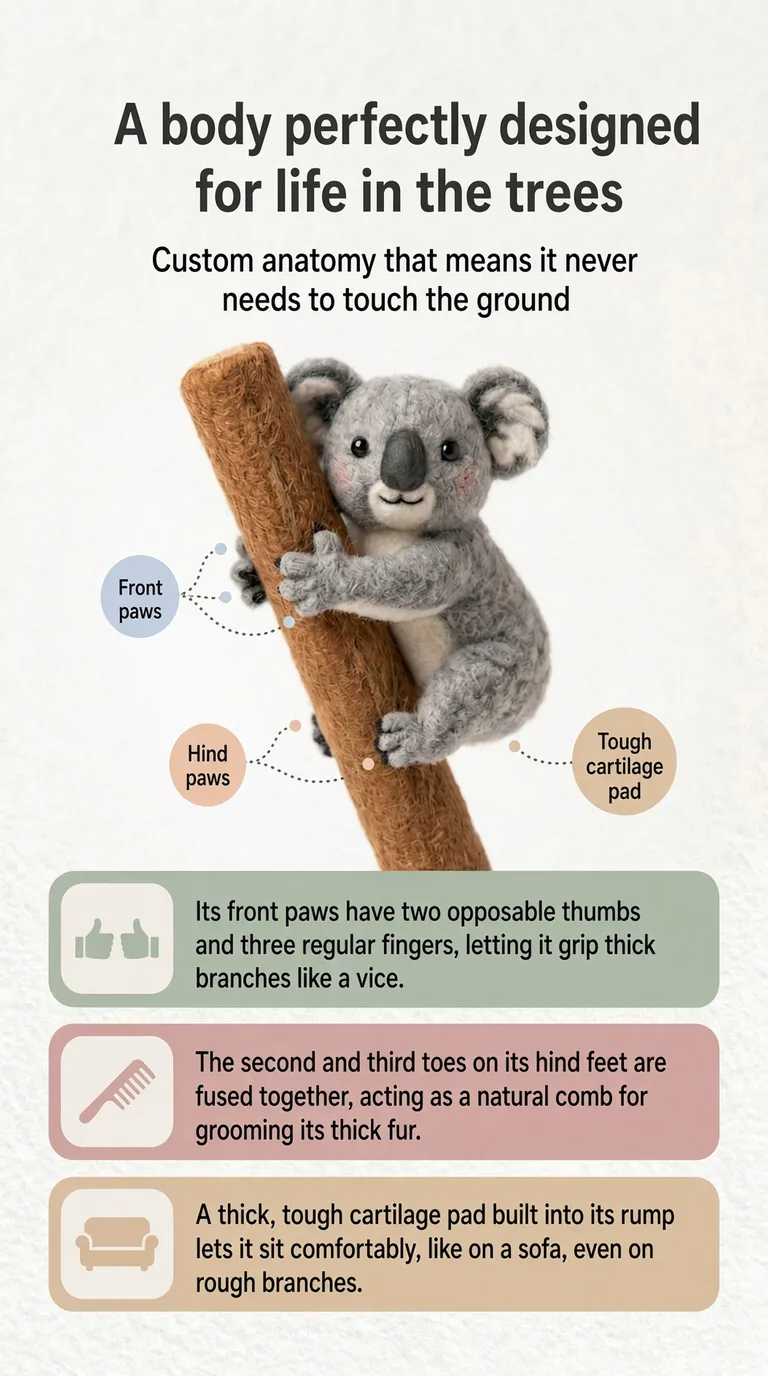
Front paws, hind paws, and tough cartilage padding
- Its front paws have two opposable thumbs and three regular fingers, letting it grip thick branches like a vice.
- The second and third toes on its hind feet are fused together, acting as a natural comb for grooming its thick fur.
- A thick, tough cartilage pad built into its rump lets it sit comfortably, like on a sofa, even on rough branches.
A natural air conditioner: hugging a tree
How a koala, with almost no sweat glands, endures extreme heat
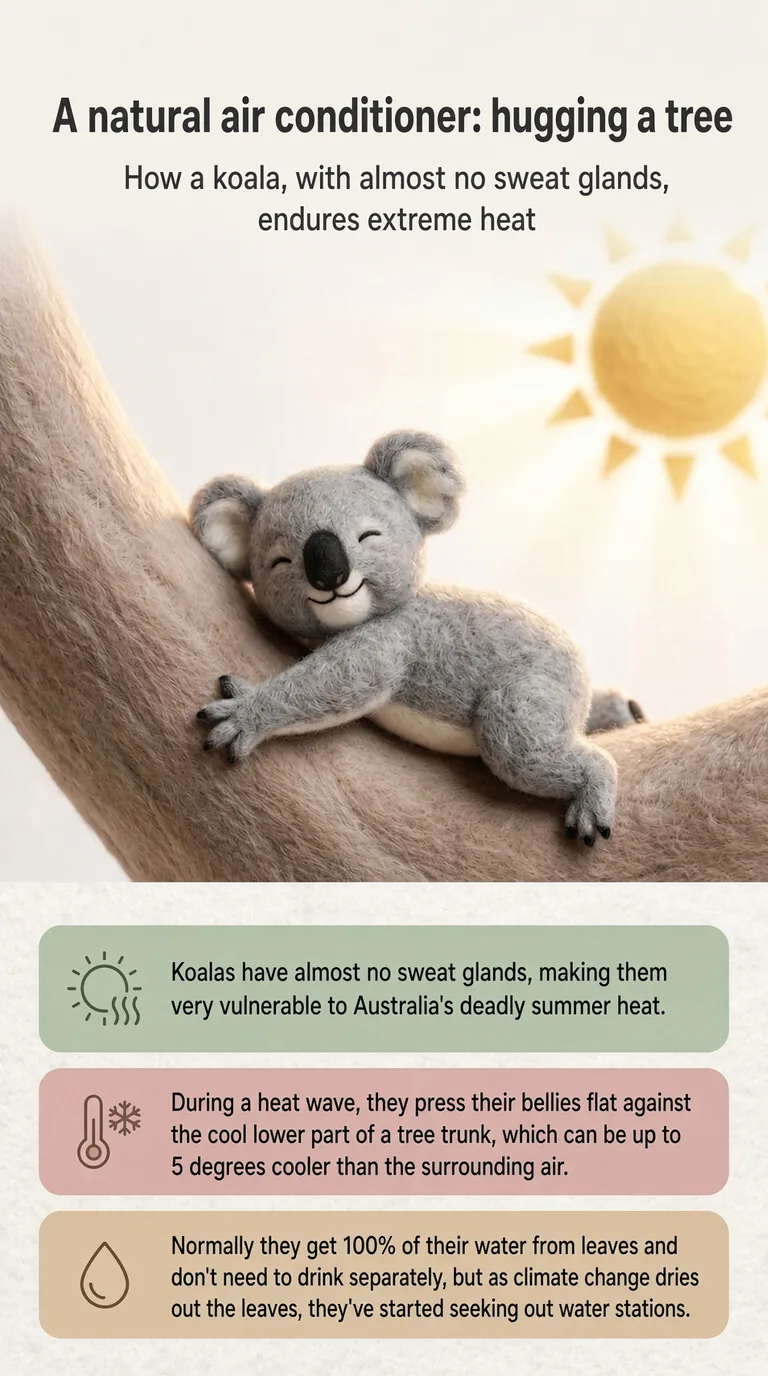
- Koalas have almost no sweat glands, making them very vulnerable to Australia's deadly summer heat.
- During a heat wave, they press their bellies flat against the cool lower part of a tree trunk, which can be up to 5 degrees cooler than the surrounding air.
- Normally they get 100% of their water from leaves and don't need to drink separately, but as climate change dries out the leaves, they've started seeking out water stations.