Wombat
Oceania
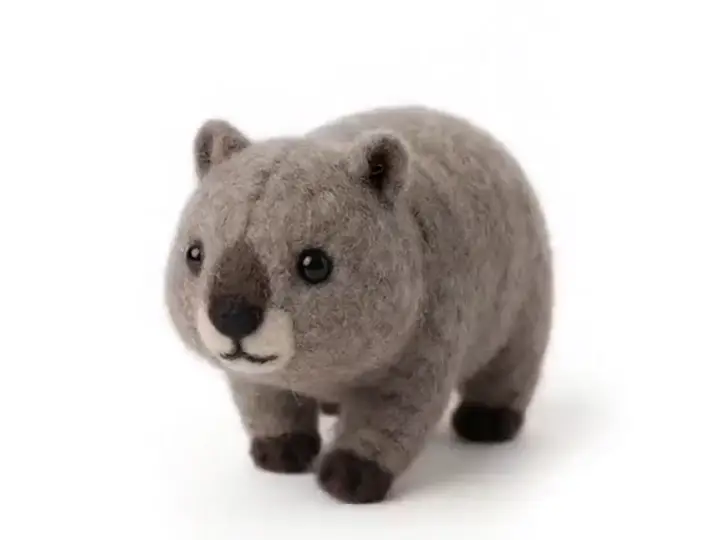
The wombat is a chubby, bear-like marsupial from Australia. It digs long burrows underground with its strong feet. Its rear end is so tough that if an enemy tries to get into its burrow, it blocks the entrance with its bottom.
Quick facts
- Habitat
- It lives in the forests and grasslands of southeastern Australia.
- Diet
- It's a plant-eater that eats grass, roots, and moss.
- Size and weight
- Length 1m, weight 20–35kg.
- Lifespan
- About 15 years
- Conservation status
- Least Concern
- Fun facts
- Wombat poop is cube-shaped!
Its pouch faces backward, so no dirt gets in while it digs.
Learn more
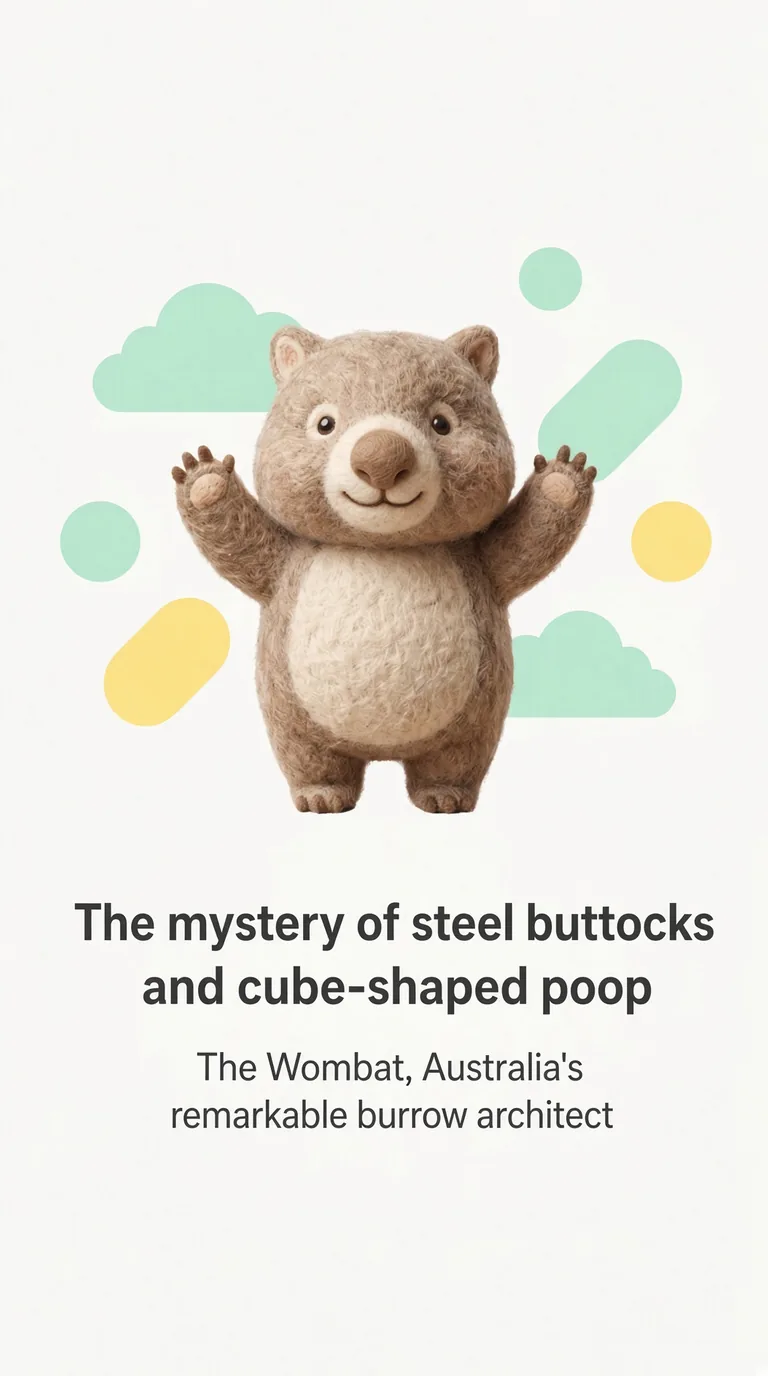
The mystery of steel buttocks and cube-shaped poop
The Wombat, Australia's remarkable burrow architect
What kind of animal is the wombat?
A species unique to Australia, closely related to koalas and kangaroos.
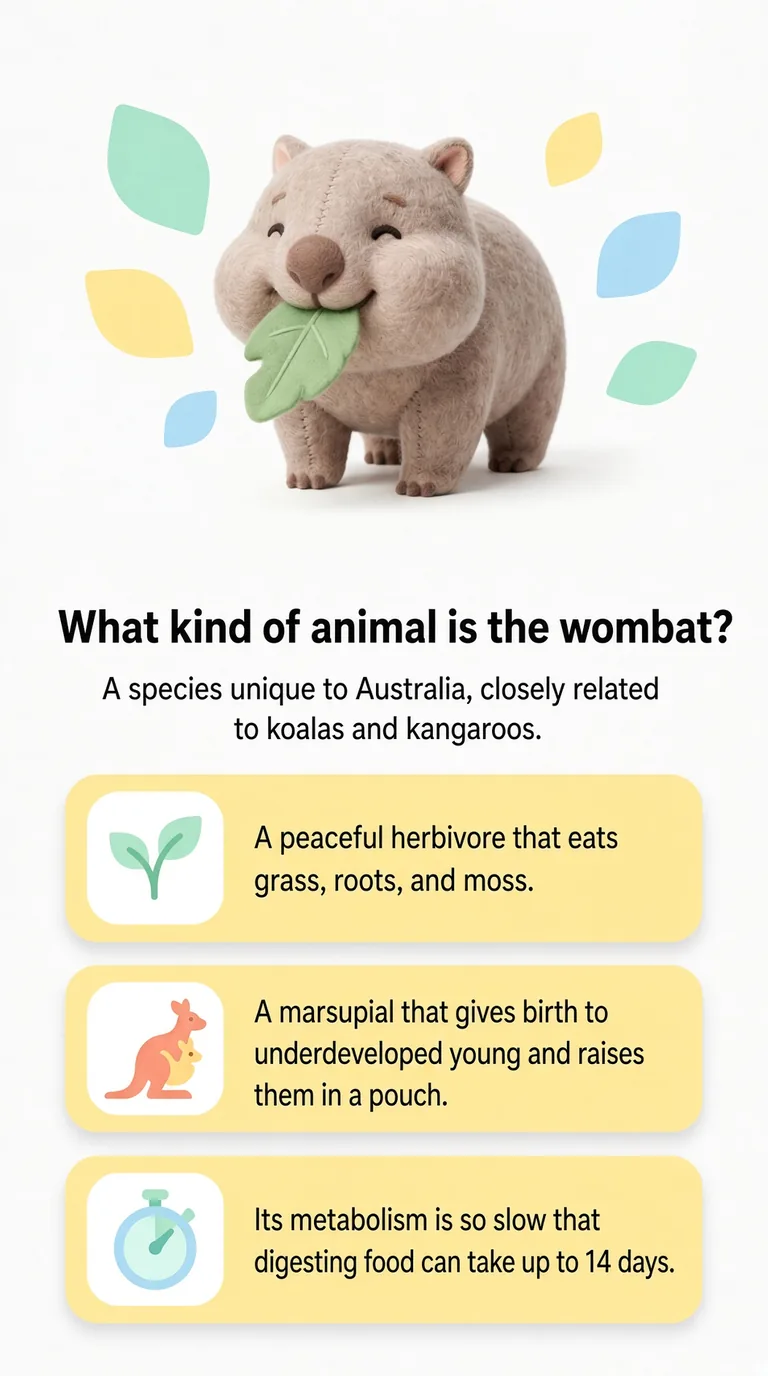
- A peaceful herbivore that eats grass, roots, and moss.
- A marsupial that gives birth to underdeveloped young and raises them in a pouch.
- Its metabolism is so slow that digesting food can take up to 14 days.
The world's only "cube-shaped poop"
The astonishing digestive secret that won a 2019 Ig Nobel Prize
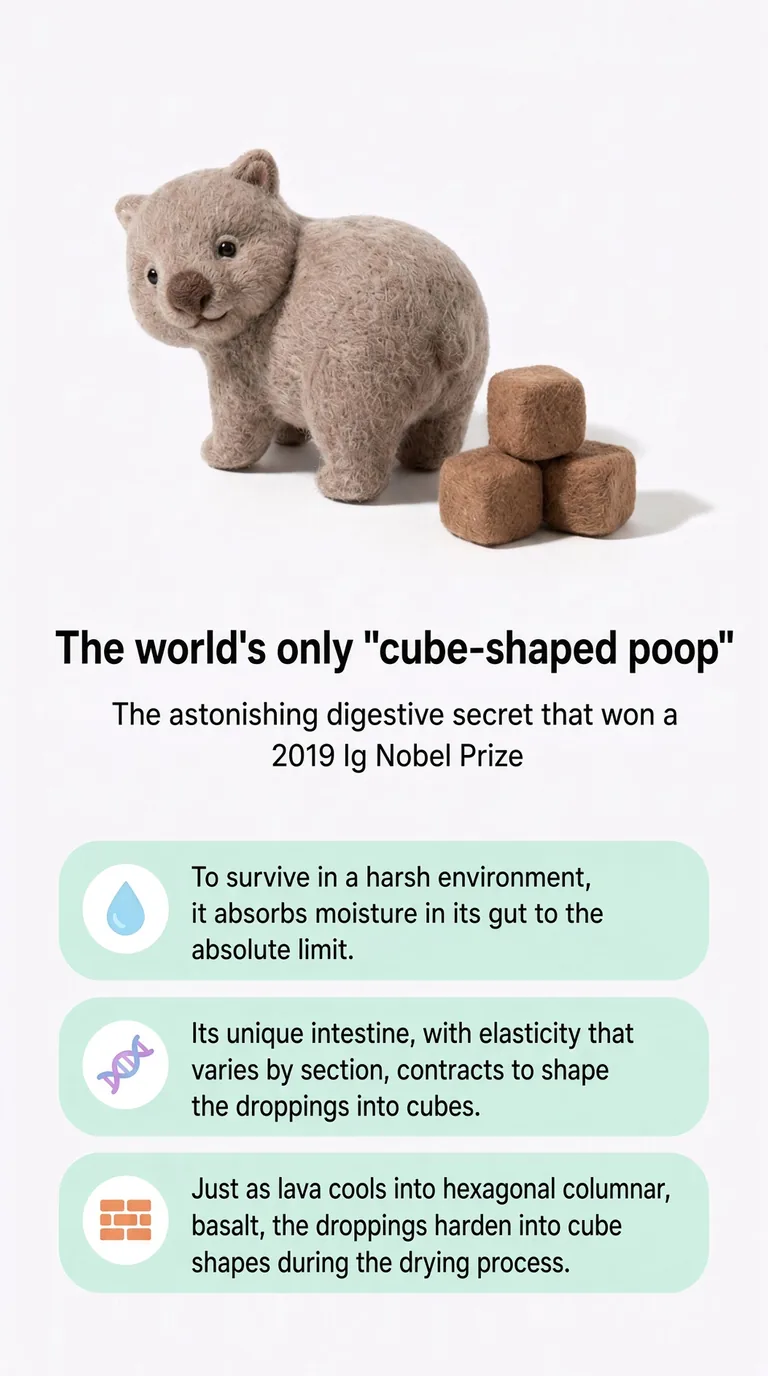
- To survive in a harsh environment, it absorbs moisture in its gut to the absolute limit.
- Its unique intestine, with elasticity that varies by section, contracts to shape the droppings into cubes.
- Just as lava cools into hexagonal columnar basalt, the droppings harden into cube shapes during the drying process.
Why cube-shaped, of all things?
The best building material for a wombat with poor eyesight
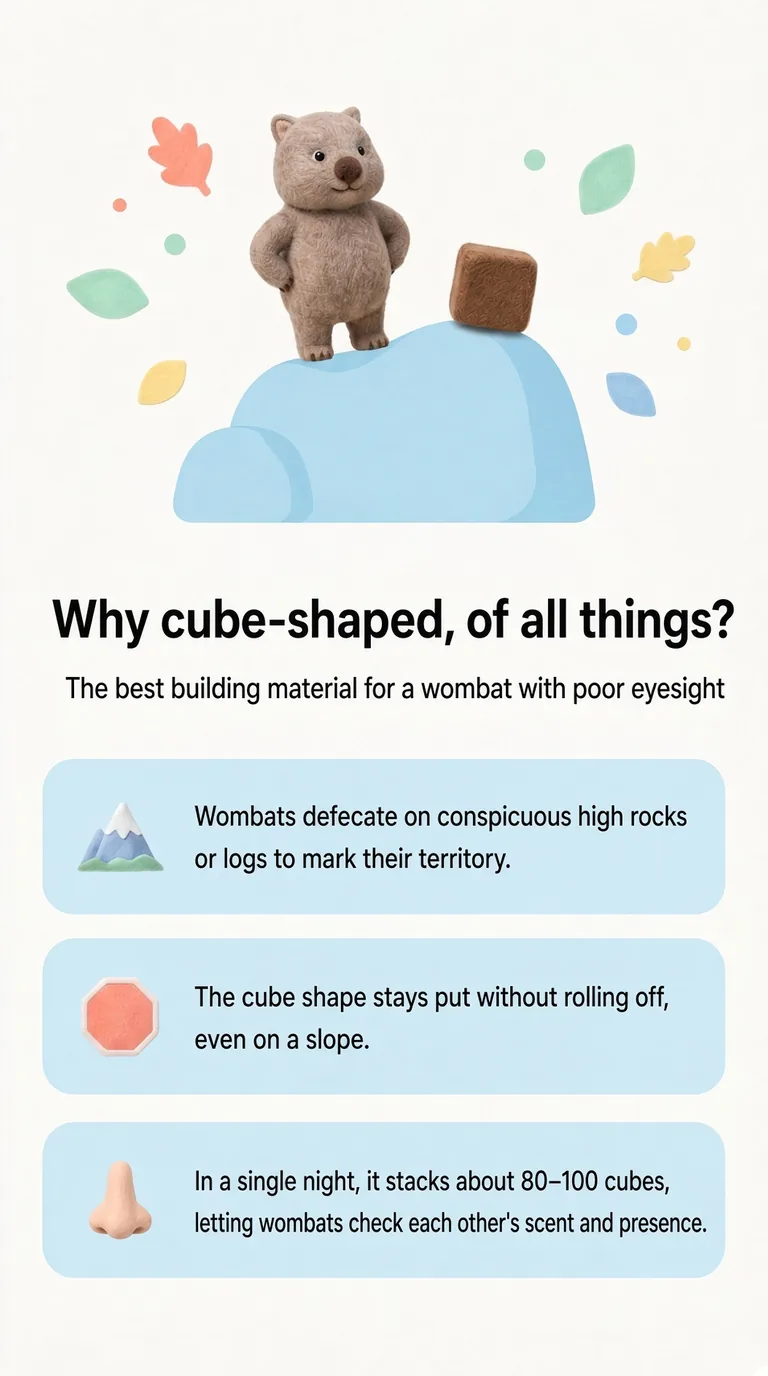
- Wombats defecate on conspicuous high rocks or logs to mark their territory.
- The cube shape stays put without rolling off, even on a slope.
- In a single night, it stacks about 80–100 cubes, letting wombats check each other's scent and presence.
A baby pouch that opens backward
A pouch custom-designed just for a master digger
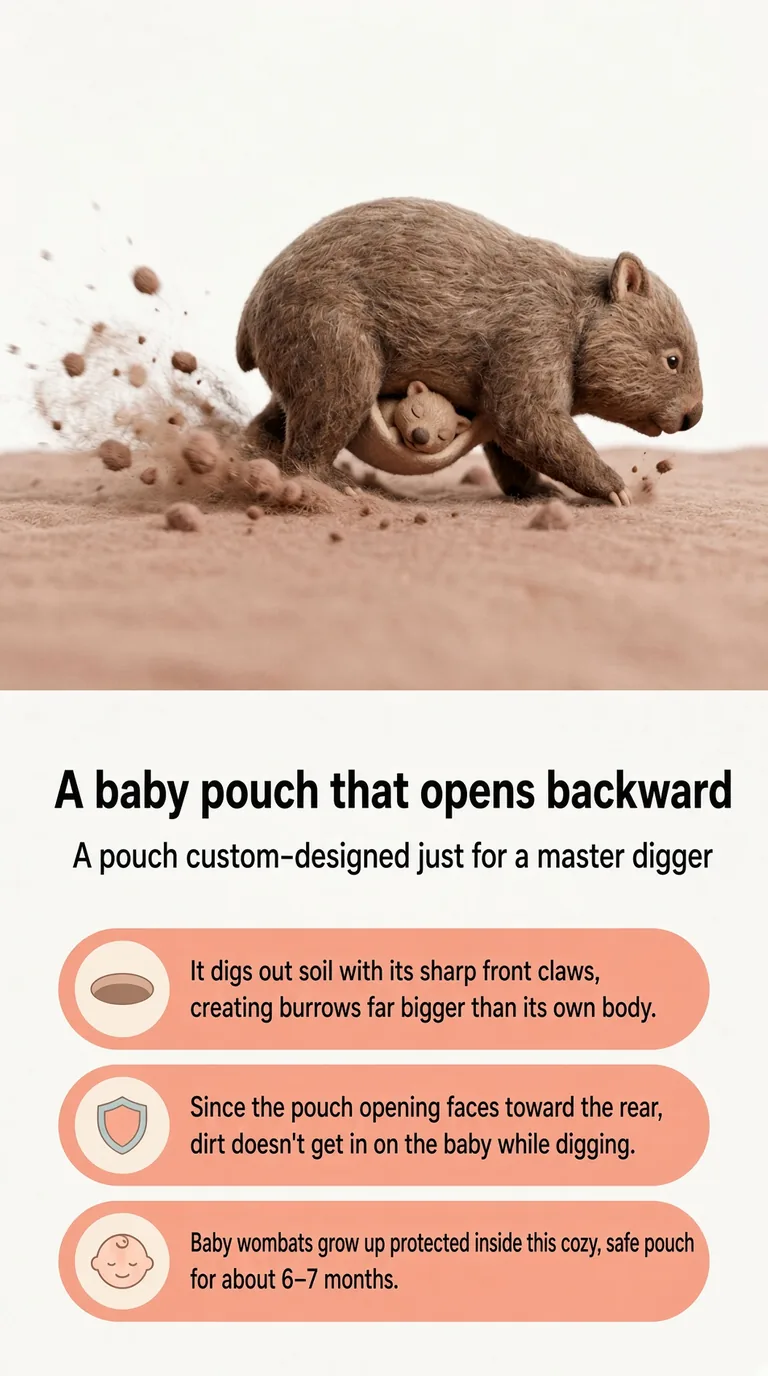
- It digs out soil with its sharp front claws, creating burrows far bigger than its own body.
- Since the pouch opening faces toward the rear, dirt doesn't get in on the baby while digging.
- Baby wombats grow up protected inside this cozy, safe pouch for about 6–7 months.
Its ultimate defense weapon, steel buttocks
The sturdiest, cutest shield in the world for fending off predators
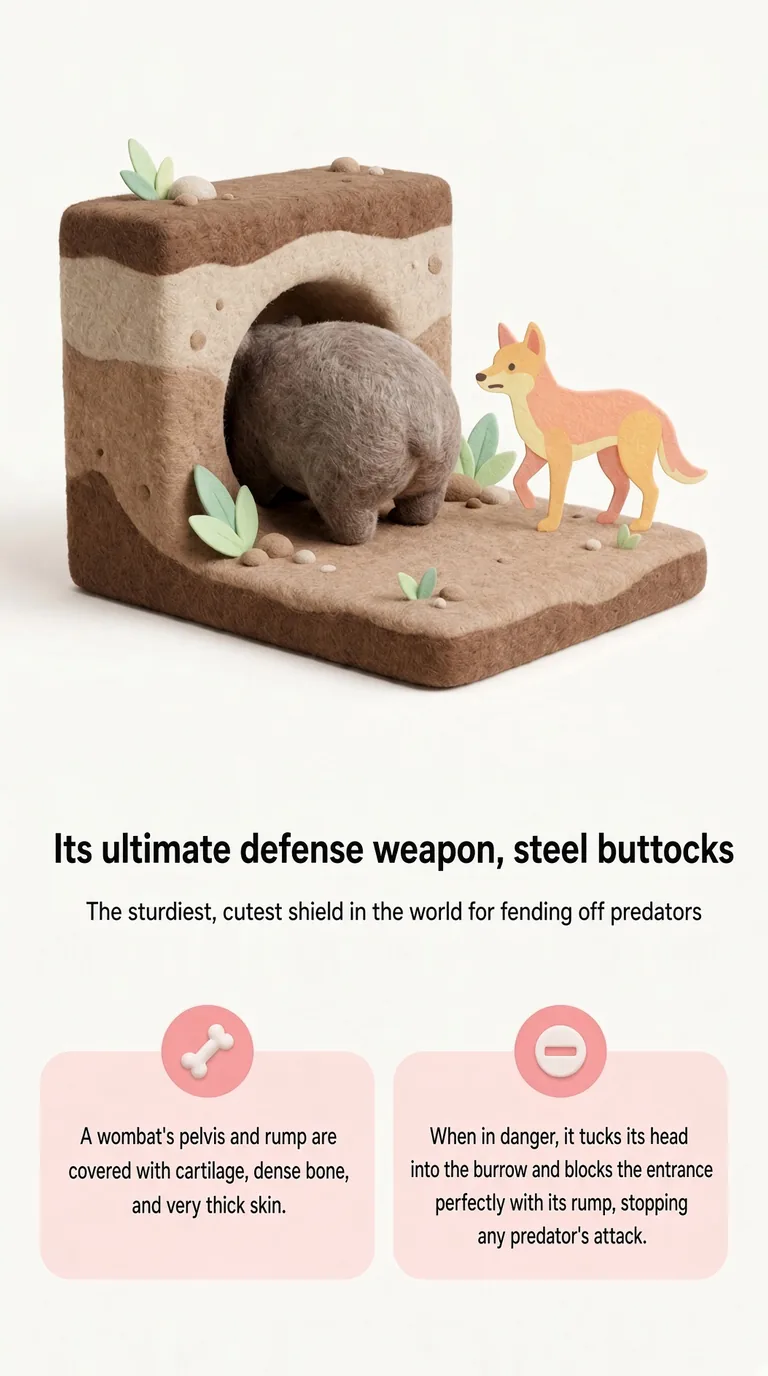
- A wombat's pelvis and rump are covered with cartilage, dense bone, and very thick skin.
- When in danger, it tucks its head into the burrow and blocks the entrance perfectly with its rump, stopping any predator's attack.
The wombat's selflessness during Australia's wildfires?
Not intentional heroism, but a hidden hero that saved the ecosystem
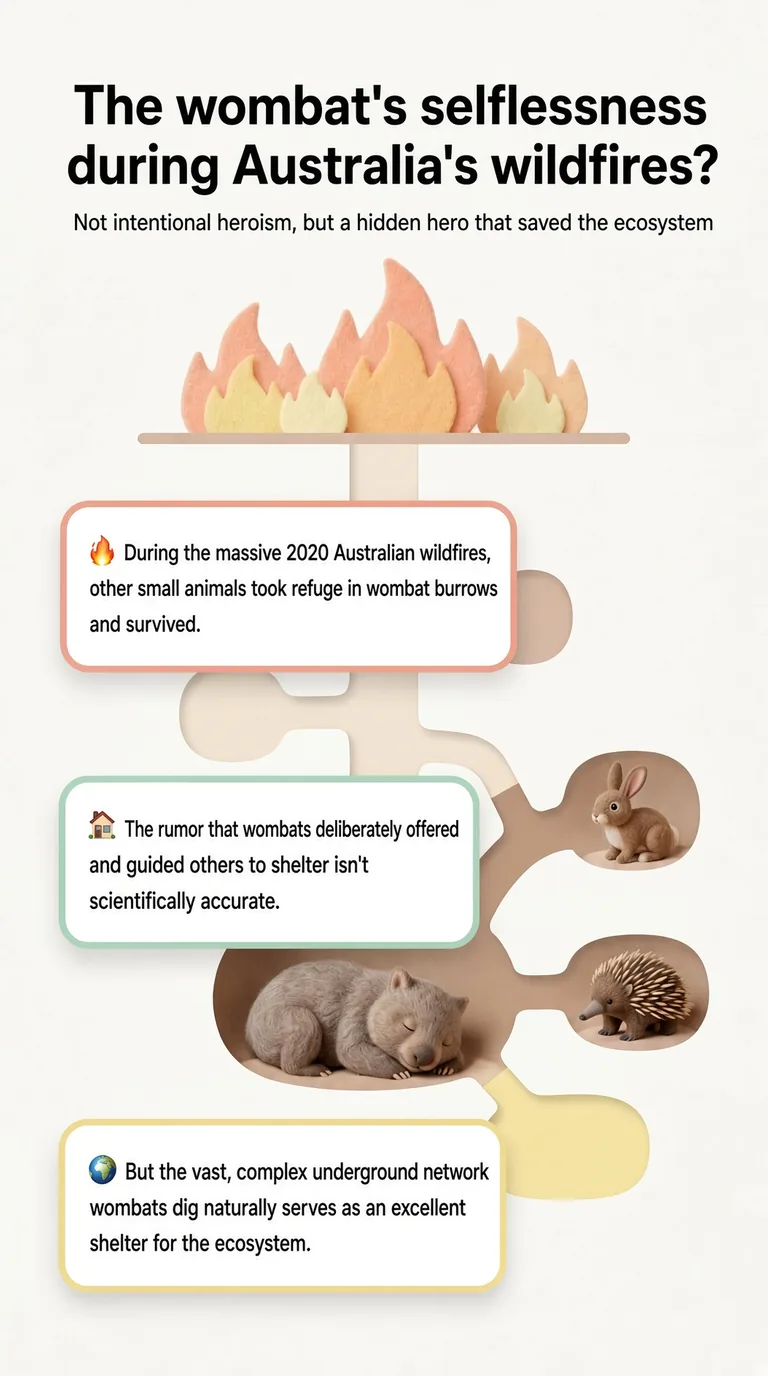
- During the massive 2020 Australian wildfires, other small animals took refuge in wombat burrows and survived.
- The rumor that wombats deliberately offered and guided others to shelter isn't scientifically accurate.
- But the vast, complex underground network wombats dig naturally serves as an excellent shelter for the ecosystem.