Quokka
Oceania
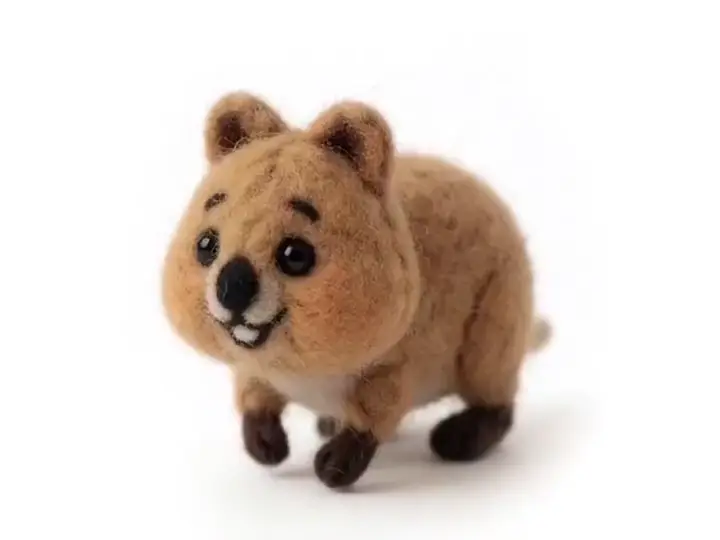
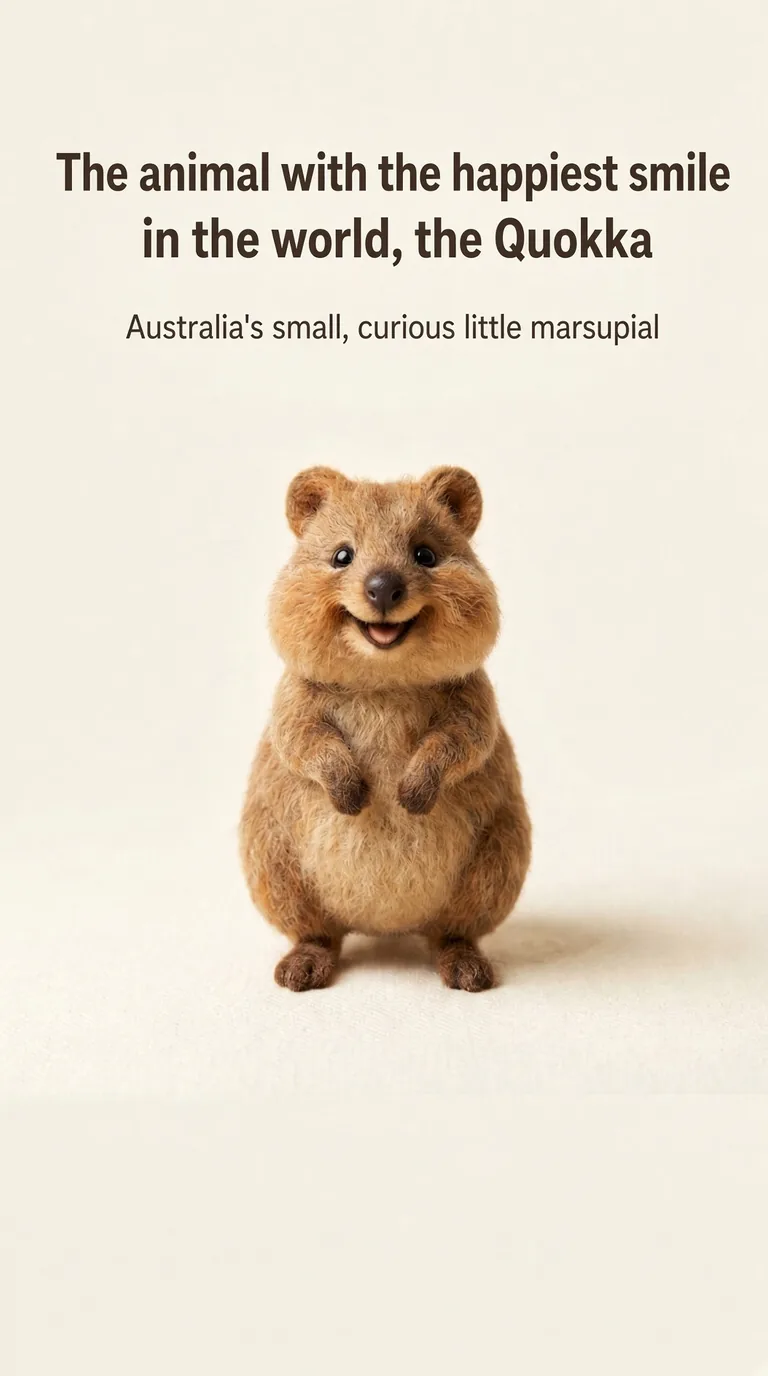
The quokka always seems to be smiling, so it's called "the happiest animal in the world." It's a small, cat-sized marsupial that isn't afraid of people and is full of curiosity. It lives mostly on small islands off western Australia.
Quick facts
- Habitat
- It lives on the islands and in the forests of western Australia.
- Diet
- It's a plant-eater that eats grass, leaves, and bark.
- Size and weight
- Length 40–54cm, weight 2.5–5kg.
- Lifespan
- About 10 years
- Conservation status
- Vulnerable
- Fun facts
- Its smiley face makes it a popular "selfie buddy"!
When water is scarce, it lives off fat stored in its tail.
Learn more
The animal with the happiest smile in the world, the Quokka
Australia's small, curious little marsupial
A tiny relative of the kangaroo
Not a rat, but a marsupial
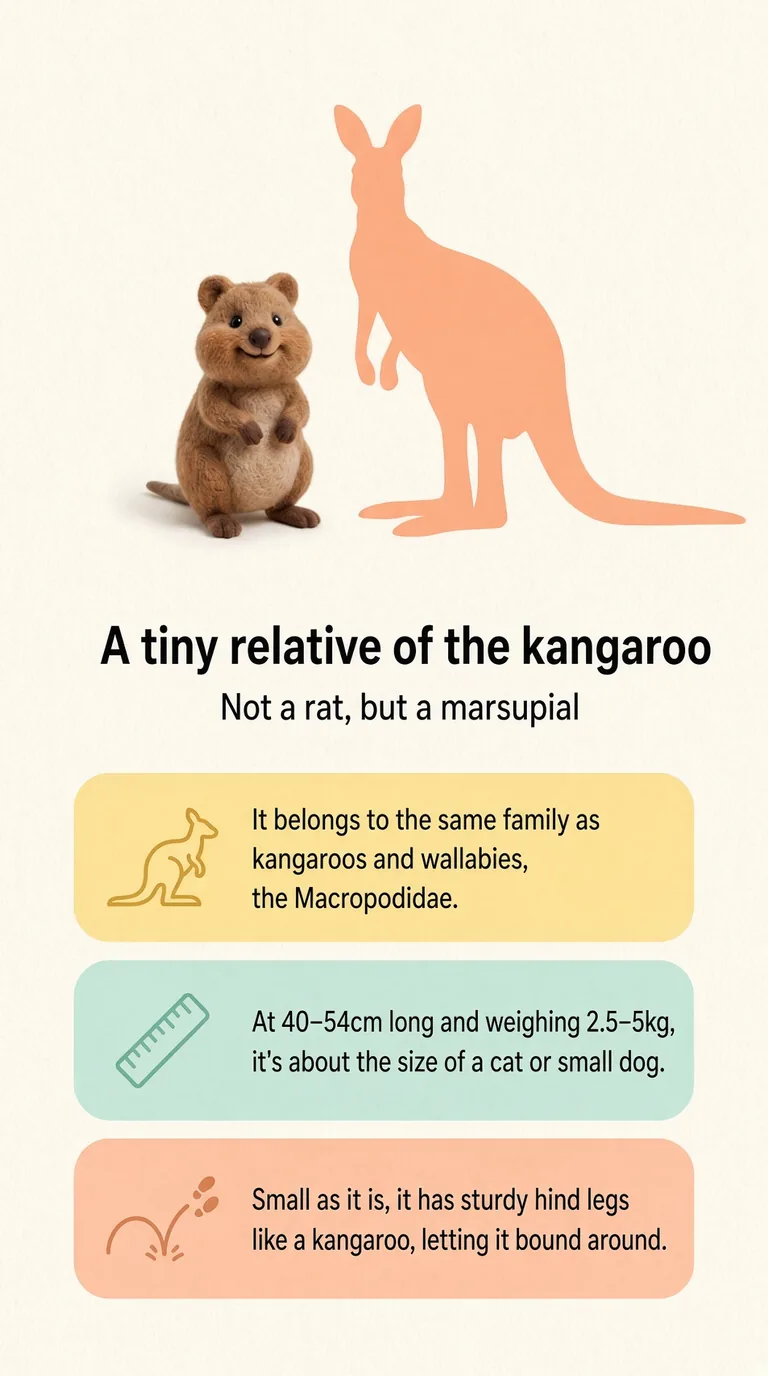
- It belongs to the same family as kangaroos and wallabies, the Macropodidae.
- At 40–54cm long and weighing 2.5–5kg, it's about the size of a cat or small dog.
- Small as it is, it has sturdy hind legs like a kangaroo, letting it bound around.
A face that smiles 365 days a year
The secret of "the happiest animal in the world"
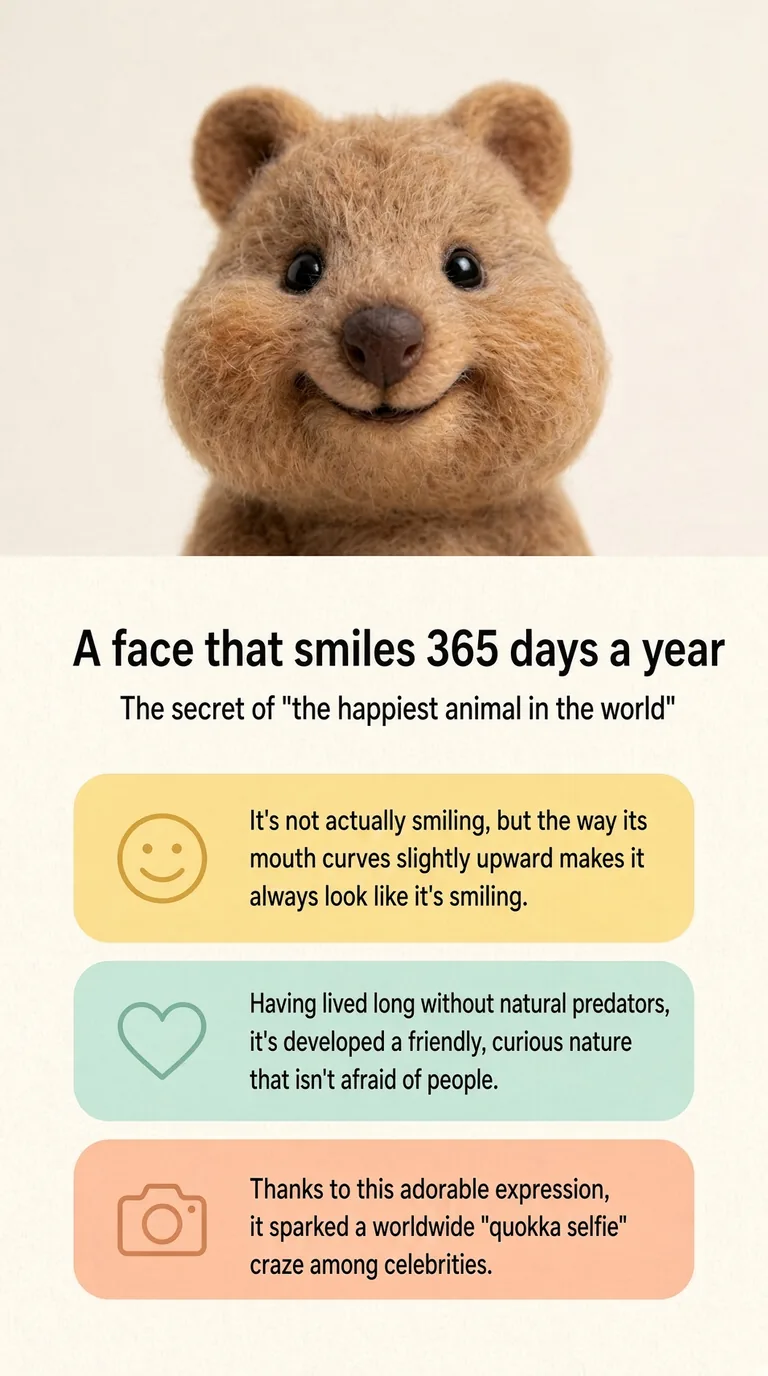
- It's not actually smiling, but the way its mouth curves slightly upward makes it always look like it's smiling.
- Having lived long without natural predators, it's developed a friendly, curious nature that isn't afraid of people.
- Thanks to this adorable expression, it sparked a worldwide "quokka selfie" craze among celebrities.
A peaceful utopia for quokkas
Rottnest Island, a pristine area in Western Australia
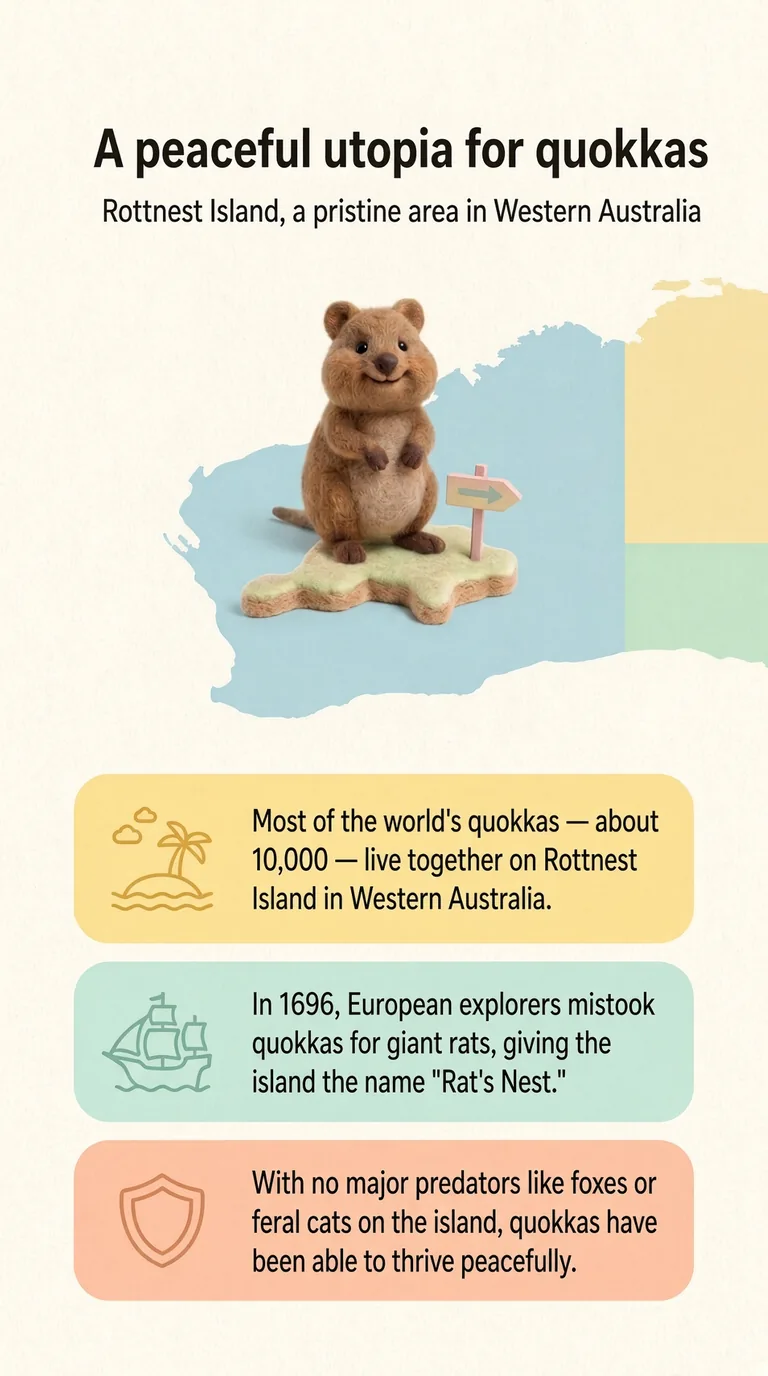
- Most of the world's quokkas — about 10,000 — live together on Rottnest Island in Western Australia.
- In 1696, European explorers mistook quokkas for giant rats, giving the island the name "Rat's Nest."
- With no major predators like foxes or feral cats on the island, quokkas have been able to thrive peacefully.
Tough enough to survive even in the desert
A small but powerful master of the wild
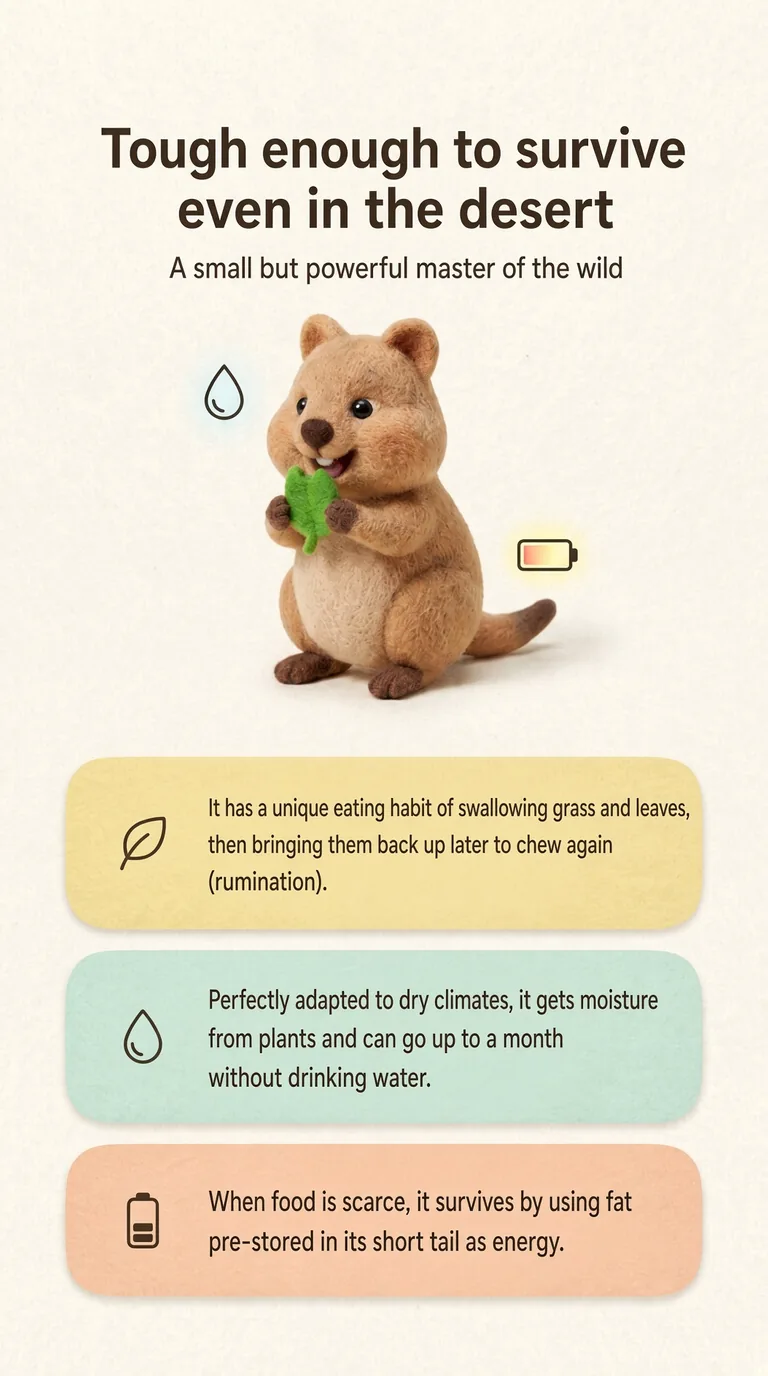
- It has a unique eating habit of swallowing grass and leaves, then bringing them back up later to chew again (rumination).
- Perfectly adapted to dry climates, it gets moisture from plants and can go up to a month without drinking water.
- When food is scarce, it survives by using fat pre-stored in its short tail as energy.
A hidden climbing ability
In search of fresh leaves
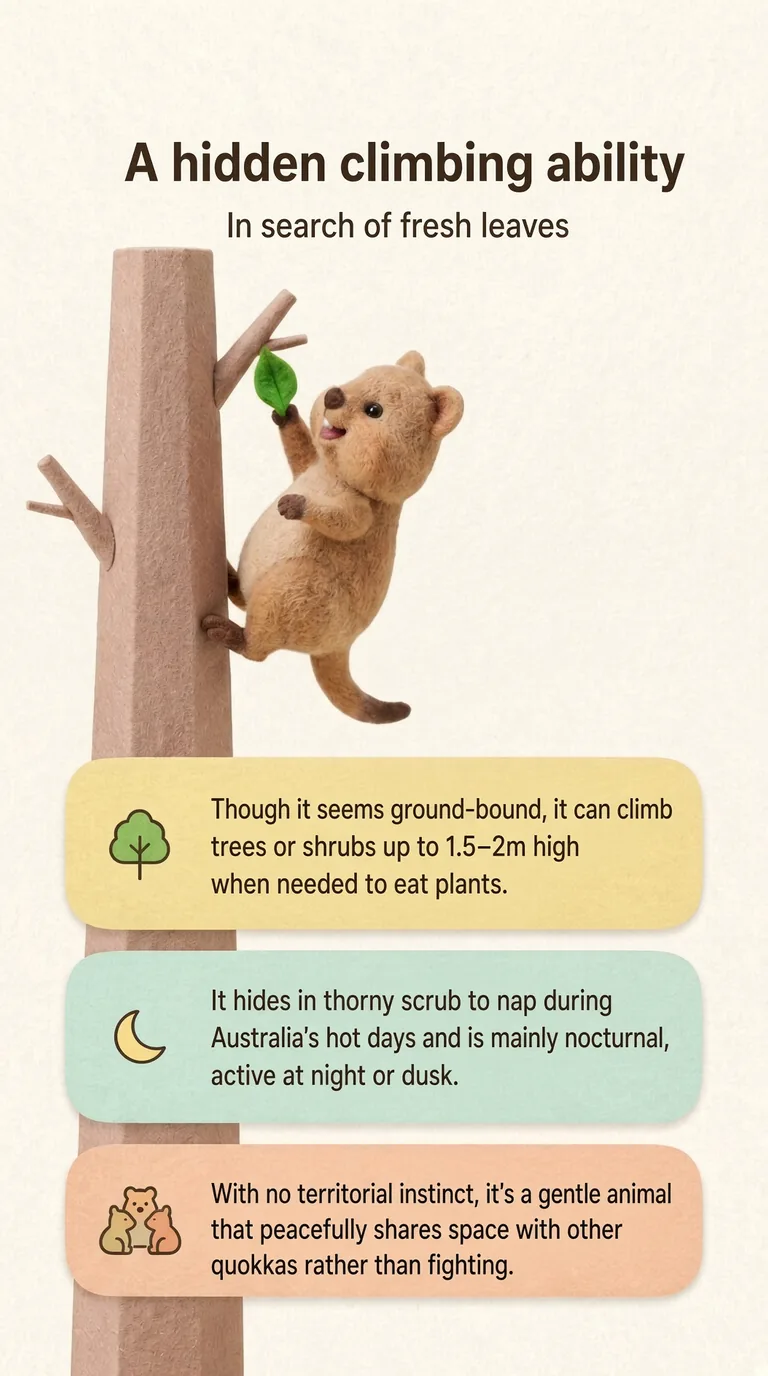
- Though it seems ground-bound, it can climb trees or shrubs up to 1.5–2m high when needed to eat plants.
- It hides in thorny scrub to nap during Australia's hot days and is mainly nocturnal, active at night or dusk.
- With no territorial instinct, it's a gentle animal that peacefully shares space with other quokkas rather than fighting.
A baby quokka in the pouch
Growing up safe in mother's embrace
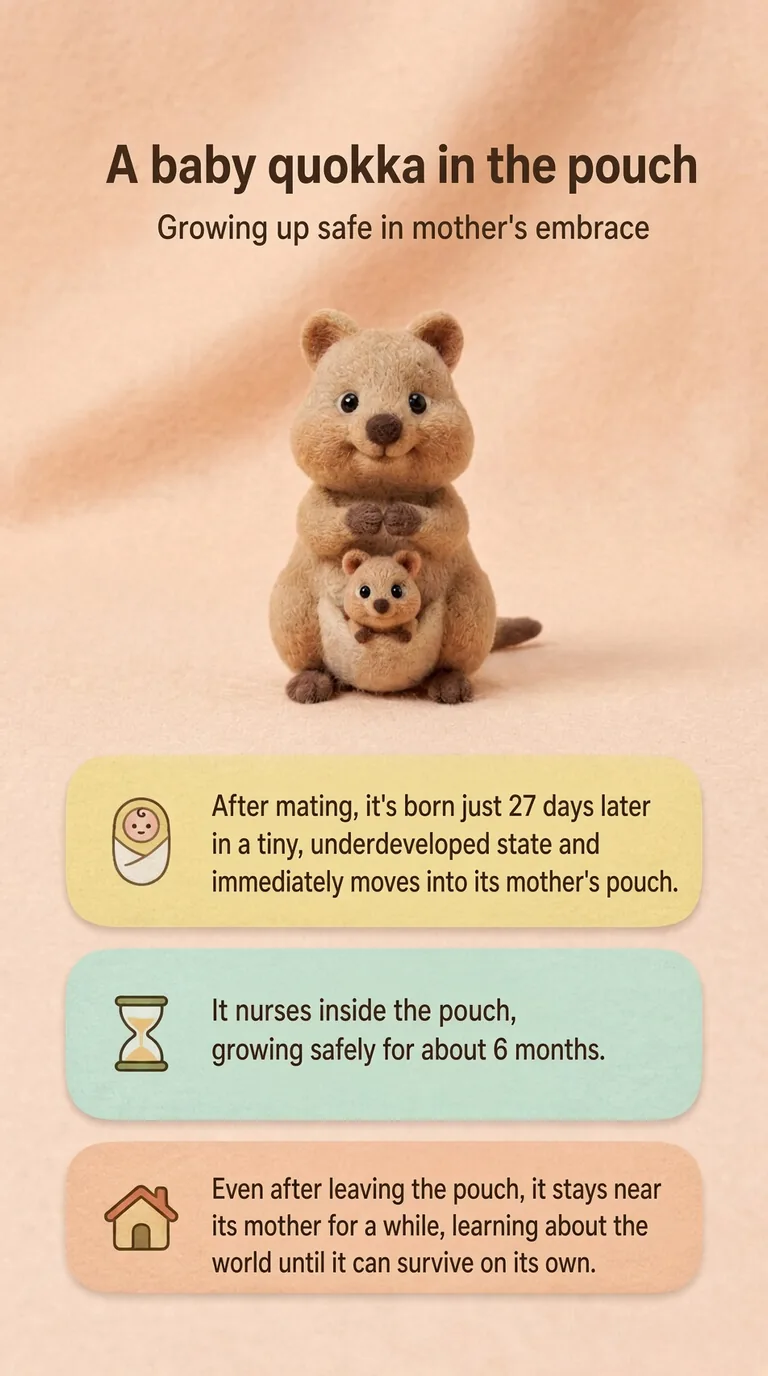
- After mating, it's born just 27 days later in a tiny, underdeveloped state and immediately moves into its mother's pouch.
- It nurses inside the pouch, growing safely for about 6 months.
- Even after leaving the pouch, it stays near its mother for a while, learning about the world until it can survive on its own.