Eurasian Lynx
Europe
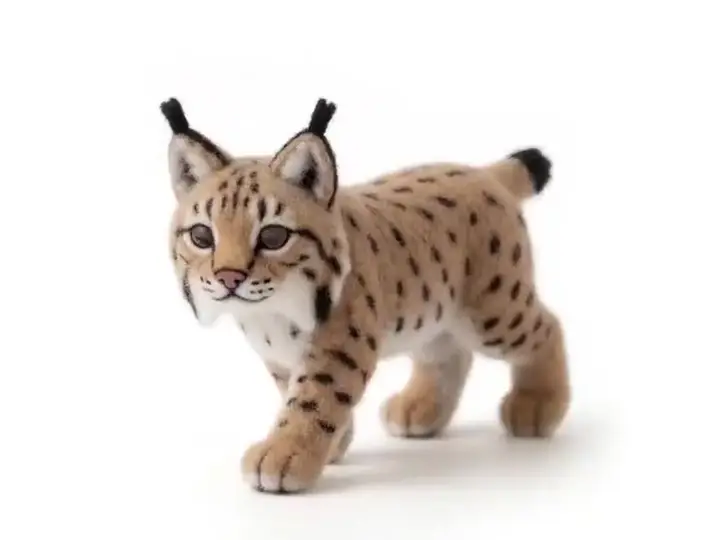
The lynx is a handsome wild cat with tufts of black fur on the tips of its ears. These tufts help it hear even the smallest sounds. Its wide, fluffy paws let it walk lightly across the snow as it hunts.
Quick facts
- Habitat
- It lives in the thick conifer forests of northern Europe.
- Diet
- It hunts rabbits, deer, birds, and more.
- Size and weight
- Length 80–130cm, weight 15–30kg.
- Lifespan
- About 17 years
- Conservation status
- Least Concern
- Fun facts
- It can clearly see a mouse 75m away!
Its wide paws work like snowshoes, so it doesn't sink into the snow.
Learn more
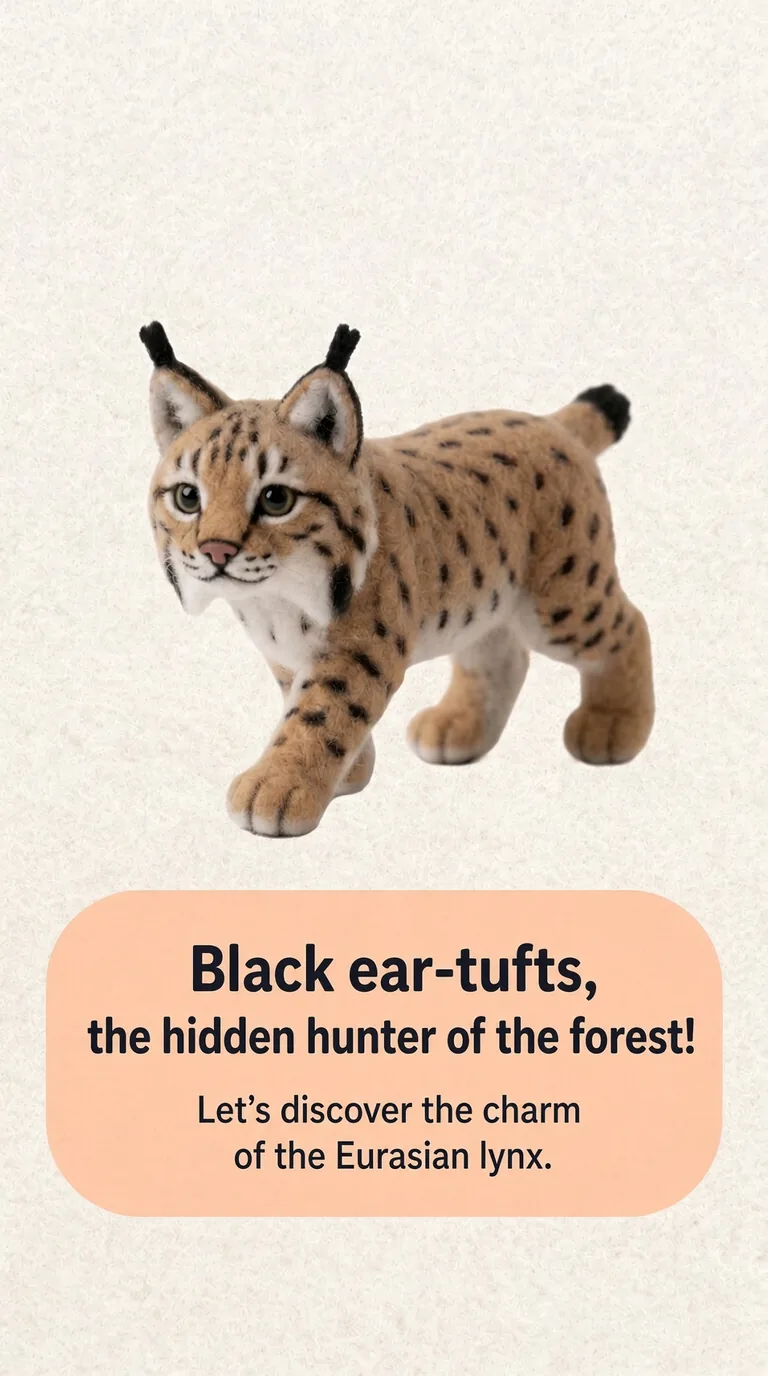
Black ear-tufts, the hidden hunter of the forest!
Let's discover the charm of the Eurasian lynx.
3 charming features
A closer look at its unique appearance!
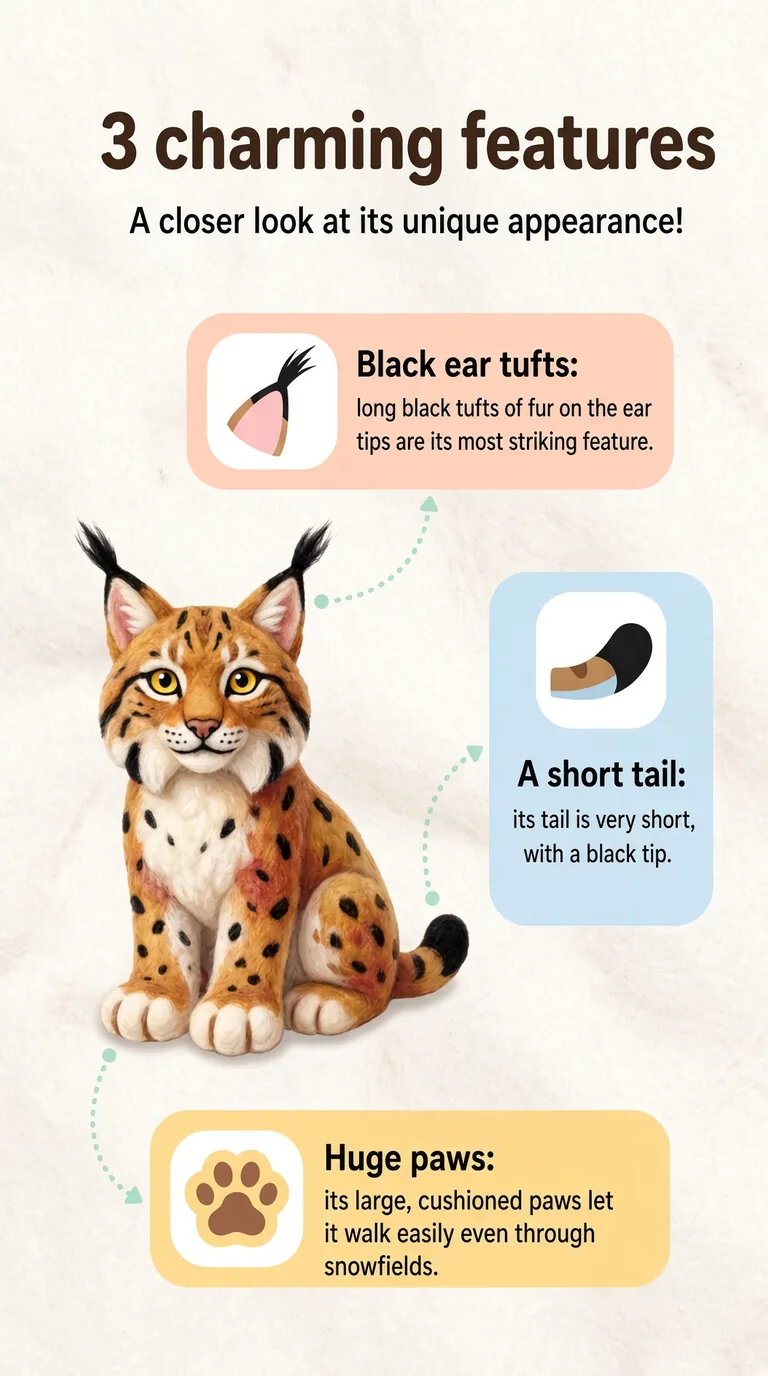
- Black ear tufts — long black tufts of fur on the ear tips are its most striking feature.
- A short tail — its tail is very short, with a black tip.
- Huge paws — its large, cushioned paws let it walk easily even through snowfields.
The big brother of the lynx family
Among the 4 species worldwide, the Eurasian lynx is the largest!
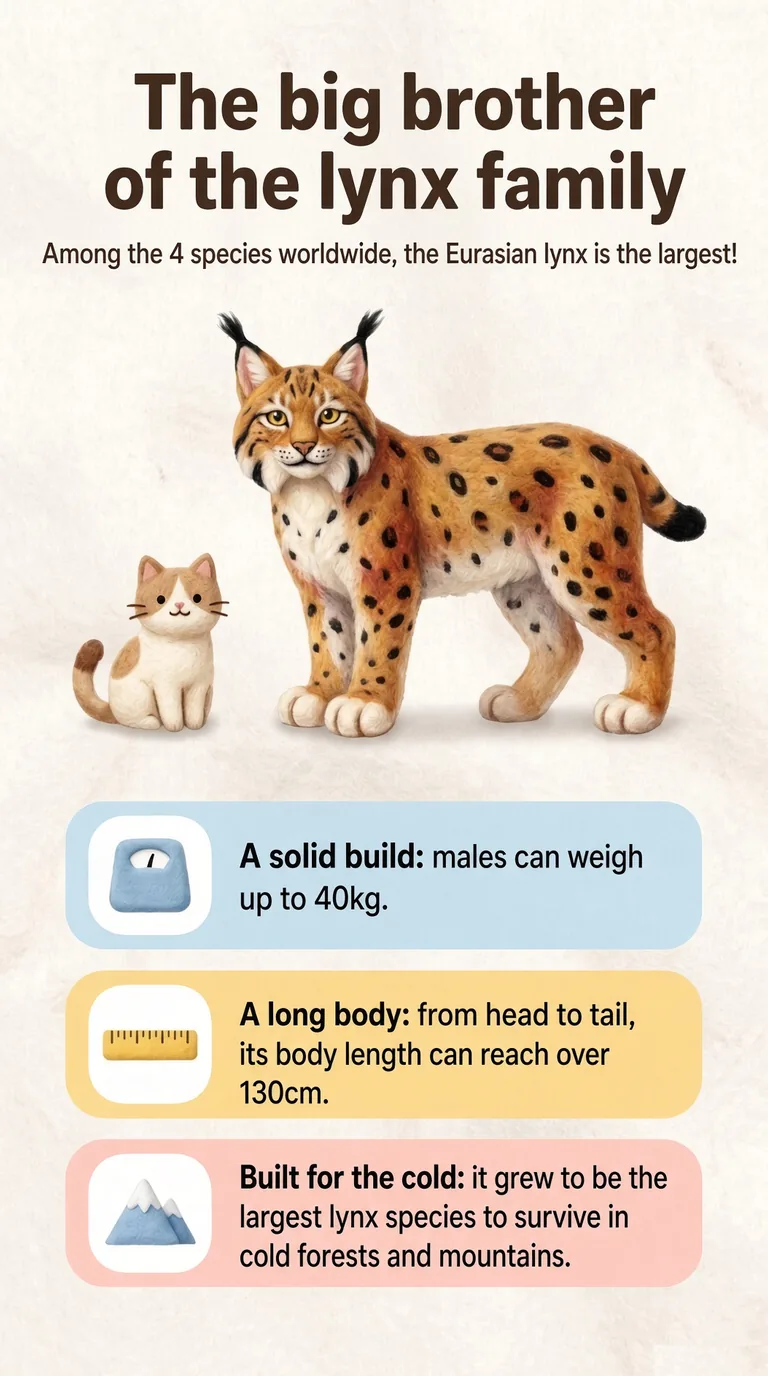
A solid build: males can weigh up to 40kg.
A long body: from head to tail, its body length can reach over 130cm.
Built for the cold: it grew to be the largest lynx species to survive in cold forests and mountains.
Natural snowshoes
The special secret to walking easily even through deep snow
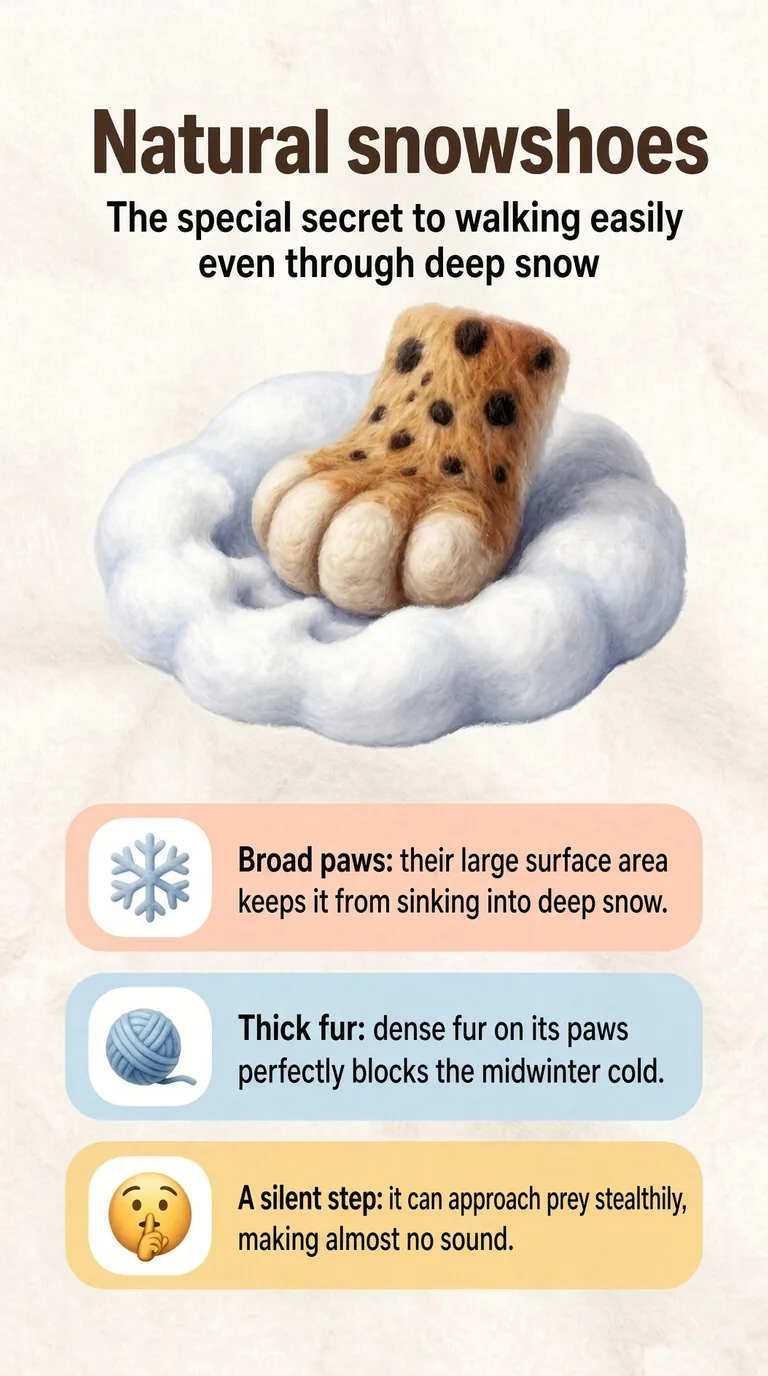
- Broad paws — their large surface area keeps it from sinking into deep snow.
- Thick fur — dense fur on its paws perfectly blocks the midwinter cold.
- A silent step — it can approach prey stealthily, making almost no sound.
What does it eat?
Its hunting skill is far better than it looks
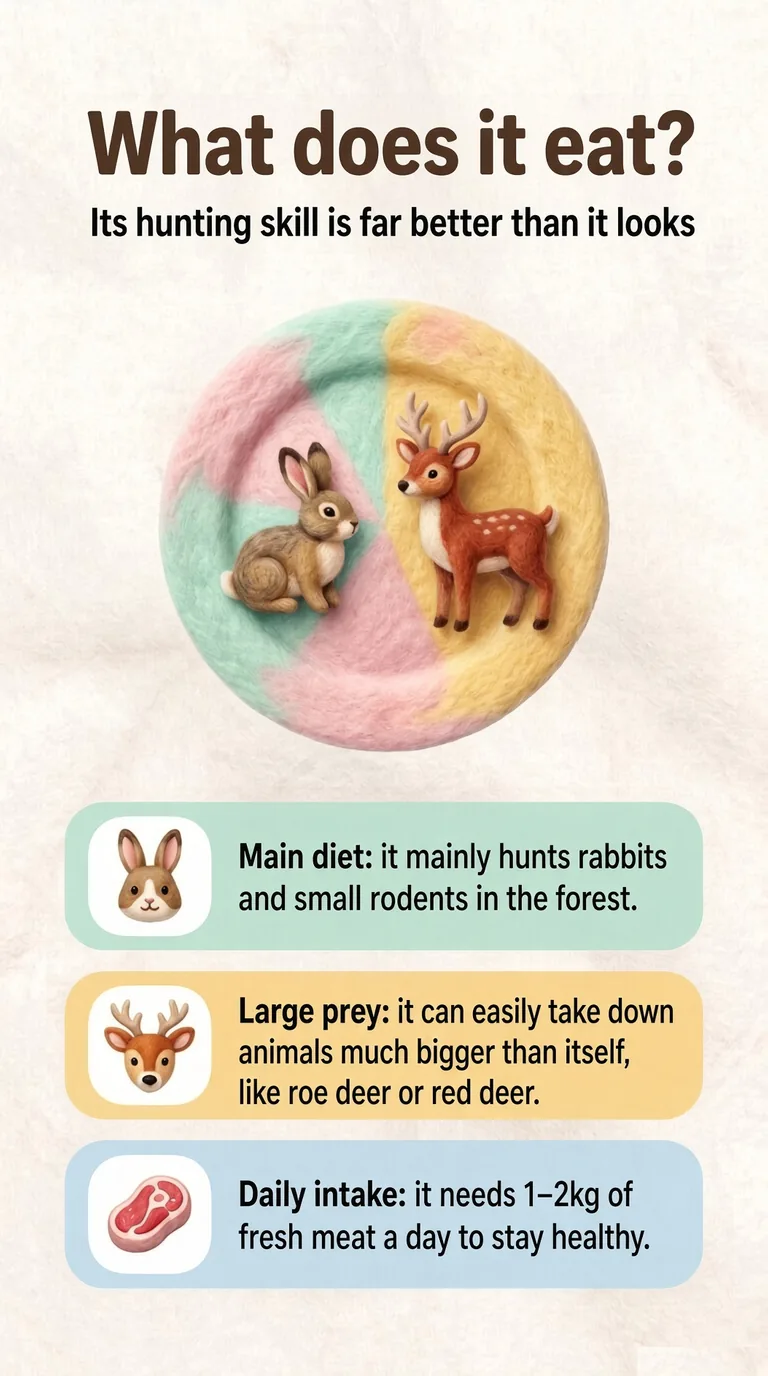
- Main diet — it mainly hunts rabbits and small rodents in the forest.
- Large prey — it can easily take down animals much bigger than itself, like roe deer or red deer.
- Daily intake — it needs 1–2kg of fresh meat a day to stay healthy.
A lonely wanderer
It loves living alone, unnoticed by anyone
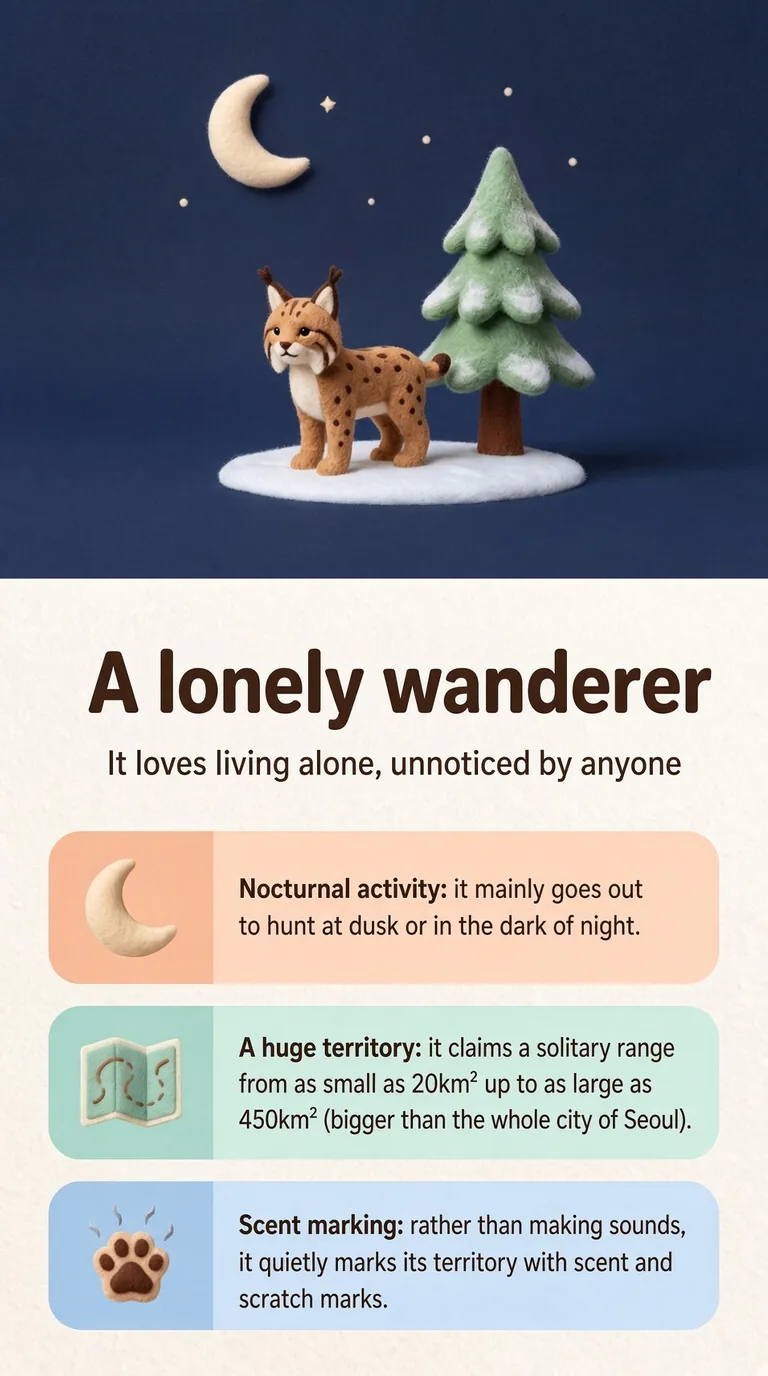
- Nocturnal activity — it mainly goes out to hunt at dusk or in the dark of night.
- A huge territory — it claims a solitary range from as small as 20km² up to as large as 450km² (bigger than the whole city of Seoul).
- Scent marking — rather than making sounds, it quietly marks its territory with scent and scratch marks.
The 'land leopard' of the Joseon dynasty
Surprisingly, it once ruled the forests of the Korean Peninsula!
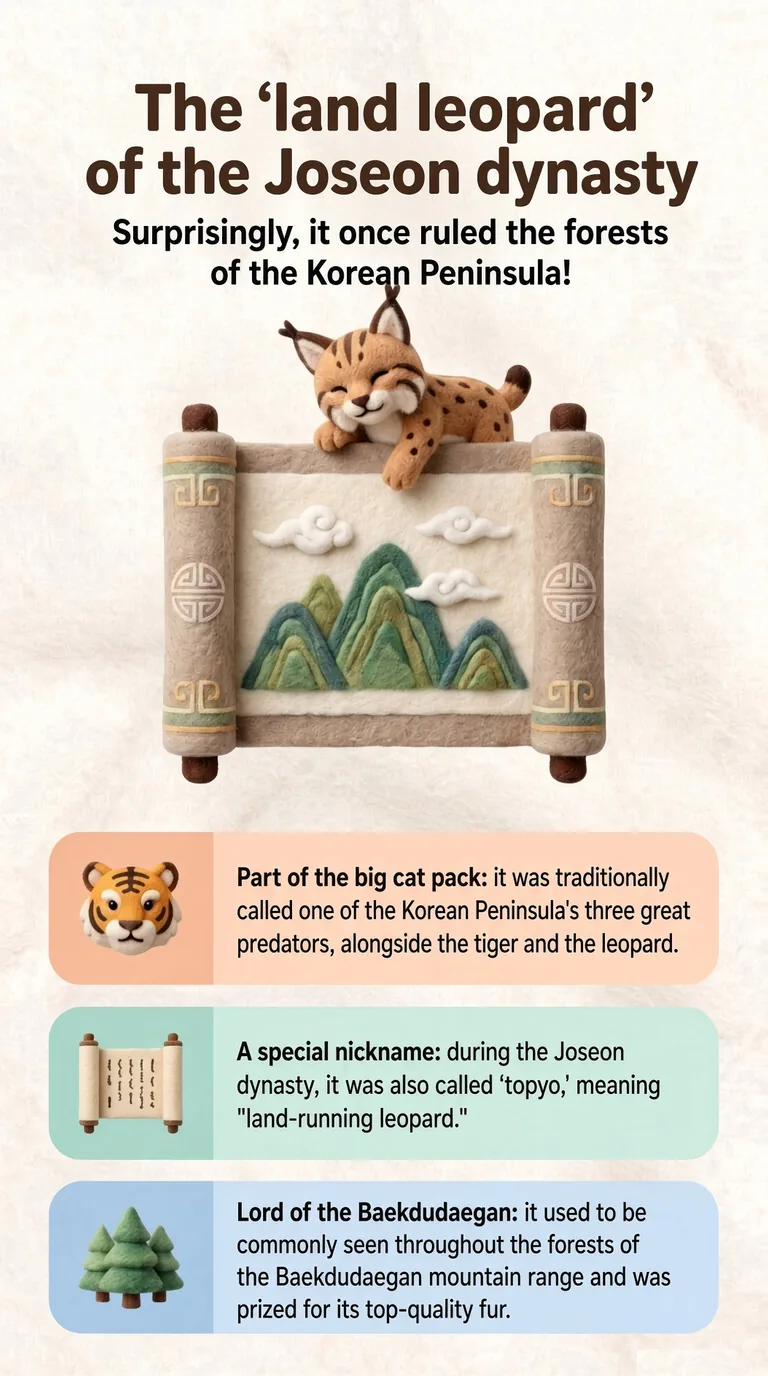
- Part of the big cat pack — it was traditionally called one of the Korean Peninsula's three great predators, alongside the tiger and the leopard.
- A special nickname — during the Joseon dynasty, it was also called 'topyo,' meaning "land-running leopard."
- Lord of the Baekdudaegan — it used to be commonly seen throughout the forests of the Baekdudaegan mountain range and was prized for its top-quality fur.