European Rabbit
Europe

The European rabbit is the kind of rabbit most people picture when they think of one. It has long ears and strong back legs, and it digs complex burrows underground where many rabbits live together.
Quick facts
- Habitat
- It lives in the grasslands, fields, forest edges, and farmland of western and southern Europe.
- Diet
- It's a plant-eater that eats grass, leaves, roots, and bark.
- Size and weight
- Length 35–50cm, weight 1.2–2.5kg.
- Lifespan
- About 5–9 years
- Conservation status
- Near Threatened
- Fun facts
- It lives in a big underground burrow made of many connected rooms!
When it spots danger, it thumps the ground with its back feet to warn other rabbits.
Learn more
The cute invader that multiplied from 24 to 200 million
The amazing survival secrets of the European rabbit that overran the Australian continent
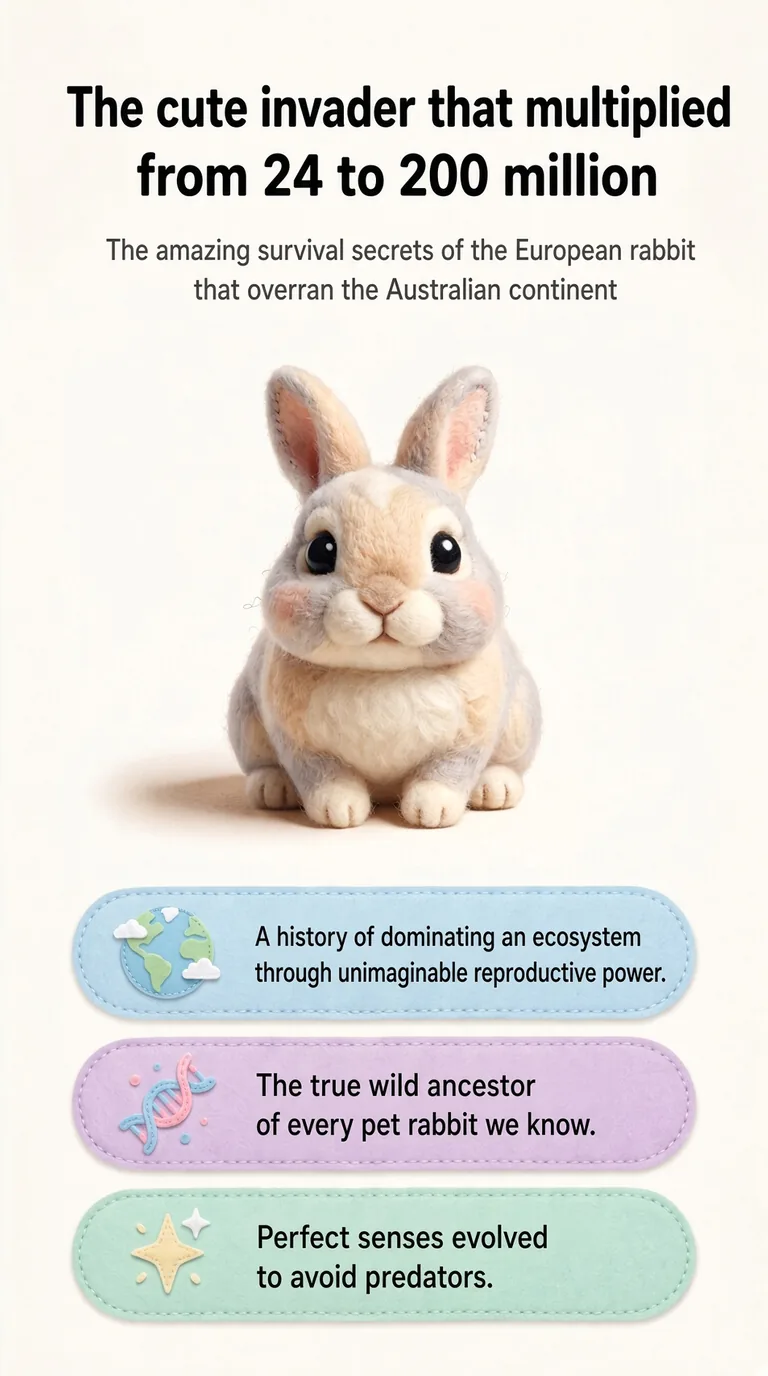
- A history of dominating an ecosystem through unimaginable reproductive power.
- The true wild ancestor of every pet rabbit we know.
- Perfect senses evolved to avoid predators.
The 24 wild rabbits that conquered Australia
The ecological miracle and disaster created by rabbits brought in for hunting in 1859
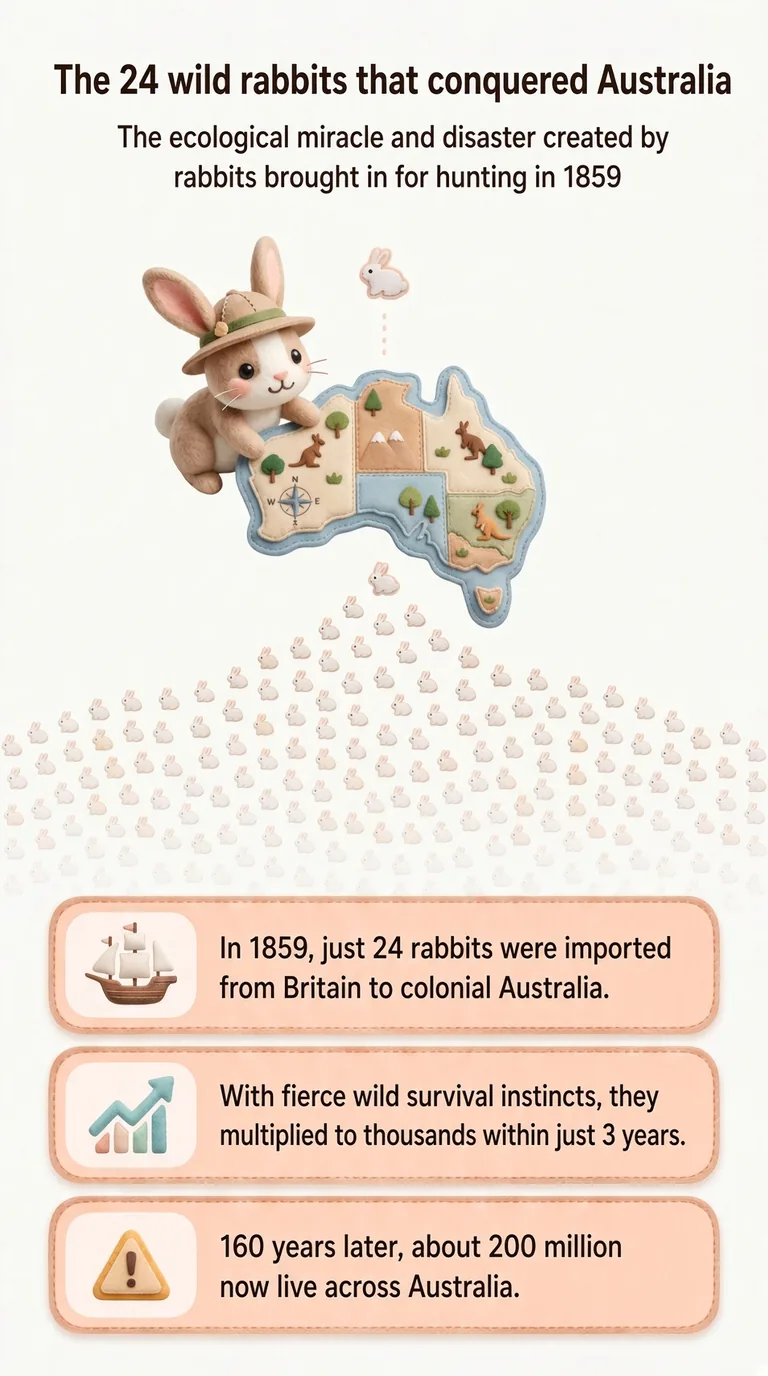
- In 1859, just 24 rabbits were imported from Britain to colonial Australia.
- With fierce wild survival instincts, they multiplied to thousands within just 3 years.
- 160 years later, about 200 million now live across Australia.
The true ancestor of the rabbits we know
The sole root of countless pet rabbit breeds worldwide, the European rabbit
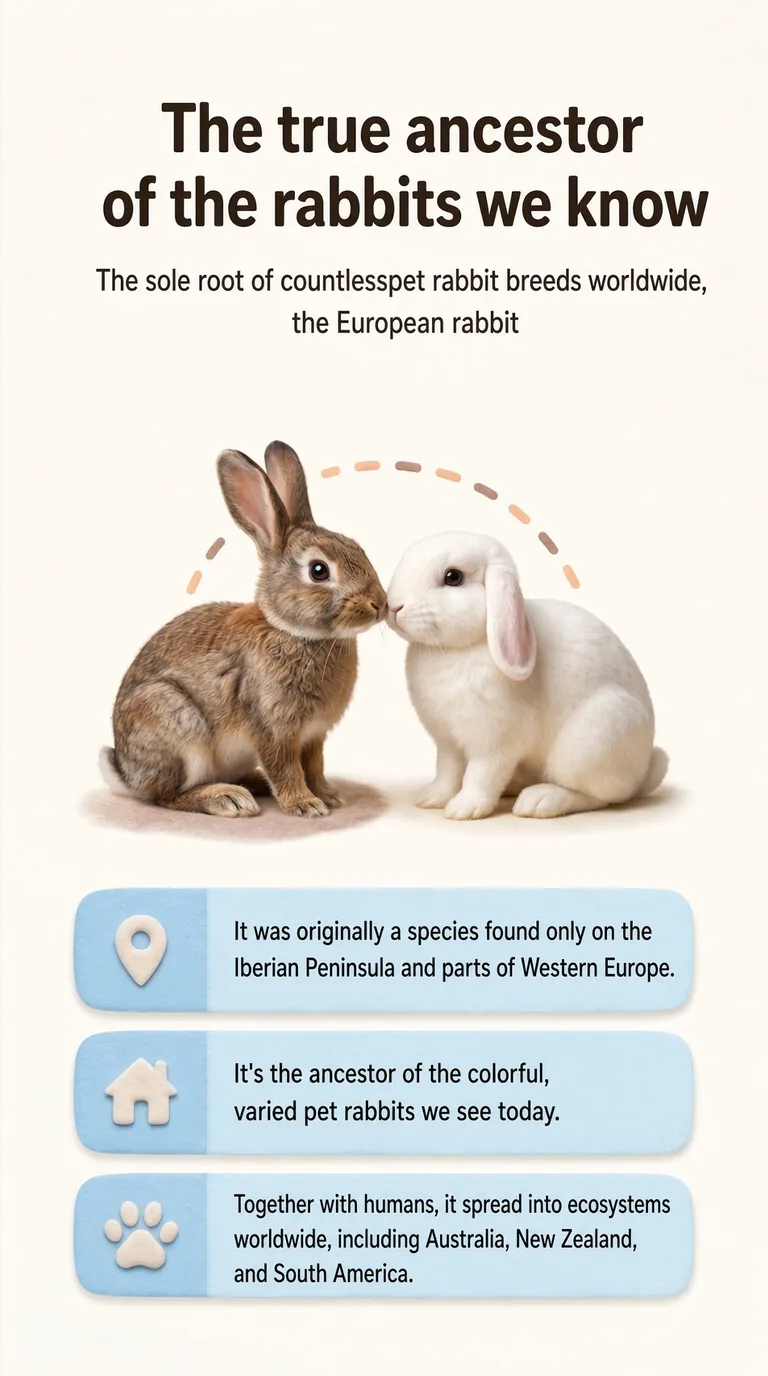
- It was originally a species found only on the Iberian Peninsula and parts of Western Europe.
- It's the ancestor of the colorful, varied pet rabbits we see today.
- Together with humans, it spread into ecosystems worldwide, including Australia, New Zealand, and South America.
A complex underground maze
The European rabbit's perfect safe house, the warren
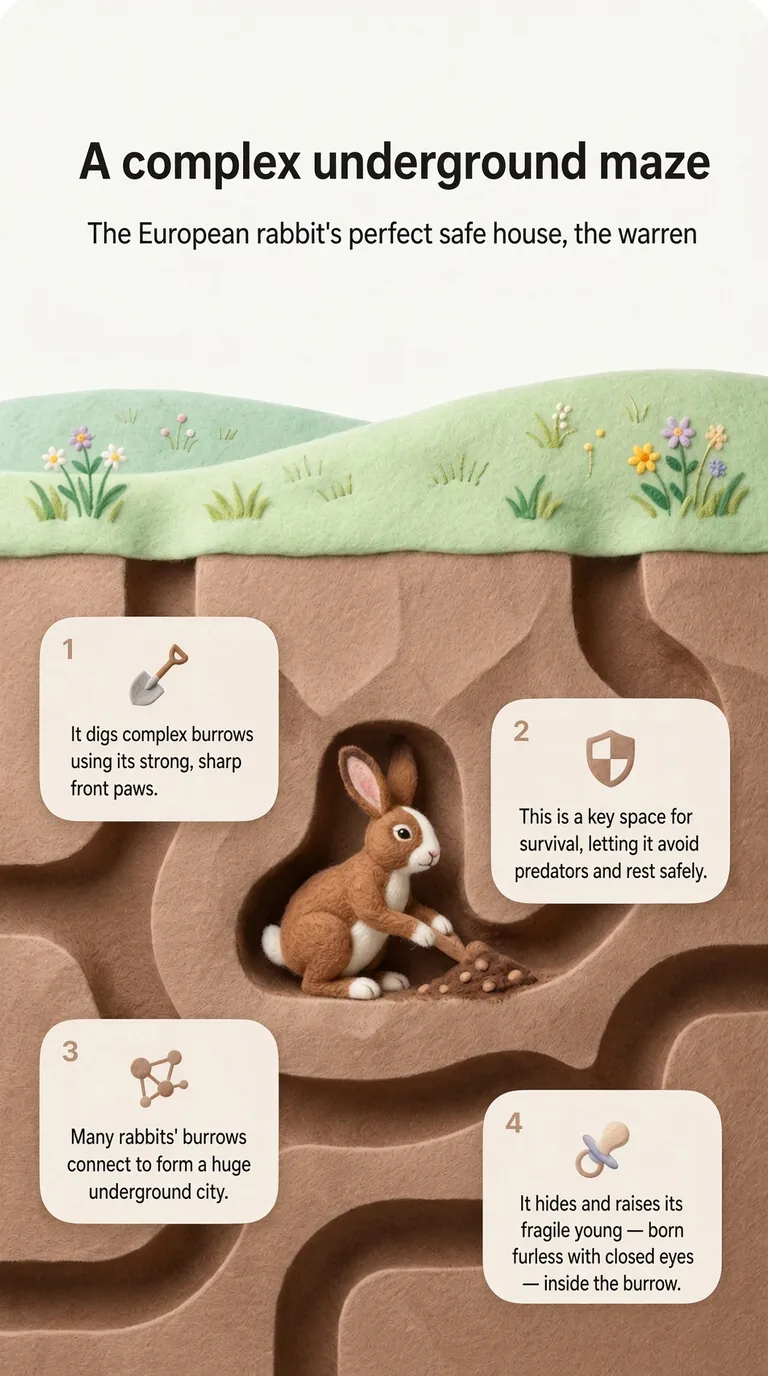
- It digs complex burrows using its strong, sharp front paws.
- This is a key space for survival, letting it avoid predators and rest safely.
- Many rabbits' burrows connect to form a huge underground city.
- It hides and raises its fragile young — born furless with closed eyes — inside the burrow.
Rabbits and hares are completely different
Different habitats and biological traits from the moment of birth
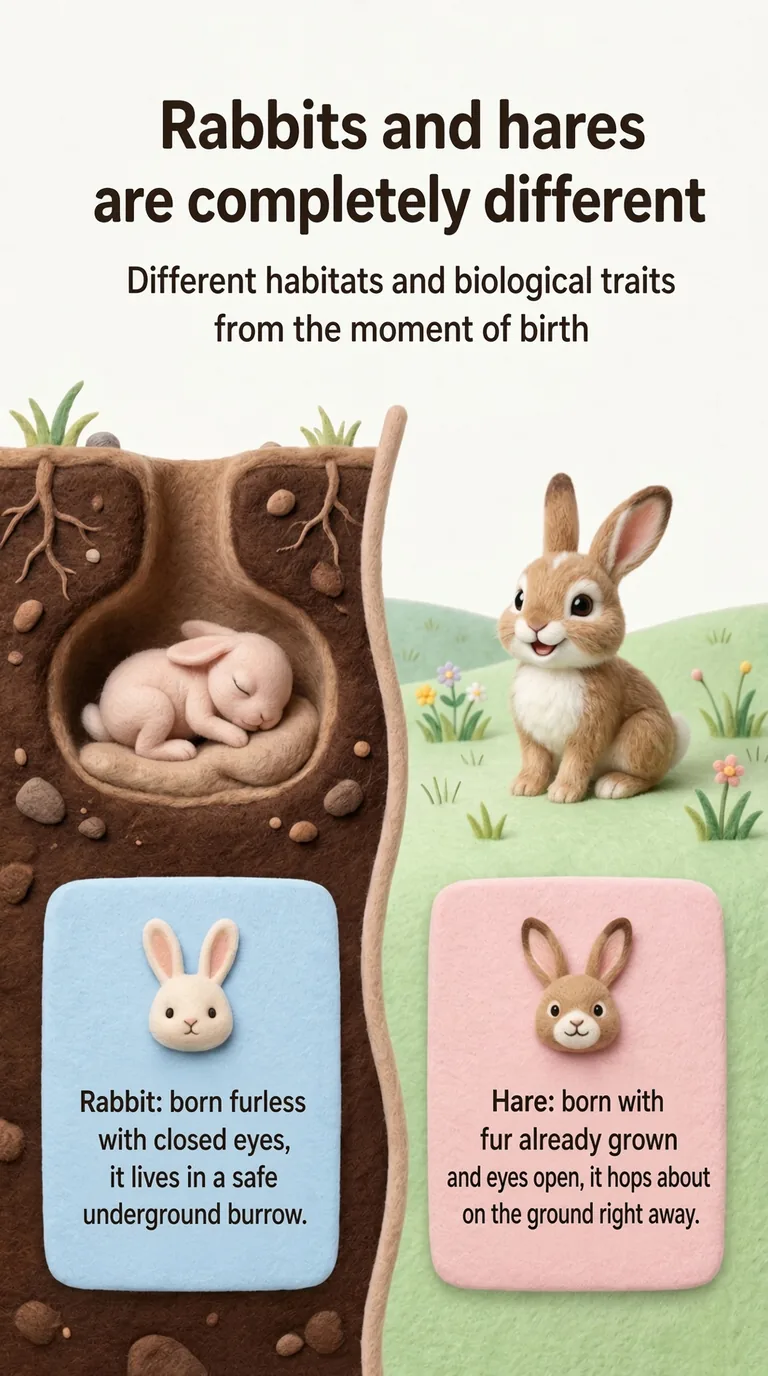
- Rabbit — born furless with closed eyes, it lives in a safe underground burrow.
- Hare — born with fur already grown and eyes open, it hops about on the ground right away.
A 360-degree radar and a natural air conditioner
Perfect sensory organs evolved to detect predators
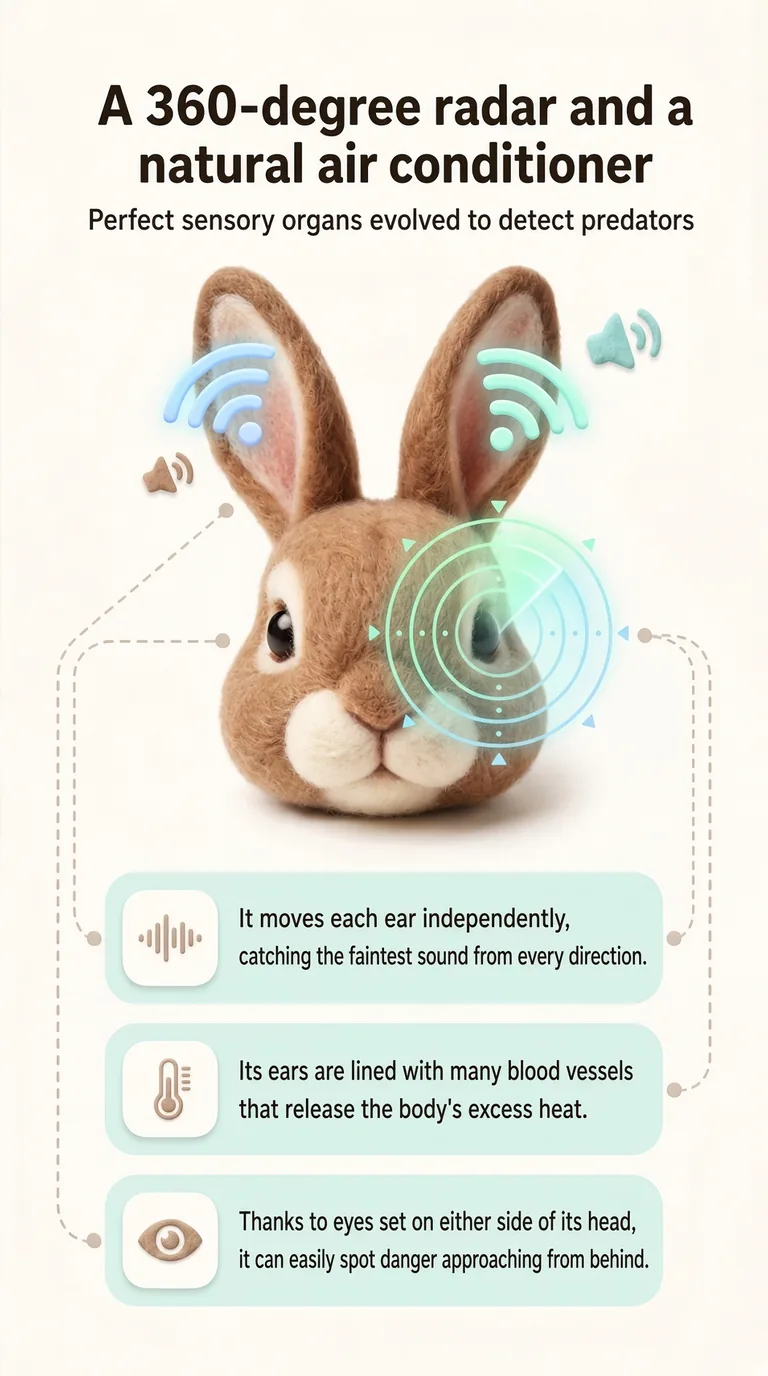
- It moves each ear independently, catching the faintest sound from every direction.
- Its ears are lined with many blood vessels that release the body's excess heat.
- Thanks to eyes set on either side of its head, it can easily spot danger approaching from behind.
Zigzag running and ever-growing teeth
The ultimate survival weapons of a small but powerful wild rabbit

- Its long, sturdy hind legs give it tremendous jumping power and explosive running speed.
- While running, it sharply changes direction to shake off pursuing predators.
- Its front and back teeth keep growing continuously throughout its life.
- It constantly chews on tough grass and bark to keep its teeth worn to the right length.
A small animal with a huge impact on the ecosystem
A fascinating animal that shapes nature through its remarkable vitality
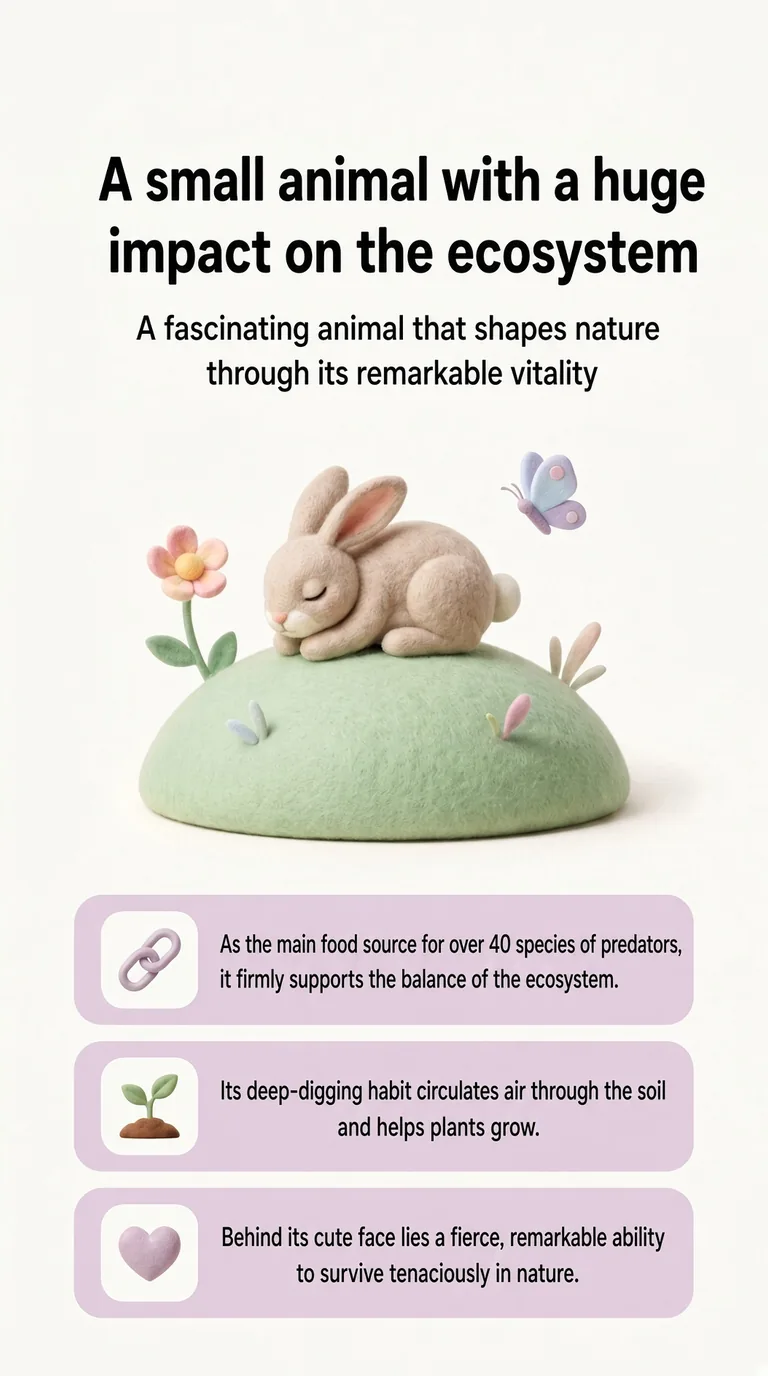
- As the main food source for over 40 species of predators, it firmly supports the balance of the ecosystem.
- Its deep-digging habit circulates air through the soil and helps plants grow.
- Behind its cute face lies a fierce, remarkable ability to survive tenaciously in nature.