Giant Anteater
South America
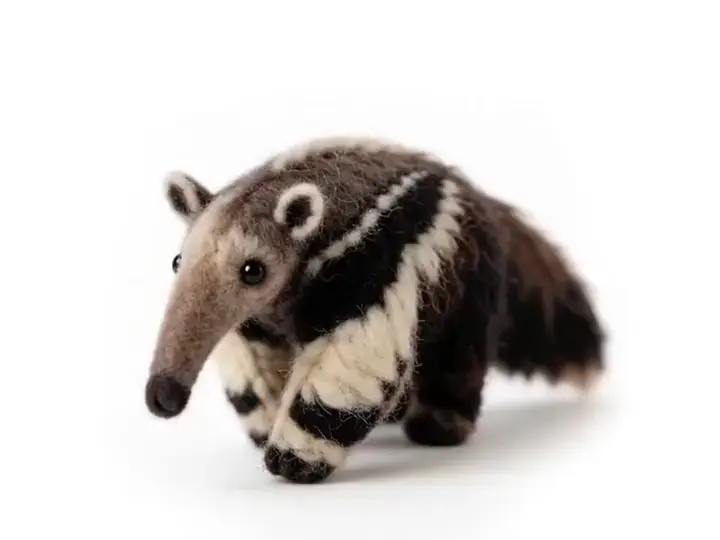
The giant anteater is an unusual animal with a long snout and a big, bushy tail. It has no teeth at all, so it laps up ants and termites with a sticky tongue that's 60cm long. It can eat as many as 30,000 in a single day!
Quick facts
- Habitat
- It lives in the grasslands, wetlands, and rainforests of Central and South America.
- Diet
- It laps up ants and termites with its long tongue.
- Size and weight
- Length 1.8–2.4m, weight 18–50kg.
- Lifespan
- About 15 years
- Conservation status
- Vulnerable
- Fun facts
- It can flick its tongue in and out 150 times a minute!
When it sleeps, it covers itself with its big tail like a blanket.
Learn more
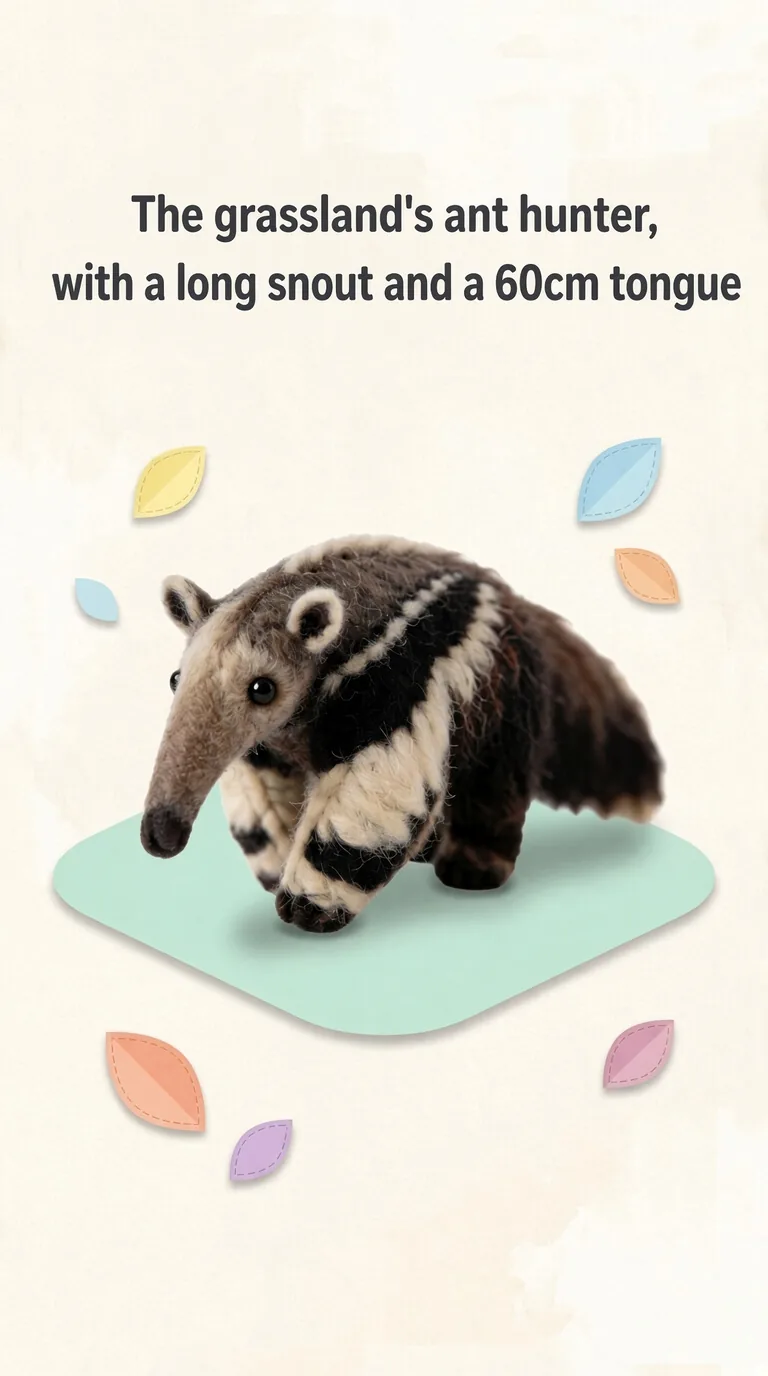
The grassland's ant hunter, with a long snout and a 60cm tongue
Giant Anteater
The largest anteater species
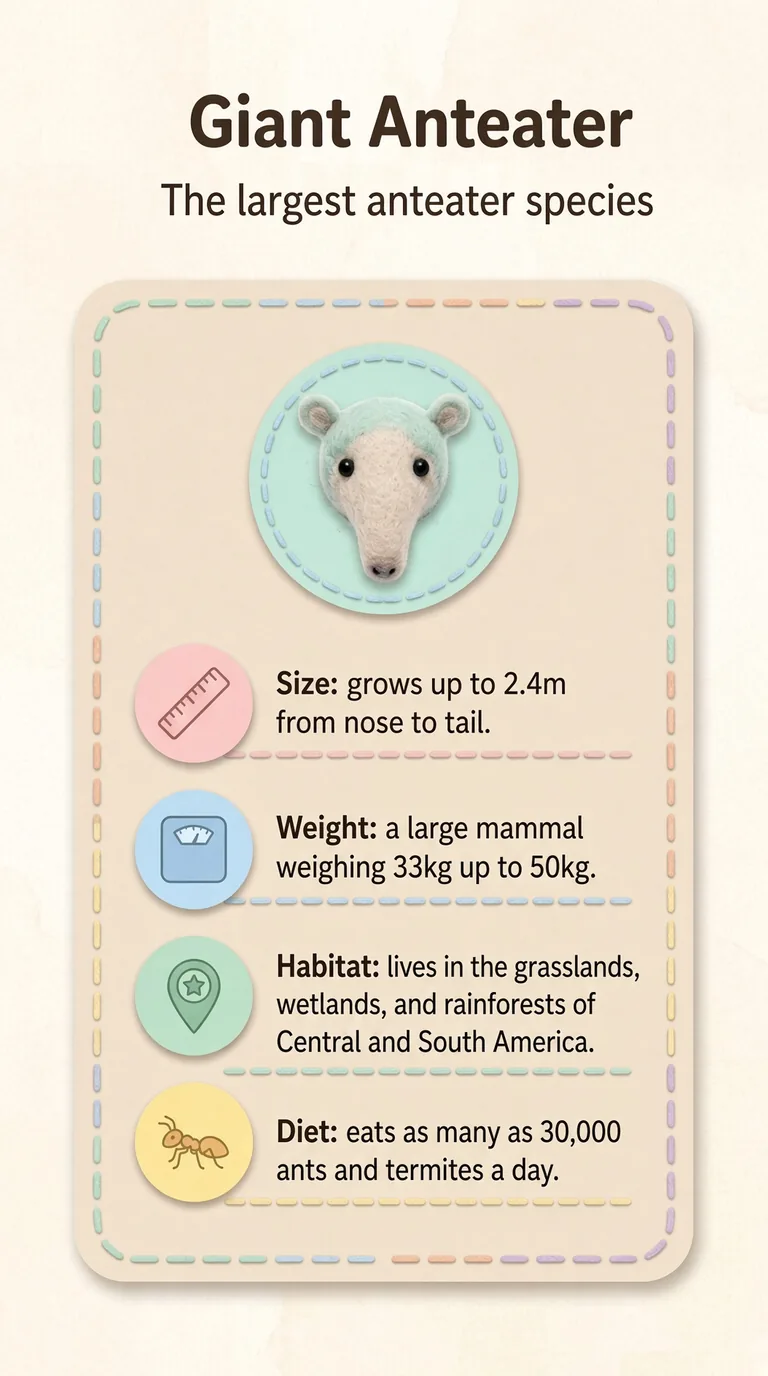
- Size — grows up to 2.4m from nose to tail.
- Weight — a large mammal weighing 33kg up to 50kg.
- Habitat — lives in the grasslands, wetlands, and rainforests of Central and South America.
- Diet — eats as many as 30,000 ants and termites a day.
Amazing sense of smell, weak eyesight
It sees the world through its nose, not its eyes
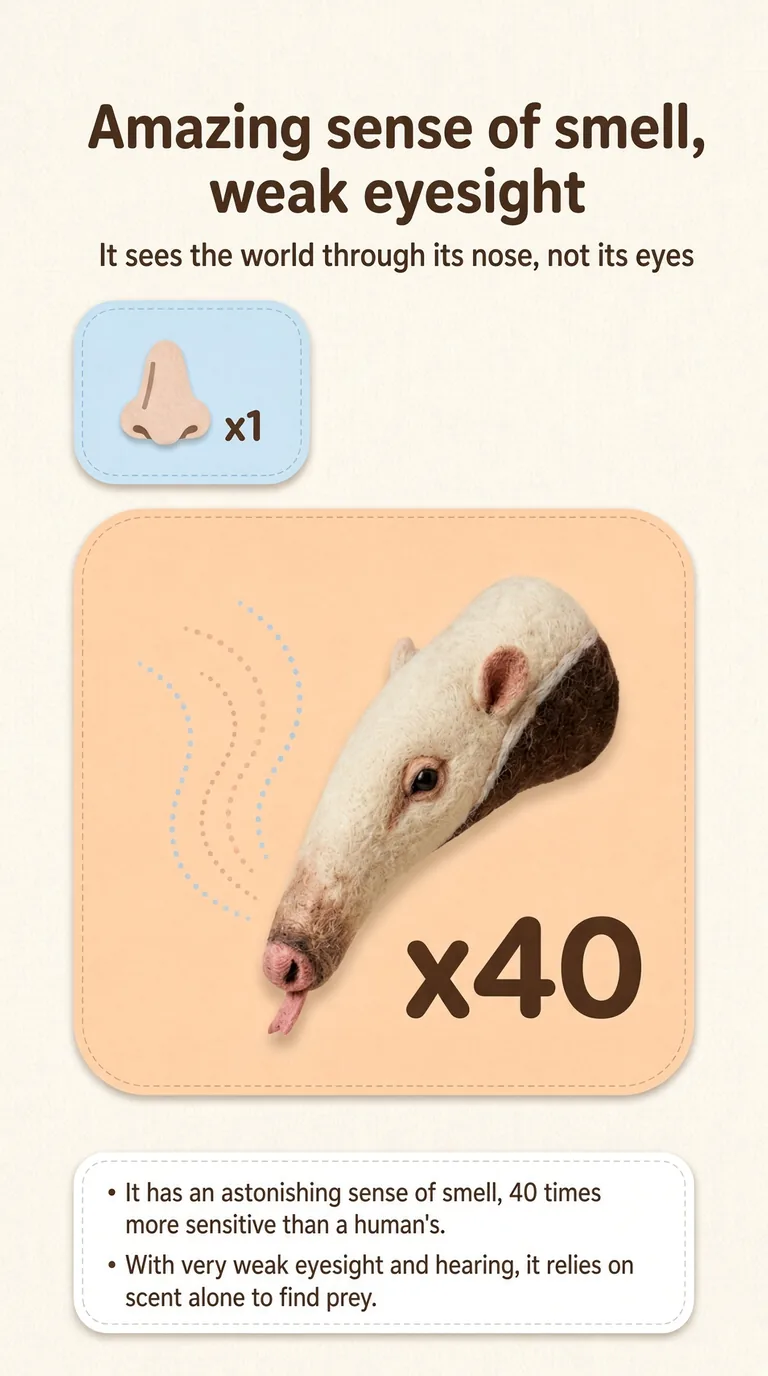
- It has an astonishing sense of smell, 40 times more sensitive than a human's.
- With very weak eyesight and hearing, it relies on scent alone to find prey.
A 60cm sticky weapon
The secret to hunting perfectly without teeth
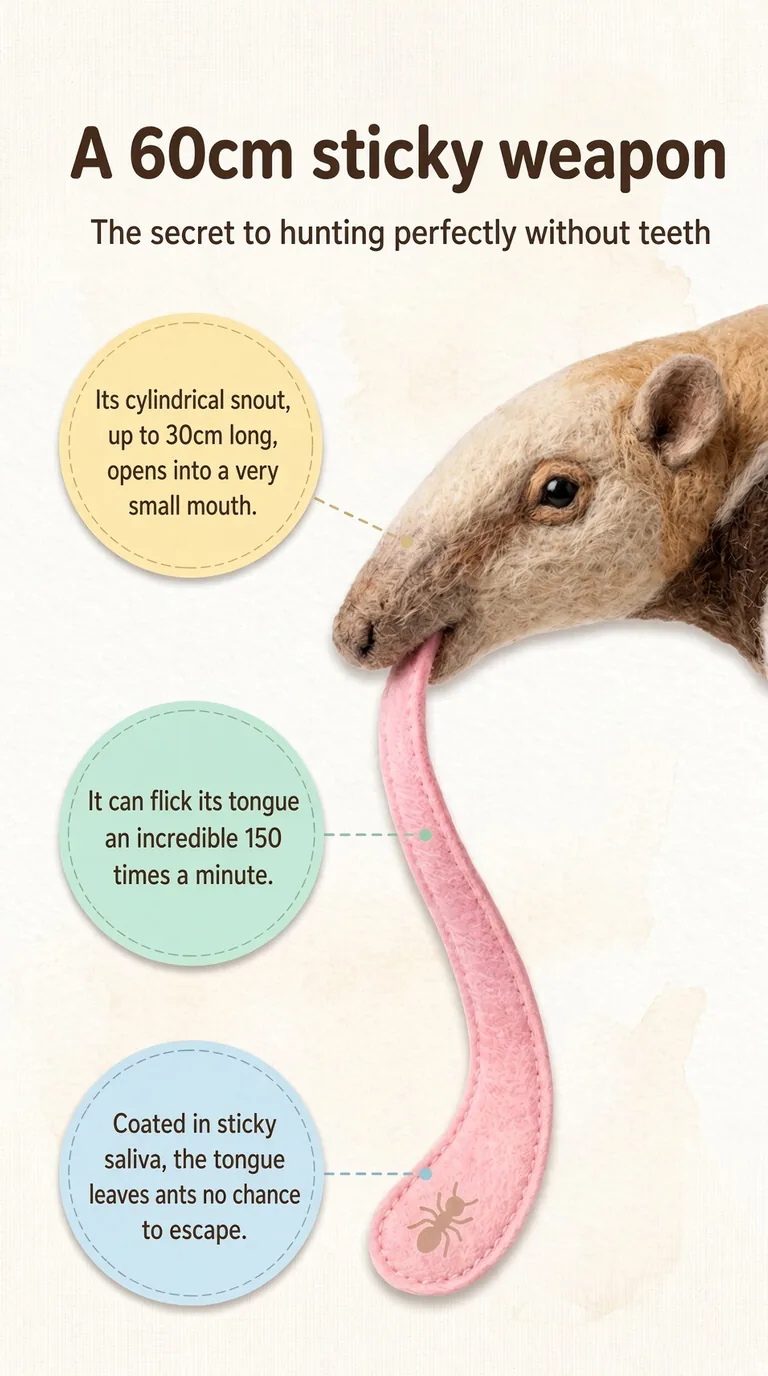
- Its cylindrical snout, up to 30cm long, opens into a very small mouth.
- It can flick its tongue an incredible 150 times a minute.
- Coated in sticky saliva, the tongue leaves ants no chance to escape.
The secret to eating without teeth
A special 3-step digestive factory with no stomach acid
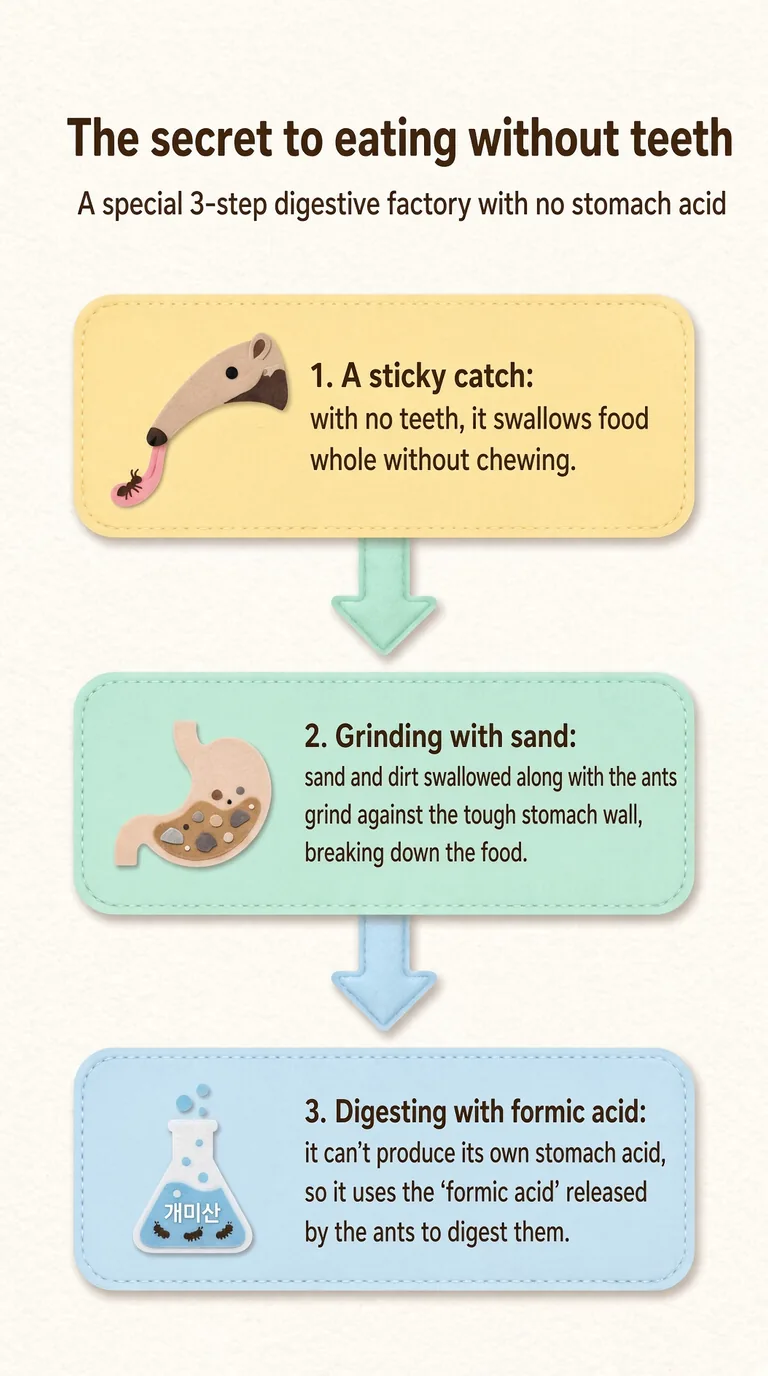
- A sticky catch — with no teeth, it swallows food whole without chewing.
- Grinding with sand — sand and dirt swallowed along with the ants grind against the tough stomach wall, breaking down the food.
- Digesting with formic acid — it can't produce its own stomach acid, so it uses the 'formic acid' released by the ants to digest them.
Massive 15cm claws
Both a tool and a powerful weapon of defense
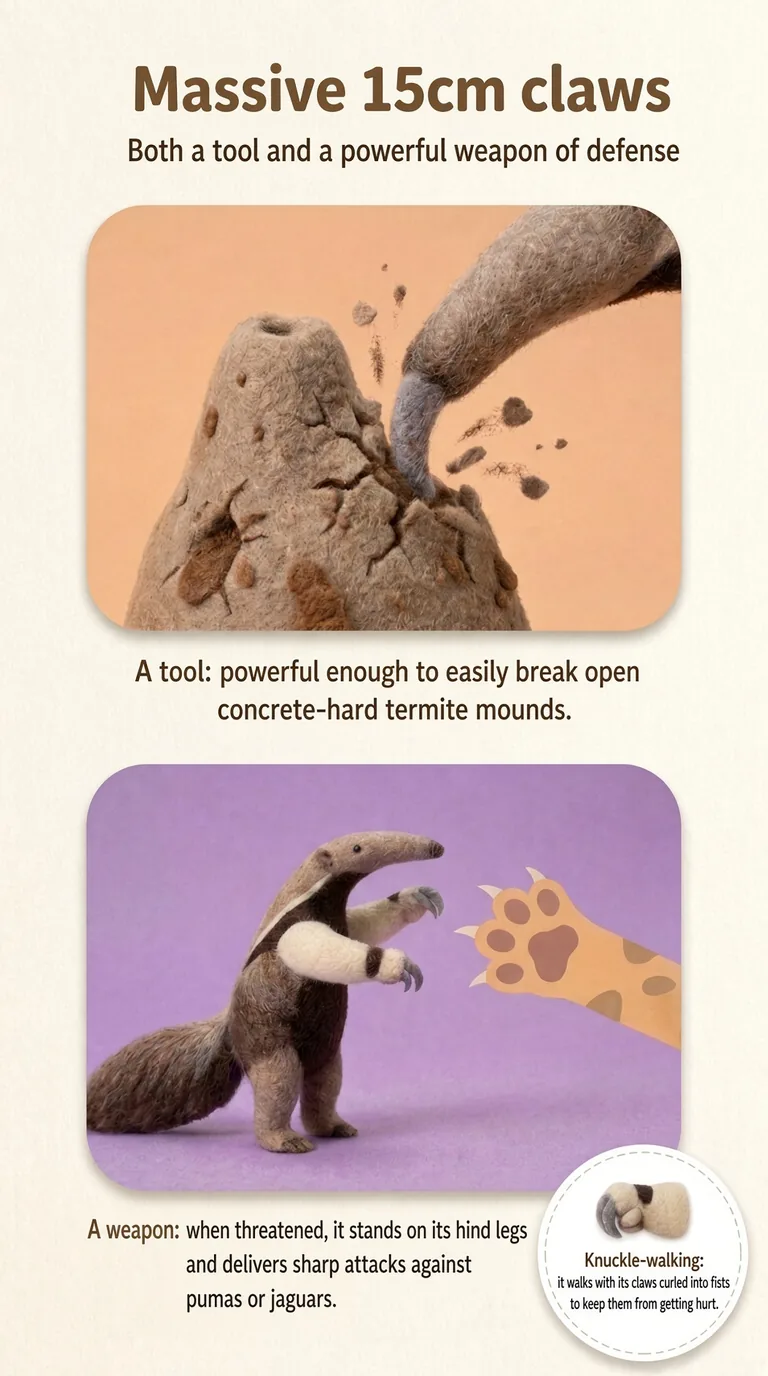
- A tool — powerful enough to easily break open concrete-hard termite mounds.
- A weapon — when threatened, it stands on its hind legs and delivers sharp attacks against pumas or jaguars.
- Knuckle-walking — it walks with its claws curled into fists to keep them from getting hurt.
A cozy, all-purpose blanket tail
A big, bushy tail that serves 11 different purposes
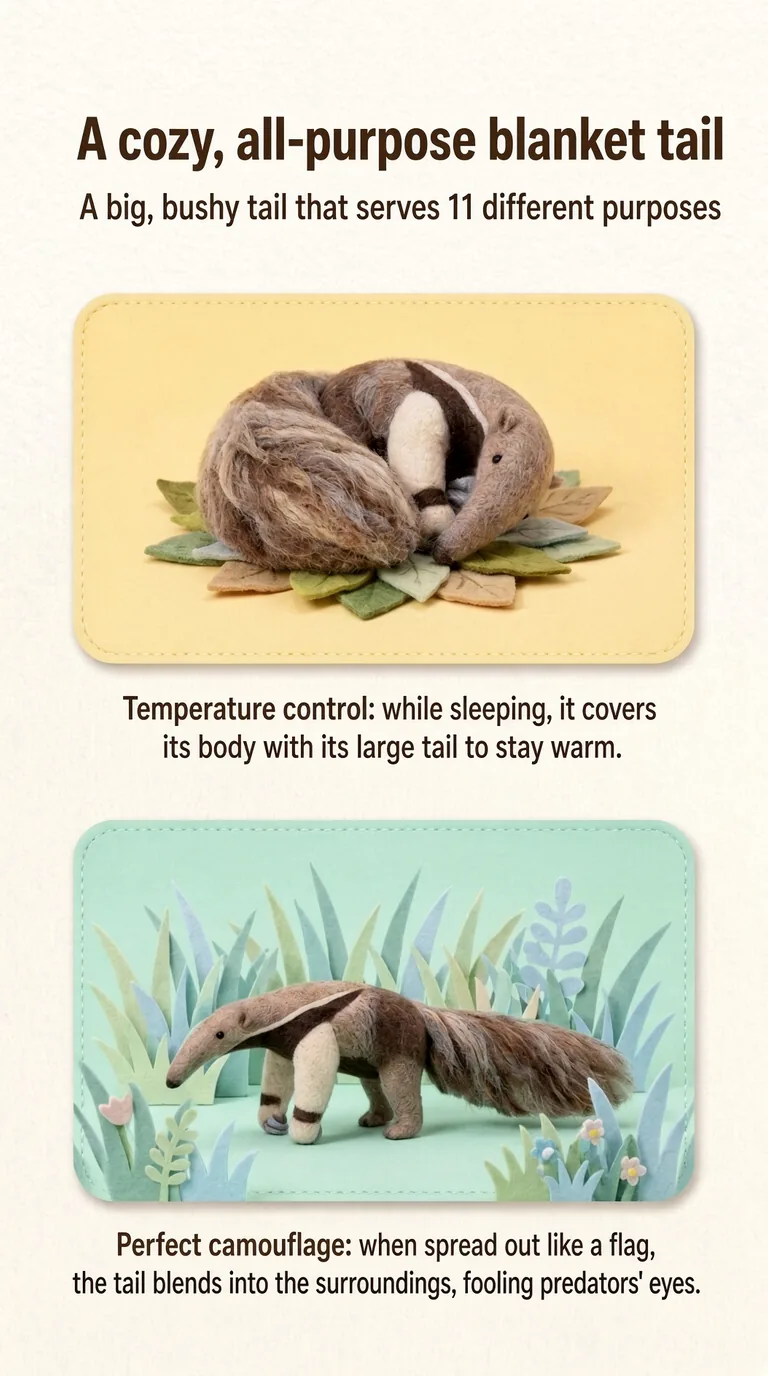
- Temperature control — while sleeping, it covers its body with its large tail to stay warm.
- Perfect camouflage — when spread out like a flag, the tail blends into the surroundings, fooling predators' eyes.
Click, onto mom's back!
A loving style of parenting
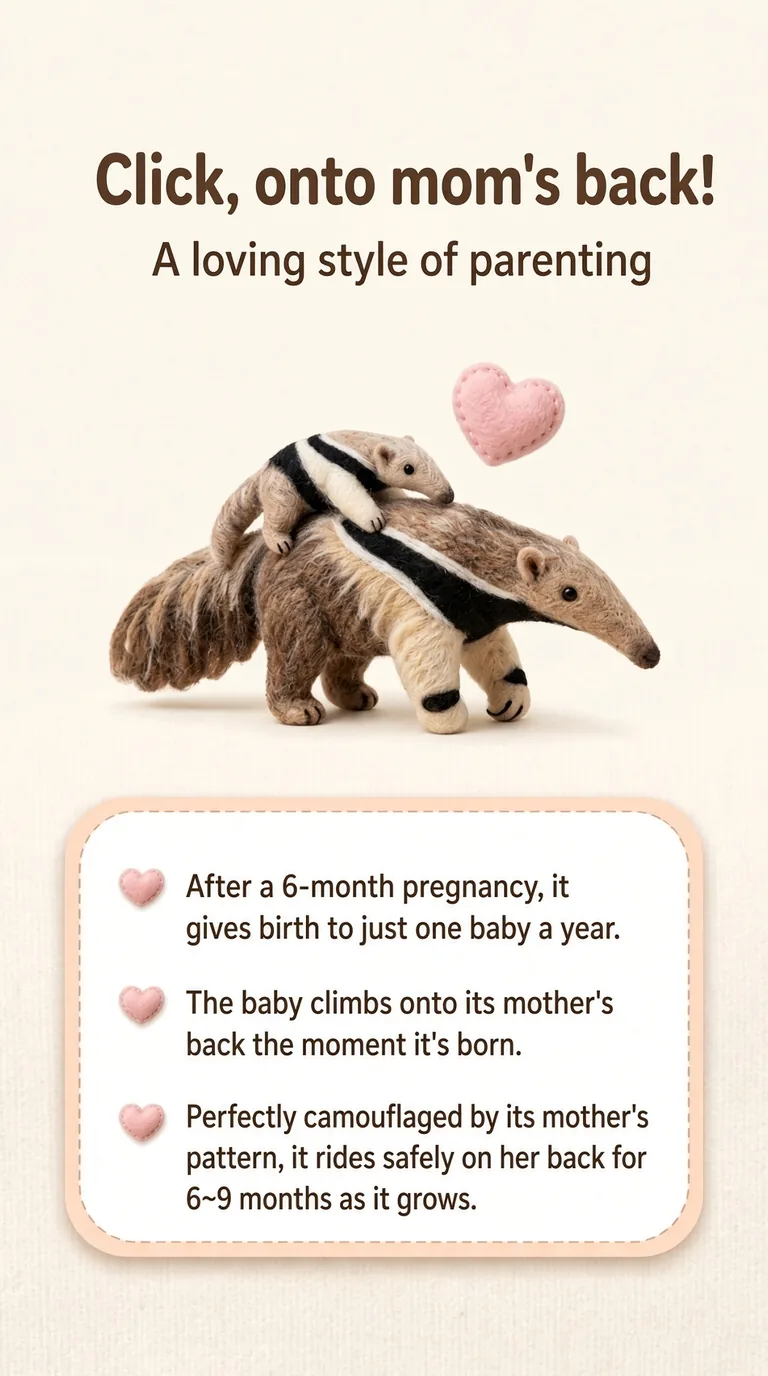
- After a 6-month pregnancy, it gives birth to just one baby a year.
- The baby climbs onto its mother's back the moment it's born.
- Perfectly camouflaged by its mother's pattern, it rides safely on her back for 6–9 months as it grows.