Sloth
South America
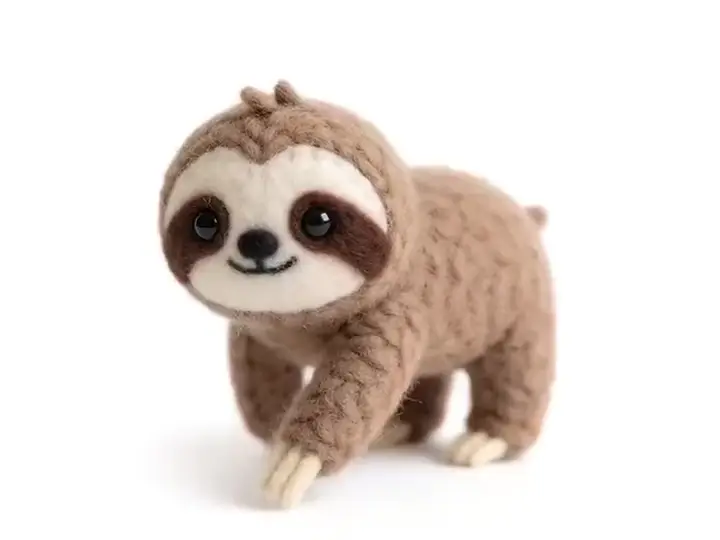
The sloth is one of the slowest animals in the world. It spends almost its whole life hanging upside down in the trees, moving very slowly. It's so slow that green algae can grow in its fur, which actually helps it hide.
Quick facts
- Habitat
- It lives in the trees of Central and South American rainforests.
- Diet
- It's a plant-eater that mostly eats leaves.
- Size and weight
- Length 50–75cm, weight 4–8kg.
- Lifespan
- 20–30 years
- Conservation status
- Least Concern
- Fun facts
- It takes a whole month to digest the leaves it eats!
Surprisingly, it swims three times faster than it moves on land.
Learn more
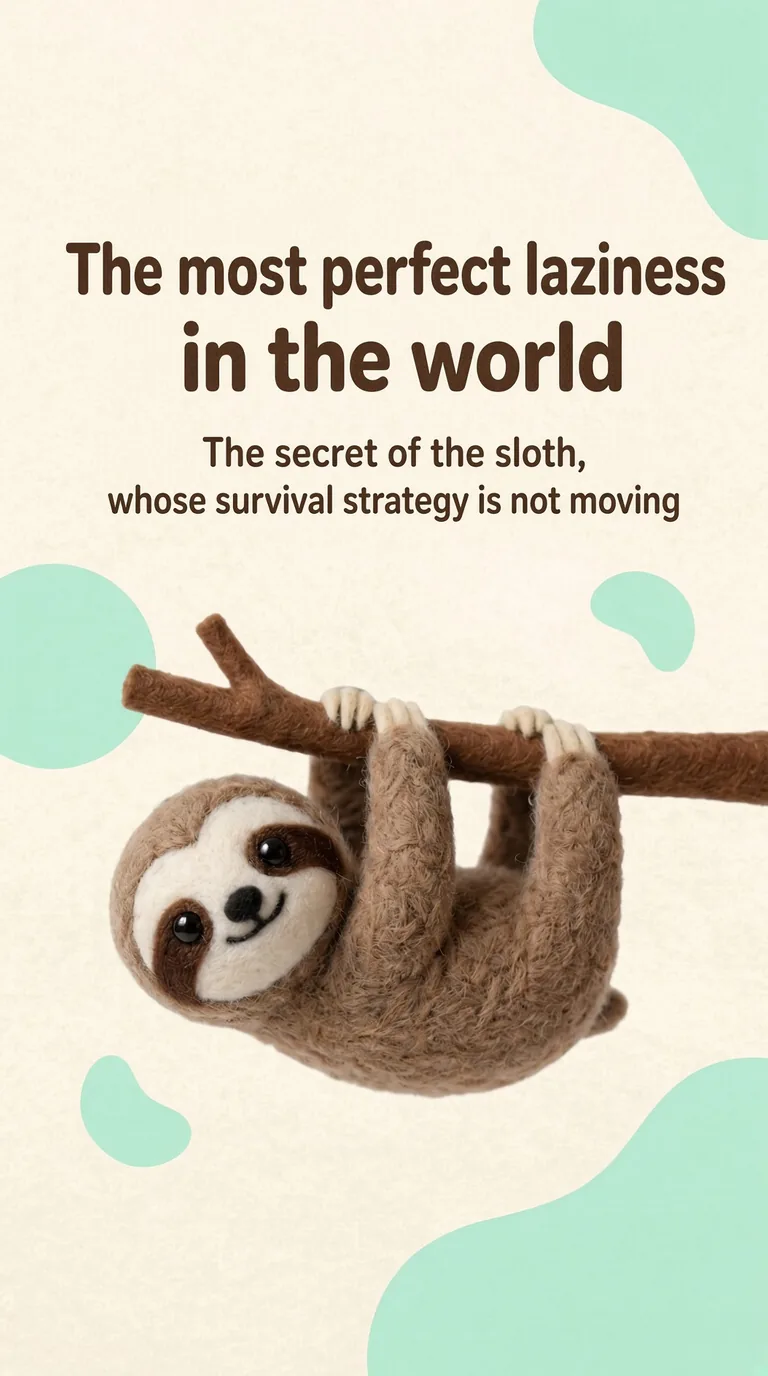
The most perfect laziness in the world
The secret of the sloth, whose survival strategy is not moving
Not slow — "efficient"
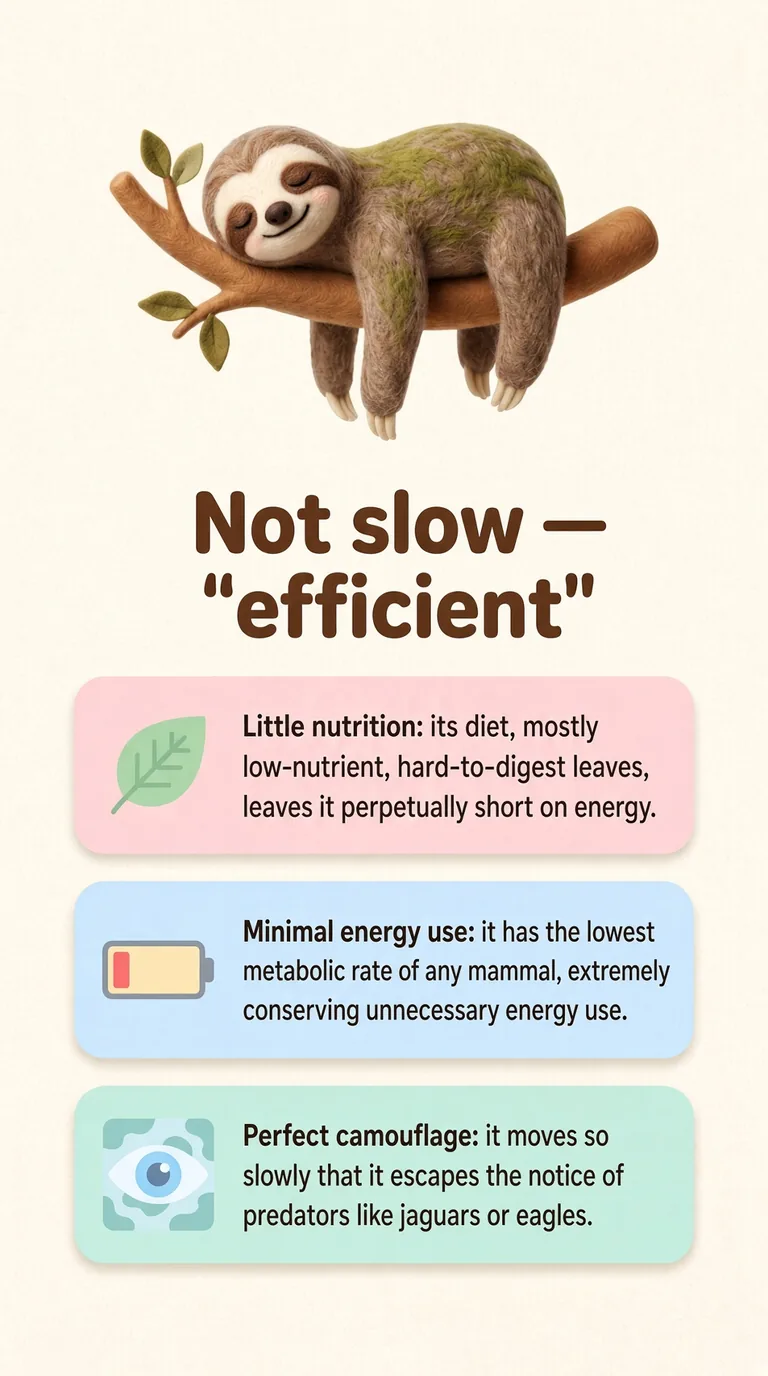
- Little nutrition — its diet, mostly low-nutrient, hard-to-digest leaves, leaves it perpetually short on energy.
- Minimal energy use — it has the lowest metabolic rate of any mammal, extremely conserving unnecessary energy use.
- Perfect camouflage — it moves so slowly that it escapes the notice of predators like jaguars or eagles.
A whole month to digest a single leaf
The slowest digestive system in the world
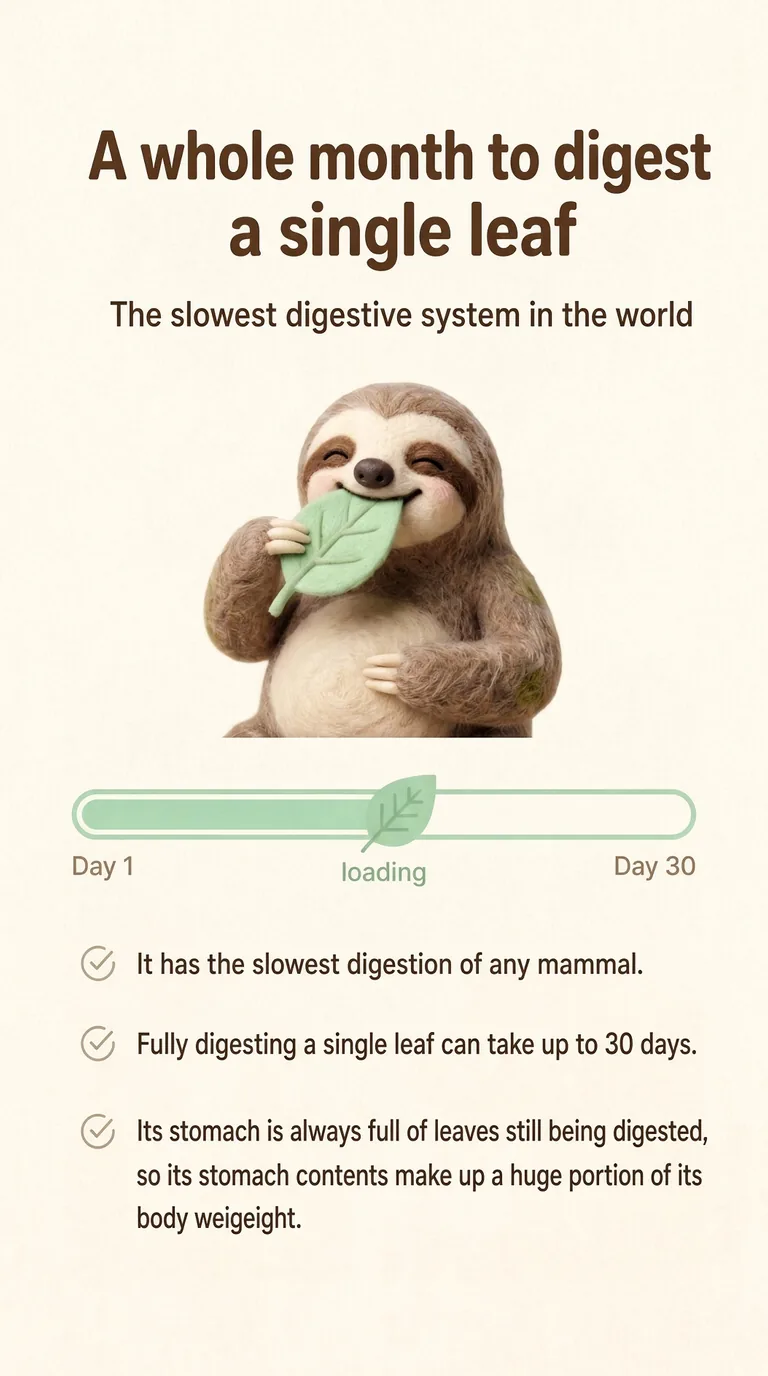
- It has the slowest digestion of any mammal.
- Fully digesting a single leaf can take up to 30 days.
- Its stomach is always full of leaves still being digested, so its stomach contents make up a huge portion of its body weight.
Two-toed vs. three-toed
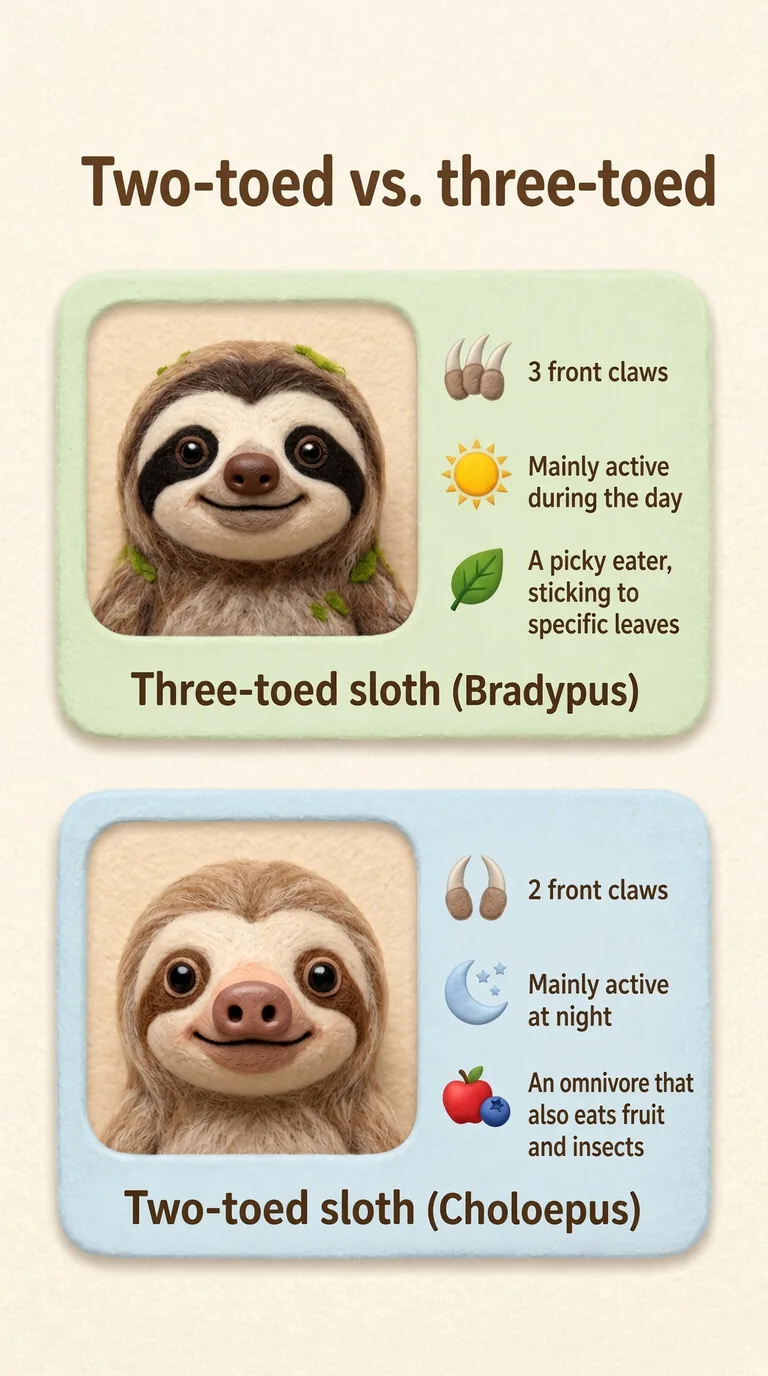
- Three-toed sloth (Bradypus)
- 3 front claws
- Mainly active during the day
- A picky eater, sticking to specific leaves
- Two-toed sloth (Choloepus)
- 2 front claws
- Mainly active at night
- An omnivore that also eats fruit and insects
A neck that turns like an owl's
The secret of a 270-degree rotation
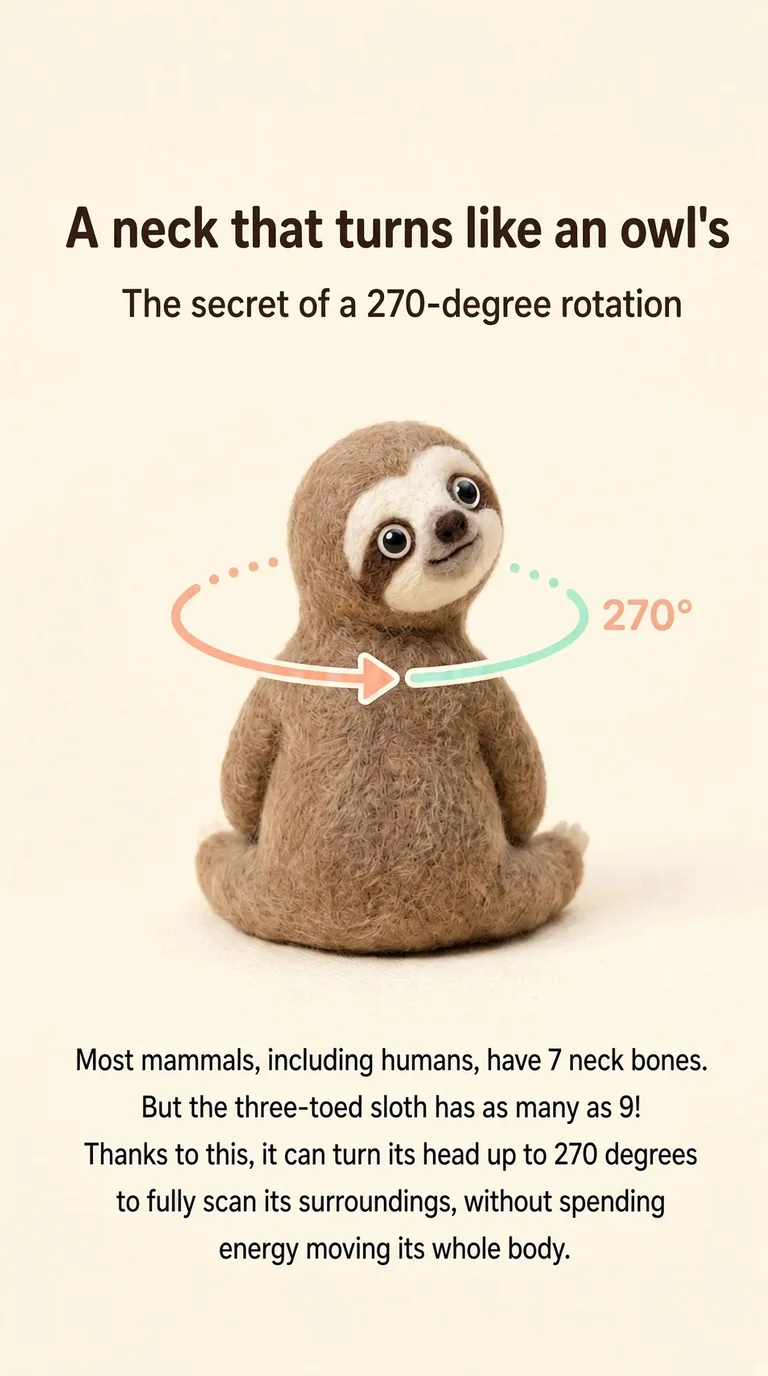
Most mammals, including humans, have 7 neck bones.
But the three-toed sloth has as many as 9!
Thanks to this, it can turn its head up to 270 degrees to fully scan its surroundings, without spending energy moving its whole body.
A speed racer underwater
Swims 3 times faster than it walks on land
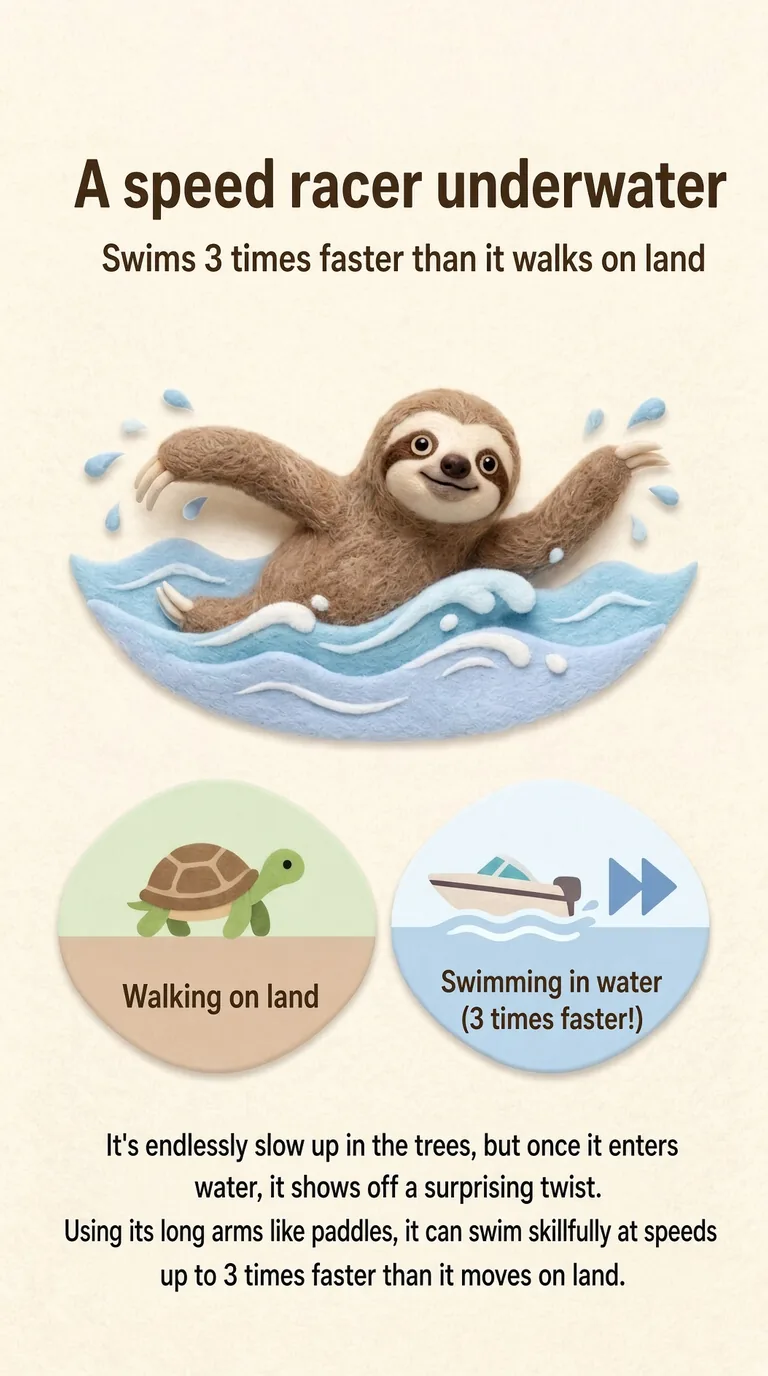
- Walking on land
- Swimming in water (3 times faster!)
It's endlessly slow up in the trees, but once it enters water, it shows off a surprising twist.
Using its long arms like paddles, it can swim skillfully at speeds up to 3 times faster than it moves on land.
A risky, once-a-week outing
The sloth's mysterious bathroom habit
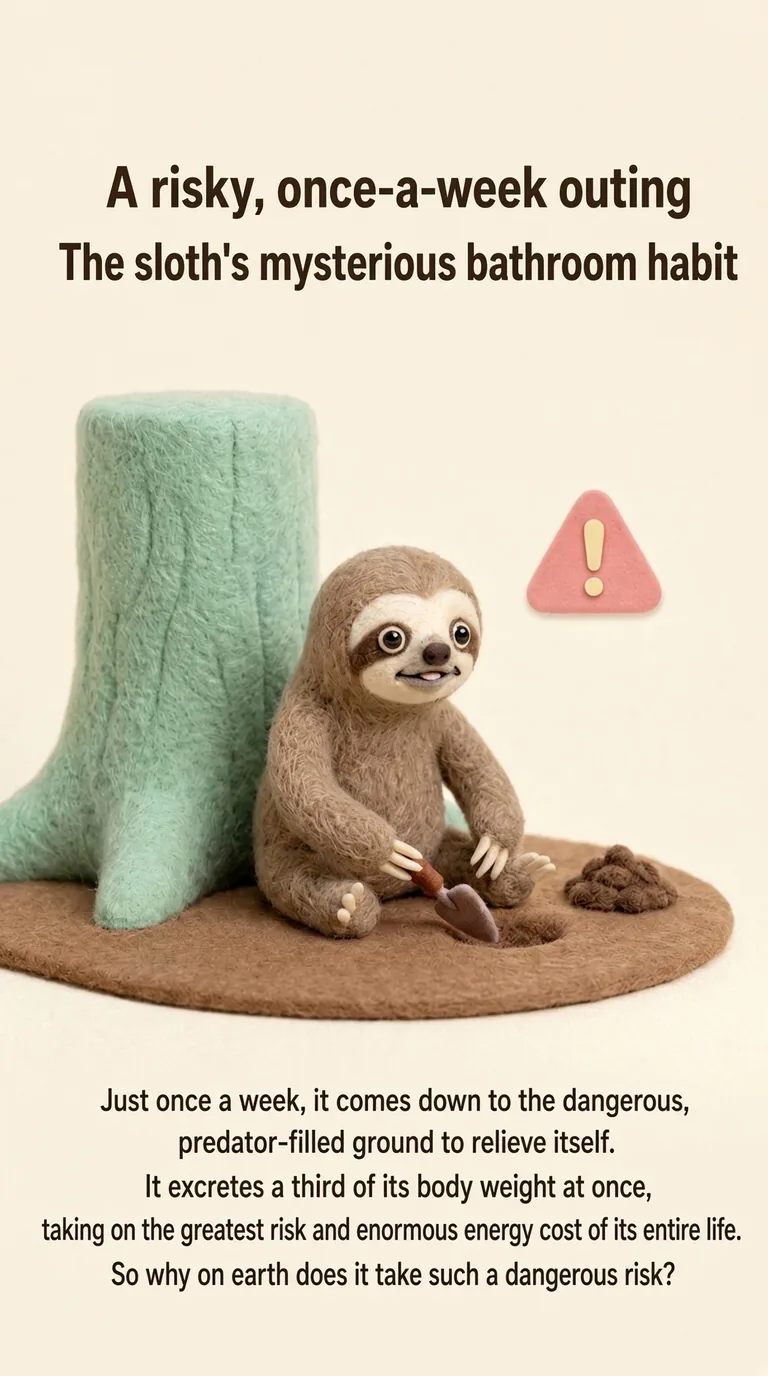
Just once a week, it comes down to the dangerous, predator-filled ground to relieve itself.
It excretes a third of its body weight at once, taking on the greatest risk and enormous energy cost of its entire life.
So why on earth does it take such a dangerous risk?
A "secret garden" hidden in its fur
The perfect symbiosis between moths, algae, and the sloth
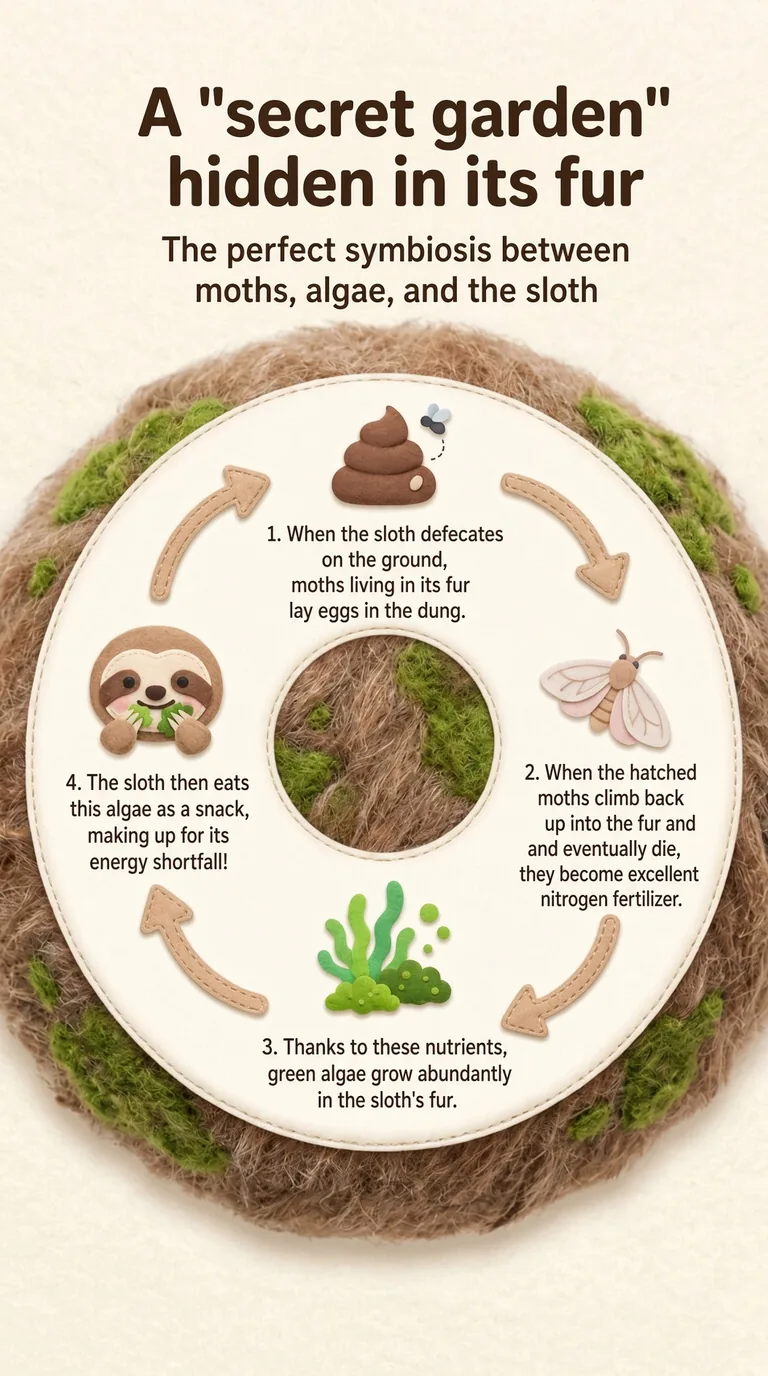
- When the sloth defecates on the ground, moths living in its fur lay eggs in the dung.
- When the hatched moths climb back up into the fur and eventually die, they become excellent nitrogen fertilizer.
- Thanks to these nutrients, green algae grow abundantly in the sloth's fur.
- The sloth then eats this algae as a snack, making up for its energy shortfall!