Llama
South America

The llama is a member of the camel family that lives in the Andes Mountains. Its soft wool, long neck, and big eyes make it charming. It's a friendly animal that has helped people carry loads for a very long time.
Quick facts
- Habitat
- It lives on the high plateaus of the Andes in South America.
- Diet
- It's a plant-eater that eats grass, leaves, and moss.
- Size and weight
- Height 1.7–1.8m, weight 130–200kg.
- Lifespan
- 15–25 years
- Conservation status
- Least Concern
- Fun facts
- When a llama gets angry, it spits with great aim!
It's also very good at guarding herds as a lookout.
Learn more
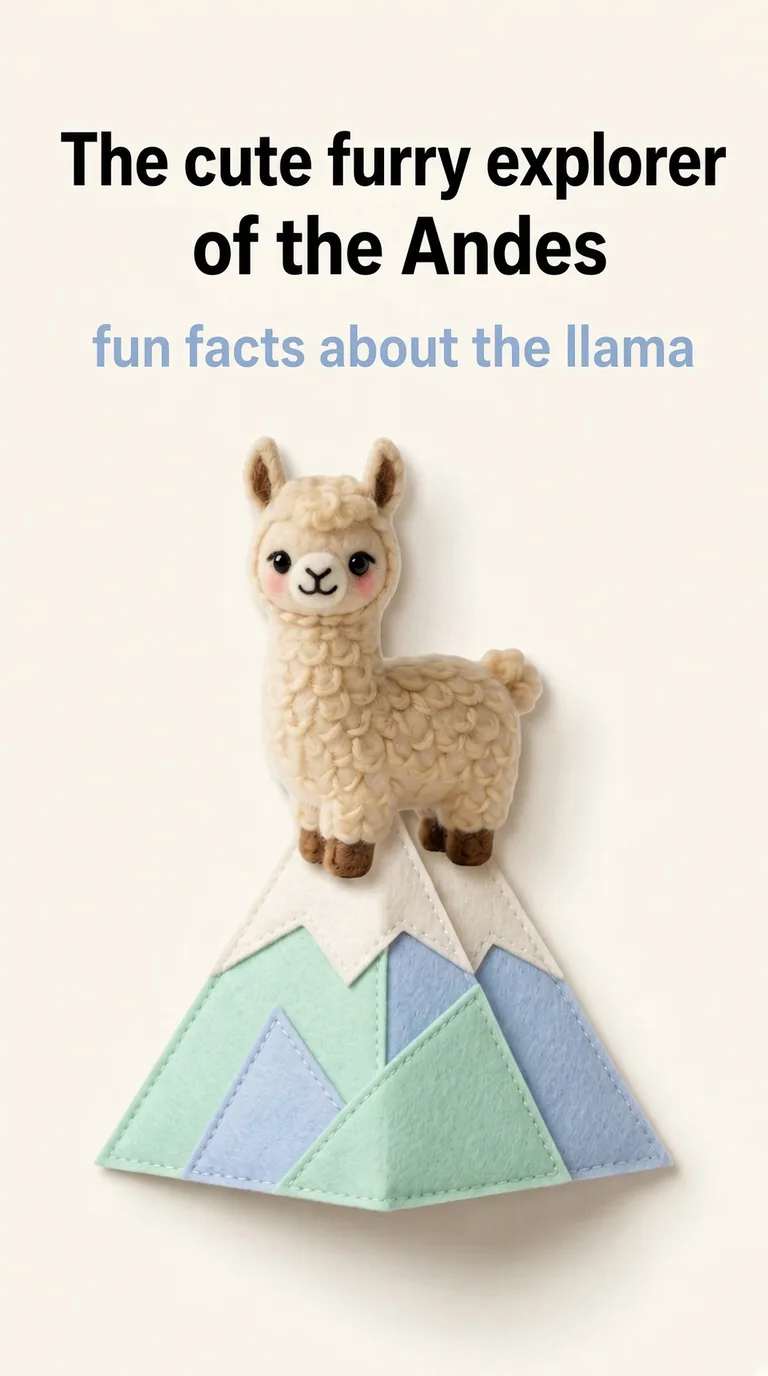
The cute
furry explorer of the Andes — fun facts about the llama
A relative of the camel?
No hump, but still a proud member of the camel family
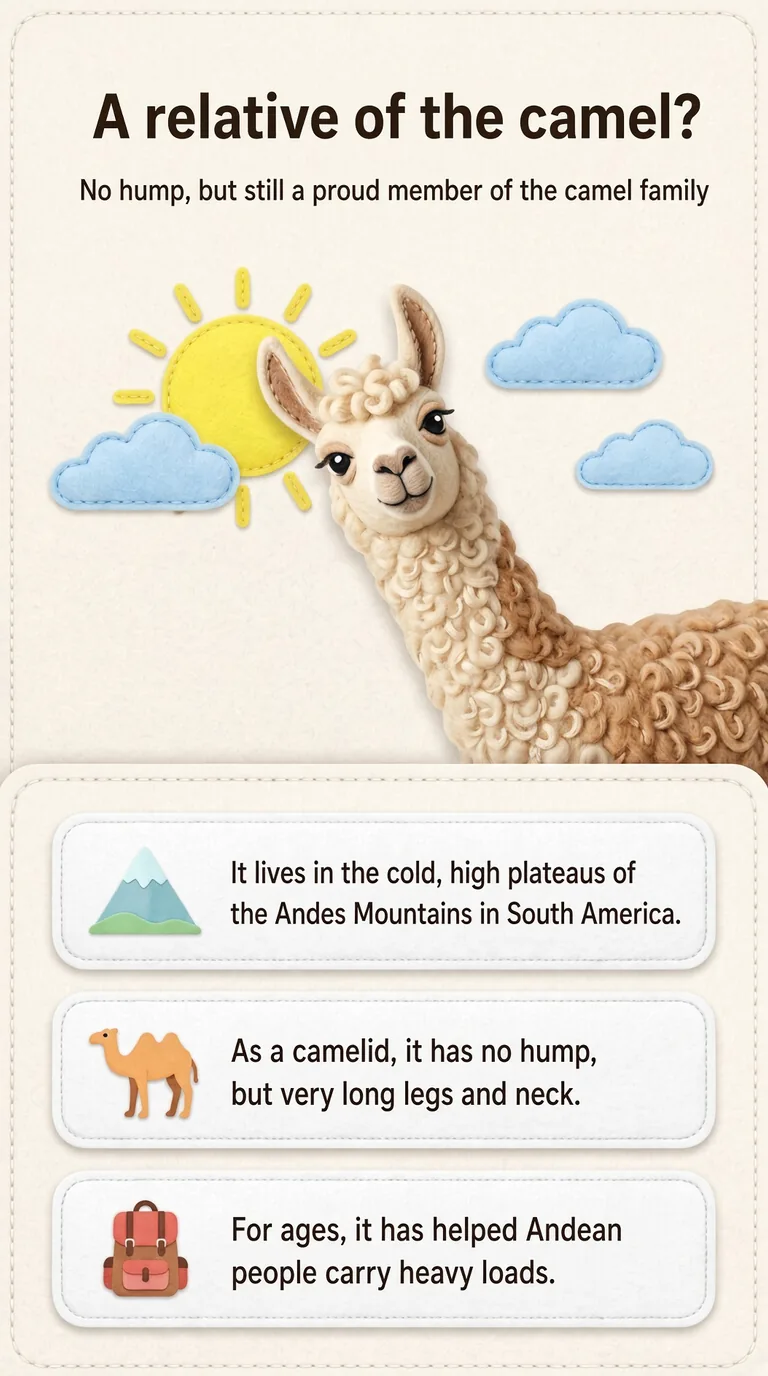
- It lives in the cold, high plateaus of the Andes Mountains in South America.
- As a camelid, it has no hump, but very long legs and neck.
- For ages, it has helped Andean people carry heavy loads.
Perky banana-shaped ears
The llama's biggest charm point!
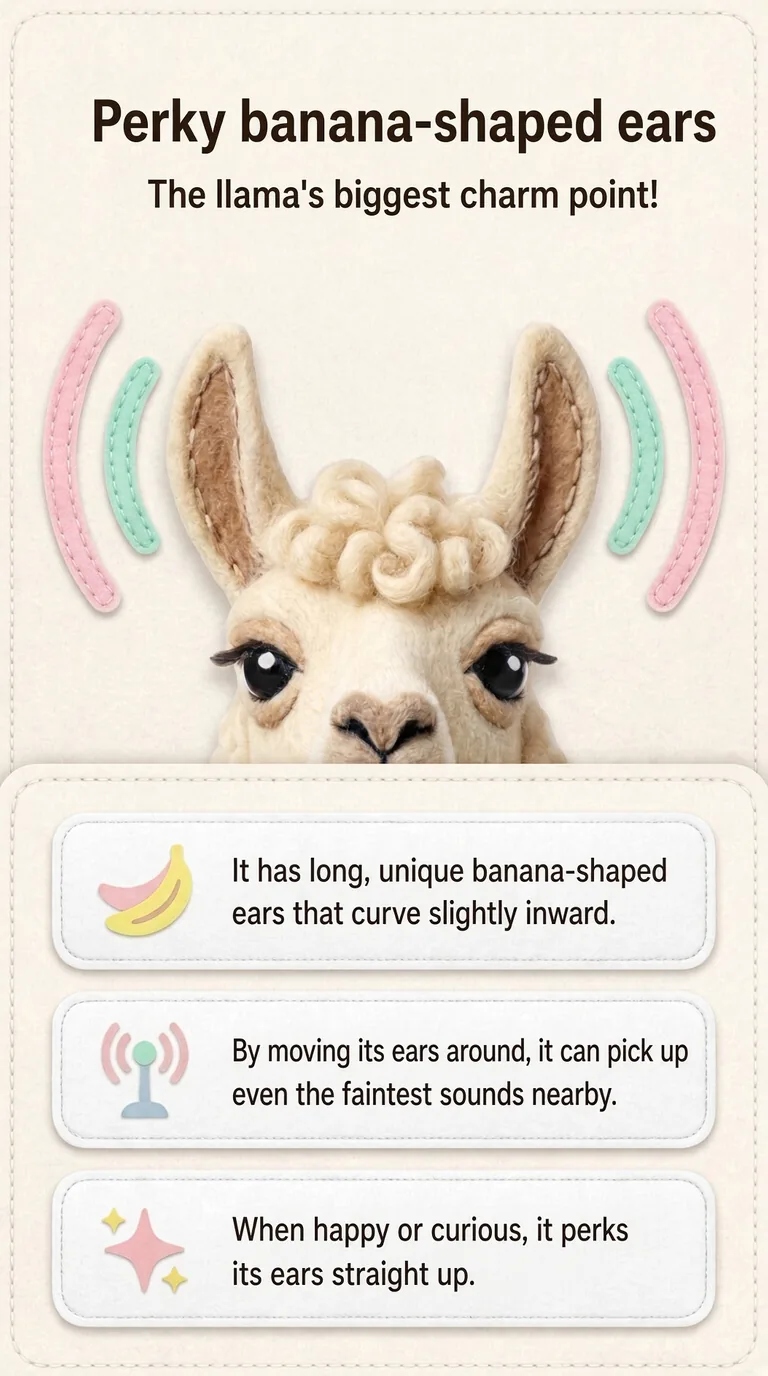
- It has long, unique banana-shaped ears that curve slightly inward.
- By moving its ears around, it can pick up even the faintest sounds nearby.
- When happy or curious, it perks its ears straight up.
Munch munch — an interesting mealtime
The llama's secret to nonstop chewing

- A peaceful herbivore that enjoys grass and moss.
- It brings swallowed food back up to chew again, a process called "rumination."
- Thanks to this special eating method, it can fully digest even tough mountain grass.
Soft, cushioned special shoes
It walks easily even over rough, rocky mountains!

- Unlike horses, its foot is split into exactly two toes.
- Soft, cushioned pads are attached to the bottom of its feet.
- Thanks to these cushioned feet, it can safely walk even bumpy, rugged mountain trails.
When angry, pfft!
The llama's special self-defense
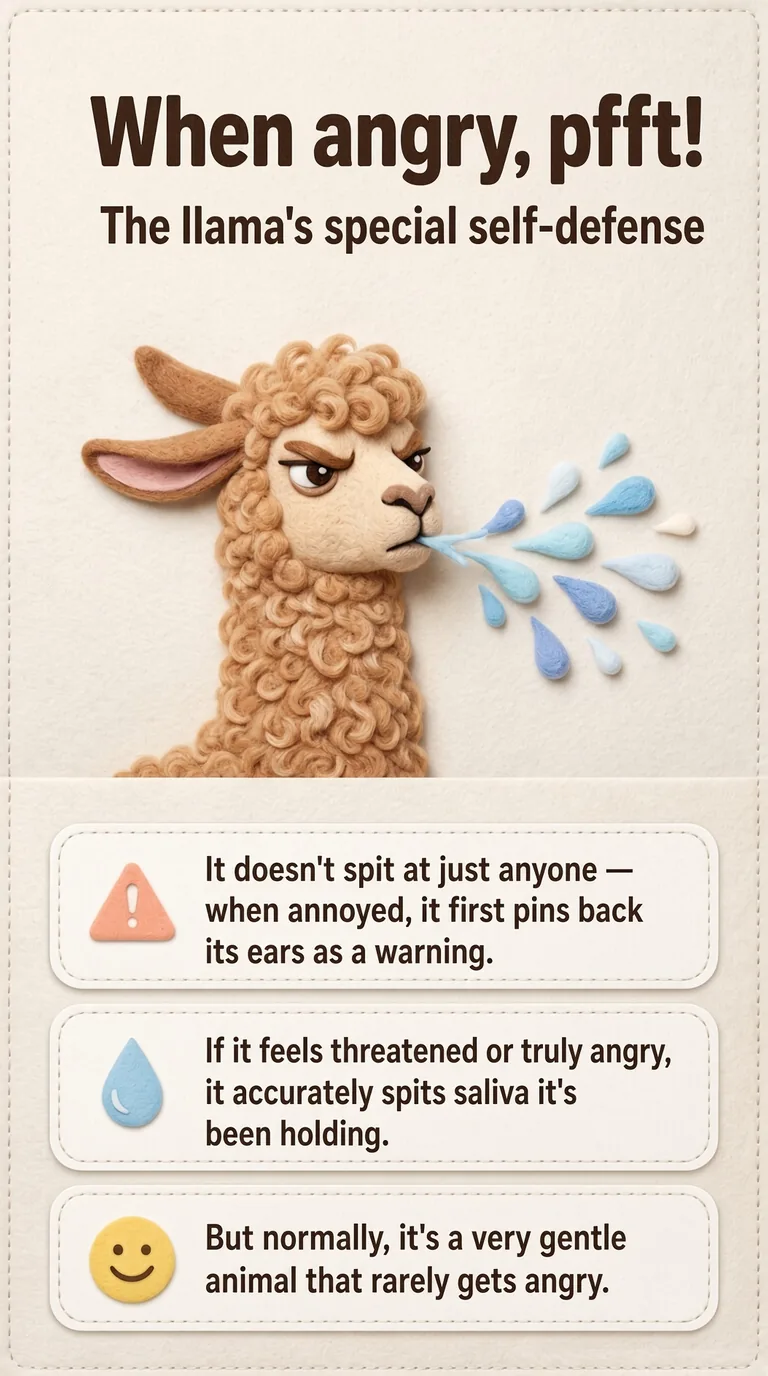
- It doesn't spit at just anyone — when annoyed, it first pins back its ears as a warning.
- If it feels threatened or truly angry, it accurately spits saliva it's been holding.
- But normally, it's a very gentle animal that rarely gets angry.
Humming a tune
How do llamas talk to each other?
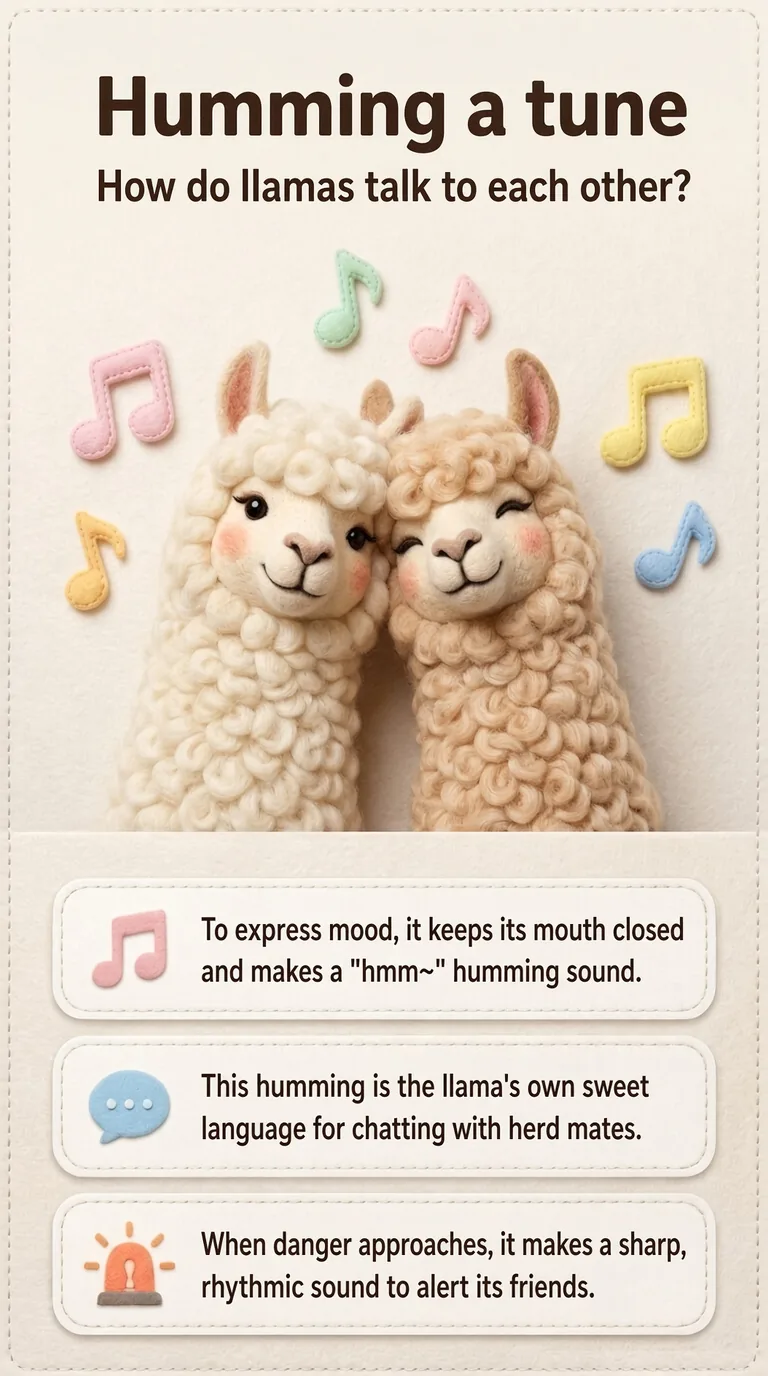
- To express mood, it keeps its mouth closed and makes a "hmm~" humming sound.
- This humming is the llama's own sweet language for chatting with herd mates.
- When danger approaches, it makes a sharp, rhythmic sound to alert its friends.
A reliable guardian of the herd
A brave sentry protecting its friends
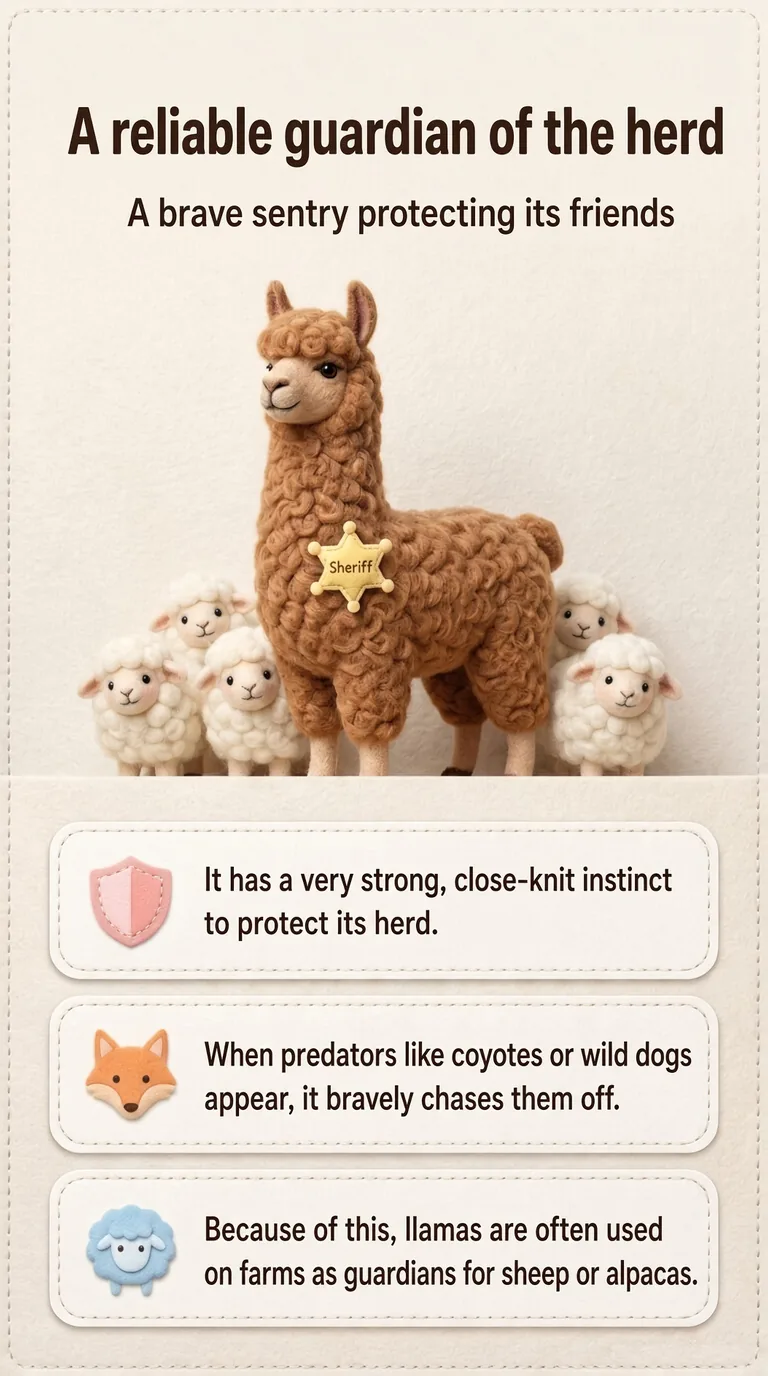
- It has a very strong, close-knit instinct to protect its herd.
- When predators like coyotes or wild dogs appear, it bravely chases them off.
- Because of this, llamas are often used on farms as guardians for sheep or alpacas.
Llama? Alpaca? What's the difference?
They look similar, but these two friends are quite distinct!
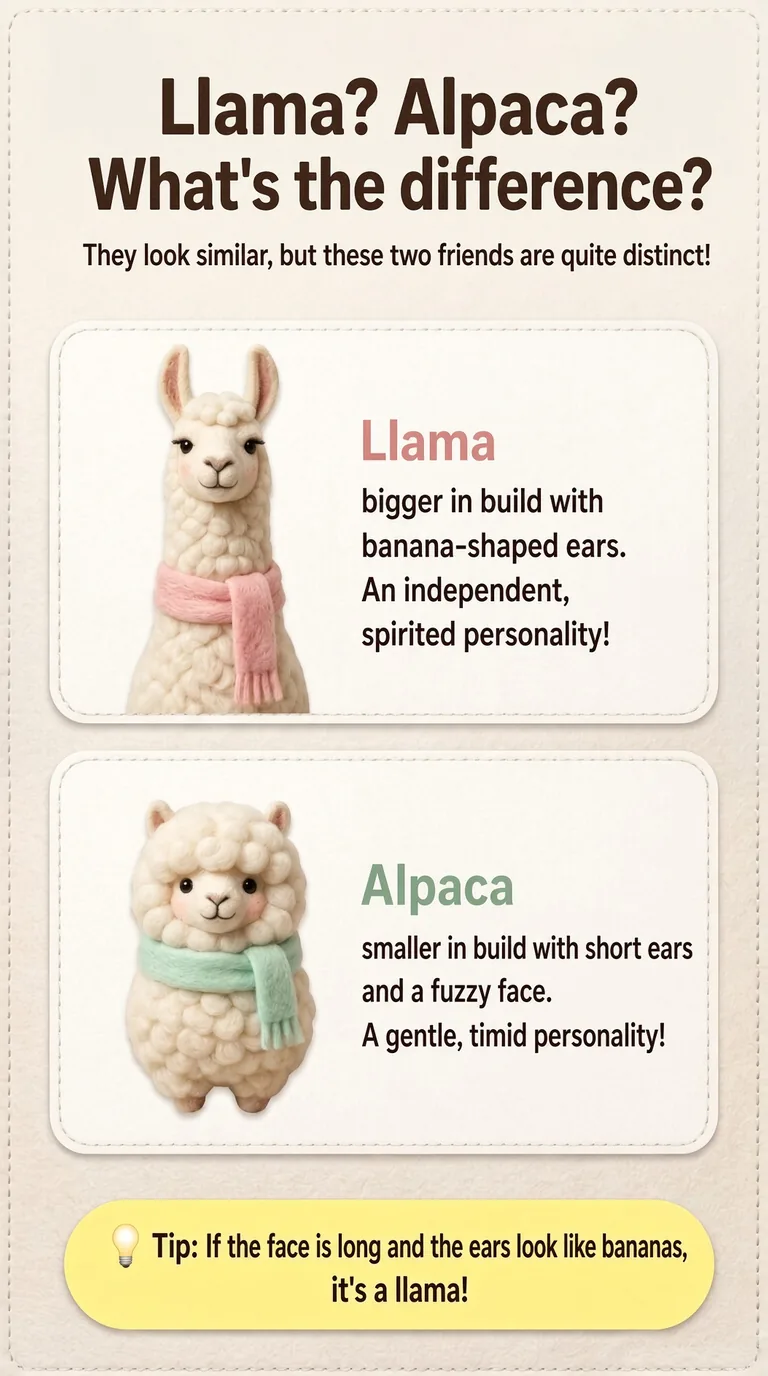
- Llama — bigger in build with banana-shaped ears. An independent, spirited personality!
- Alpaca — smaller in build with short ears and a fuzzy face. A gentle, timid personality!
Tip: If the face is long and the ears look like bananas, it's a llama!