Capybara
South America
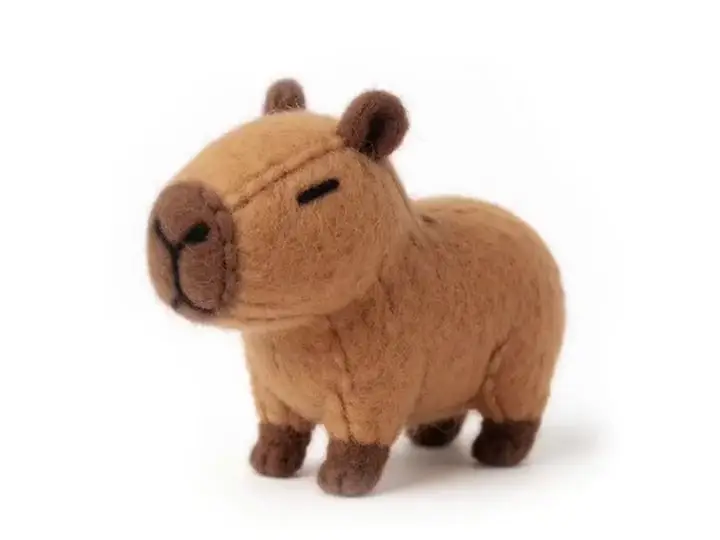
The capybara is the largest rodent in the world. It looks like a giant guinea pig, and it's so gentle that it gets along well with other animals. It loves water and cools off in the river when it's hot.
Quick facts
- Habitat
- It lives along rivers and in the swamps and wetlands of South America.
- Diet
- It eats grass, water plants, and fruit.
- Size and weight
- Length 1–1.3m, weight 35–65kg.
- Lifespan
- 8–10 years
- Conservation status
- Least Concern
- Fun facts
- It can hold its breath underwater for five minutes!
It stays calm even when birds, monkeys, or caimans climb on its back.
Learn more
The friendliest animal in the world, the Capybara
The biggest rodent in the world!
It looks like a guinea pig, but much bigger.
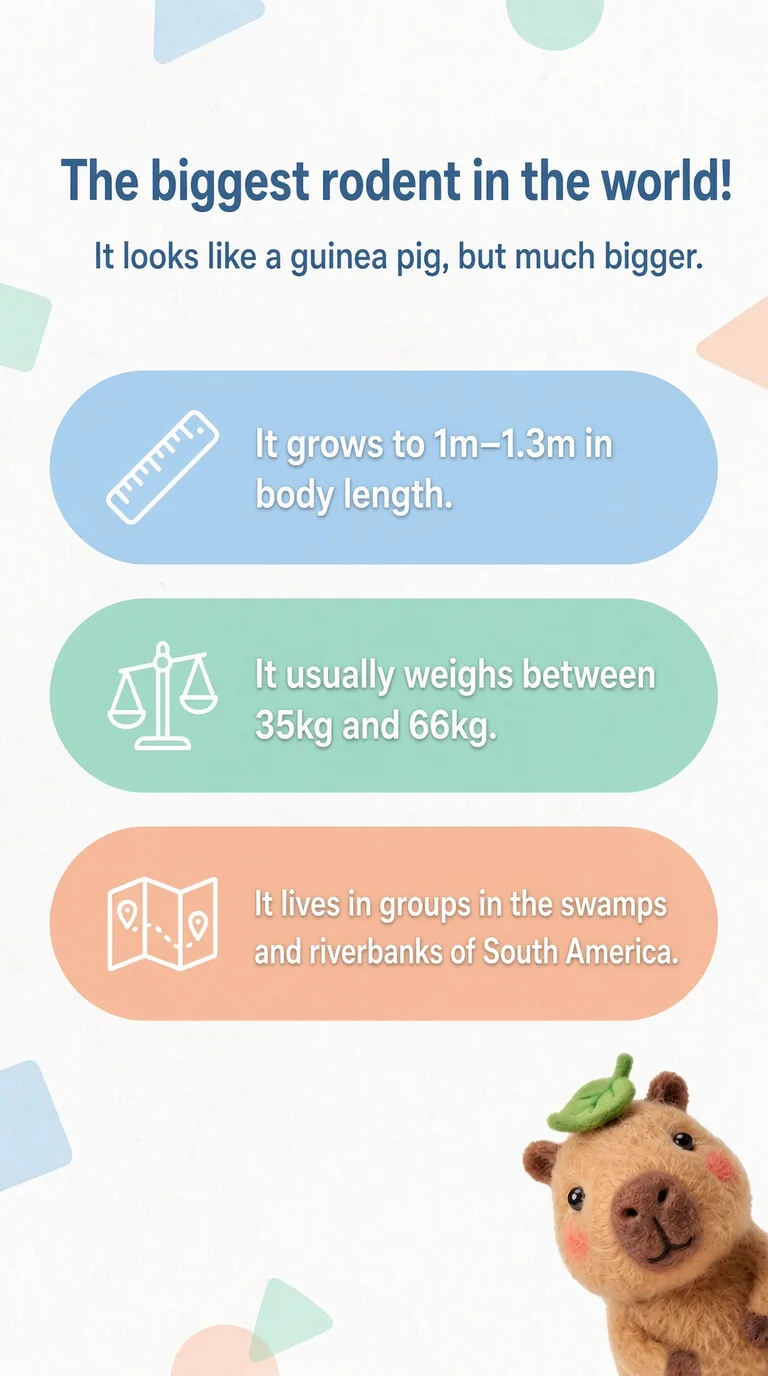
- It grows to 1m–1.3m in body length.
- It usually weighs between 35kg and 66kg.
- It lives in groups in the swamps and riverbanks of South America.
A body built perfectly for life by the water
There's a secret to why it's such a great swimmer.
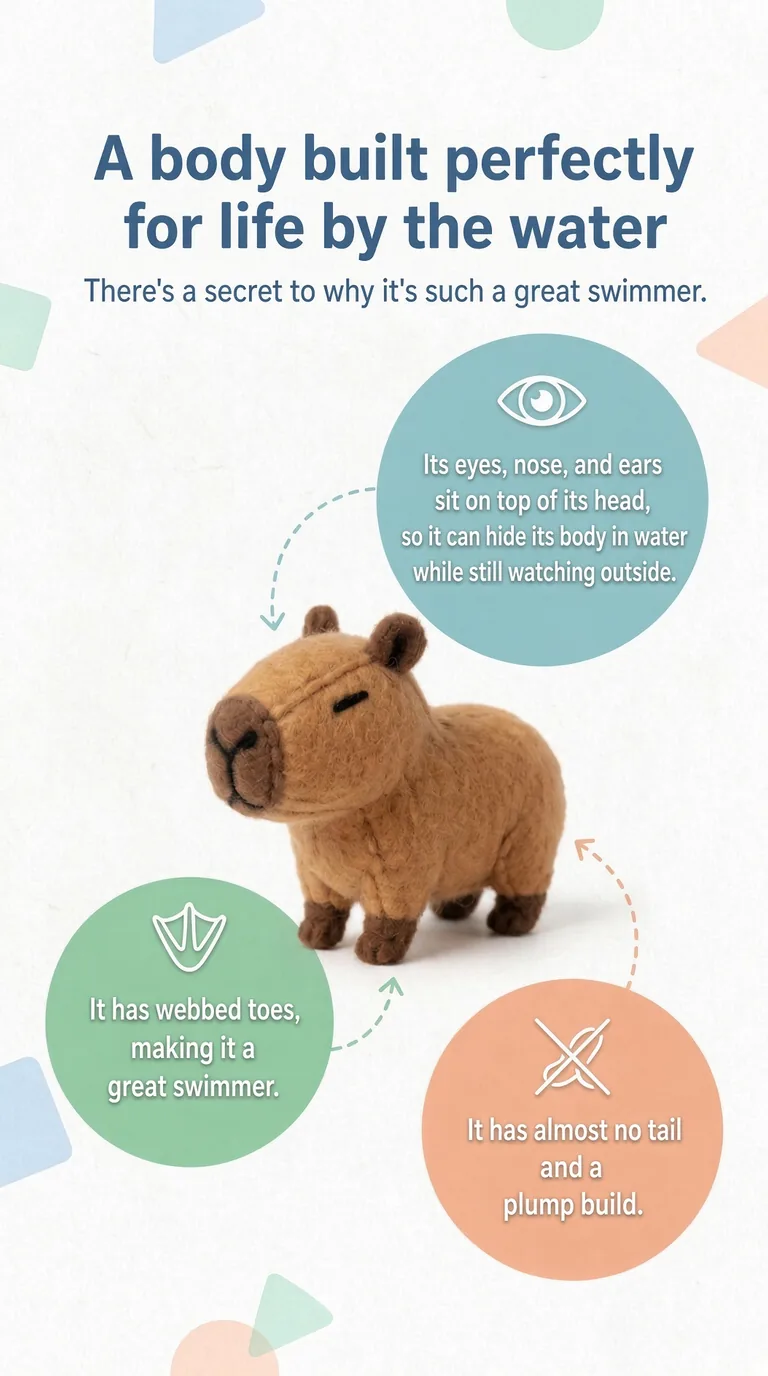
- Its eyes, nose, and ears sit on top of its head, so it can hide its body in water while still watching outside.
- It has webbed toes, making it a great swimmer.
- It has almost no tail and a plump build.
A swimming champion in the water!
It feels more comfortable in water than on land.
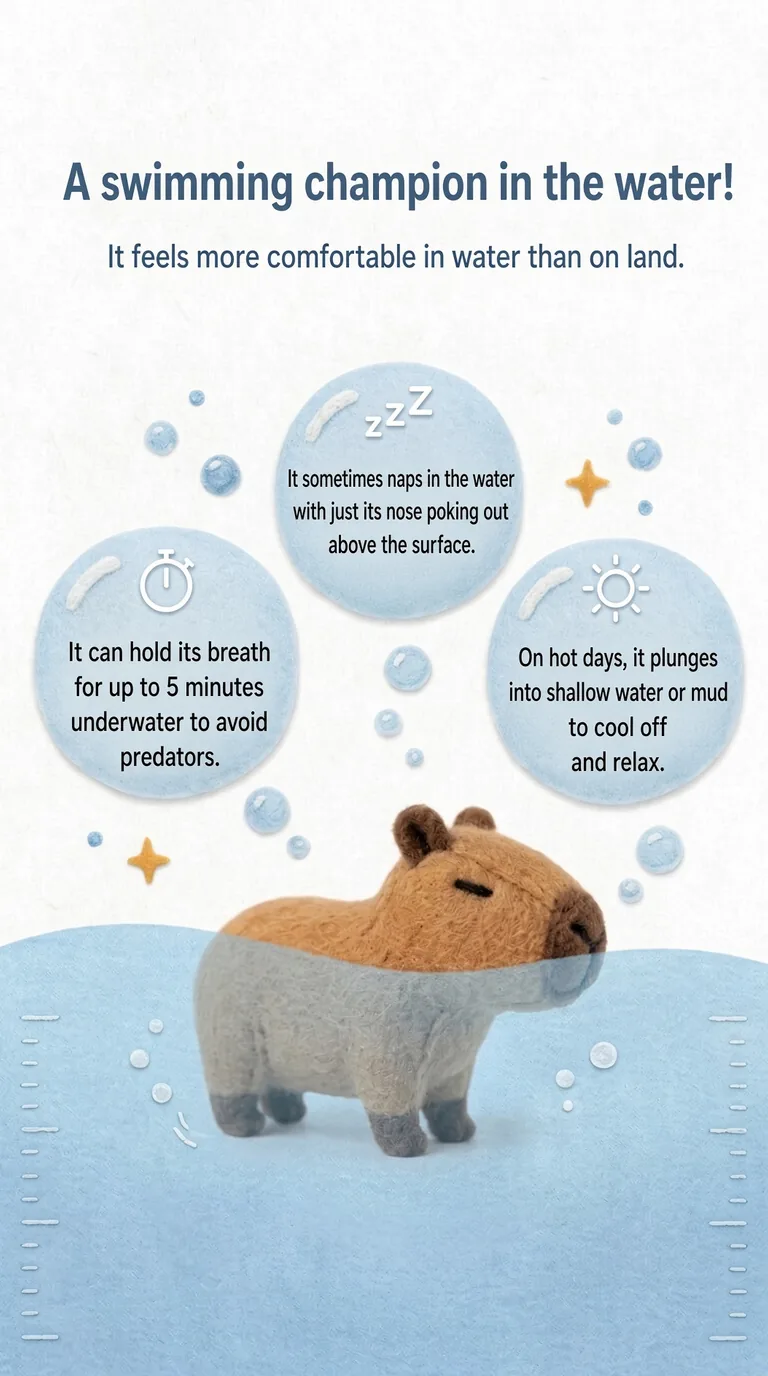
- It sometimes naps in the water with just its nose poking out above the surface.
- It can hold its breath for up to 5 minutes underwater to avoid predators.
- On hot days, it plunges into shallow water or mud to cool off and relax.
It loves grass, and even eats its own poop?!
A special eating habit that keeps the capybara healthy.

- As a true herbivore, it eats about 3kg of grass, water plants, and fruit every day.
- It re-eats its own droppings to break down hard-to-digest fiber and gain beneficial bacteria.
- Like guinea pigs, it can't make vitamin C on its own, so it must get it from food.
The idol of every animal
Its laid-back nature makes it quick friends with any animal.
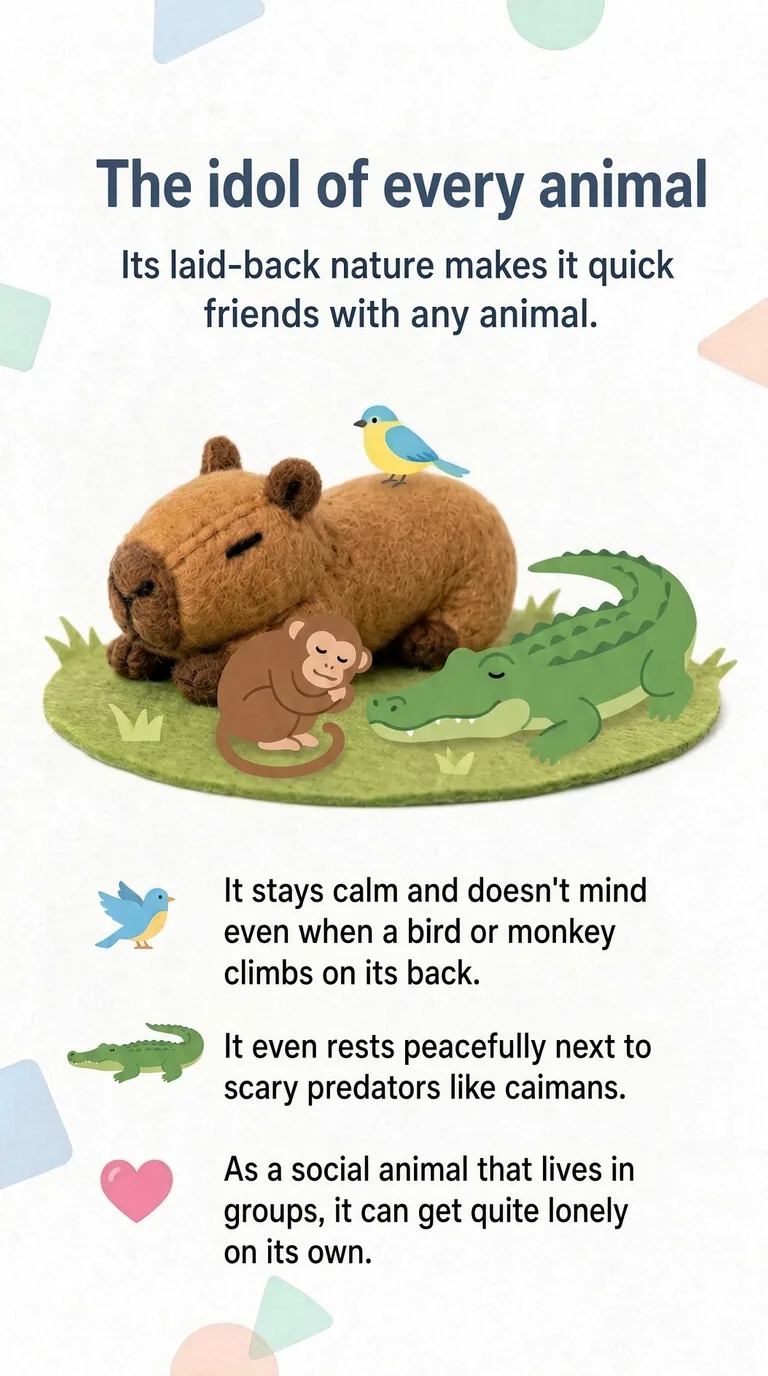
- It stays calm and doesn't mind even when a bird or monkey climbs on its back.
- It even rests peacefully next to scary predators like caimans.
- As a social animal that lives in groups, it can get quite lonely on its own.
The capybara's secret language
It may look still, but it "talks" with a variety of sounds.
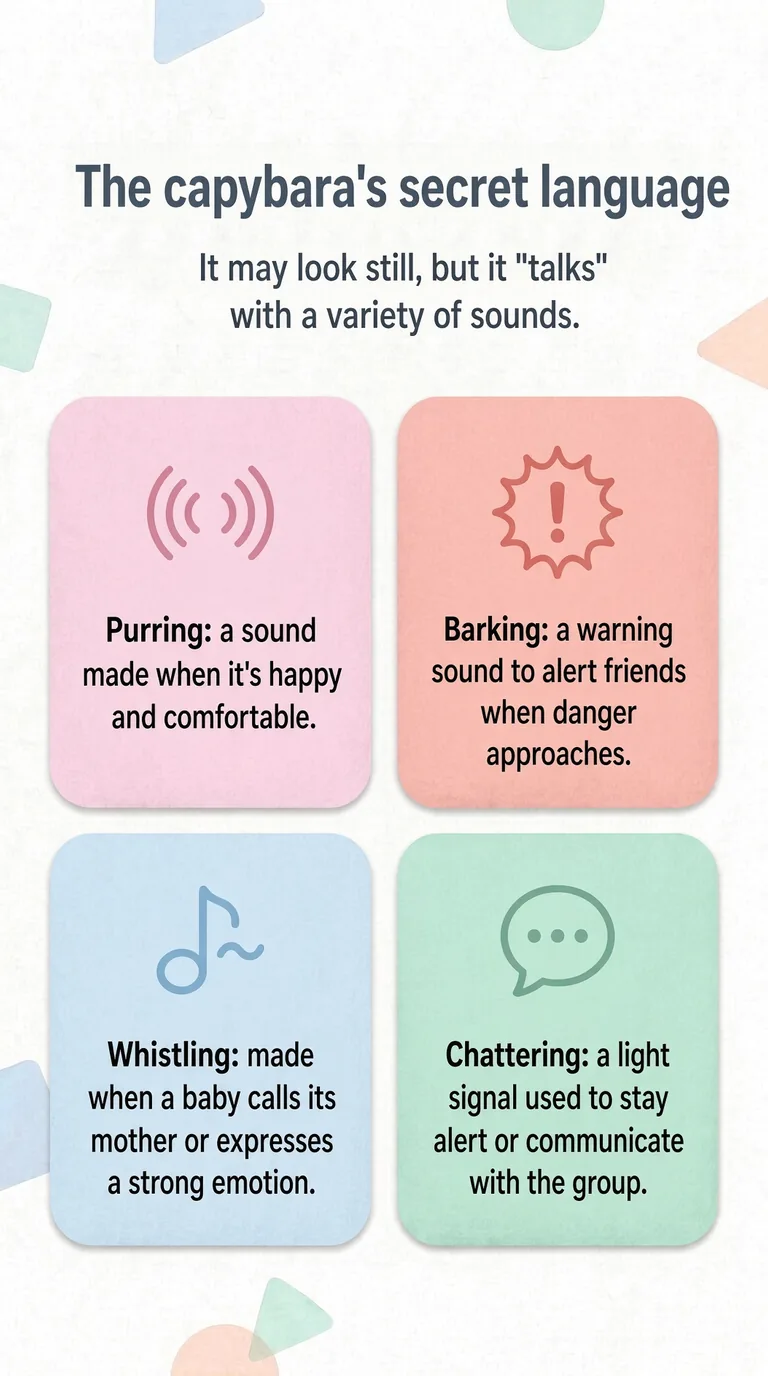
- Purring — a sound made when it's happy and comfortable.
- Barking — a warning sound to alert friends when danger approaches.
- Whistling — made when a baby calls its mother or expresses a strong emotion.
- Chattering — a light signal used to stay alert or communicate with the group.
An animal that enjoys a hot spring bath
In cold winter, it loves nothing more than soaking in warm water.
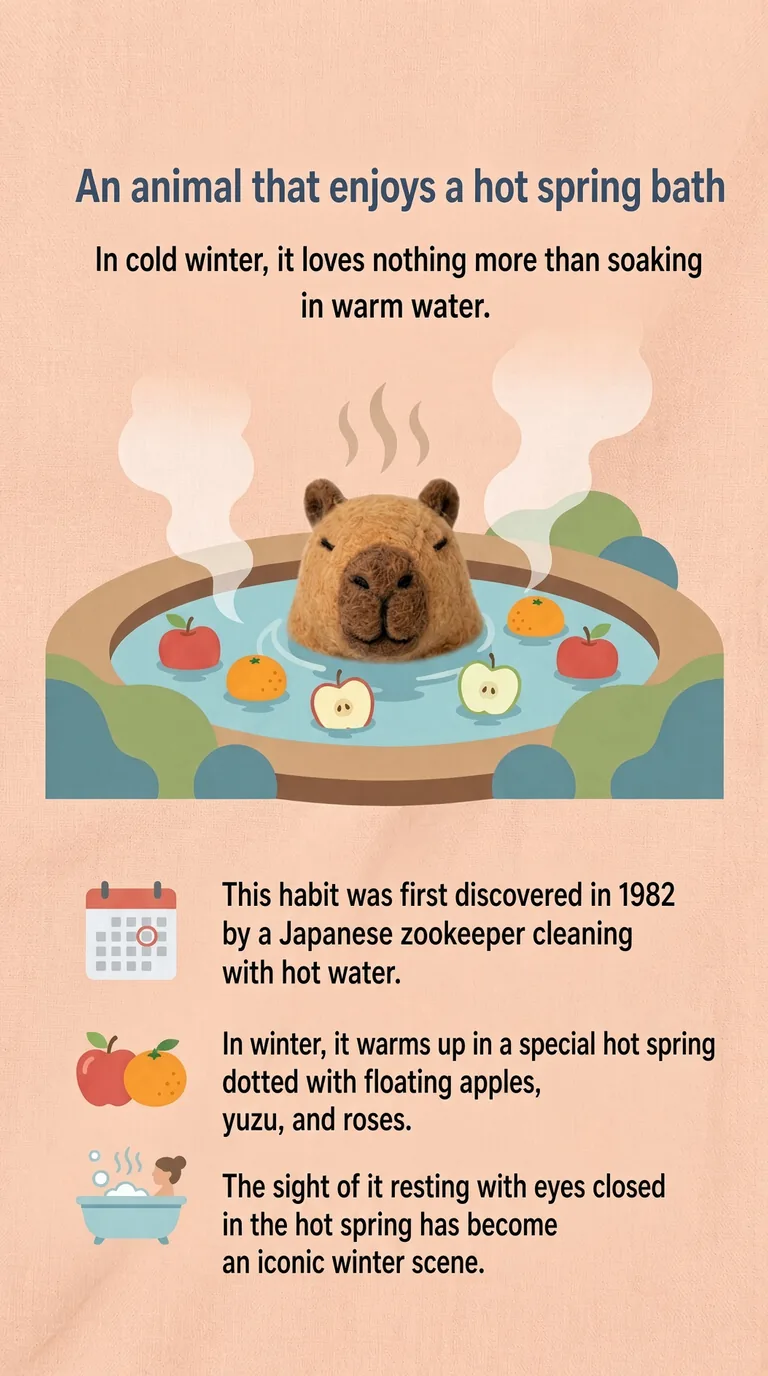
- This habit was first discovered in 1982 by a Japanese zookeeper cleaning with hot water.
- In winter, it warms up in a special hot spring dotted with floating apples, yuzu, and roses.
- The sight of it resting with eyes closed in the hot spring has become an iconic winter scene.
How to live together, calmly
A peaceful way of life we can learn from the capybara.

Never in a hurry, the capybara quietly makes room even for friends who look nothing like itself.
Why not try living a little more calmly and peacefully with those around us, just like the capybara?