European Badger
Europe
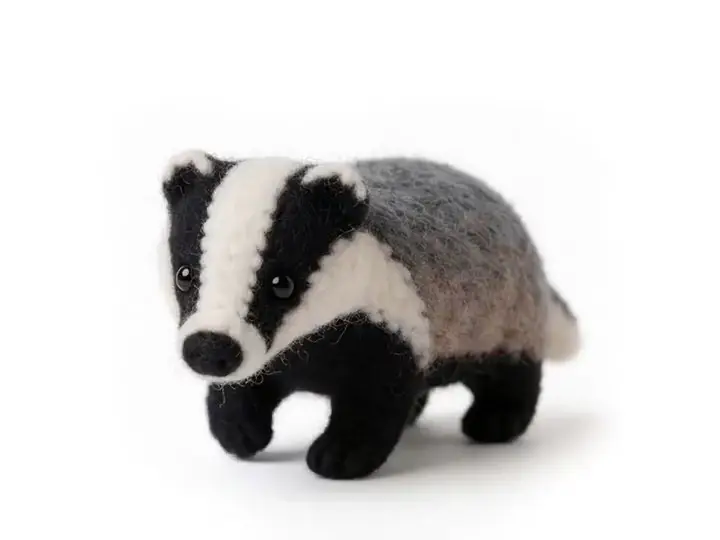
The badger is a stocky animal with black-and-white stripes on its face. It uses its strong front paws to dig a huge underground burrow called a "sett," where several badgers live together. Some setts are passed down and used for hundreds of years.
Quick facts
- Habitat
- It lives in underground burrows in Europe's woods and fields.
- Diet
- It eats earthworms, insects, fruit, and small animals.
- Size and weight
- Length 60–90cm, weight 9–17kg.
- Lifespan
- About 14 years
- Conservation status
- Least Concern
- Fun facts
- It can eat hundreds of earthworms in a single night!
It keeps a separate, clean toilet area in its burrow.
Learn more
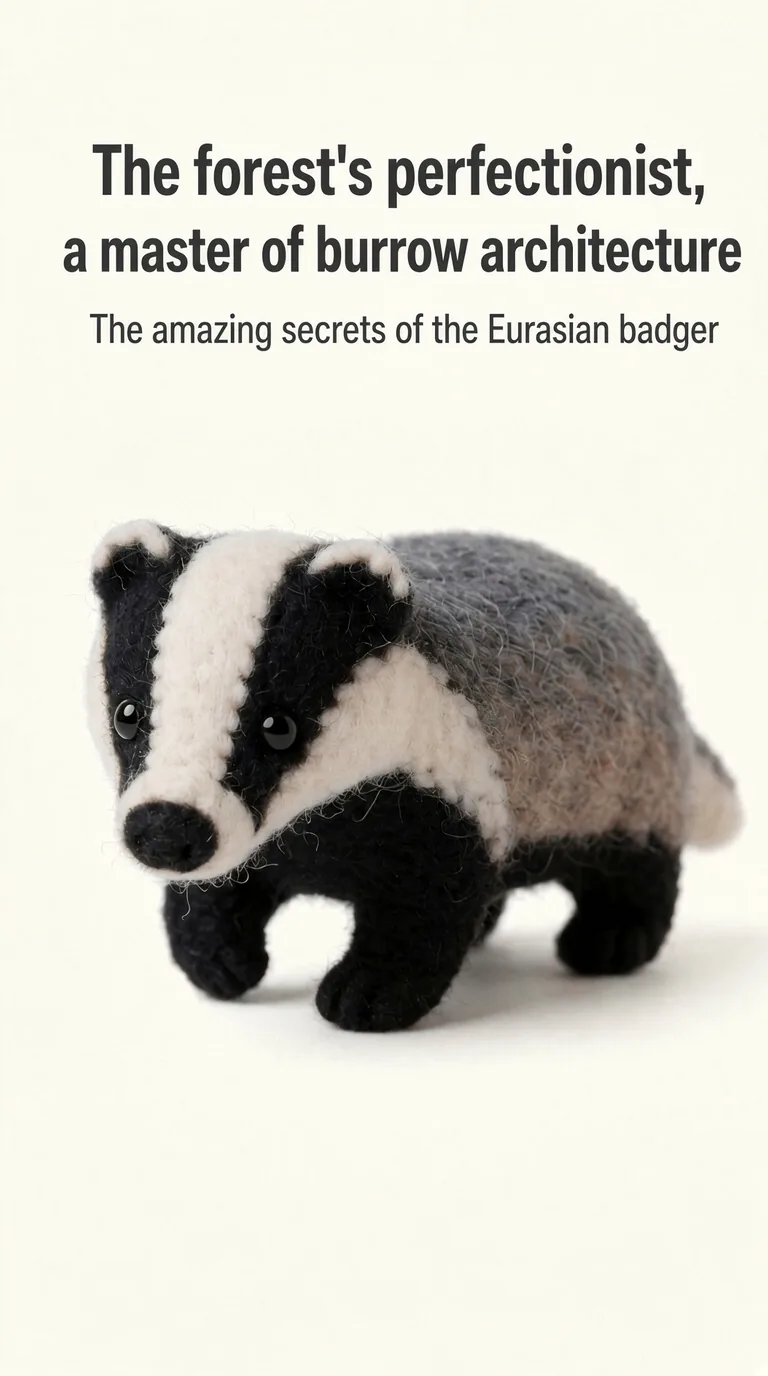
The forest's perfectionist, a master of burrow architecture
The amazing secrets of the Eurasian badger
Basic facts about badgers
A sturdy, medium-sized member of the weasel family
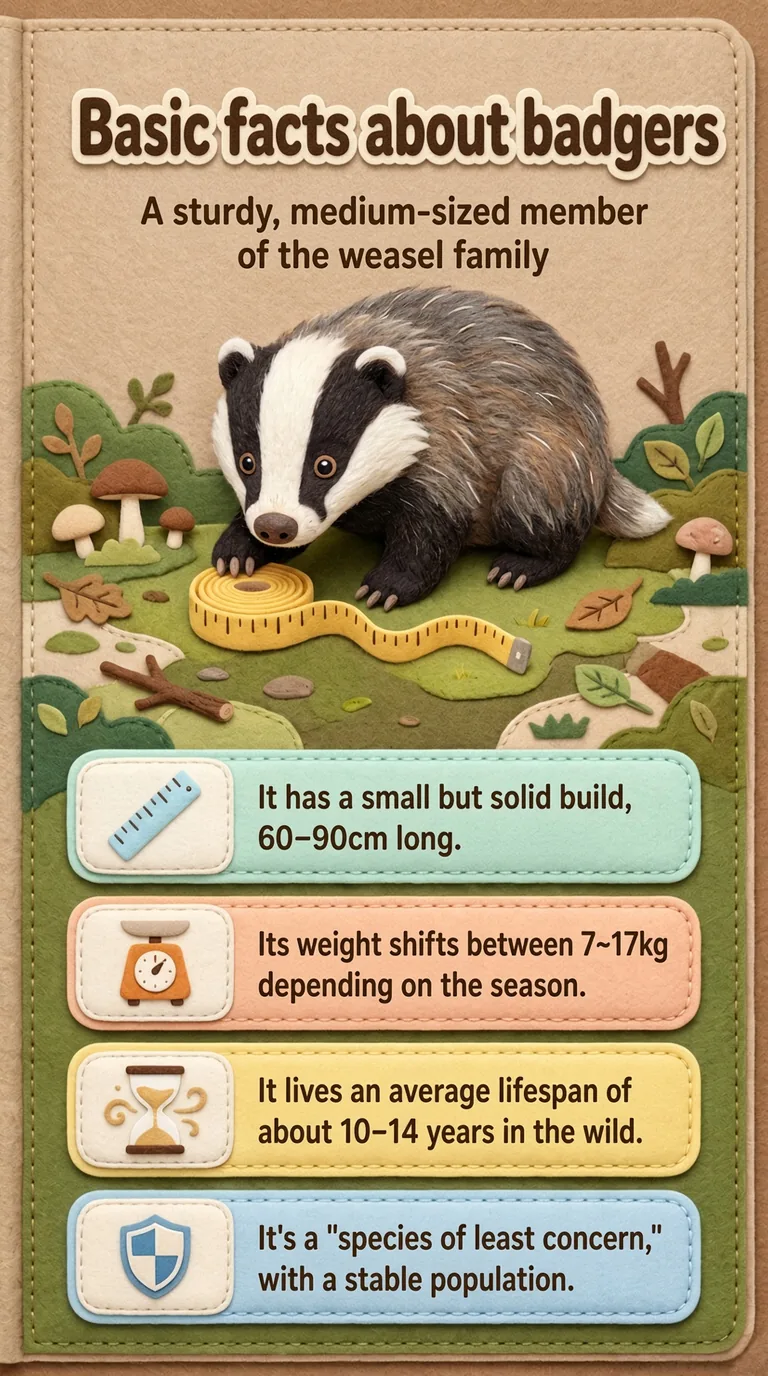
- It has a small but solid build, 60–90cm long.
- Its weight shifts between 7–17kg depending on the season.
- It lives an average lifespan of about 10–14 years in the wild.
- It's a "species of least concern," with a stable population.
The burrow master's equipment
A body perfectly evolved for digging
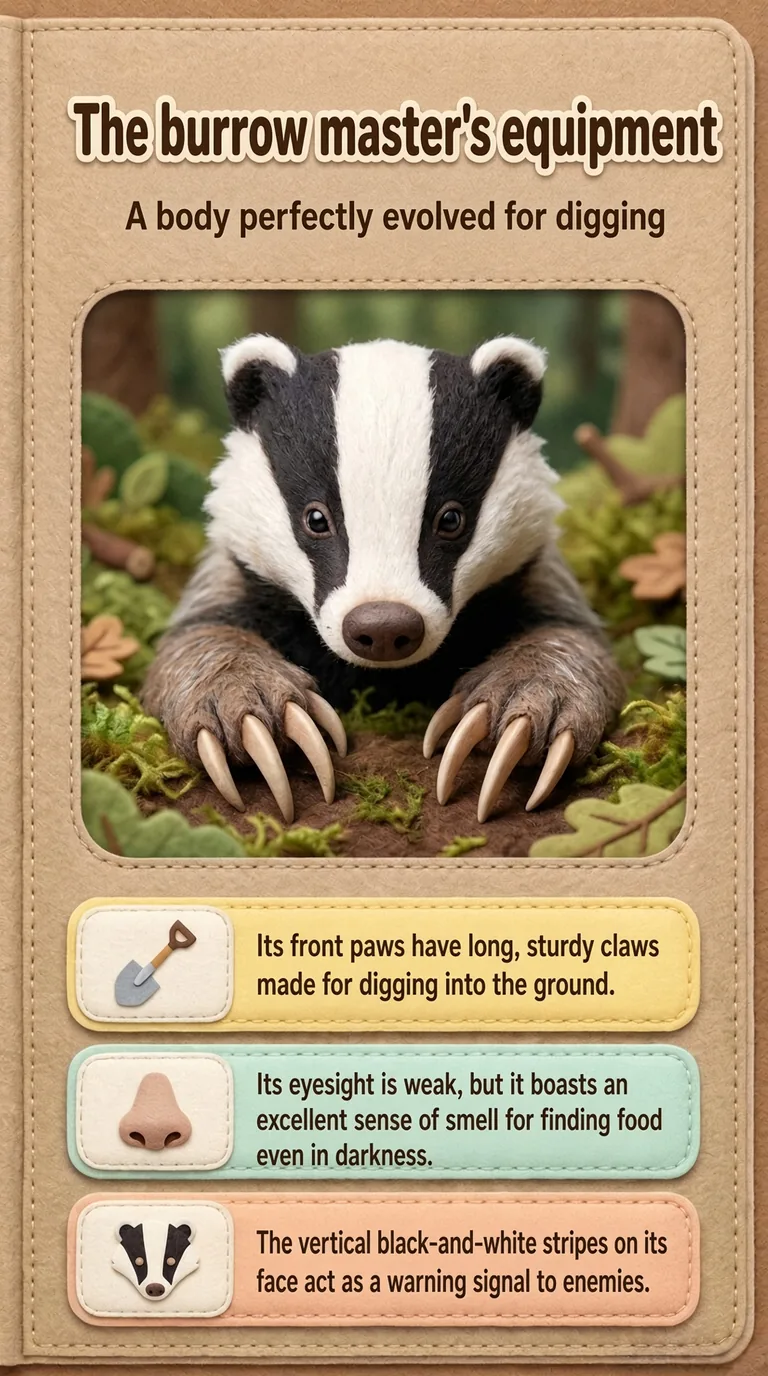
- Its front paws have long, sturdy claws made for digging into the ground.
- Its eyesight is weak, but it boasts an excellent sense of smell for finding food even in darkness.
- The vertical black-and-white stripes on its face act as a warning signal to enemies.
The table of a worm-killer
A hearty eater that devours hundreds in one night
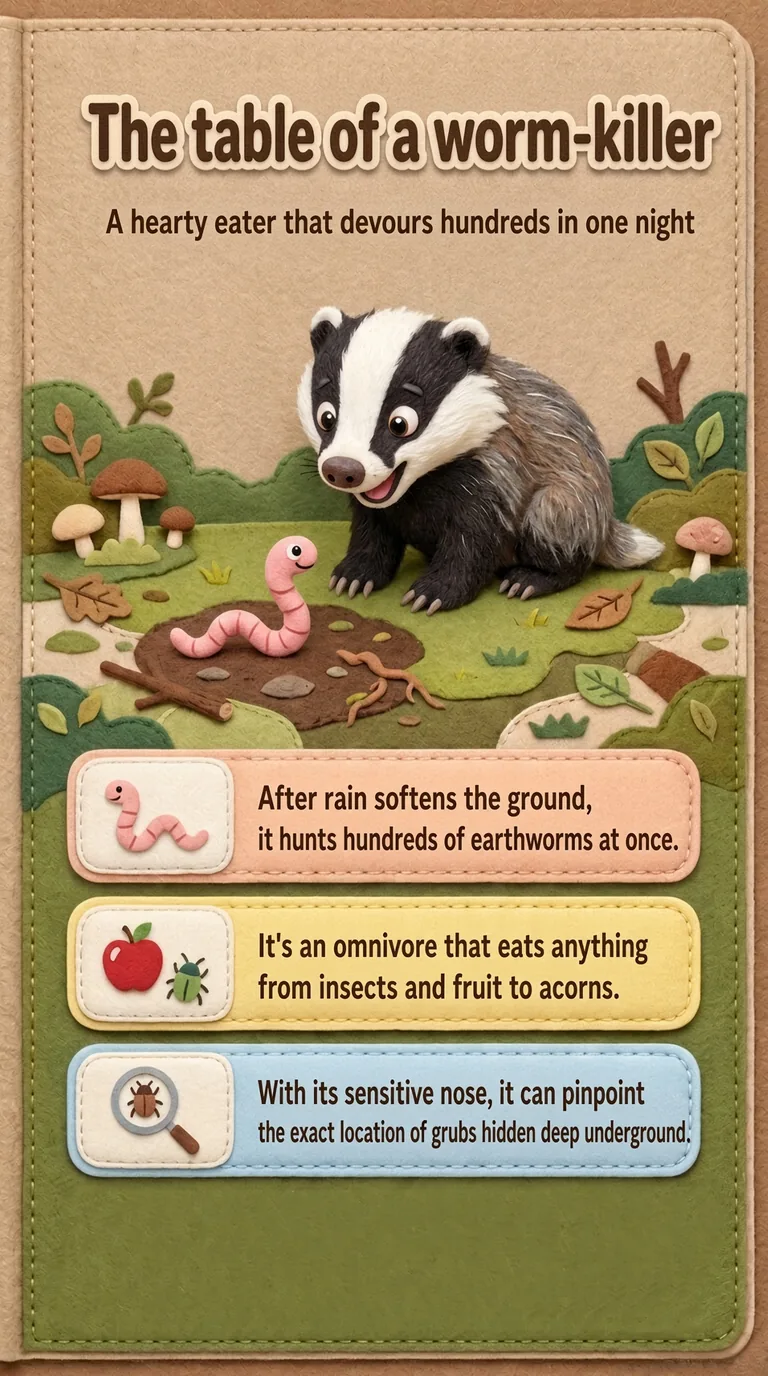
- After rain softens the ground, it hunts hundreds of earthworms at once.
- It's an omnivore that eats anything from insects and fruit to acorns.
- With its sensitive nose, it can pinpoint the exact location of grubs hidden deep underground.
A luxury underground villa, the sett
A vast underground empire passed down over centuries
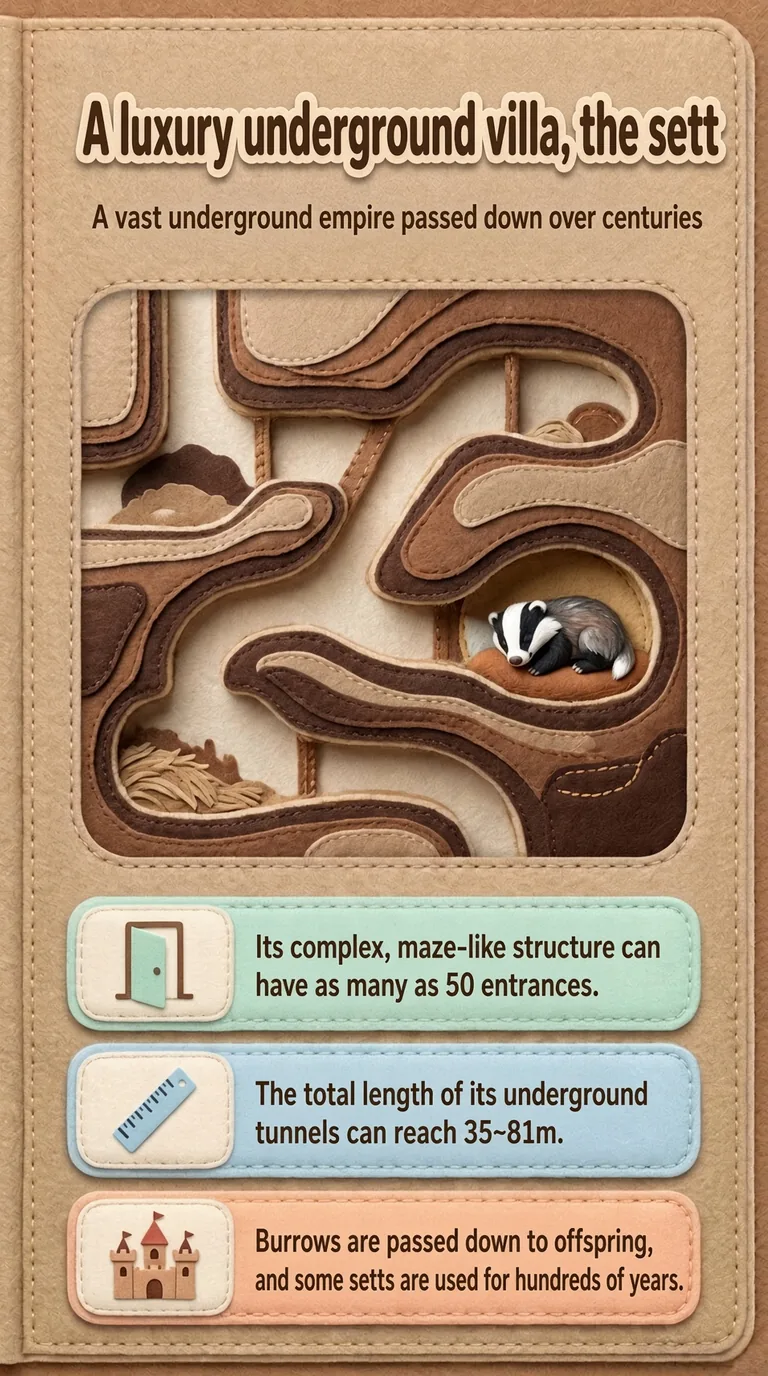
- Its complex, maze-like structure can have as many as 50 entrances.
- The total length of its underground tunnels can reach 35–81m.
- Burrows are passed down to offspring, and some setts are used for hundreds of years.
A surprisingly tidy creature of the forest
A habit of strictly separating bedroom from bathroom
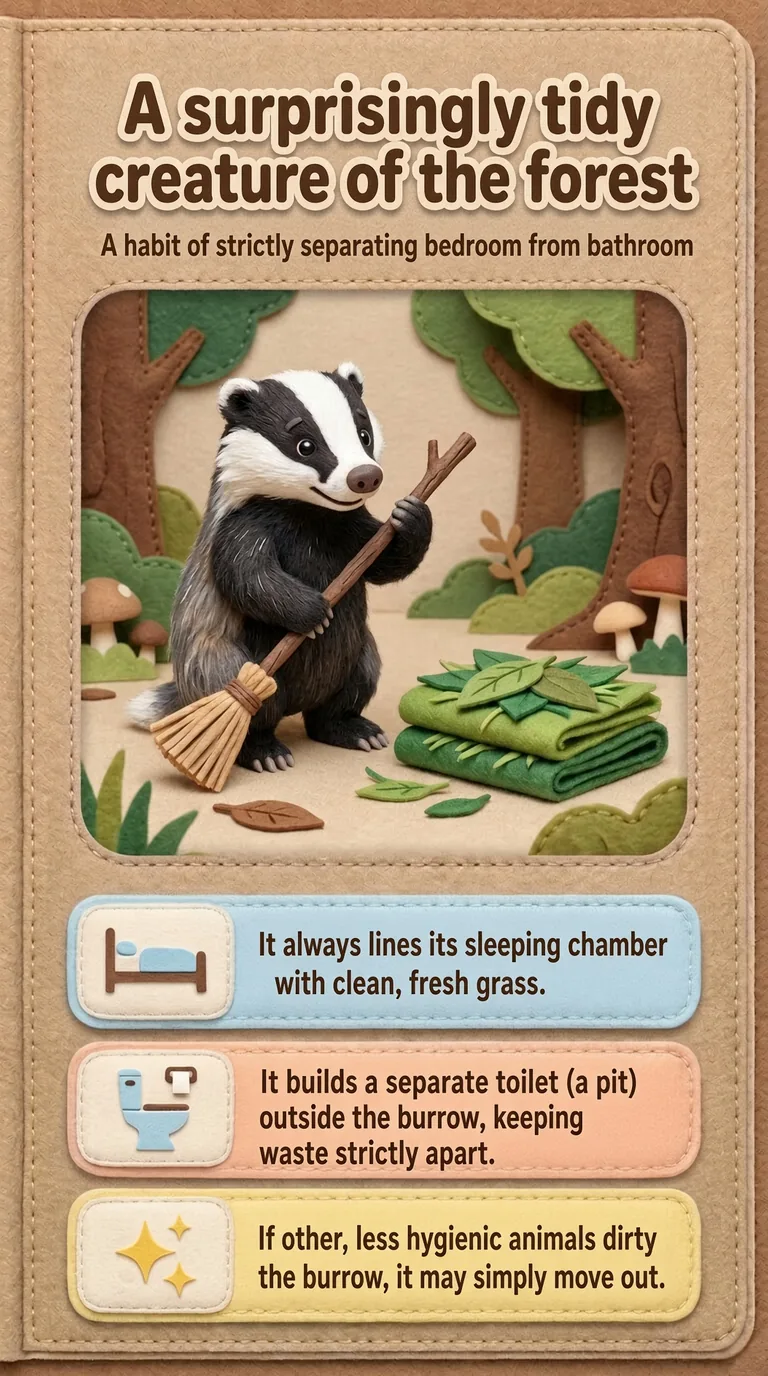
- It always lines its sleeping chamber with clean, fresh grass.
- It builds a separate toilet (a pit) outside the burrow, keeping waste strictly apart.
- If other, less hygienic animals dirty the burrow, it may simply move out.
Why it lives alongside unwelcome neighbors
A clever strategy of using foxes and raccoon dogs as a shield
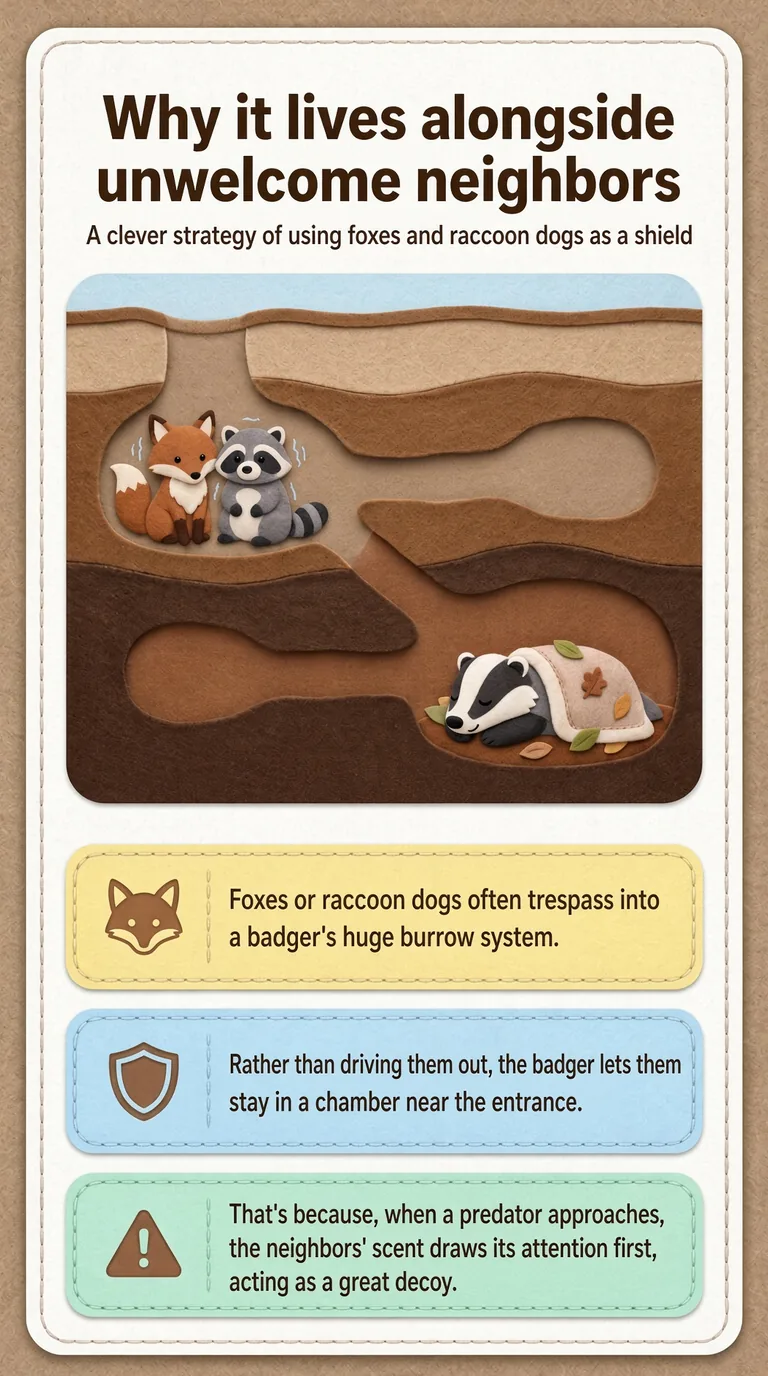
- Foxes or raccoon dogs often trespass into a badger's huge burrow system.
- Rather than driving them out, the badger lets them stay in a chamber near the entrance.
- That's because, when a predator approaches, the neighbors' scent draws its attention first, acting as a great decoy.
A special way of getting through winter
Not true hibernation, but 'shallow torpor'
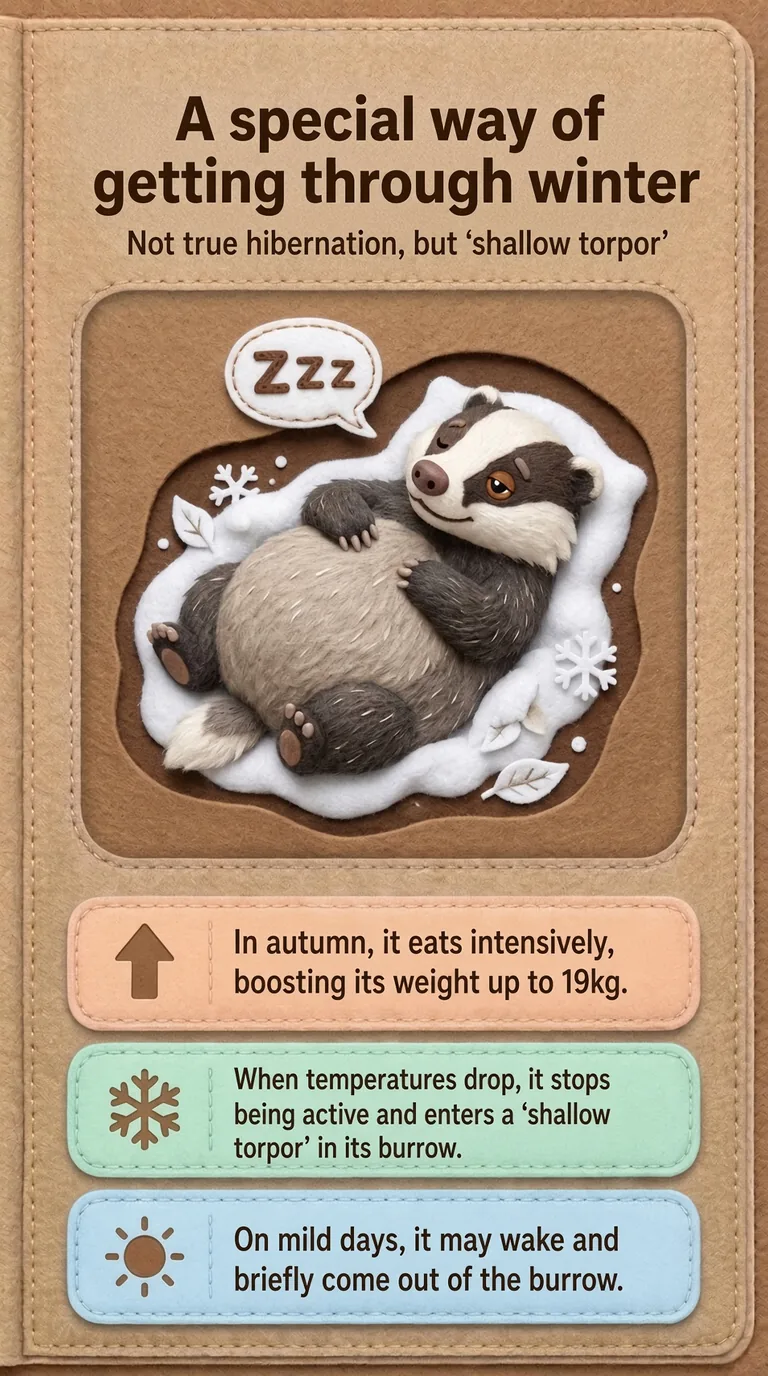
- In autumn, it eats intensively, boosting its weight up to 19kg.
- When temperatures drop, it stops being active and enters a 'shallow torpor' in its burrow.
- On mild days, it may wake and briefly come out of the burrow.
Badger vs raccoon dog
A sure way to tell them apart on a dark night
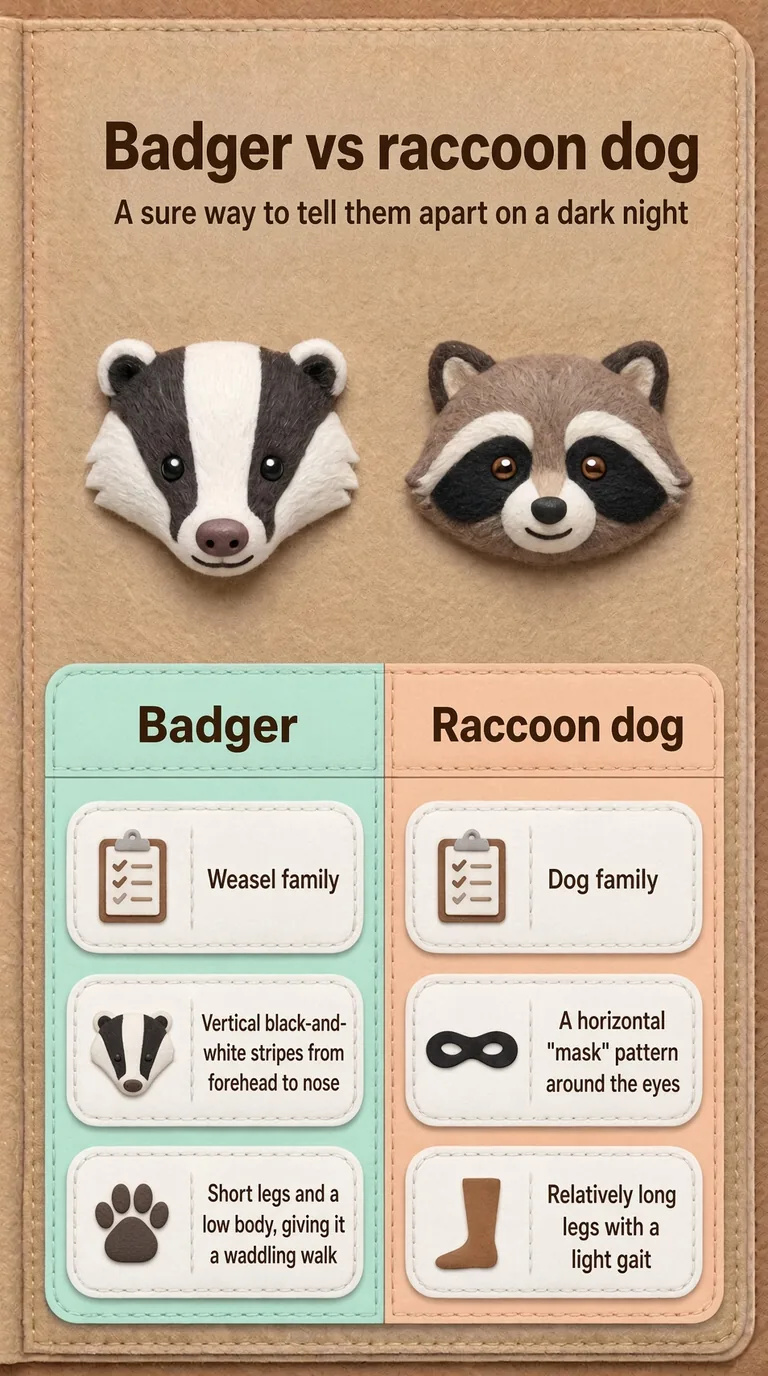
- Badger
- Weasel family
- Vertical black-and-white stripes from forehead to nose
- Short legs and a low body, giving it a waddling walk
- Raccoon dog
- Dog family
- A horizontal "mask" pattern around the eyes
- Relatively long legs with a light gait