Wild Boar
Europe
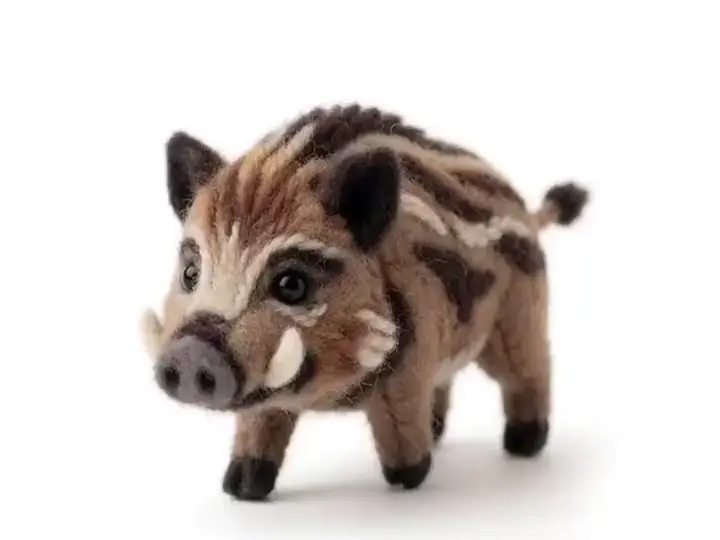
The wild boar is the wild ancestor of the pig. It digs up the ground with its tough snout to find food, and males have sharp tusks. It's smart and adaptable, so it does well in almost any habitat.
Quick facts
- Habitat
- It lives in the forests, wetlands, and farmland of Europe and Asia.
- Diet
- It eats roots, nuts, insects, and small animals.
- Size and weight
- Length 1.5–2m, weight 60–200kg.
- Lifespan
- 10–14 years
- Conservation status
- Least Concern
- Fun facts
- Its sense of smell is so good it can find food buried deep underground!
Its piglets are striped, so they're nicknamed "watermelon piglets."
Learn more
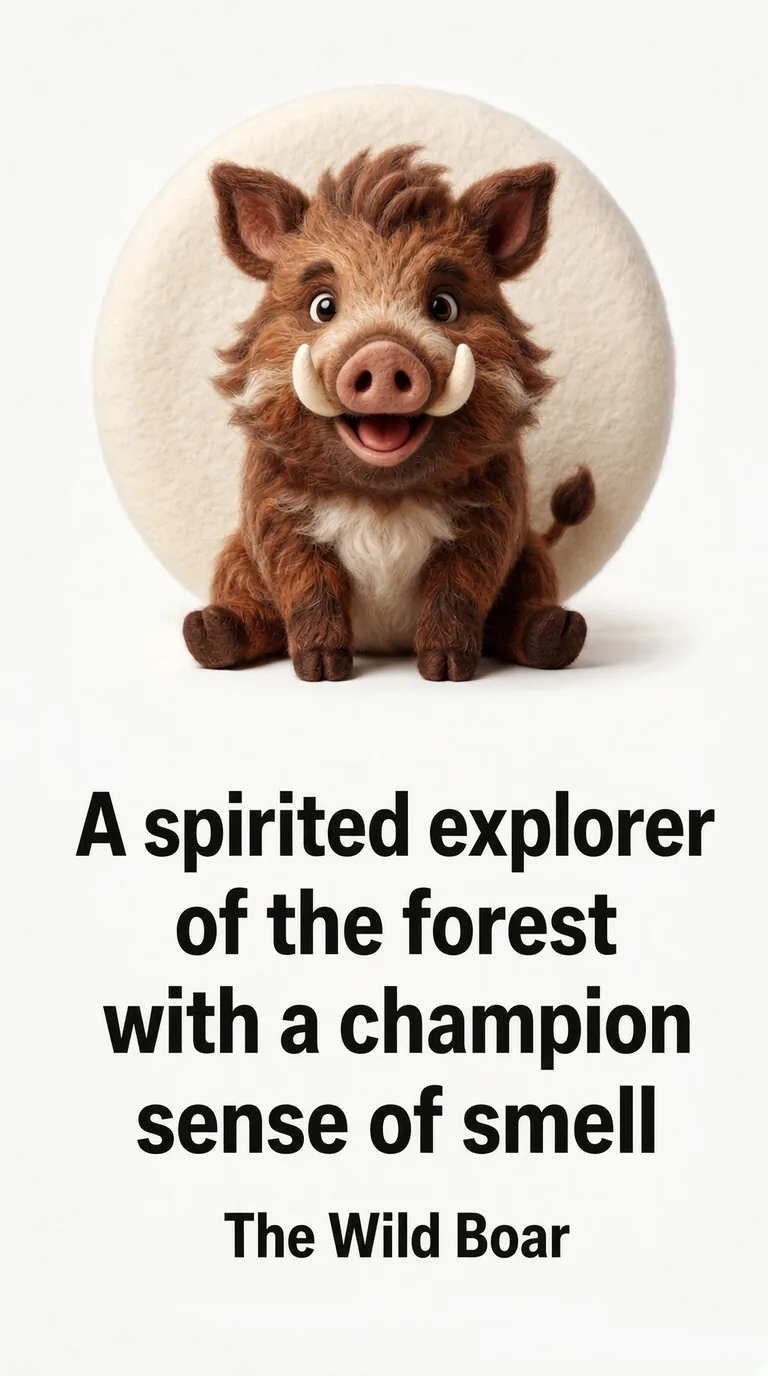
A spirited explorer of the forest with a champion sense of smell
The Wild Boar
Wild boar profile
The wild ancestor of the domestic pig!
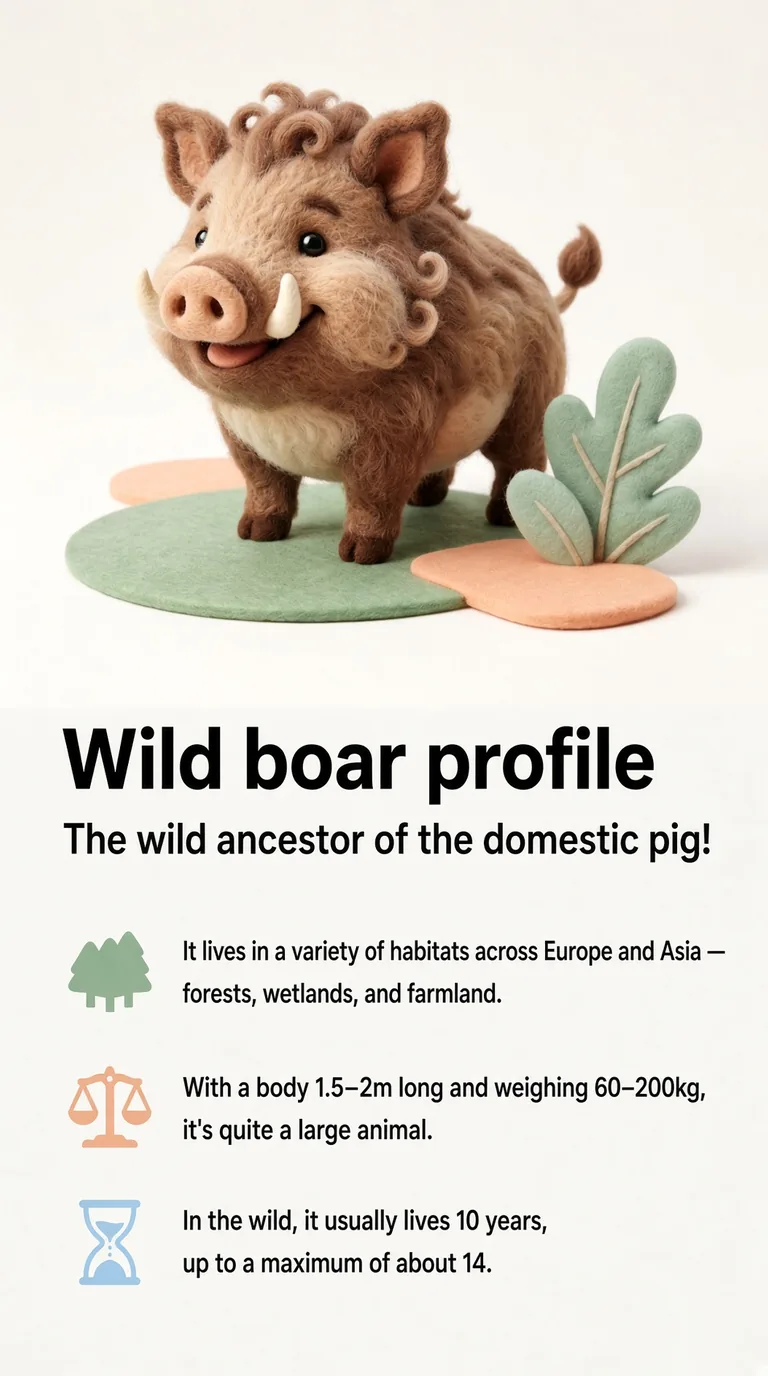
- It lives in a variety of habitats across Europe and Asia — forests, wetlands, and farmland.
- With a body 1.5–2m long and weighing 60–200kg, it's quite a large animal.
- In the wild, it usually lives 10 years, up to a maximum of about 14.
Its nose is the best detector!
Its nose is far more sensitive than its eyes.
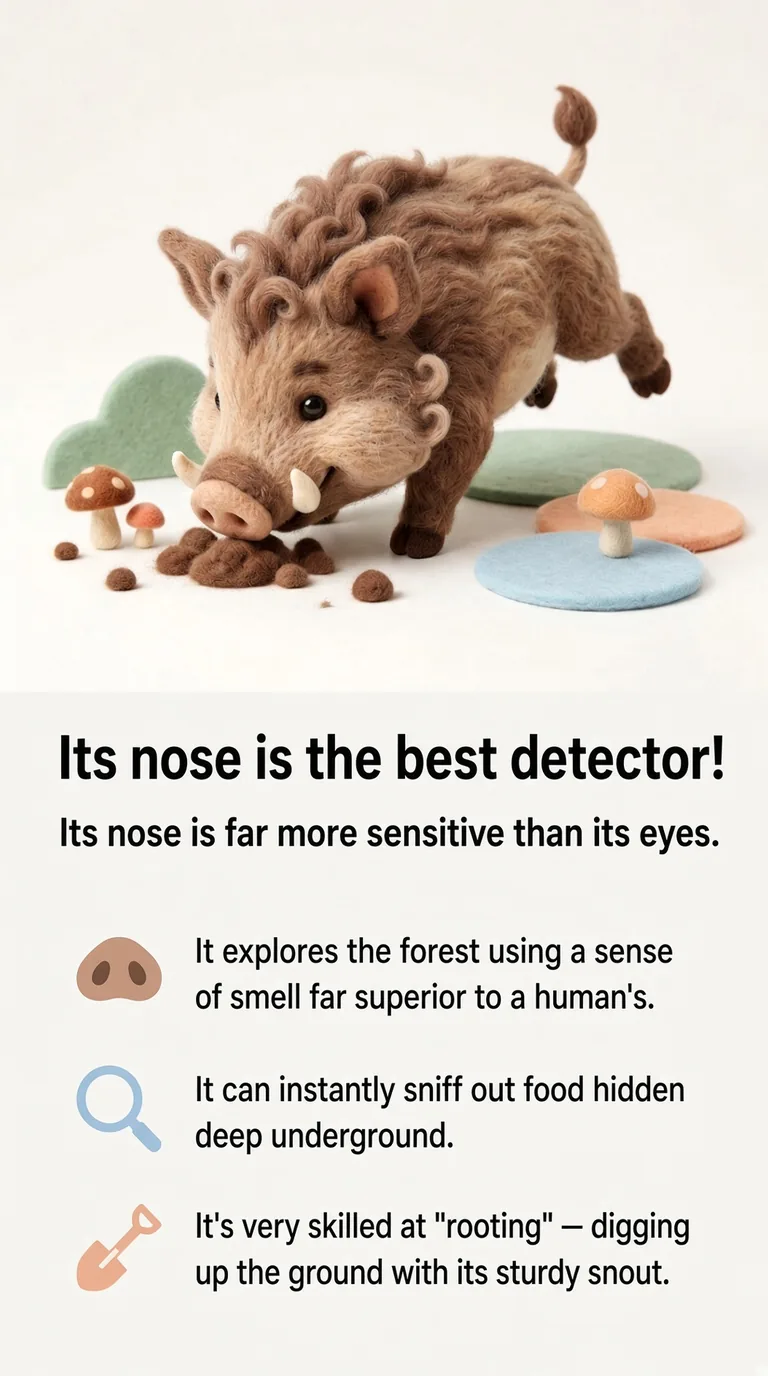
- It explores the forest using a sense of smell far superior to a human's.
- It can instantly sniff out food hidden deep underground.
- It's very skilled at "rooting" — digging up the ground with its sturdy snout.
An invincible spear and shield
It has powerful weapons for surviving in the forest.
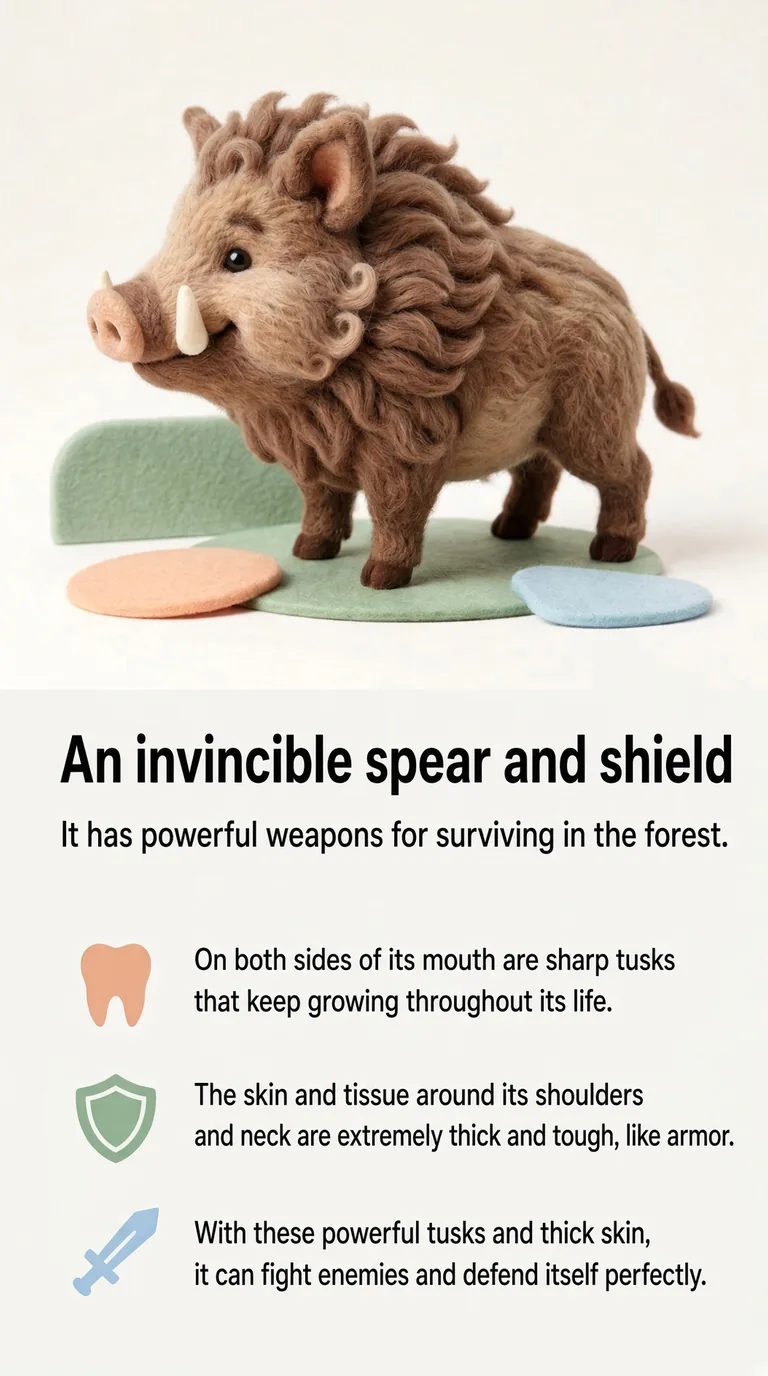
- On both sides of its mouth are sharp tusks that keep growing throughout its life.
- The skin and tissue around its shoulders and neck are extremely thick and tough, like armor.
- With these powerful tusks and thick skin, it can fight enemies and defend itself perfectly.
The forest's big eater
It eats just about anything without picking favorites!
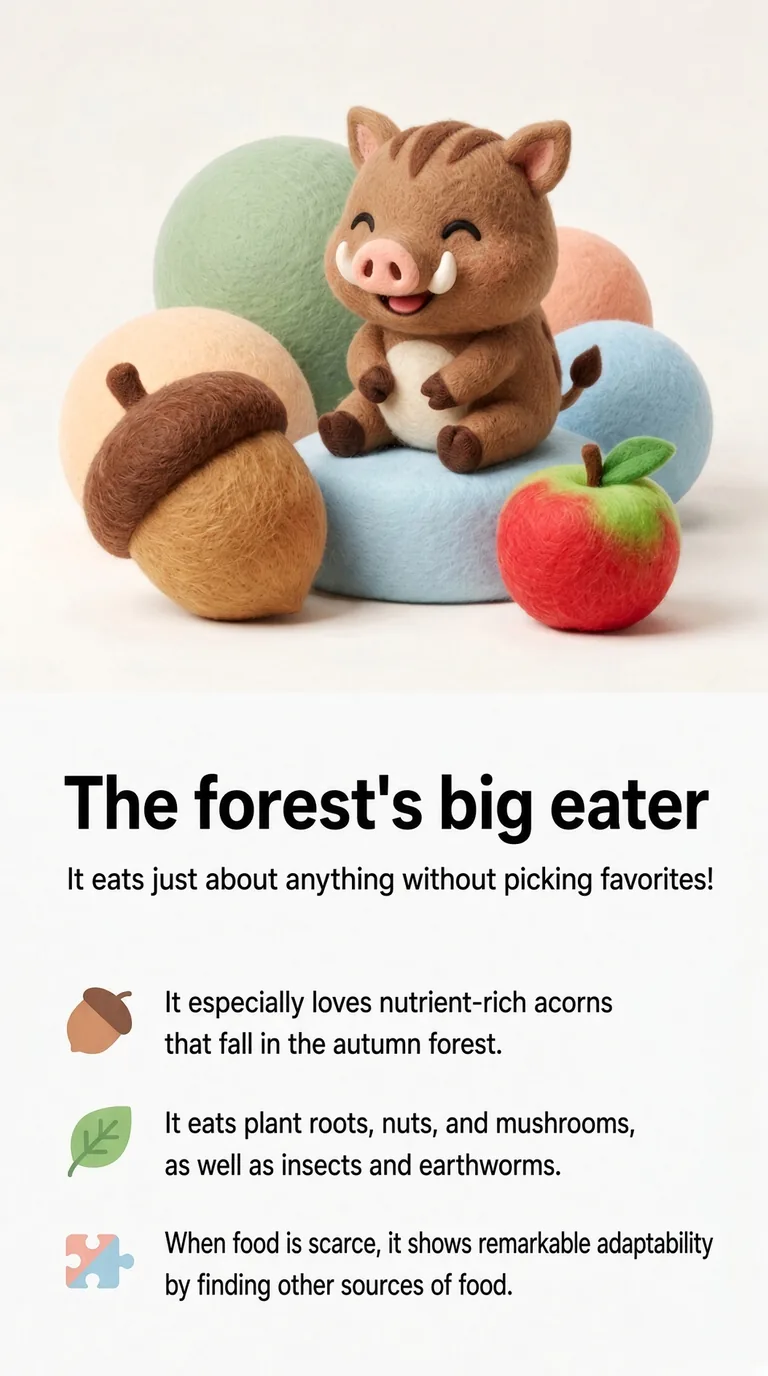
- It especially loves nutrient-rich acorns that fall in the autumn forest.
- It eats plant roots, nuts, and mushrooms, as well as insects and earthworms.
- When food is scarce, it shows remarkable adaptability by finding other sources of food.
A surprisingly all-around athlete
Despite its chubby build, it's incredibly quick and fast!
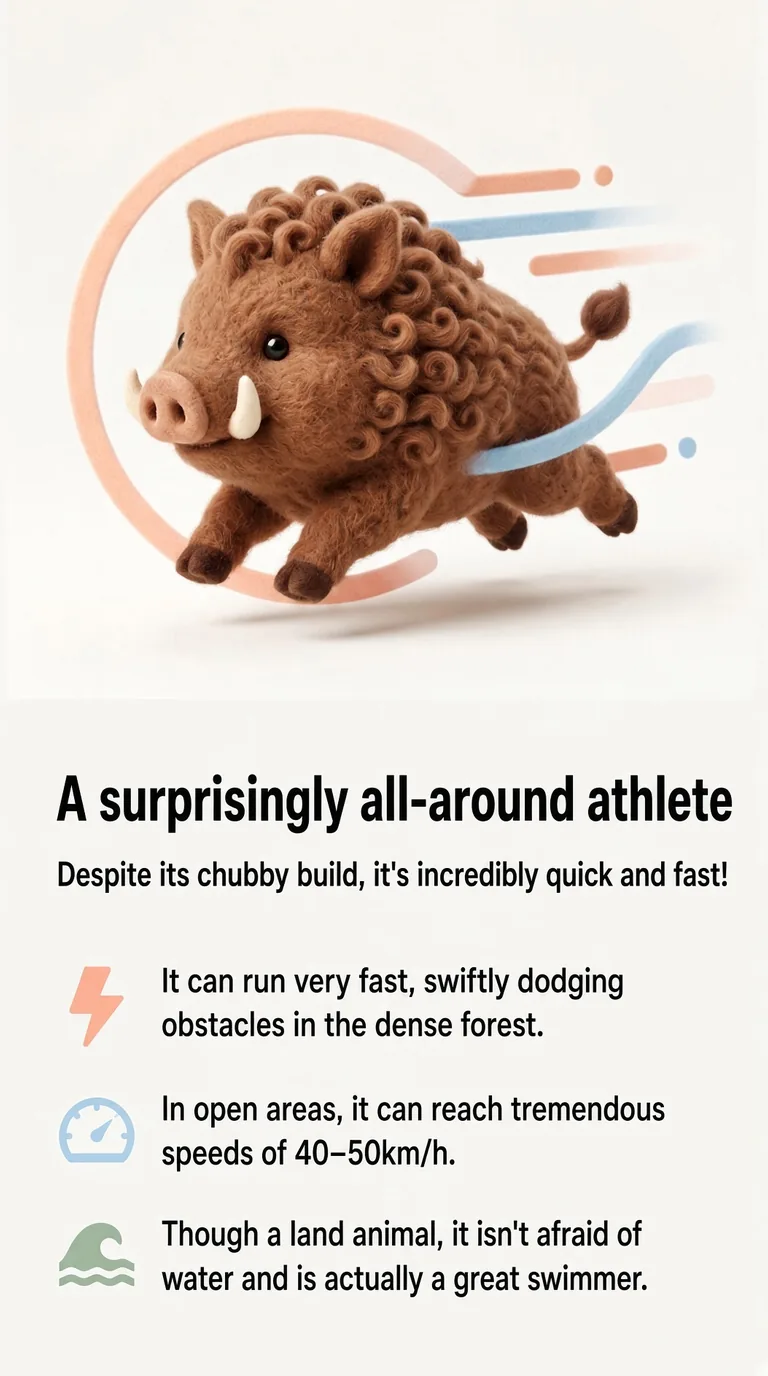
- It can run very fast, swiftly dodging obstacles in the dense forest.
- In open areas, it can reach tremendous speeds of 40–50km/h.
- Though a land animal, it isn't afraid of water and is actually a great swimmer.
A natural mud-spa enthusiast
A mud bath is an essential ritual for the wild boar.
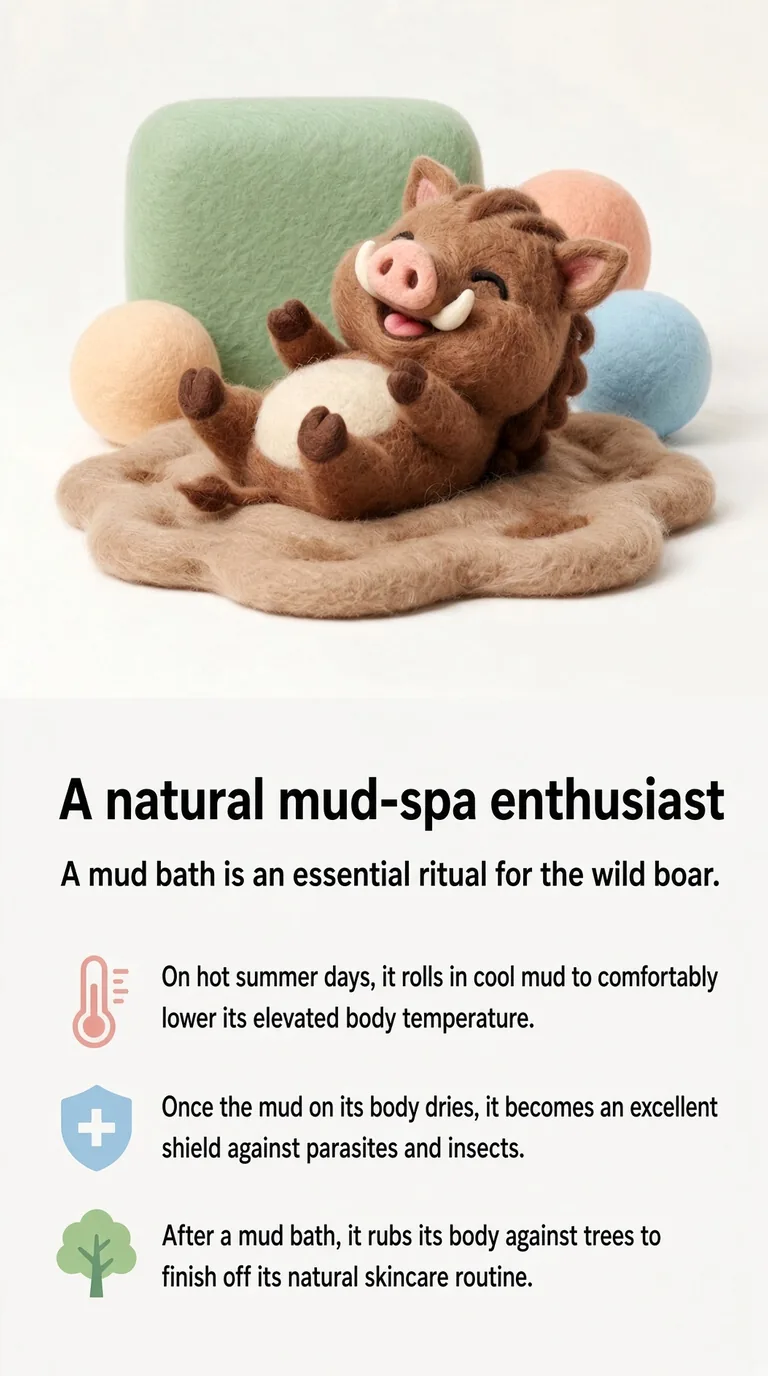
- On hot summer days, it rolls in cool mud to comfortably lower its elevated body temperature.
- Once the mud on its body dries, it becomes an excellent shield against parasites and insects.
- After a mud bath, it rubs its body against trees to finish off its natural skincare routine.
The adorable "watermelon piglet"
Baby wild boars look very different from adults.
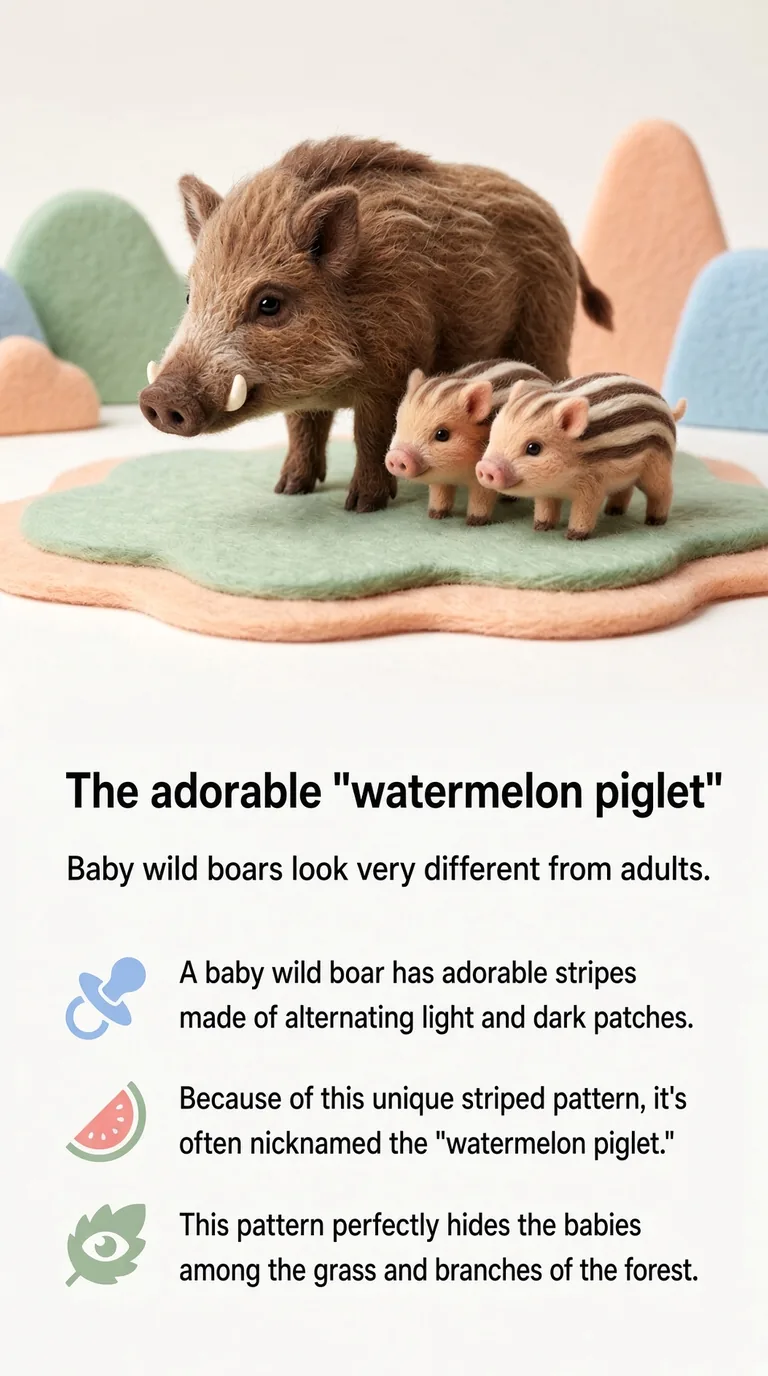
- A baby wild boar has adorable stripes made of alternating light and dark patches.
- Because of this unique striped pattern, it's often nicknamed the "watermelon piglet."
- This pattern perfectly hides the babies among the grass and branches of the forest.
A big family that loves the night
It stays active with keen senses, even in the dark
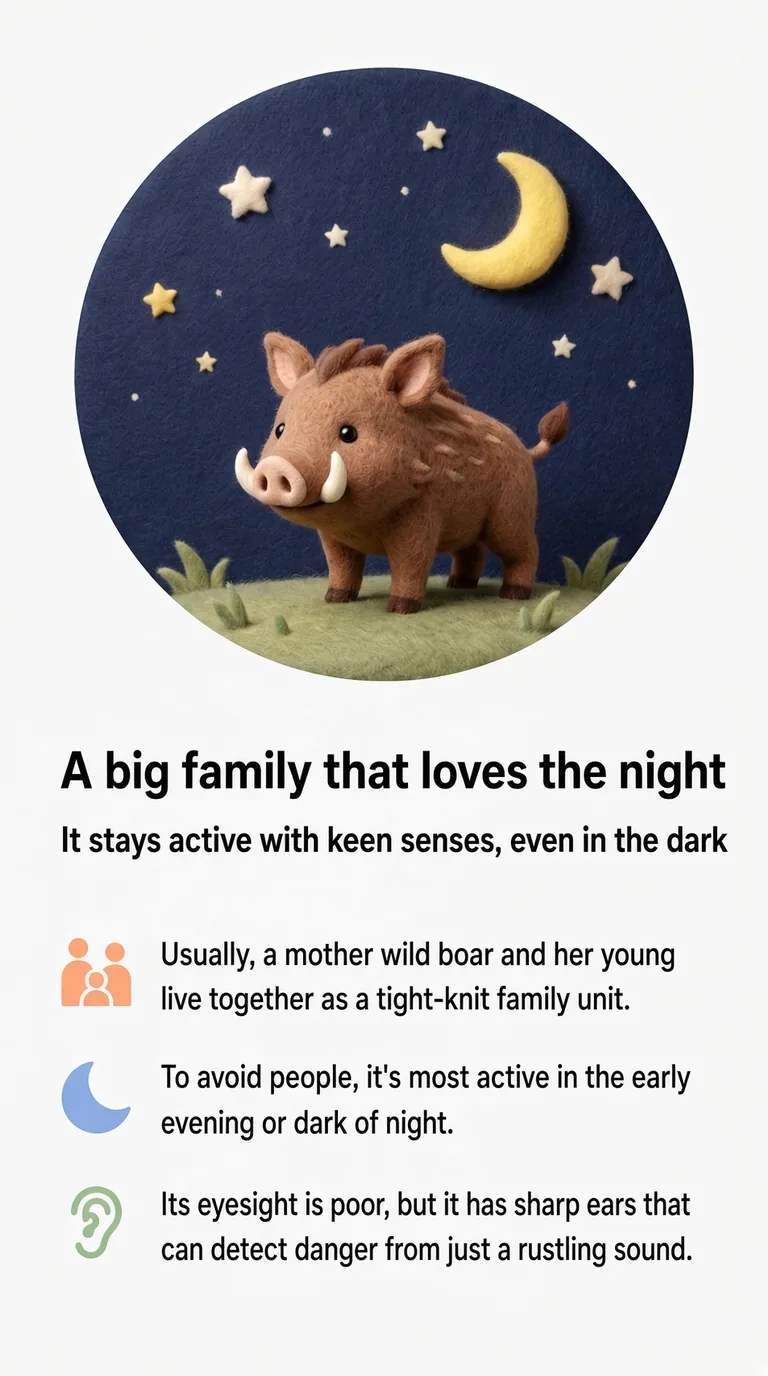
- Usually, a mother wild boar and her young live together as a tight-knit family unit.
- To avoid people, it's most active in the early evening or dark of night.
- Its eyesight is poor, but it has sharp ears that can detect danger from just a rustling sound.