Cheetah
Africa
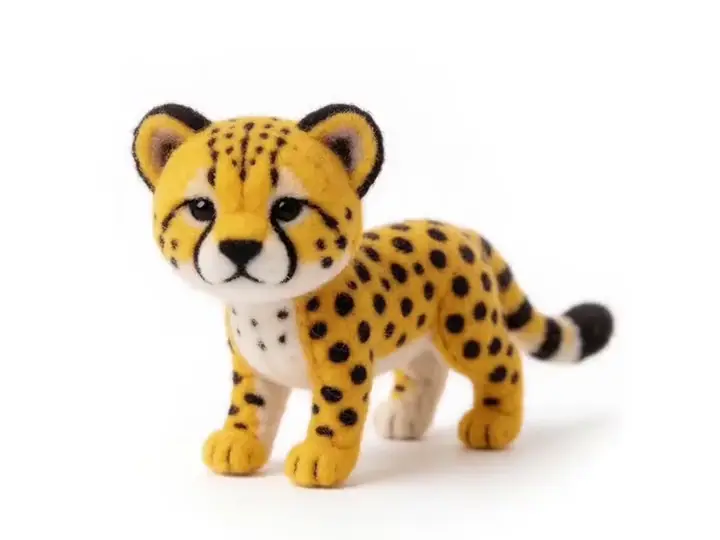
The cheetah is the fastest land animal on Earth. It can reach 110km/h, but it can't keep that speed up for long, so it ends a hunt in one quick burst. Its slim body and long legs are built for running.
Quick facts
- Habitat
- It lives on open savannas and dry grasslands.
- Diet
- It hunts fast animals like gazelles and impalas.
- Size and weight
- Height 75cm, weight 35–65kg.
- Lifespan
- 10–12 years
- Conservation status
- Vulnerable
- Fun facts
- A cheetah can go from 0 to 100km/h in just three seconds!
Unlike other cats, it can't fully pull in its claws.
Learn more
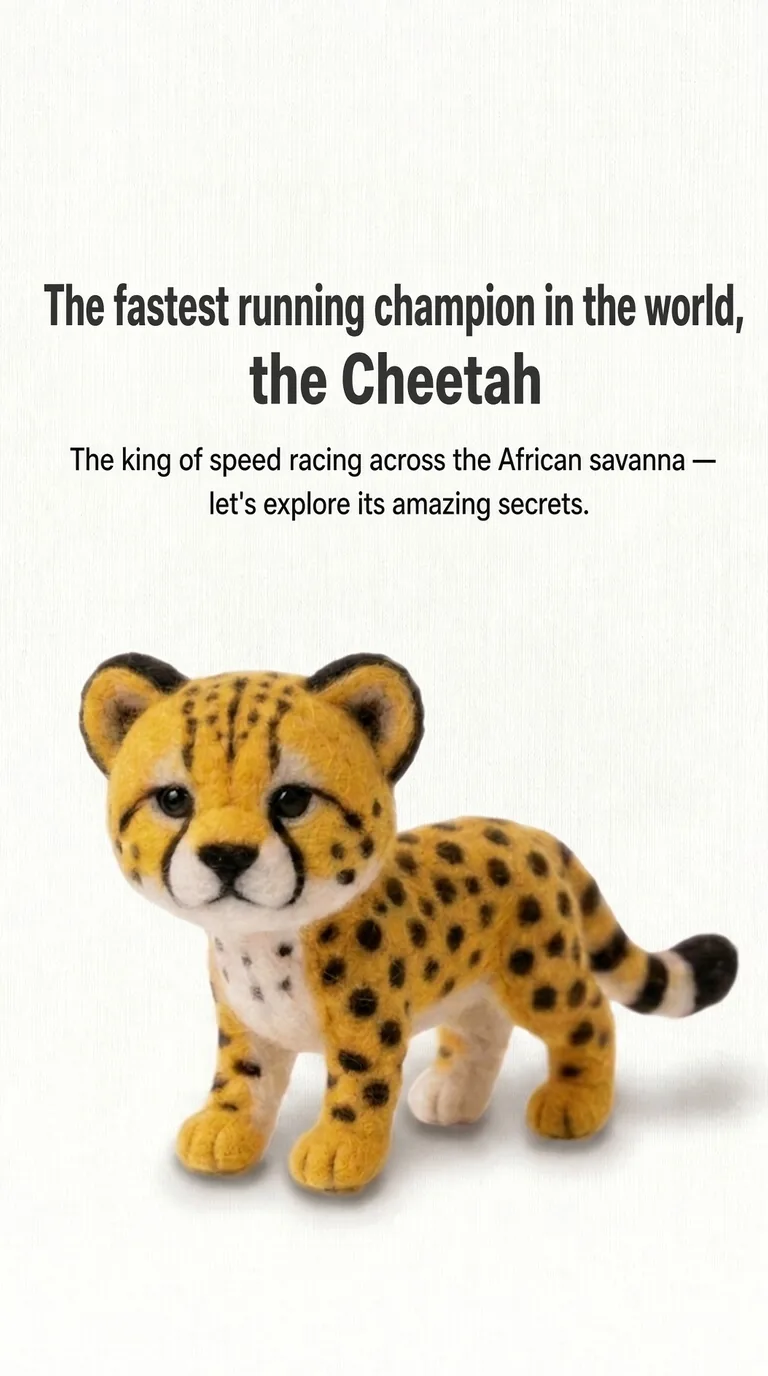
The fastest running champion in the world, the Cheetah
The king of speed racing across the African savanna — let's explore its amazing secrets.
Acceleration more amazing than a sports car
It generates explosive energy, reaching 100km/h in just 3 seconds.
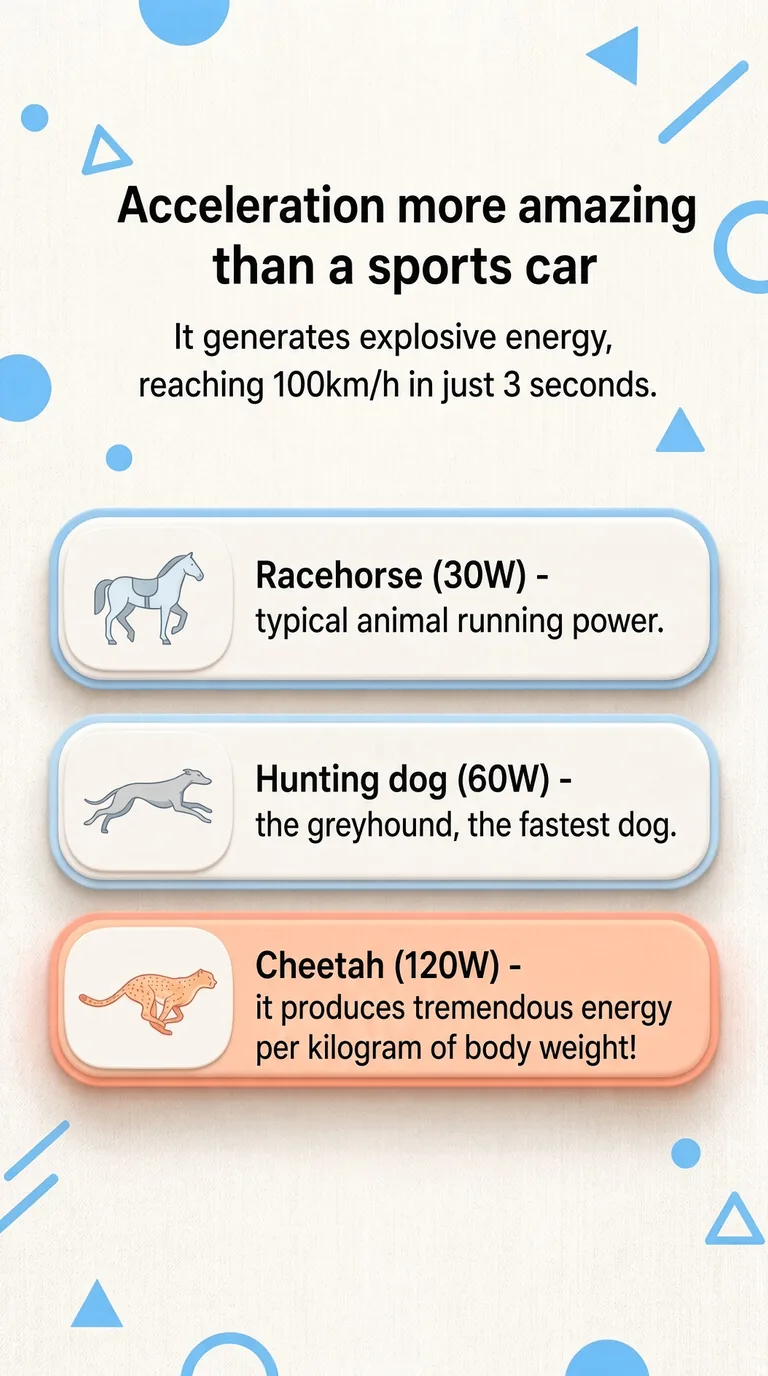
- Racehorse (30W) - typical animal running power.
- Hunting dog (60W) - the greyhound, the fastest dog.
- Cheetah (120W) - it produces tremendous energy per kilogram of body weight!
Designed for the perfect run
The cheetah's body has evolved for one thing only: 'speed.'
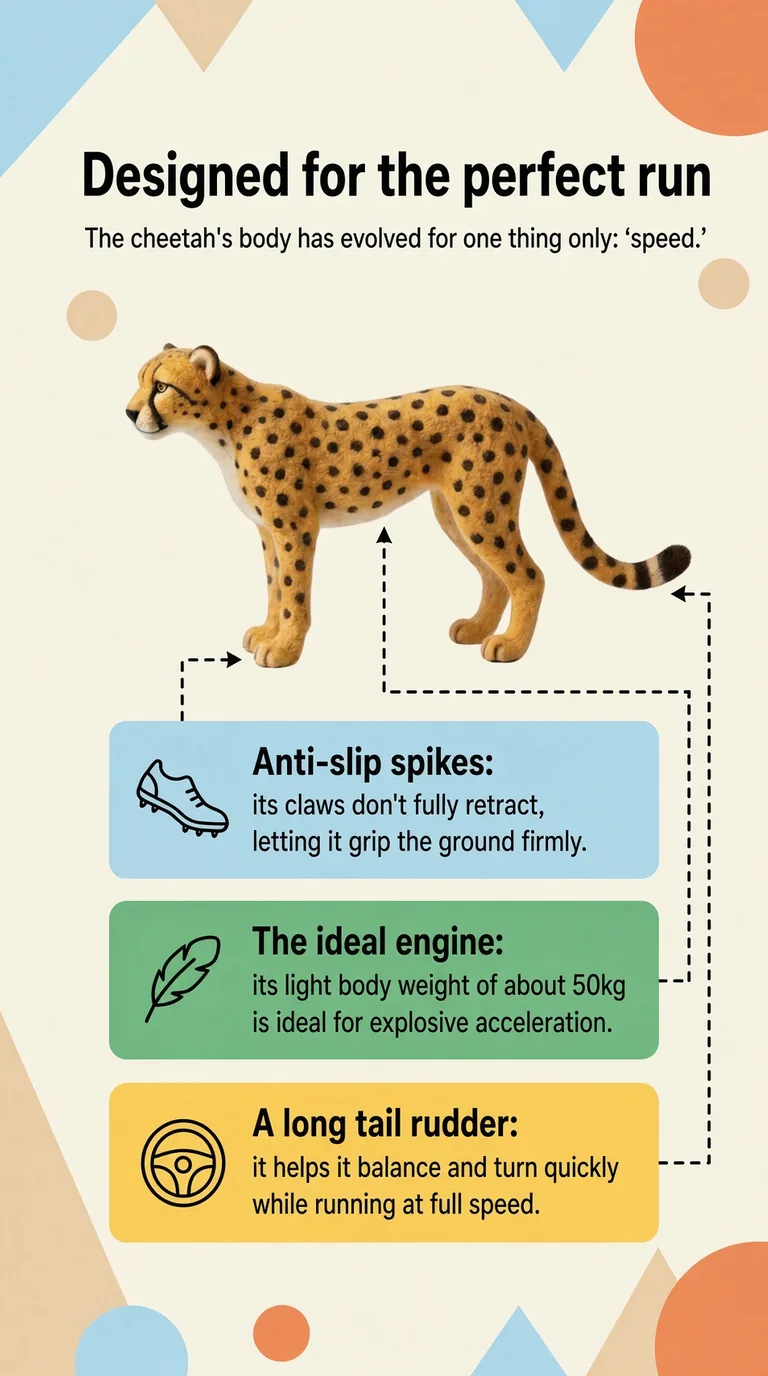
- Anti-slip spikes — its claws don't fully retract, letting it grip the ground firmly.
- The ideal engine — its light body weight of about 50kg is ideal for explosive acceleration.
- A long tail rudder — it helps it balance and turn quickly while running at full speed.
The secret hidden in its tear marks
The black lines running from eyes to mouth aren't from sadness!
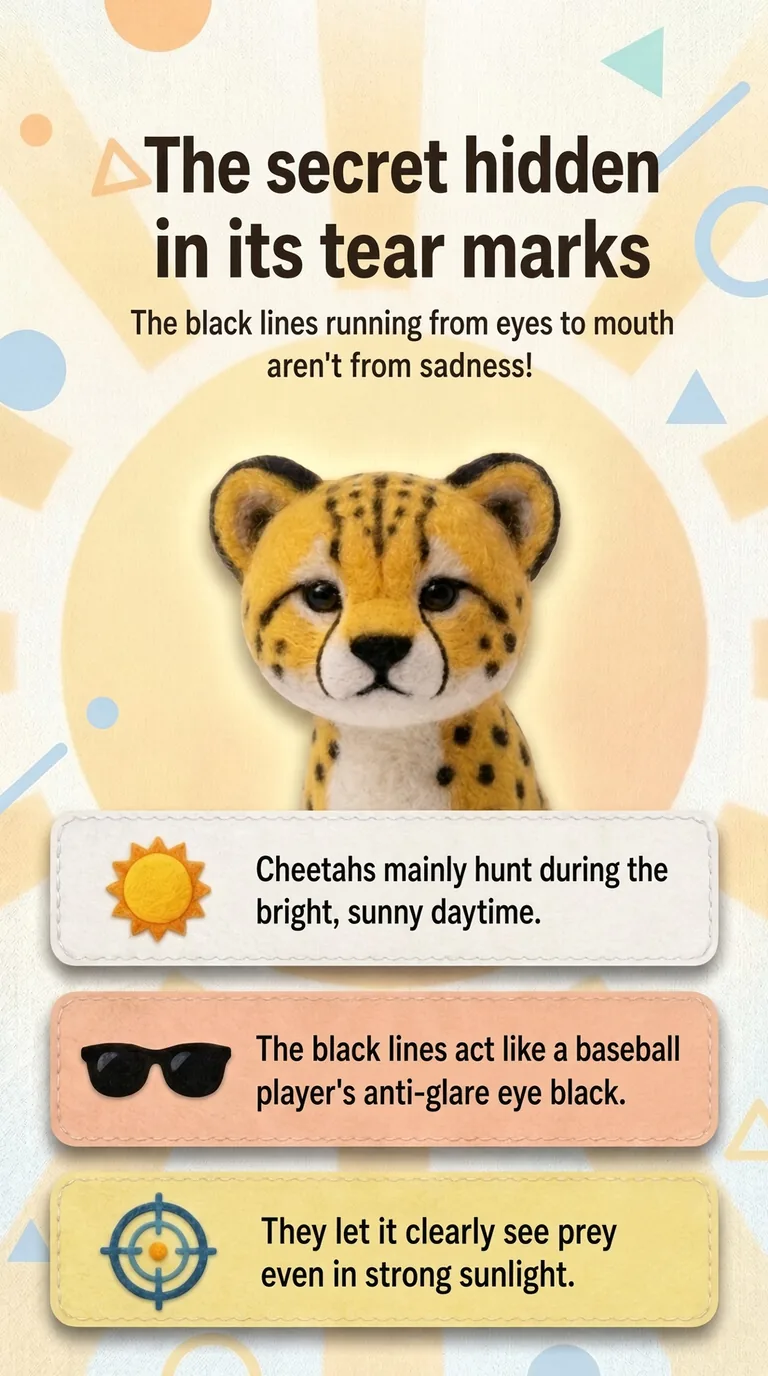
- Cheetahs mainly hunt during the bright, sunny daytime.
- The black lines act like a baseball player's anti-glare eye black.
- They let it clearly see prey even in strong sunlight.
Just 30 seconds: the limit of its speed
The fastest in the world, but with very weak endurance.
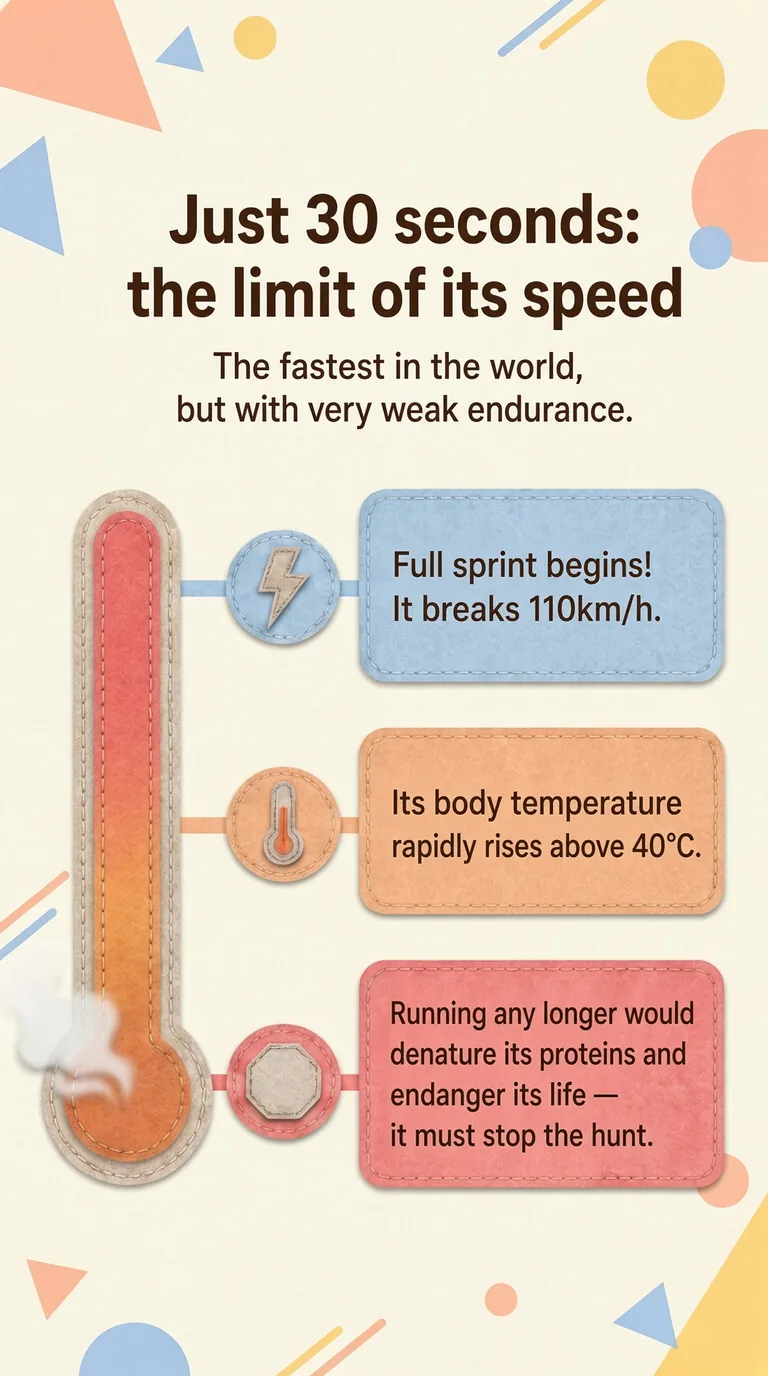
- Full sprint begins! It breaks 110km/h.
- Its body temperature rapidly rises above 40°C.
- Running any longer would denature its proteins and endanger its life — it must stop the hunt.
The real secret to a successful hunt is 'sudden braking'
Simply running fast isn't the key to a successful hunt.
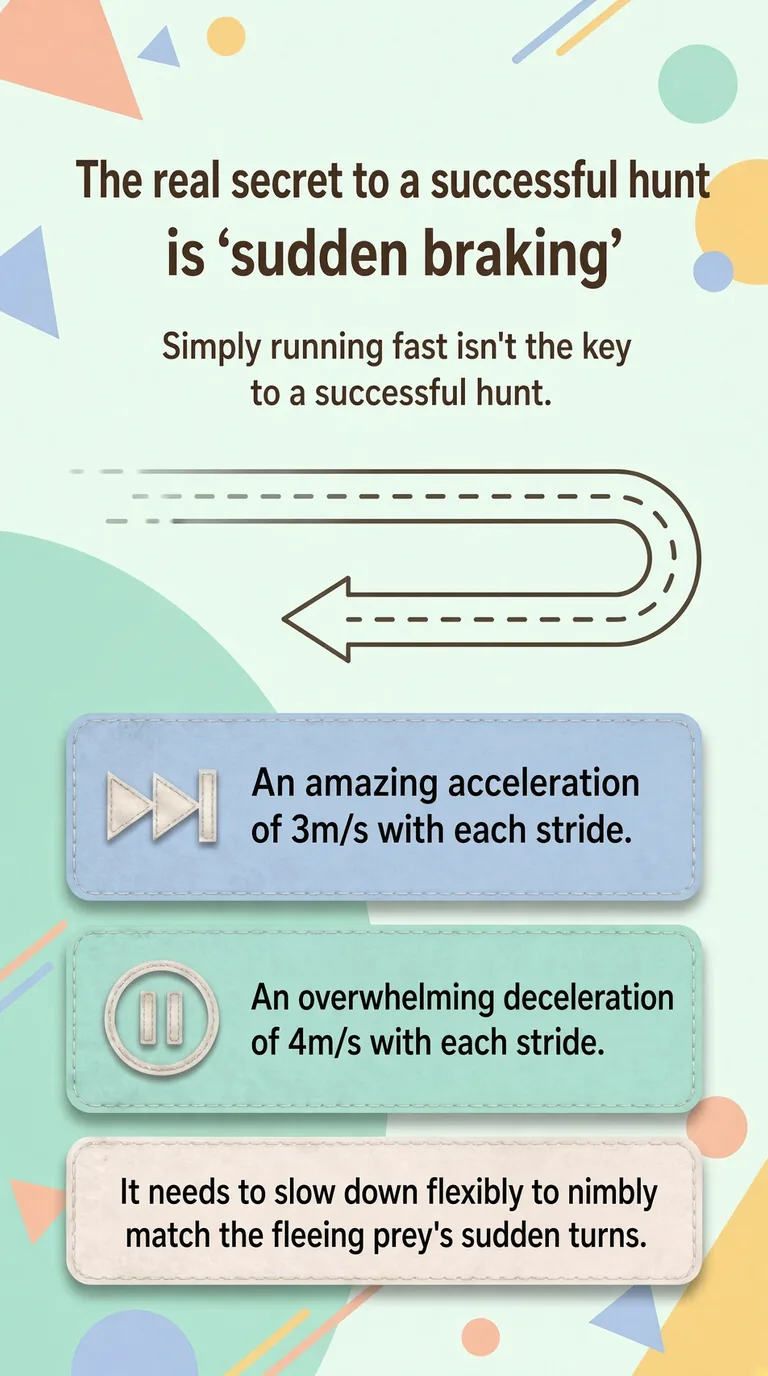
- An amazing acceleration of 3m/s with each stride.
- An overwhelming deceleration of 4m/s with each stride.
- It needs to slow down flexibly to nimbly match the fleeing prey's sudden turns.
Which one is the real cheetah?
Easily tell wild cats apart by their spot patterns.
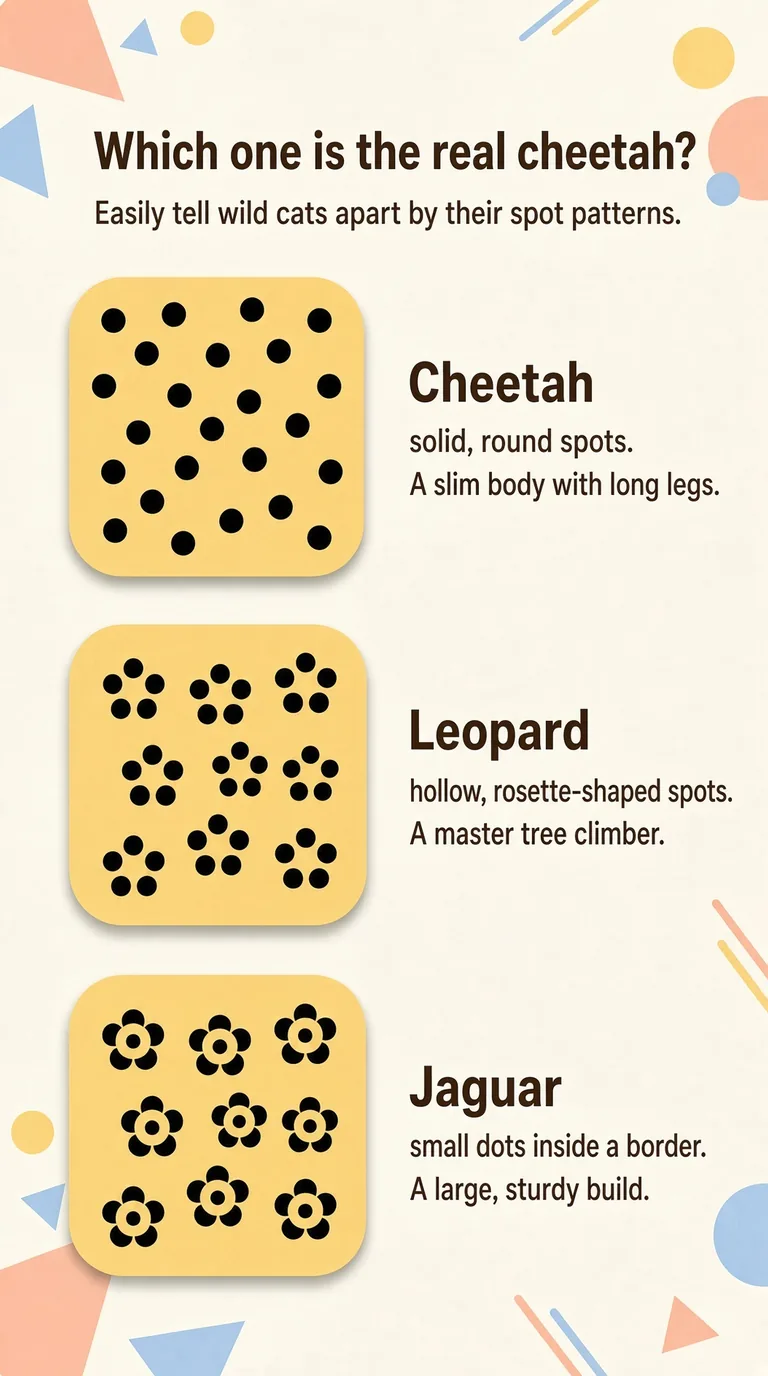
- Cheetah — solid, round spots. A slim body with long legs.
- Leopard — hollow, rosette-shaped spots. A master tree climber.
- Jaguar — small dots inside a border. A large, sturdy build.
The underdog of the predator world?
It has fast legs, but isn't skilled at fighting.
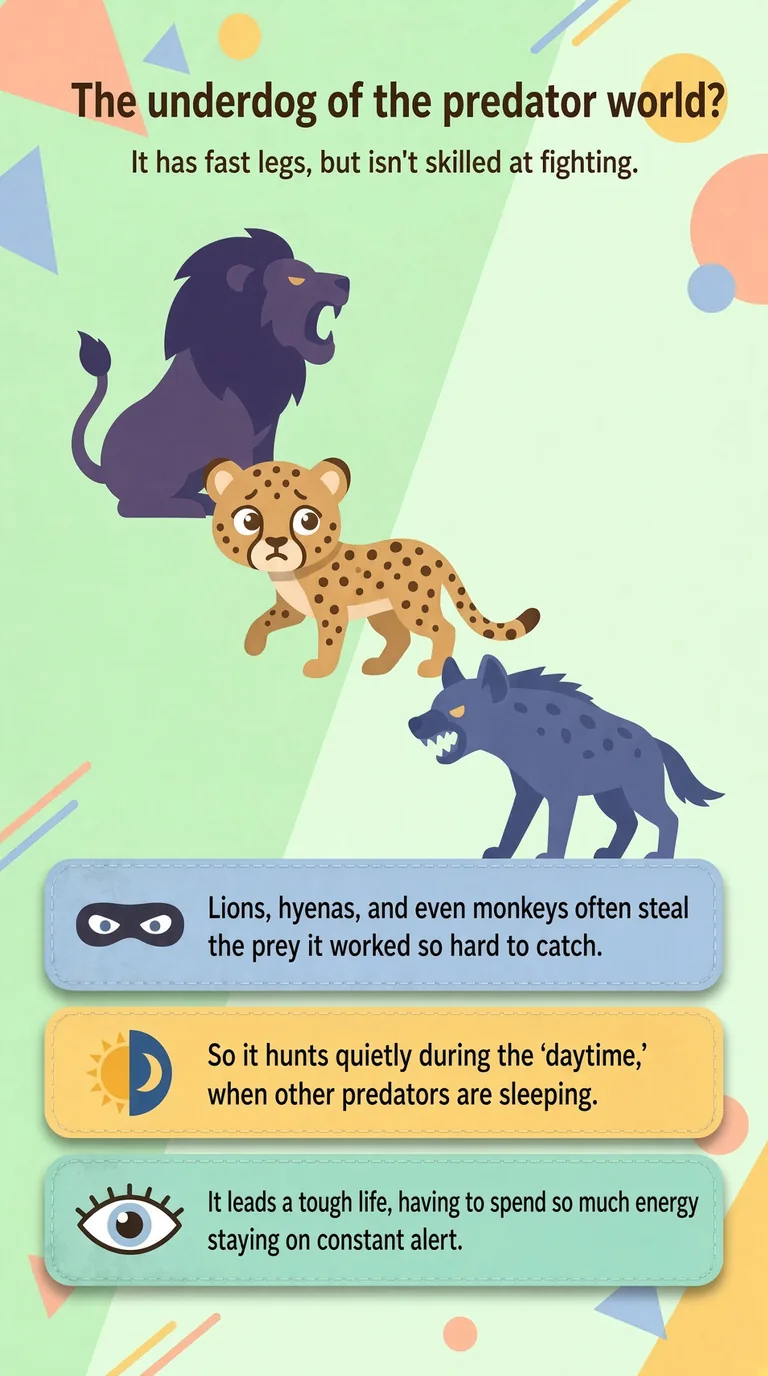
- Lions, hyenas, and even monkeys often steal the prey it worked so hard to catch.
- So it hunts quietly during the 'daytime,' when other predators are sleeping.
- It leads a tough life, having to spend so much energy staying on constant alert.
A baby cheetah disguised in fluff
The fluffy silver-gray fur on its back is essential for survival.
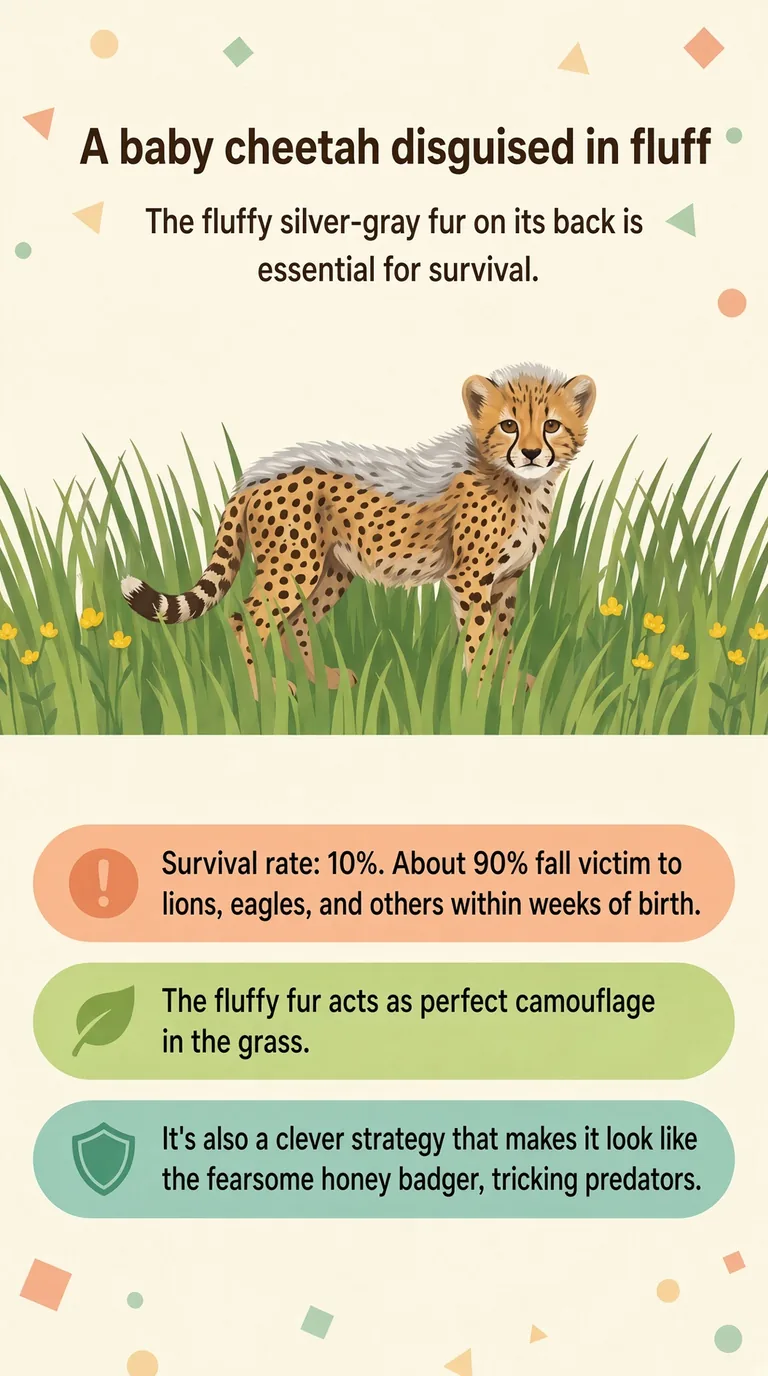
- Survival rate — 10%. About 90% fall victim to lions, eagles, and others within weeks of birth.
- The fluffy fur acts as perfect camouflage in the grass.
- It's also a clever strategy that makes it look like the fearsome honey badger, tricking predators.