Rhinoceros
Africa
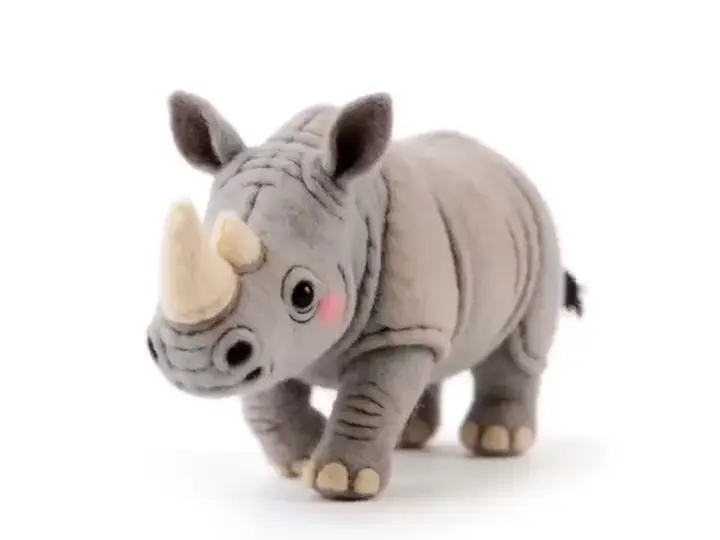
The rhino is a giant plant-eater with a big horn on its nose. The horn is made of keratin, the same stuff as our fingernails. Its eyesight is poor, but its hearing and sense of smell are excellent.
Quick facts
- Habitat
- It lives in savanna grasslands and scrubland.
- Diet
- It's a plant-eater that feeds on grass, leaves, and shoots.
- Size and weight
- Length 3–4m, weight 1,000–2,300kg.
- Lifespan
- 35–50 years
- Conservation status
- Critically Endangered
- Fun facts
- Even though it's huge, it can run at 50km/h!
Birds that eat ticks often sit on a rhino's back.
Learn more
The grassland's giant lawnmower, the Rhinoceros
A surprising twist hidden behind its sharp horn and armored skin
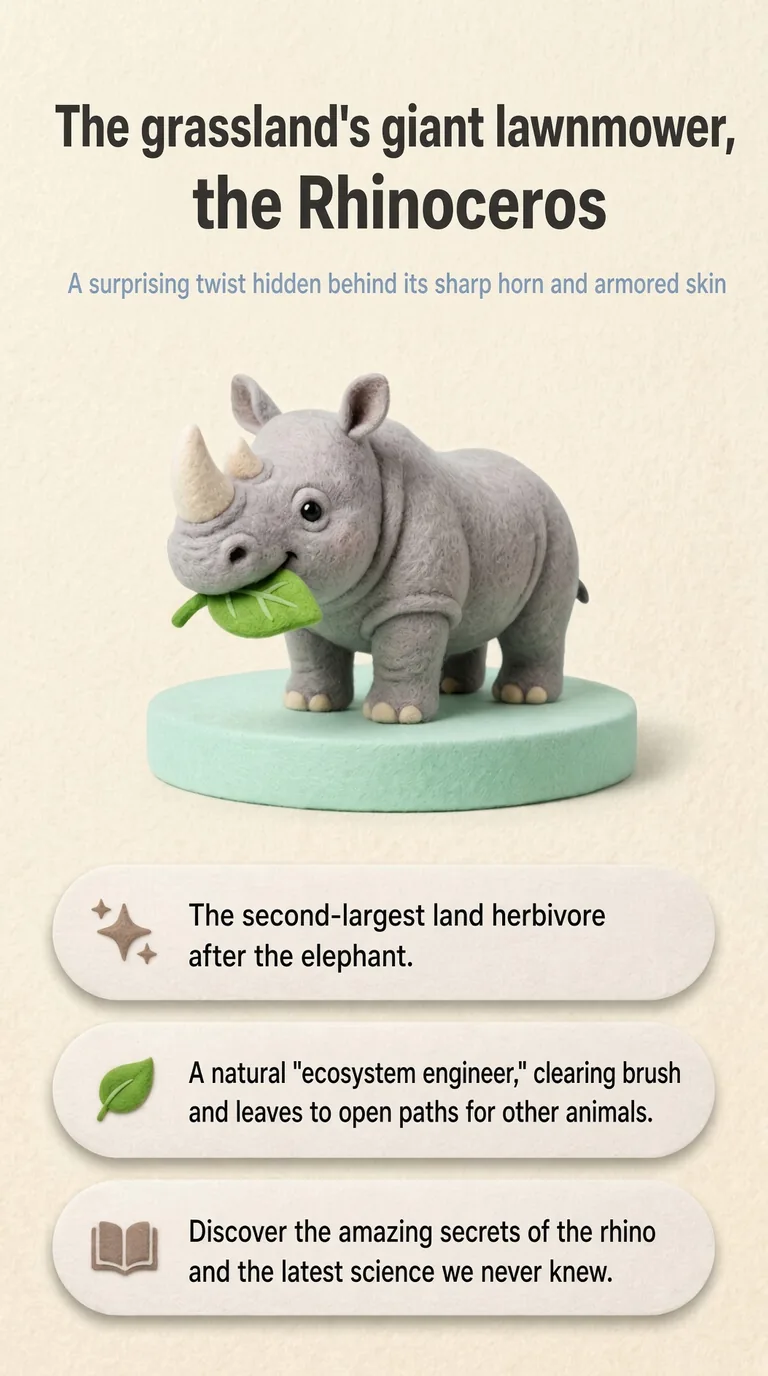
- The second-largest land herbivore after the elephant.
- A natural "ecosystem engineer," clearing brush and leaves to open paths for other animals.
- Discover the amazing secrets of the rhino and the latest science we never knew.
A rhino's horn isn't bone!
The surprising keratin secret hidden in its horn
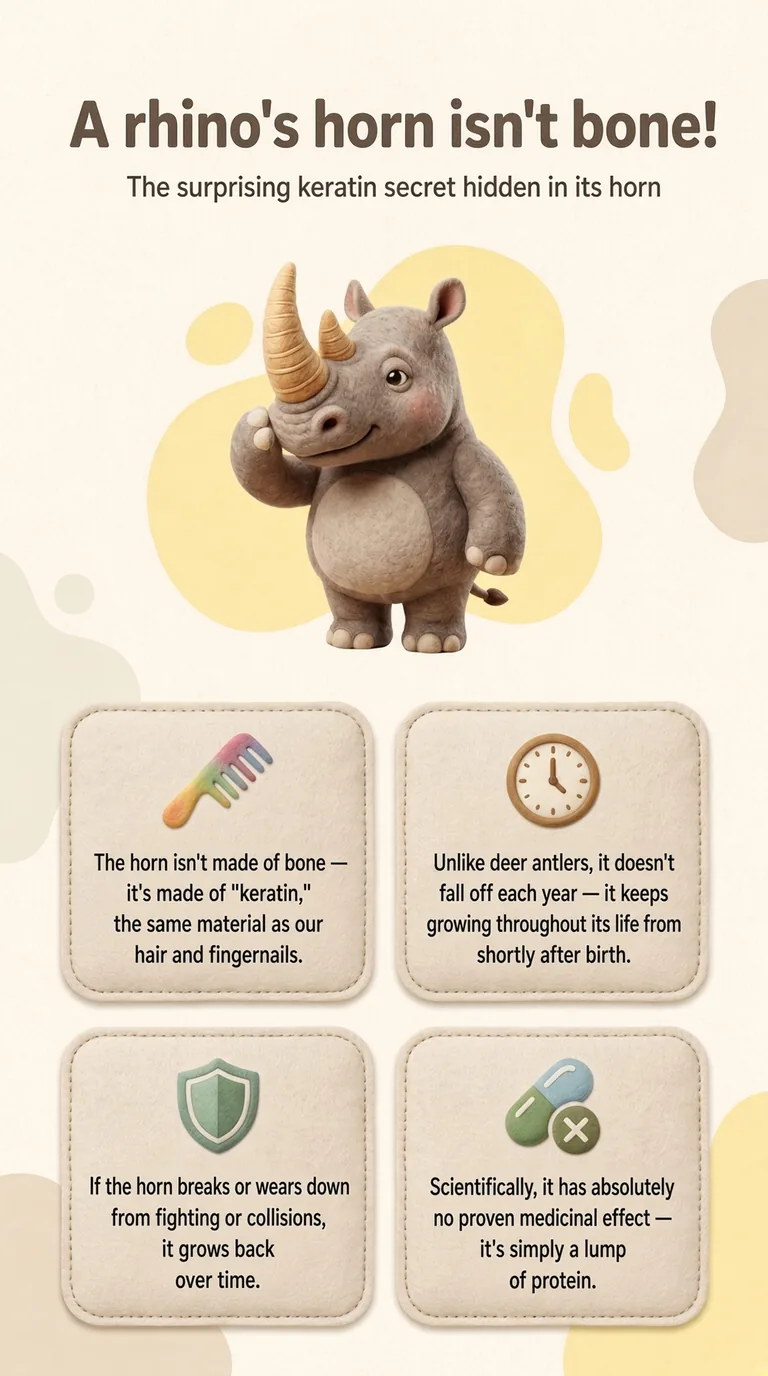
- The horn isn't made of bone — it's made of "keratin," the same material as our hair and fingernails.
- Unlike deer antlers, it doesn't fall off each year — it keeps growing throughout its life from shortly after birth.
- If the horn breaks or wears down from fighting or collisions, it grows back over time.
- Scientifically, it has absolutely no proven medicinal effect — it's simply a lump of protein.
Heavy, but incredibly fast
Enough with the myth that it's fat and slow!
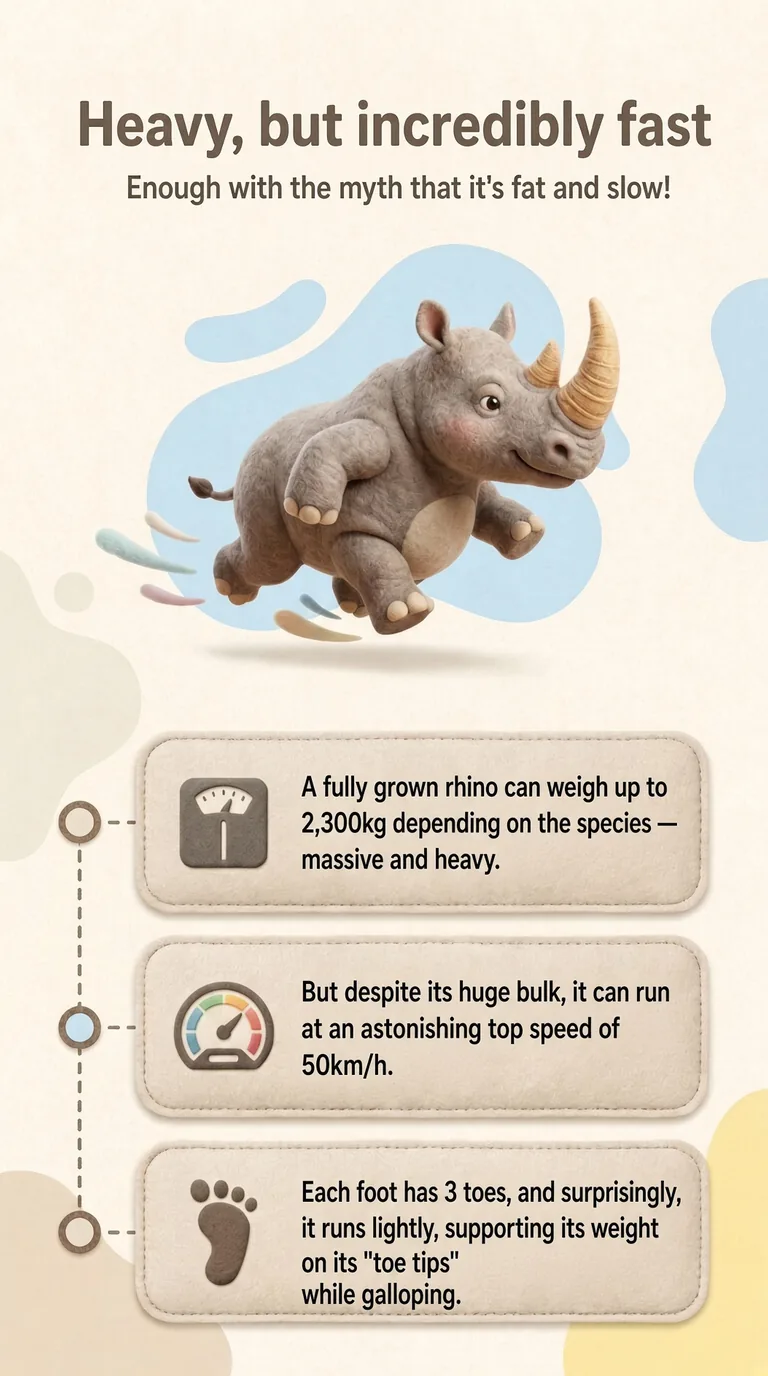
- A fully grown rhino can weigh up to 2,300kg depending on the species — massive and heavy.
- But despite its huge bulk, it can run at an astonishing top speed of 50km/h.
- Each foot has 3 toes, and surprisingly, it runs lightly, supporting its weight on its "toe tips" while galloping.
Seeing the world through scent and sound
Excellent smell and hearing make up for weak eyesight
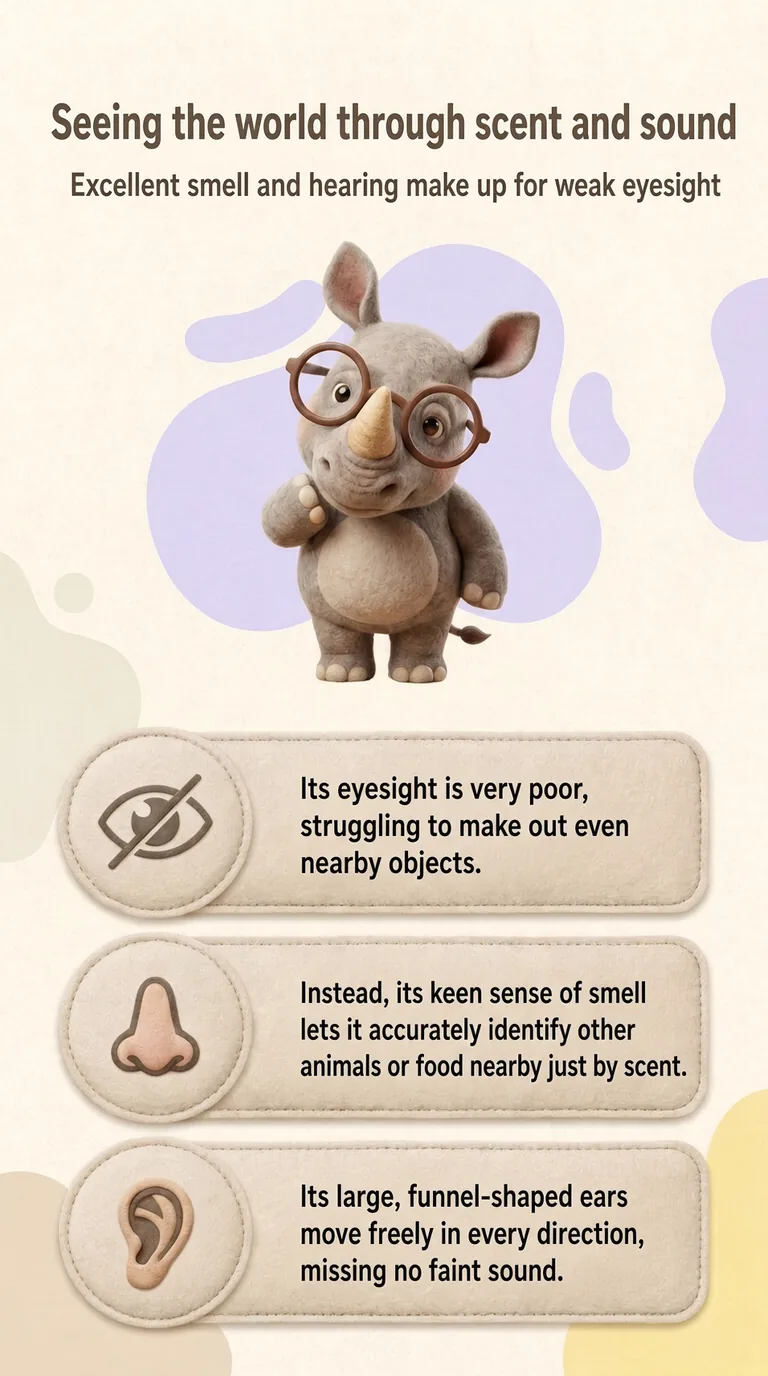
- Its eyesight is very poor, struggling to make out even nearby objects.
- Instead, its keen sense of smell lets it accurately identify other animals or food nearby just by scent.
- Its large, funnel-shaped ears move freely in every direction, missing no faint sound.
It looks armored, but it's actually sensitive
A delicate animal that loves mud baths
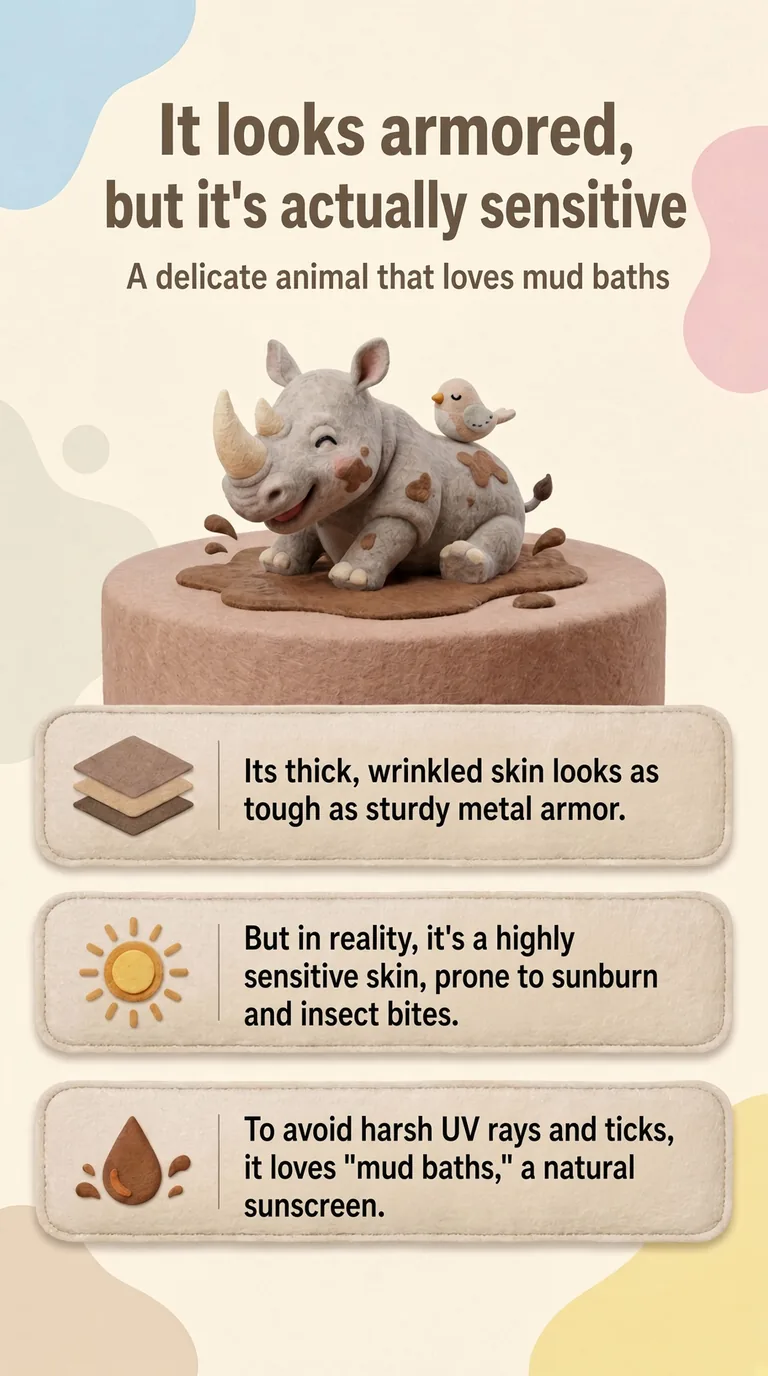
- Its thick, wrinkled skin looks as tough as sturdy metal armor.
- But in reality, it's a highly sensitive skin, prone to sunburn and insect bites.
- To avoid harsh UV rays and ticks, it loves "mud baths," a natural sunscreen.
It's not about color!
Two African rhinos, told apart by lip shape and diet
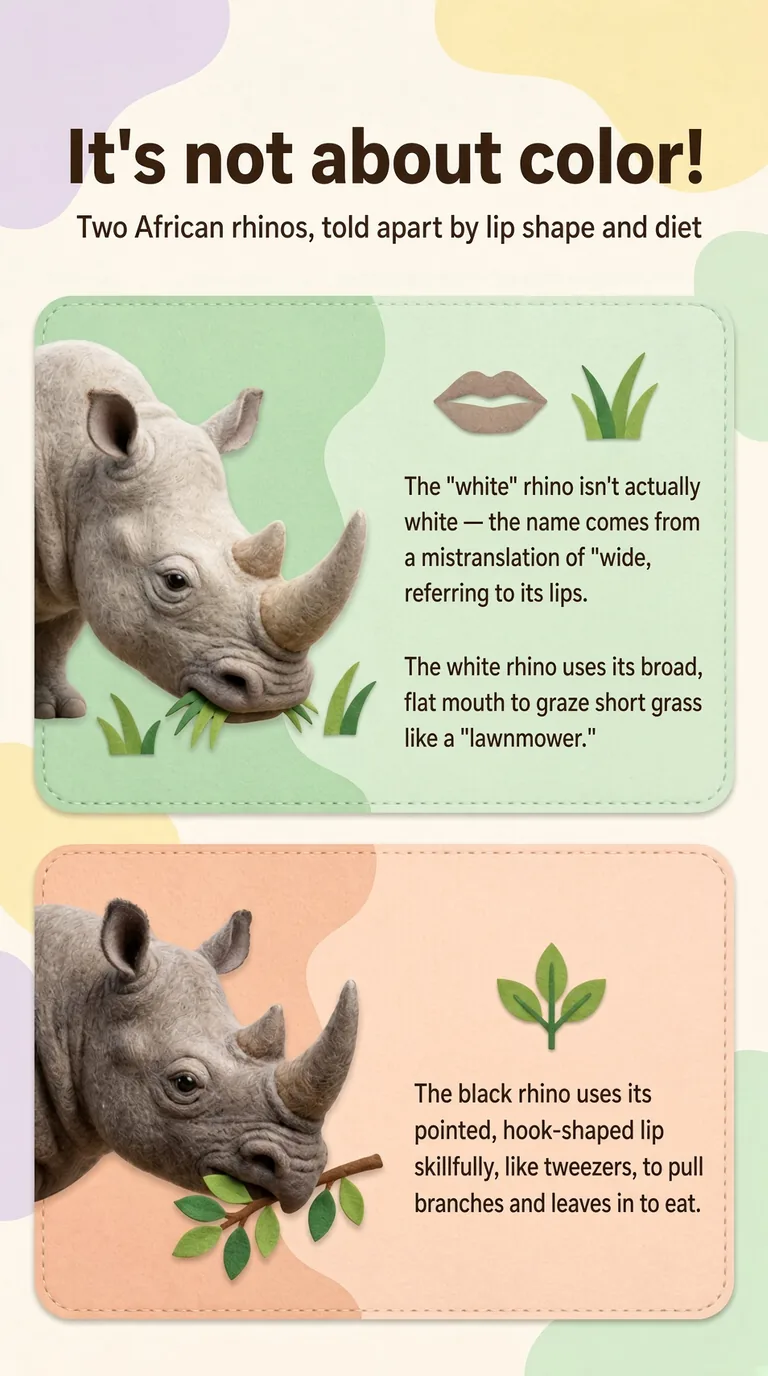
- The "white" rhino isn't actually white — the name comes from a mistranslation of "wide," referring to its lips. The white rhino uses its broad, flat mouth to graze short grass like a "lawnmower."
- The black rhino uses its pointed, hook-shaped lip skillfully, like tweezers, to pull branches and leaves in to eat.
There are only 5 rhino species left in the world!
Rhinos scattered across Africa and Asia
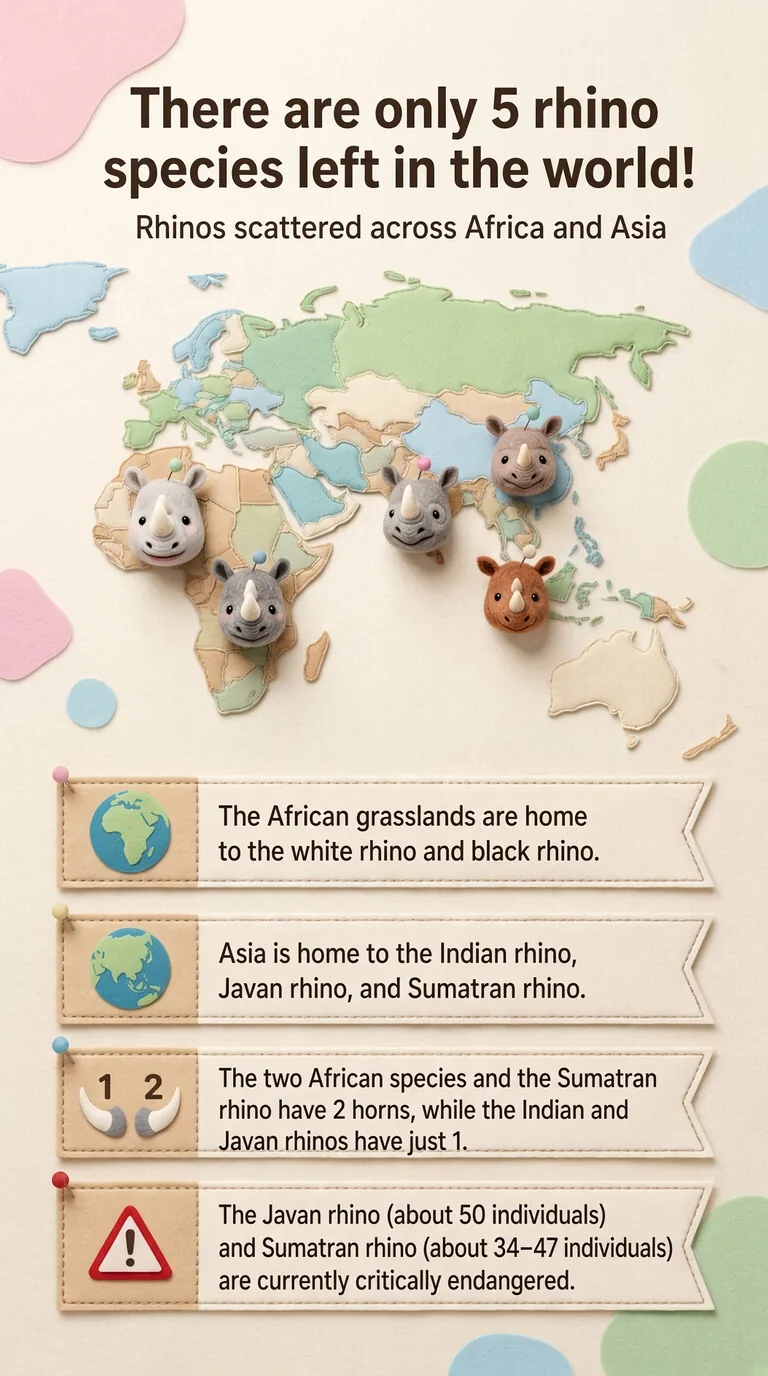
- The African grasslands are home to the white rhino and black rhino.
- Asia is home to the Indian rhino, Javan rhino, and Sumatran rhino.
- The two African species and the Sumatran rhino have 2 horns, while the Indian and Javan rhinos have just 1.
- The Javan rhino (about 50 individuals) and Sumatran rhino (about 34–47 individuals) are currently critically endangered.