Zebra
Africa
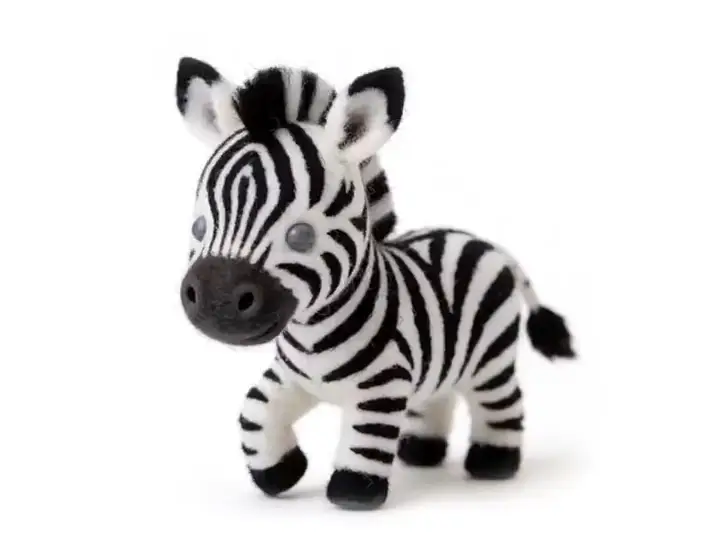
The zebra is an African wild horse with striking black-and-white stripes. No two zebras have the same stripes, so they use them to recognize each other. Zebras travel in large herds and keep watch for predators like lions.
Quick facts
- Habitat
- It lives in herds on open grasslands and savannas.
- Diet
- It eats grass, leaves, and small twigs.
- Size and weight
- Height 1.2–1.5m, weight 200–450kg.
- Lifespan
- 20–30 years
- Conservation status
- Least Concern
- Fun facts
- A zebra's stripes are thought to help keep flies away!
A newborn foal can walk and run within an hour.
Learn more
The amazing secrets of the zebra
A wild survivor we never really knew
The real secret behind its skin color
Is it white with black stripes?
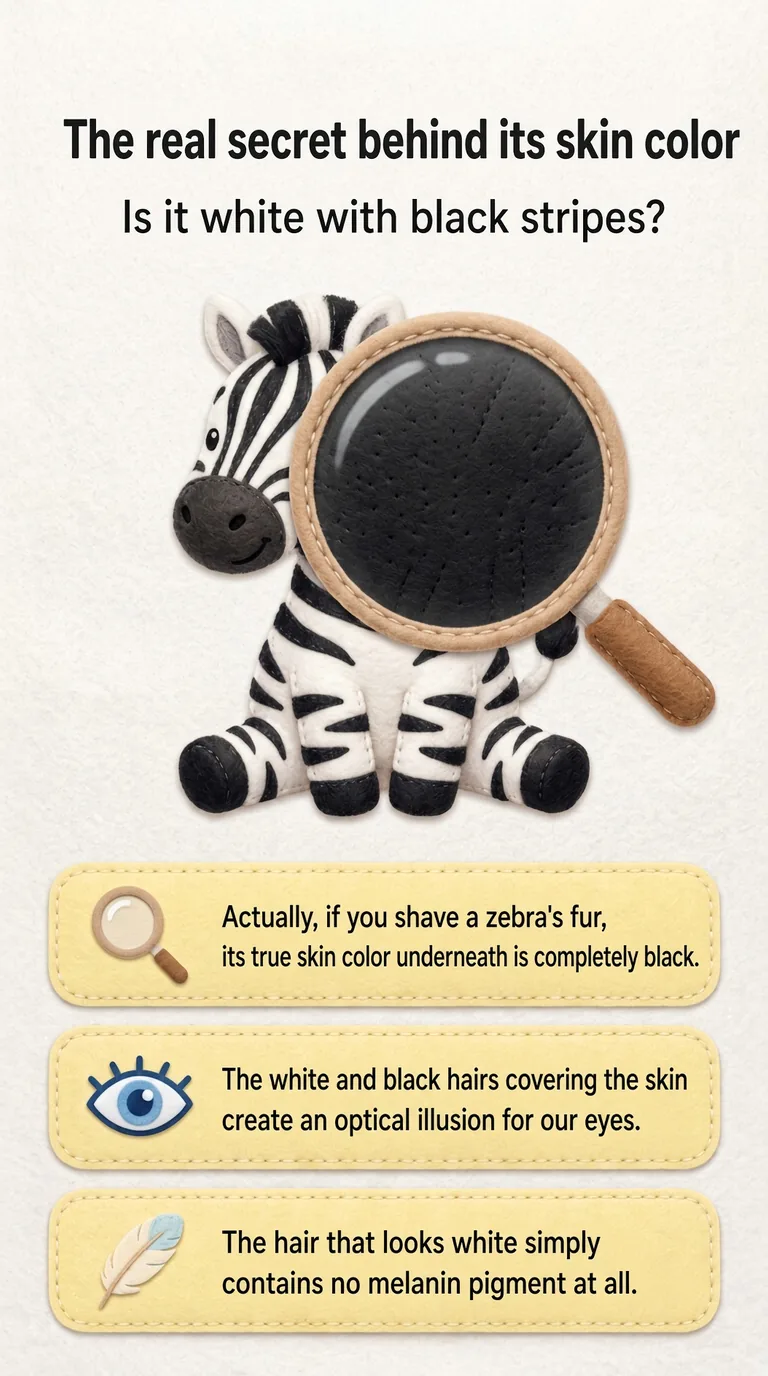
- Actually, if you shave a zebra's fur, its true skin color underneath is completely black.
- The white and black hairs covering the skin create an optical illusion for our eyes.
- The hair that looks white simply contains no melanin pigment at all.
The true purpose of its stripes
It's not camouflage to avoid lions.
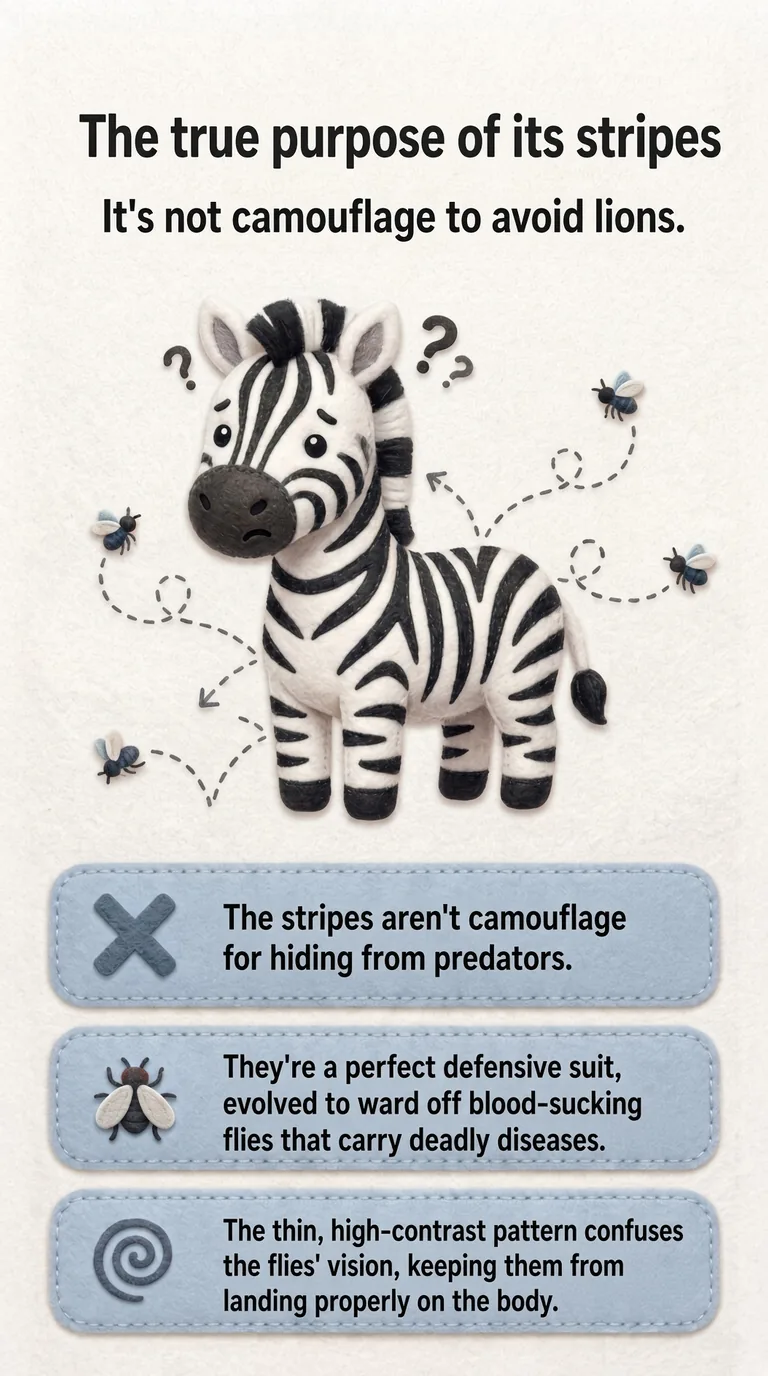
- The stripes aren't camouflage for hiding from predators.
- They're a perfect defensive suit, evolved to ward off blood-sucking flies that carry deadly diseases.
- The thin, high-contrast pattern confuses the flies' vision, keeping them from landing properly on the body.
A fingerprint made by nature
Do they all look exactly alike?
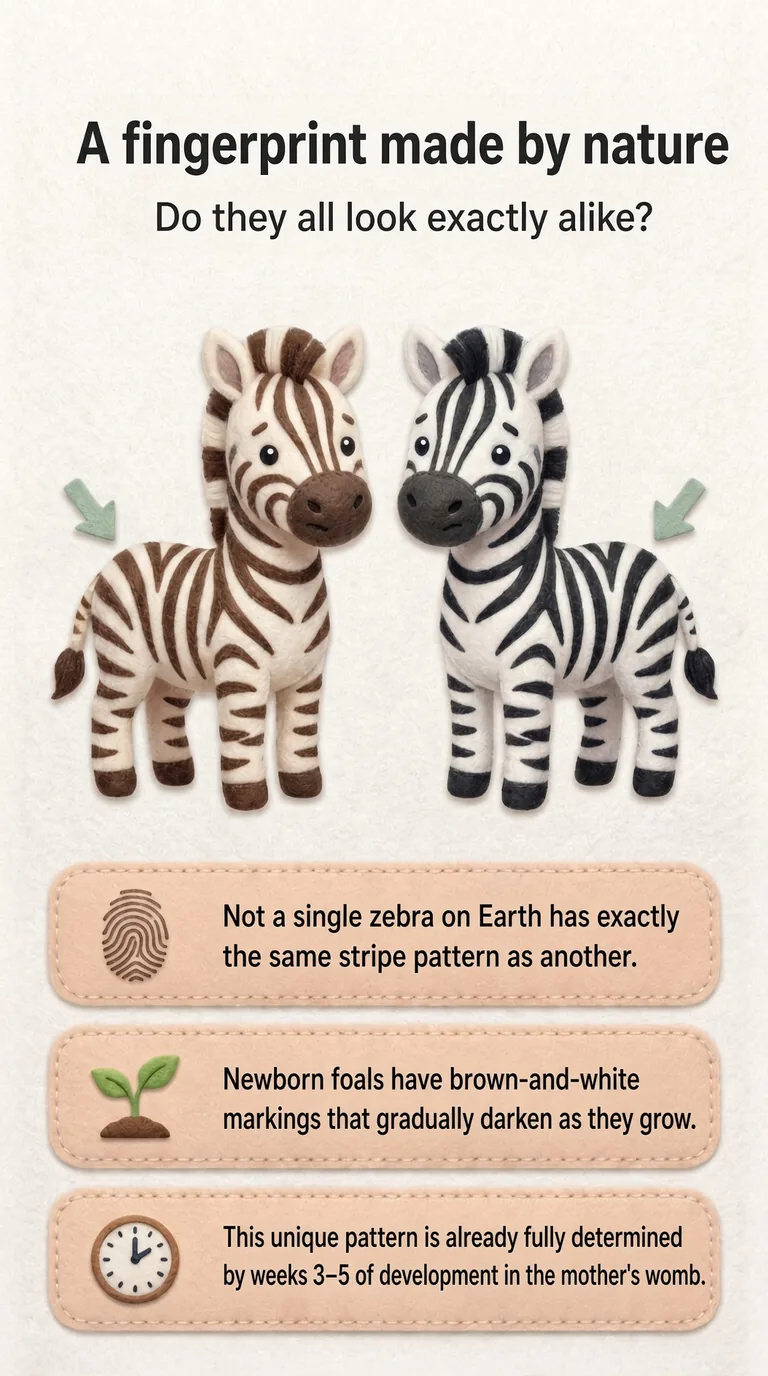
- Not a single zebra on Earth has exactly the same stripe pattern as another.
- Newborn foals have brown-and-white markings that gradually darken as they grow.
- This unique pattern is already fully determined by weeks 3–5 of development in the mother's womb.
A wild nature that can never be tamed
A gentle horse with stripes?
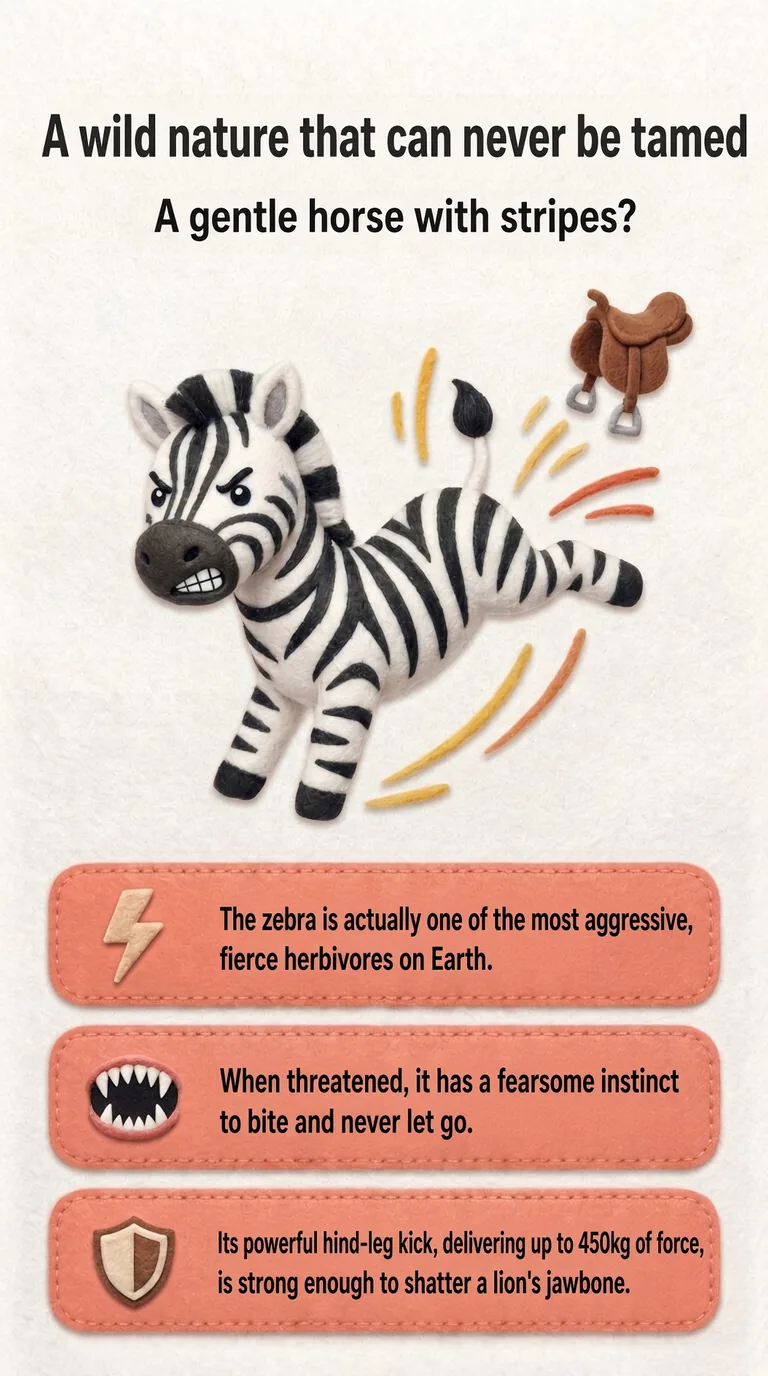
- The zebra is actually one of the most aggressive, fierce herbivores on Earth.
- When threatened, it has a fearsome instinct to bite and never let go.
- Its powerful hind-leg kick, delivering up to 450kg of force, is strong enough to shatter a lion's jawbone.
Horse vs. zebra: a difference in evolution
Environment shapes temperament.
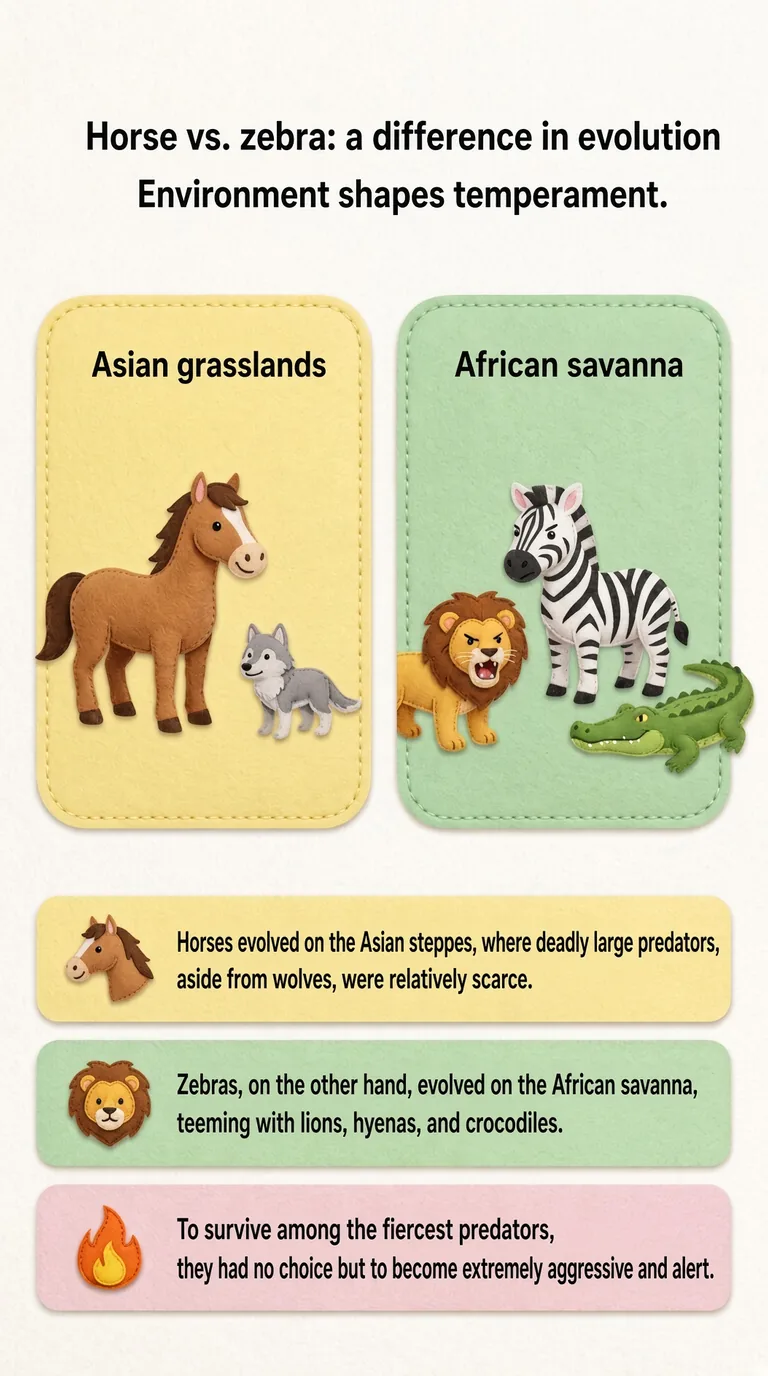
Asian grasslands vs. African savanna
- Horses evolved on the Asian steppes, where deadly large predators, aside from wolves, were relatively scarce.
- Zebras, on the other hand, evolved on the African savanna, teeming with lions, hyenas, and crocodiles.
- To survive among the fiercest predators, they had no choice but to become extremely aggressive and alert.
The biological reason it can't be ridden
Why humans had no choice but to give up
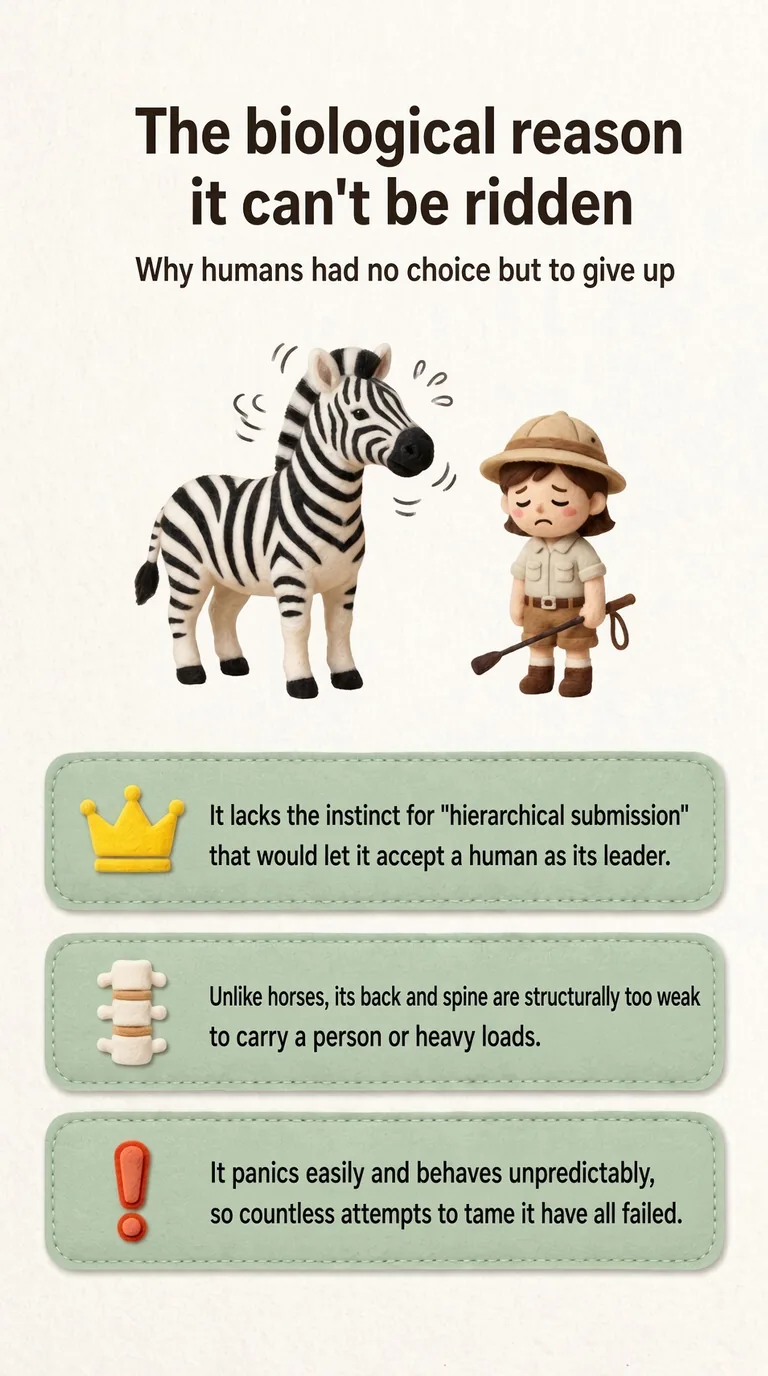
- It lacks the instinct for "hierarchical submission" that would let it accept a human as its leader.
- Unlike horses, its back and spine are structurally too weak to carry a person or heavy loads.
- It panics easily and behaves unpredictably, so countless attempts to tame it have all failed.
24 hours on the savanna
A day that changes depending on company
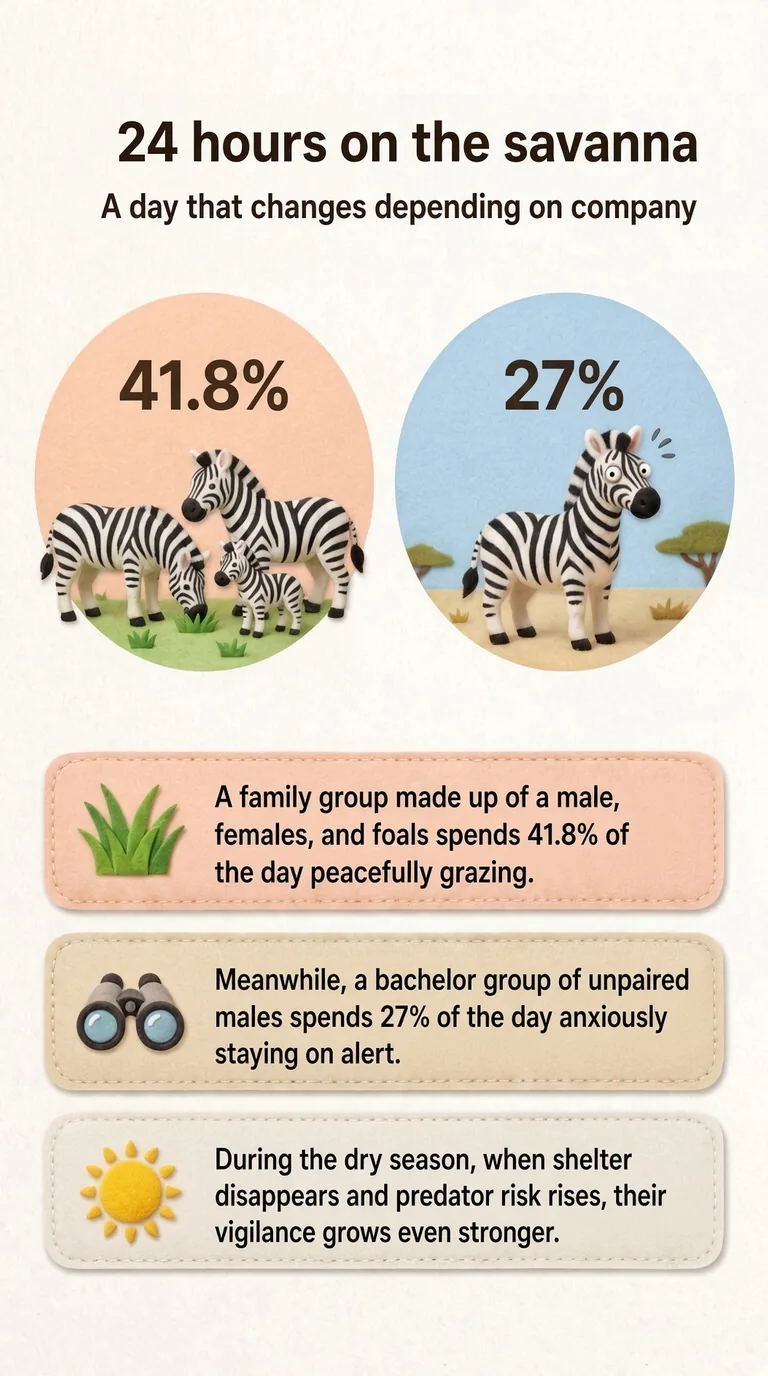
41.8% vs 27%
- A family group made up of a male, females, and foals spends 41.8% of the day peacefully grazing.
- Meanwhile, a bachelor group of unpaired males spends 27% of the day anxiously staying on alert.
- During the dry season, when shelter disappears and predator risk rises, their vigilance grows even stronger.
Three zebra siblings
The 3 surviving species today
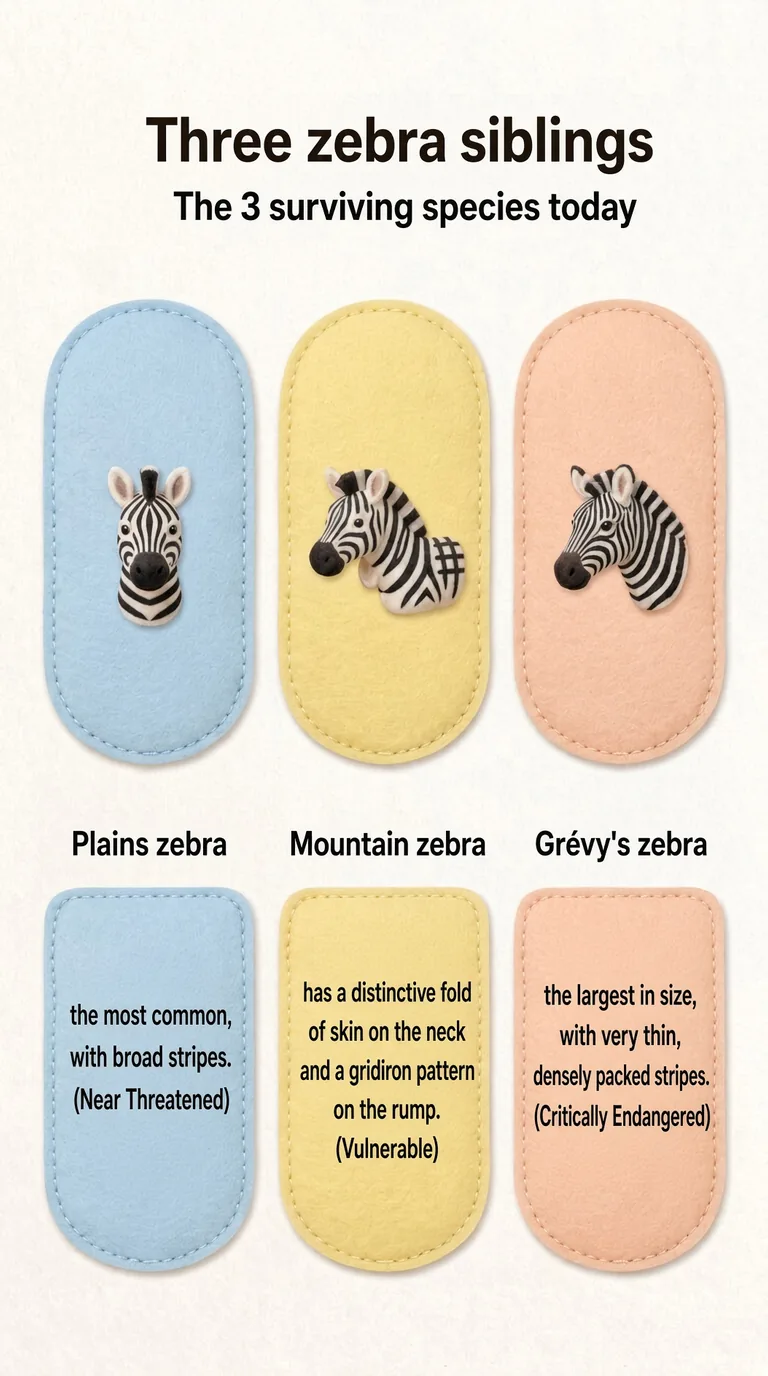
- Plains zebra — the most common, with broad stripes. (Near Threatened)
- Mountain zebra — has a distinctive fold of skin on the neck and a gridiron pattern on the rump. (Vulnerable)
- Grévy's zebra — the largest in size, with very thin, densely packed stripes. (Critically Endangered)
A true survivor of the savanna
Nature's choice, not humanity's
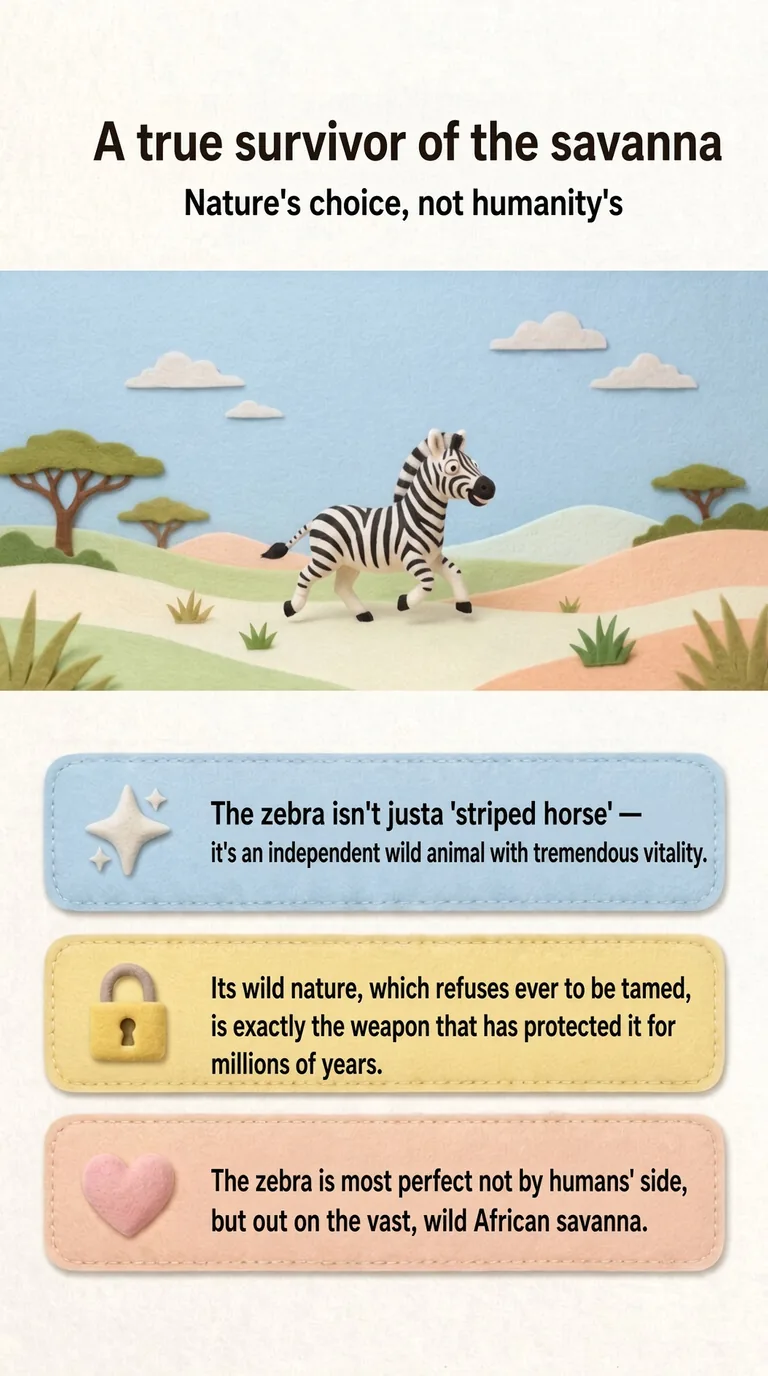
- The zebra isn't just a "striped horse" — it's an independent wild animal with tremendous vitality.
- Its wild nature, which refuses ever to be tamed, is exactly the weapon that has protected it for millions of years.
- The zebra is most perfect not by humans' side, but out on the vast, wild African savanna.