Bottlenose Dolphin
Ocean
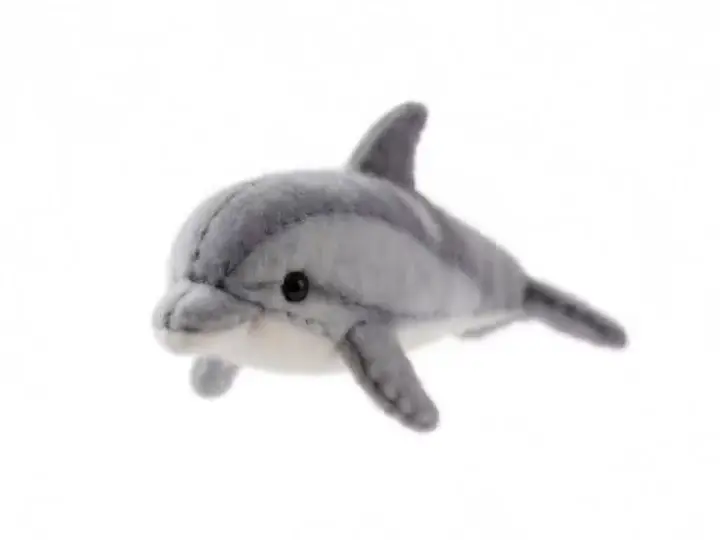
The bottlenose dolphin lives in groups and is smart enough to call others by name. Along with humans and chimpanzees, it's one of the few animals that can recognize itself in a mirror.
Quick facts
- Habitat
- It lives along the coasts of warm and tropical seas around the world.
- Diet
- It eats fish and squid.
- Size and weight
- Length 2–4m, weight 150–650kg.
- Lifespan
- About 40–50 years
- Conservation status
- Least Concern
- Fun facts
- Every dolphin has its own signature whistle, like a name!
It can hear and process sounds four times faster than a human.
Learn more
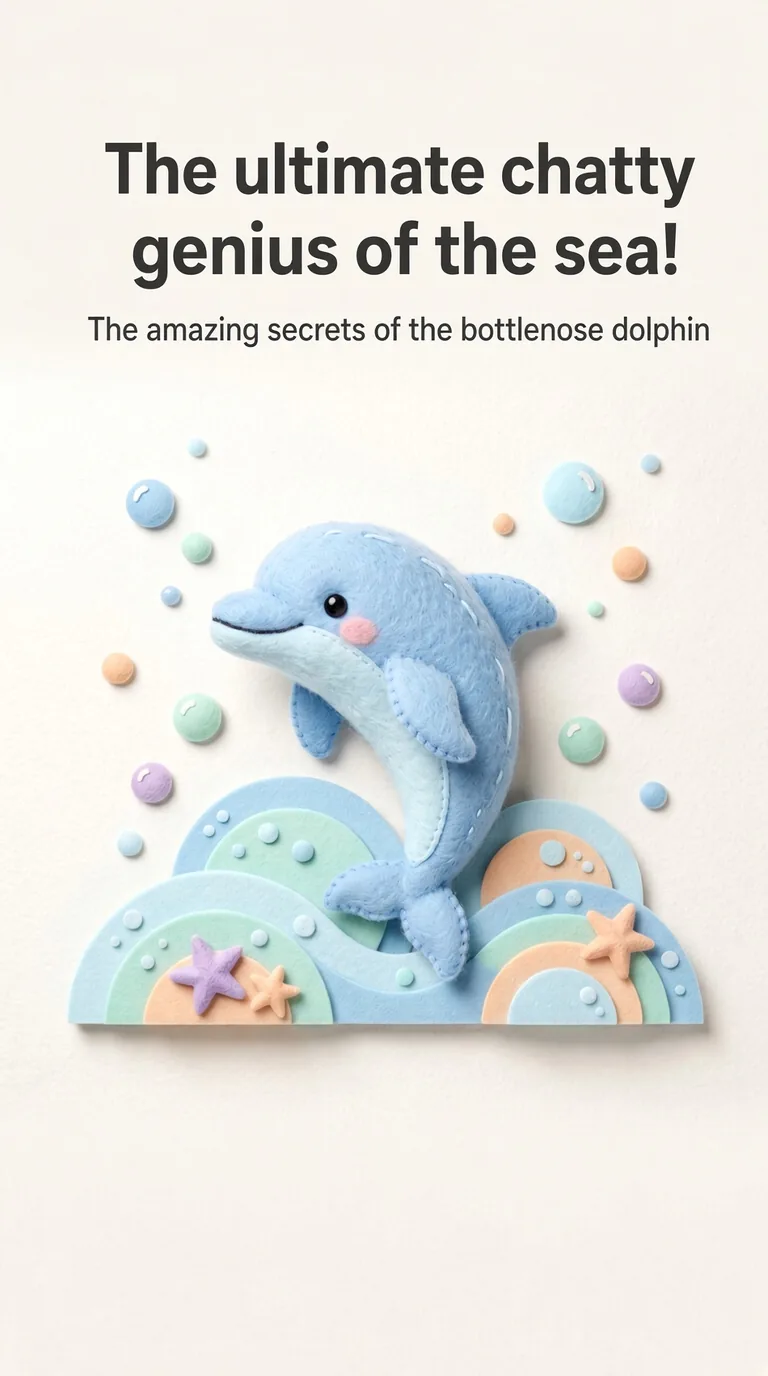
The ultimate chatty genius of the sea!
The amazing secrets of the bottlenose dolphin
It lives in water, but it's not a fish
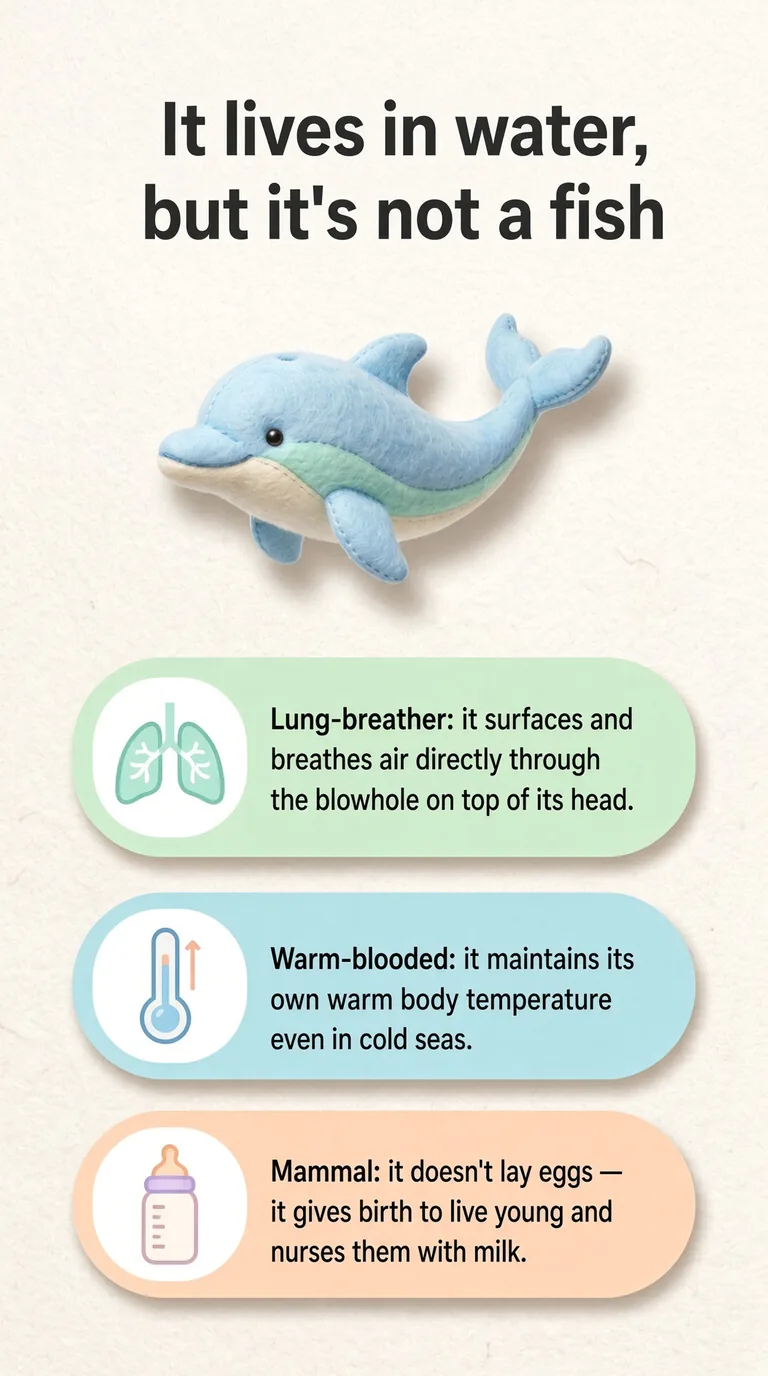
- Lung-breather — it surfaces and breathes air directly through the blowhole on top of its head.
- Warm-blooded — it maintains its own warm body temperature even in cold seas.
- Mammal — it doesn't lay eggs — it gives birth to live young and nurses them with milk.
The magical organs that let it "see" with sound
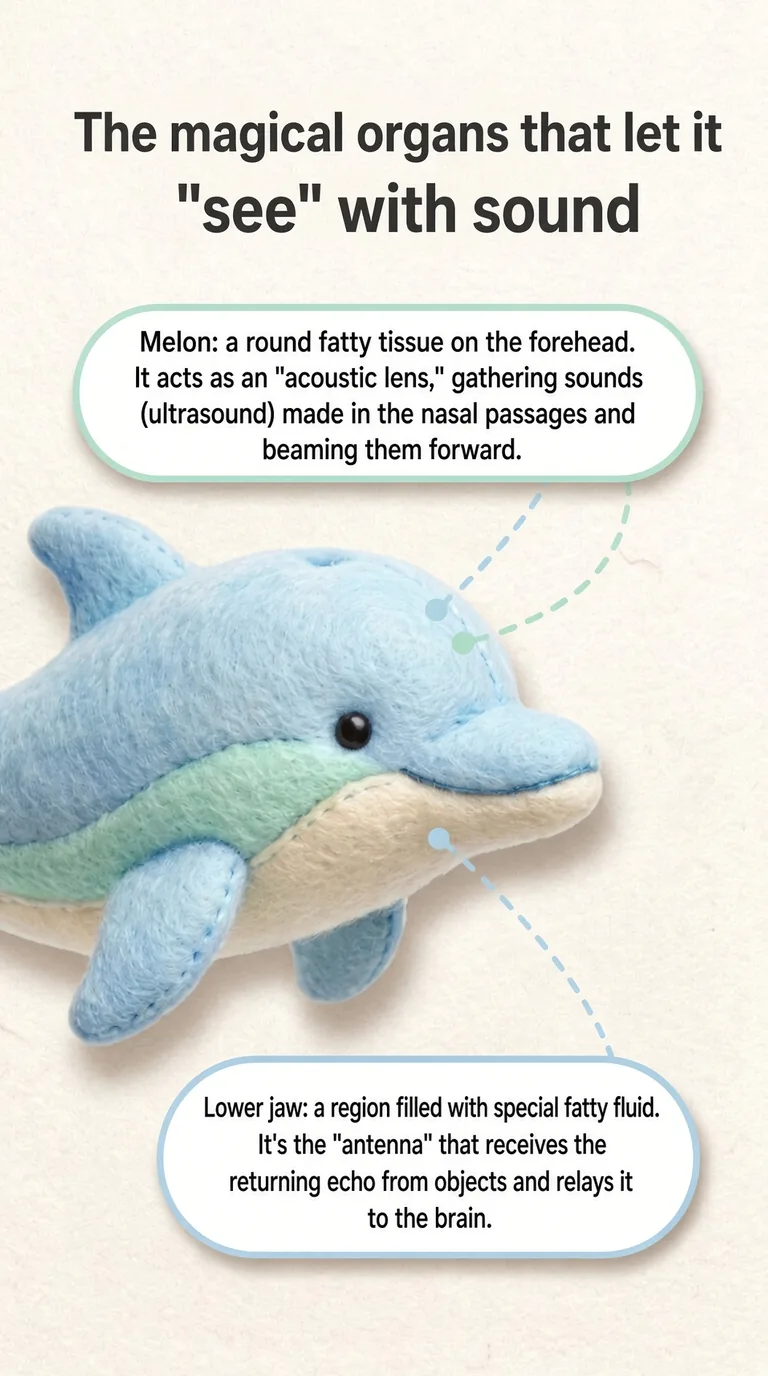
- Melon — a round fatty tissue on the forehead. It acts as an "acoustic lens," gathering sounds (ultrasound) made in the nasal passages and beaming them forward.
- Lower jaw — a region filled with special fatty fluid. It's the "antenna" that receives the returning echo from objects and relays it to the brain.
Ultrasonic sonar that scans the ocean in 3D
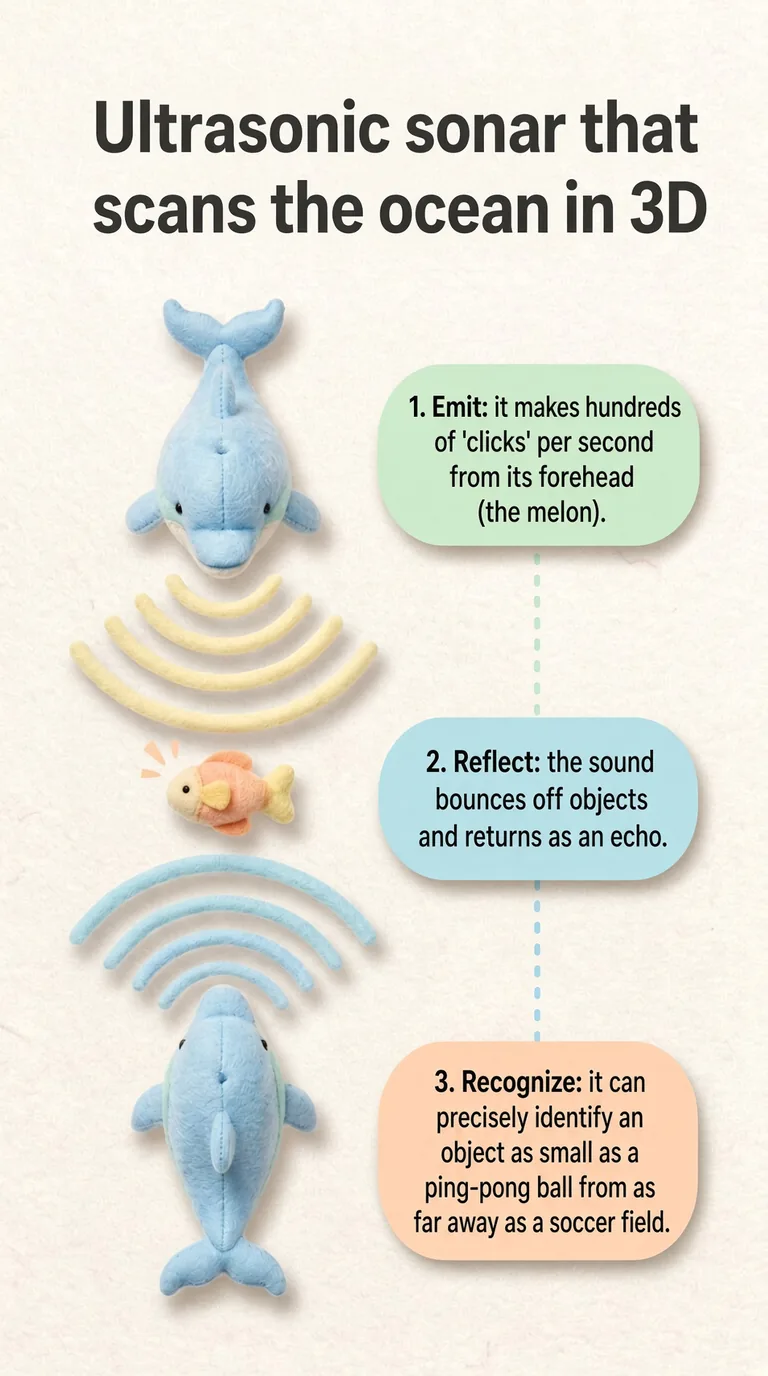
- Emit — it makes hundreds of 'clicks' per second from its forehead (the melon).
- Reflect — the sound bounces off objects and returns as an echo.
- Recognize — it can precisely identify an object as small as a ping-pong ball from as far away as a soccer field.
Recognizing a friend by the taste of urine?
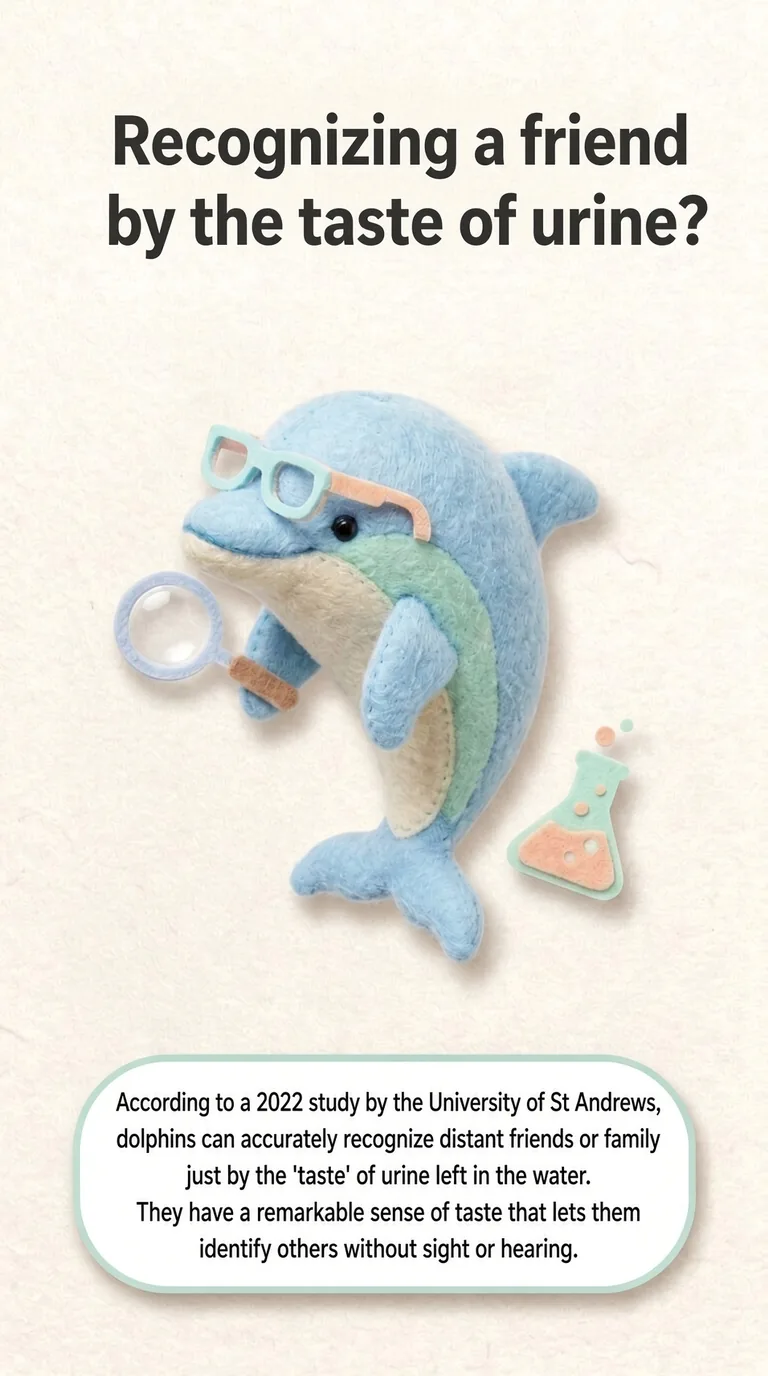
According to a 2022 study by the University of St Andrews, dolphins can accurately recognize distant friends or family just by the 'taste' of urine left in the water. They have a remarkable sense of taste that lets them identify others without sight or hearing.
An underwater Einstein that surpasses chimpanzees
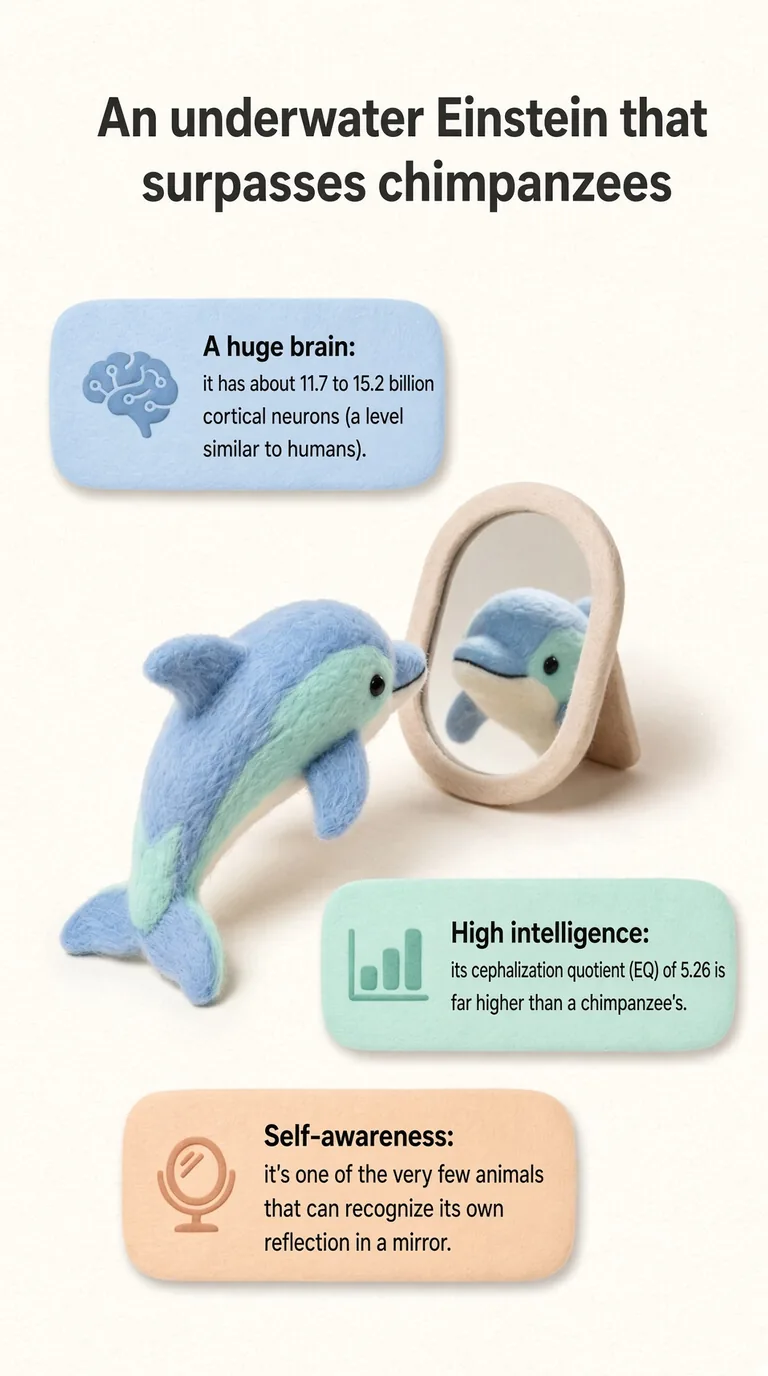
- A huge brain — it has about 11.7 to 15.2 billion cortical neurons (a level similar to humans).
- High intelligence — its encephalization quotient (EQ) of 5.26 is far higher than a chimpanzee's.
- Self-awareness — it's one of the very few animals that can recognize its own reflection in a mirror.
Remembering a best friend's name even after 20 years
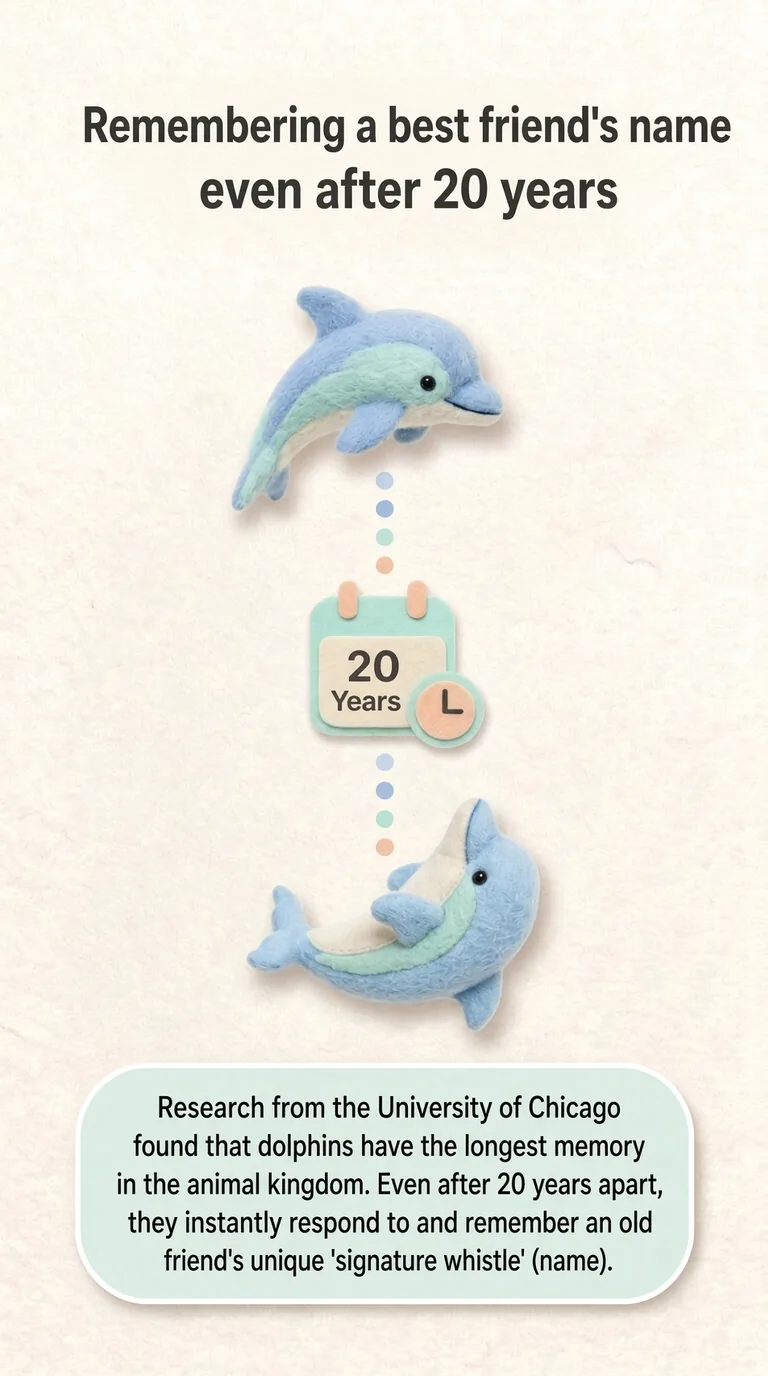
Research from the University of Chicago found that dolphins have the longest memory in the animal kingdom.
Even after 20 years apart, they instantly respond to and remember an old friend's unique 'signature whistle' (name).
Different tool use and hunting cultures by region
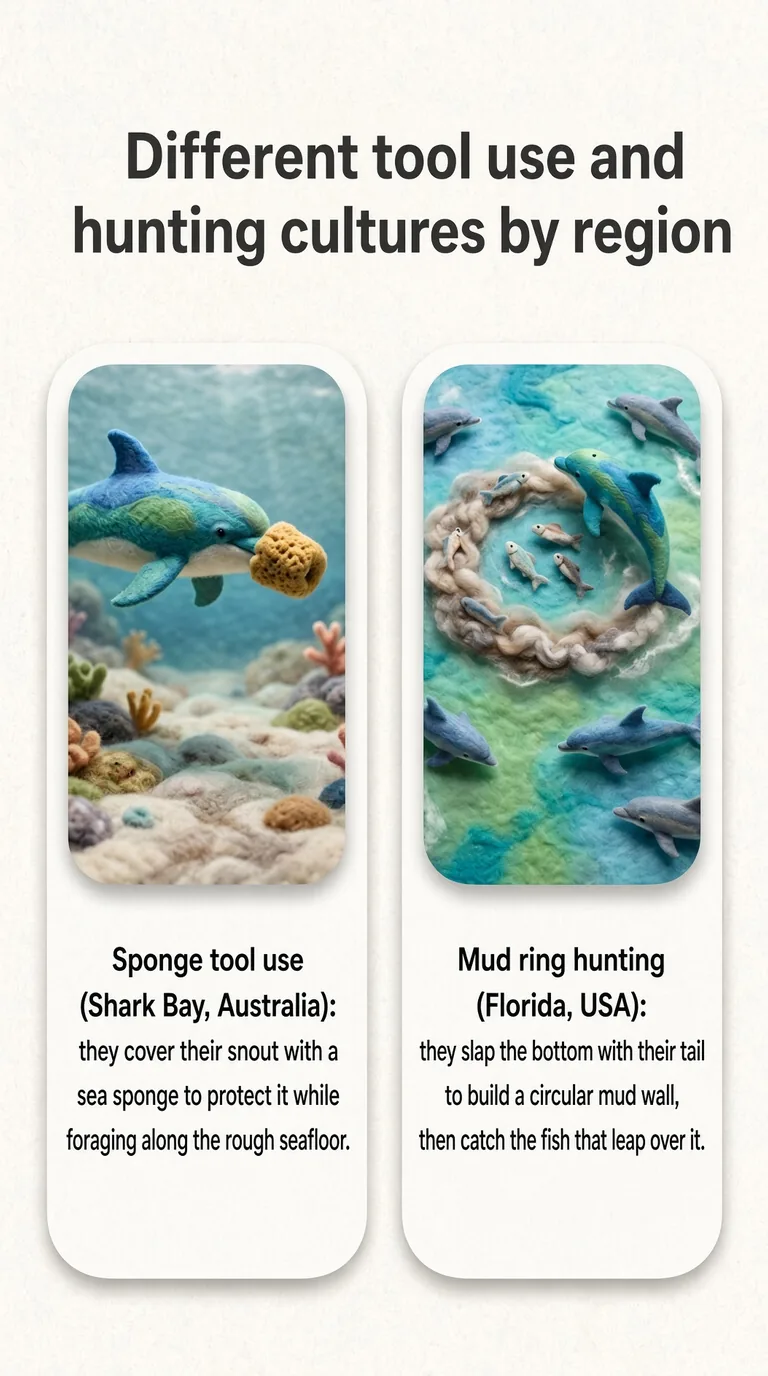
- Sponge tool use (Shark Bay, Australia) — they cover their snout with a sea sponge to protect it while foraging along the rough seafloor.
- Mud ring hunting (Florida, USA) — they slap the bottom with their tail to build a circular mud wall, then catch the fish that leap over it.
A complex dolphin vocabulary made of 3 kinds of sounds
- Whistles — long, high-pitched sounds. Used to call each other's names or strengthen social bonds.
- Clicks — short, powerful energy pulses. Used as 'sonar' for navigation or detecting prey.
- Burst-pulses — fast, loud continuous sounds. Used when excited or warning of aggression, to avoid physical conflict.
A social network that forms alliances and cooperates, like humans
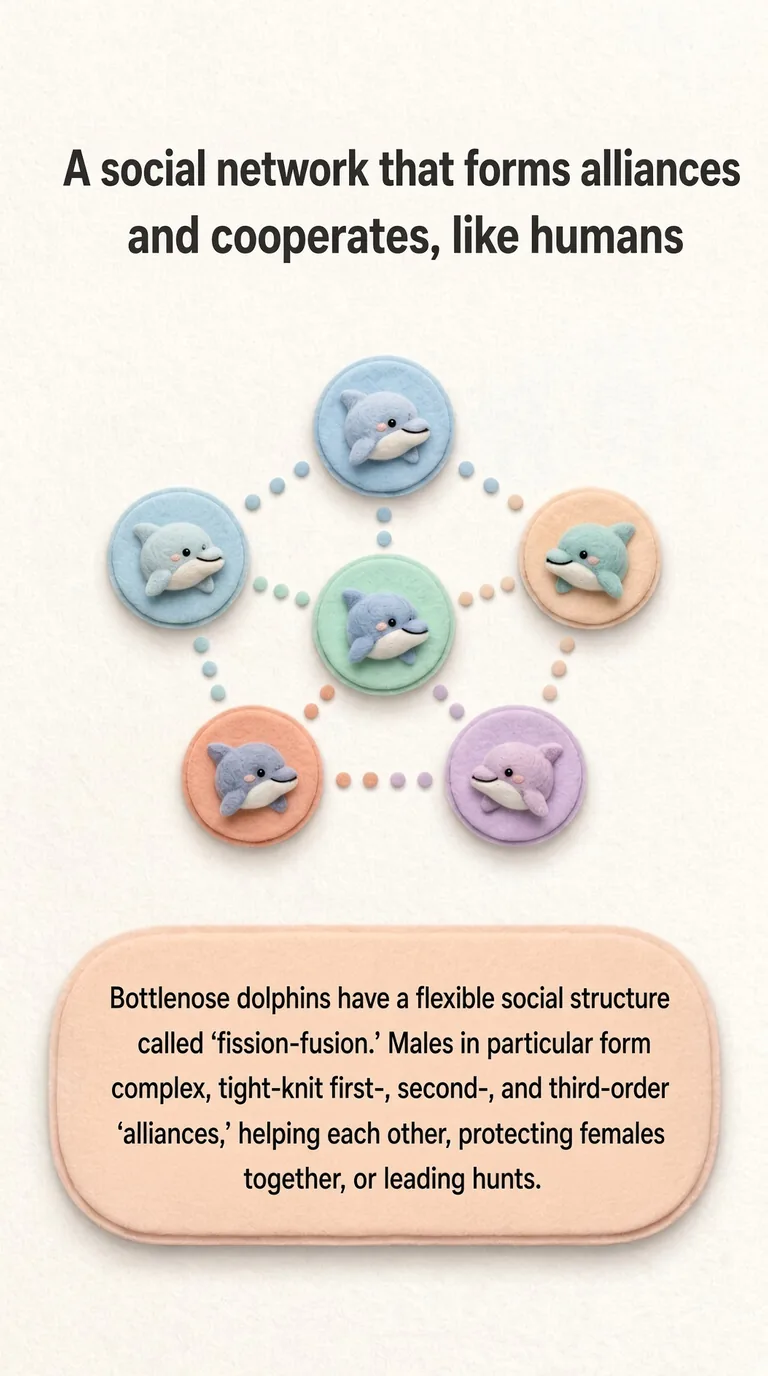
Bottlenose dolphins have a flexible social structure called 'fission-fusion.'
Males in particular form complex, tight-knit first-, second-, and third-order 'alliances,' helping each other, protecting females together, or leading hunts.