Sea Turtle
Ocean
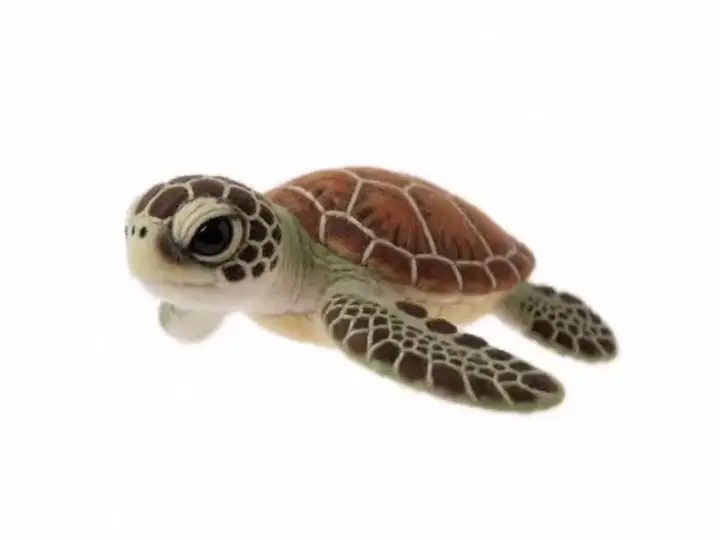
The sea turtle is a living fossil that has been on Earth for more than 100 million years, since the age of the dinosaurs. It has a mysterious habit of returning to the very beach where it was born to lay its eggs.
Quick facts
- Habitat
- It lives in tropical and subtropical seas.
- Diet
- It eats jellyfish, seaweed, and shellfish.
- Size and weight
- Shell 0.8–1.5m long, weight 100–200kg.
- Lifespan
- About 50–70 years
- Conservation status
- Endangered
- Fun facts
- It senses the Earth's magnetic field to find its way across the open ocean!
Whether a baby turtle is male or female depends on how warm the sand around its egg is.
Learn more
The great ocean navigator that remembers thousands of kilometers
The secrets of the sea turtle, Earth's most wondrous reptile
A body perfectly adapted to the sea
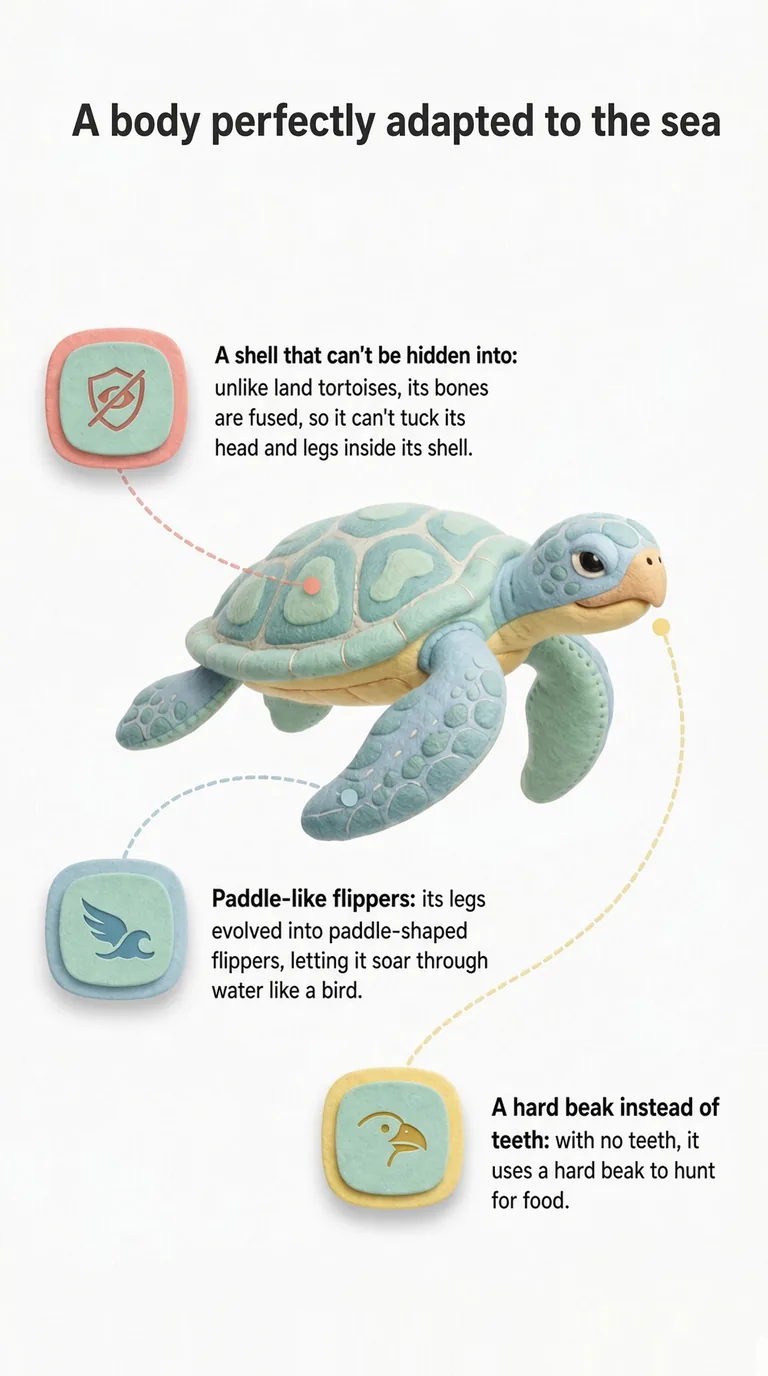
- A shell that can't be hidden into — unlike land tortoises, its bones are fused, so it can't tuck its head and legs inside its shell.
- Paddle-like flippers — its legs evolved into paddle-shaped flippers, letting it soar through water like a bird.
- A hard beak instead of teeth — with no teeth, it uses a hard beak to hunt for food.
The secret of the tears it sheds on the beach
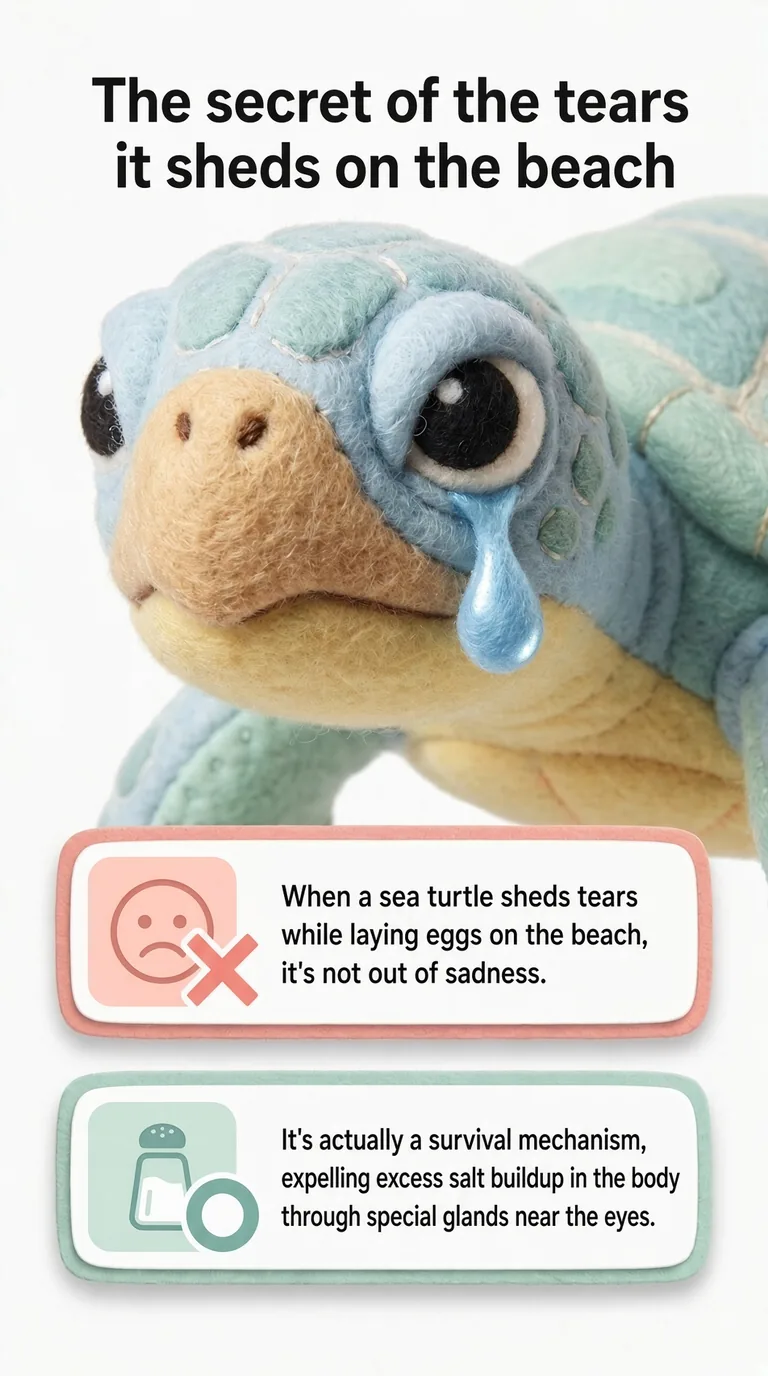
- When a sea turtle sheds tears while laying eggs on the beach, it's not out of sadness.
- It's actually a survival mechanism, expelling excess salt buildup in the body through special glands near the eyes.
A natural compass hidden inside its body
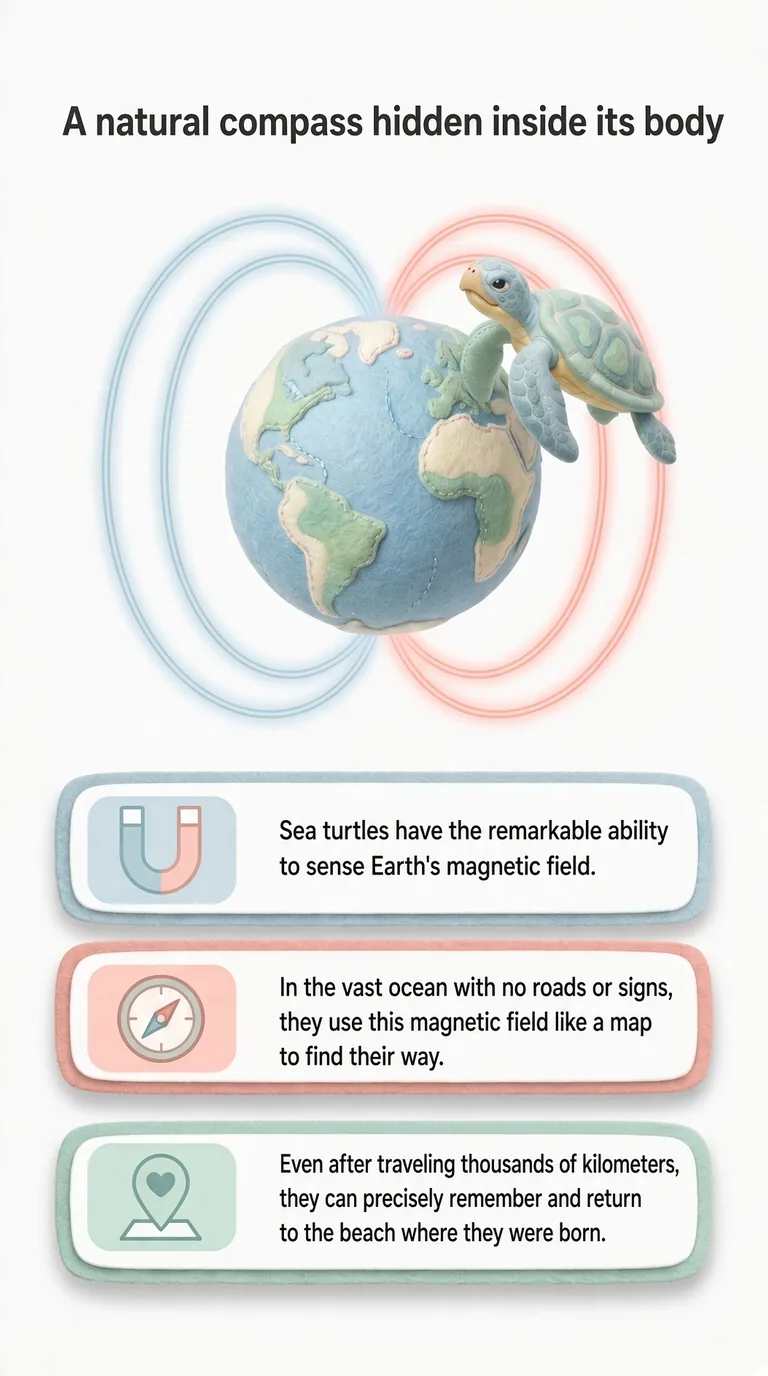
- Sea turtles have the remarkable ability to sense Earth's magnetic field.
- In the vast ocean with no roads or signs, they use this magnetic field like a map to find their way.
- Even after traveling thousands of kilometers, they can precisely remember and return to the beach where they were born.
From Jeju to Vietnam, a 15,000km voyage
The real migration route of a green sea turtle released in 2021
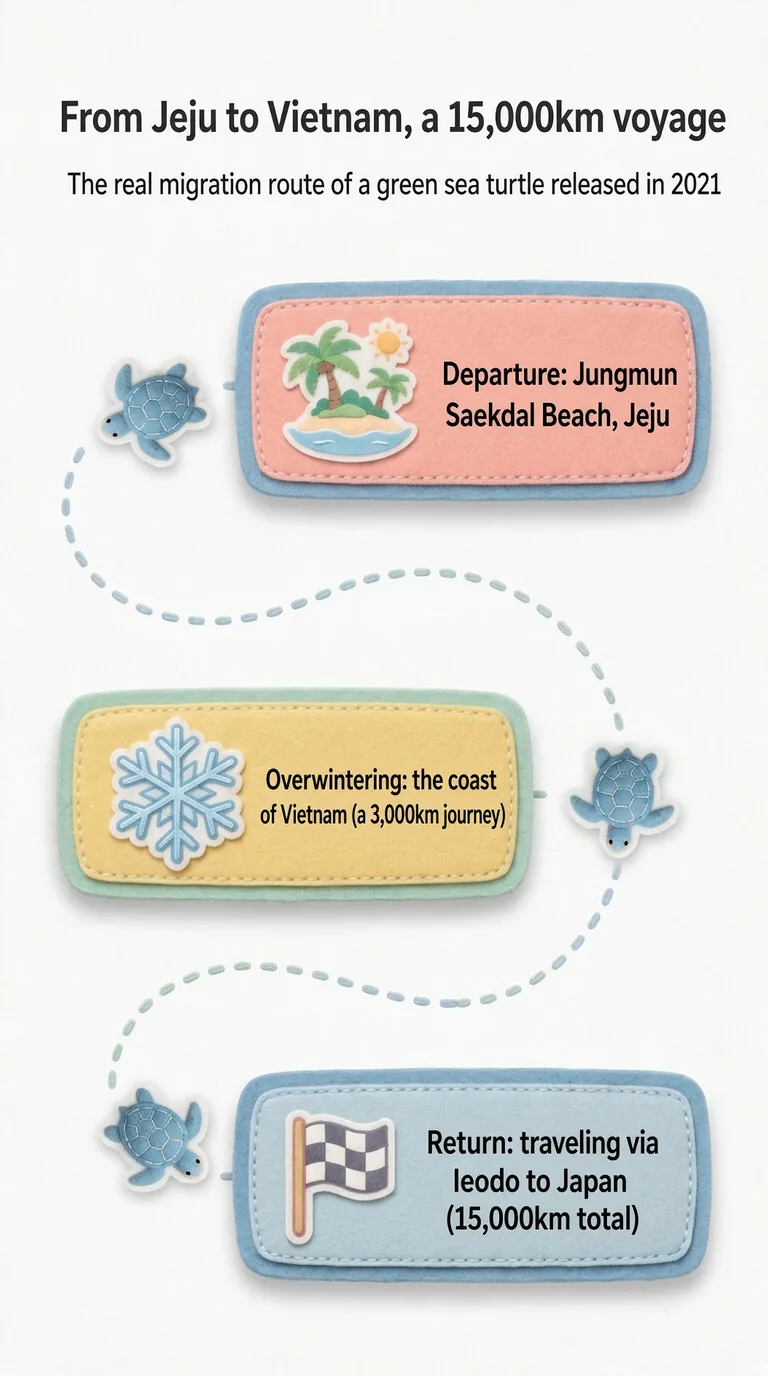
- Departure — Jungmun Saekdal Beach, Jeju
- Overwintering — the coast of Vietnam (a 3,000km journey)
- Return — traveling via Ieodo to Japan (15,000km total)
A 1-in-1,000 miracle
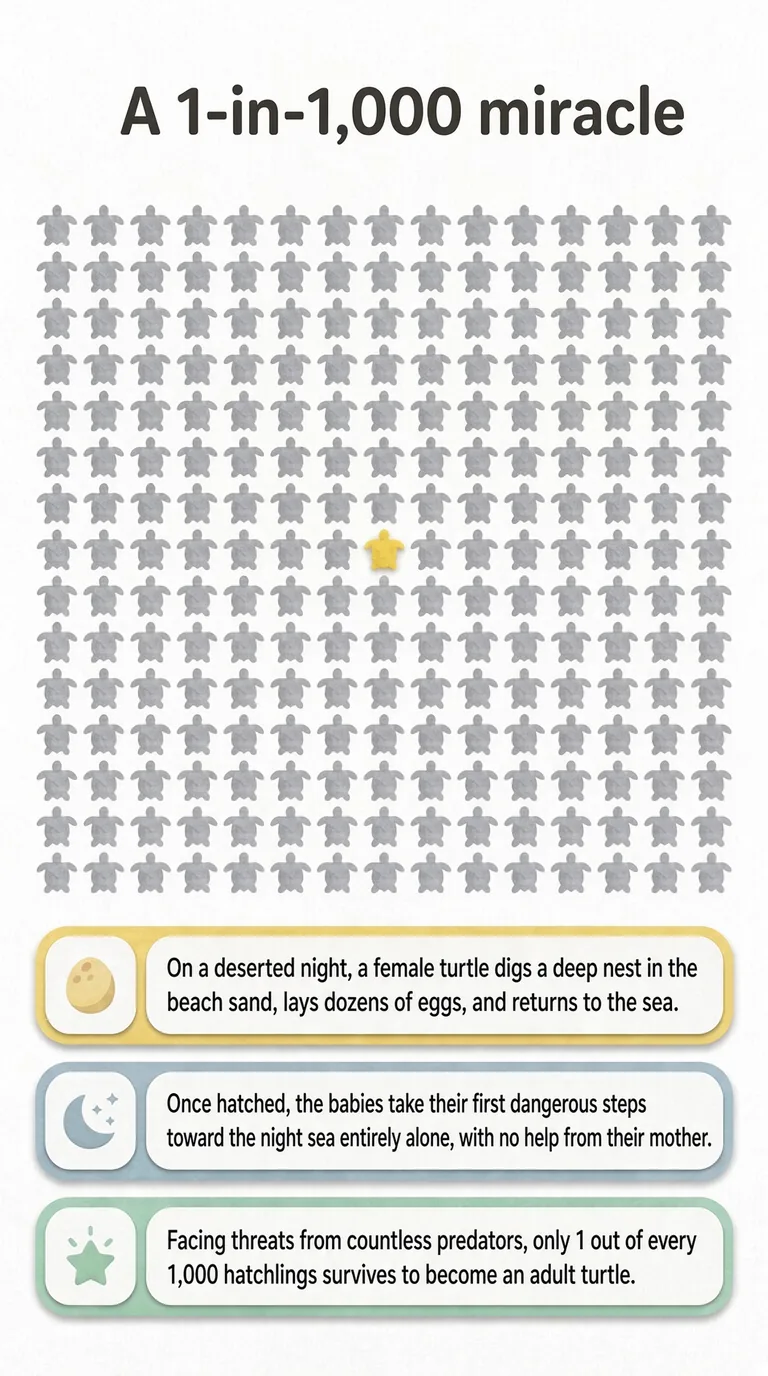
- On a deserted night, a female turtle digs a deep nest in the beach sand, lays dozens of eggs, and returns to the sea.
- Once hatched, the babies take their first dangerous steps toward the night sea entirely alone, with no help from their mother.
- Facing threats from countless predators, only 1 out of every 1,000 hatchlings survives to become an adult turtle.
Sand temperature determines sex
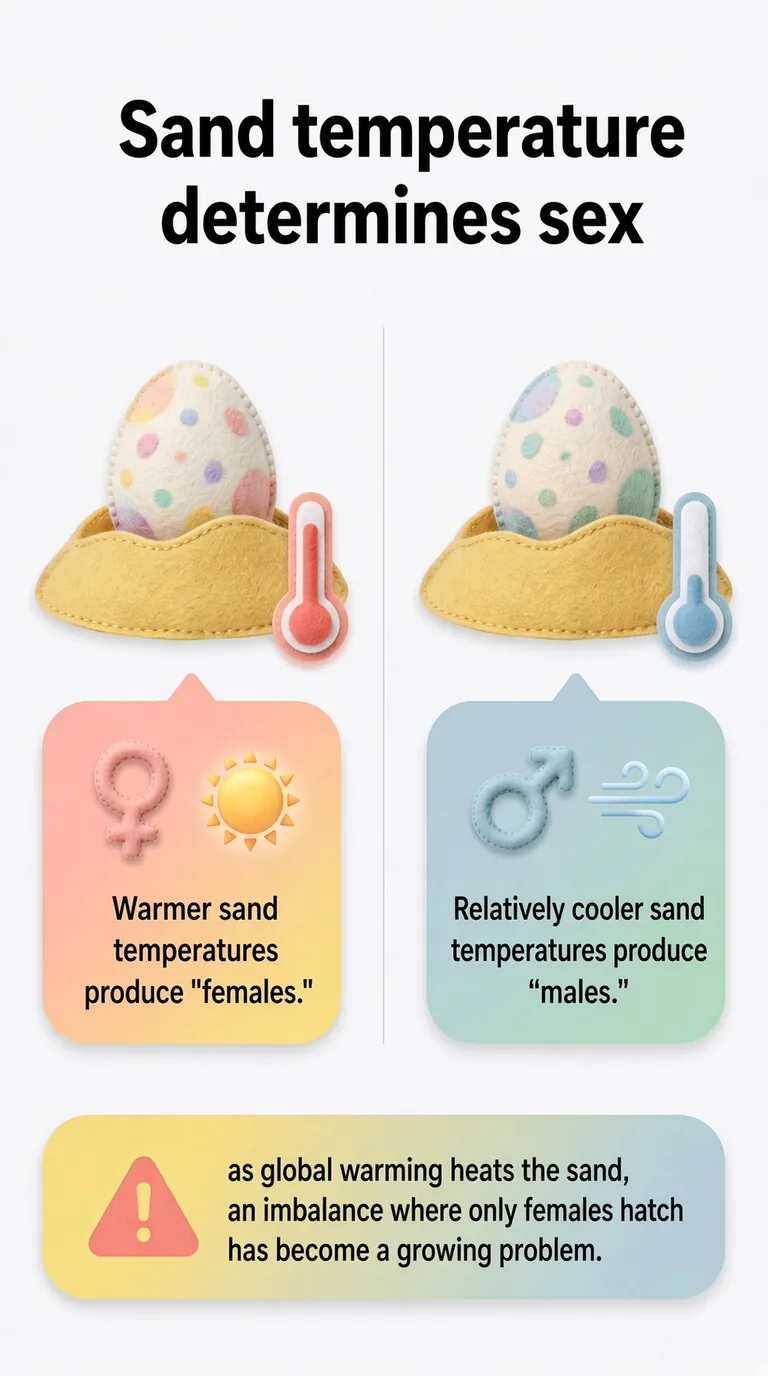
- Warmer sand temperatures produce "females."
- Relatively cooler sand temperatures produce "males."
Note: as global warming heats the sand, an imbalance where only females hatch has become a growing problem.
7 species of turtle roaming the world's oceans
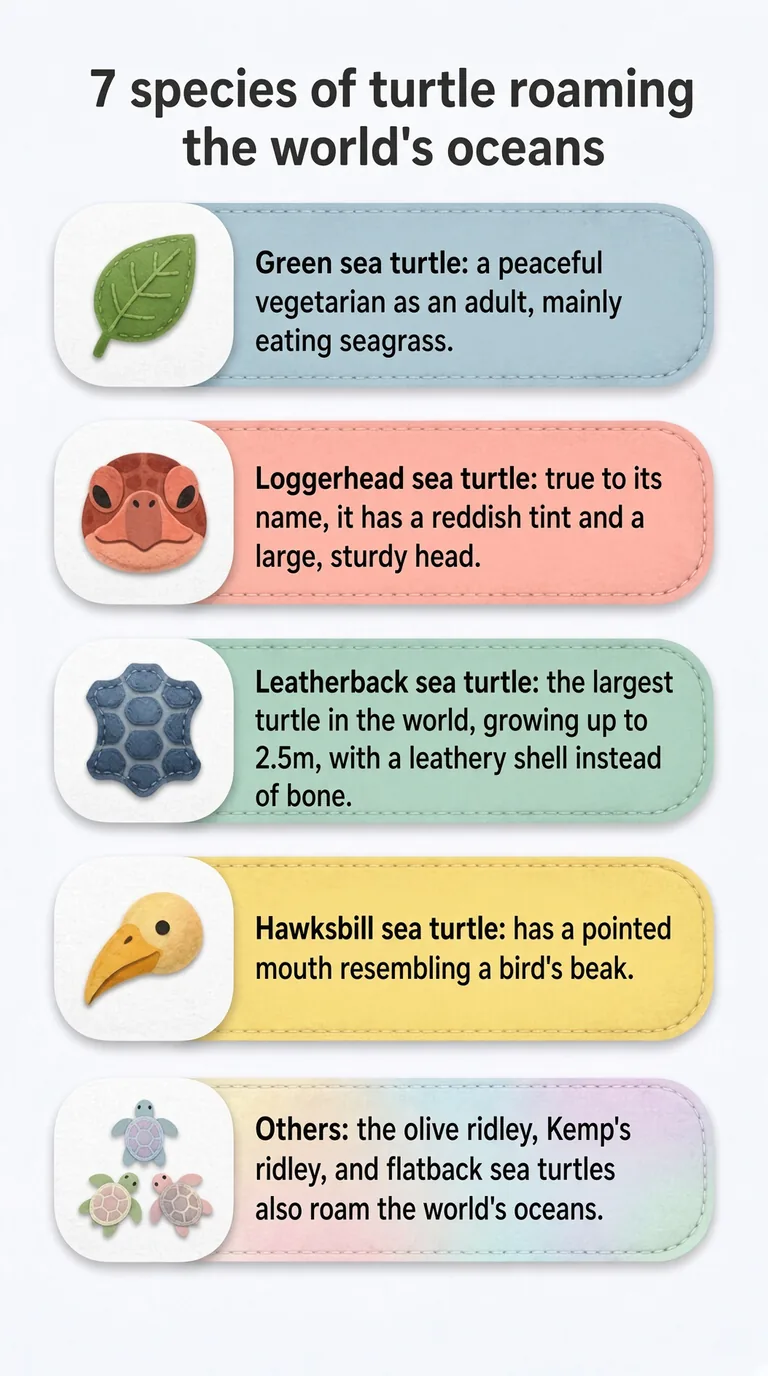
- Green sea turtle — a peaceful vegetarian as an adult, mainly eating seagrass.
- Loggerhead sea turtle — true to its name, it has a reddish tint and a large, sturdy head.
- Leatherback sea turtle — the largest turtle in the world, growing up to 2.5m, with a leathery shell instead of bone.
- Hawksbill sea turtle — has a pointed mouth resembling a bird's beak.
- Others — the olive ridley, Kemp's ridley, and flatback sea turtles also roam the world's oceans.