Common Octopus
Ocean
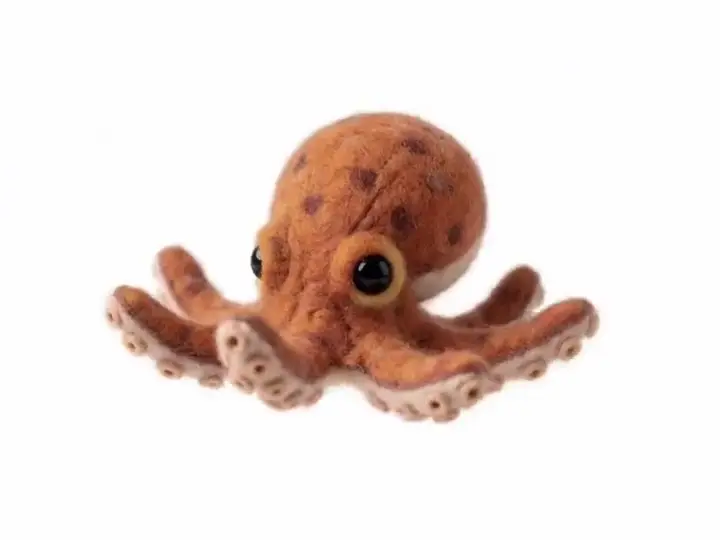
The octopus is an amazing animal with three hearts and nine brains. When danger strikes, it can change its color and shape in an instant to blend perfectly into its surroundings.
Quick facts
- Habitat
- It lives in rocky areas of warm and tropical seas around the world.
- Diet
- It eats clams, crabs, and fish.
- Size and weight
- Arms 30–90cm long, weight 3–10kg.
- Lifespan
- About 1–2 years
- Conservation status
- Least Concern
- Fun facts
- Two-thirds of its brain is spread out across its eight arms!
It's such a good problem-solver that it can even open a jar lid.
Learn more
The genius magician of the sea, a shapeshifter with 8 arms
Meet the octopus, a hidden genius of the marine ecosystem full of amazing abilities.
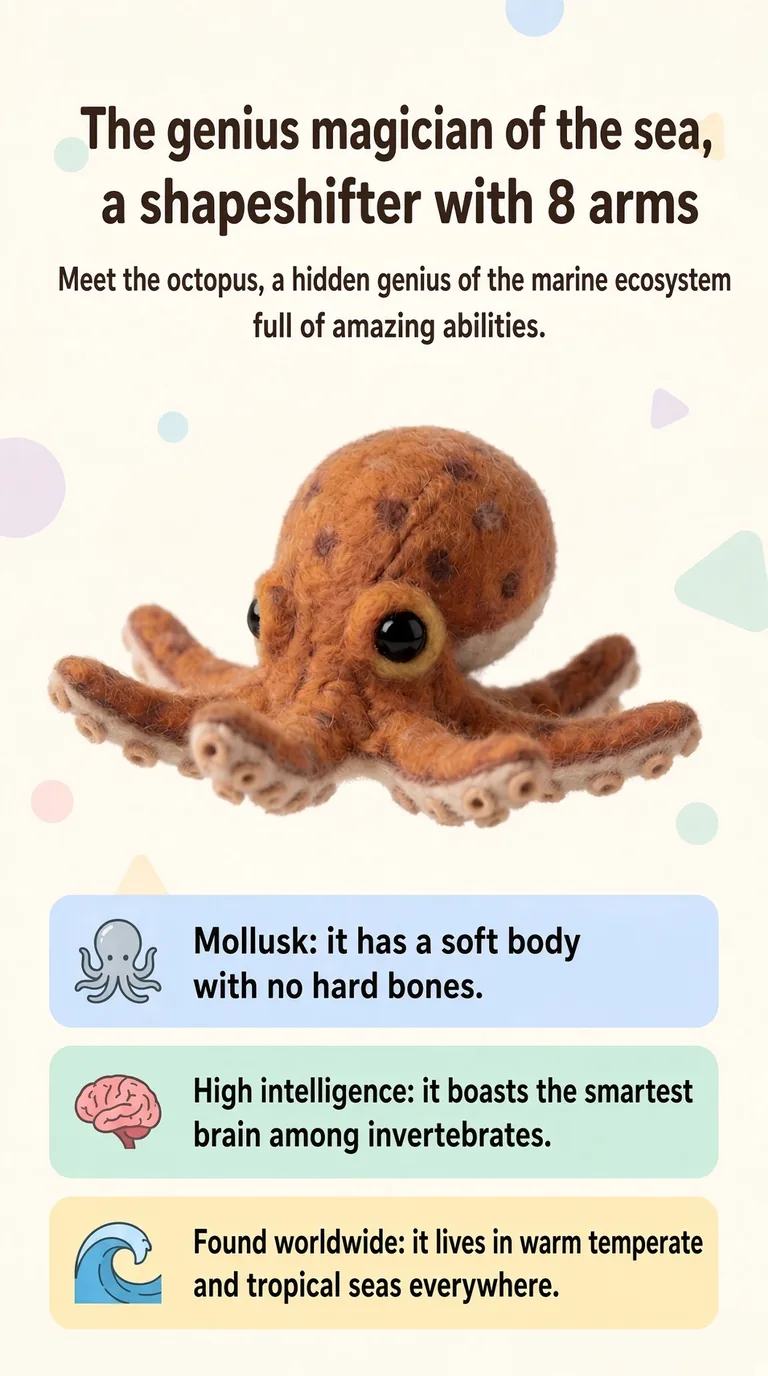
- Mollusk — it has a soft body with no hard bones.
- High intelligence — it boasts the smartest brain among invertebrates.
- Found worldwide — it lives in warm temperate and tropical seas everywhere.
Eight arms that think for themselves
An octopus's arms are more than just a way to move — they're special sensory organs.
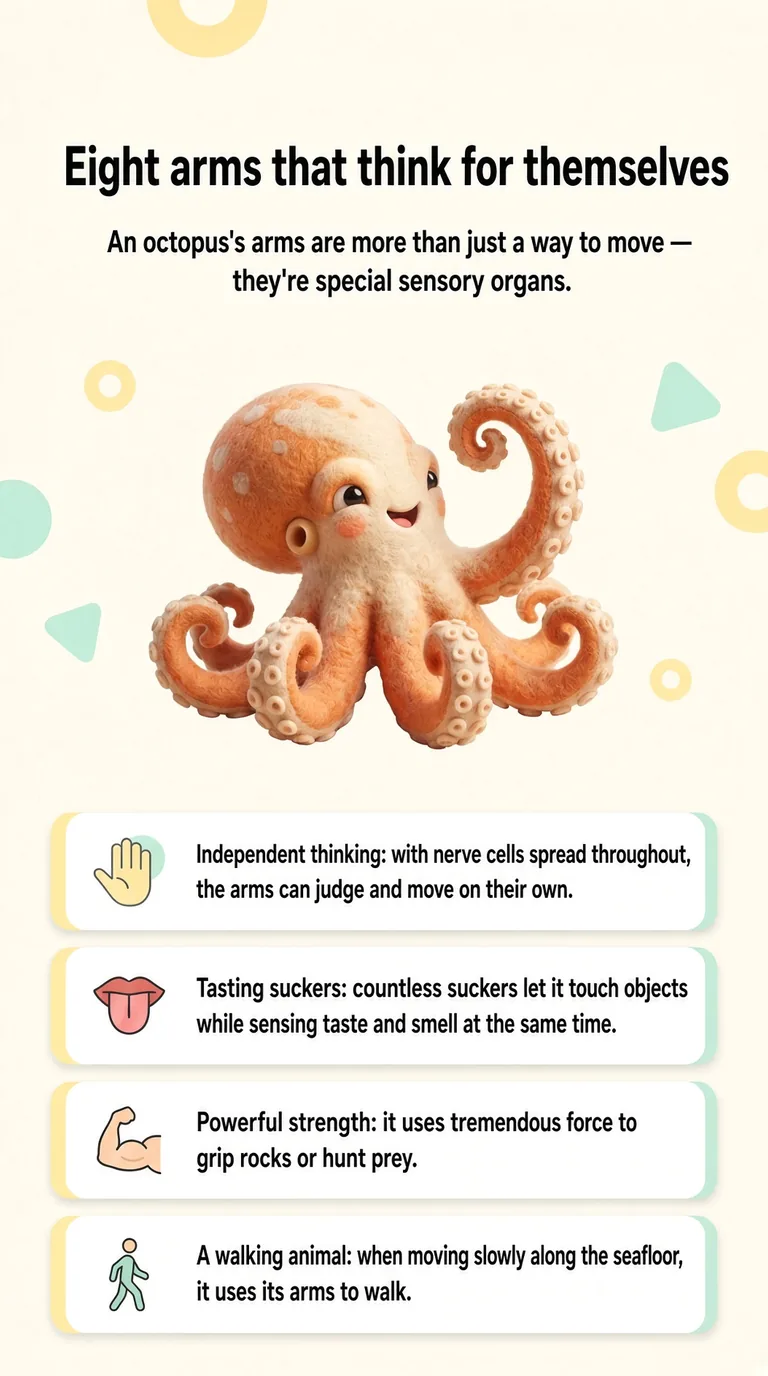
- Independent thinking — with nerve cells spread throughout, the arms can judge and move on their own.
- Tasting suckers — countless suckers let it touch objects while sensing taste and smell at the same time.
- Powerful strength — it uses tremendous force to grip rocks or hunt prey.
- A walking animal — when moving slowly along the seafloor, it uses its arms to walk.
The ultimate boneless escape artist
It boasts extreme flexibility, slipping through even the narrowest gaps.
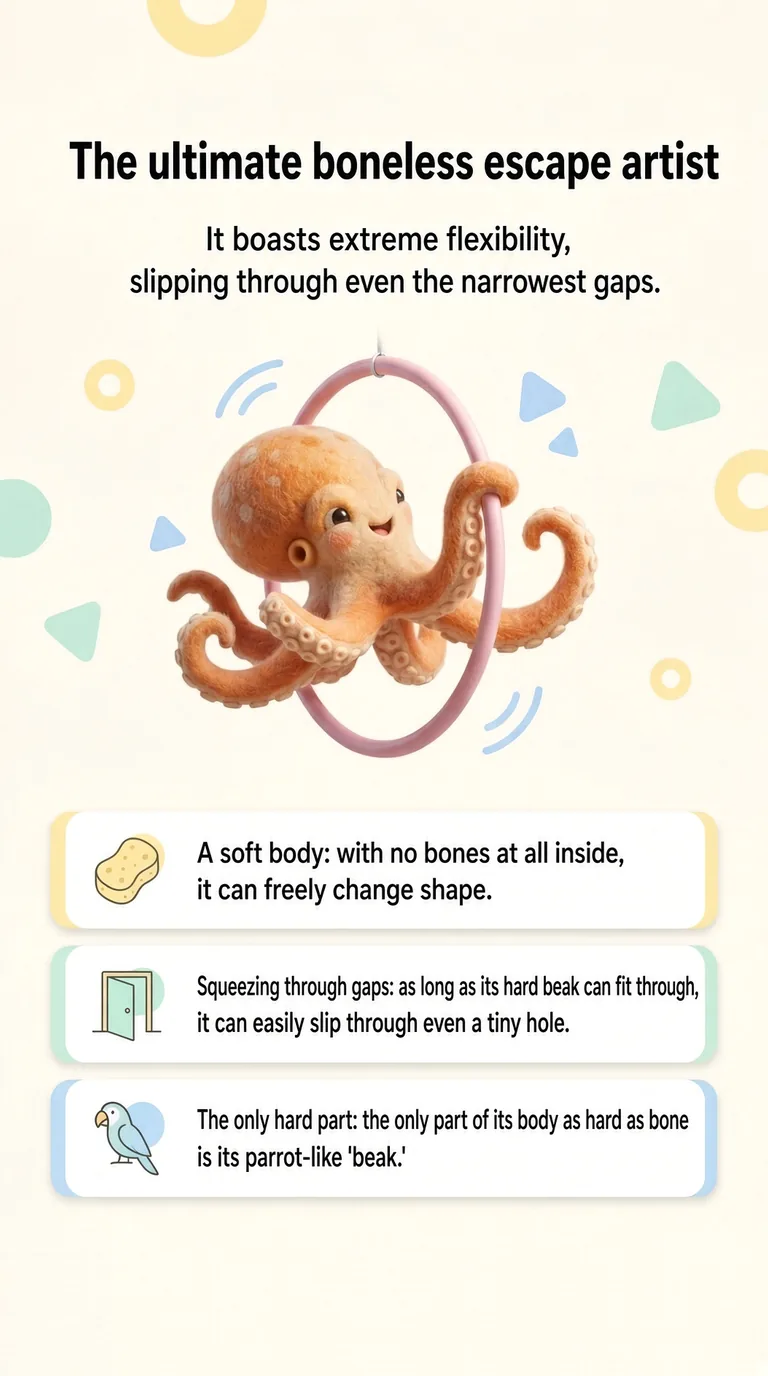
- A soft body — with no bones at all inside, it can freely change shape.
- Squeezing through gaps — as long as its hard beak can fit through, it can easily slip through even a tiny hole.
- The only hard part — the only part of its body as hard as bone is its parrot-like 'beak.'
Perfect camouflage completed in 1 second
It instantly changes its body's color and texture to match its surroundings and mood.
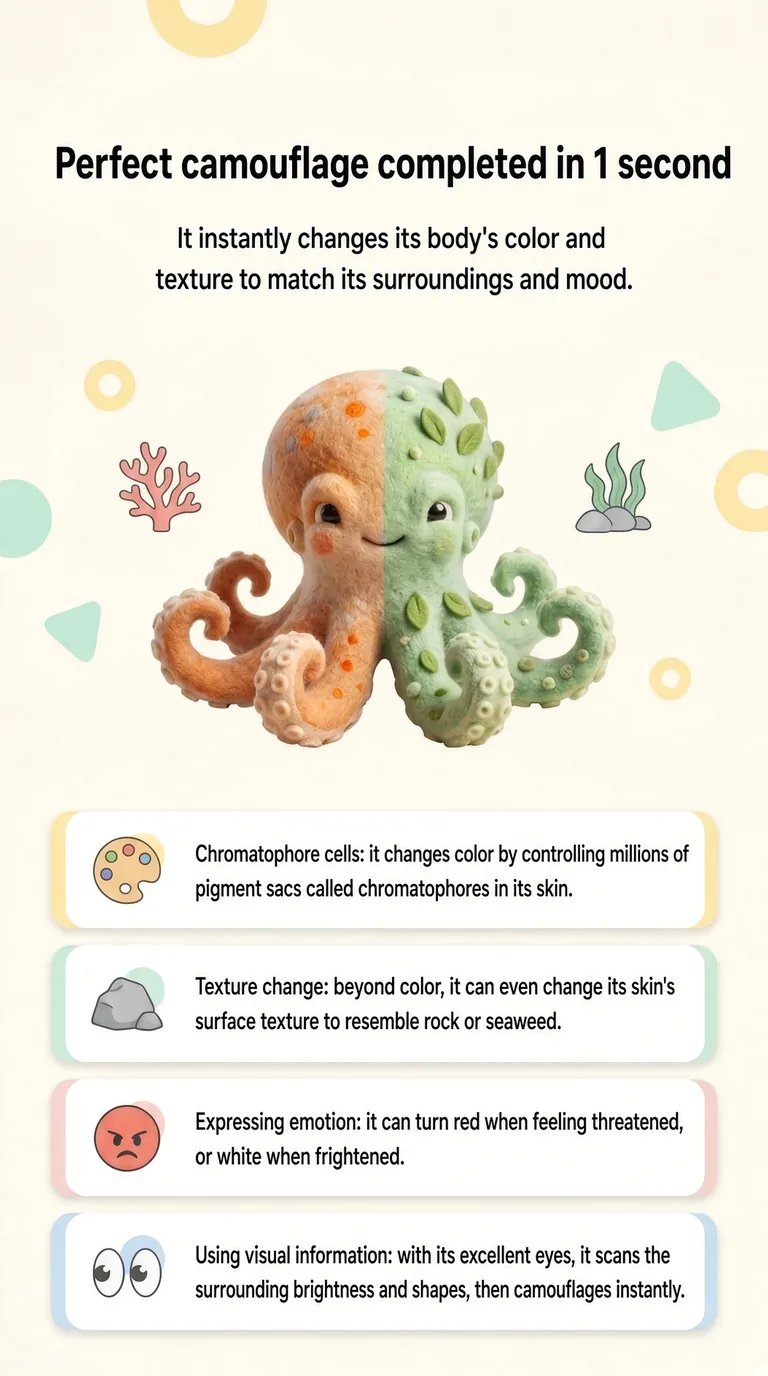
- Chromatophore cells — it changes color by controlling millions of pigment sacs called chromatophores in its skin.
- Texture change — beyond color, it can even change its skin's surface texture to resemble rock or seaweed.
- Expressing emotion — it can turn red when feeling threatened, or white when frightened.
- Using visual information — with its excellent eyes, it scans the surrounding brightness and shapes, then camouflages instantly.
A tool-using genius of the sea
It has intelligence and problem-solving skill on par with a dog.
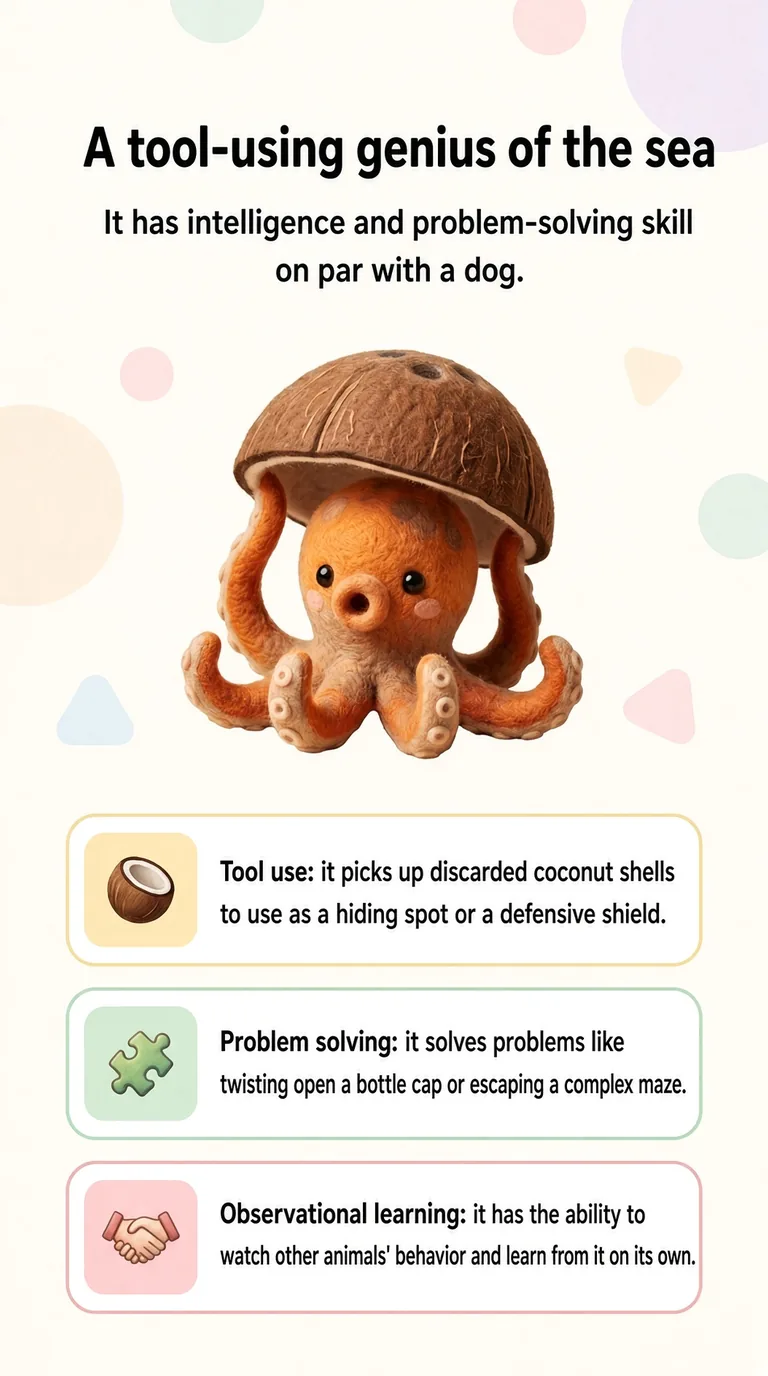
- Tool use — it picks up discarded coconut shells to use as a hiding spot or a defensive shield.
- Problem solving — it solves problems like twisting open a bottle cap or escaping a complex maze.
- Observational learning — it has the ability to watch other animals' behavior and learn from it on its own.
Two famous seafood stars, the giant octopus vs. the common octopus
Let's compare two representative octopus species found in Korean waters.
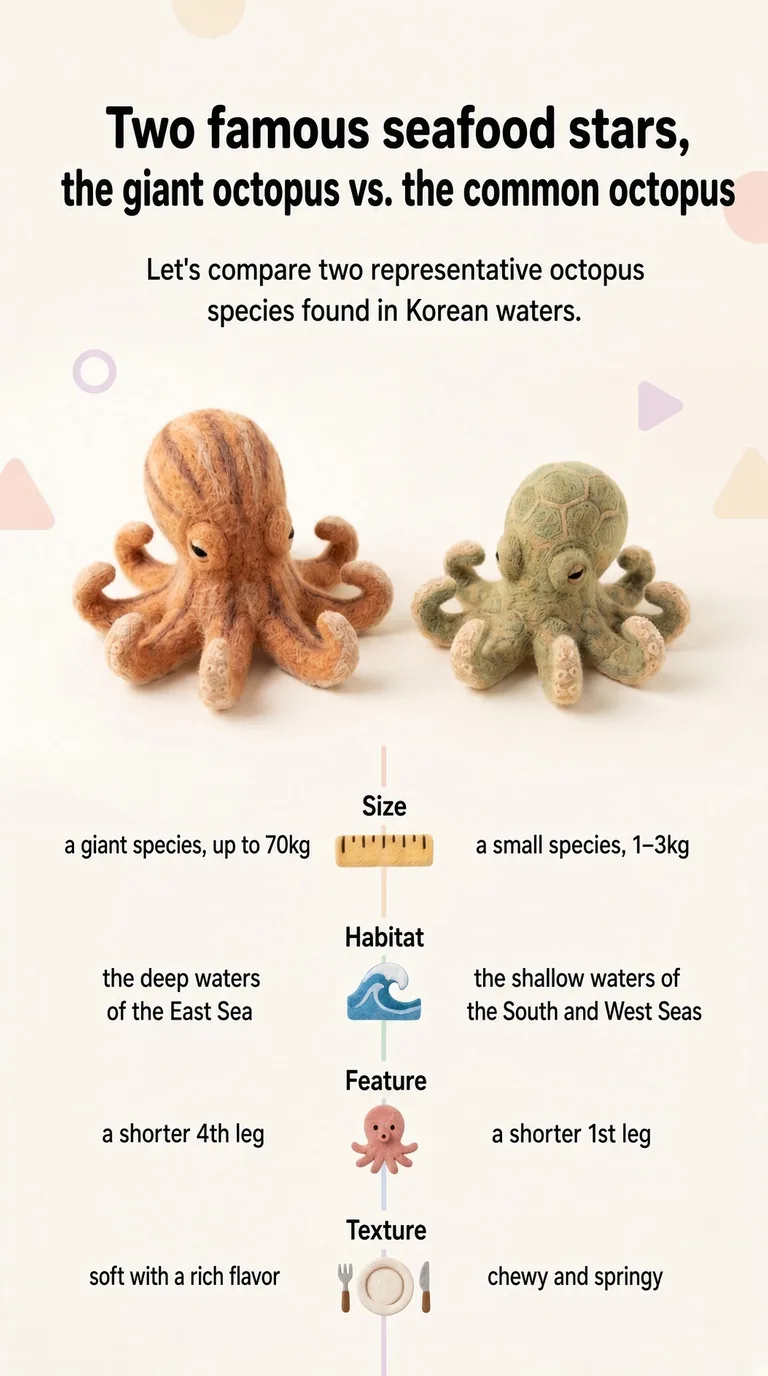
- Giant octopus
- Size — a giant species, up to 70kg
- Habitat — the deep waters of the East Sea
- Feature — a shorter 4th leg
- Texture — soft with a rich flavor
- Common octopus
- Size — a small species, 1–3kg
- Habitat — the shallow waters of the South and West Seas
- Feature — a shorter 1st leg
- Texture — chewy and springy
A natural energy station that washes away fatigue
A wonderful high-protein, low-fat ingredient, and a seafood that's great for your health.
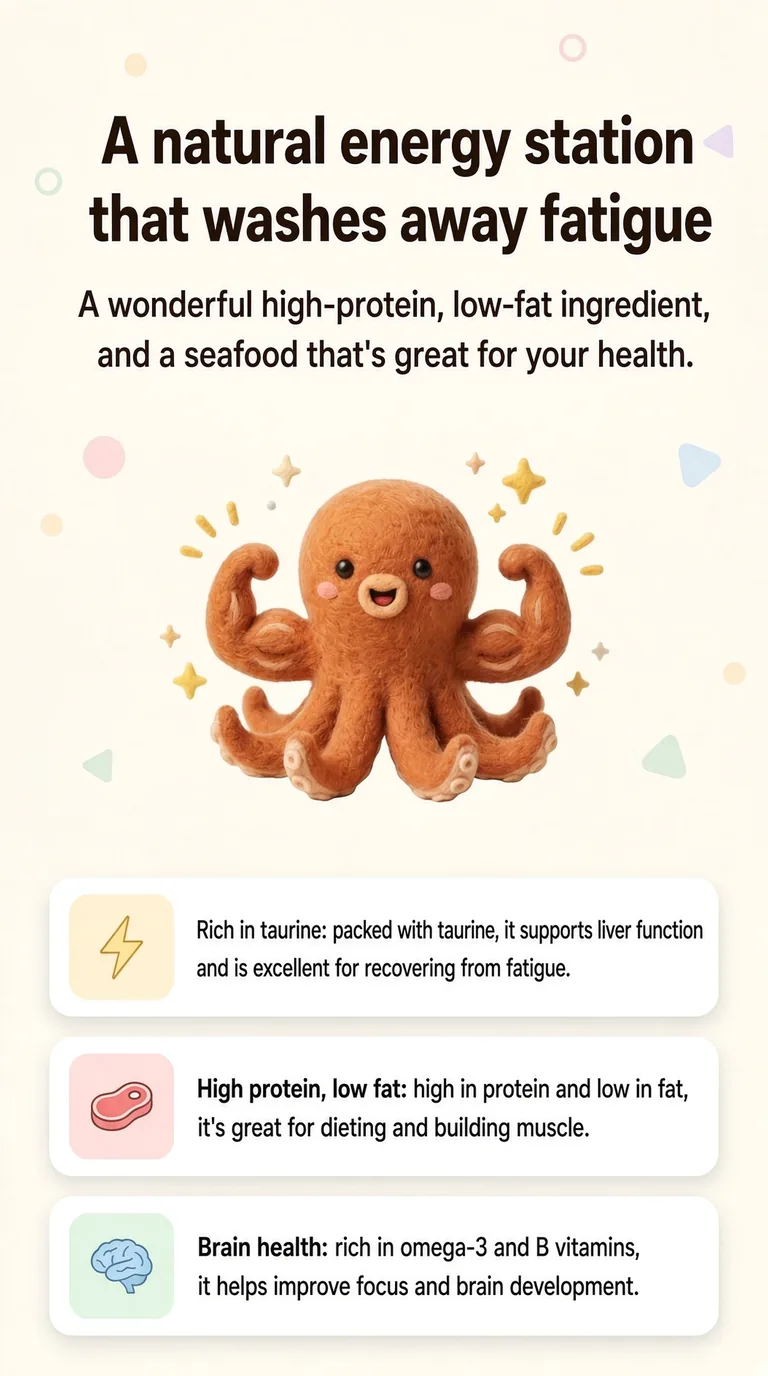
- Rich in taurine — packed with taurine, it supports liver function and is excellent for recovering from fatigue.
- High protein, low fat — high in protein and low in fat, it's great for dieting and building muscle.
- Brain health — rich in omega-3 and B vitamins, it helps improve focus and brain development.