Great White Shark
Ocean
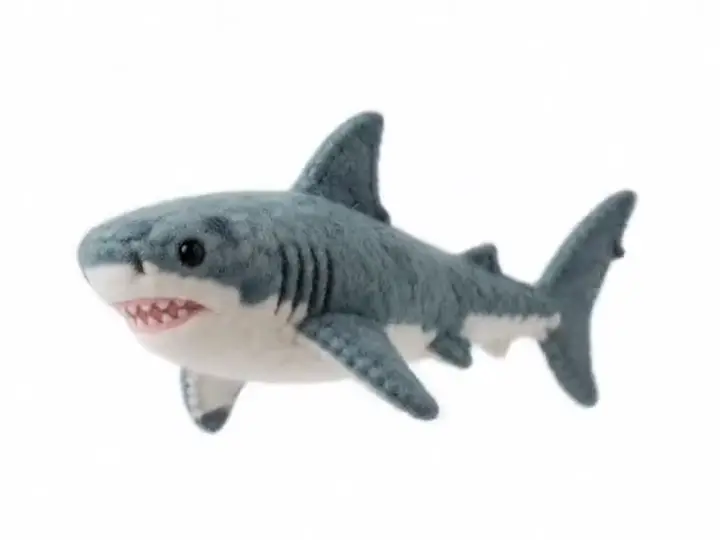
The great white shark is the ocean's top predator. Its sense of smell is so powerful it can detect a single drop of blood several km away. It's the most famous shark of all.
Quick facts
- Habitat
- It lives in the shallow coastal waters of temperate seas around the world.
- Diet
- It eats seals, fish, and sea lions.
- Size and weight
- Length 4–6m, weight 680–1,100kg.
- Lifespan
- About 70 years
- Conservation status
- Vulnerable
- Fun facts
- It grows new teeth all its life, more than 30,000 in total!
When it hunts, it can leap completely out of the water.
Learn more
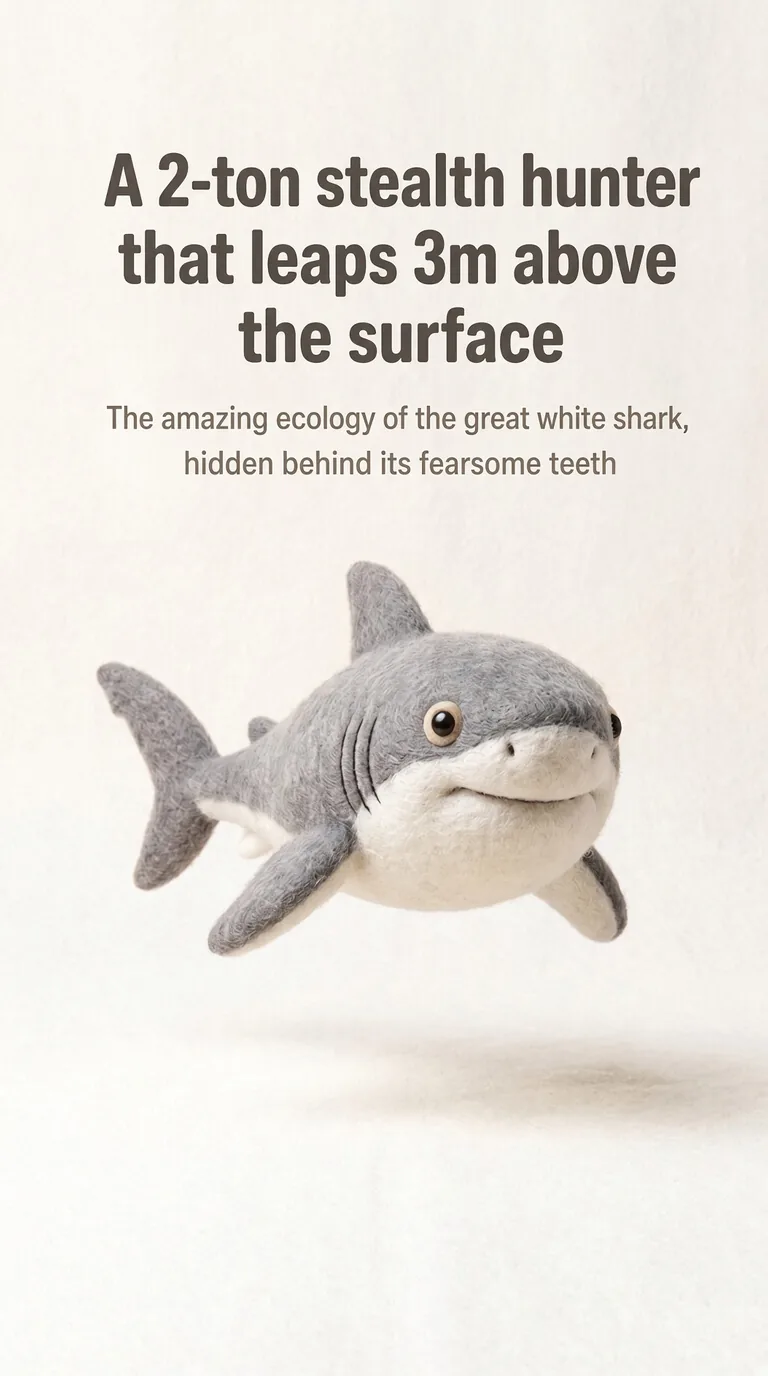
A 2-ton stealth hunter that leaps 3m above the surface
The amazing ecology of the great white shark, hidden behind its fearsome teeth
A perfect stealth camouflage suit
Despite its name, it isn't all white.
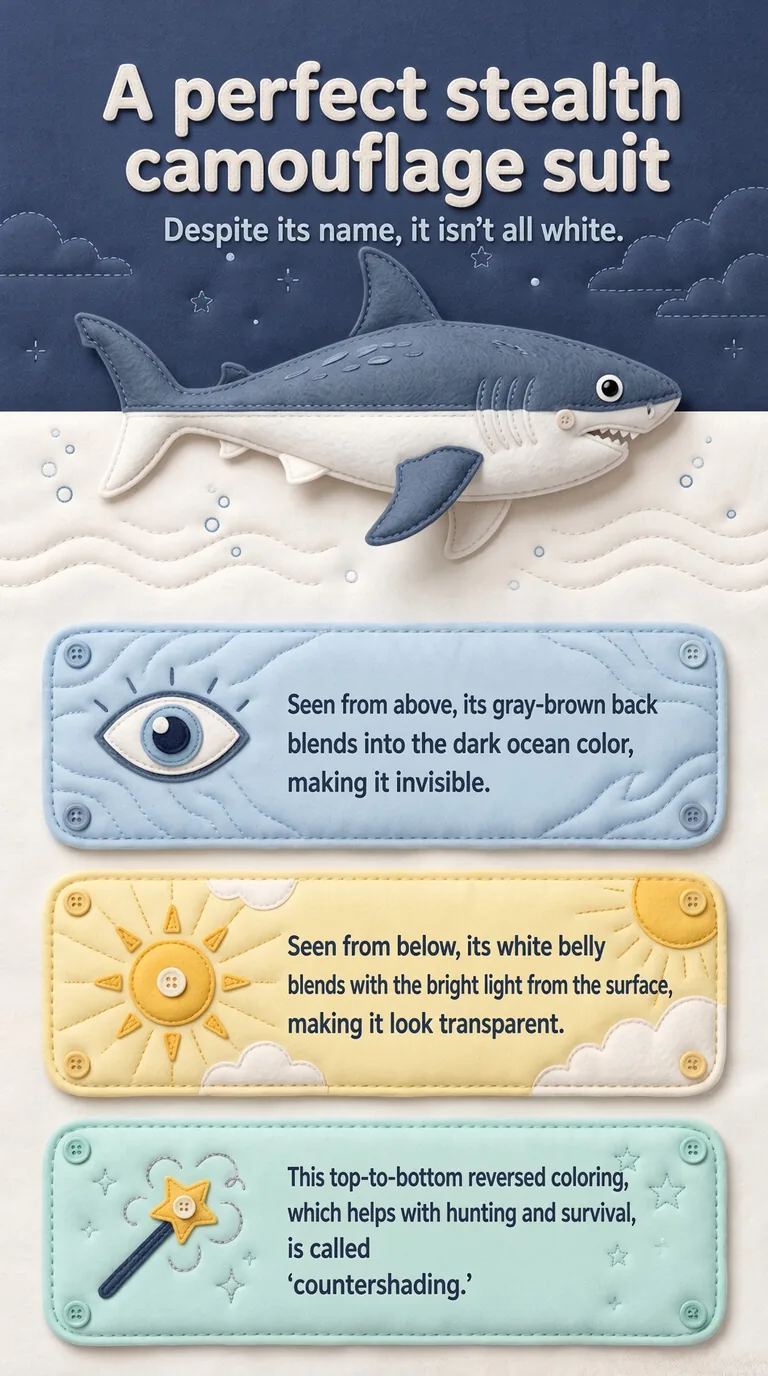
- Seen from above, its gray-brown back blends into the dark ocean color, making it invisible.
- Seen from below, its white belly blends with the bright light from the surface, making it look transparent.
- This top-to-bottom reversed coloring, which helps with hunting and survival, is called 'countershading.'
Giants of the sea, Deep Blue
Sharks vary enormously in size.
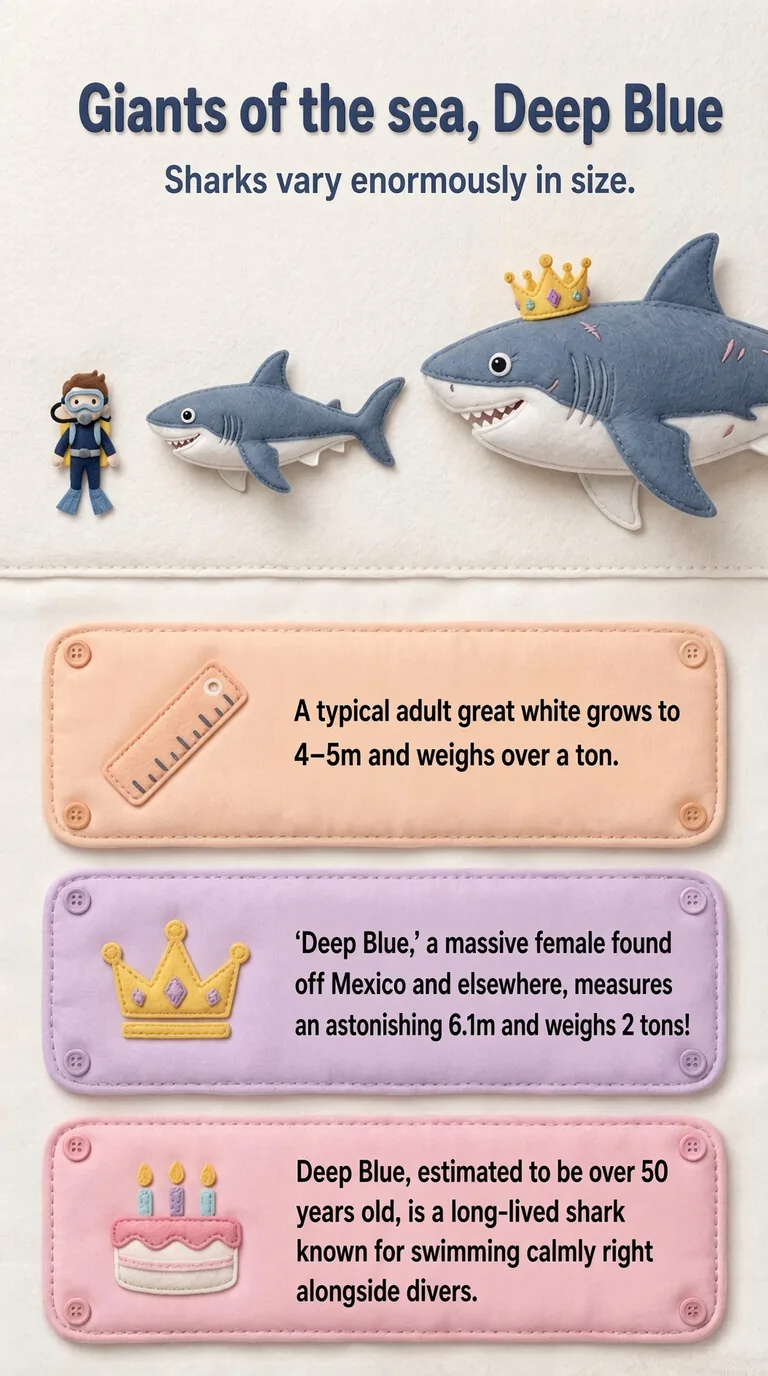
- A typical adult great white grows to 4–5m and weighs over a ton.
- 'Deep Blue,' a massive female found off Mexico and elsewhere, measures an astonishing 6.1m and weighs 2 tons!
- Deep Blue, estimated to be over 50 years old, is a long-lived shark known for swimming calmly right alongside divers.
The legendary predator, Megalodon
How big was its ancient relative?
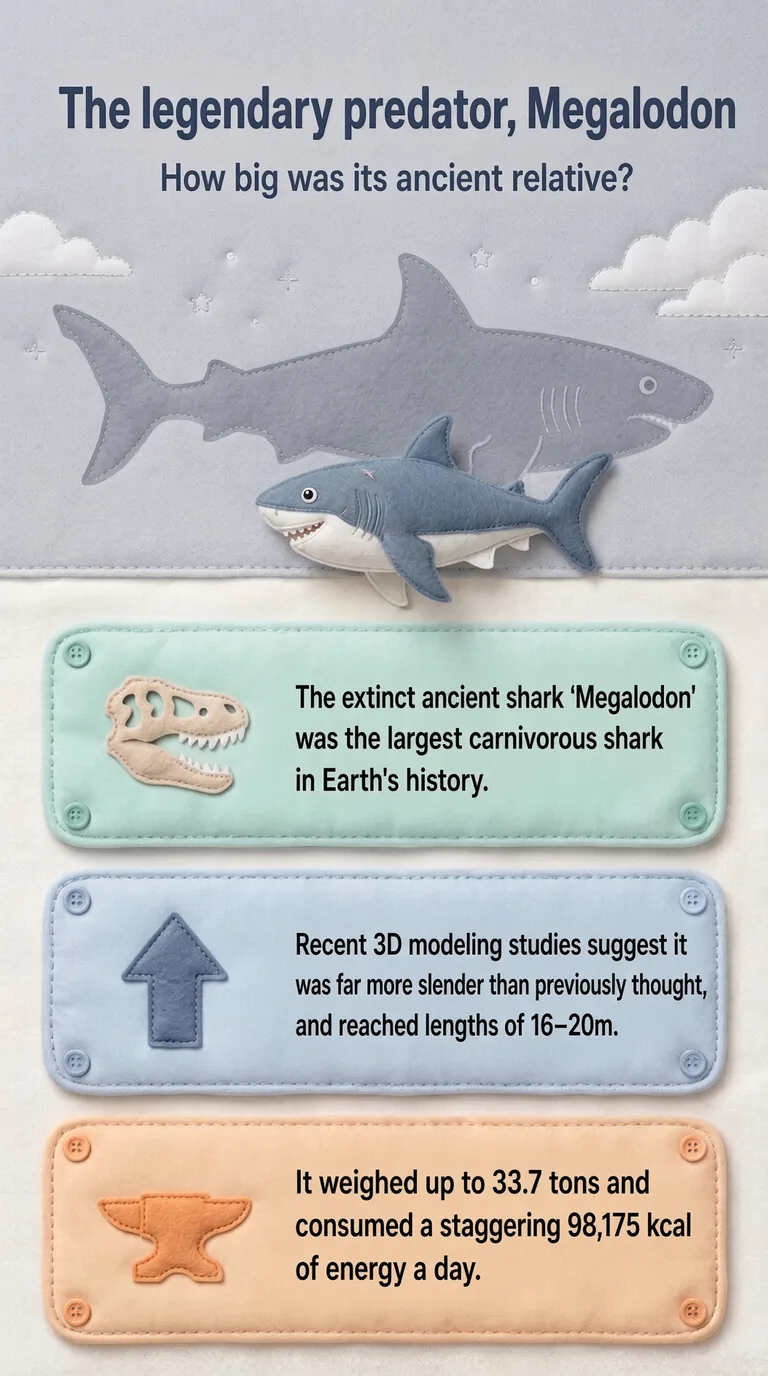
- The extinct ancient shark 'Megalodon' was the largest carnivorous shark in Earth's history.
- Recent 3D modeling studies suggest it was far more slender than previously thought, and reached lengths of 16–20m.
- It weighed up to 33.7 tons and consumed a staggering 98,175 kcal of energy a day.
An astonishing sixth-sense radar
It never misses even hidden prey.
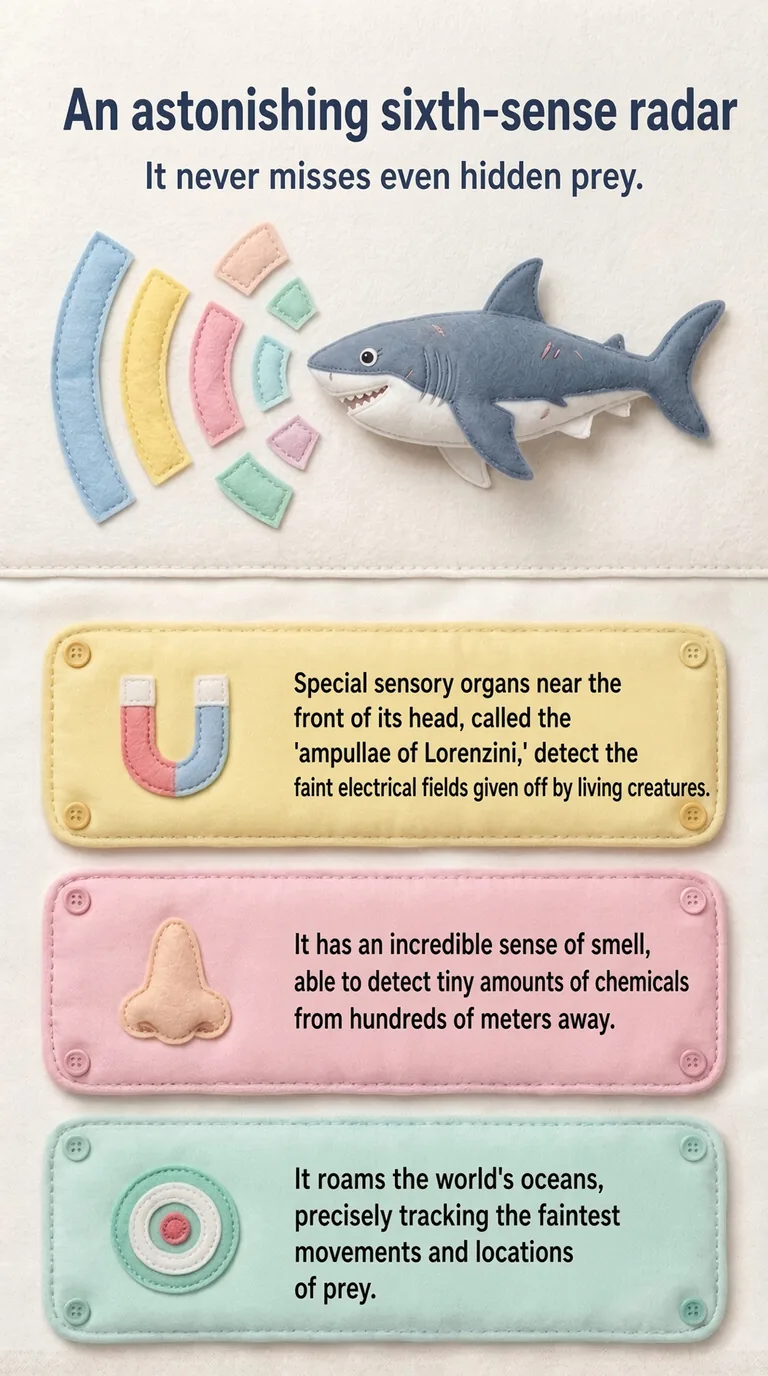
- Special sensory organs near the front of its head, called the 'ampullae of Lorenzini,' detect the faint electrical fields given off by living creatures.
- It has an incredible sense of smell, able to detect tiny amounts of chemicals from hundreds of meters away.
- It roams the world's oceans, precisely tracking the faintest movements and locations of prey.
A relentless submarine of the deep sea
Its whole body is like a machine optimized for swimming and hunting.
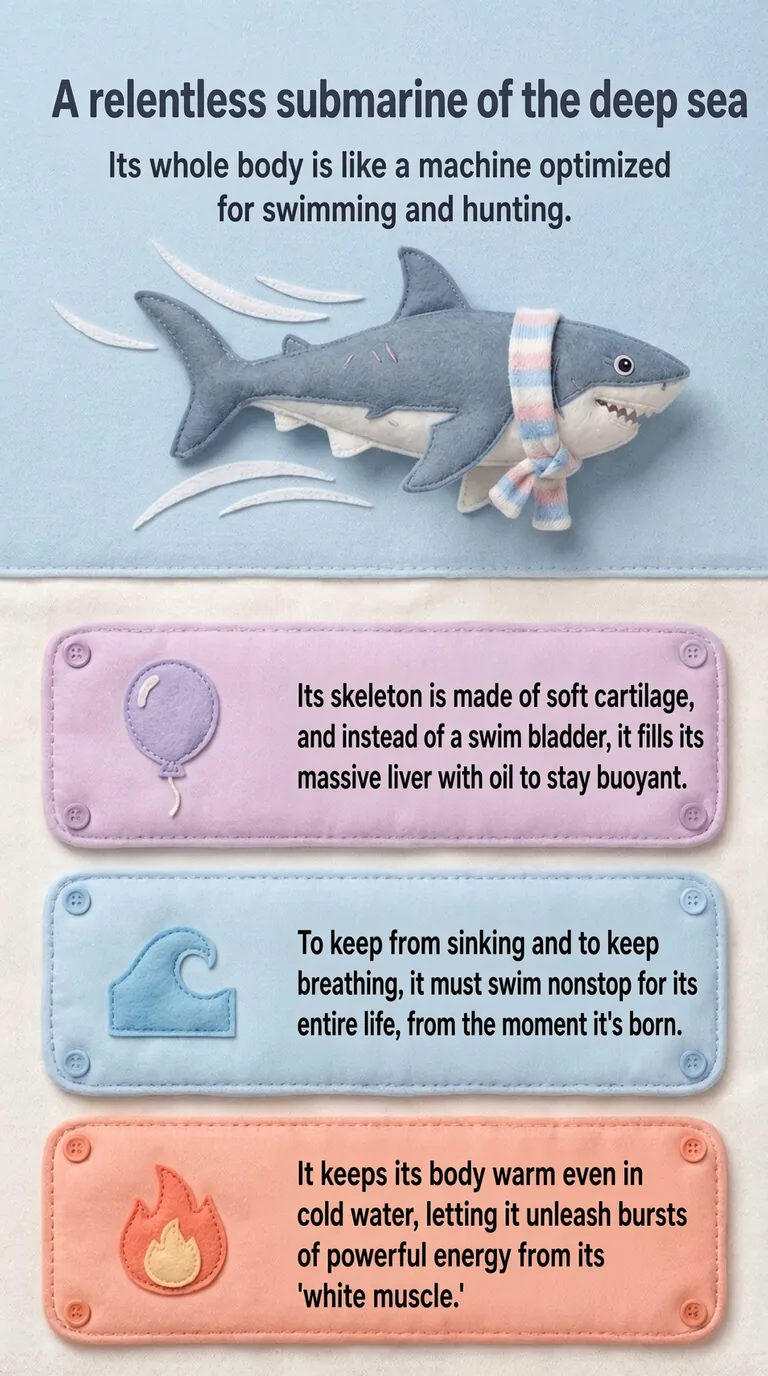
- Its skeleton is made of soft cartilage, and instead of a swim bladder, it fills its massive liver with oil to stay buoyant.
- To keep from sinking and to keep breathing, it must swim nonstop for its entire life, from the moment it's born.
- It keeps its body warm even in cold water, letting it unleash bursts of powerful energy from its 'white muscle.'
A hunt that erupts above the surface
The most dramatic skydive in the ocean
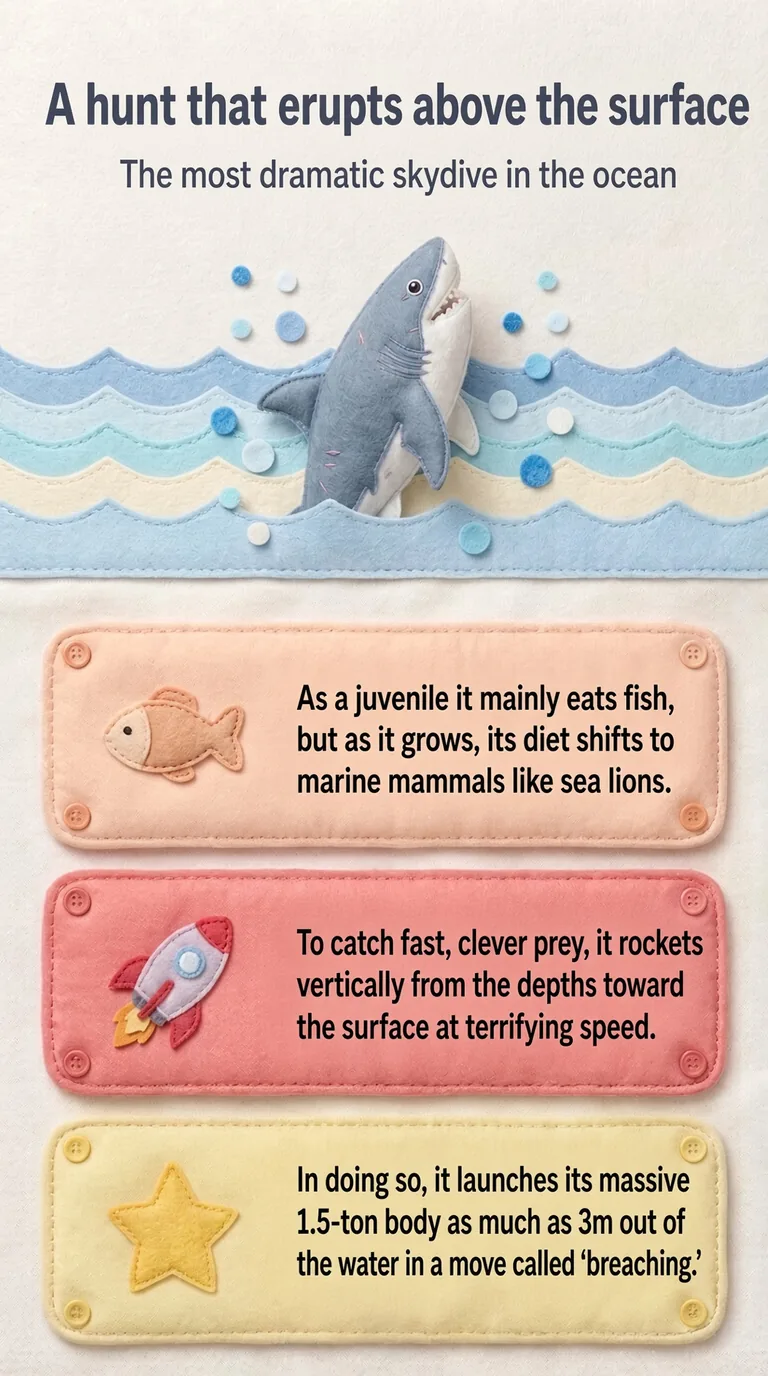
- As a juvenile it mainly eats fish, but as it grows, its diet shifts to marine mammals like sea lions.
- To catch fast, clever prey, it rockets vertically from the depths toward the surface at terrifying speed.
- In doing so, it launches its massive 1.5-ton body as much as 3m out of the water in a move called 'breaching.'
The White Shark Café
A hidden hotspot for sharks in the middle of the Pacific
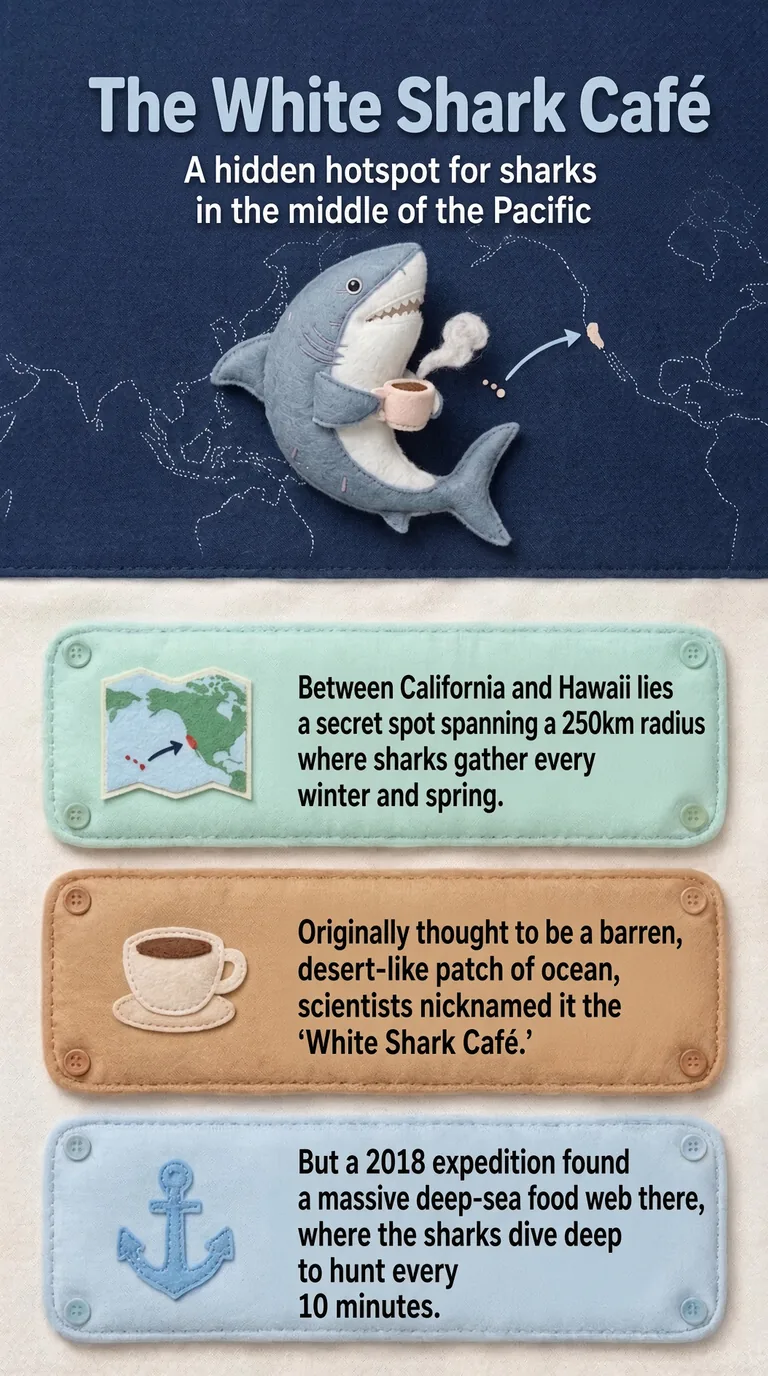
- Between California and Hawaii lies a secret spot spanning a 250km radius where sharks gather every winter and spring.
- Originally thought to be a barren, desert-like patch of ocean, scientists nicknamed it the 'White Shark Café.'
- But a 2018 expedition found a massive deep-sea food web there, where the sharks dive deep to hunt every 10 minutes.
A borderless traveler
One giant family roaming the world's oceans freely
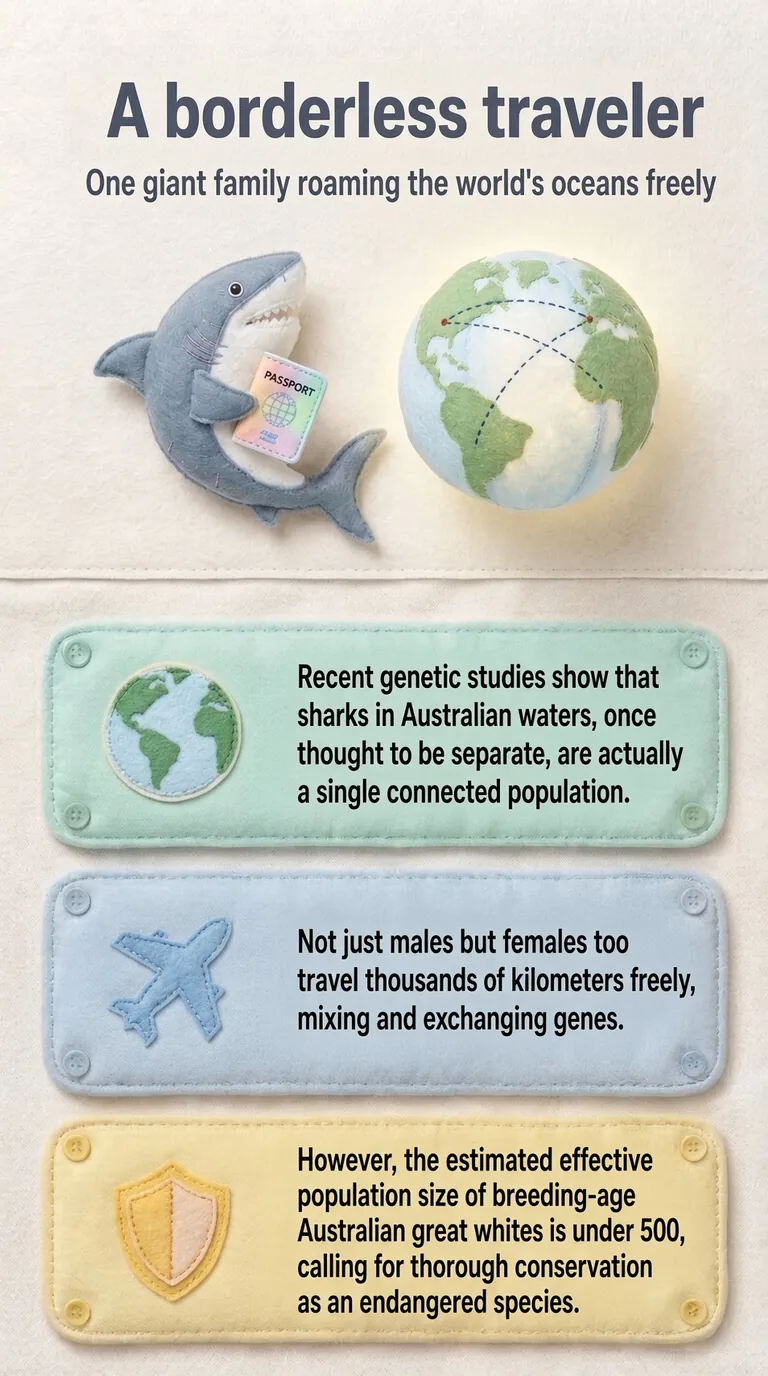
- Recent genetic studies show that sharks in Australian waters, once thought to be separate, are actually a single connected population.
- Not just males but females too travel thousands of kilometers freely, mixing and exchanging genes.
- However, the estimated effective population size of breeding-age Australian great whites is under 500, calling for thorough conservation as an endangered species.