Echidna
Oceania
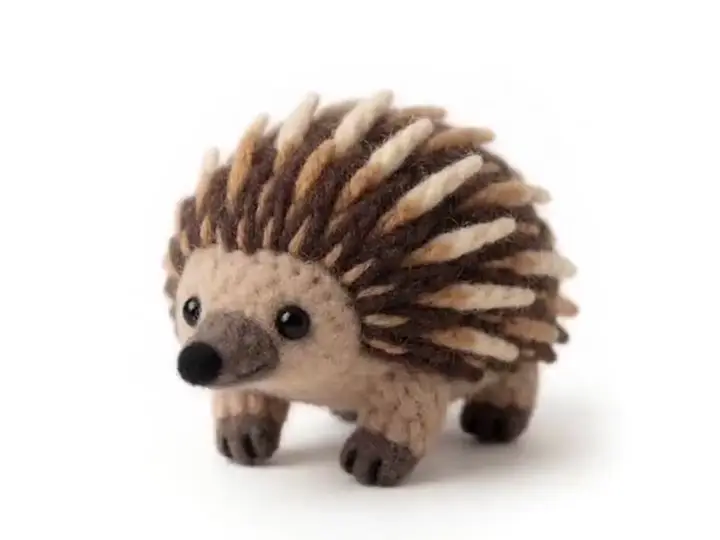
The echidna is one of only two kinds of mammals that lay eggs, along with the platypus. Its back is covered in spines like a hedgehog's, and it eats ants with its long snout and sticky tongue. When it's in danger, it digs into the ground until only its spines show.
Quick facts
- Habitat
- It lives in the forests, deserts, and mountains of Australia and New Guinea.
- Diet
- It eats ants and termites with its sticky tongue.
- Size and weight
- Length 30–45cm, weight 2–7kg.
- Lifespan
- About 16 years
- Conservation status
- Least Concern
- Fun facts
- A baby echidna that hatches from an egg is called a "puggle"!
It has no teeth, so it mashes food between its tongue and the roof of its mouth.
Learn more
The strangest mammal, the Echidna
Exploring nature's adorable oddity
A mammal that lays eggs?
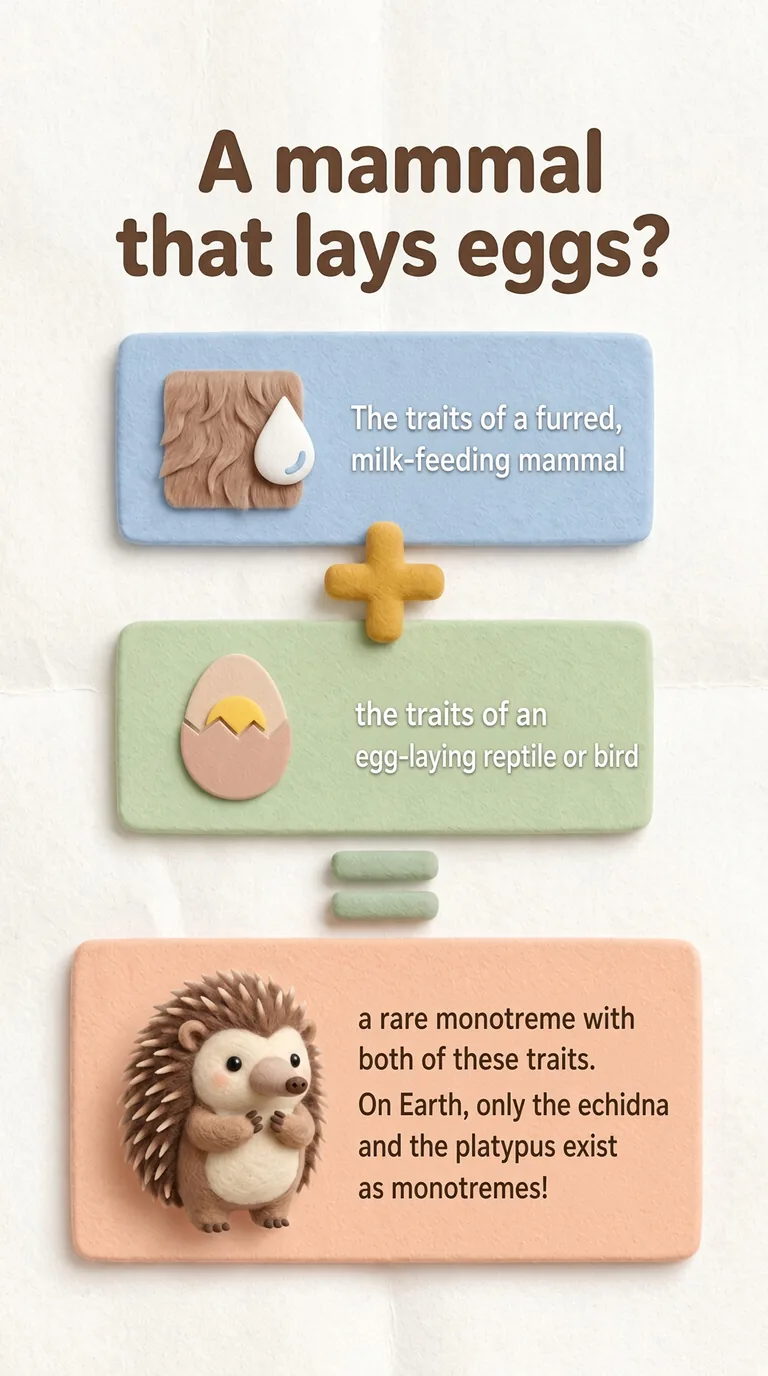
The traits of a furred, milk-feeding mammal + the traits of an egg-laying reptile or bird
= a rare monotreme with both of these traits.
On Earth, only the echidna and the platypus exist as monotremes!
A super body built for survival
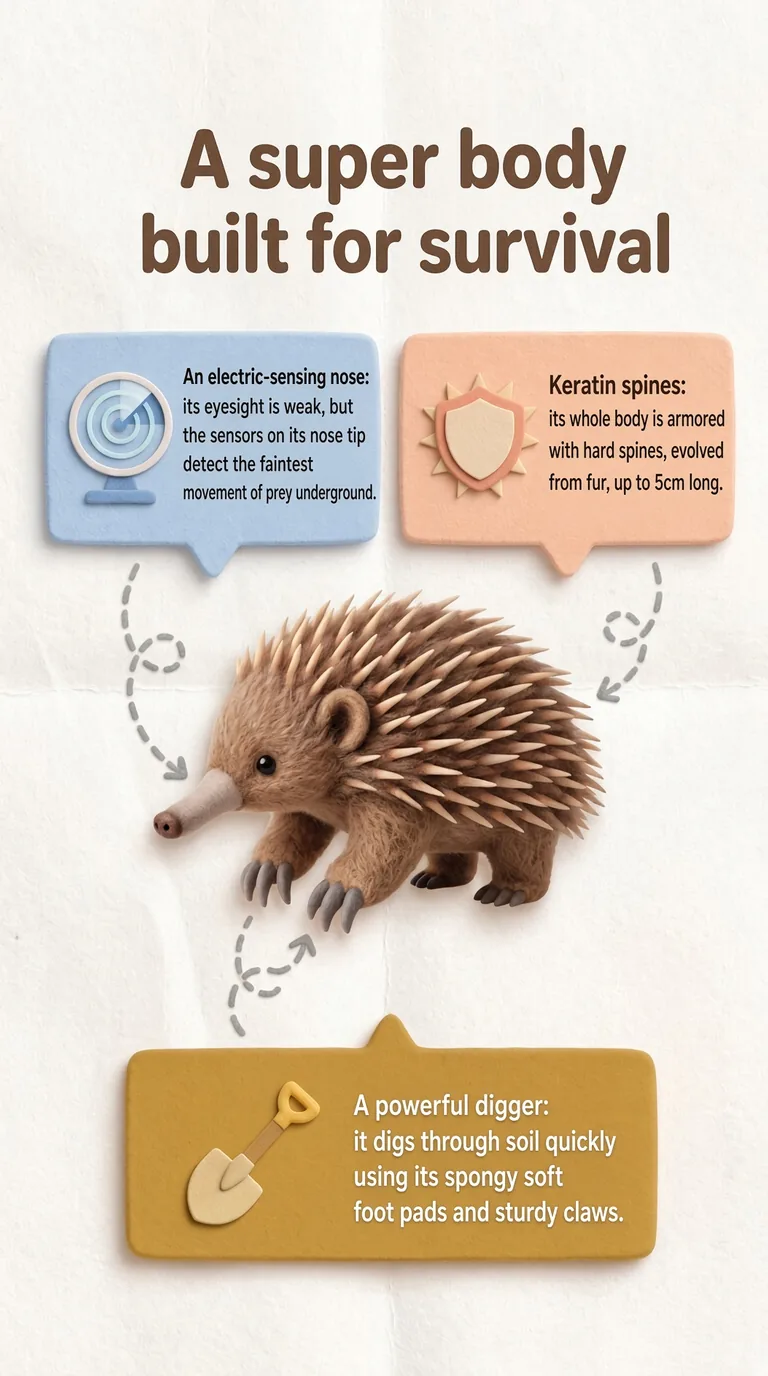
- An electric-sensing nose — its eyesight is weak, but the sensors on its nose tip detect the faintest movement of prey underground.
- Keratin spines — its whole body is armored with hard spines, evolved from fur, up to 5cm long.
- A powerful digger — it digs through soil quickly using its spongy soft foot pads and sturdy claws.
A toothless insect hunter
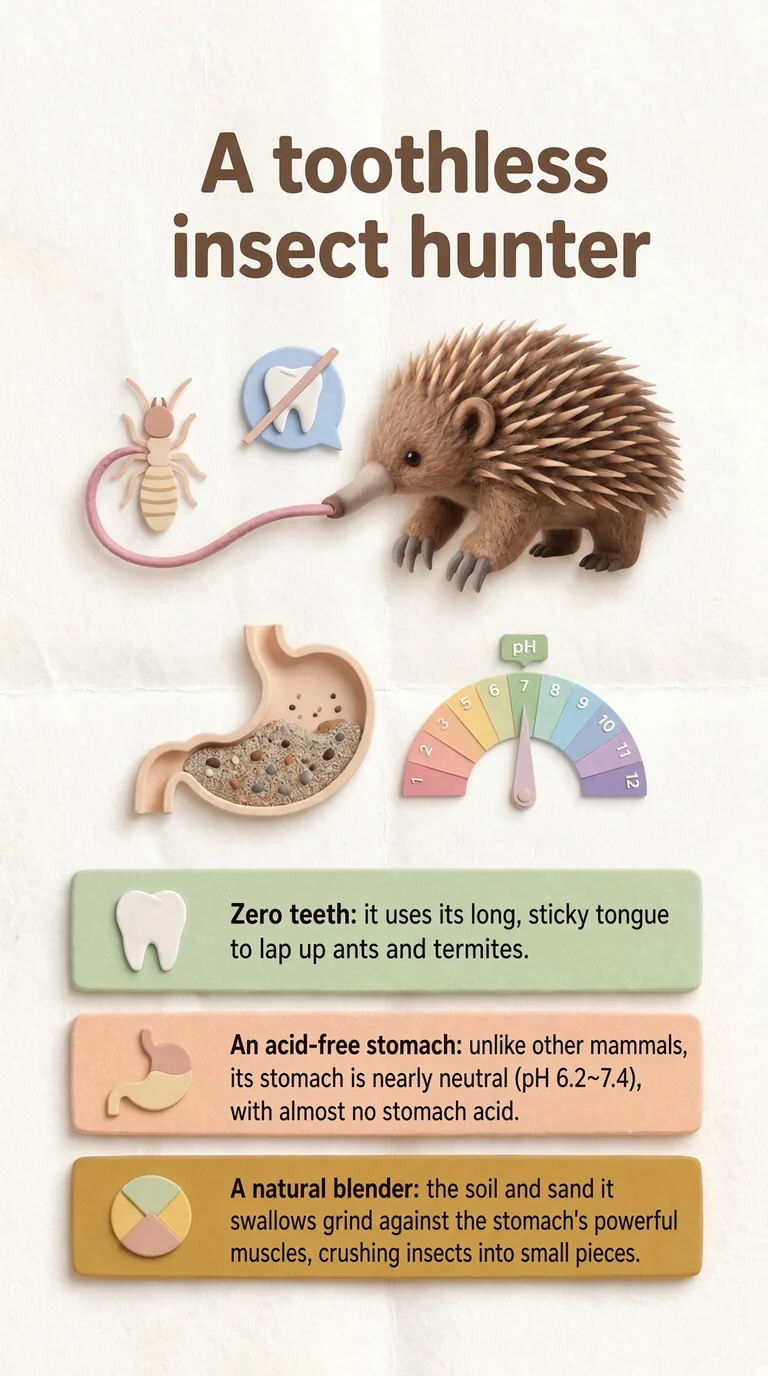
- Zero teeth — it uses its long, sticky tongue to lap up ants and termites.
- An acid-free stomach — unlike other mammals, its stomach is nearly neutral (pH 6.2–7.4), with almost no stomach acid.
- A natural blender — the soil and sand it swallows grind against the stomach's powerful muscles, crushing insects into small pieces.
'Snot bubbles' instead of sweat
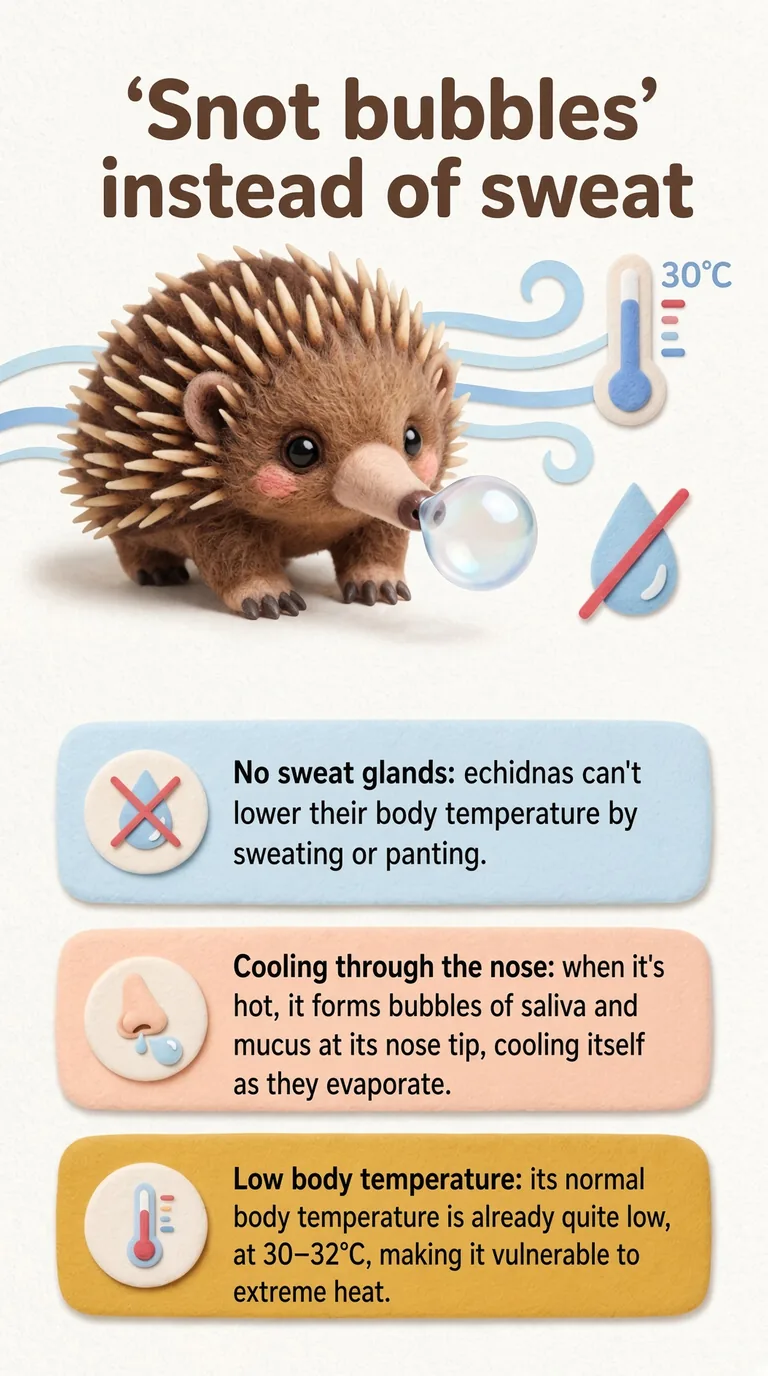
- No sweat glands — echidnas can't lower their body temperature by sweating or panting.
- Cooling through the nose — when it's hot, it forms bubbles of saliva and mucus at its nose tip, cooling itself as they evaporate.
- Low body temperature — its normal body temperature is already quite low, at 30–32°C, making it vulnerable to extreme heat.
A perfect, impenetrable defense
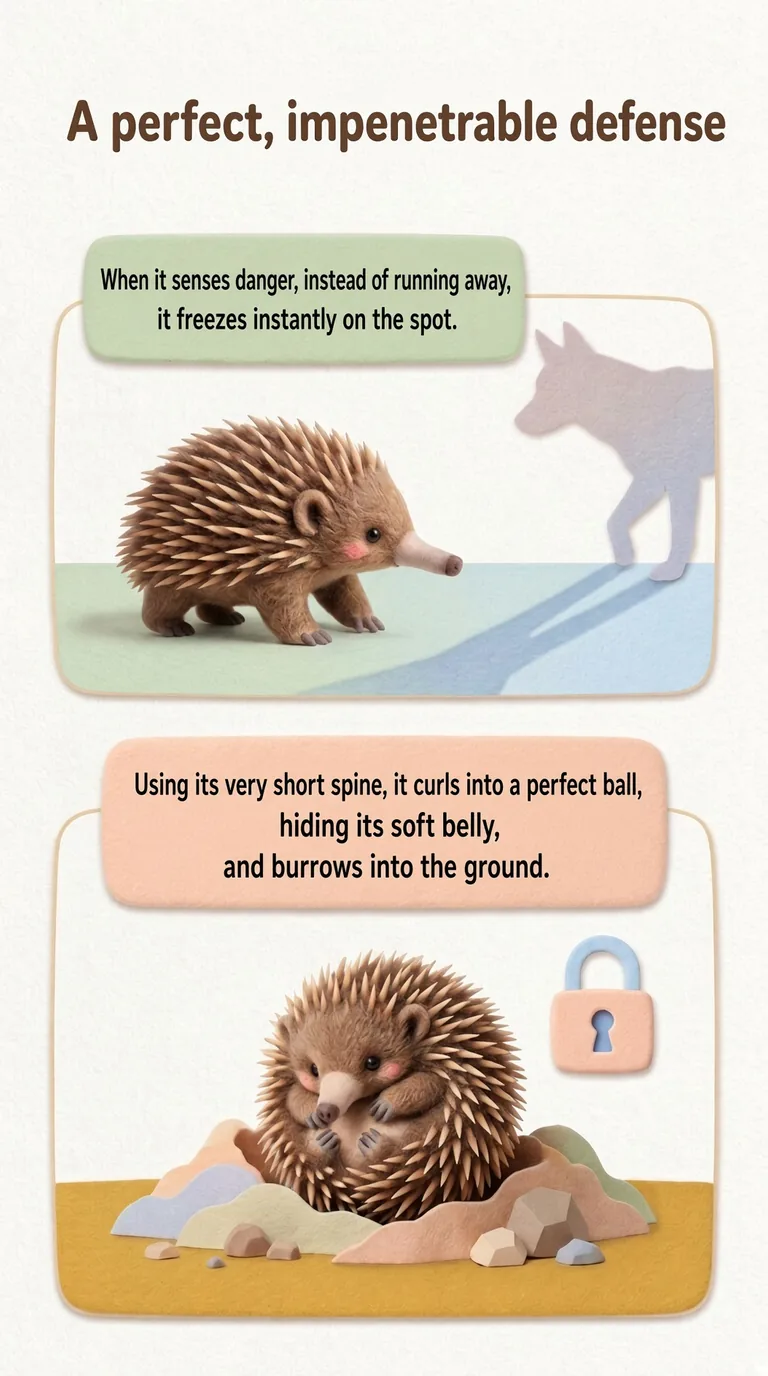
- When it senses danger, instead of running away, it freezes instantly on the spot.
- Using its very short spine, it curls into a perfect ball, hiding its soft belly, and burrows into the ground.
The strange 'mating train'
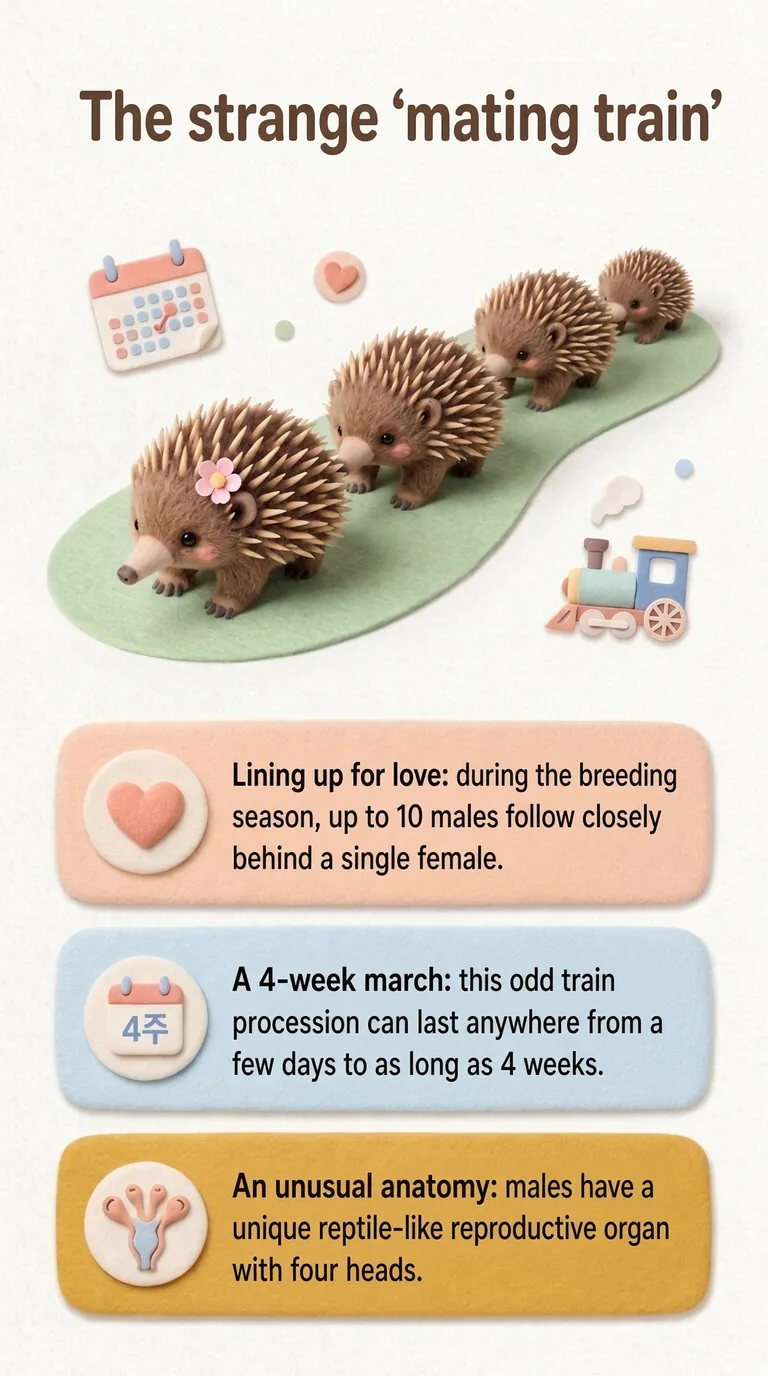
- Lining up for love — during the breeding season, up to 10 males follow closely behind a single female.
- A 4-week march — this odd train procession can last anywhere from a few days to as long as 4 weeks.
- An unusual anatomy — males have a unique reptile-like reproductive organ with four heads.
A rubbery egg the size of a grape
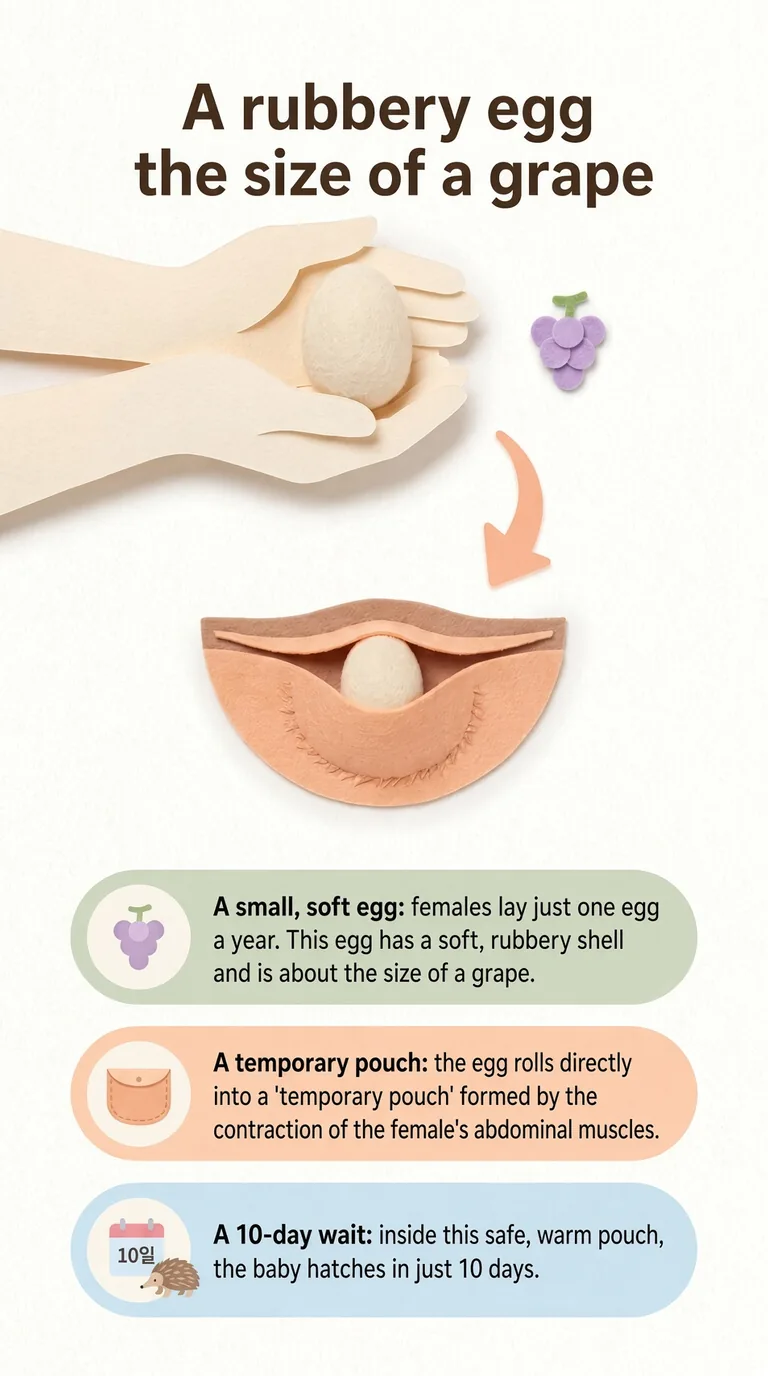
- A small, soft egg — females lay just one egg a year. This egg has a soft, rubbery shell and is about the size of a grape.
- A temporary pouch — the egg rolls directly into a 'temporary pouch' formed by the contraction of the female's abdominal muscles.
- A 10-day wait — inside this safe, warm pouch, the baby hatches in just 10 days.
Hello, baby 'puggle'!
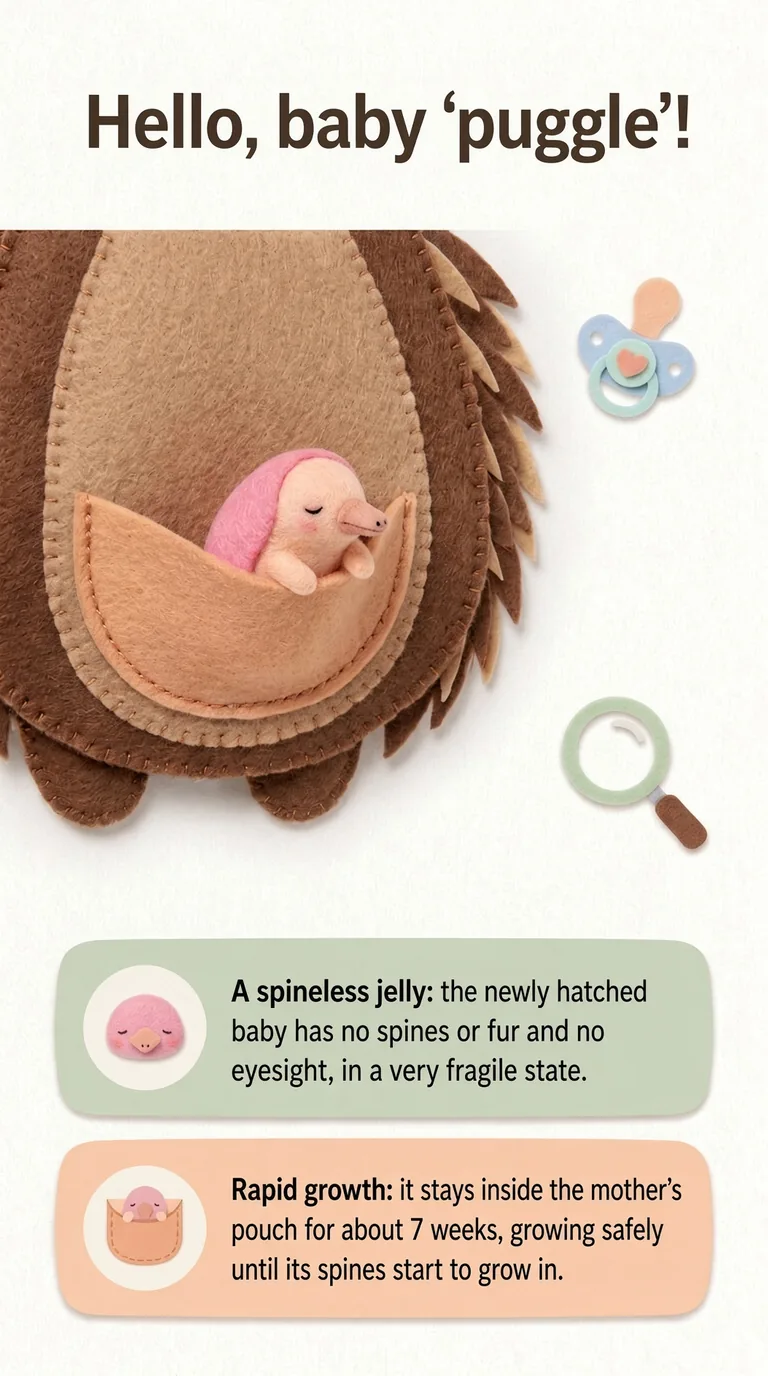
- A spineless jelly — the newly hatched baby has no spines or fur and no eyesight, in a very fragile state.
- Rapid growth — it stays inside the mother's pouch for about 7 weeks, growing safely until its spines start to grow in.
Special nursing without nipples
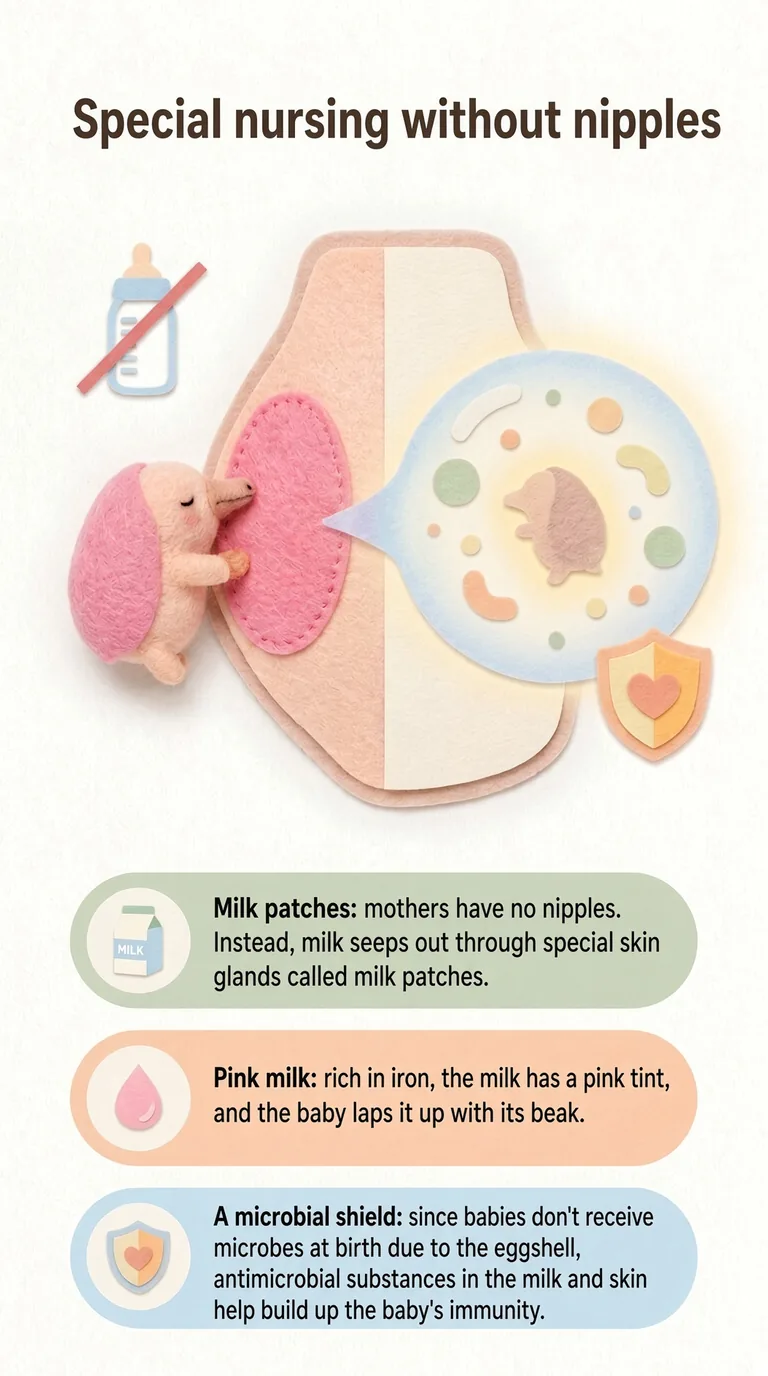
- Milk patches — mothers have no nipples. Instead, milk seeps out through special skin glands called milk patches.
- Pink milk — rich in iron, the milk has a pink tint, and the baby laps it up with its beak.
- A microbial shield — since babies don't receive microbes at birth due to the eggshell, antimicrobial substances in the milk and skin help build up the baby's immunity.
Comparing relatives: short-beaked vs long-beaked
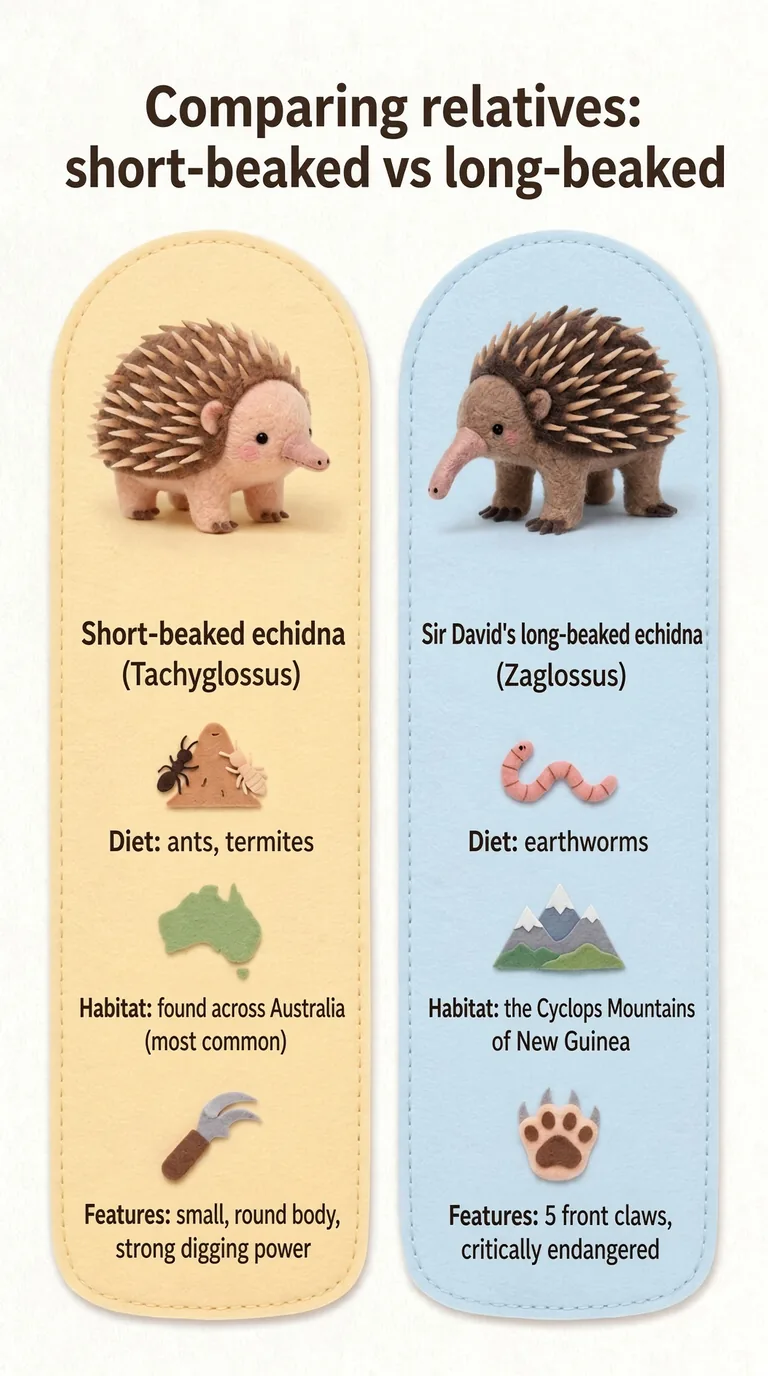
- Short-beaked echidna (Tachyglossus)
- Diet — ants, termites
- Habitat — found across Australia (most common)
- Features — small, round body, strong digging power
- Sir David's long-beaked echidna (Zaglossus)
- Diet — earthworms
- Habitat — the Cyclops Mountains of New Guinea
- Features — 5 front claws, critically endangered
Slow but tough vitality
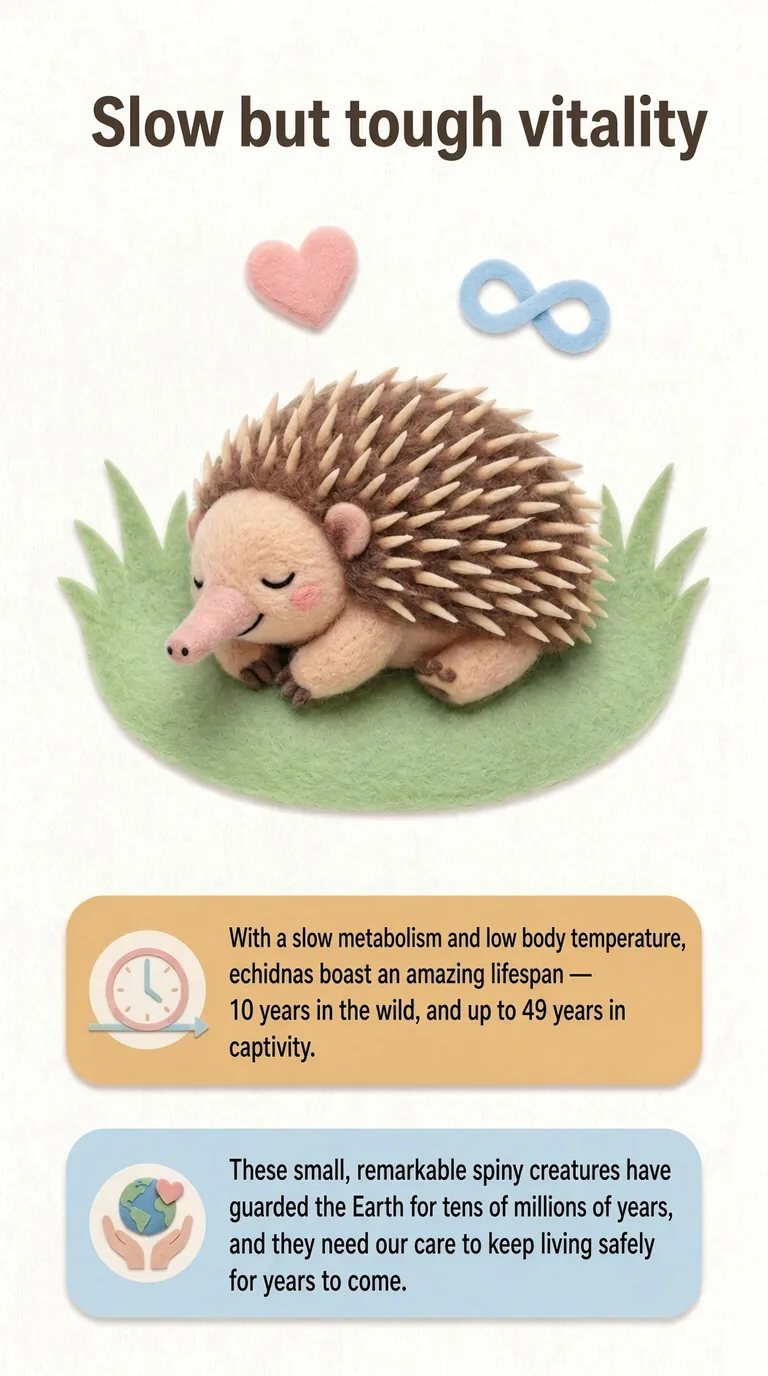
- With a slow metabolism and low body temperature, echidnas boast an amazing lifespan — 10 years in the wild, and up to 49 years in captivity.
- These small, remarkable spiny creatures have guarded the Earth for tens of millions of years, and they need our care to keep living safely for years to come.