Frilled Lizard
Oceania
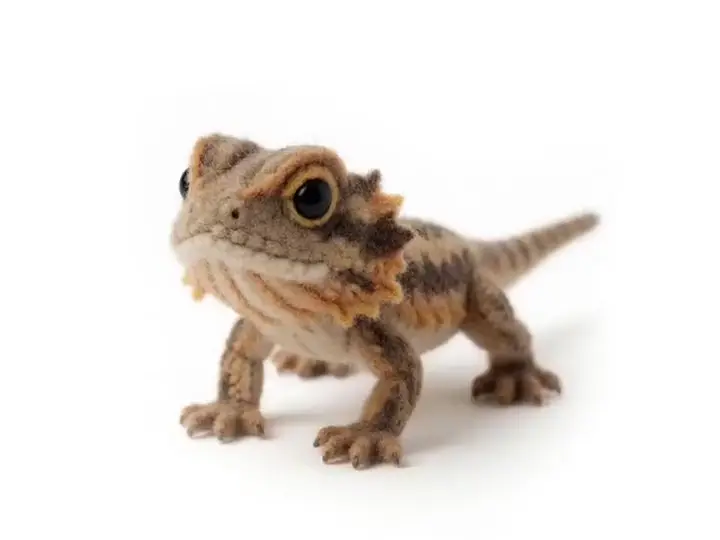
The frilled lizard is an unusual lizard with a large, folded frill around its neck. When it's startled, it opens the frill like an umbrella to look big and scary. If that doesn't work, it stands up on its back legs and runs away!
Quick facts
- Habitat
- It lives in the dry forests of northern Australia and New Guinea.
- Diet
- It eats insects, spiders, and small lizards.
- Size and weight
- Length 70–90cm, including the tail.
- Lifespan
- About 10 years
- Conservation status
- Least Concern
- Fun facts
- When it's scared, it runs away on two legs!
Its frill can open up to 30cm wide, like an umbrella.
Learn more
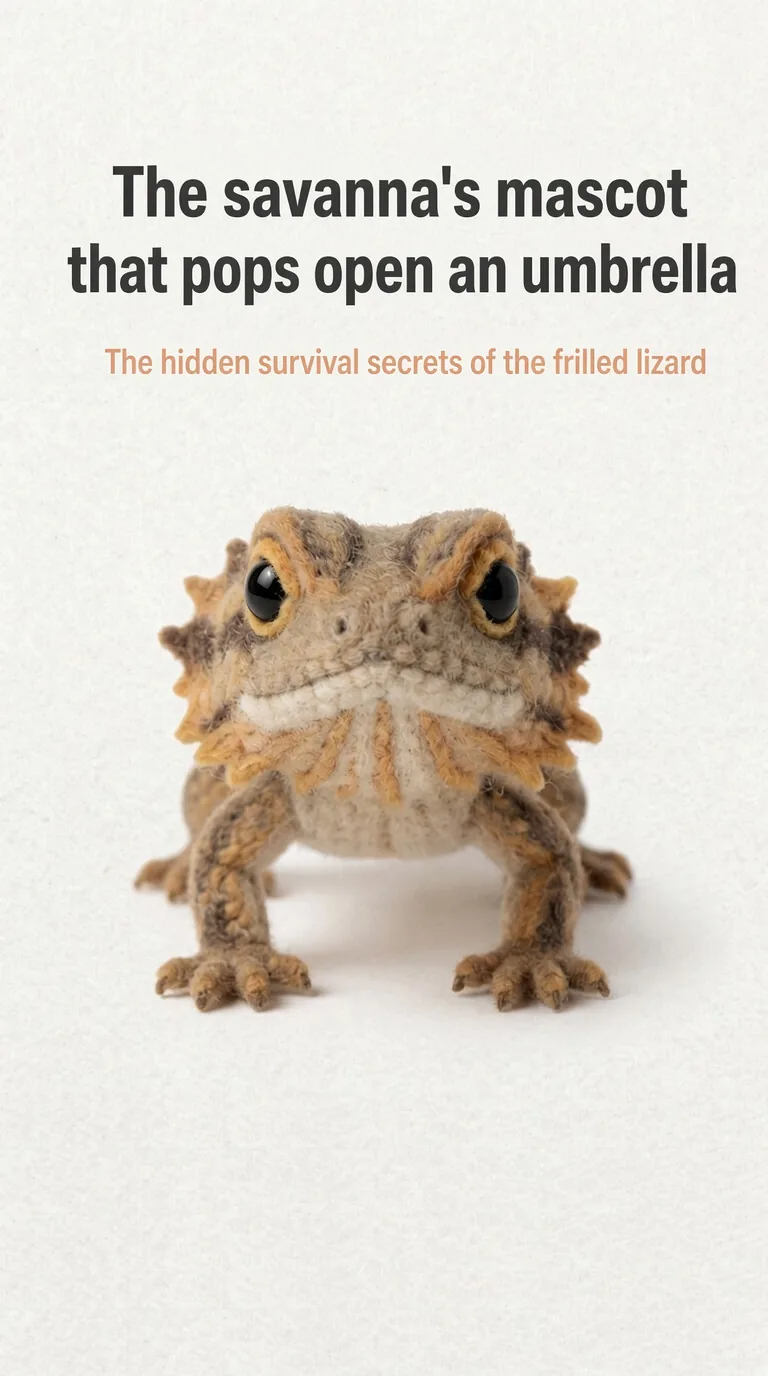
The savanna's mascot that pops open an umbrella
The hidden survival secrets of the frilled lizard
Frilled lizard ID card
A special friend from Australia and New Guinea
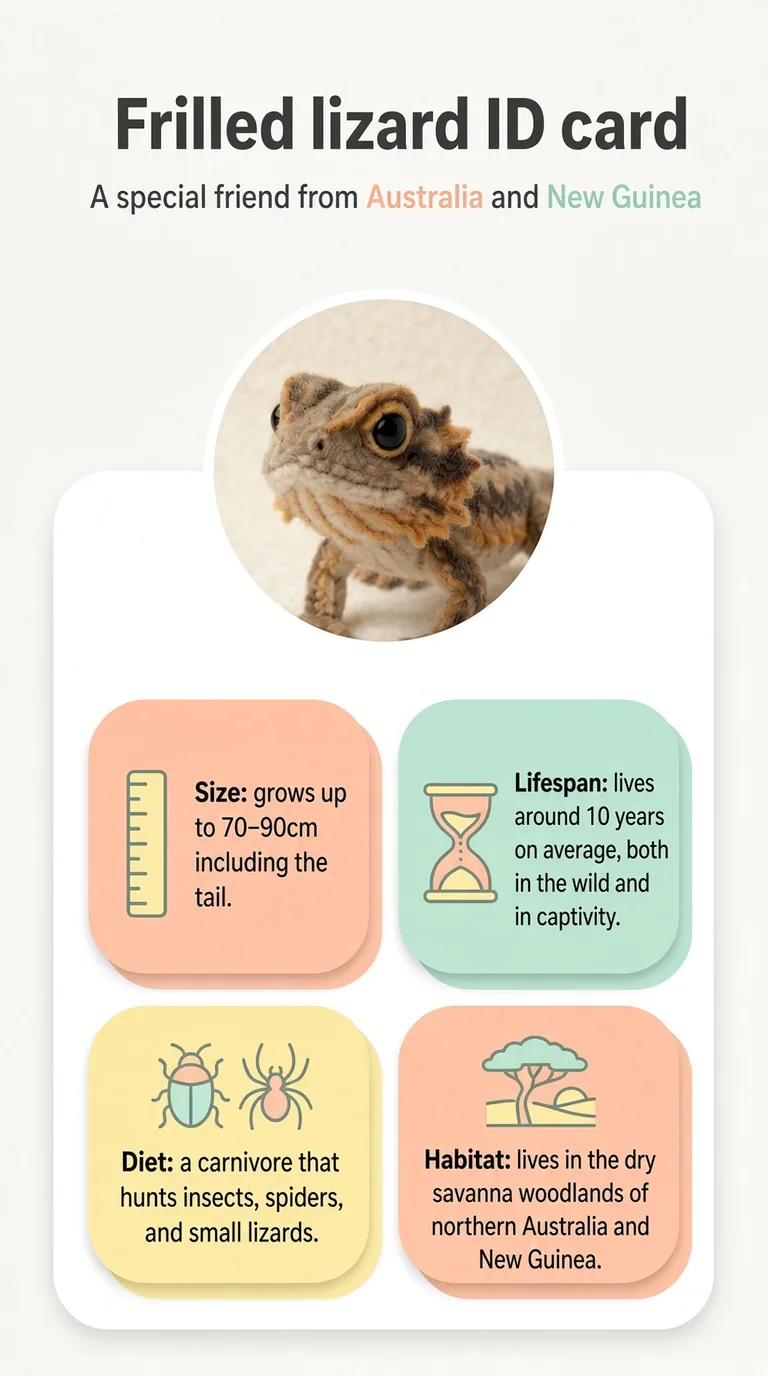
- Size — grows up to 70–90cm including the tail.
- Lifespan — lives around 10 years on average, both in the wild and in captivity.
- Diet — a carnivore that hunts insects, spiders, and small lizards.
- Habitat — lives in the dry savanna woodlands of northern Australia and New Guinea.
The frill is a defensive shield
A magical sequence that startles predators
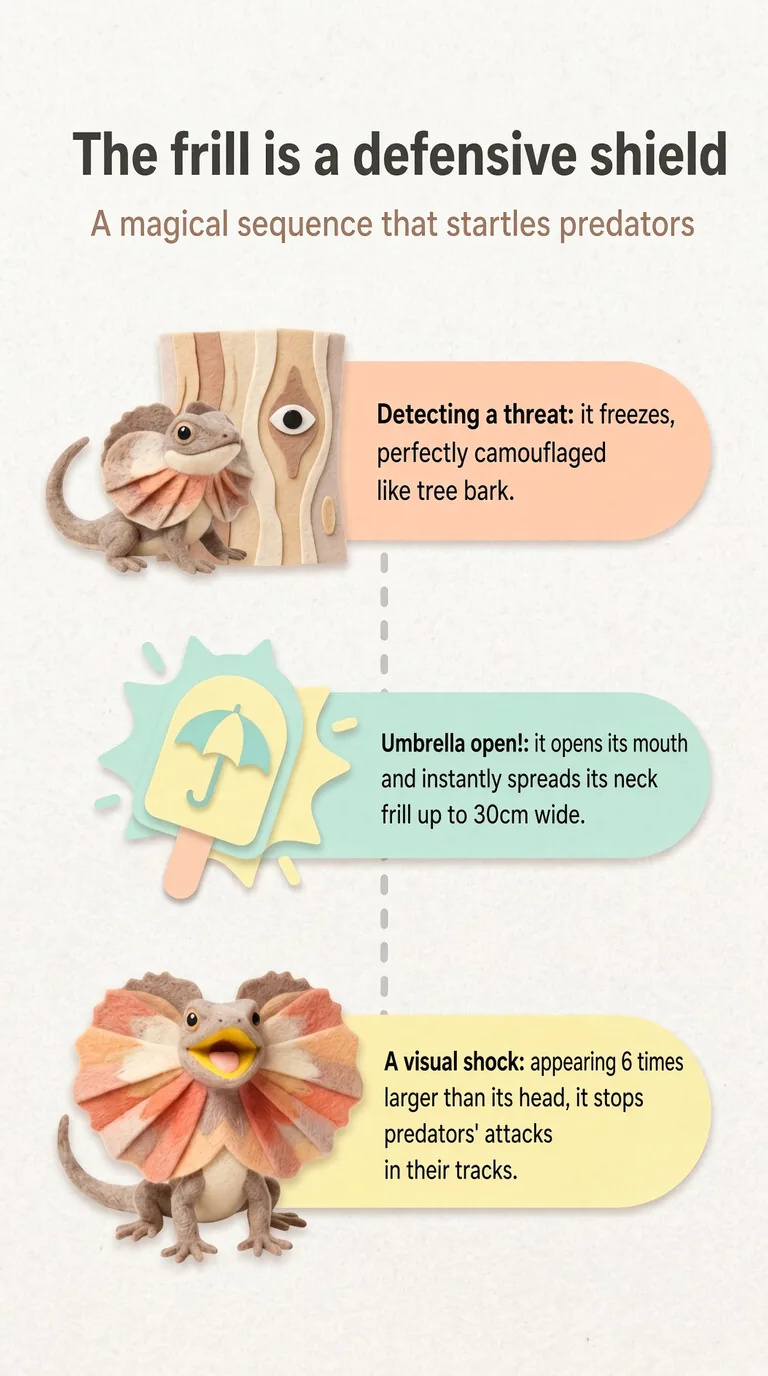
- Detecting a threat — it freezes, perfectly camouflaged like tree bark.
- Umbrella open! — it opens its mouth and instantly spreads its neck frill up to 30cm wide.
- A visual shock — appearing 6 times larger than its head, it stops predators' attacks in their tracks.
A surprising twist — it runs on two legs
It transforms into an upright runner in an emergency
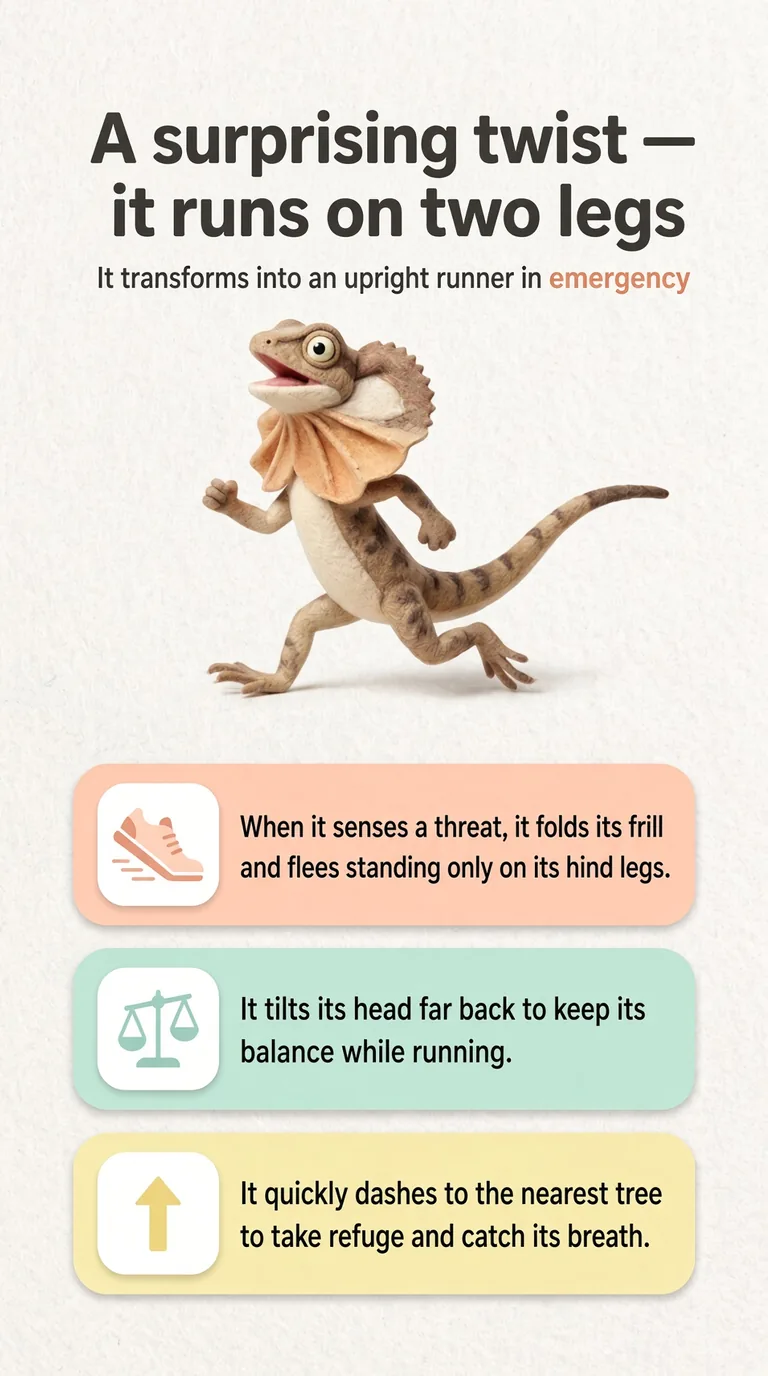
- When it senses a threat, it folds its frill and flees standing only on its hind legs.
- It tilts its head far back to keep its balance while running.
- It quickly dashes to the nearest tree to take refuge and catch its breath.
The more colorful, the stronger fighter
The secret rank hidden in frill color
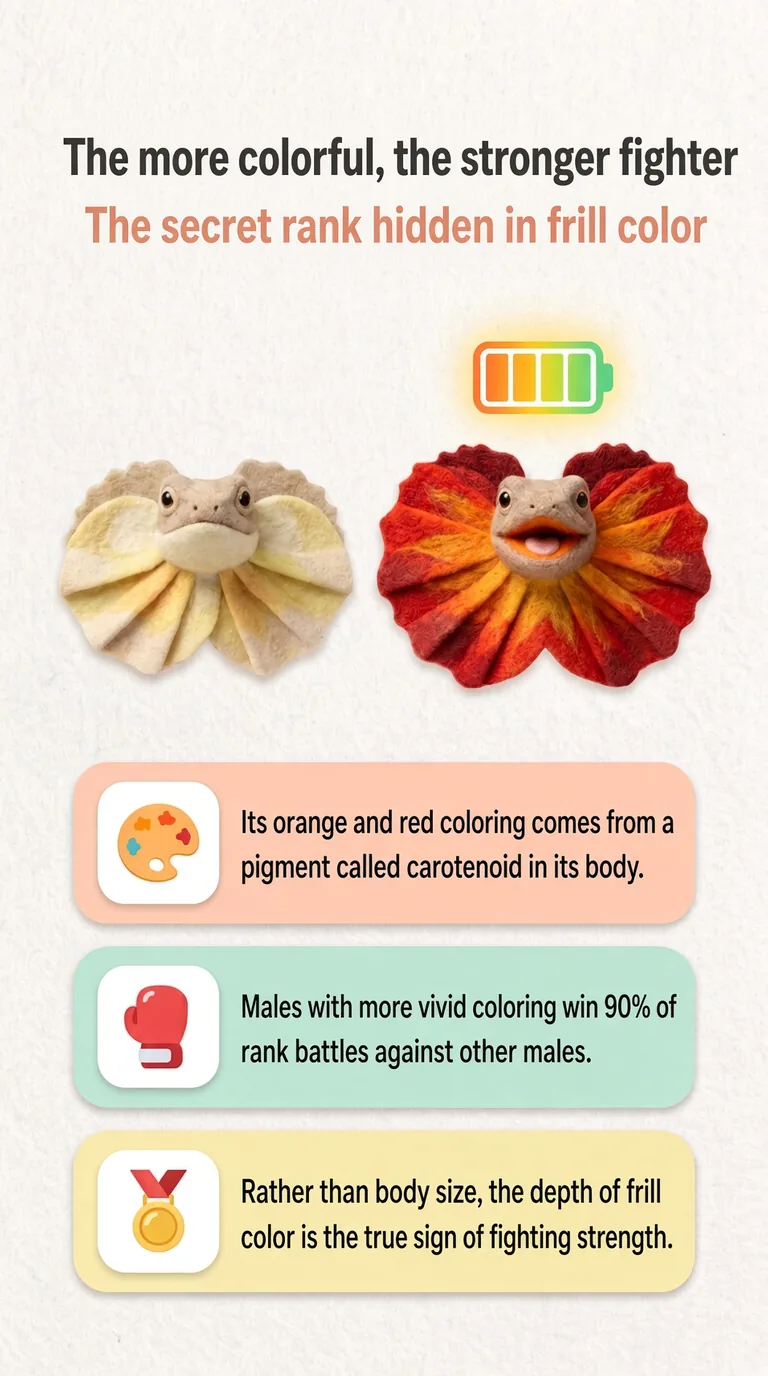
- Its orange and red coloring comes from a pigment called carotenoid in its body.
- Males with more vivid coloring win 90% of rank battles against other males.
- Rather than body size, the depth of frill color is the true sign of fighting strength.
A life of extremes between wet and dry seasons
A smart survival strategy tuned to Australia's seasons
- When it rains, it comes down near the ground, actively hunting insects and beginning to breed.
- When food and water become scarce, it climbs high into the trees to rest and conserve energy.