Maned Wolf
South America
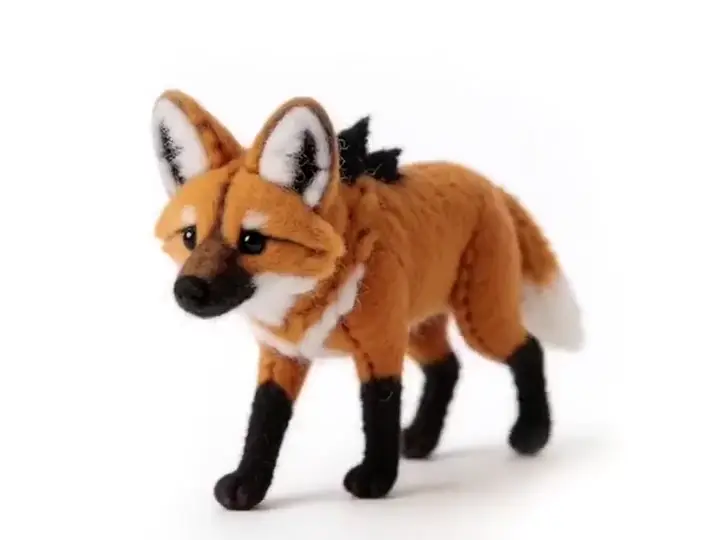
The maned wolf is a one-of-a-kind animal that looks like a fox on very long legs. Its long legs let it see over tall grass. It isn't a wolf or a fox, but a species all its own.
Quick facts
- Habitat
- It lives on the tall-grass plains of South America.
- Diet
- It's an omnivore that eats fruit, small animals, and insects.
- Size and weight
- Height 90cm, weight 20–30kg.
- Lifespan
- 12–15 years
- Conservation status
- Near Threatened
- Fun facts
- Its pee has a strong smell, a lot like a skunk's!
Its favorite food is a fruit called the "wolf apple."
Learn more
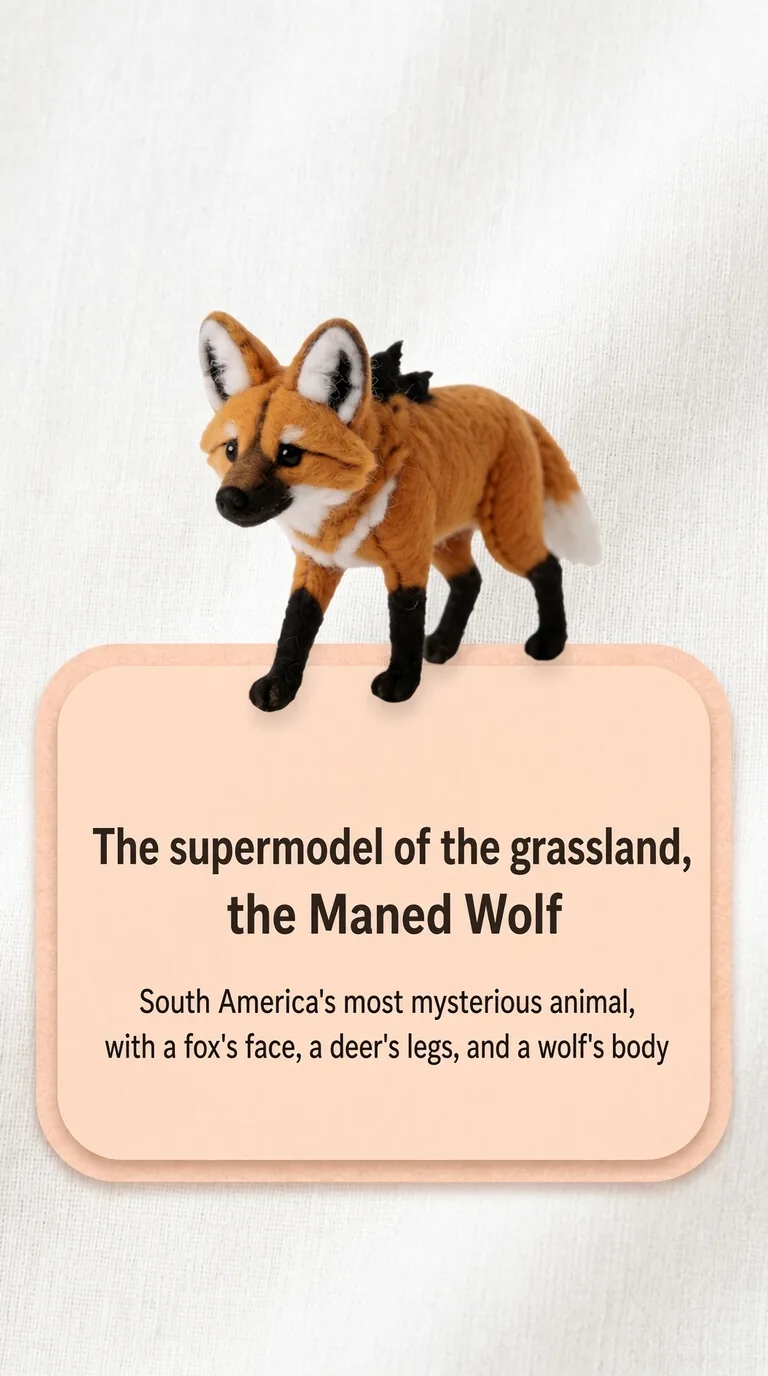
The supermodel of the grassland, the Maned Wolf
South America's most mysterious animal, with a fox's face, a deer's legs, and a wolf's body
Not a wolf, and not a fox either
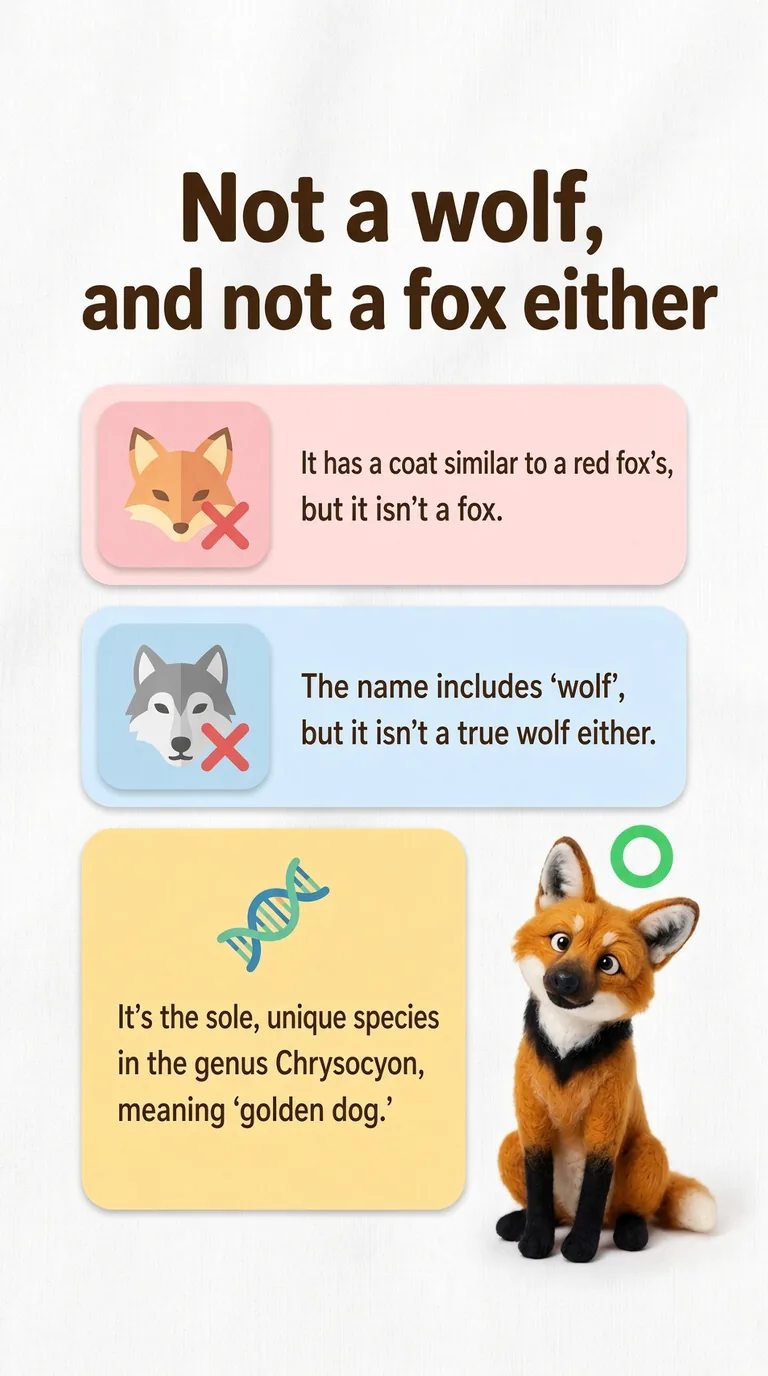
- It has a coat similar to a red fox's, but it isn't a fox.
- The name includes "wolf," but it isn't a true wolf either.
It's the sole, unique species in the genus Chrysocyon, meaning "golden dog."
Perfectly evolved for tall grasslands
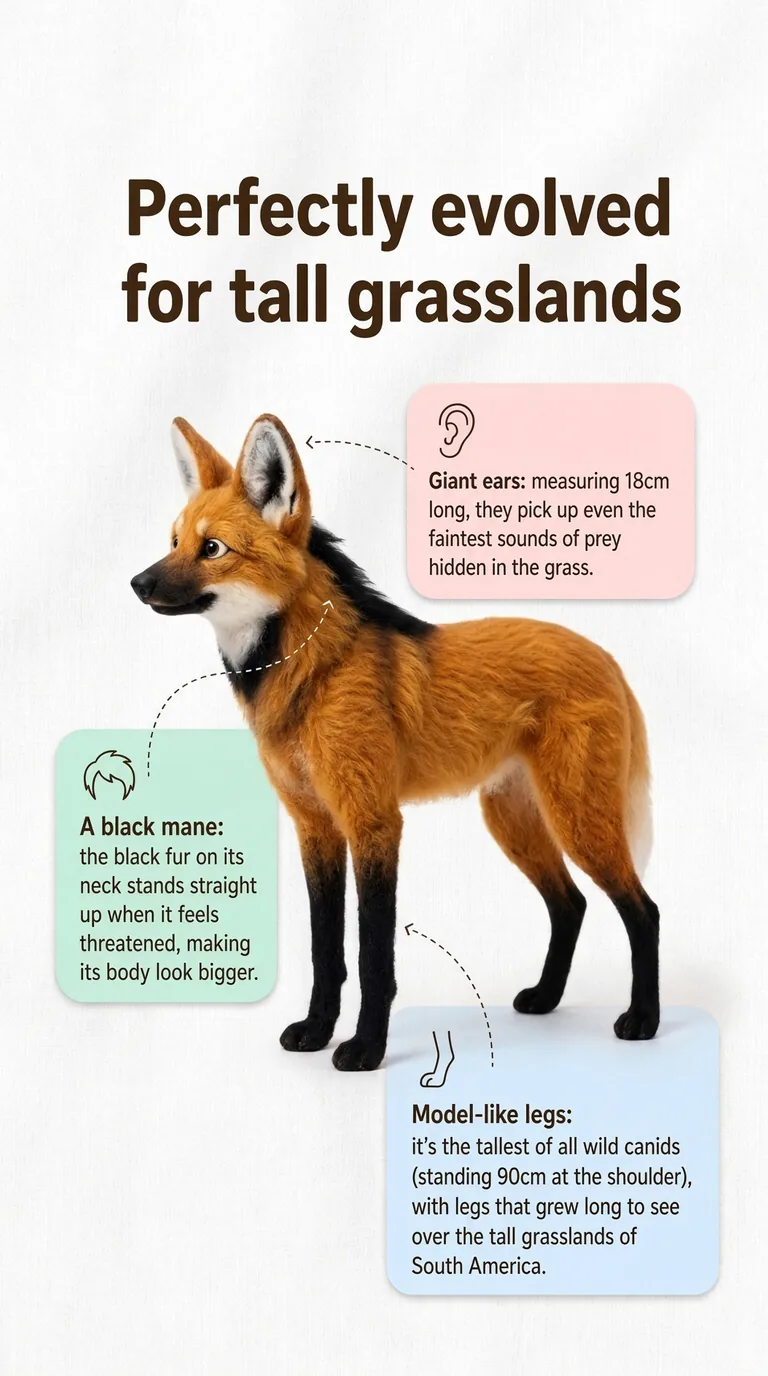
- Giant ears — measuring 18cm long, they pick up even the faintest sounds of prey hidden in the grass.
- A black mane — the black fur on its neck stands straight up when it feels threatened, making its body look bigger.
- Model-like legs — it's the tallest of all wild canids (standing 90cm at the shoulder), with legs that grew long to see over the tall grasslands of South America.
A carnivore that loves veggies
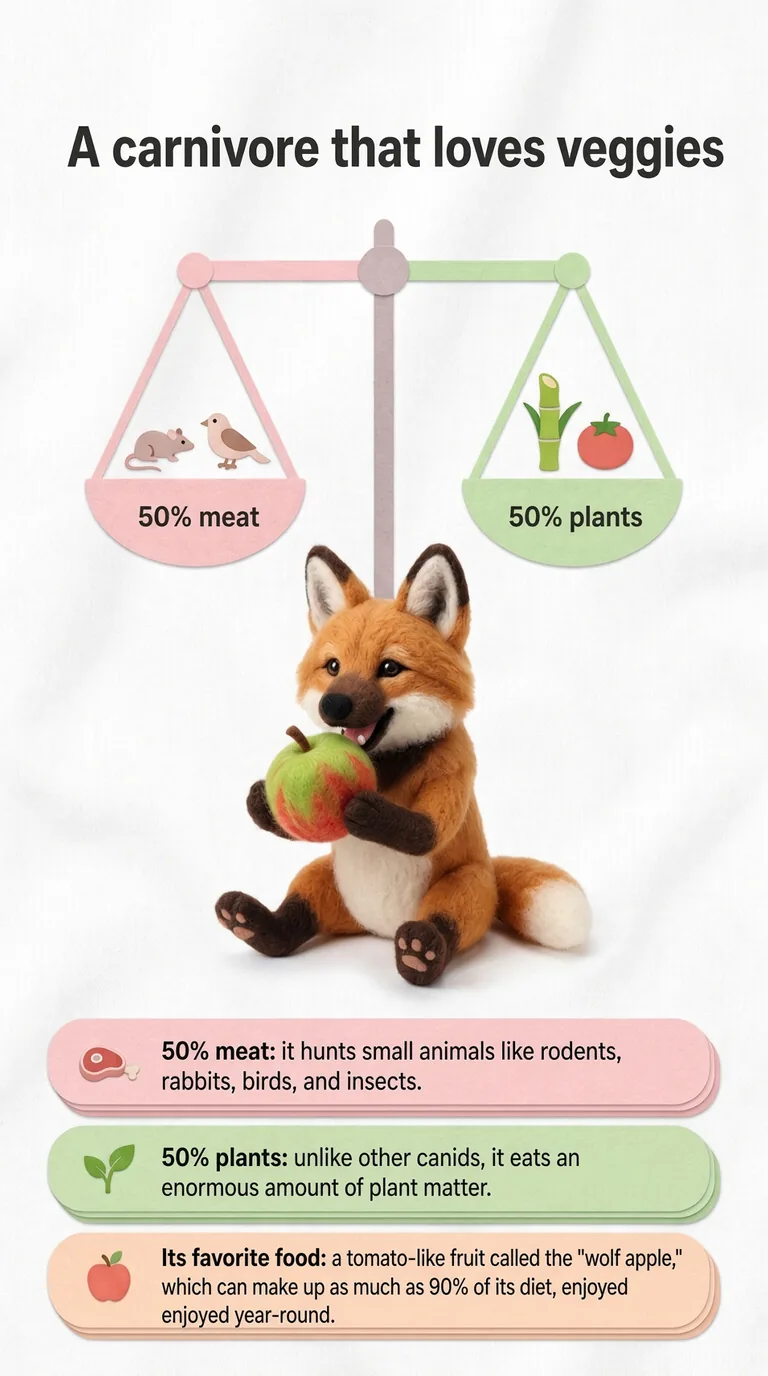
50% meat, 50% plants
- 50% meat — it hunts small animals like rodents, rabbits, birds, and insects.
- 50% plants — unlike other canids, it eats an enormous amount of plant matter.
- Its favorite food — a tomato-like fruit called the "wolf apple," which can make up as much as 90% of its diet, enjoyed year-round.
A three-way symbiotic relationship that tends the grassland
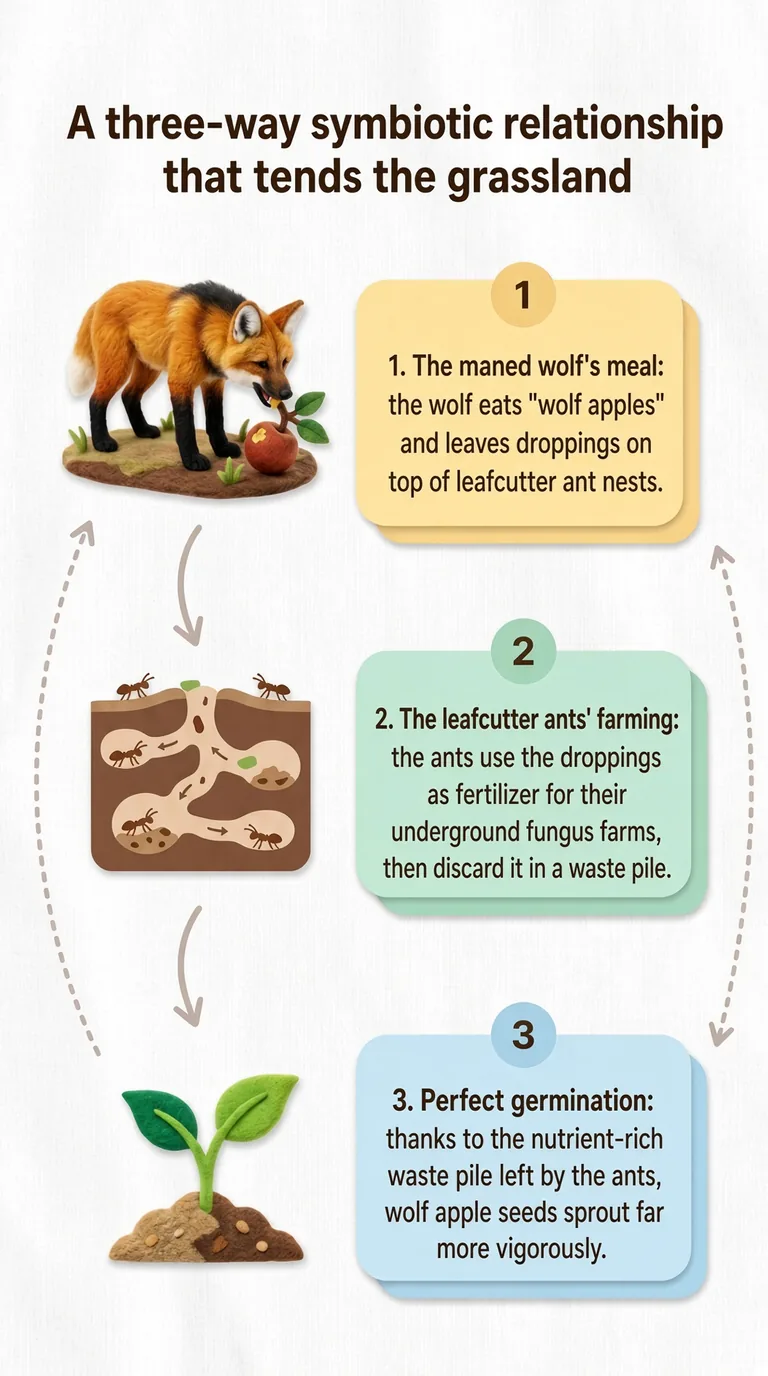
- The maned wolf's meal — the wolf eats "wolf apples" and leaves droppings on top of leafcutter ant nests.
- The leafcutter ants' farming — the ants use the droppings as fertilizer for their underground fungus farms, then discard it in a waste pile.
- Perfect germination — thanks to the nutrient-rich waste pile left by the ants, wolf apple seeds sprout far more vigorously.
A solitary hunter of twilight
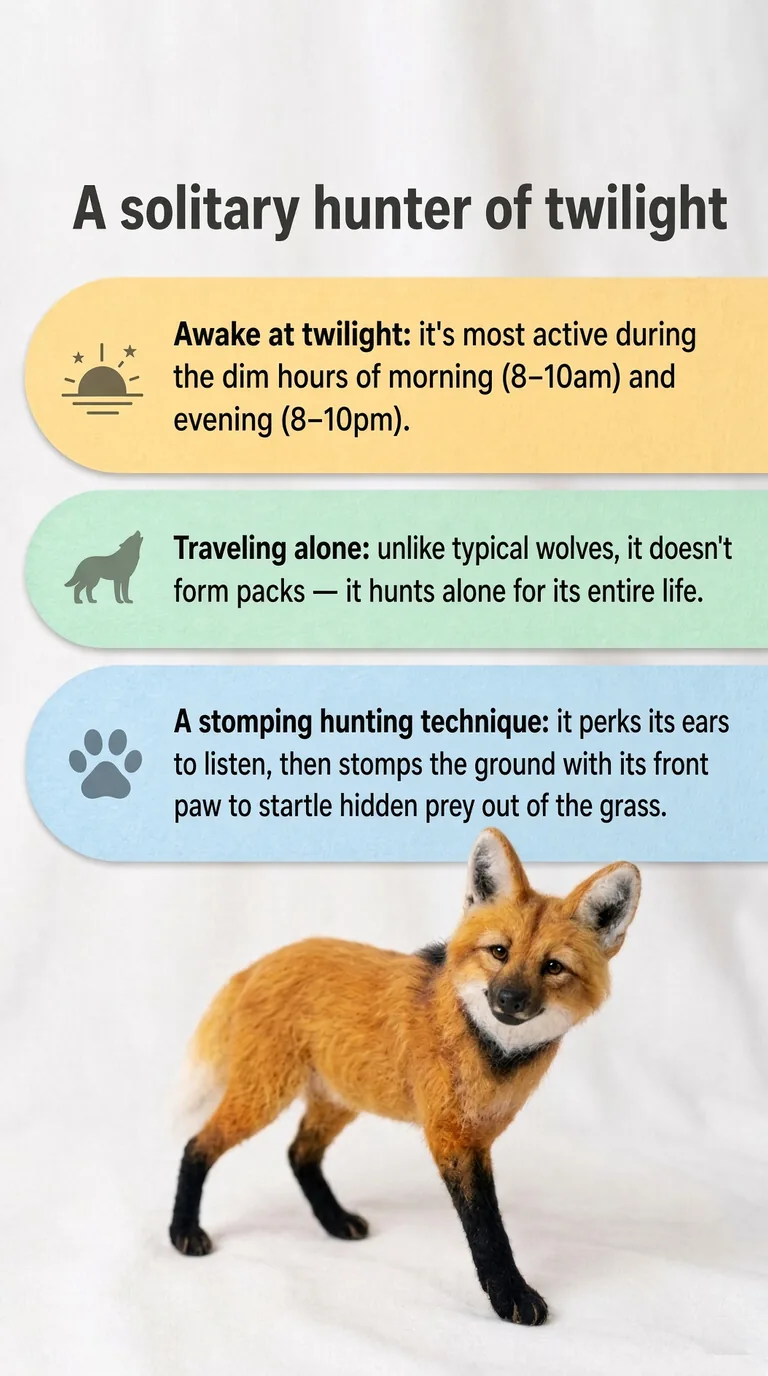
- Awake at twilight — it's most active during the dim hours of morning (8–10am) and evening (8–10pm).
- Traveling alone — unlike typical wolves, it doesn't form packs — it hunts alone for its entire life.
- A stomping hunting technique — it perks its ears to listen, then stomps the ground with its front paw to startle hidden prey out of the grass.
A unique way of communicating
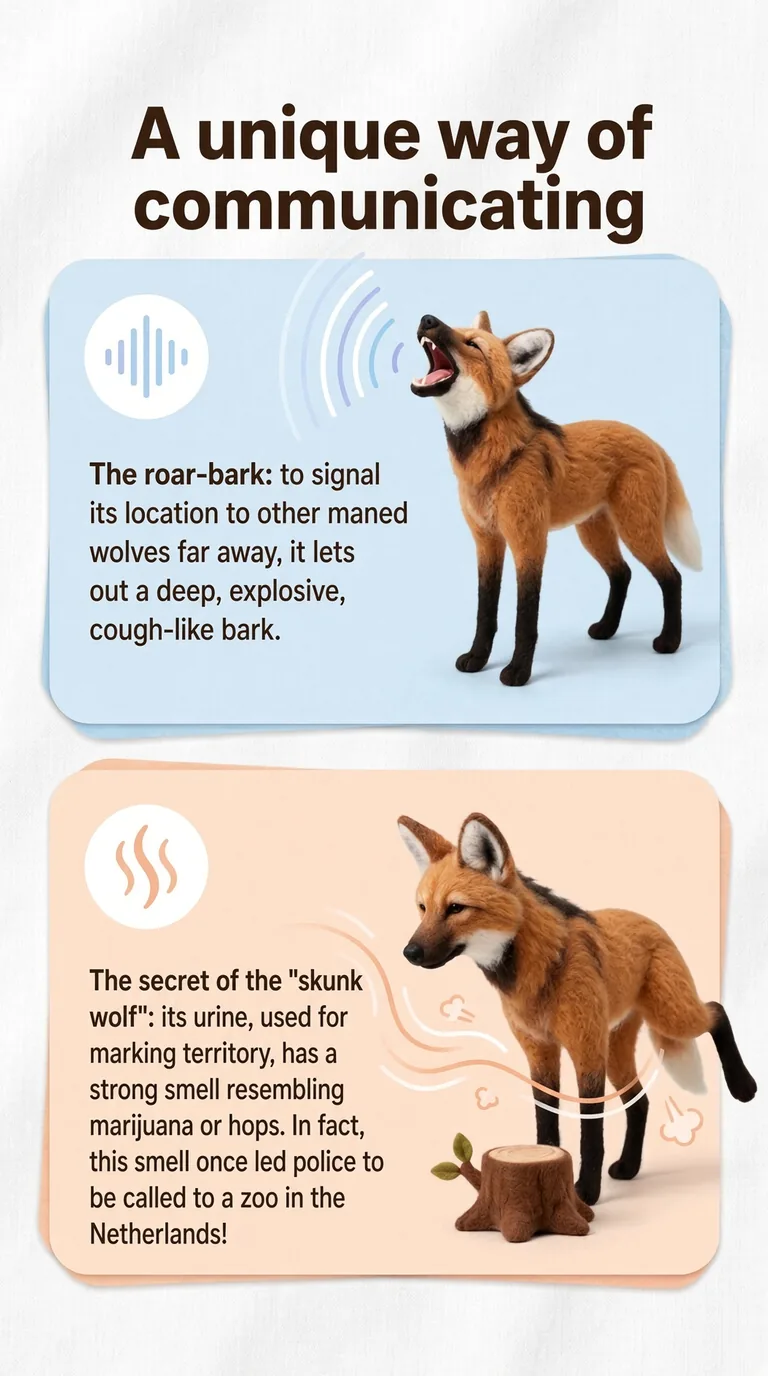
- The roar-bark — to signal its location to other maned wolves far away, it lets out a deep, explosive, cough-like bark.
- The secret of the "skunk wolf" — its urine, used for marking territory, has a strong smell resembling marijuana or hops. In fact, this smell once led police to be called to a zoo in the Netherlands!
The magic of changing fur color
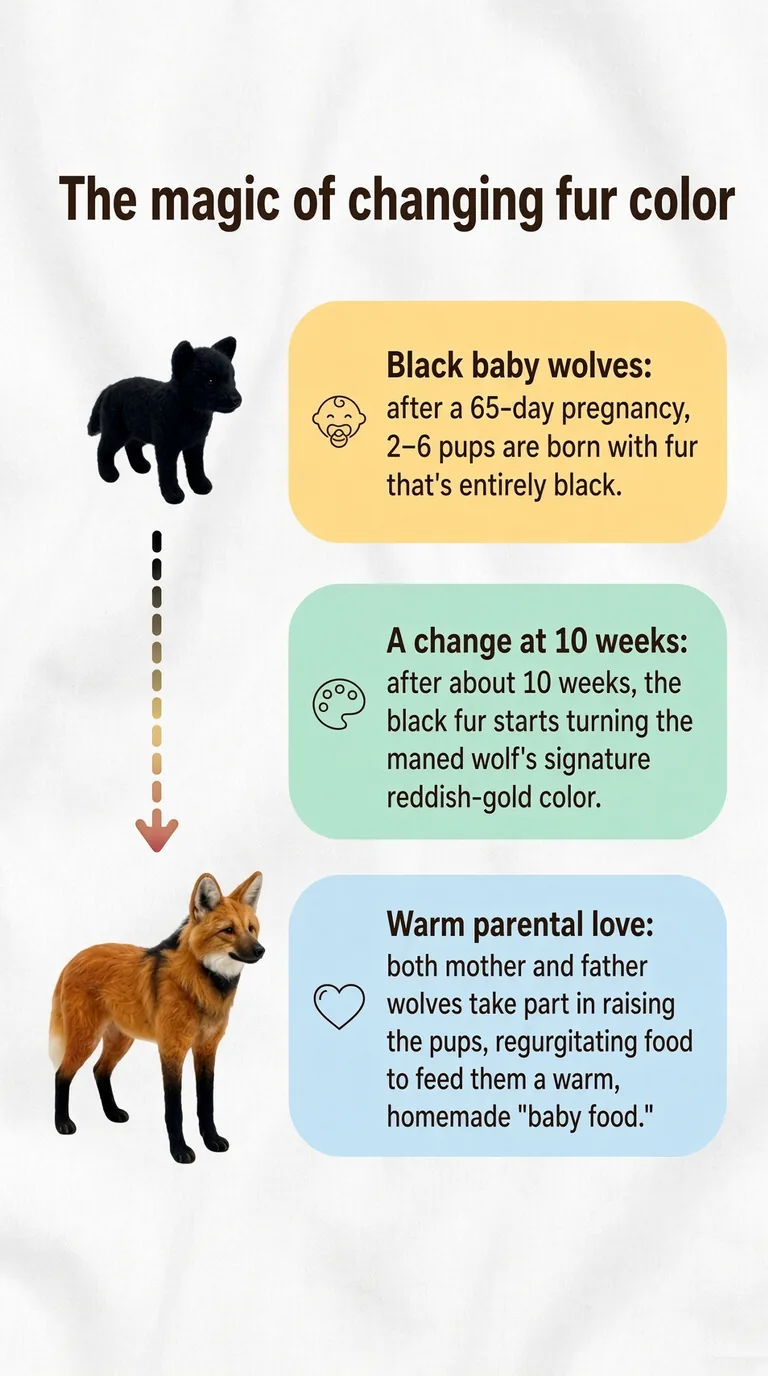
- Black baby wolves — after a 65-day pregnancy, 2–6 pups are born with fur that's entirely black.
- A change at 10 weeks — after about 10 weeks, the black fur starts turning the maned wolf's signature reddish-gold color.
- Warm parental love — both mother and father wolves take part in raising the pups, regurgitating food to feed them a warm, homemade "baby food."