Red Fox
Europe
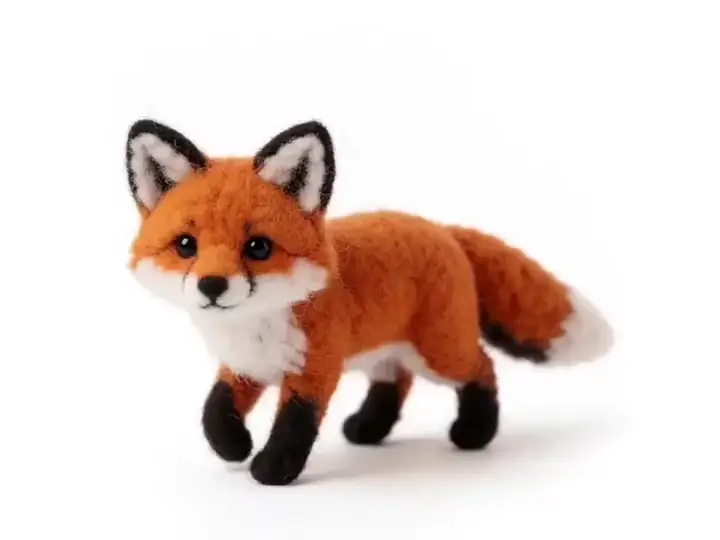
The red fox is famous for being clever. It has handsome red fur, a bushy tail, and pointed ears. It's so adaptable that it can even live in cities, and it's a very skilled hunter.
Quick facts
- Habitat
- It lives in forests, grasslands, and mountains, and near cities, too.
- Diet
- It's an omnivore that eats mice, rabbits, birds, and even fruit.
- Size and weight
- Length 45–90cm, weight 4–8kg.
- Lifespan
- 3–5 years in the wild
- Conservation status
- Least Concern
- Fun facts
- It's thought to use the Earth's magnetic field to find food under the snow!
Like a cat, it hides its claws and sneaks up on its prey.
Learn more
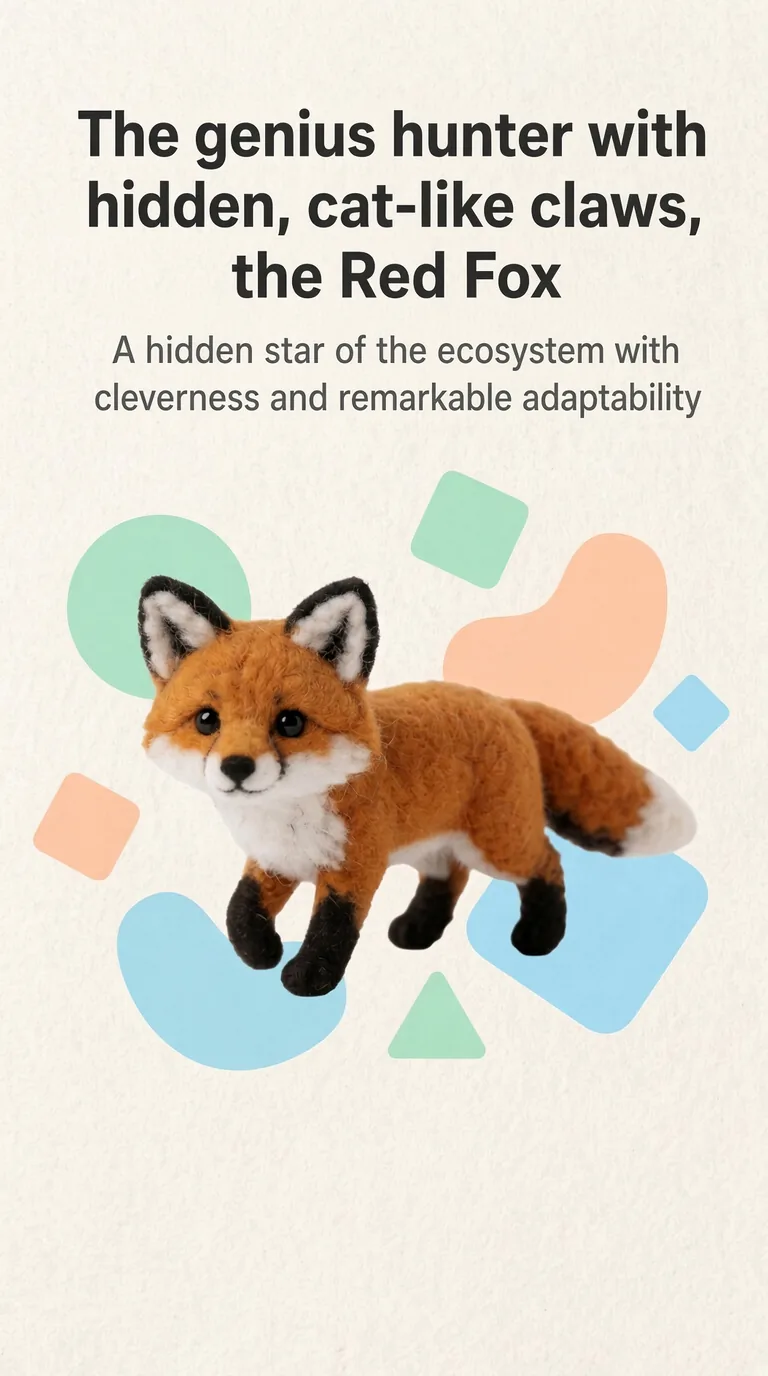
The genius hunter with hidden, cat-like claws, the Red Fox
A hidden star of the ecosystem with cleverness and remarkable adaptability
A striking contrast between red coat and black boots
A fox's appearance defined by vivid color contrast
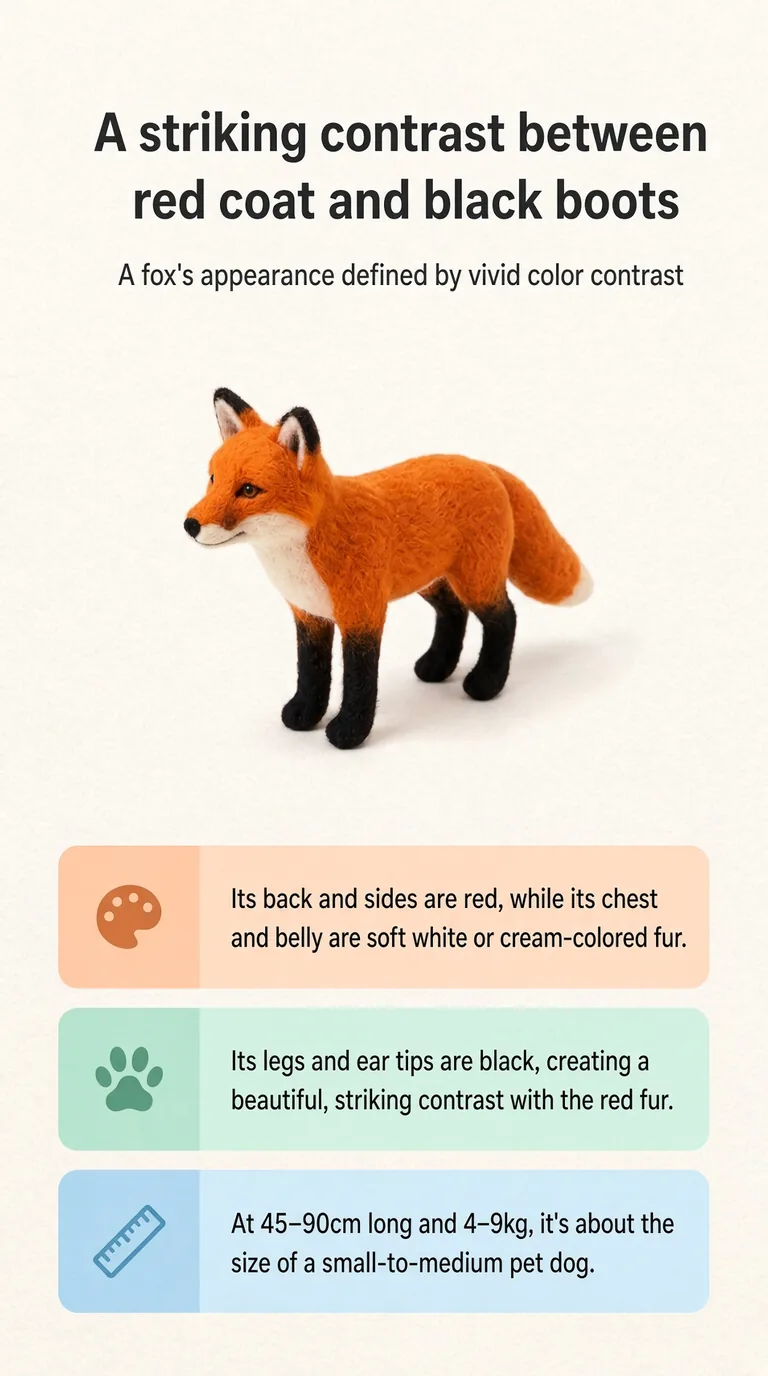
- Its back and sides are red, while its chest and belly are soft white or cream-colored fur.
- Its legs and ear tips are black, creating a beautiful, striking contrast with the red fur.
- At 45–90cm long and 4–9kg, it's about the size of a small-to-medium pet dog.
A super sense that reads Earth's magnetic field
The secret to precisely calculating the position of unseen prey
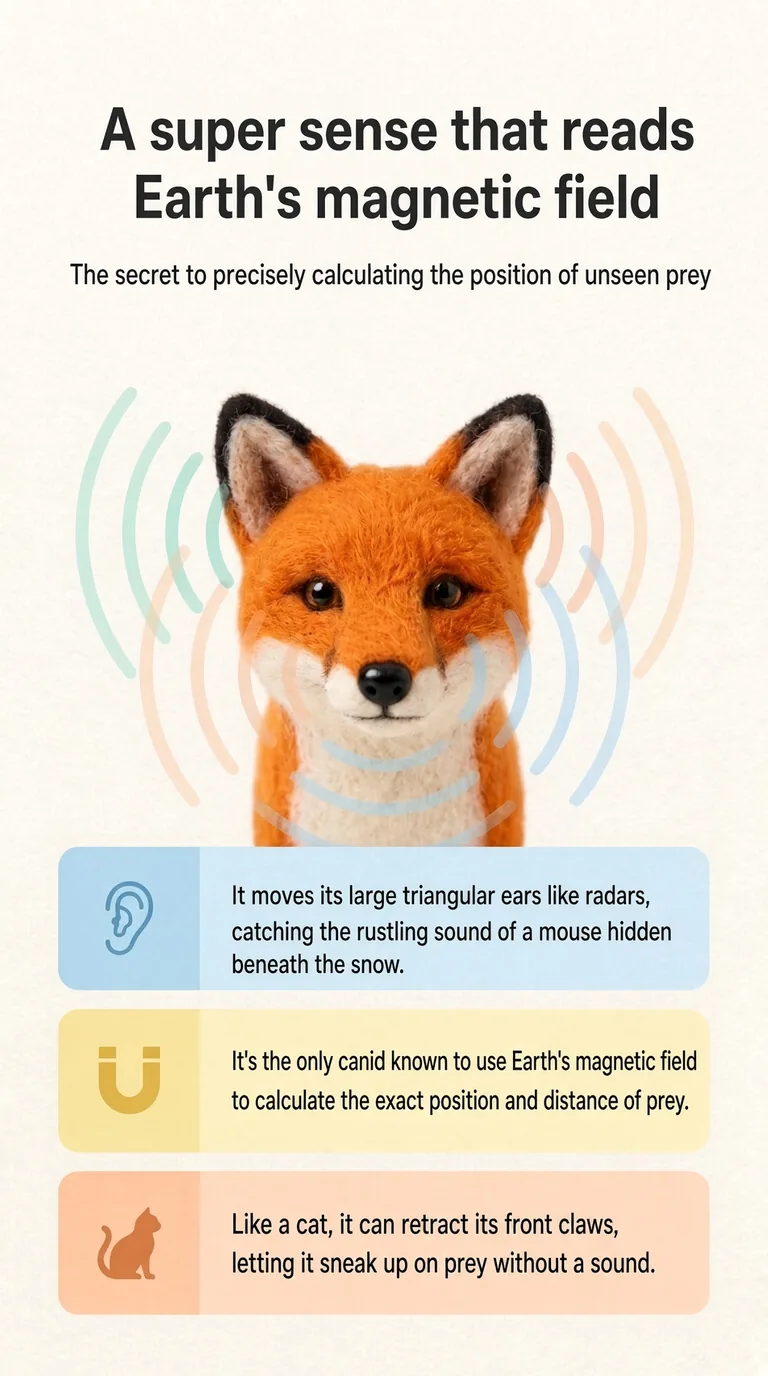
- It moves its large triangular ears like radars, catching the rustling sound of a mouse hidden beneath the snow.
- It's the only canid known to use Earth's magnetic field to calculate the exact position and distance of prey.
- Like a cat, it can retract its front claws, letting it sneak up on prey without a sound.
The signature "fox pounce," hunting by sound alone
A perfect 3-step technique for catching prey hidden in snow or grass
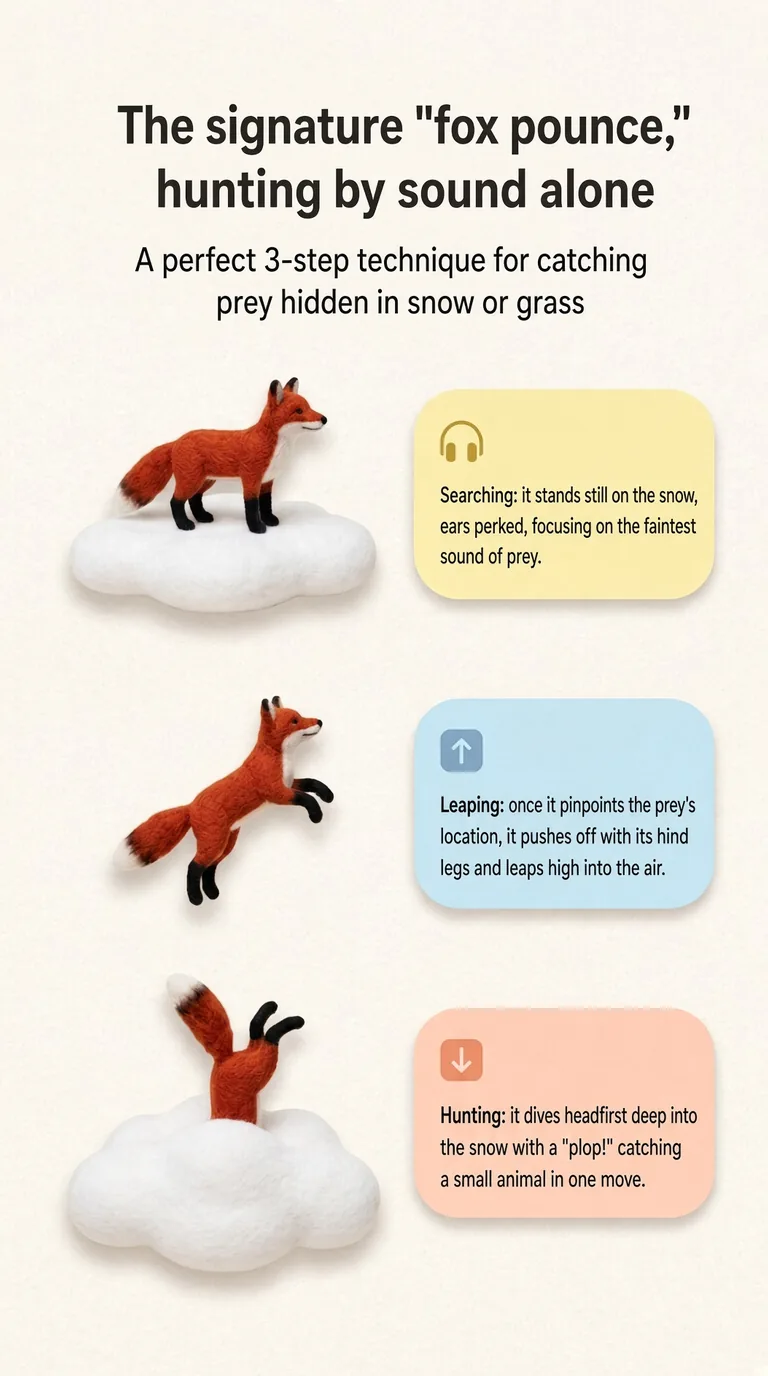
- Searching — it stands still on the snow, ears perked, focusing on the faintest sound of prey.
- Leaping — once it pinpoints the prey's location, it pushes off with its hind legs and leaps high into the air.
- Hunting — it dives headfirst deep into the snow with a "plop!" catching a small animal in one move.
A gourmet who eats anything to boost survival
A smart omnivorous diet and storage strategy, from meat to sweet fruit
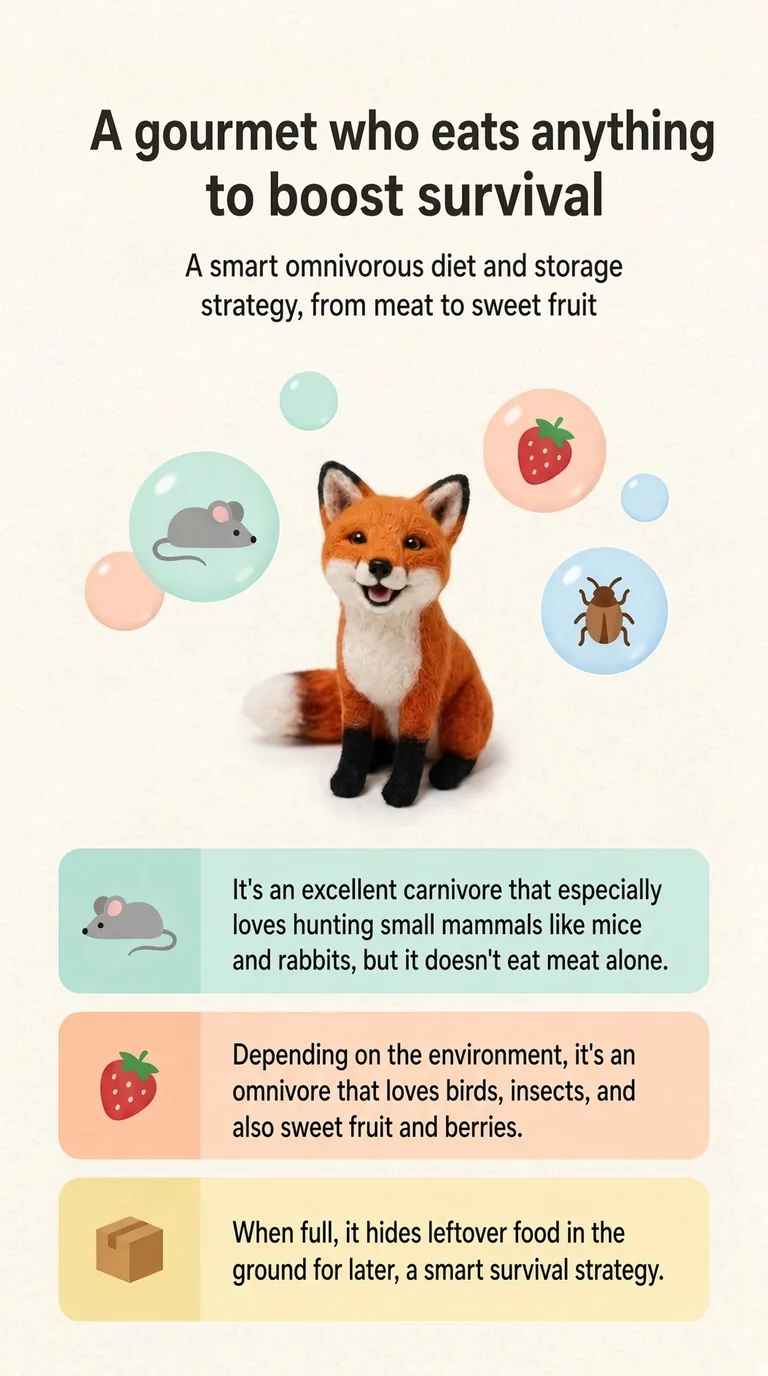
- It's an excellent carnivore that especially loves hunting small mammals like mice and rabbits, but it doesn't eat meat alone.
- Depending on the environment, it's an omnivore that loves birds, insects, and also sweet fruit and berries.
- When full, it hides leftover food in the ground for later, a smart survival strategy.
From body balance to communication, an all-purpose tail
3 key roles of its bushy tail, which makes up half its body length
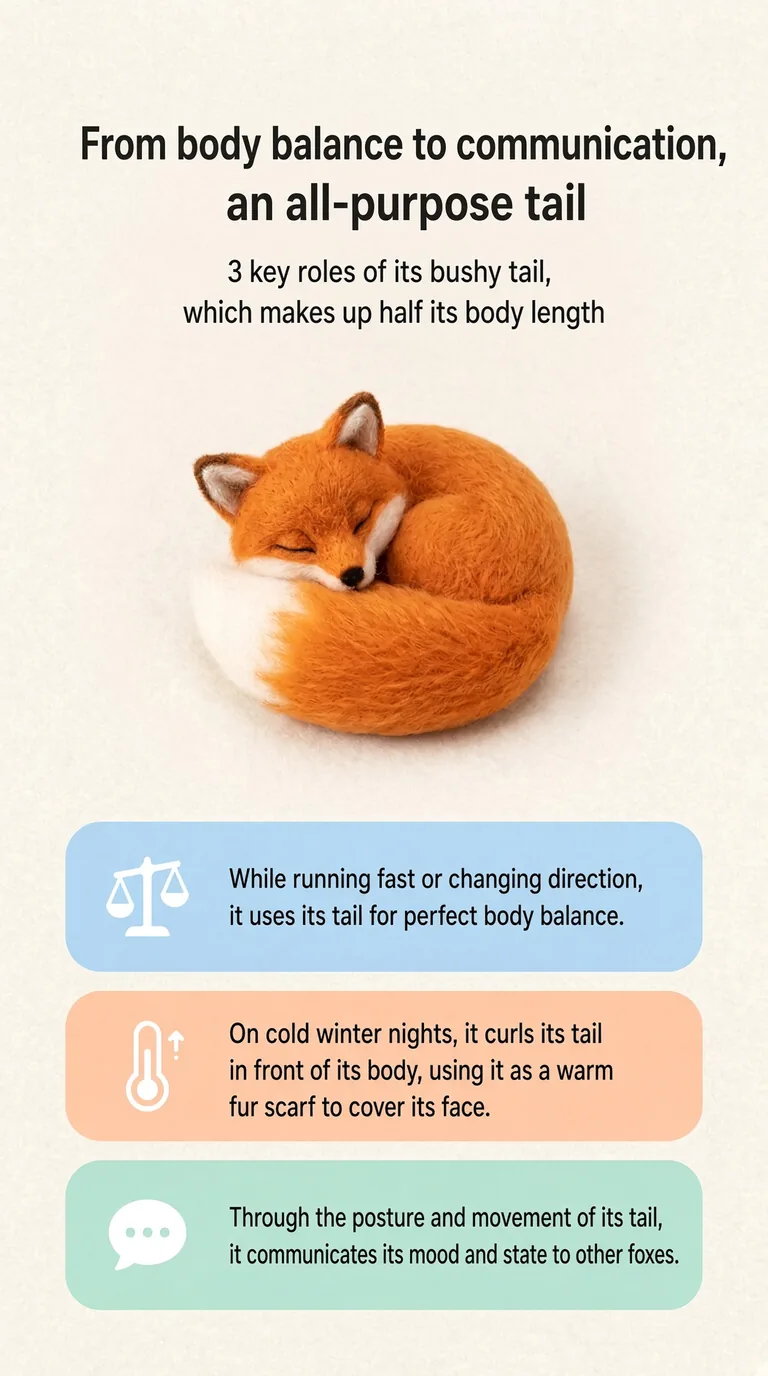
- While running fast or changing direction, it uses its tail for perfect body balance.
- On cold winter nights, it curls its tail in front of its body, using it as a warm fur scarf to cover its face.
- Through the posture and movement of its tail, it communicates its mood and state to other foxes.
From deep forests to city parks, a survival champion
The most widespread mammal in the world, thanks to remarkable adaptability
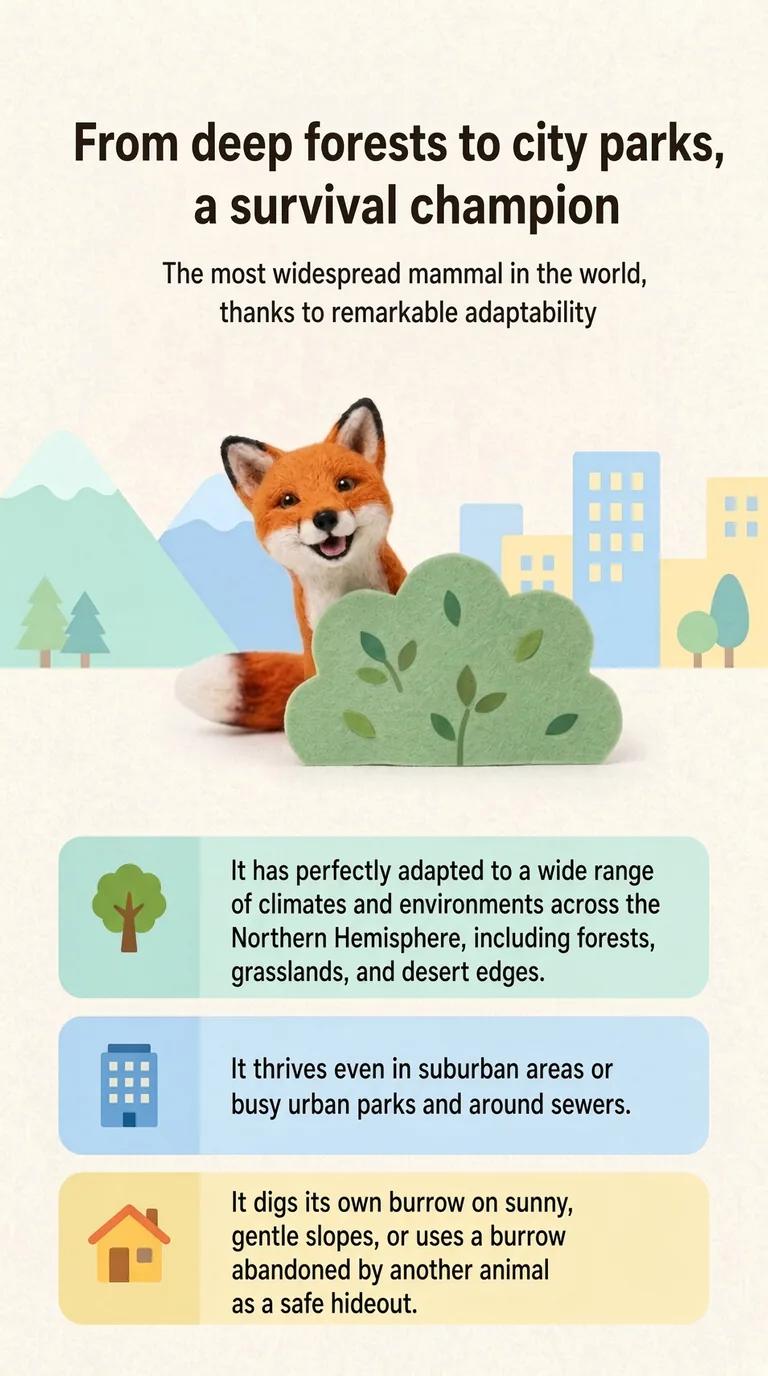
- It has perfectly adapted to a wide range of climates and environments across the Northern Hemisphere, including forests, grasslands, and desert edges.
- It thrives even in suburban areas or busy urban parks and around sewers.
- It digs its own burrow on sunny, gentle slopes, or uses a burrow abandoned by another animal as a safe hideout.
Comparing with its polar cousin, the arctic fox
The widespread red fox vs. the arctic fox, adapted to -80°C polar cold
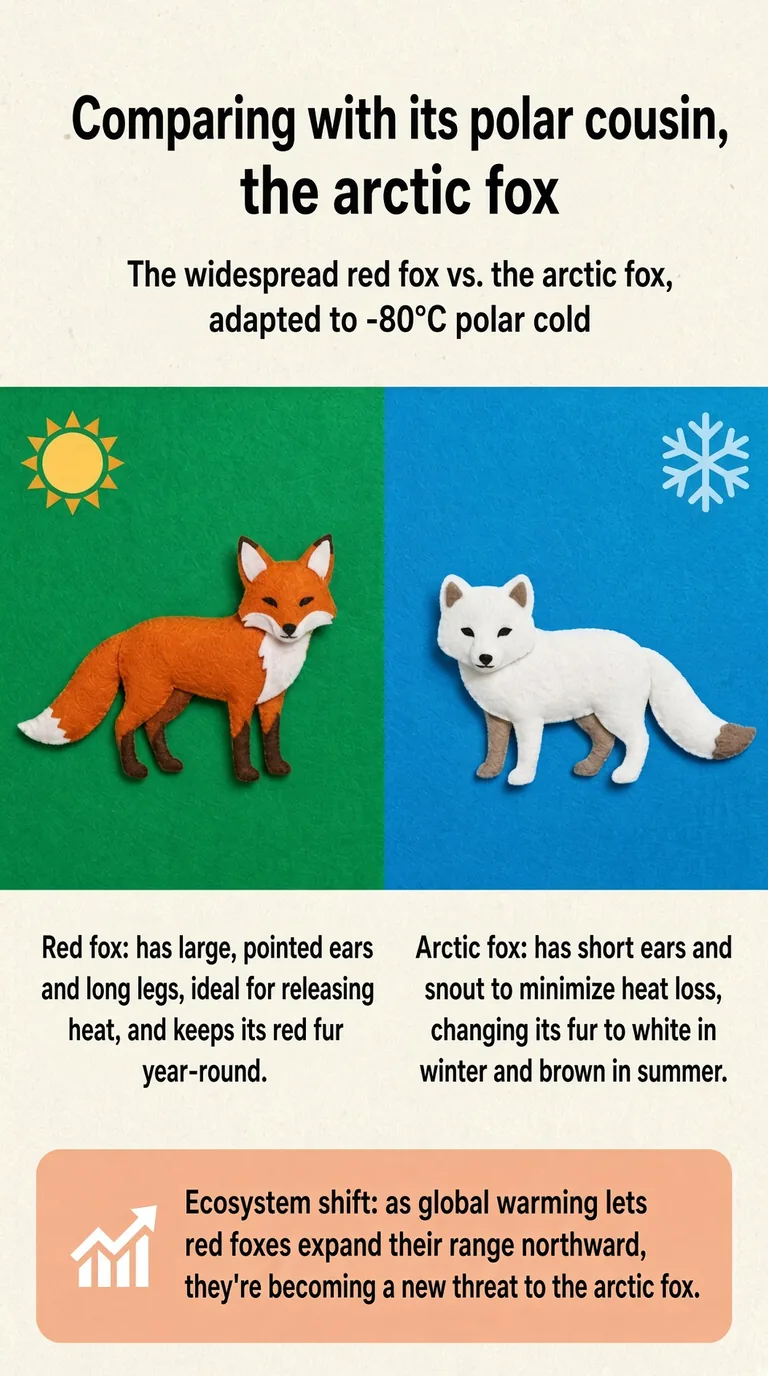
- Red fox — has large, pointed ears and long legs, ideal for releasing heat, and keeps its red fur year-round.
- Arctic fox — has short ears and snout to minimize heat loss, changing its fur to white in winter and brown in summer.
Ecosystem shift: as global warming lets red foxes expand their range northward, they're becoming a new threat to the arctic fox.