Bald Eagle
North America
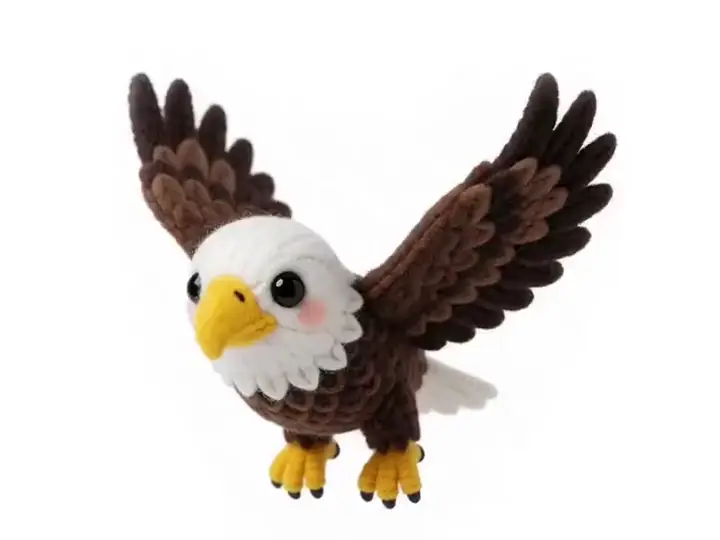
The bald eagle is the national bird of the United States, a bird of prey with a white head and powerful wings. With its amazing eyesight, it spots fish from high in the sky and swoops down to catch them. It fixes up the same nest year after year, making it bigger and bigger.
Quick facts
- Habitat
- It builds its nest in tall trees near lakes, rivers, and coasts.
- Diet
- It mostly hunts fish, and it eats small animals, too.
- Size and weight
- Wingspan 1.8–2.3m, weight 3–6kg.
- Lifespan
- 20–30 years
- Conservation status
- Least Concern
- Fun facts
- Its eyesight is so sharp it can clearly see a fish 1km away!
The biggest bird's nest ever found, a bald eagle's, weighed more than a ton.
Learn more
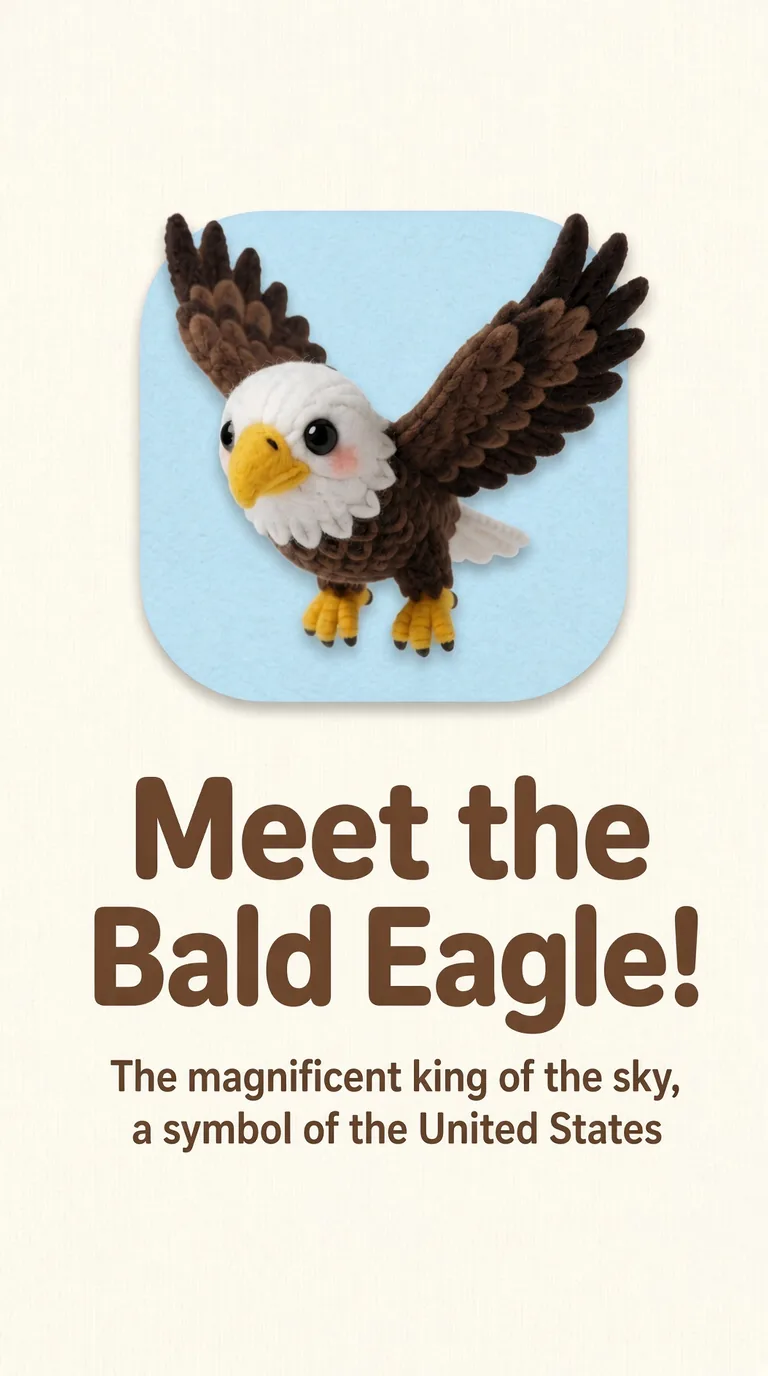
Meet the Bald Eagle!
The magnificent king of the sky, a symbol of the United States
Is it really bald?
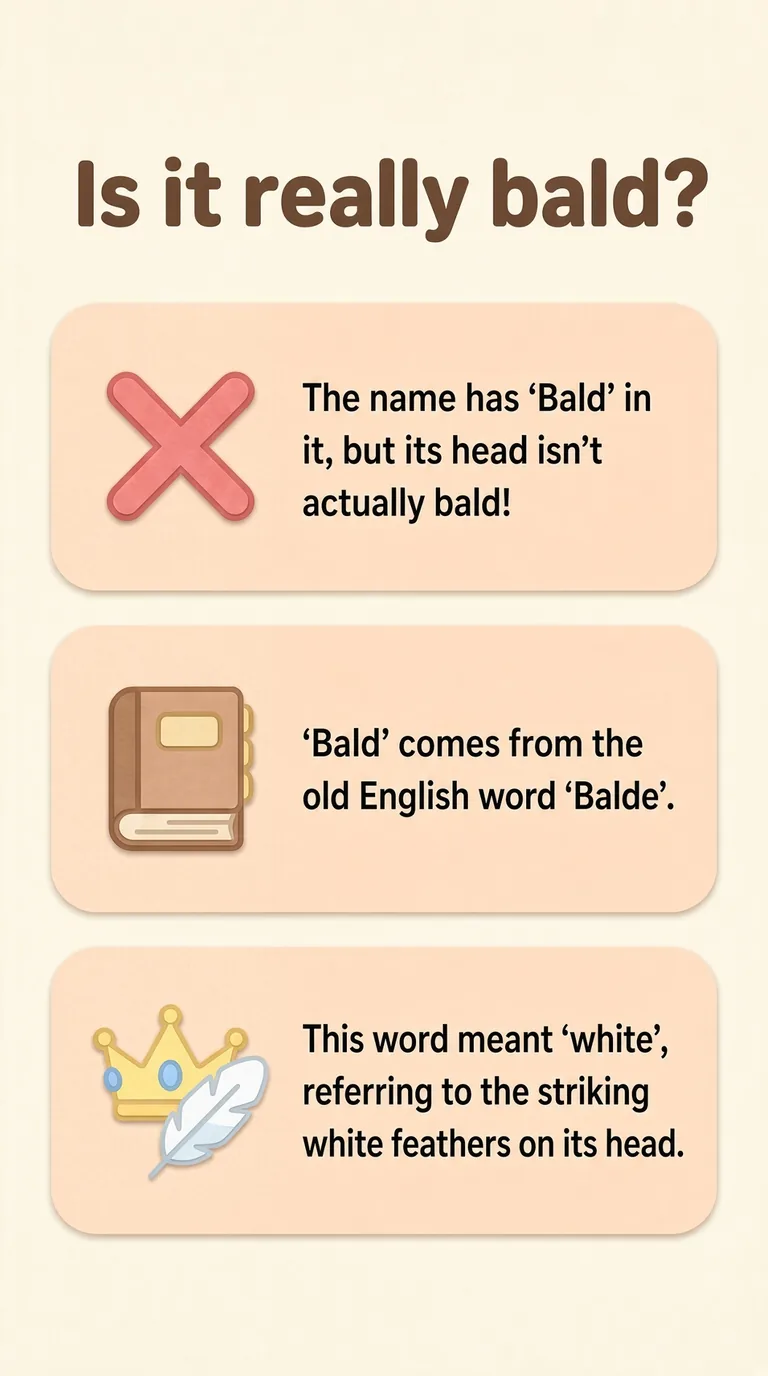
- The name has 'Bald' in it, but its head isn't actually bald!
- 'Bald' comes from the old English word 'Balde'.
- This word meant 'white', referring to the striking white feathers on its head.
Animal superpowers!
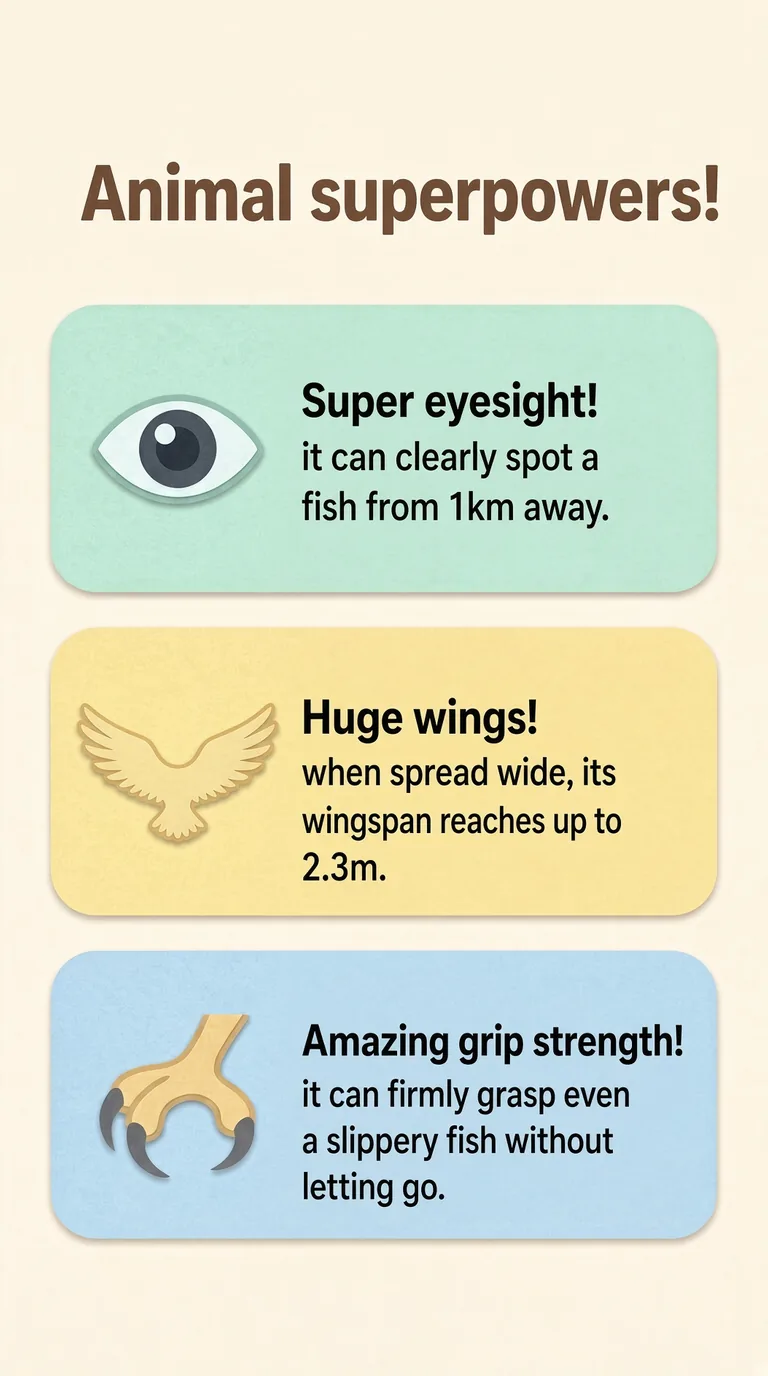
- Super eyesight! — it can clearly spot a fish from 1km away.
- Huge wings! — when spread wide, its wingspan reaches up to 2.3m.
- Amazing grip strength! — it can firmly grasp even a slippery fish without letting go.
What does it eat?
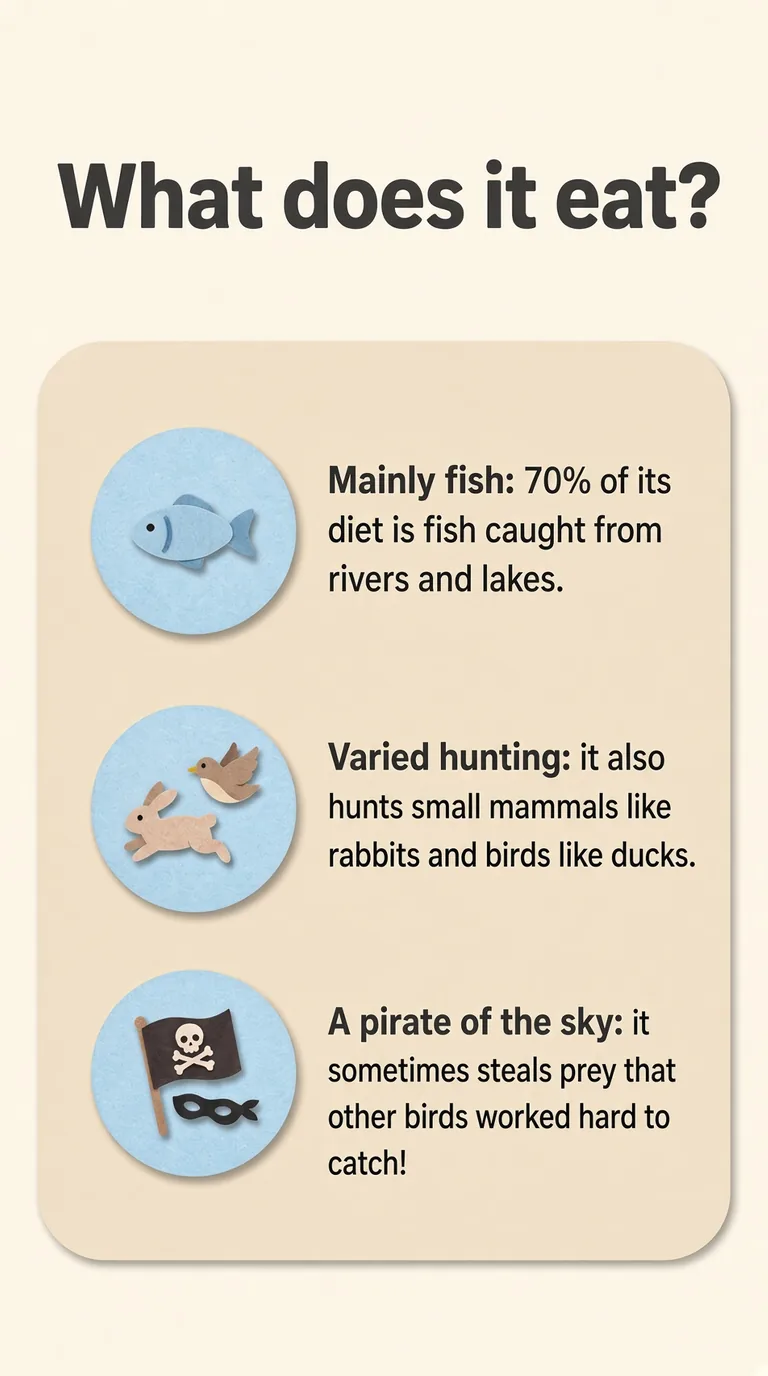
- Mainly fish — 70% of its diet is fish caught from rivers and lakes.
- Varied hunting — it also hunts small mammals like rabbits and birds like ducks.
- A pirate of the sky — it sometimes steals prey that other birds worked hard to catch!
The biggest nest in the world
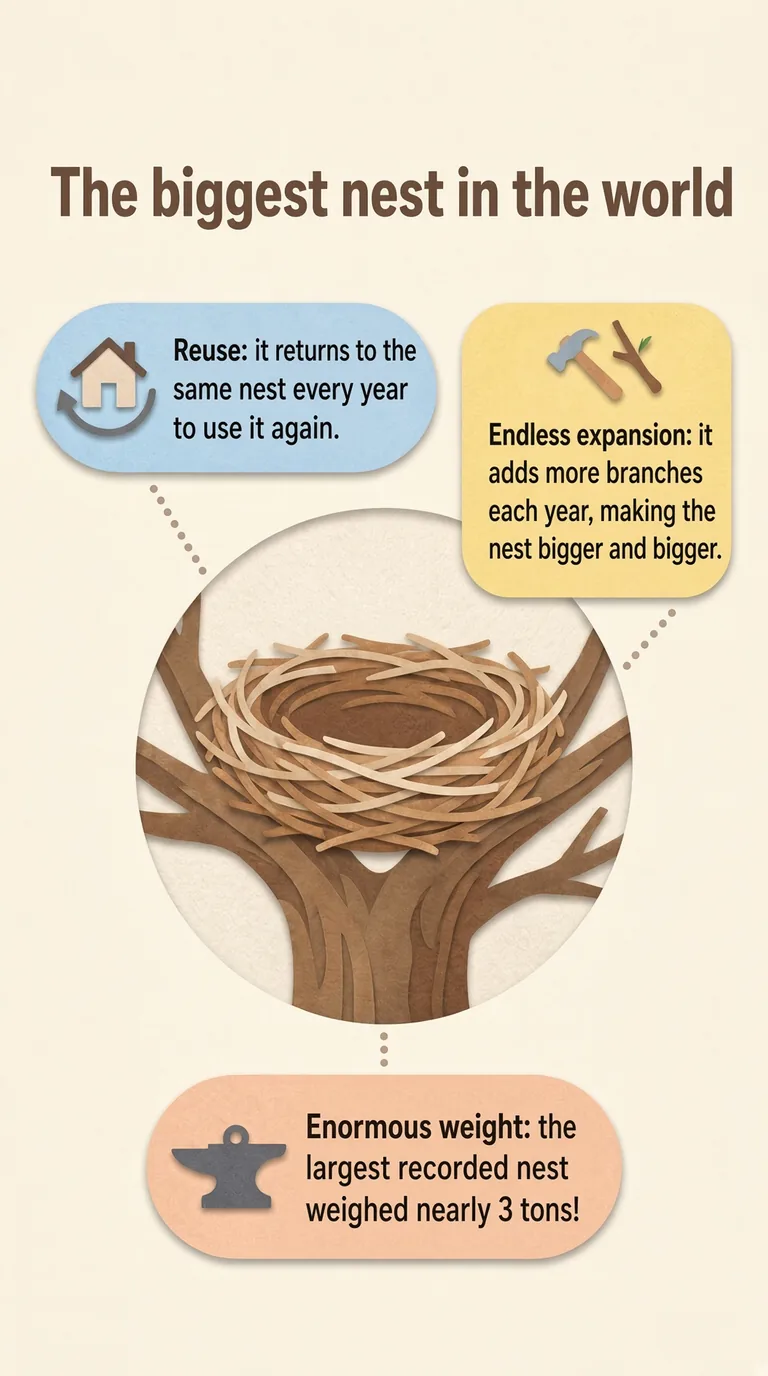
- Reuse — it returns to the same nest every year to use it again.
- Endless expansion — it adds more branches each year, making the nest bigger and bigger.
- Enormous weight — the largest recorded nest weighed nearly 3 tons!
The journey to becoming a magnificent adult
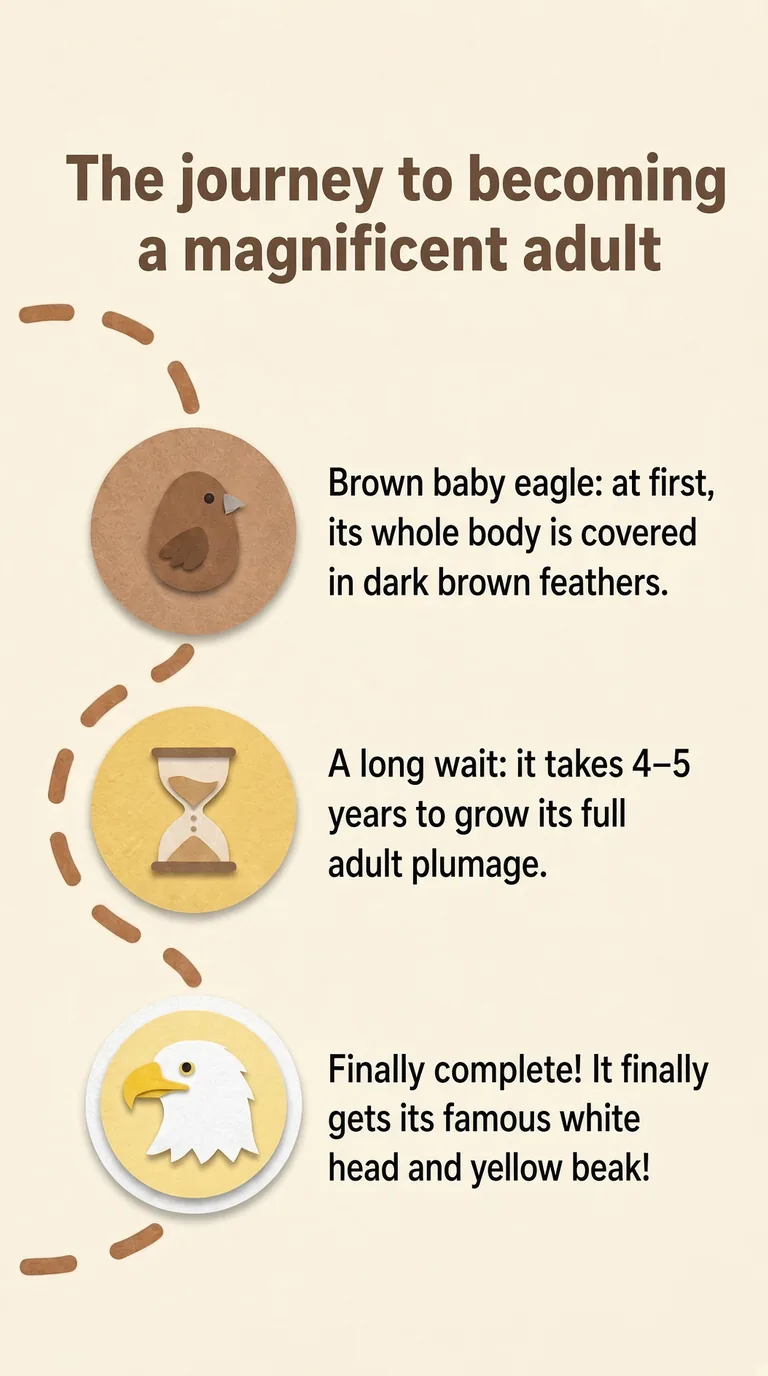
- Brown baby eagle — at first, its whole body is covered in dark brown feathers.
- A long wait — it takes 4–5 years to grow its full adult plumage.
- Finally complete! It finally gets its famous white head and yellow beak!
Who is it? Spot the look-alike
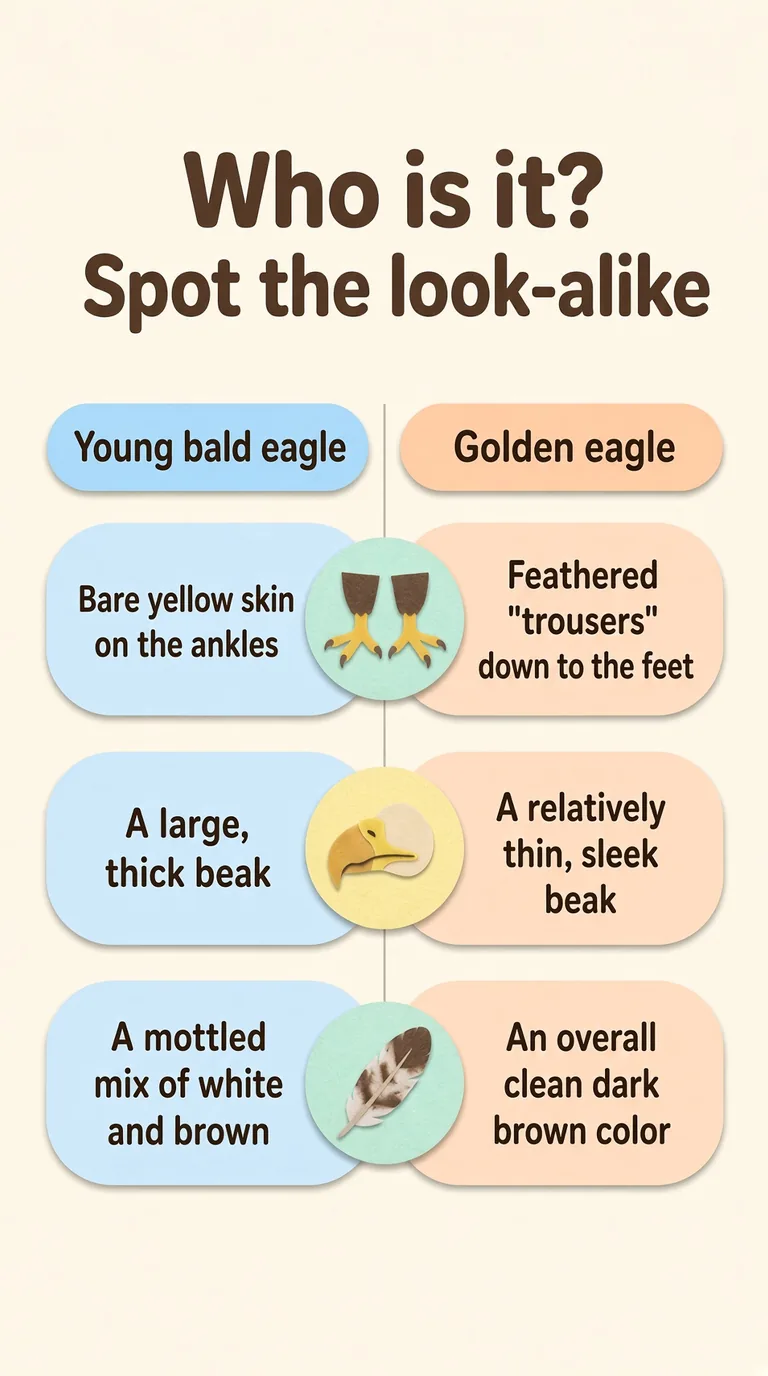
- Young bald eagle
- Bare yellow skin on the ankles
- A large, thick beak
- A mottled mix of white and brown
- Golden eagle
- Feathered "trousers" down to the feet
- A relatively thin, sleek beak
- An overall clean dark brown color
A great story of nature's recovery
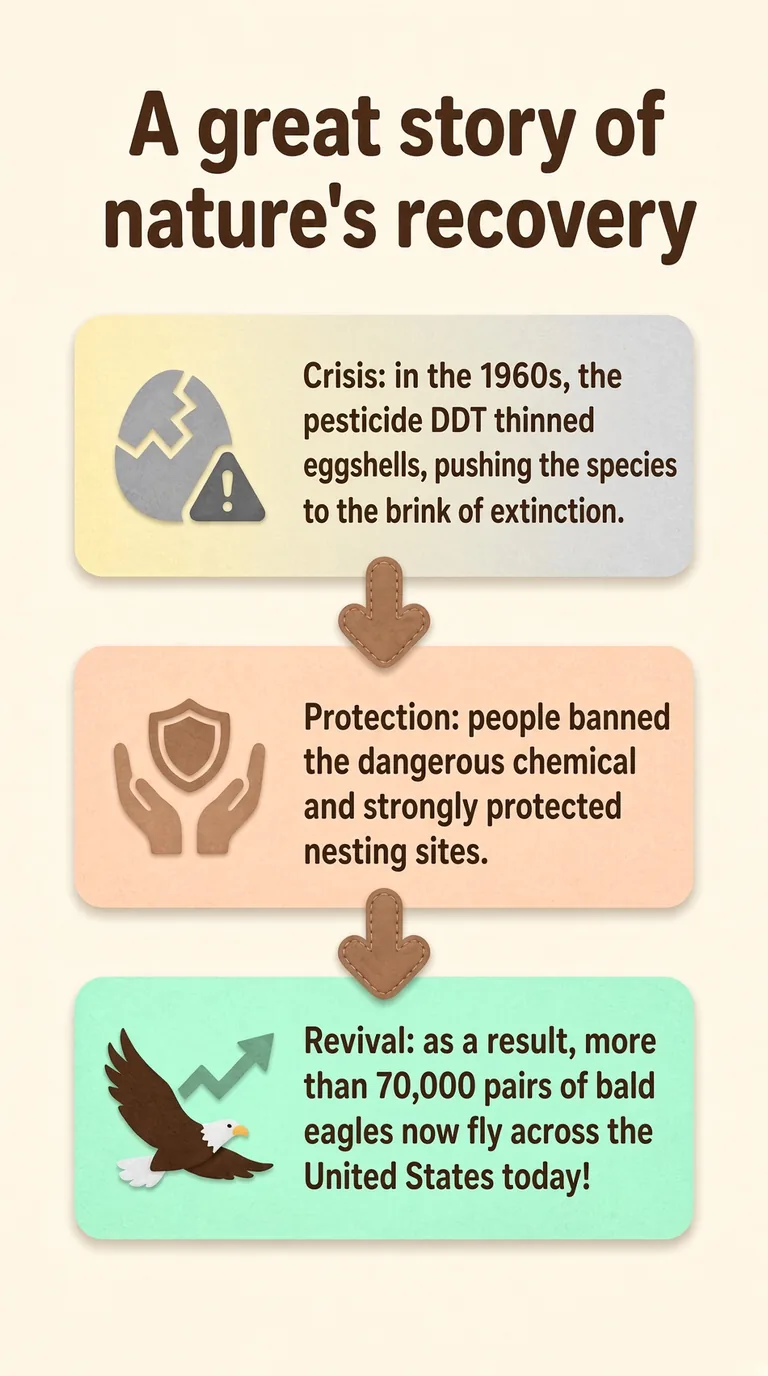
- Crisis — in the 1960s, the pesticide DDT thinned eggshells, pushing the species to the brink of extinction.
- Protection — people banned the dangerous chemical and strongly protected nesting sites.
- Revival — as a result, more than 70,000 pairs of bald eagles now fly across the United States today!
If we cherish and protect nature, animals can always bounce back strong!
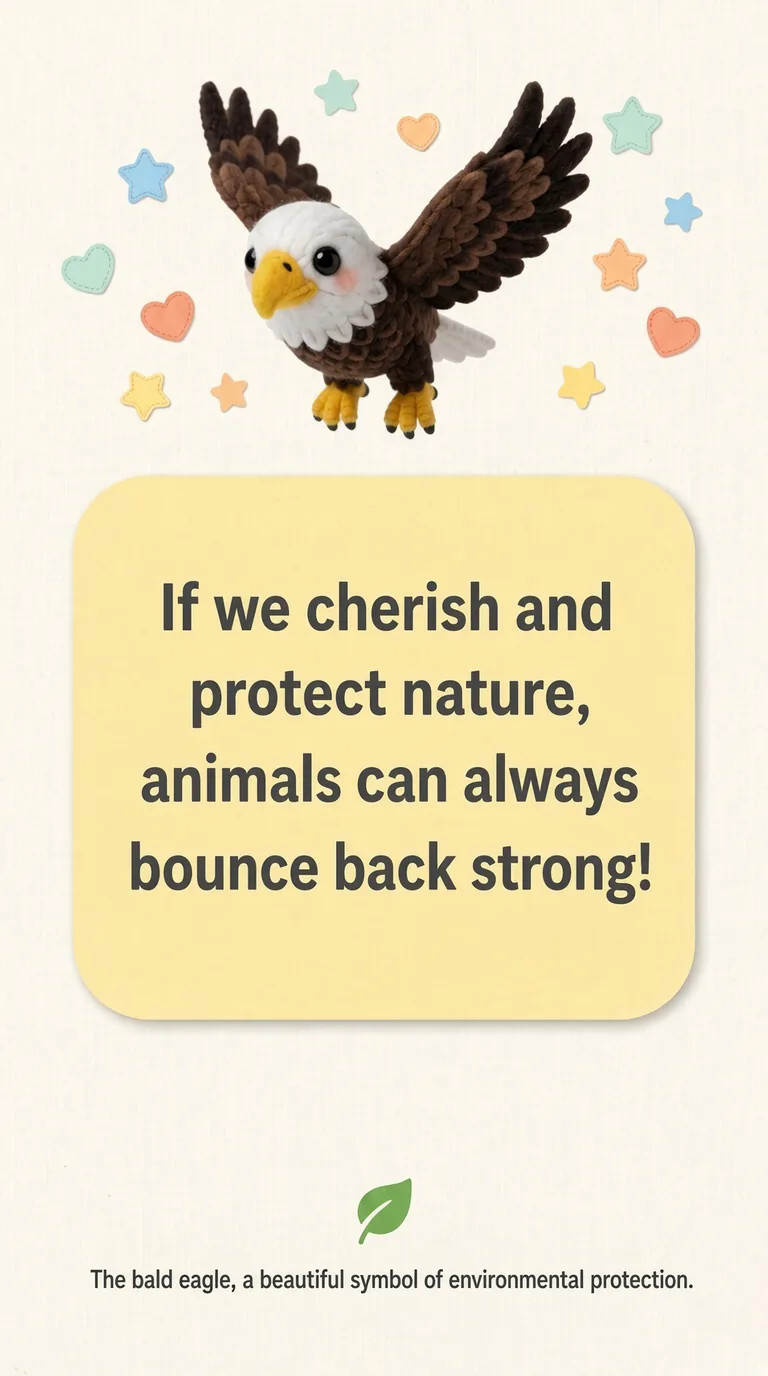
The bald eagle, a beautiful symbol of environmental protection.