Gray Wolf
North America
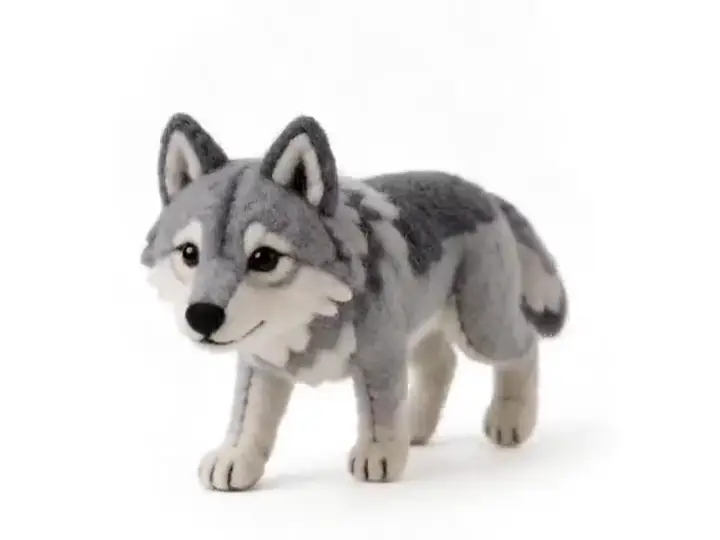
The gray wolf is a smart wild member of the dog family that lives in groups. It forms a family group called a "pack" that hunts together and raises pups. Wolves howl to talk to each other and to share where the pack is.
Quick facts
- Habitat
- It lives in the forests and tundra of North America, Europe, and Asia.
- Diet
- It hunts large animals like deer and moose as a pack.
- Size and weight
- Length 1.4–1.8m, weight 30–60kg.
- Lifespan
- 6–8 years
- Conservation status
- Least Concern
- Fun facts
- A wolf's howl can be heard from 16km away!
Every pet dog in the world is descended from the wolf.
Learn more
The clever hunter who revived a forest — and ancestor of every dog, the Gray Wolf
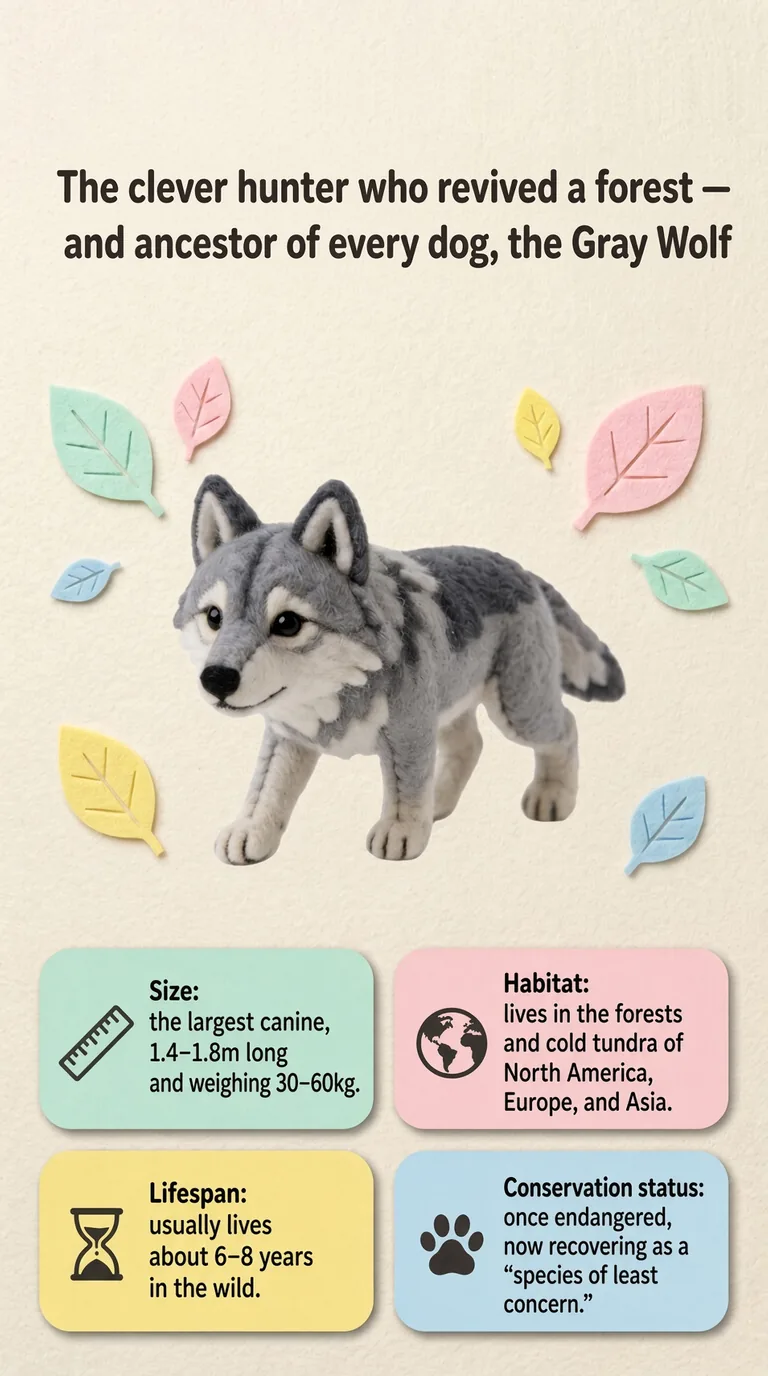
- Size — the largest canine, 1.4–1.8m long and weighing 30–60kg.
- Habitat — lives in the forests and cold tundra of North America, Europe, and Asia.
- Lifespan — usually lives about 6–8 years in the wild.
- Conservation status — once endangered, now recovering as a "species of least concern."
The true ancestor of every dog we know
How similar are wolves and dogs?
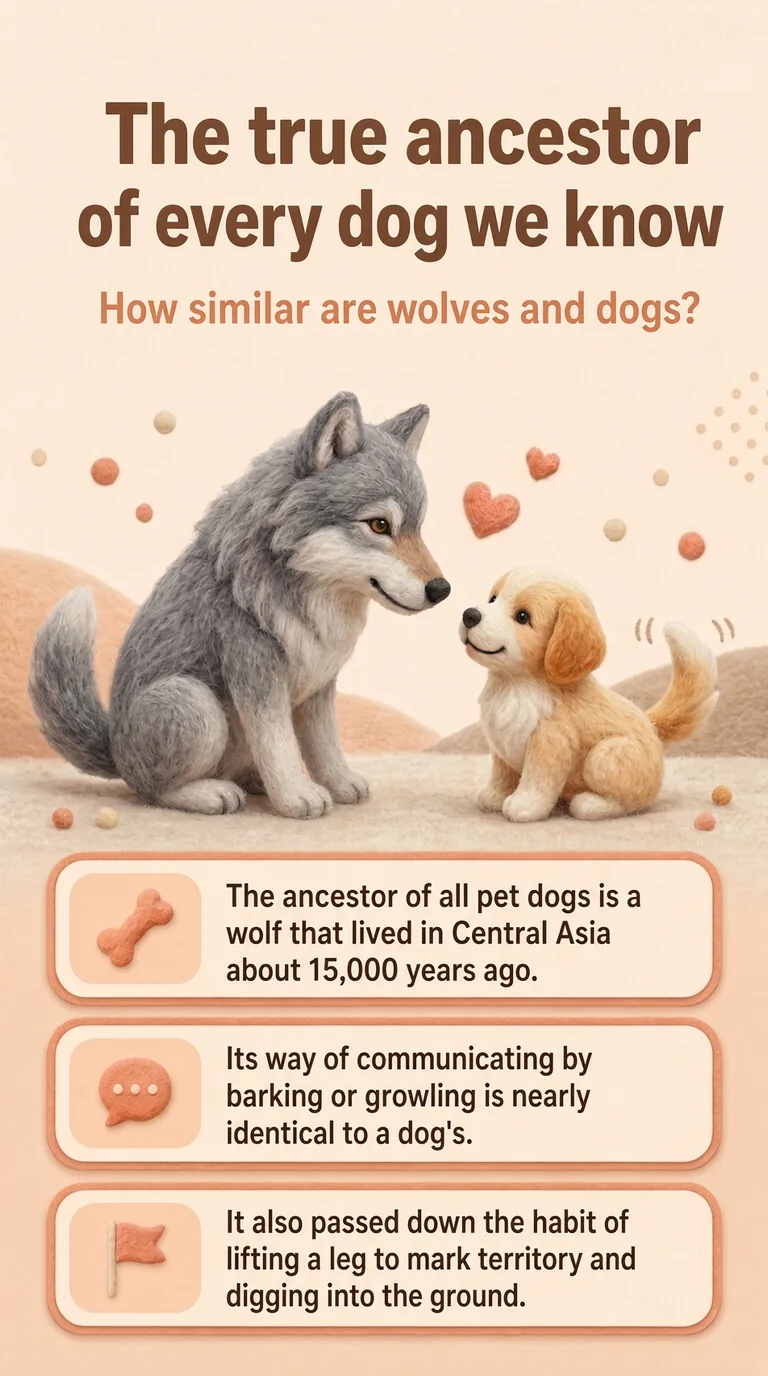
- The ancestor of all pet dogs is a wolf that lived in Central Asia about 15,000 years ago.
- Its way of communicating by barking or growling is nearly identical to a dog's.
- It also passed down the habit of lifting a leg to mark territory and digging into the ground.
A close-knit family pack life
Wolves form a thoroughly cooperative society.
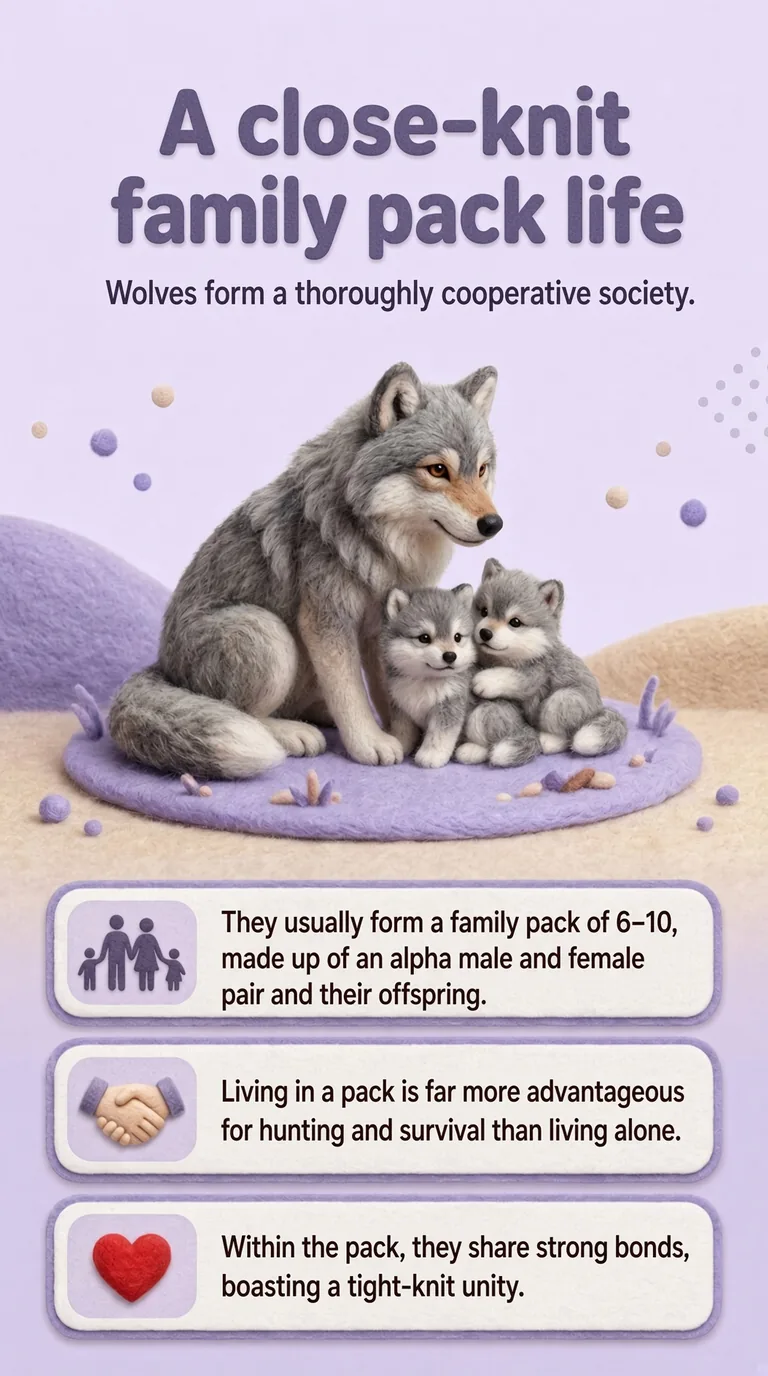
- They usually form a family pack of 6–10, made up of an alpha male and female pair and their offspring.
- Living in a pack is far more advantageous for hunting and survival than living alone.
- Within the pack, they share strong bonds, boasting a tight-knit unity.
Body language spoken through ears and tail
They can express mood and rank without making a sound.
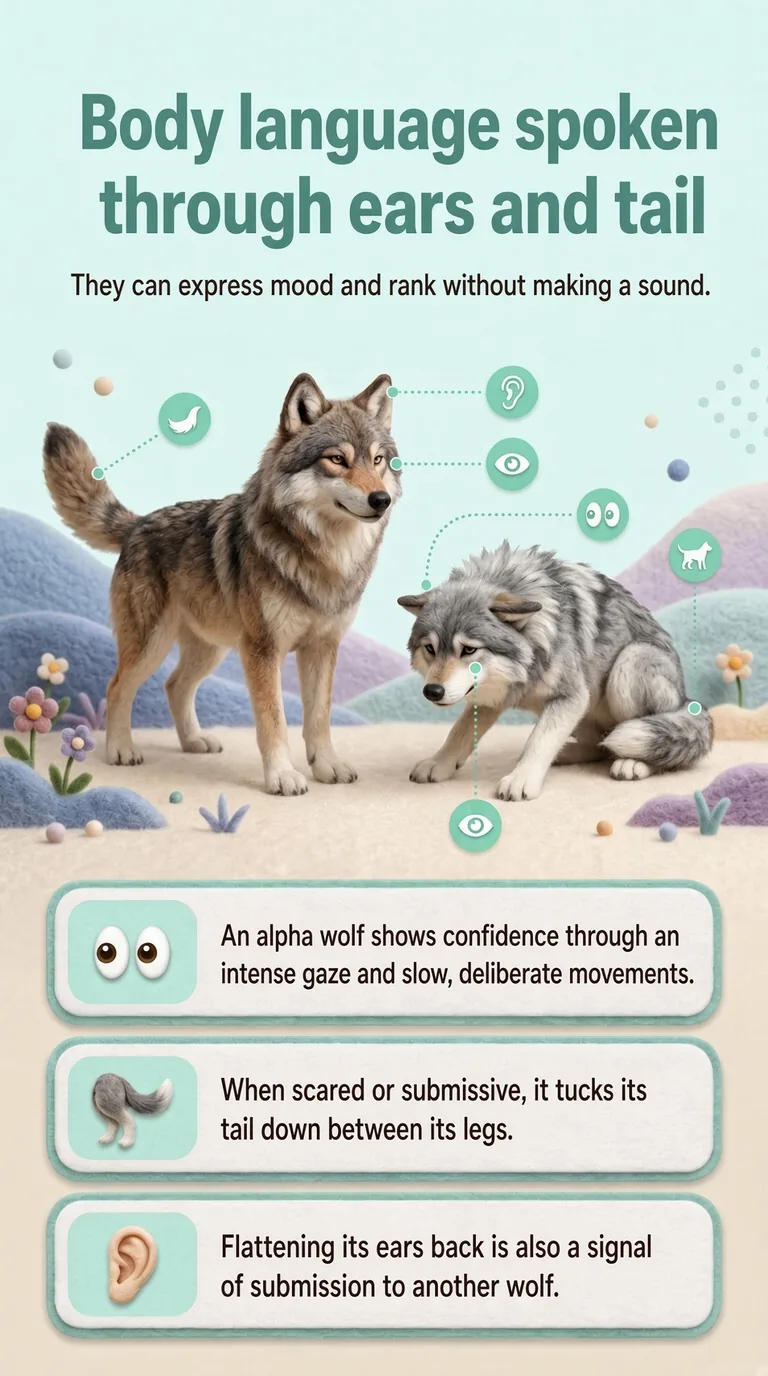
- An alpha wolf shows confidence through an intense gaze and slow, deliberate movements.
- When scared or submissive, it tucks its tail down between its legs.
- Flattening its ears back is also a signal of submission to another wolf.
A forest chorus that carries 16km away
A wolf's mysterious howl carries a great deal of information.
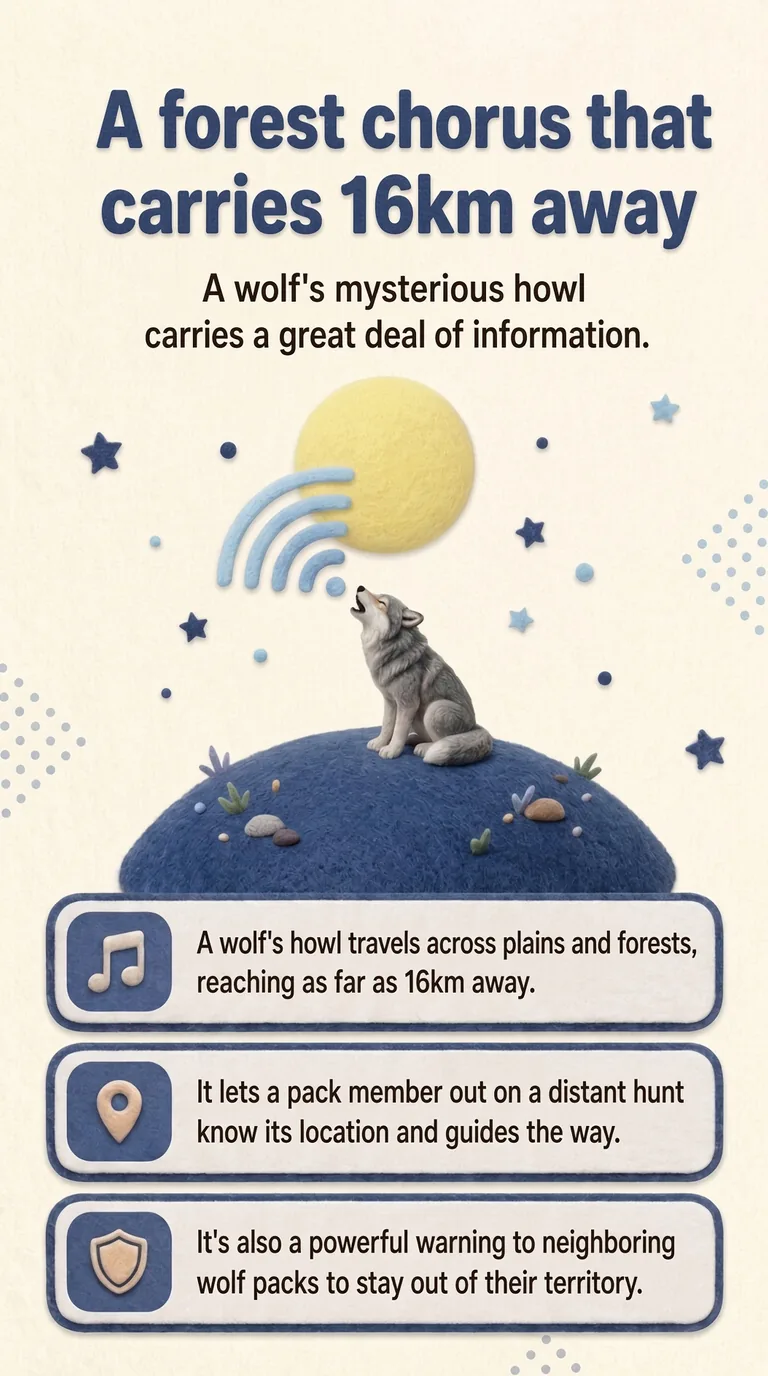
- A wolf's howl travels across plains and forests, reaching as far as 16km away.
- It lets a pack member out on a distant hunt know its location and guides the way.
- It's also a powerful warning to neighboring wolf packs to stay out of their territory.
A tireless hunter and a footprint detective
Remarkable physical abilities for surviving in harsh nature.
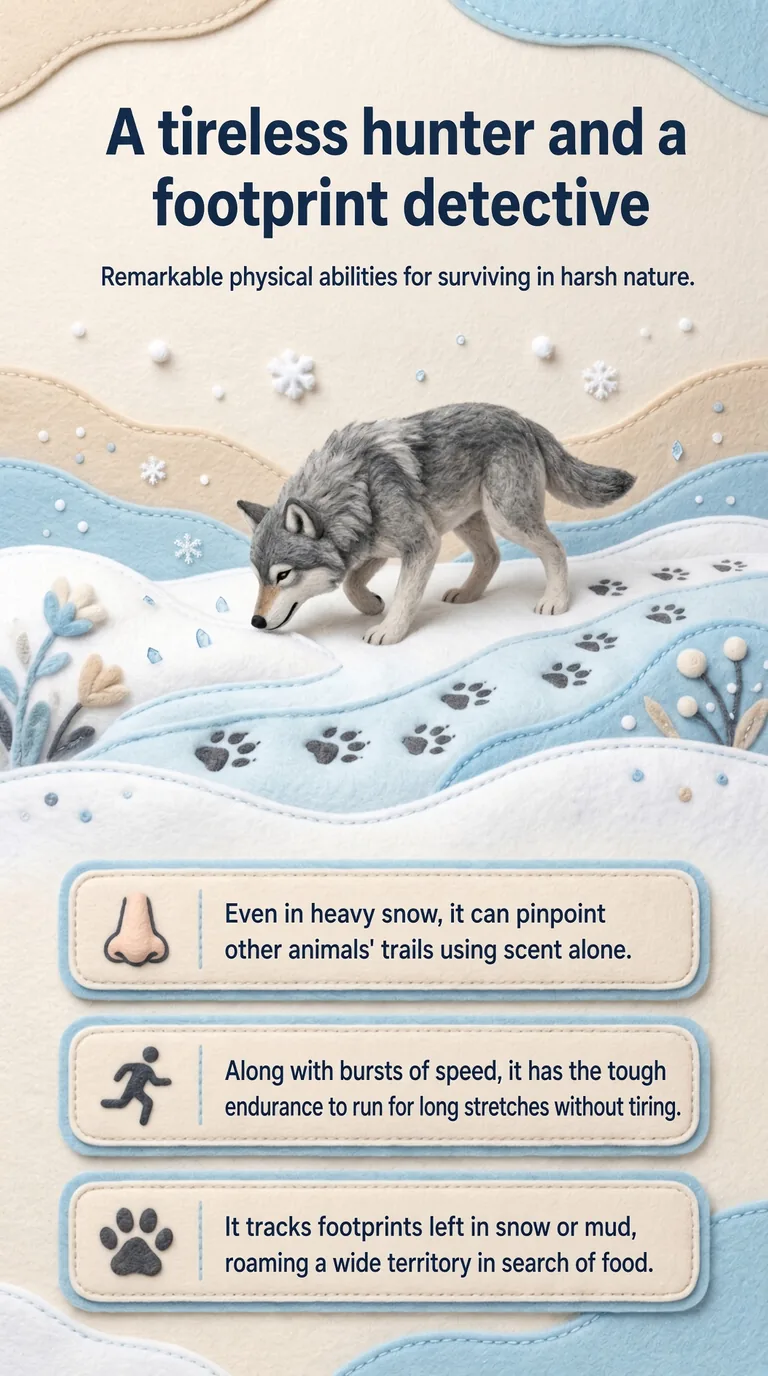
- Even in heavy snow, it can pinpoint other animals' trails using scent alone.
- Along with bursts of speed, it has the tough endurance to run for long stretches without tiring.
- It tracks footprints left in snow or mud, roaming a wide territory in search of food.
How wolves revived a forest: 'the miracle of Yellowstone'
The restoration of a single animal changed the entire ecosystem.
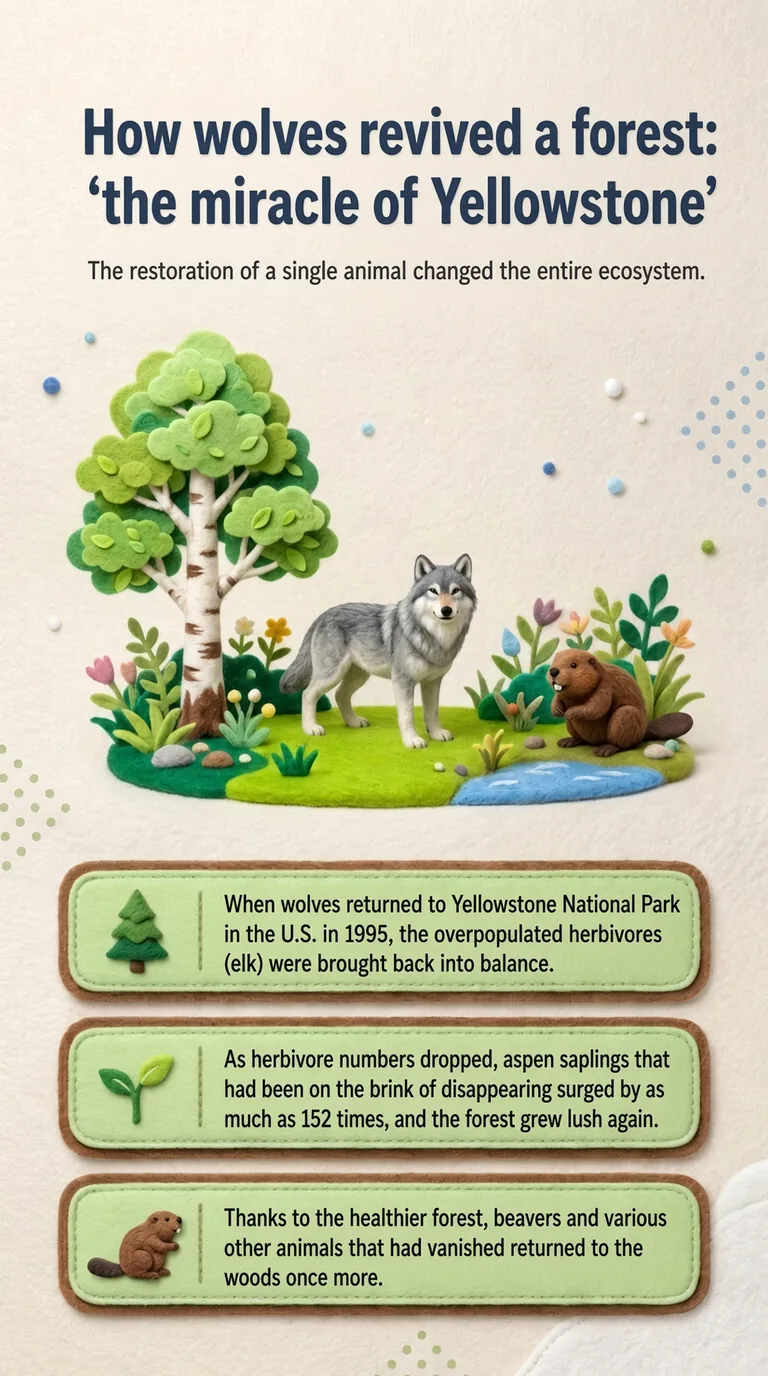
- When wolves returned to Yellowstone National Park in the U.S. in 1995, the overpopulated herbivores (elk) were brought back into balance.
- As herbivore numbers dropped, aspen saplings that had been on the brink of disappearing surged by as much as 152 times, and the forest grew lush again.
- Thanks to the healthier forest, beavers and various other animals that had vanished returned to the woods once more.