Beaver
North America
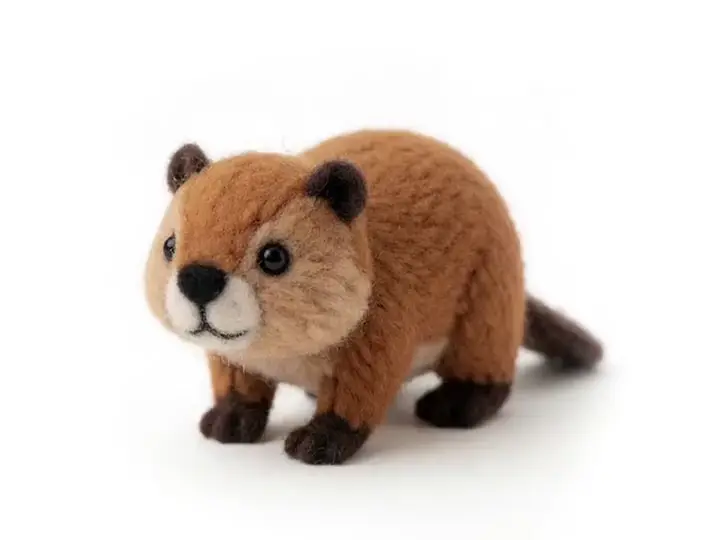
The beaver is nature's builder, gnawing down trees to build dams. Its strong front teeth can fell thick trees, which it uses to block rivers, make ponds, and build a home inside them. It swims with its flat tail and slaps the water with it to warn of danger.
Quick facts
- Habitat
- It lives near water, in rivers, streams, and lakes.
- Diet
- It's a plant-eater that eats bark, leaves, and water plants.
- Size and weight
- Length 0.8–1.2m, weight 11–30kg.
- Lifespan
- 10–12 years
- Conservation status
- Least Concern
- Fun facts
- Its front teeth never stop growing, so it keeps them short by gnawing wood!
It can hold its breath underwater for 15 minutes.
Learn more
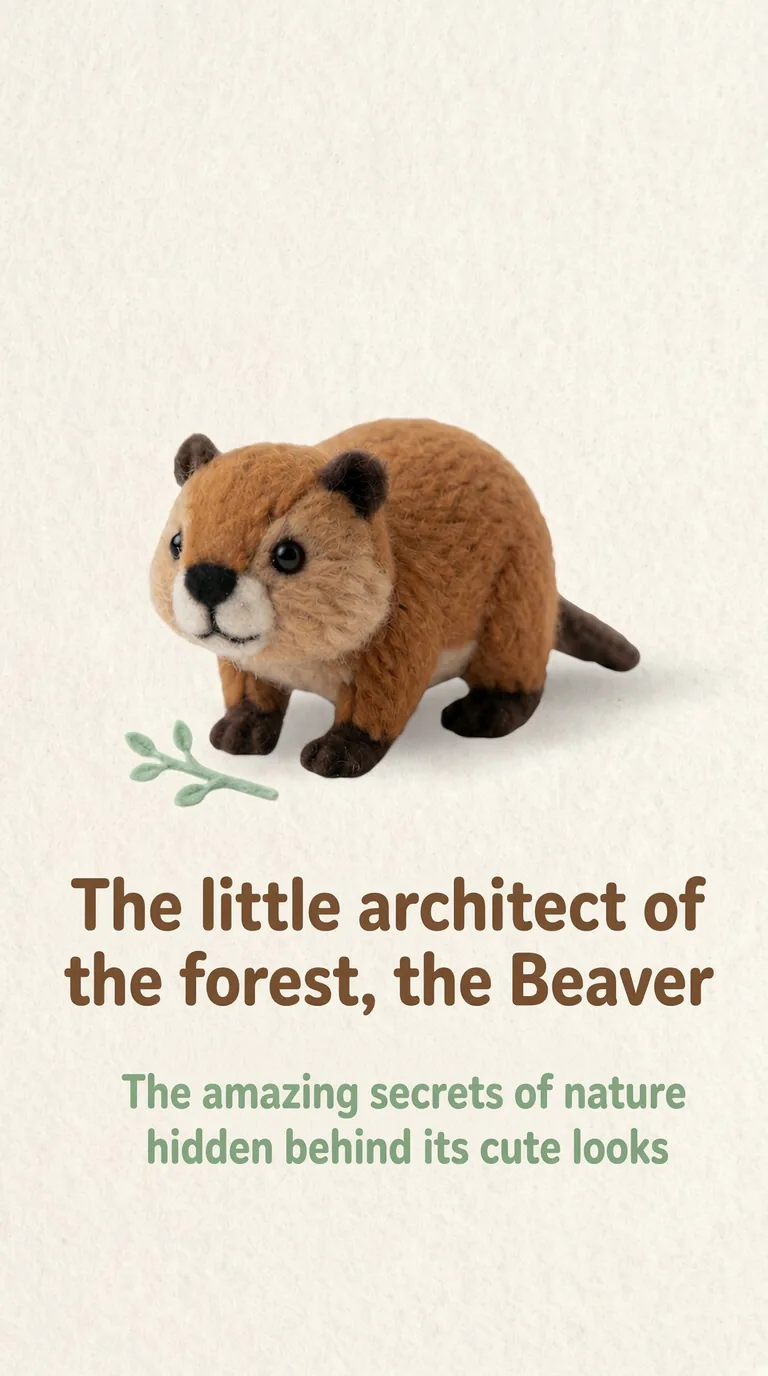
The little architect of the forest, the Beaver
The amazing secrets of nature hidden behind its cute looks
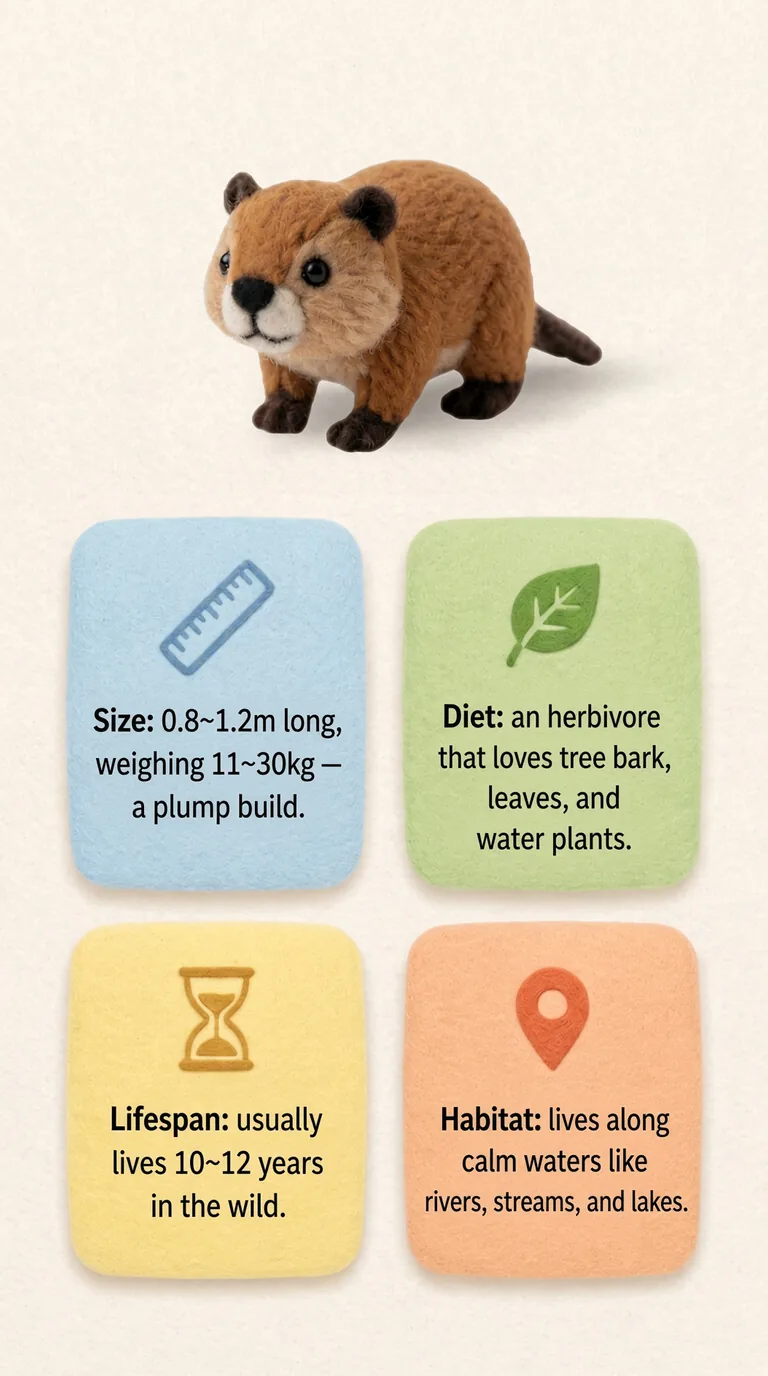
- Size — 0.8–1.2m long, weighing 11–30kg — a plump build.
- Lifespan — usually lives 10–12 years in the wild.
- Diet — an herbivore that loves tree bark, leaves, and water plants.
- Habitat — lives along calm waters like rivers, streams, and lakes.
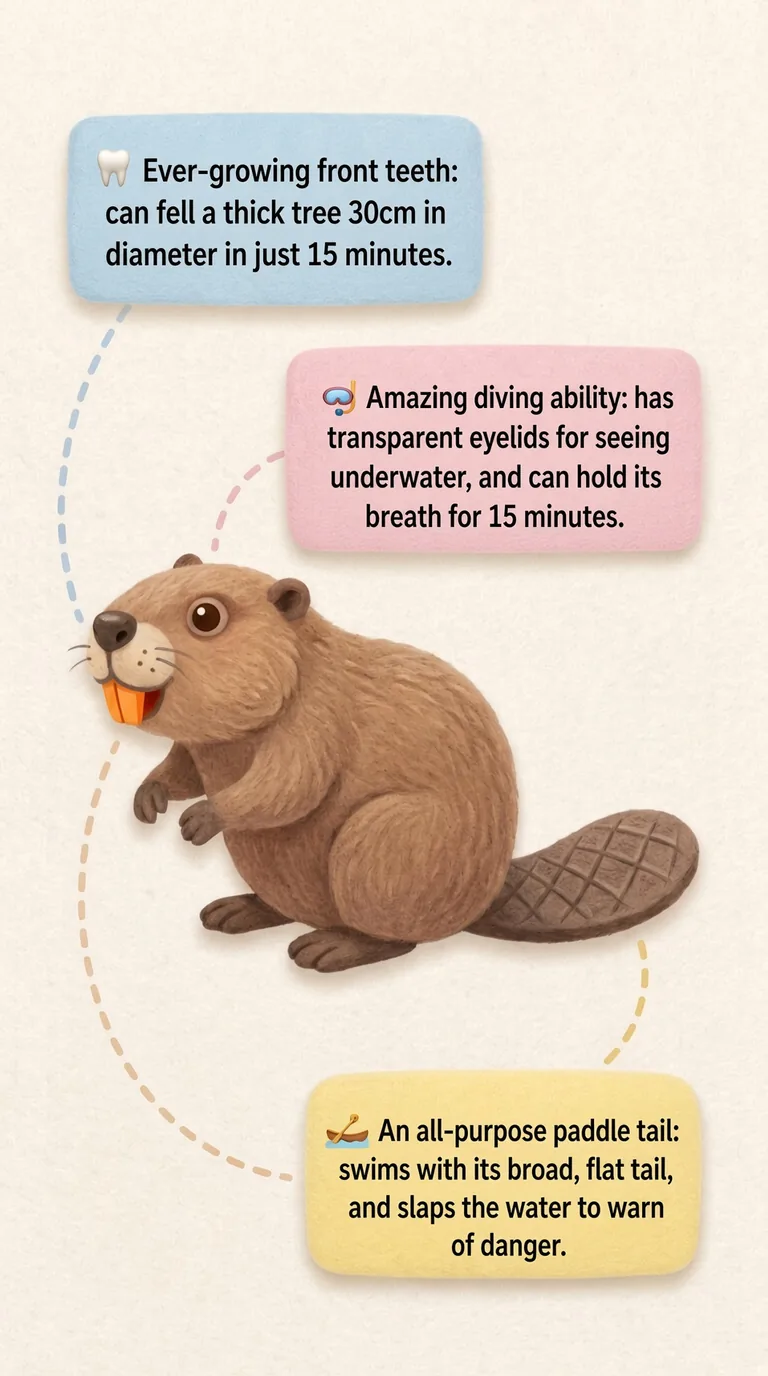
- Ever-growing front teeth — can fell a thick tree 30cm in diameter in just 15 minutes.
- Amazing diving ability — has transparent eyelids for seeing underwater, and can hold its breath for 15 minutes.
- An all-purpose paddle tail — swims with its broad, flat tail, and slaps the water to warn of danger.
How a beaver builds its home
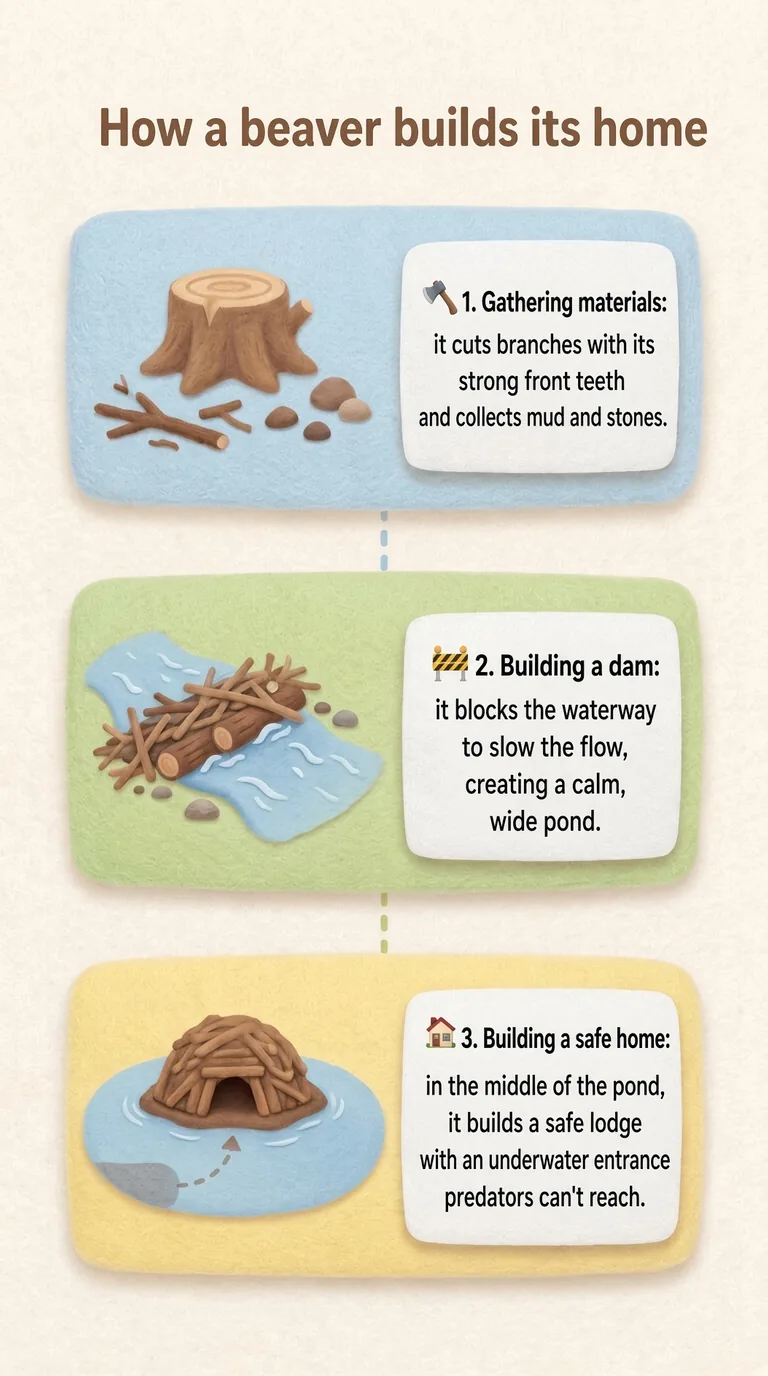
- Gathering materials — it cuts branches with its strong front teeth and collects mud and stones.
- Building a dam — it blocks the waterway to slow the flow, creating a calm, wide pond.
- Building a safe home — in the middle of the pond, it builds a safe lodge with an underwater entrance predators can't reach.
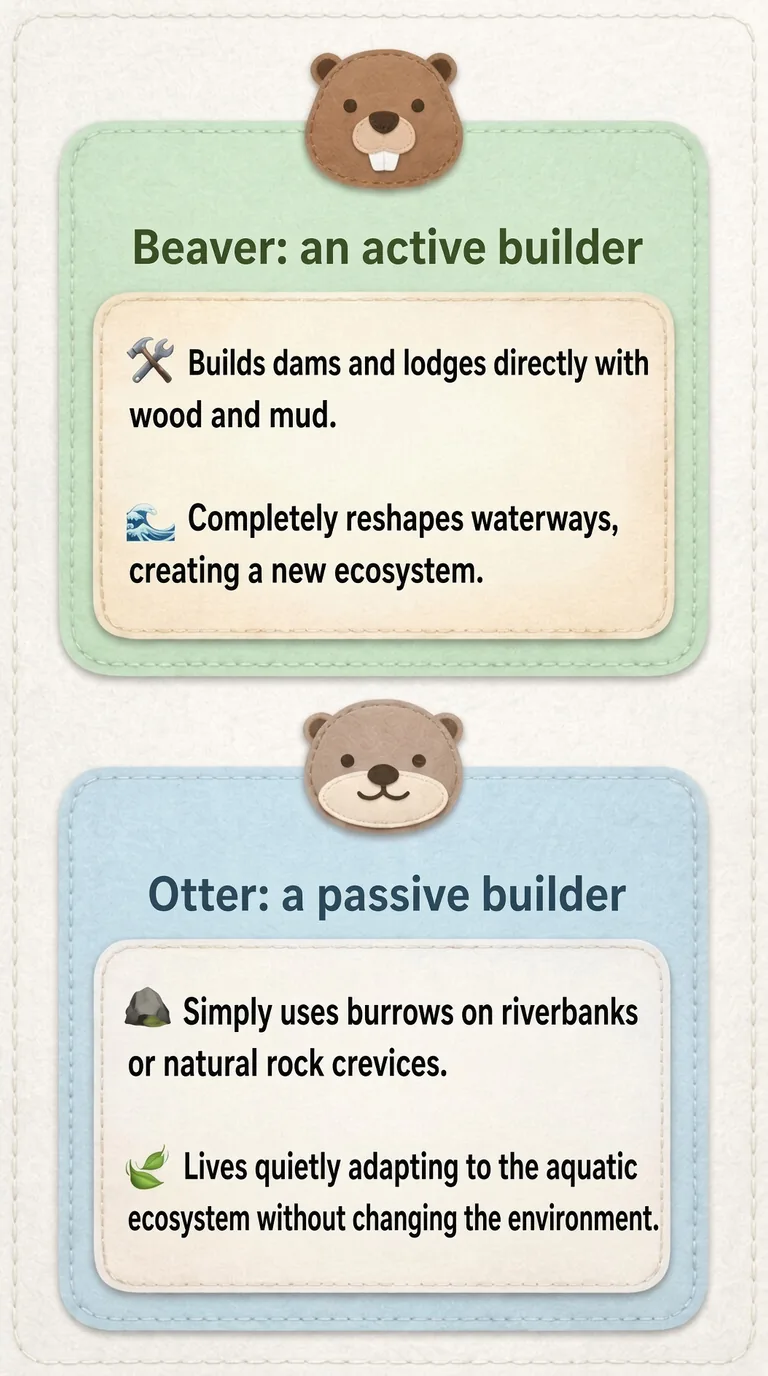
- Beaver — an active builder
- Builds dams and lodges directly with wood and mud.
- Completely reshapes waterways, creating a new ecosystem.
- Otter — a passive builder
- Simply uses burrows on riverbanks or natural rock crevices.
- Lives quietly adapting to the aquatic ecosystem without changing the environment.
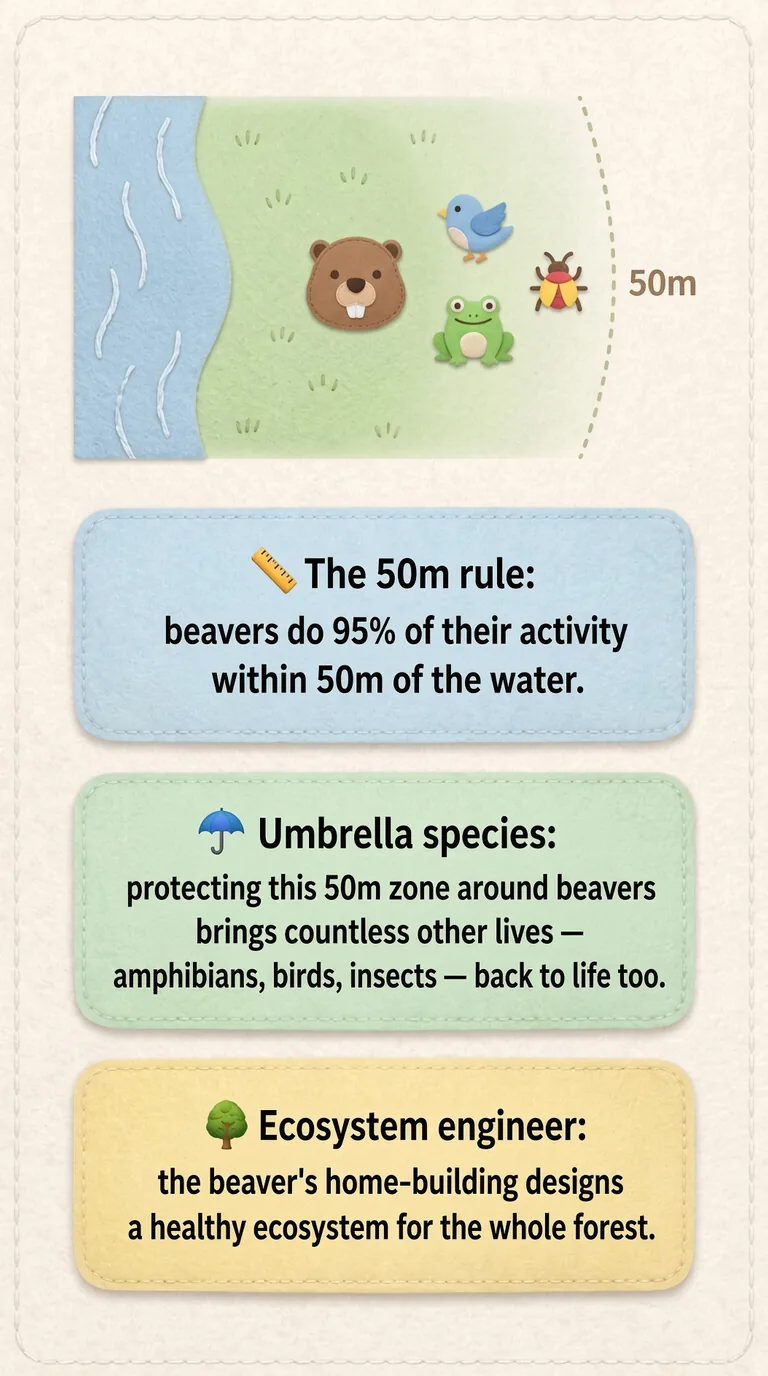
- The 50m rule — beavers do 95% of their activity within 50m of the water.
- Umbrella species — protecting this 50m zone around beavers brings countless other lives — amphibians, birds, insects — back to life too.
- Ecosystem engineer — the beaver's home-building designs a healthy ecosystem for the whole forest.
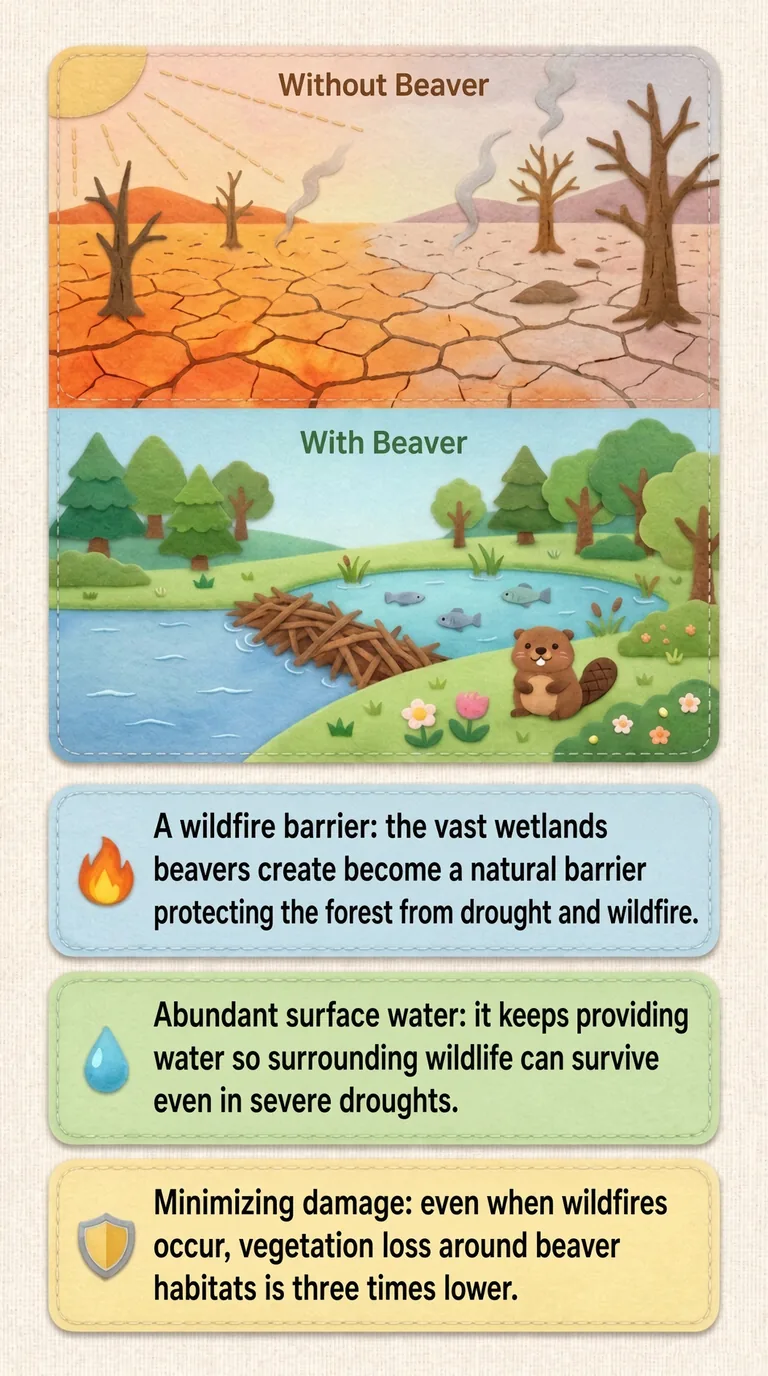
- The beaver's role
- A wildfire barrier — the vast wetlands beavers create become a natural barrier protecting the forest from drought and wildfire.
- Abundant surface water — it keeps providing water so surrounding wildlife can survive even in severe droughts.
- Minimizing damage — even when wildfires occur, vegetation loss around beaver habitats is three times lower.
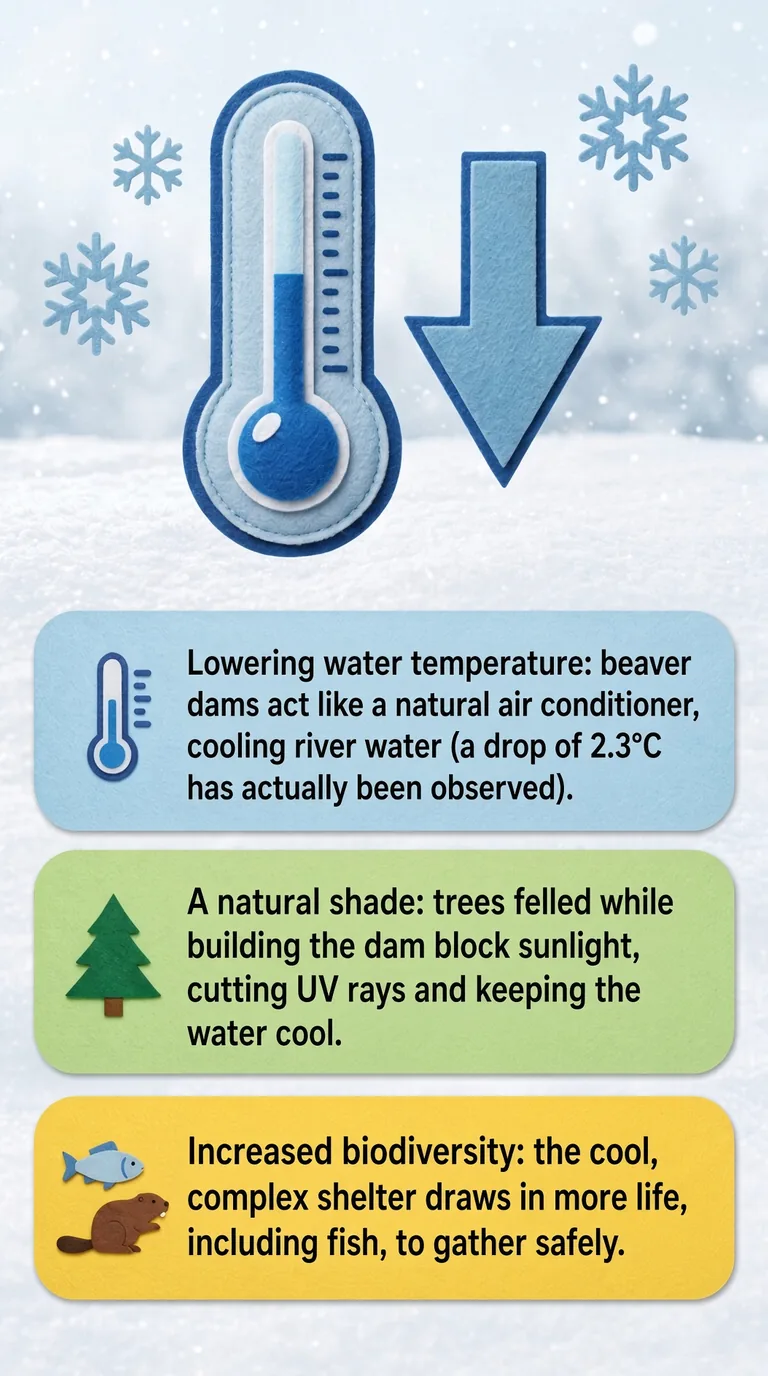
- The beaver's role
- Lowering water temperature — beaver dams act like a natural air conditioner, cooling river water (a drop of 2.3°C has actually been observed).
- A natural shade — trees felled while building the dam block sunlight, cutting UV rays and keeping the water cool.
- Increased biodiversity — the cool, complex shelter draws in more life, including fish, to gather safely.
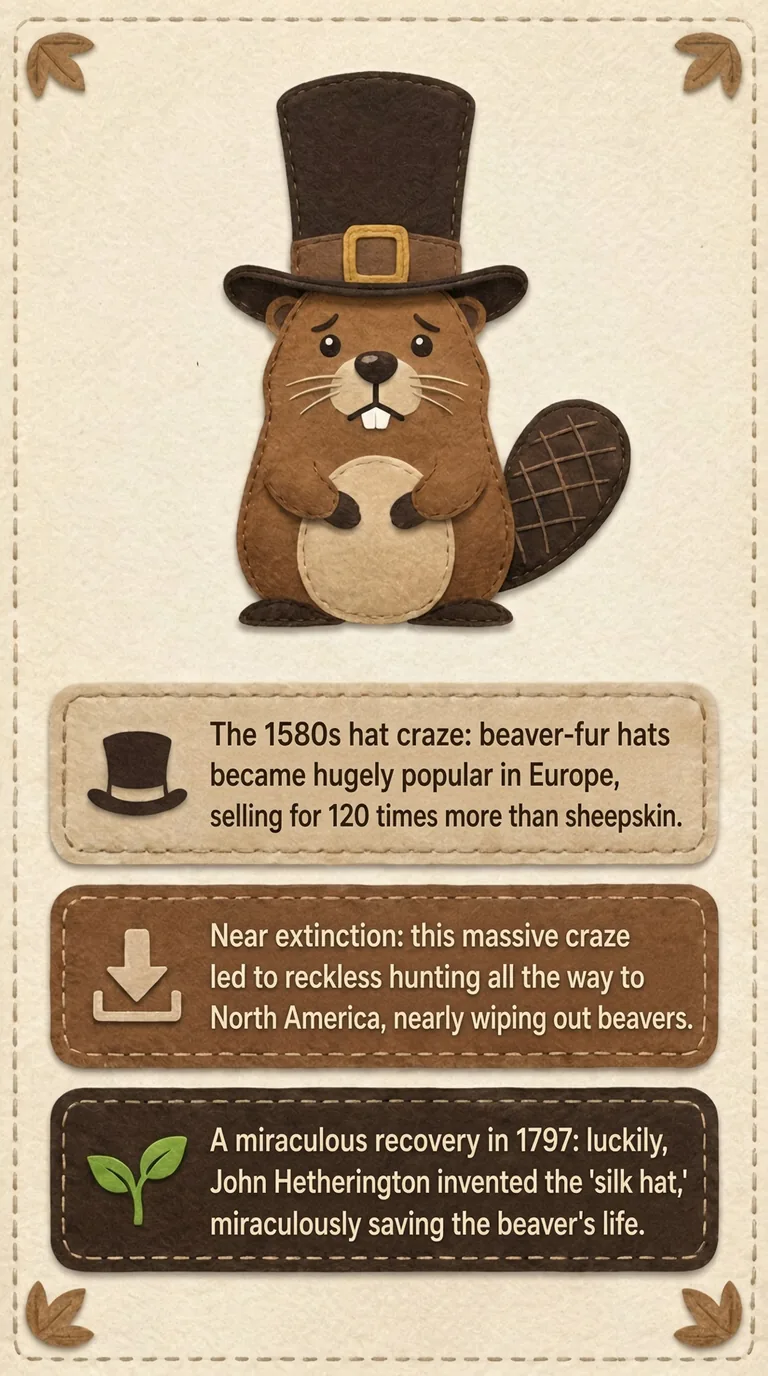
- The beaver's crisis
- The 1580s hat craze — beaver-fur hats became hugely popular in Europe, selling for 120 times more than sheepskin.
- Near extinction — this massive craze led to reckless hunting all the way to North America, nearly wiping out beavers.
- A miraculous recovery in 1797 — luckily, John Hetherington invented the 'silk hat,' miraculously saving the beaver's life.
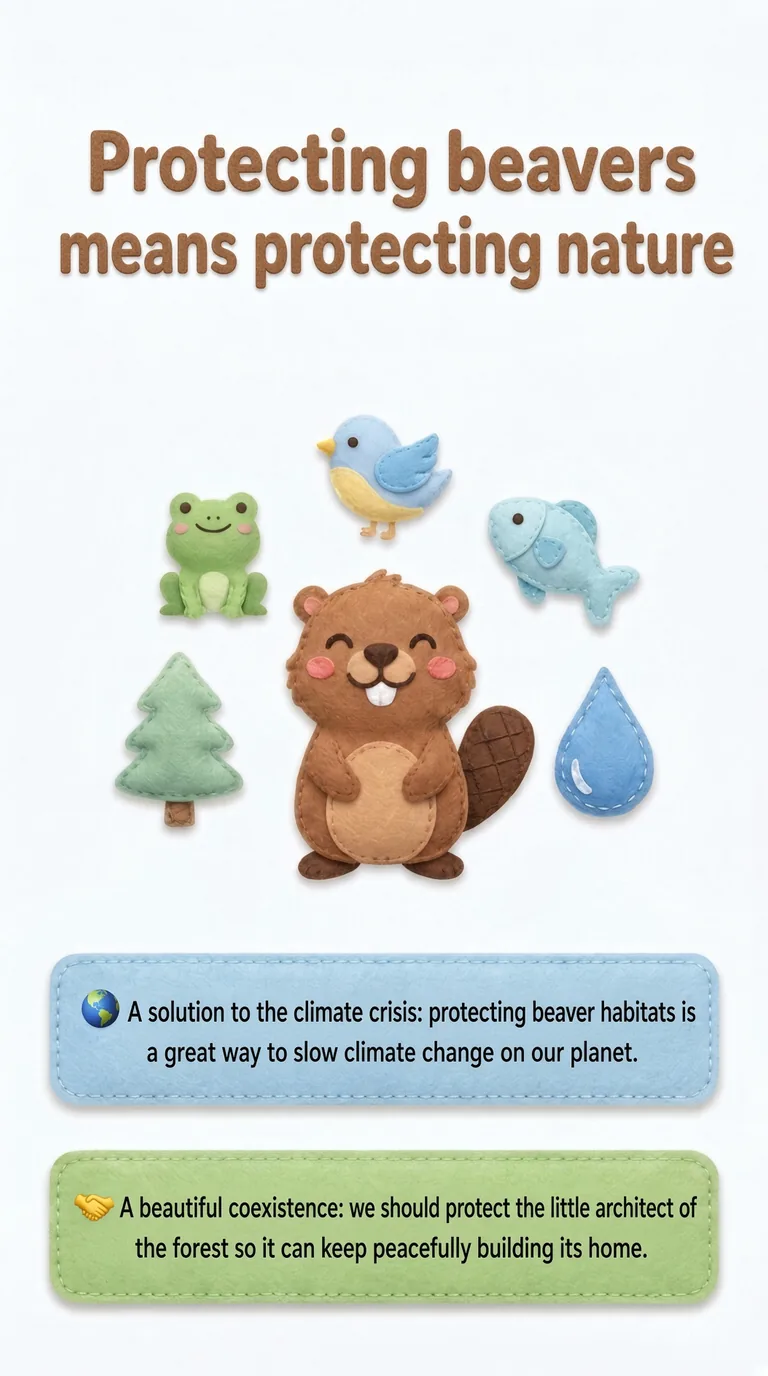
- Protecting beavers means protecting nature
- A solution to the climate crisis — protecting beaver habitats is a great way to slow climate change on our planet.
- A beautiful coexistence — we should protect the little architect of the forest so it can keep peacefully building its home.