Grizzly Bear
North America
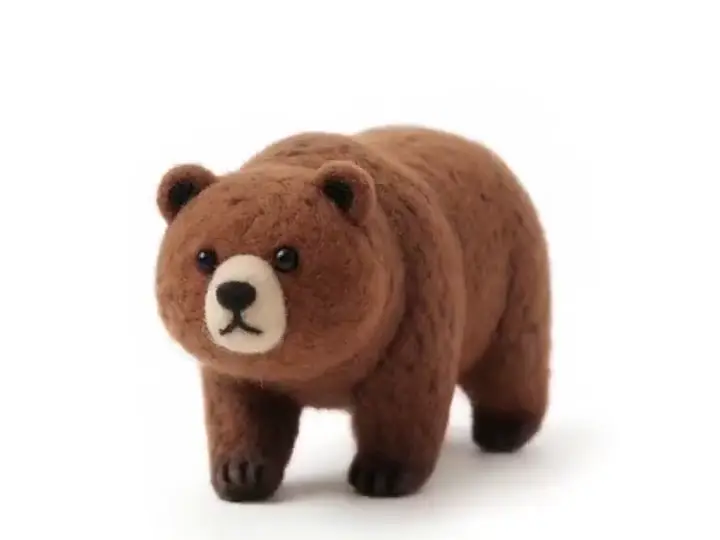
The grizzly bear is a giant brown bear that represents North America. It's known for the big hump of muscle on its shoulders and its long claws. It eats almost anything, and it spends the winter in a long sleep inside its den.
Quick facts
- Habitat
- It lives in the forests of western North America and the tundra of Alaska.
- Diet
- It eats everything from salmon, berries, and nuts to small animals.
- Size and weight
- 2.5–3m tall standing up, weight 200–400kg.
- Lifespan
- 20–25 years
- Conservation status
- Least Concern
- Fun facts
- It catches salmon in its mouth as they leap up waterfalls!
Even though it's huge, it can run at 50km/h.
Learn more
The forest's greatest eater and all-around explorer, the Grizzly Bear
The amazing ruler of the North American ecosystem
Basic profile
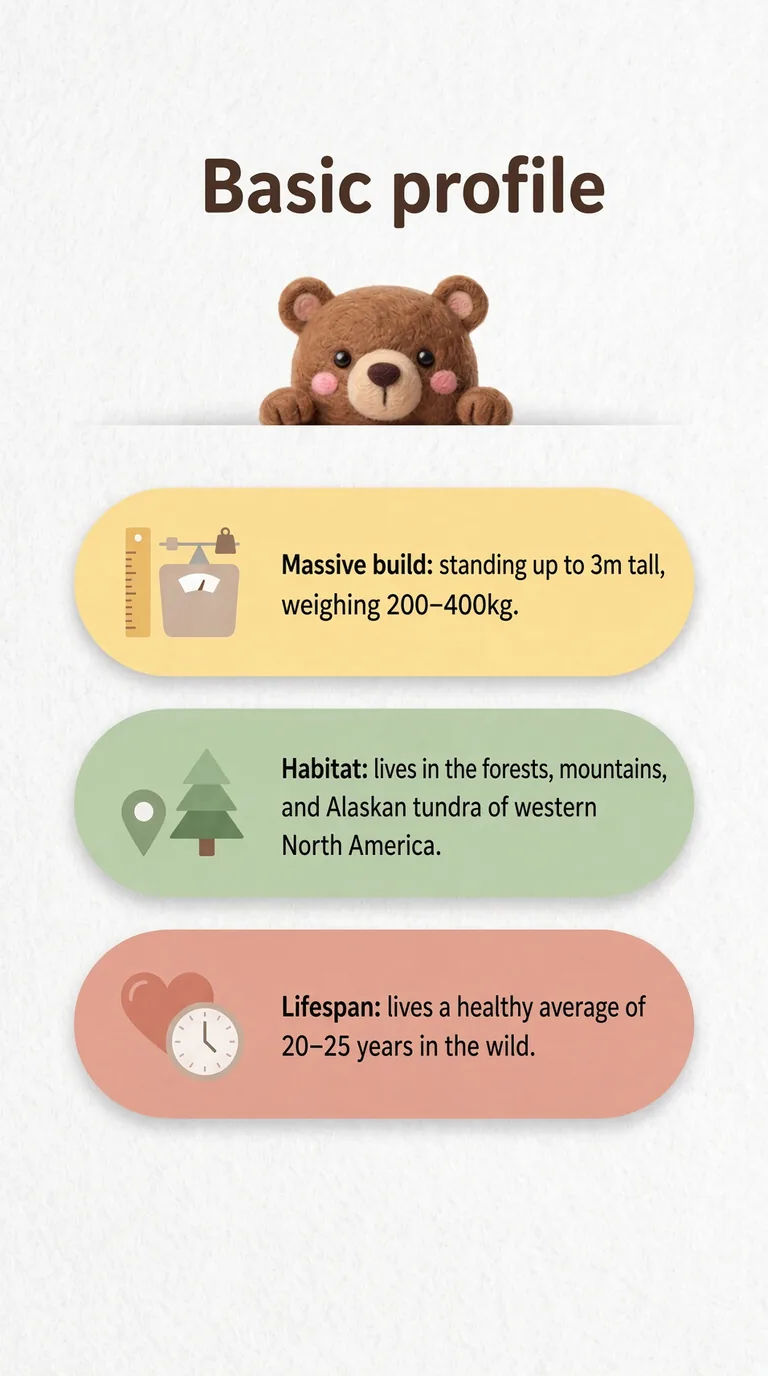
- Massive build — standing up to 3m tall, weighing 200–400kg.
- Habitat — lives in the forests, mountains, and Alaskan tundra of western North America.
- Lifespan — lives a healthy average of 20–25 years in the wild.
A physical superpower that rules the forest
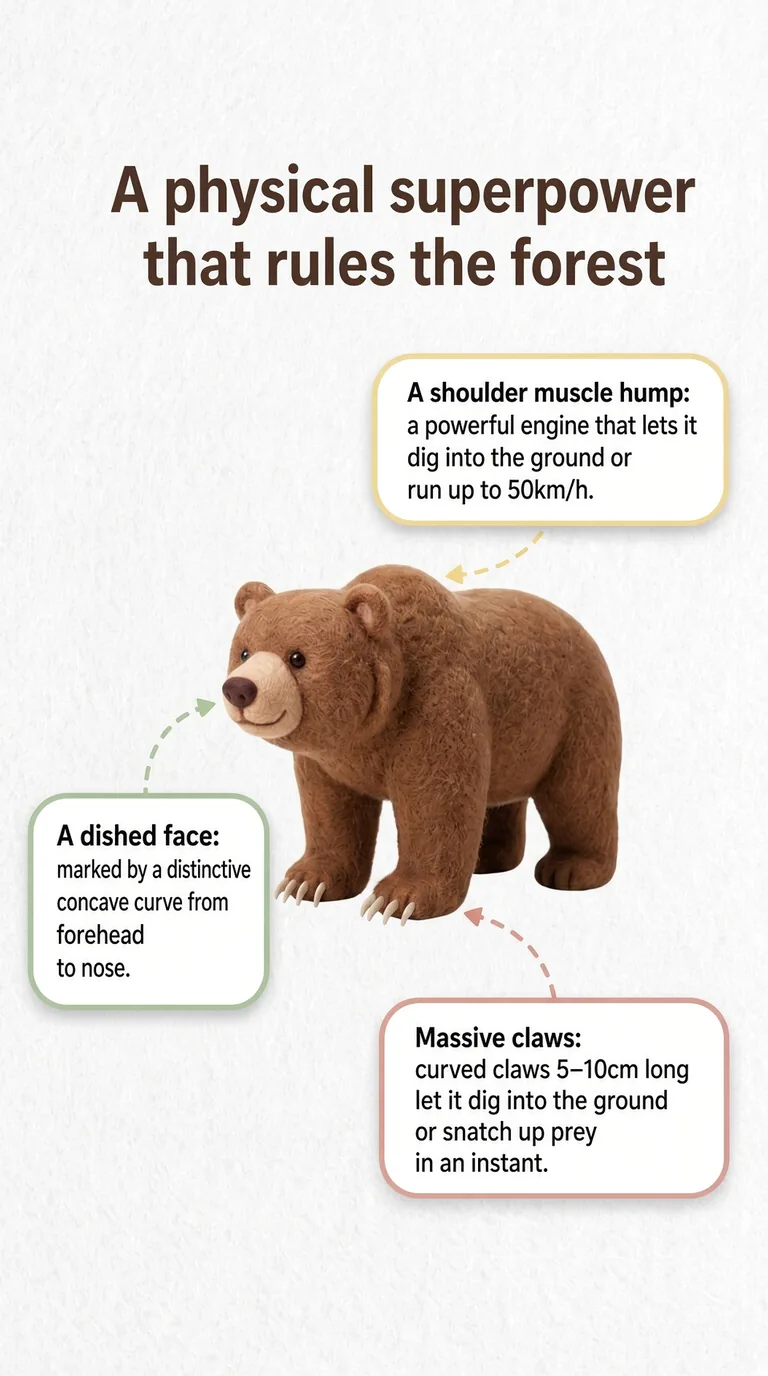
- A shoulder muscle hump — a powerful engine that lets it dig into the ground or run up to 50km/h.
- A dished face — marked by a distinctive concave curve from forehead to nose.
- Massive claws — curved claws 5–10cm long let it dig into the ground or snatch up prey in an instant.
A nose sharper than a bloodhound's
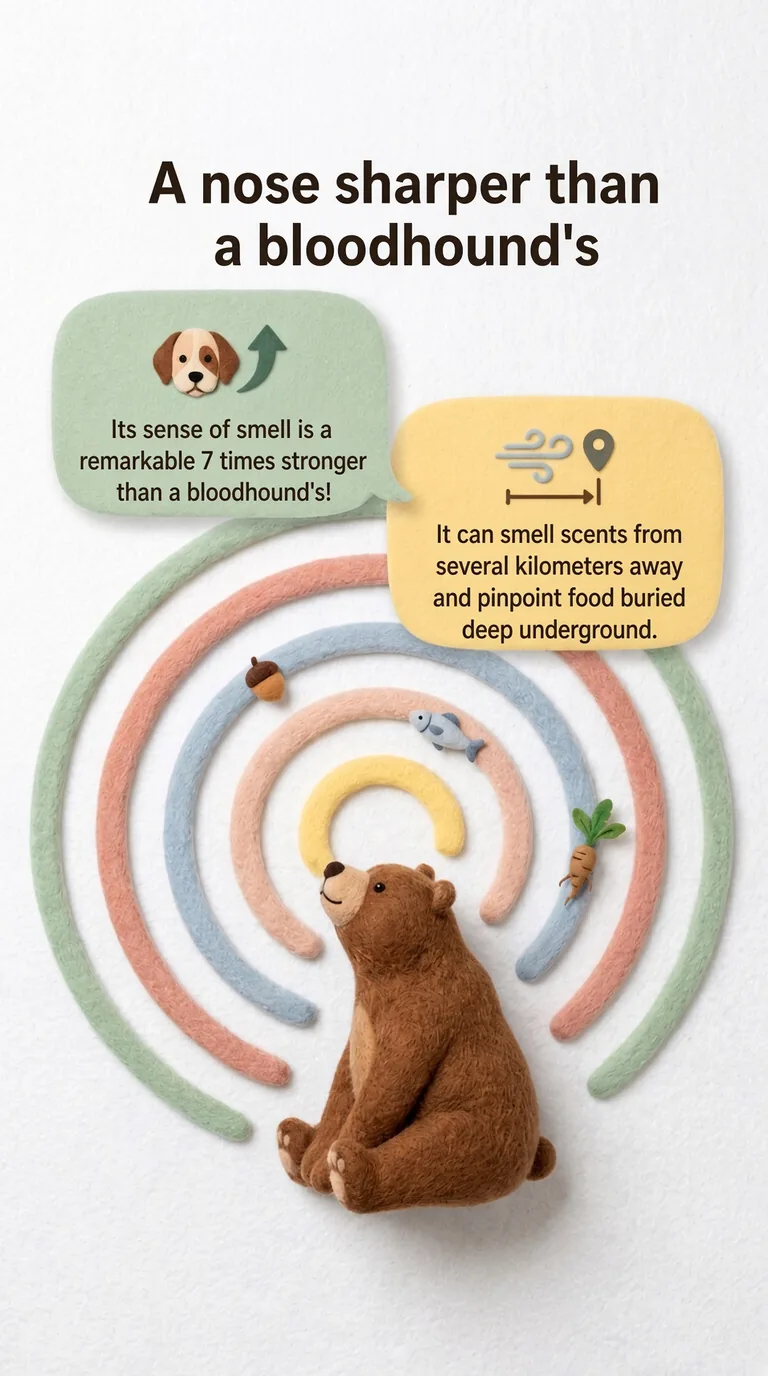
- Its sense of smell is a remarkable 7 times stronger than a bloodhound's!
- It can smell scents from several kilometers away and pinpoint food buried deep underground.
A perfect omnivore's seasonal menu
Surprisingly, 80–90% of its diet is plants and berries!
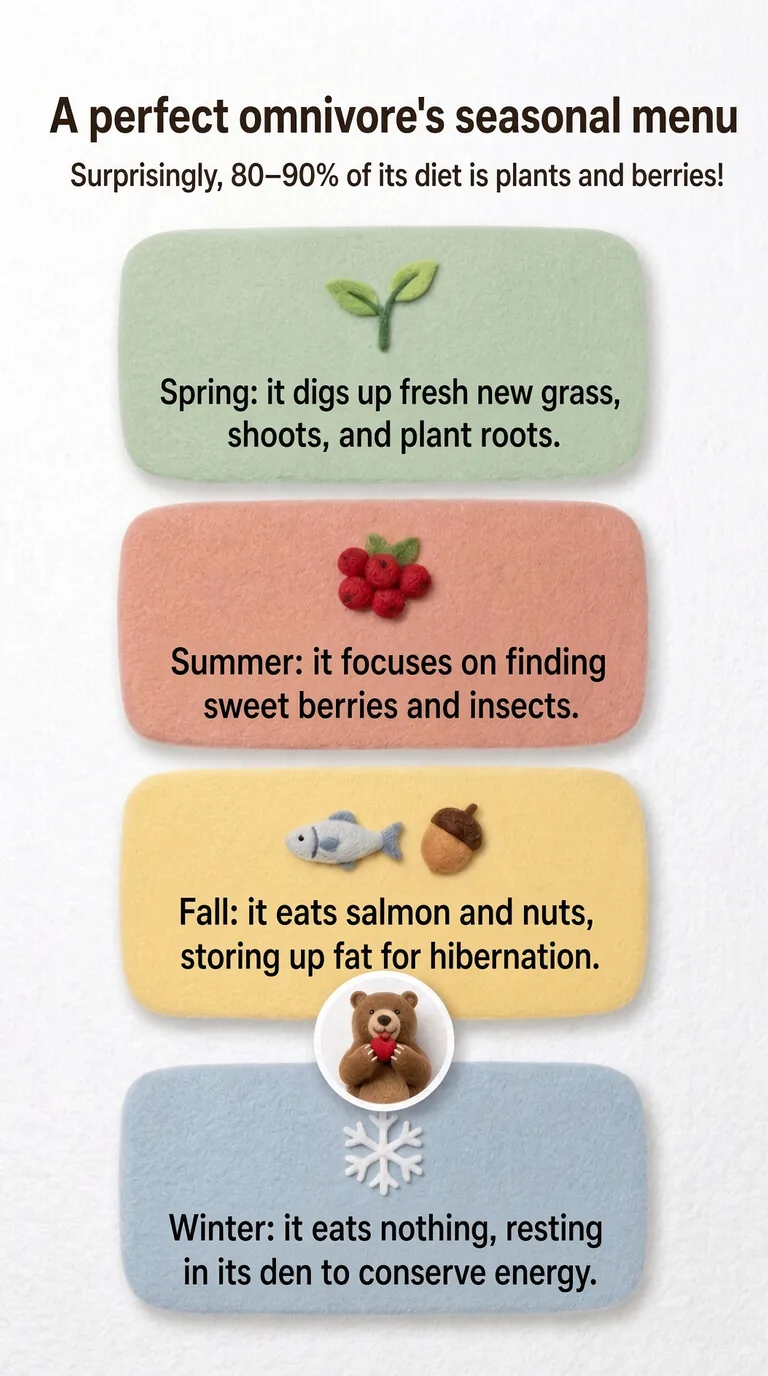
- Spring — it digs up fresh new grass, shoots, and plant roots.
- Summer — it focuses on finding sweet berries and insects.
- Fall — it eats salmon and nuts, storing up fat for hibernation.
- Winter — it eats nothing, resting in its den to conserve energy.
The smallest food and the most famous hunt
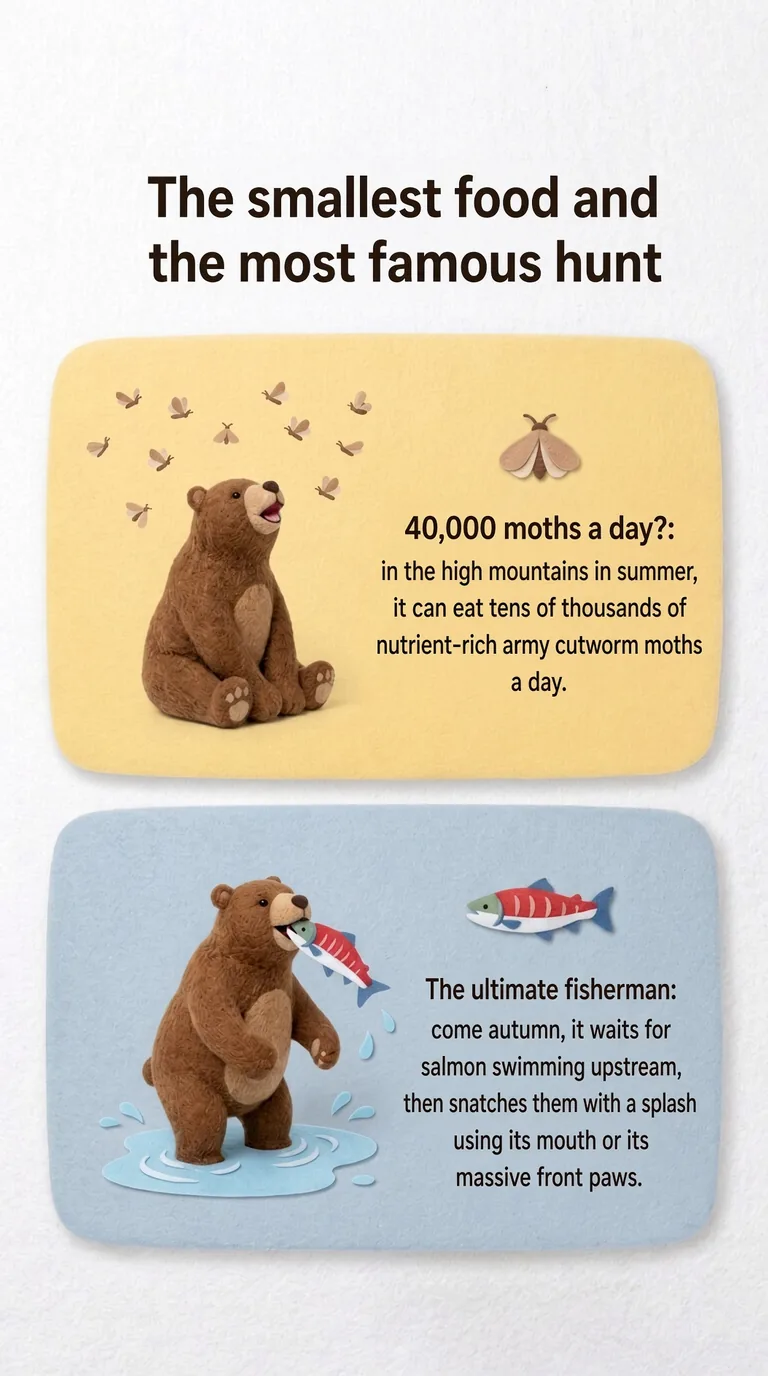
- 40,000 moths a day? — in the high mountains in summer, it can eat tens of thousands of nutrient-rich army cutworm moths a day.
- The ultimate fisherman — come autumn, it waits for salmon swimming upstream, then snatches them with a splash using its mouth or its massive front paws.
Not just sleep — the 'magic of hibernation'
It neither eats, drinks, nor excretes for 5–7 months!
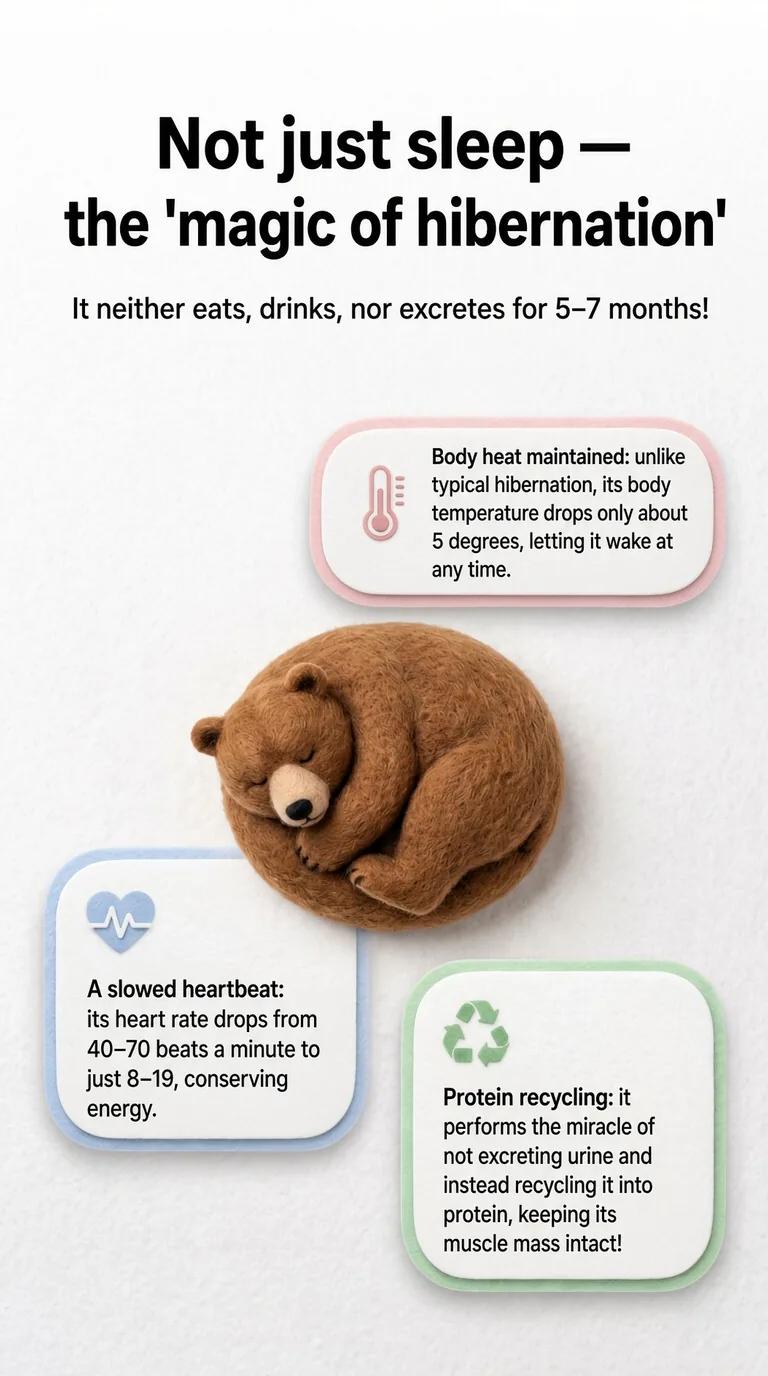
- Body heat maintained — unlike typical hibernation, its body temperature drops only about 5 degrees, letting it wake at any time.
- A slowed heartbeat — its heart rate drops from 40–70 beats a minute to just 8–19, conserving energy.
- Protein recycling — it performs the miracle of not excreting urine and instead recycling it into protein, keeping its muscle mass intact!
Birth happening during hibernation
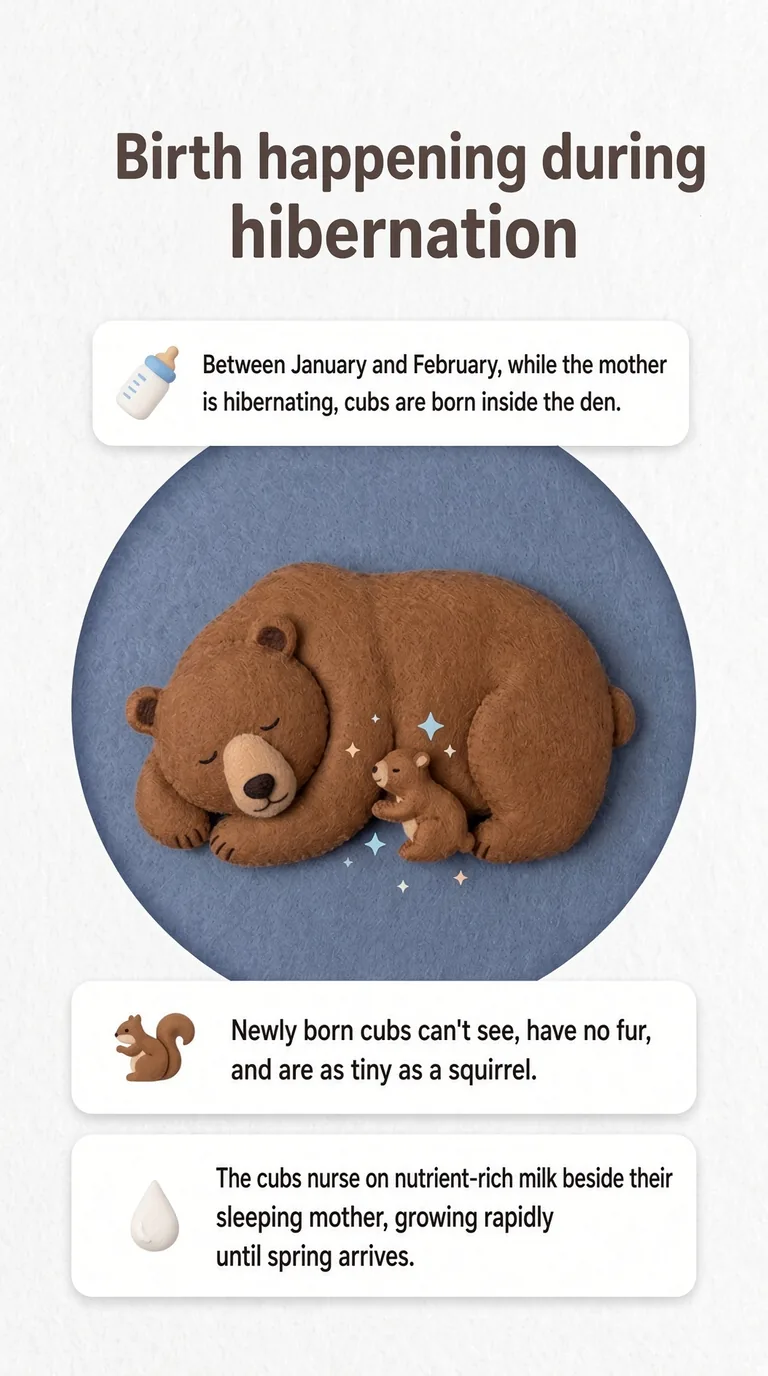
- Between January and February, while the mother is hibernating, cubs are born inside the den.
- Newly born cubs can't see, have no fur, and are as tiny as a squirrel.
- The cubs nurse on nutrient-rich milk beside their sleeping mother, growing rapidly until spring arrives.
Bear ID guide: grizzly vs black bear
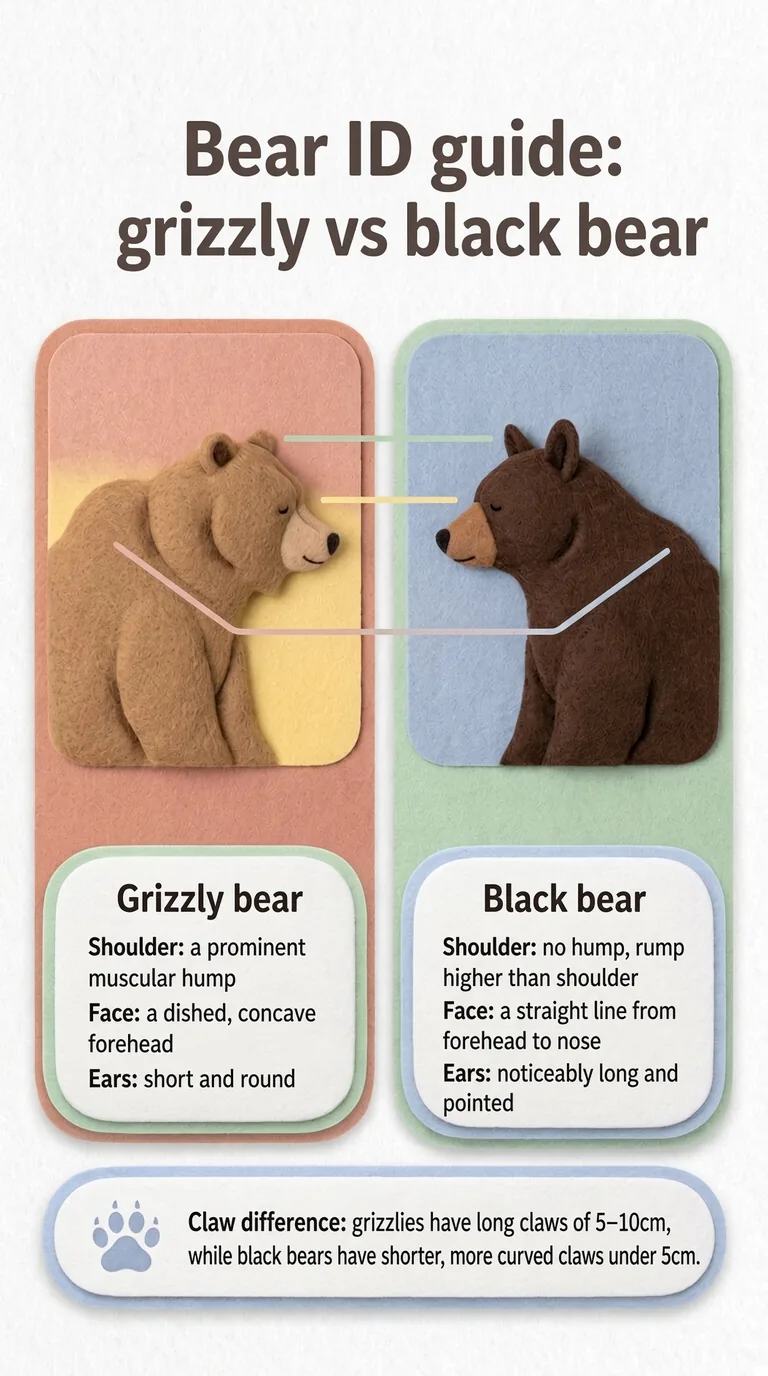
- Grizzly bear
- Shoulder — a prominent muscular hump
- Face — a dished, concave forehead
- Ears — short and round
- Black bear
- Shoulder — no hump, rump higher than shoulder
- Face — a straight line from forehead to nose
- Ears — noticeably long and pointed
Claw difference: grizzlies have long claws of 5–10cm, while black bears have shorter, more curved claws under 5cm.