Raccoon
North America
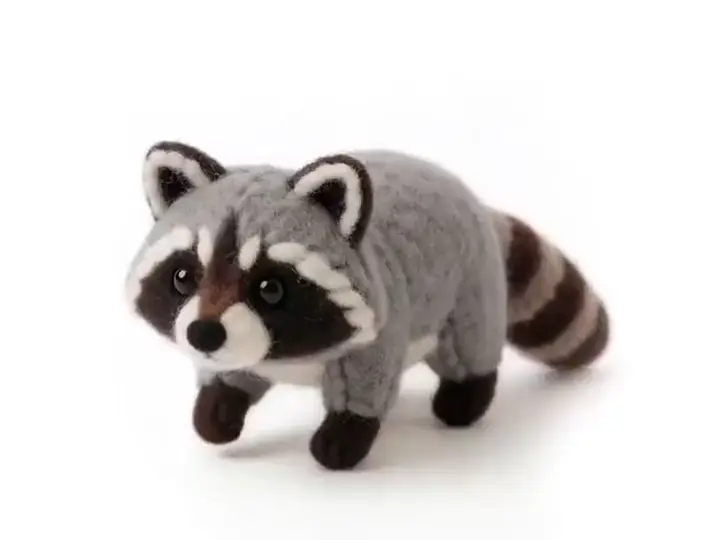
The raccoon is a clever, curious animal with a black mask around its eyes. Its front paws are as nimble as human hands, so it can open door latches and even wash its food. It's nocturnal, which means it's mostly active at night.
Quick facts
- Habitat
- It lives in forests and wetlands, and it adapts well to life near cities.
- Diet
- It eats almost anything, including fruit, insects, frogs, and eggs.
- Size and weight
- Length 40–70cm, weight 5–12kg.
- Lifespan
- 2–3 years in the wild
- Conservation status
- Least Concern
- Fun facts
- Its front paws are so sensitive it can tell what food is just by touching it!
It's smart enough to remember how to open hundreds of different trash cans.
Learn more
A tactile genius wearing a mask in the dark
The amazing secrets of the raccoon, hidden behind its cute looks
Profile
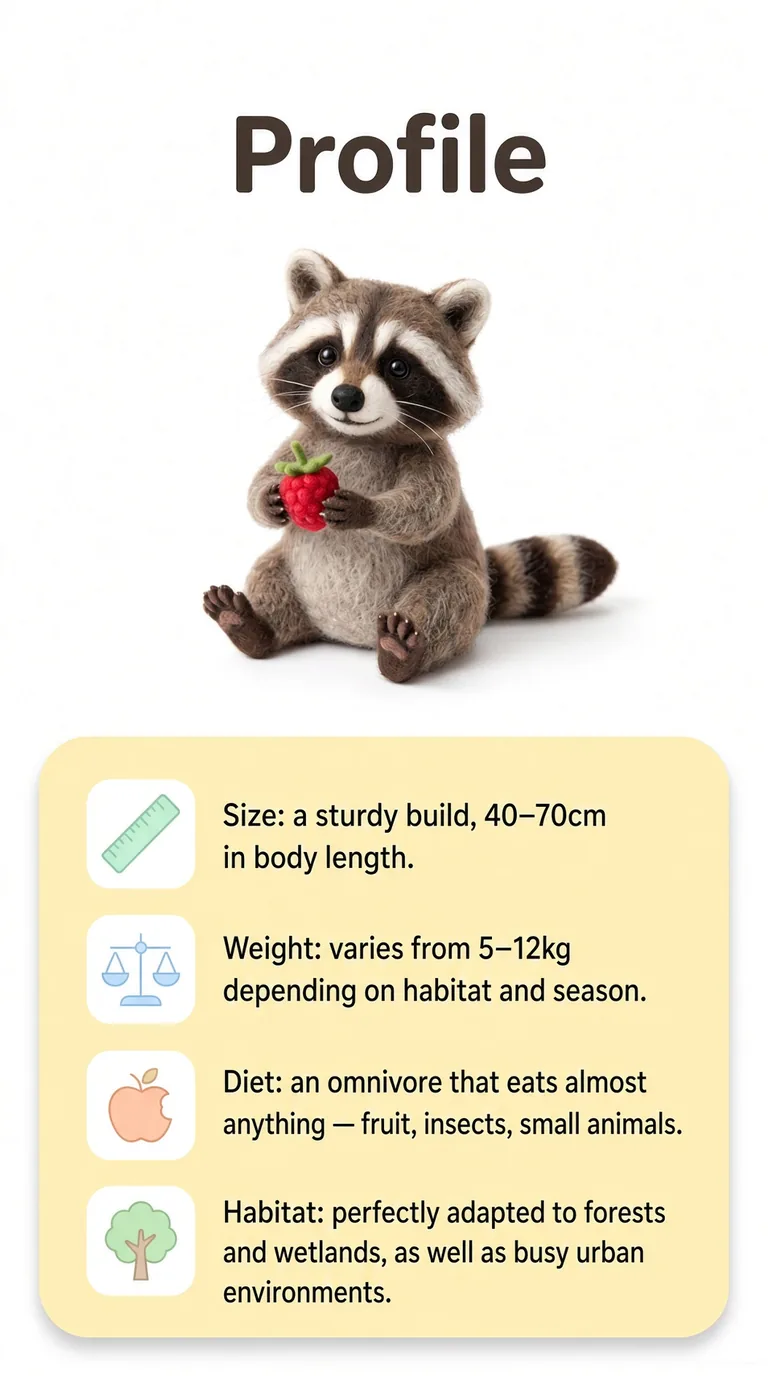
- Size — a sturdy build, 40–70cm in body length.
- Weight — varies from 5–12kg depending on habitat and season.
- Diet — an omnivore that eats almost anything — fruit, insects, small animals.
- Habitat — perfectly adapted to forests and wetlands, as well as busy urban environments.
Magic front paws
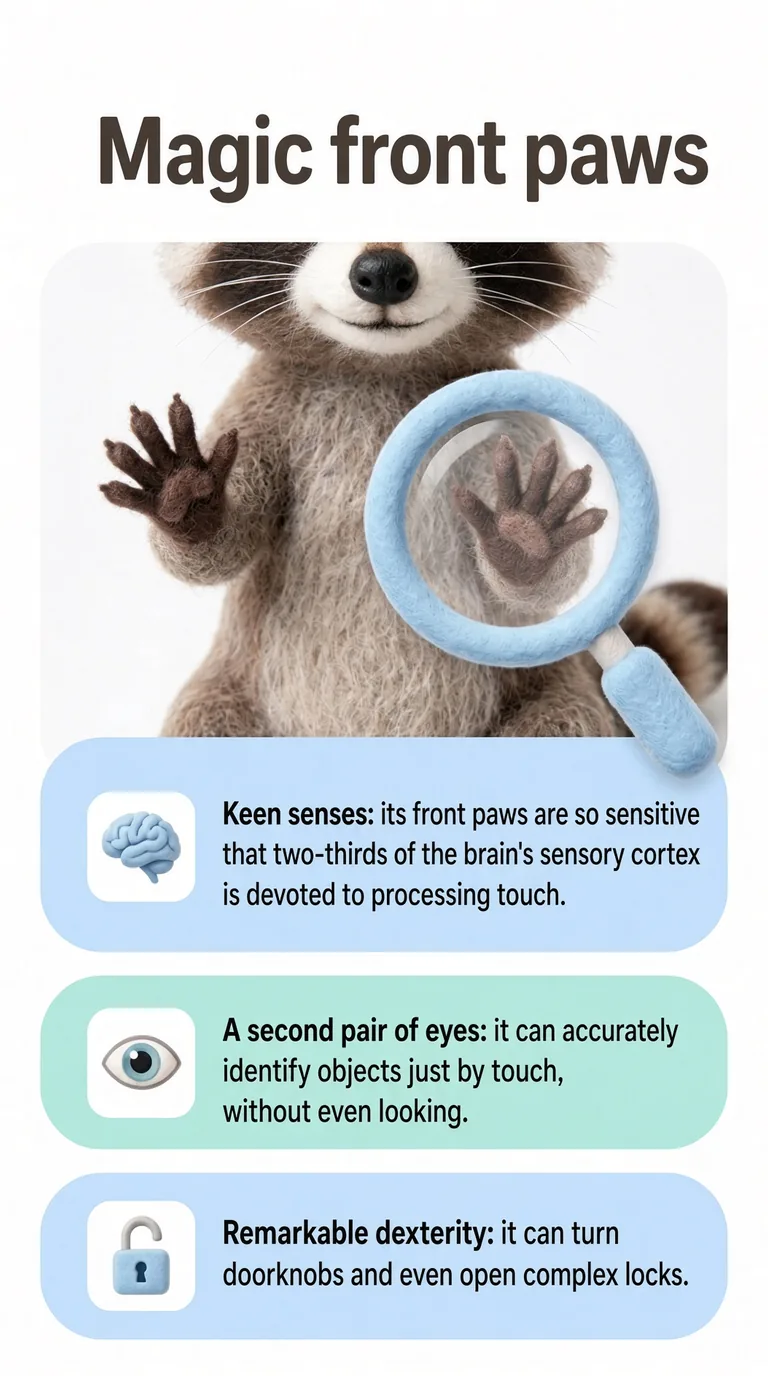
- Keen senses — its front paws are so sensitive that two-thirds of the brain's sensory cortex is devoted to processing touch.
- A second pair of eyes — it can accurately identify objects just by touch, without even looking.
- Remarkable dexterity — it can turn doorknobs and even open complex locks.
The real reason it "washes" its food?
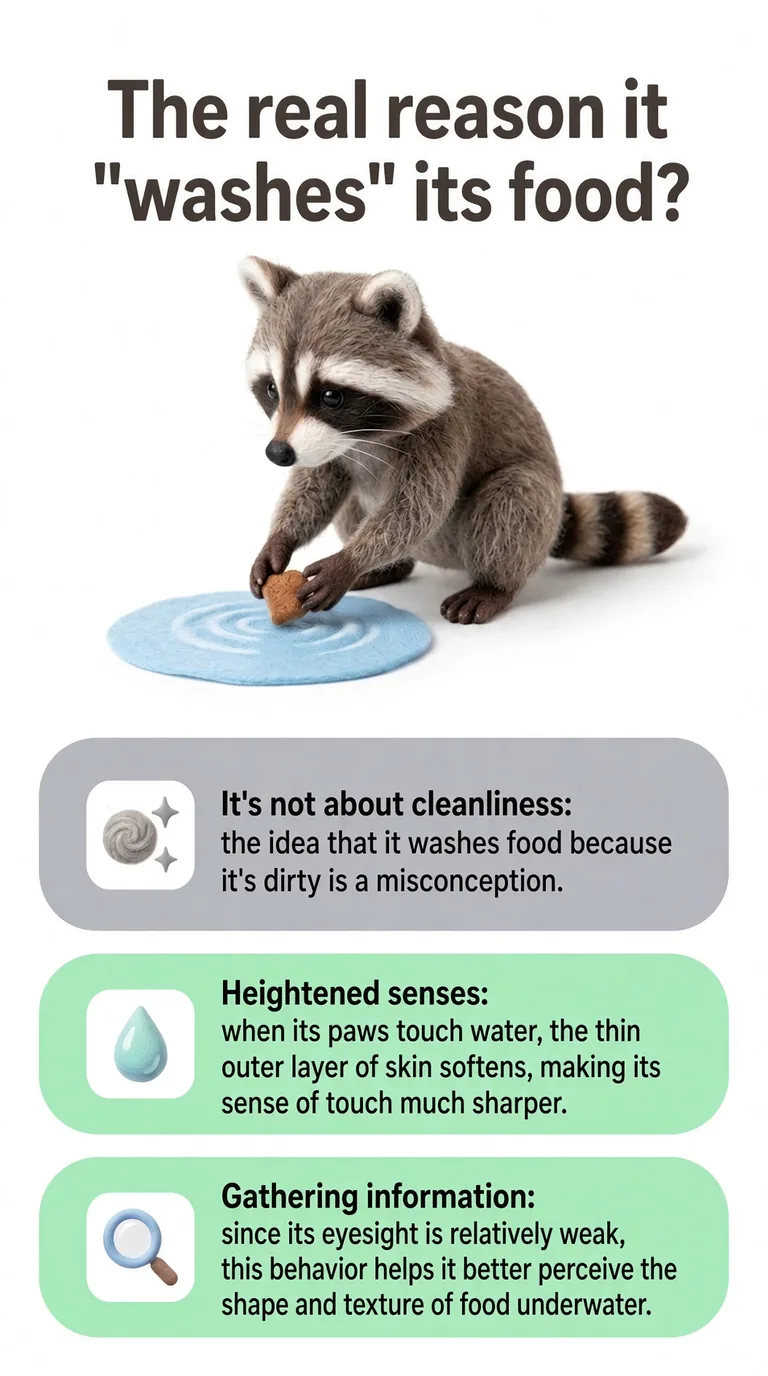
- It's not about cleanliness — the idea that it washes food because it's dirty is a misconception.
- Heightened senses — when its paws touch water, the thin outer layer of skin softens, making its sense of touch much sharper.
- Gathering information — since its eyesight is relatively weak, this behavior helps it better perceive the shape and texture of food underwater.
The Einstein of the animal kingdom
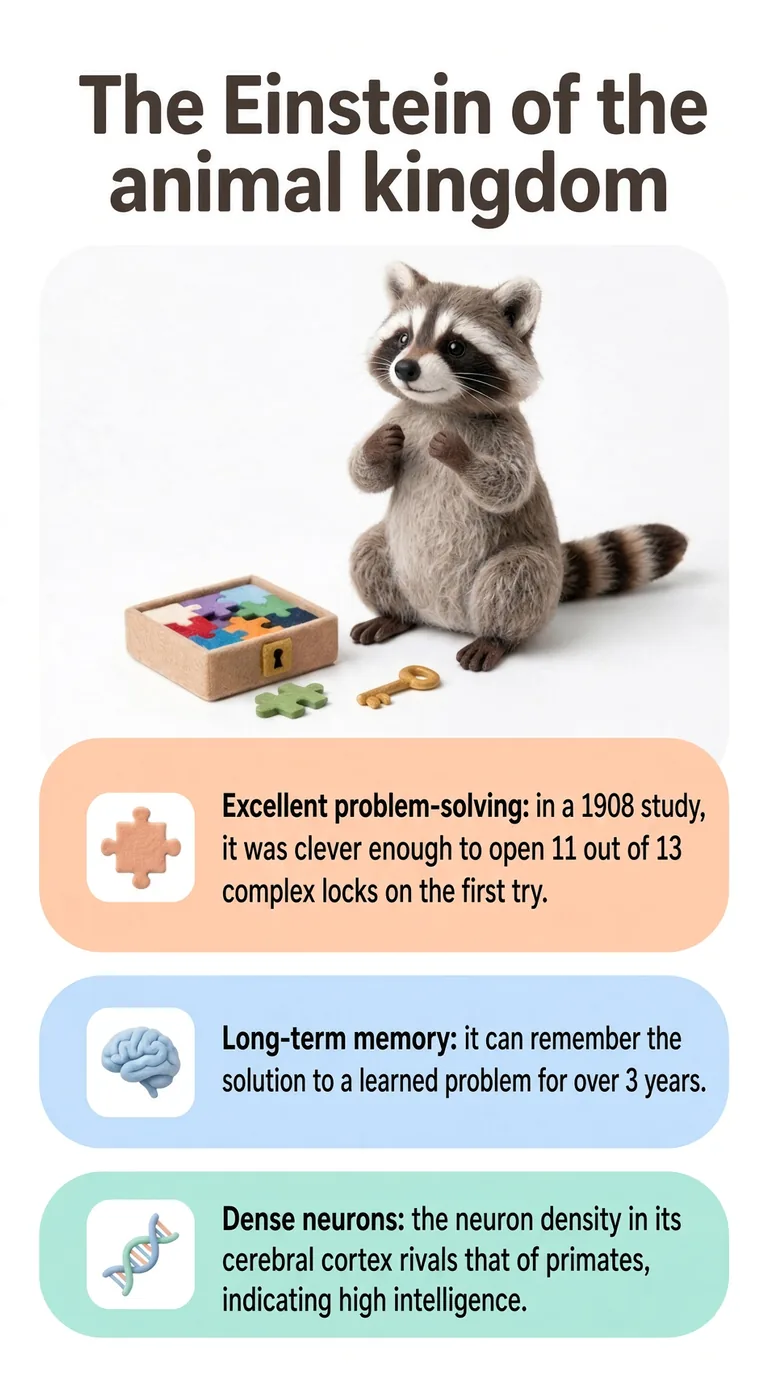
- Excellent problem-solving — in a 1908 study, it was clever enough to open 11 out of 13 complex locks on the first try.
- Long-term memory — it can remember the solution to a learned problem for over 3 years.
- Dense neurons — the neuron density in its cerebral cortex rivals that of primates, indicating high intelligence.
Surprising sociability
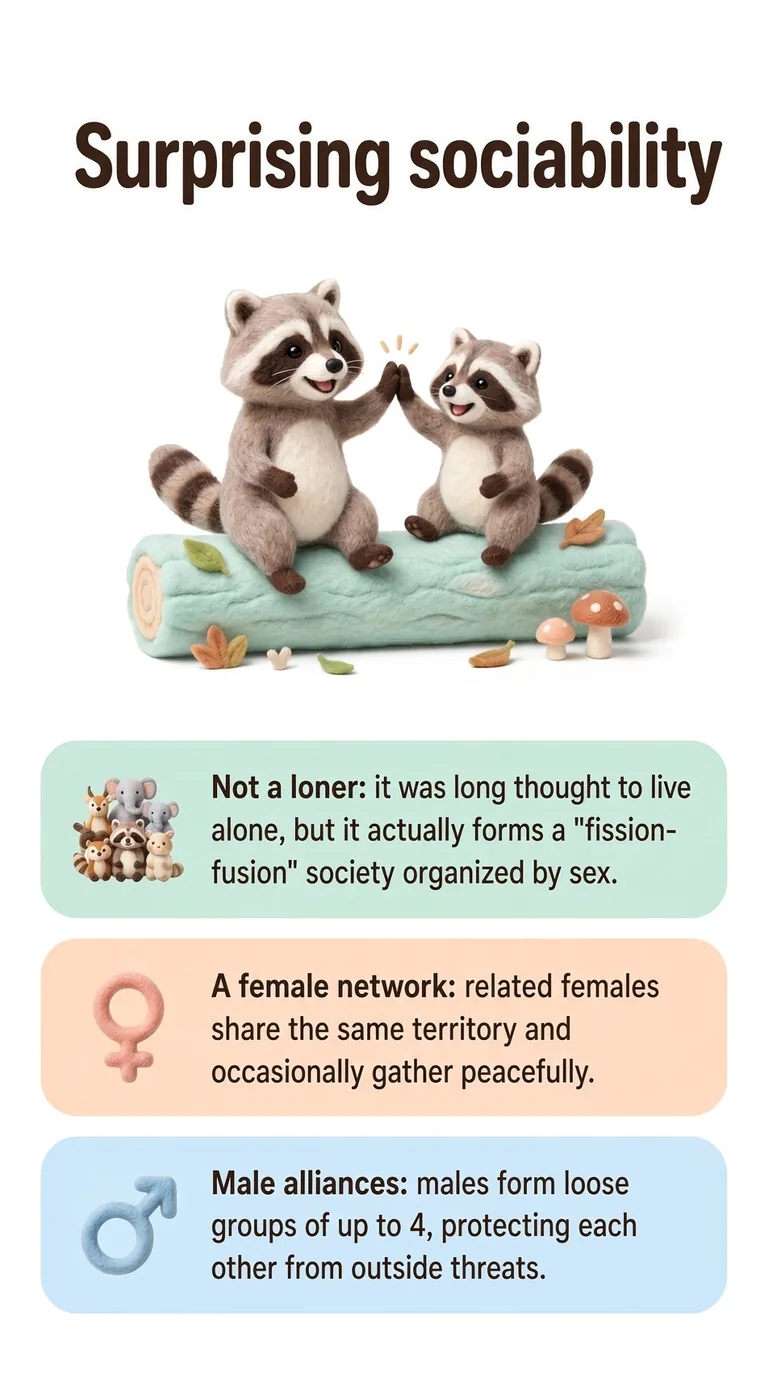
- Not a loner — it was long thought to live alone, but it actually forms a "fission-fusion" society organized by sex.
- A female network — related females share the same territory and occasionally gather peacefully.
- Male alliances — males form loose groups of up to 4, protecting each other from outside threats.
Raccoon vs. Korean raccoon dog?
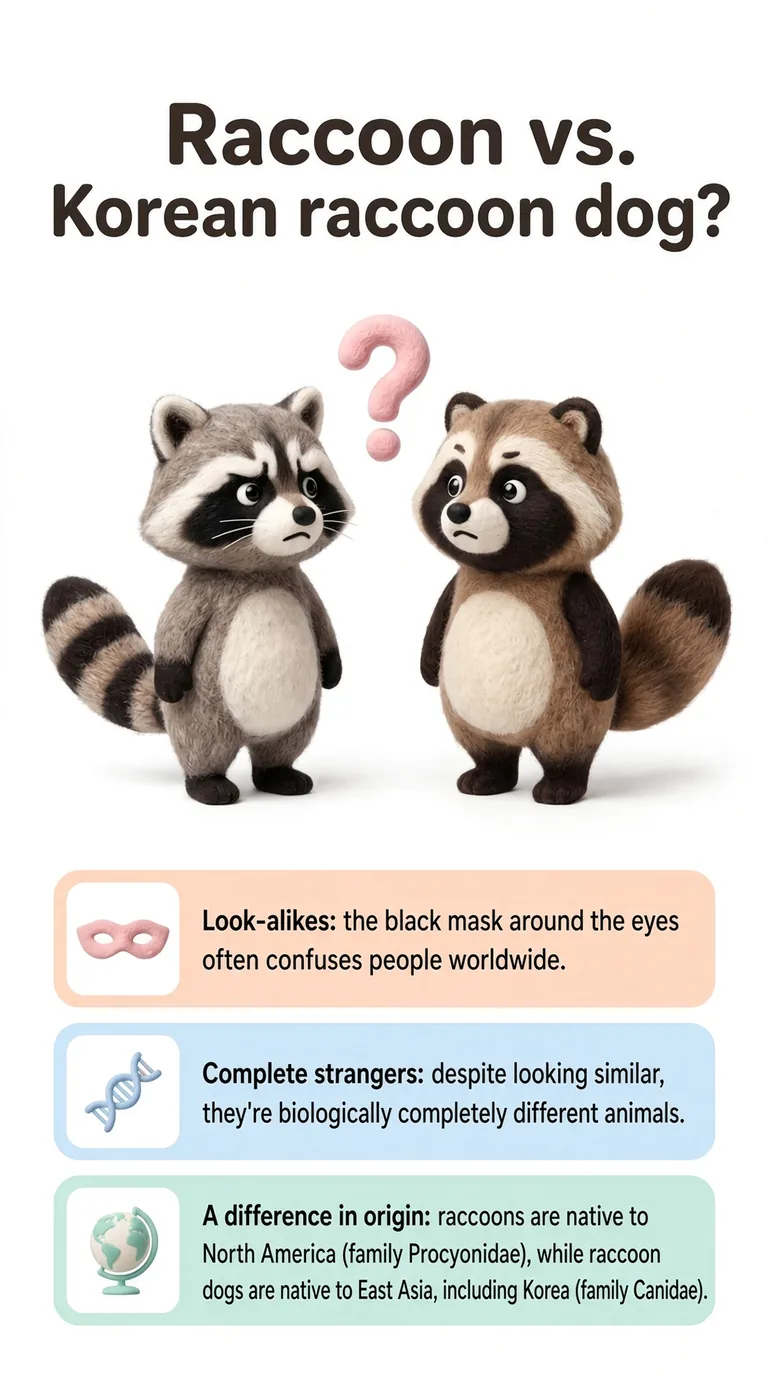
- Look-alikes — the black mask around the eyes often confuses people worldwide.
- Complete strangers — despite looking similar, they're biologically completely different animals.
- A difference in origin — raccoons are native to North America (family Procyonidae), while raccoon dogs are native to East Asia, including Korea (family Canidae).
A complete comparison guide
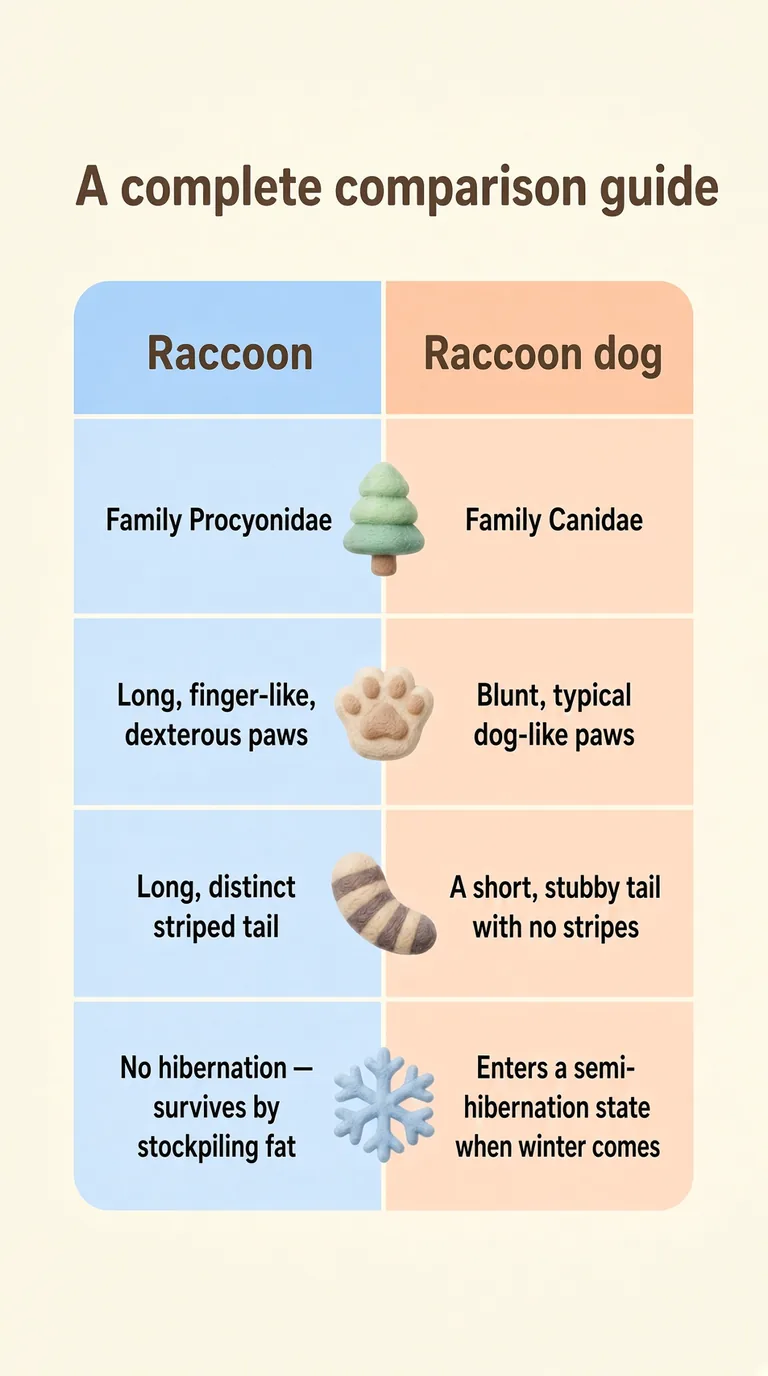
- Raccoon
- Family Procyonidae
- Long, finger-like, dexterous paws
- Long, distinct striped tail
- No hibernation — survives by stockpiling fat
- Raccoon dog
- Family Canidae
- Blunt, typical dog-like paws
- A short, stubby tail with no stripes
- Enters a semi-hibernation state when winter comes
A survivor of the city
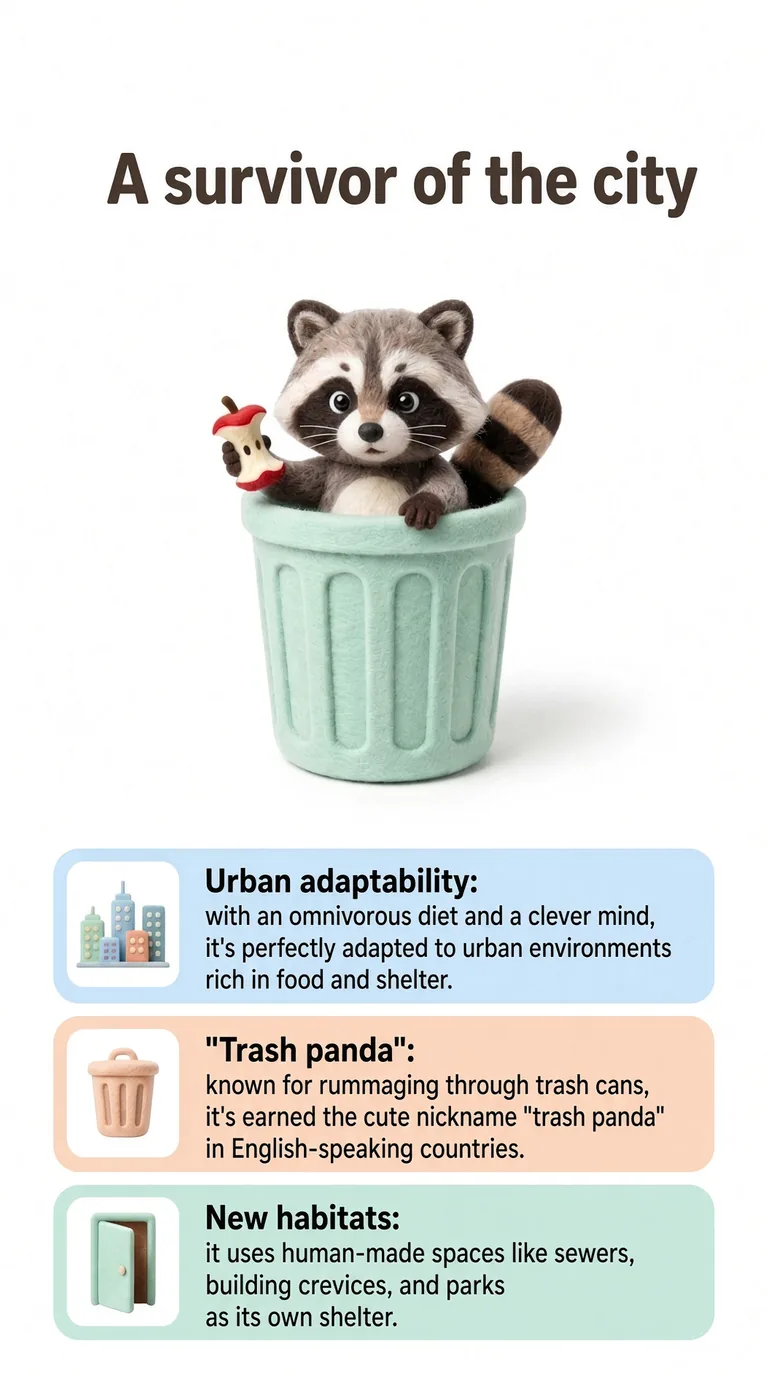
- Urban adaptability — with an omnivorous diet and a clever mind, it's perfectly adapted to urban environments rich in food and shelter.
- "Trash panda" — known for rummaging through trash cans, it's earned the cute nickname "trash panda" in English-speaking countries.
- New habitats — it uses human-made spaces like sewers, building crevices, and parks as its own shelter.