Moose
North America
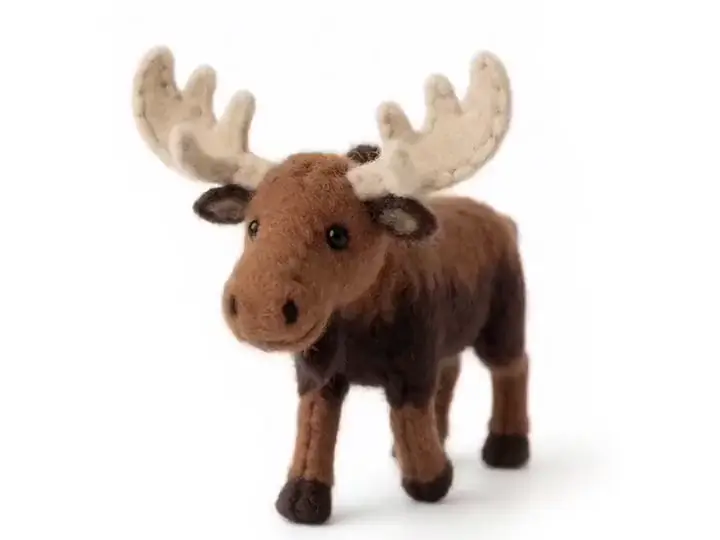
The moose is the largest member of the deer family. A male's huge antlers grow back every year and can be almost 2m wide. Its long legs help it get through deep snow and swamps.
Quick facts
- Habitat
- It lives in the northern forests and wetlands of North America and Europe.
- Diet
- It eats water plants, leaves, and young twigs.
- Size and weight
- Height 1.8–2.1m, weight 380–700kg.
- Lifespan
- 15–25 years
- Conservation status
- Least Concern
- Fun facts
- It's a strong swimmer and can swim 20km in one go!
It dives as deep as 5m underwater to eat water plants.
Learn more
The forest's giant swimmer, the Moose
The survival secrets of Earth's largest, most mysterious deer
A supersized giant of the deer family
It boasts the largest body of any living deer species.
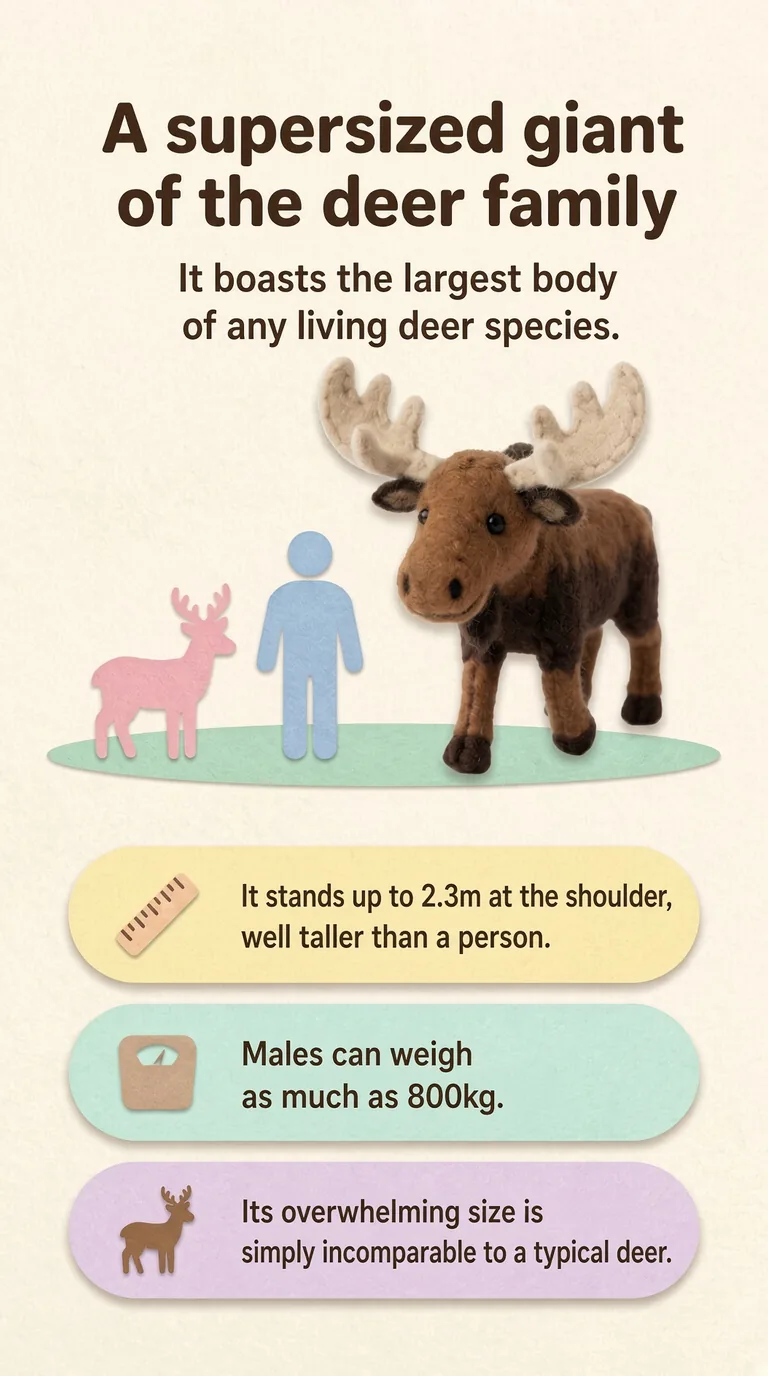
- It stands up to 2.3m at the shoulder, well taller than a person.
- Males can weigh as much as 800kg.
- Its overwhelming size is simply incomparable to a typical deer.
A giant crown rewritten every year
The secret of the male moose's signature broad antlers!
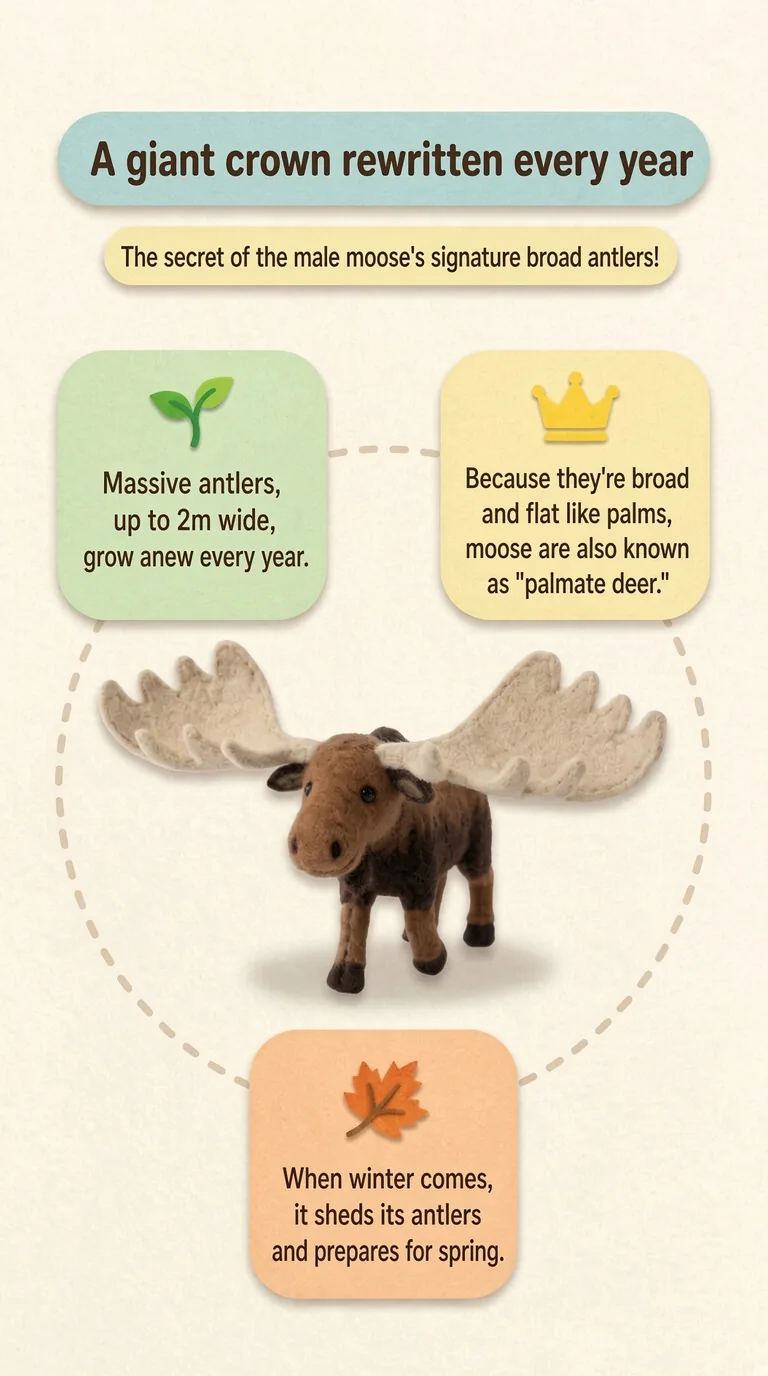
- Massive antlers, up to 2m wide, grow anew every year.
- Because they're broad and flat like palms, moose are also known as "palmate deer."
- When winter comes, it sheds its antlers on its own and prepares for spring.
An all-purpose nose, unfazed even underwater
Not ugly — just specially evolved.
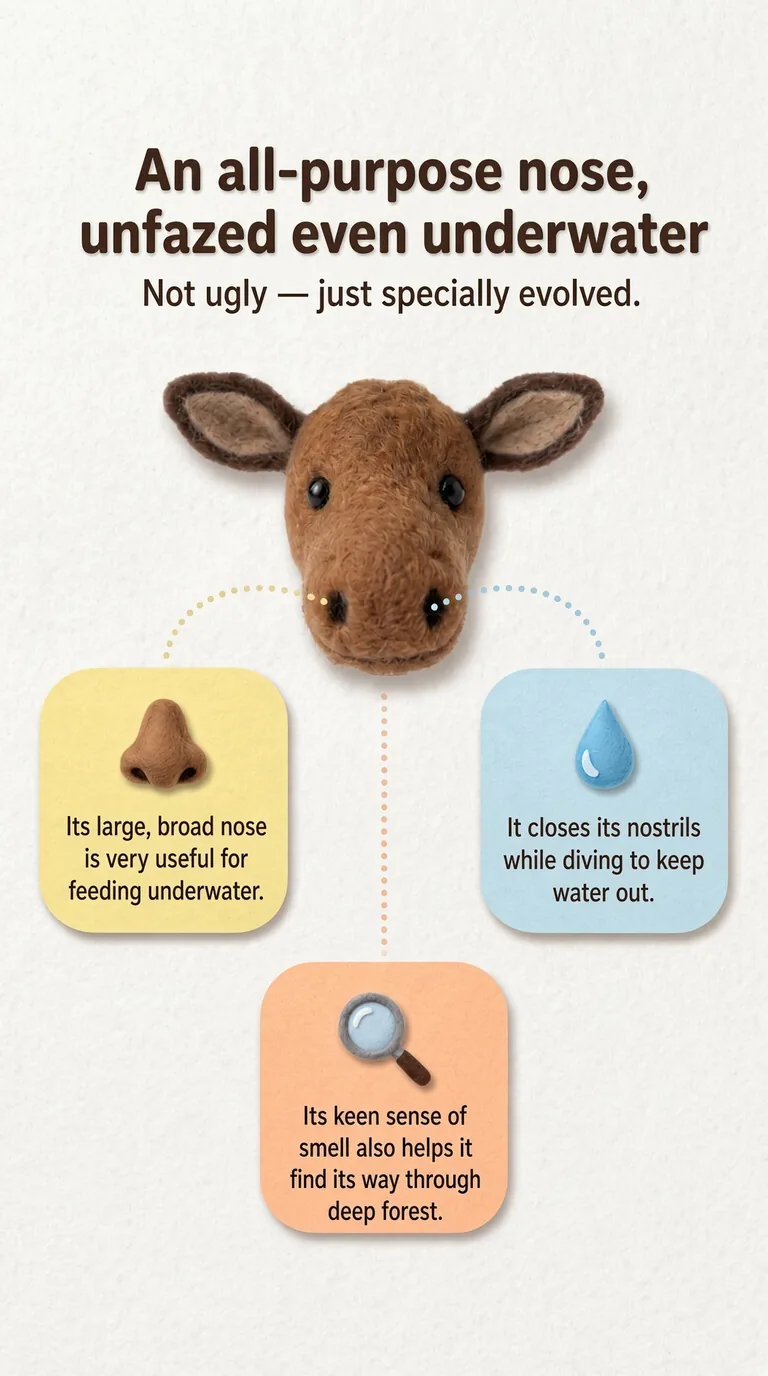
- Its large, broad nose is very useful for feeding underwater.
- It closes its nostrils while diving to keep water out.
- Its keen sense of smell also helps it find its way through deep forest.
A giant diver roaming the lakes
The moose is a surprisingly excellent swimmer, despite its size!
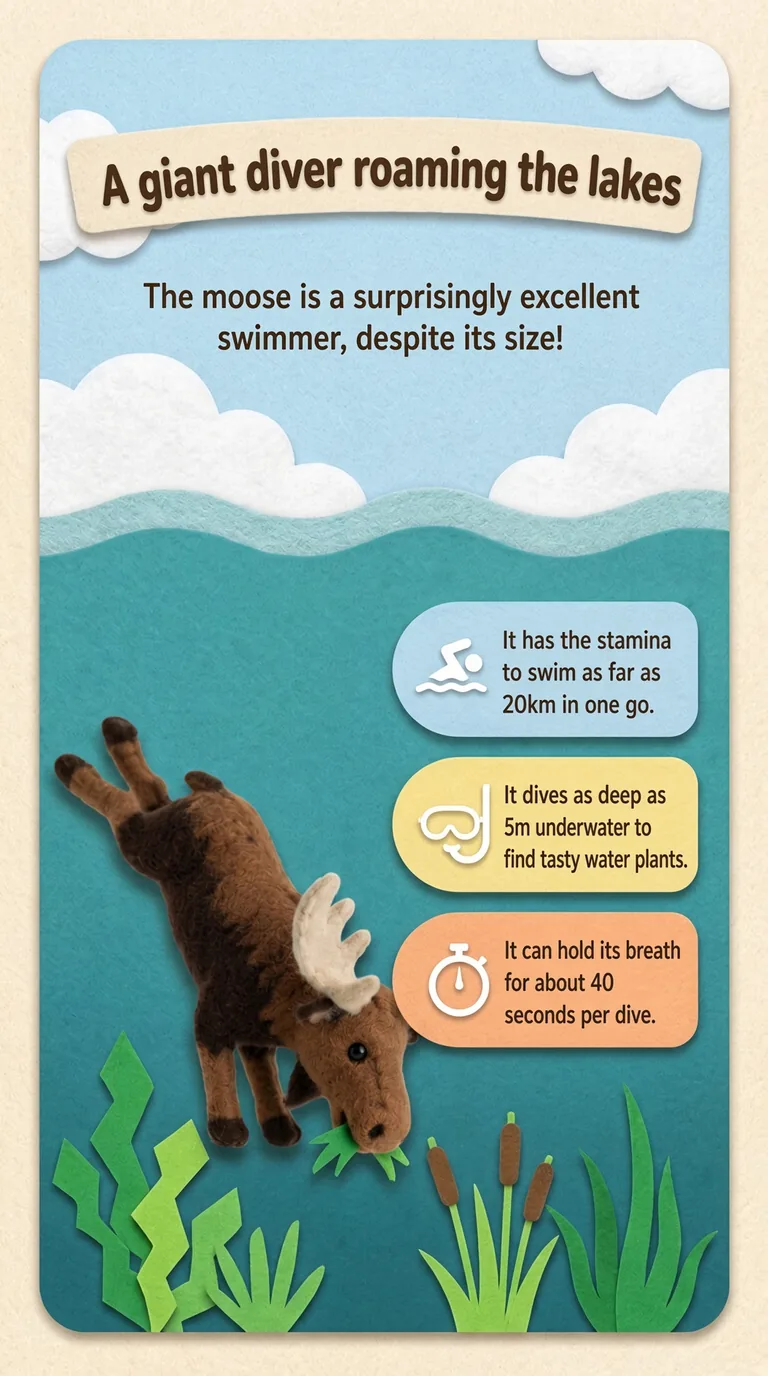
- It has the stamina to swim as far as 20km in one go.
- It dives as deep as 5m underwater to find tasty water plants.
- It can hold its breath for about 40 seconds per dive.
Long legs that push through snowfields
Its greatest weapon for surviving harsh northern forests!
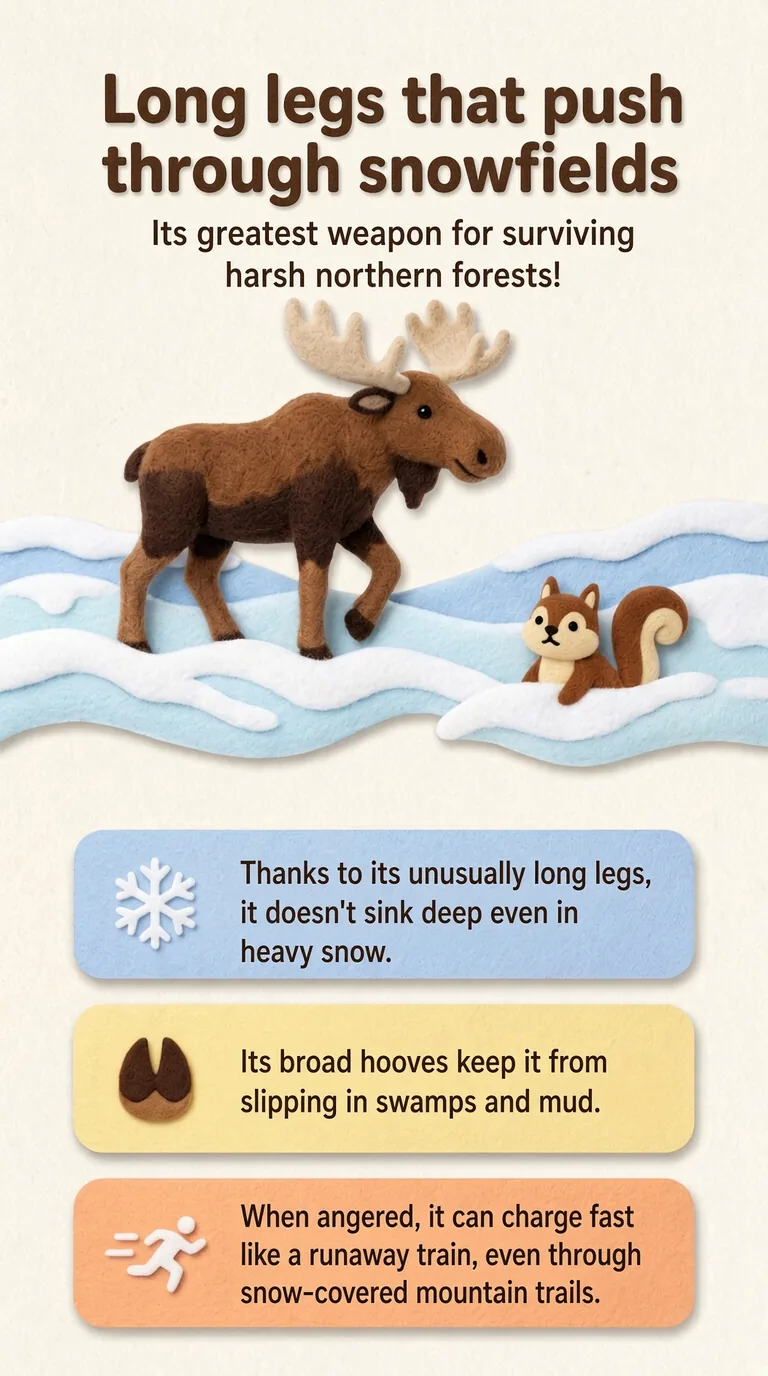
- Thanks to its unusually long legs, it doesn't sink deep even in heavy snow.
- Its broad hooves keep it from slipping in swamps and mud.
- When angered, it can charge fast like a runaway train, even through snow-covered mountain trails.
Great with cold, terrible with heat!
For a moose wrapped in fur, summer is far too hot.
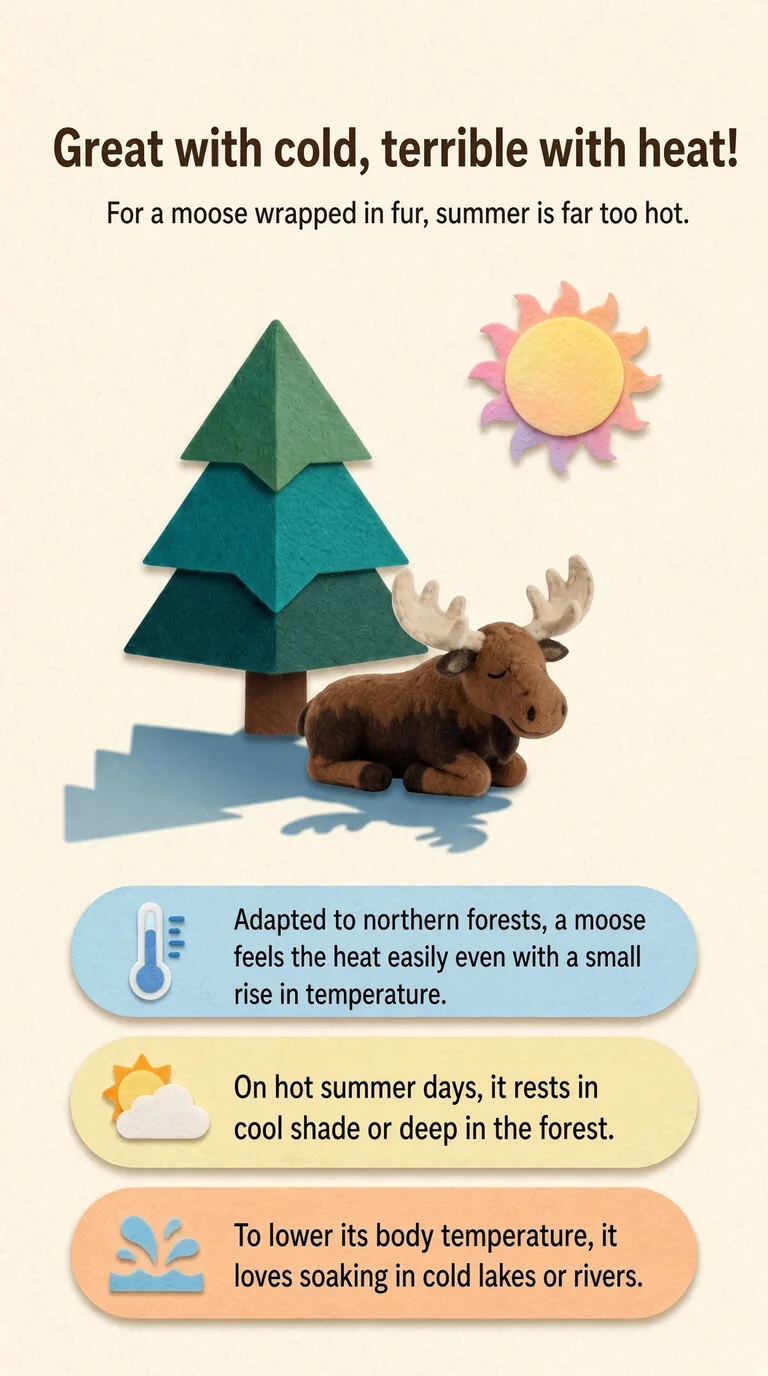
- Adapted to northern forests, a moose feels the heat easily even with a small rise in temperature.
- On hot summer days, it rests in cool shade or deep in the forest.
- To lower its body temperature, it loves soaking in cold lakes or rivers.
A super baby that walks right after birth
The moose's remarkable vitality begins from the moment it's a calf.
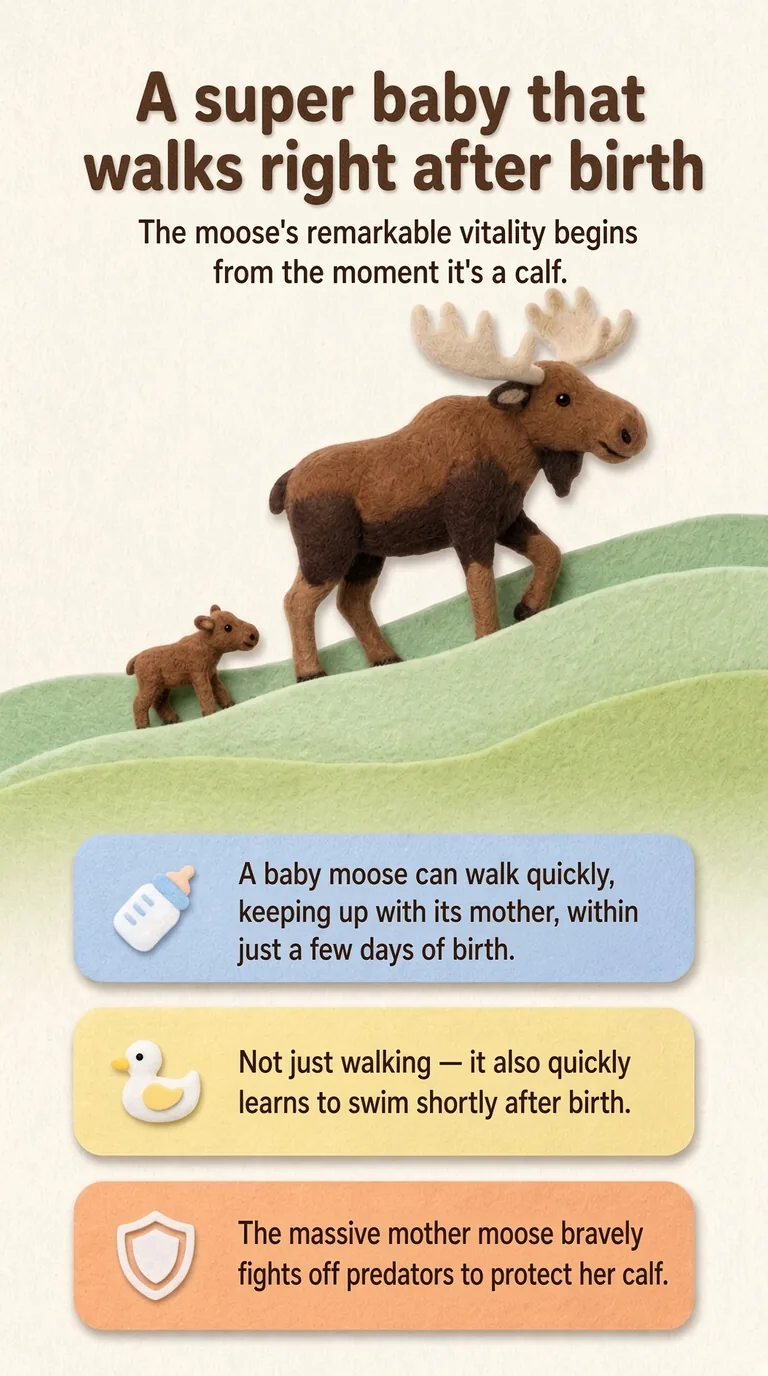
- A baby moose can walk quickly, keeping up with its mother, within just a few days of birth.
- Not just walking — it also quickly learns to swim shortly after birth.
- The massive mother moose bravely fights off predators to protect her calf.
Munching all day, the hearty moose
Maintaining such a huge body requires an enormous diet.
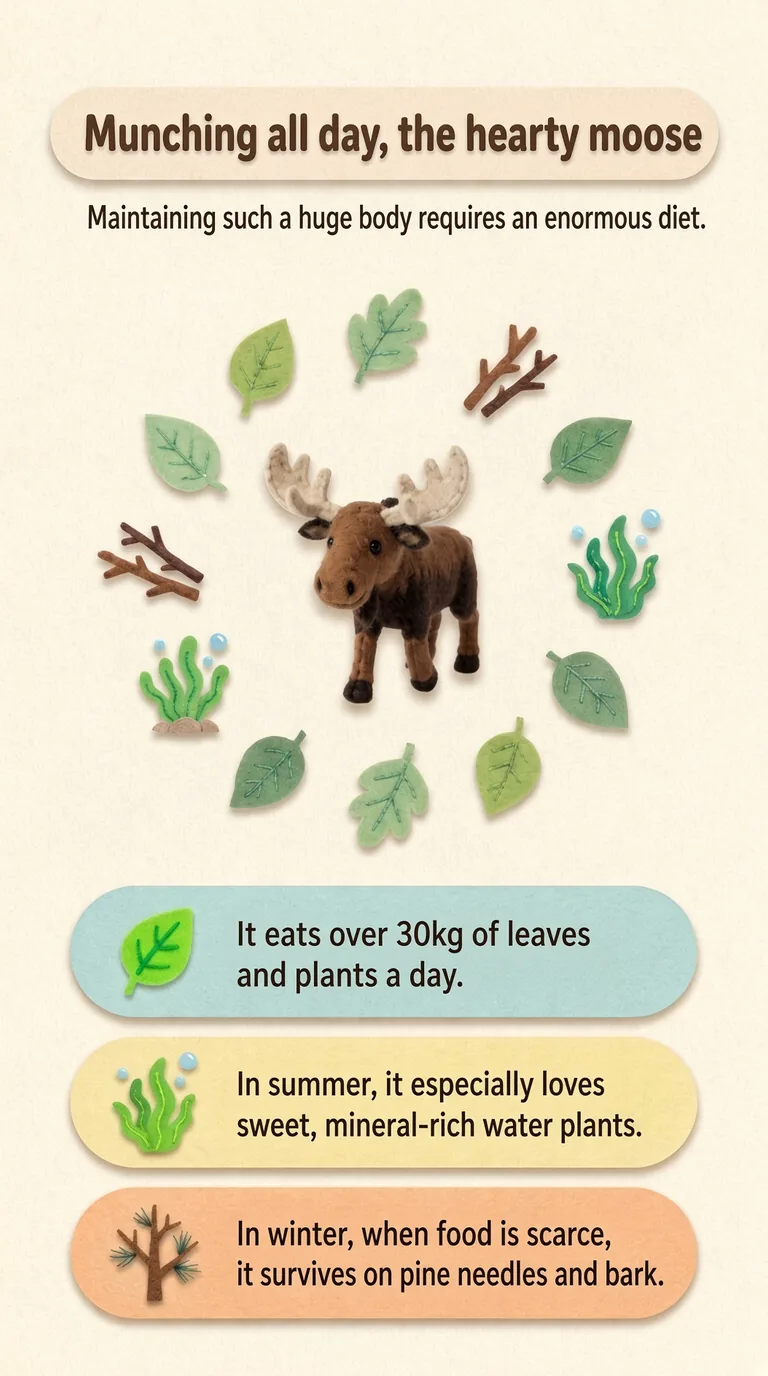
- It eats over 30kg of leaves and plants a day.
- In summer, it especially loves sweet, mineral-rich water plants.
- In winter, when food is scarce, it survives on pine needles and bark.