Pangolin
Africa
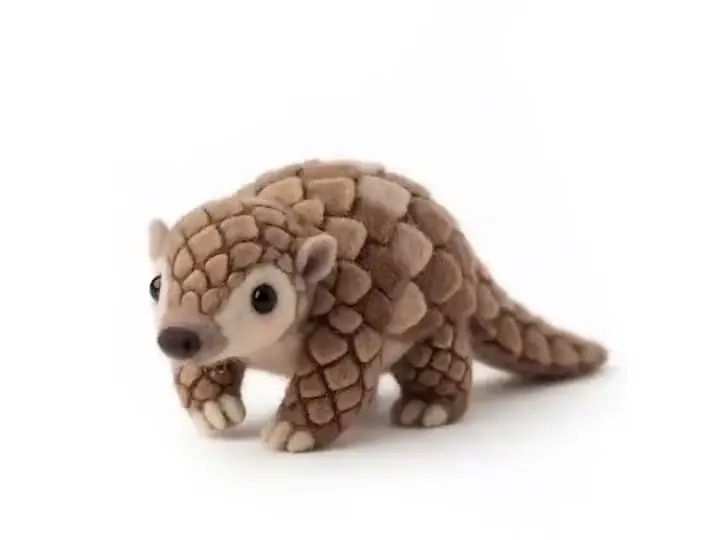
The pangolin is a very unusual animal covered in hard scales from head to tail. When it senses danger, it rolls into a ball and hides inside its armor of scales. It has no teeth, so it licks up ants and termites with its long tongue.
Quick facts
- Habitat
- It lives in forests, grasslands, and savannas.
- Diet
- It eats ants and termites with its long, sticky tongue.
- Size and weight
- Length 30–100cm, weight 2–33kg.
- Lifespan
- About 20 years
- Conservation status
- Critically Endangered
- Fun facts
- It's the only mammal with scales, so it's called a "walking pinecone"!
Its tongue is longer than its body and reaches deep inside it.
Learn more
A walking pinecone? The round knight of the forest!
Everything about the pangolin, a mysterious endangered animal
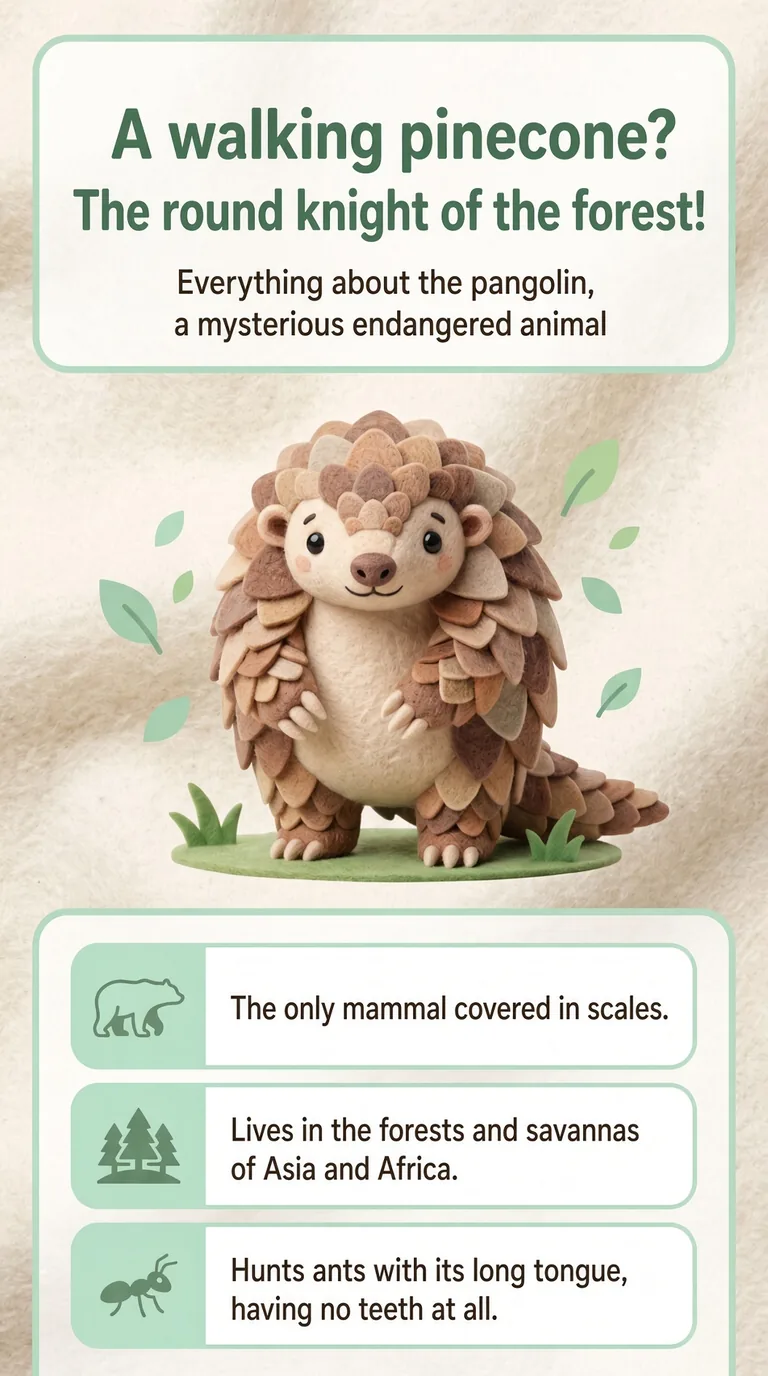
- The only mammal covered in scales.
- Lives in the forests and savannas of Asia and Africa.
- Hunts ants with its long tongue, having no teeth at all.
Perfectly evolved for life in the trees
The orangutan's unique body structure
- 2m-long arms — with arms spanning up to 2m, it swings easily between trees like on a trapeze.
- Red fur — it has striking reddish-brown fur that stands out beautifully against the green rainforest.
- Broad cheek pads — mature males develop round, wide cheek pads on either side of the face.
Who's who?
The difference between two animals that look similar but are completely different
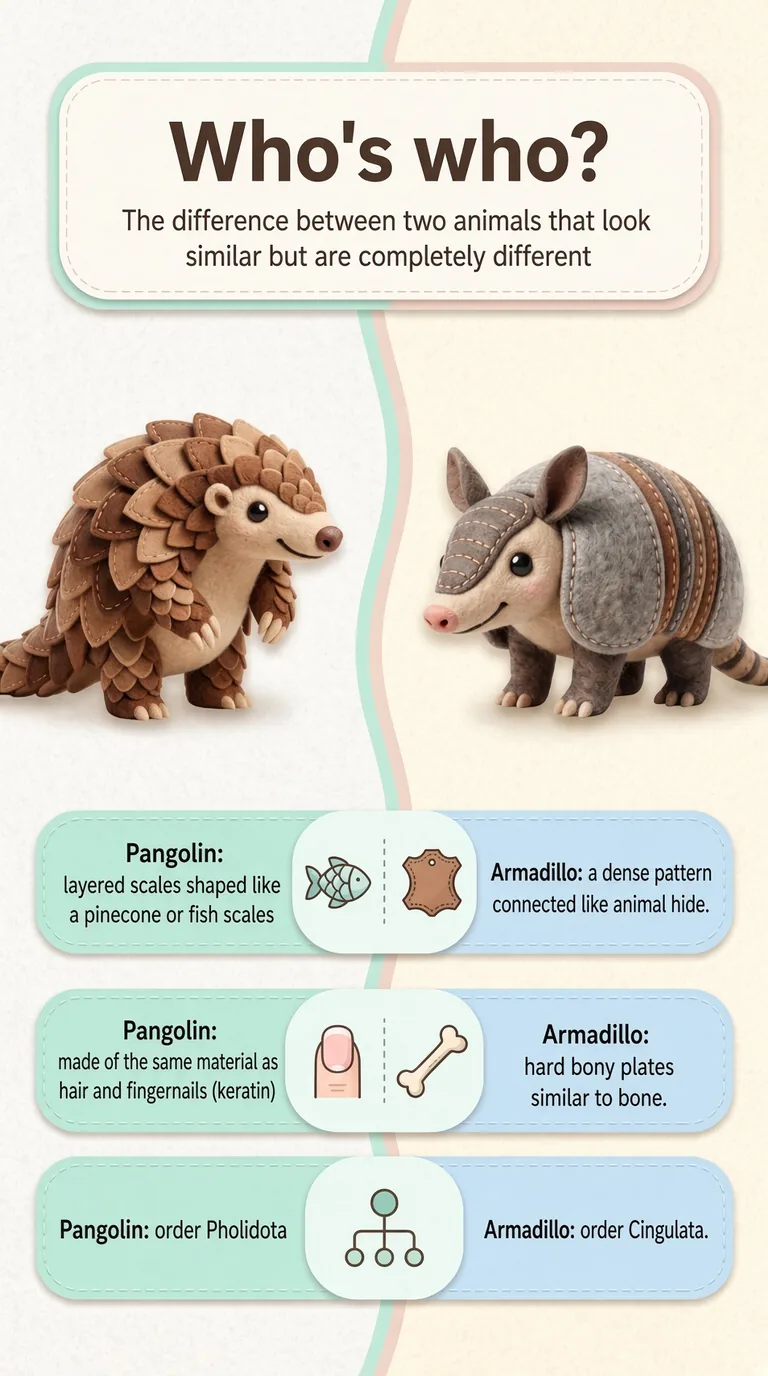
- Pangolin — layered scales shaped like a pinecone or fish scales / Armadillo: a dense pattern connected like animal hide.
- Pangolin — made of the same material as hair and fingernails (keratin) / Armadillo: hard bony plates similar to bone.
- Pangolin — order Pholidota / Armadillo: order Cingulata.
A magic tongue longer than its own body
The secret weapon that lets a toothless pangolin eat its fill
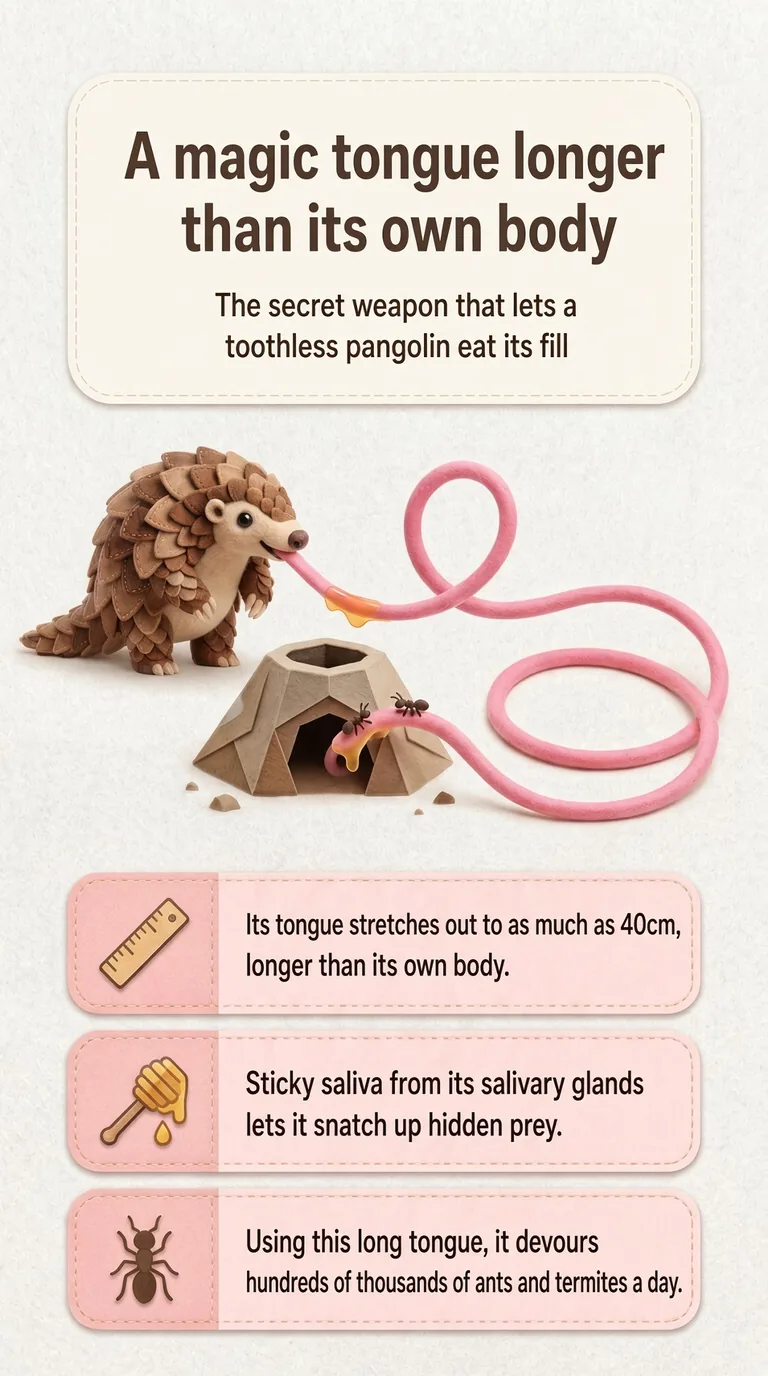
- Its tongue stretches out to as much as 40cm, longer than its own body.
- Sticky saliva from its salivary glands lets it snatch up hidden prey.
- Using this long tongue, it devours hundreds of thousands of ants and termites a day.
A tireless natural digger of the forest
What its small but powerful front claws do for the ecosystem
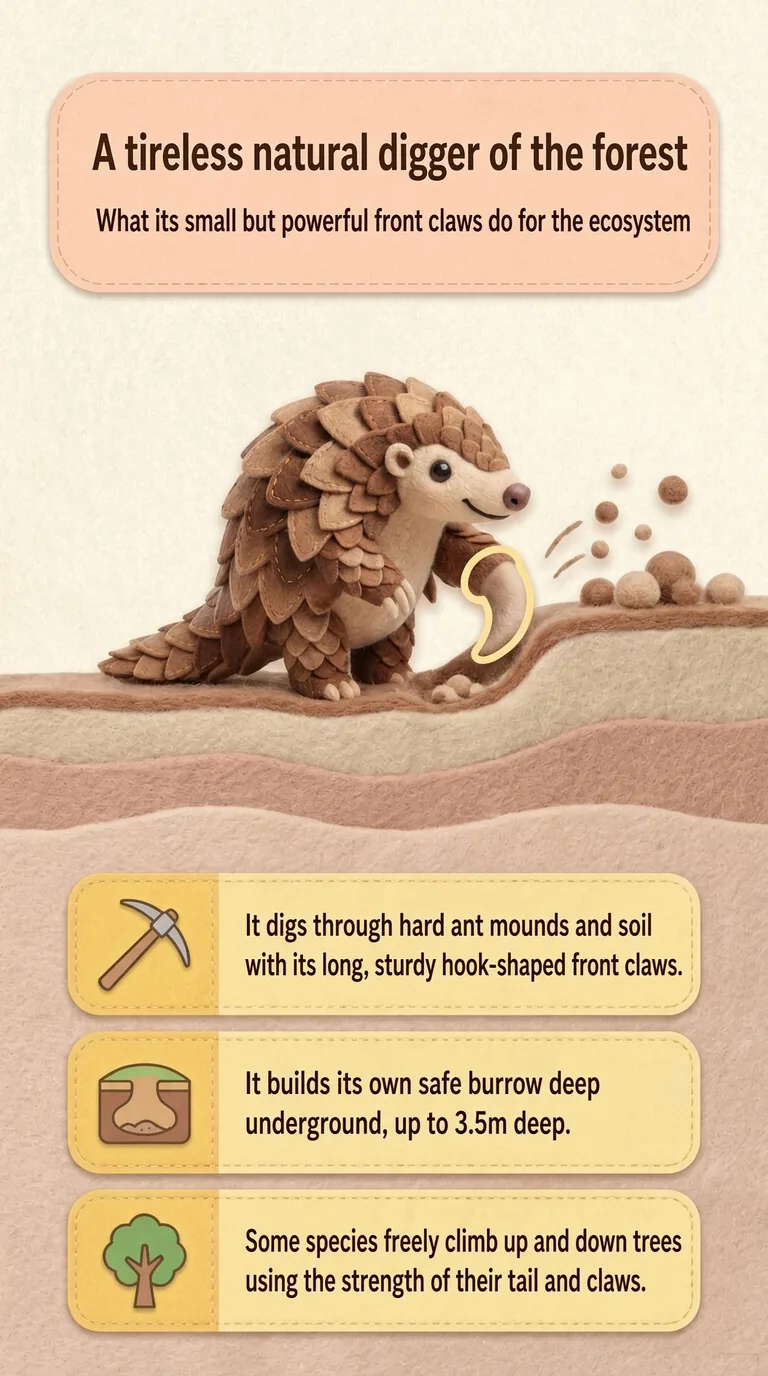
- It digs through hard ant mounds and soil with its long, sturdy hook-shaped front claws.
- It builds its own safe burrow deep underground, up to 3.5m deep.
- Some species freely climb up and down trees using the strength of their tail and claws.
Mom's tail is my sturdy ride!
The pangolin's special nighttime outings, devotedly caring for its young
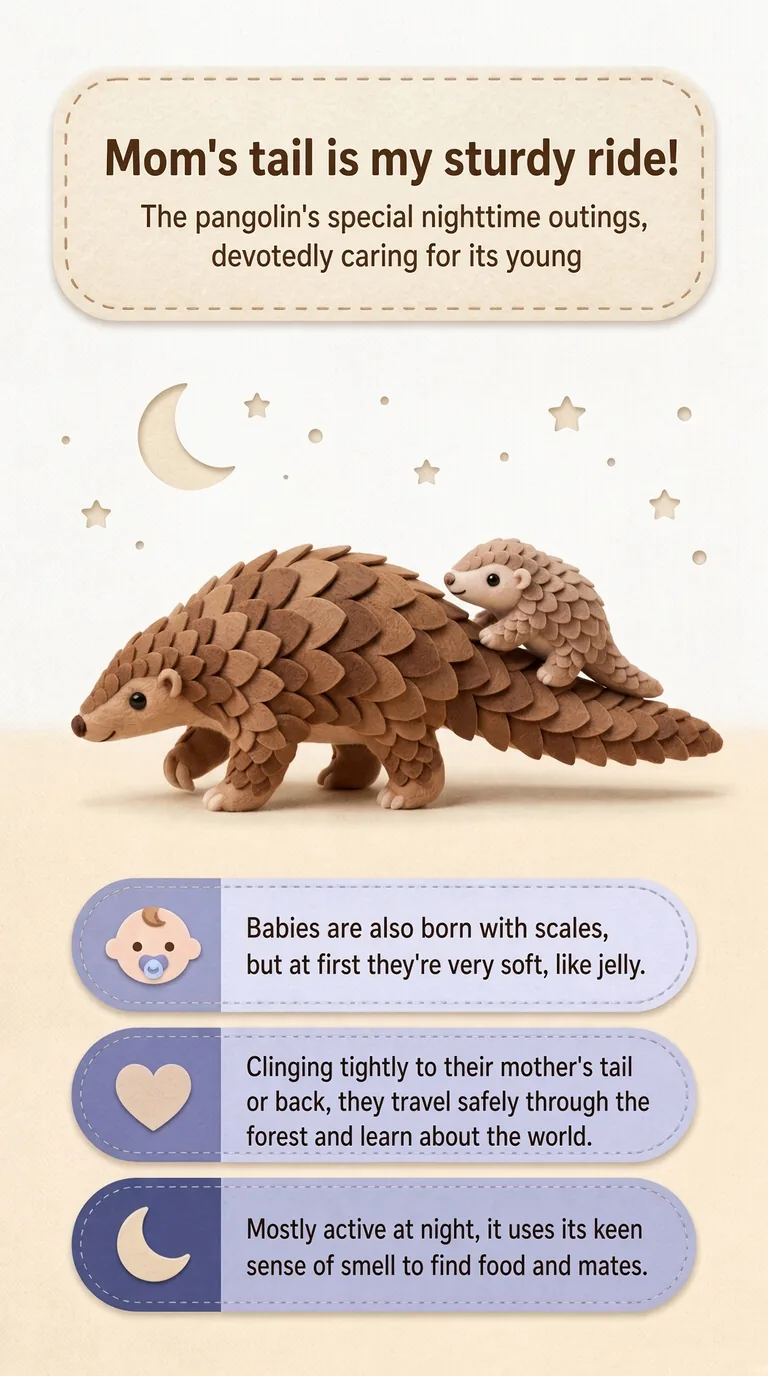
- Babies are also born with scales, but at first they're very soft, like jelly.
- Clinging tightly to their mother's tail or back, they travel safely through the forest and learn about the world.
- Mostly active at night, it uses its keen sense of smell to find food and mates.