Skunk
North America
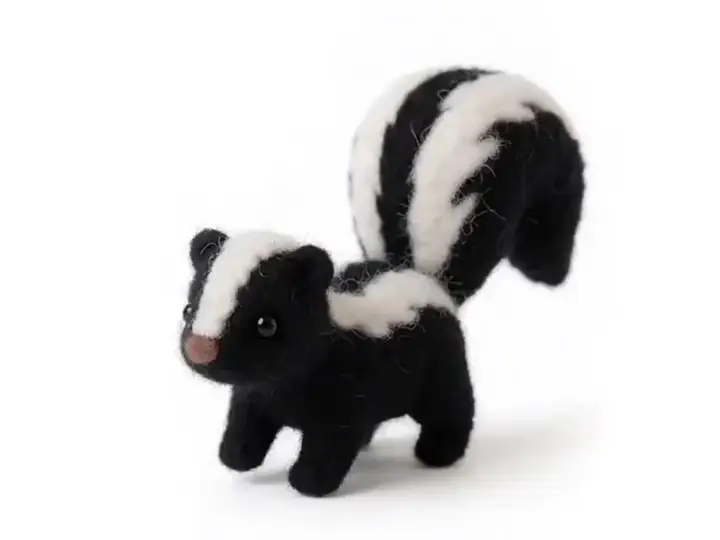
The skunk is a small black animal with bold white stripes. When it senses danger, it sprays a terrible-smelling liquid from its rear end to drive enemies away. Most of the time it's gentle, and it looks for food at night.
Quick facts
- Habitat
- It lives in all kinds of places, from forests and grasslands to the edges of cities.
- Diet
- It eats insects, worms, fruit, and small animals.
- Size and weight
- Length 40–70cm, weight 1–6kg.
- Lifespan
- 3–4 years in the wild
- Conservation status
- Least Concern
- Fun facts
- It can spray its stinky liquid with perfect aim up to 3m away!
Before it sprays, it stamps its front feet as a warning.
Learn more
A powerful stink bomb in black-and-white
The amazing secrets and ecology of the skunk that we never knew
What kind of animal is the skunk?
A unique mammal representing North America
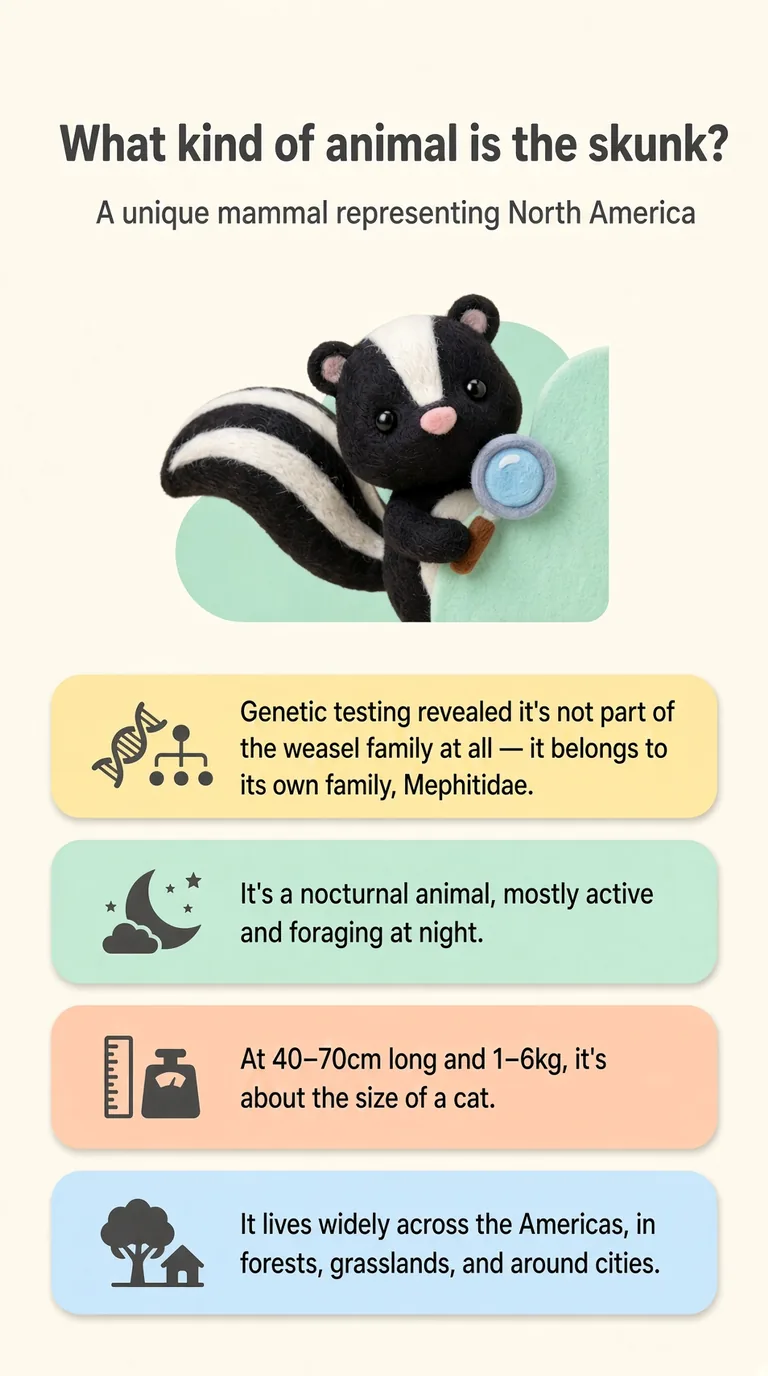
- Genetic testing revealed it's not part of the weasel family at all — it belongs to its own family, Mephitidae.
- It's a nocturnal animal, mostly active and foraging at night.
- At 40–70cm long and 1–6kg, it's about the size of a cat.
- It lives widely across the Americas, in forests, grasslands, and around cities.
A warning sign that glows in the dark
The scientific reason behind its striking pattern
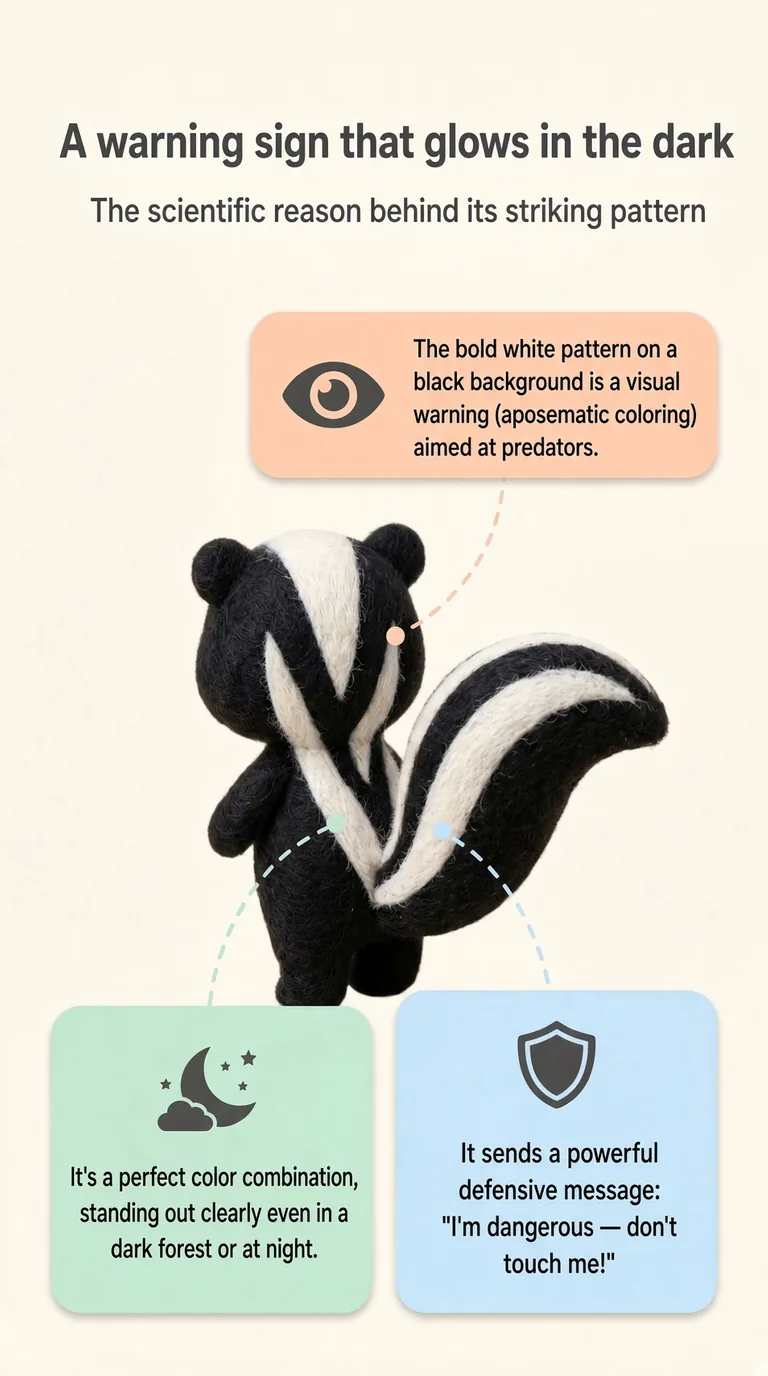
- The bold white pattern on a black background is a visual warning (aposematic coloring) aimed at predators.
- It's a perfect color combination, standing out clearly even in a dark forest or at night.
- It sends a powerful defensive message — "I'm dangerous — don't touch me!"
A terrible stink bomb that drives off predators
The skunk's most famous last-resort weapon
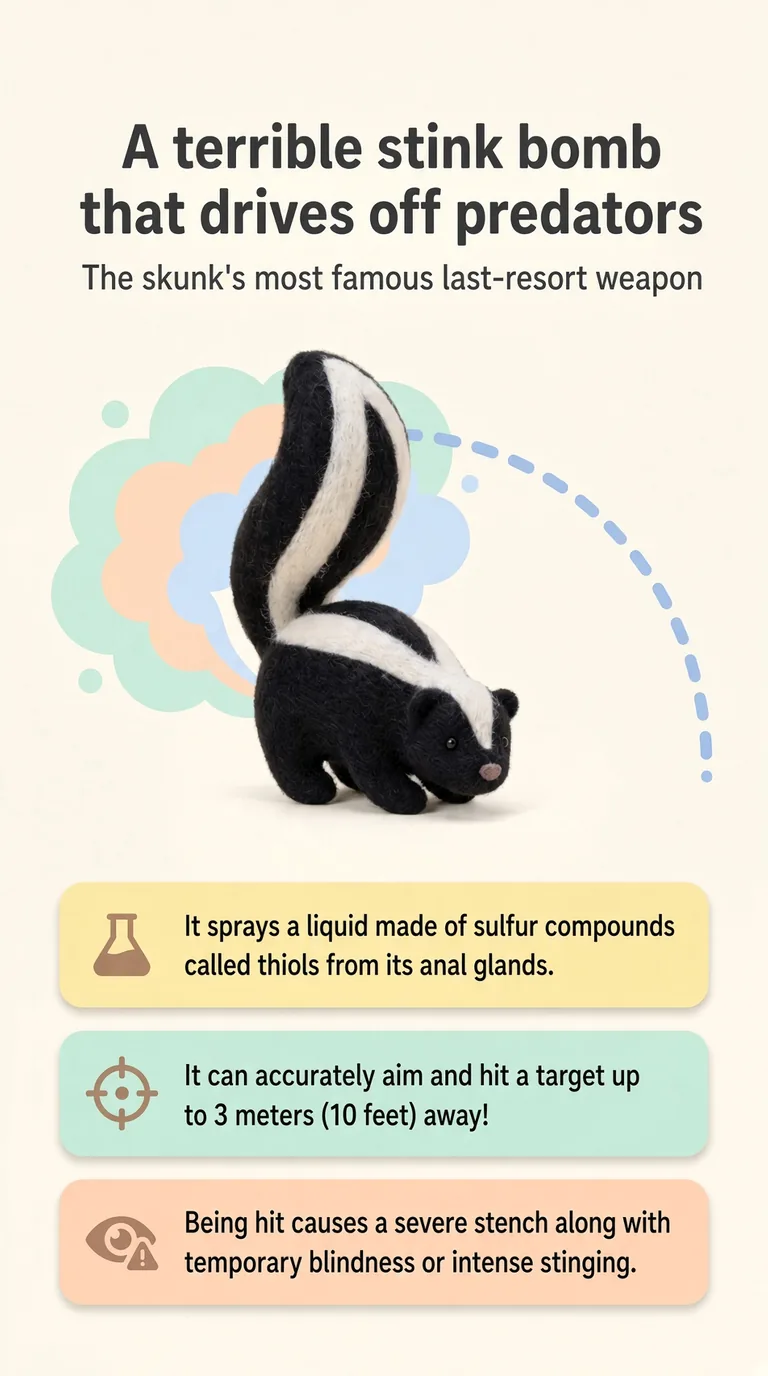
- It sprays a liquid made of sulfur compounds called thiols from its anal glands.
- It can accurately aim and hit a target up to 3 meters (10 feet) away!
- Being hit causes a severe stench along with temporary blindness or intense stinging.
Stay back! A 3-step warning
The peaceful signals it sends before setting off its stink bomb
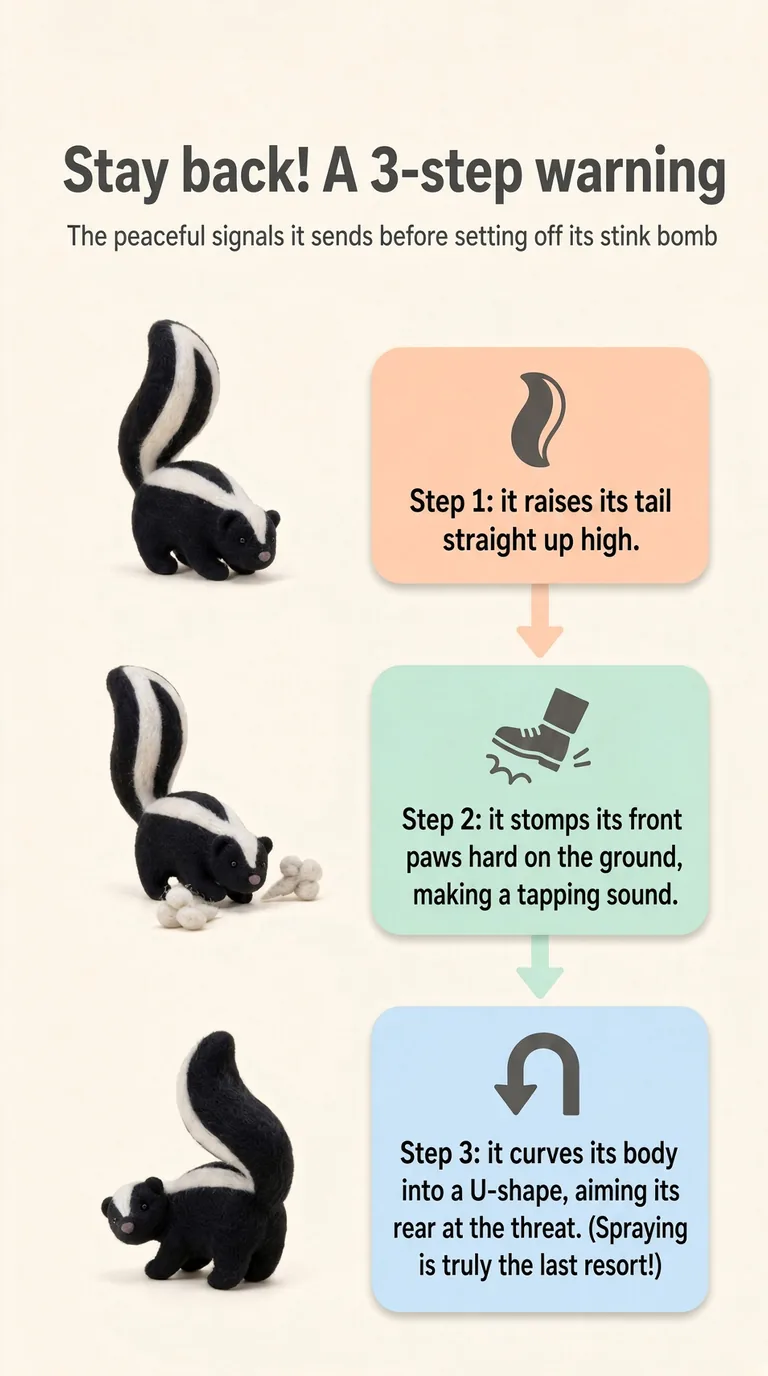
- Step 1 — it raises its tail straight up high.
- Step 2 — it stomps its front paws hard on the ground, making a tapping sound.
- Step 3 — it curves its body into a U-shape, aiming its rear at the threat. (Spraying is truly the last resort!)
A skunk that does a handstand?
The endangered plains spotted skunk
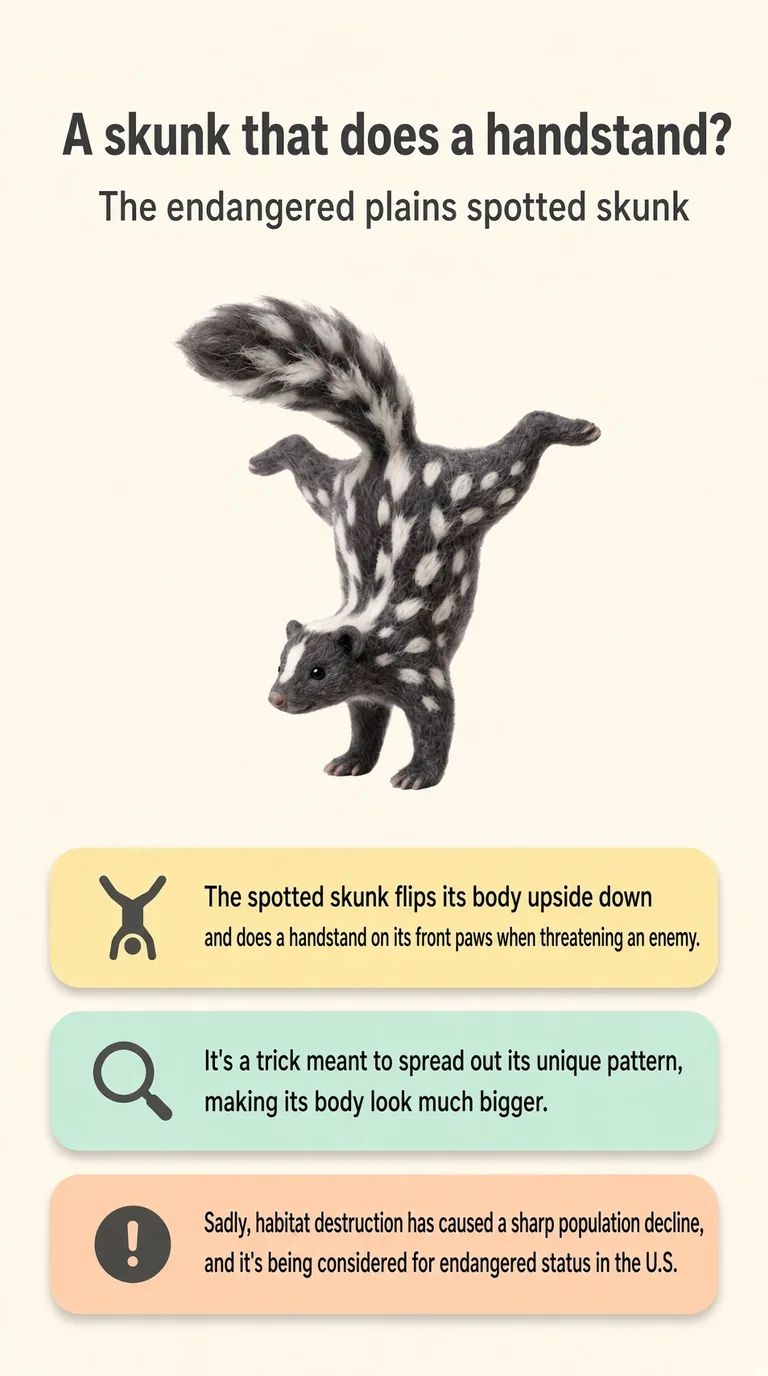
- The spotted skunk flips its body upside down and does a handstand on its front paws when threatening an enemy.
- It's a trick meant to spread out its unique pattern, making its body look much bigger.
- Sadly, habitat destruction has caused a sharp population decline, and it's being considered for endangered status in the U.S.
Striped vs. spotted
Comparing two representative North American skunk species
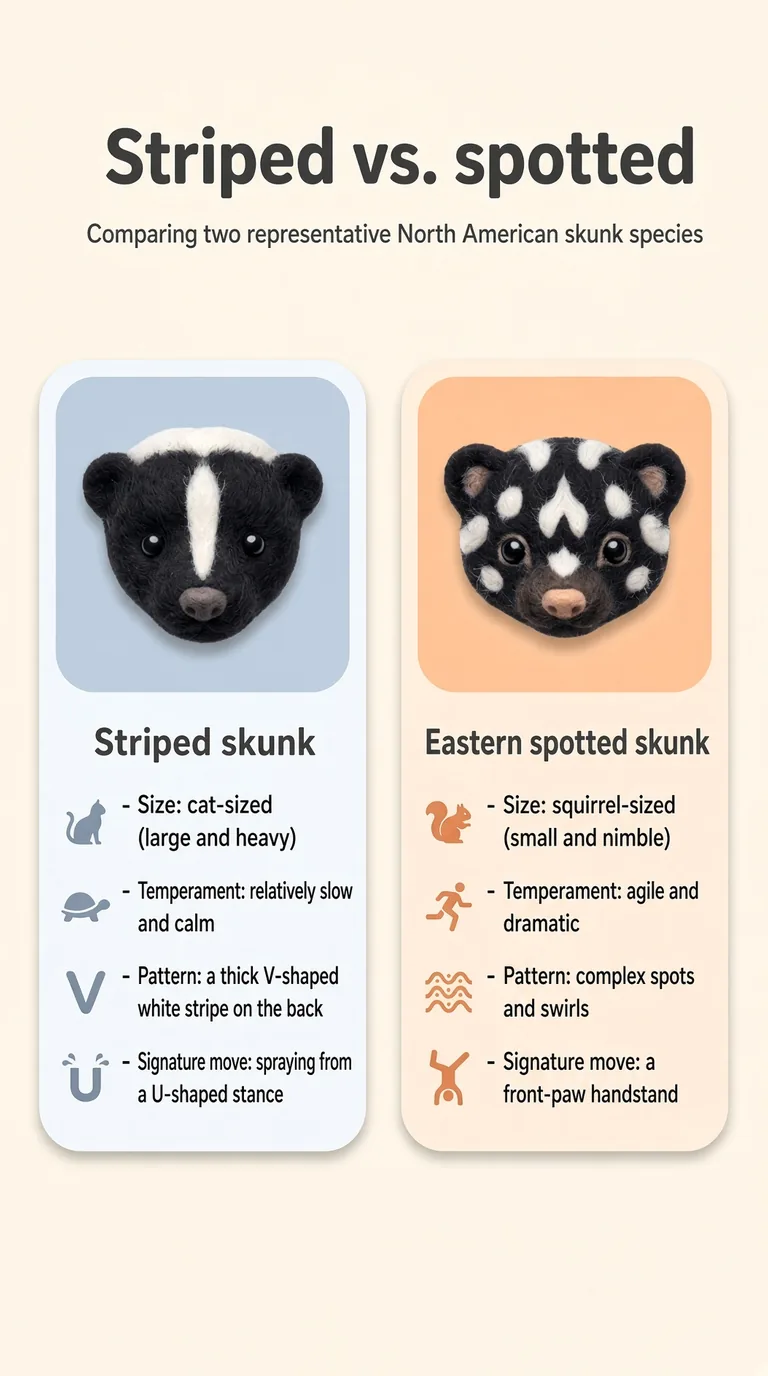
- Striped skunk
- Size — cat-sized (large and heavy)
- Temperament — relatively slow and calm
- Pattern — a thick V-shaped white stripe on the back
- Signature move — spraying from a U-shaped stance
- Eastern spotted skunk
- Size — squirrel-sized (small and nimble)
- Temperament — agile and dramatic
- Pattern — complex spots and swirls
- Signature move — a front-paw handstand
An omnivorous diet from a digging master
An excellent cleaner, thanks to a keen sense of smell
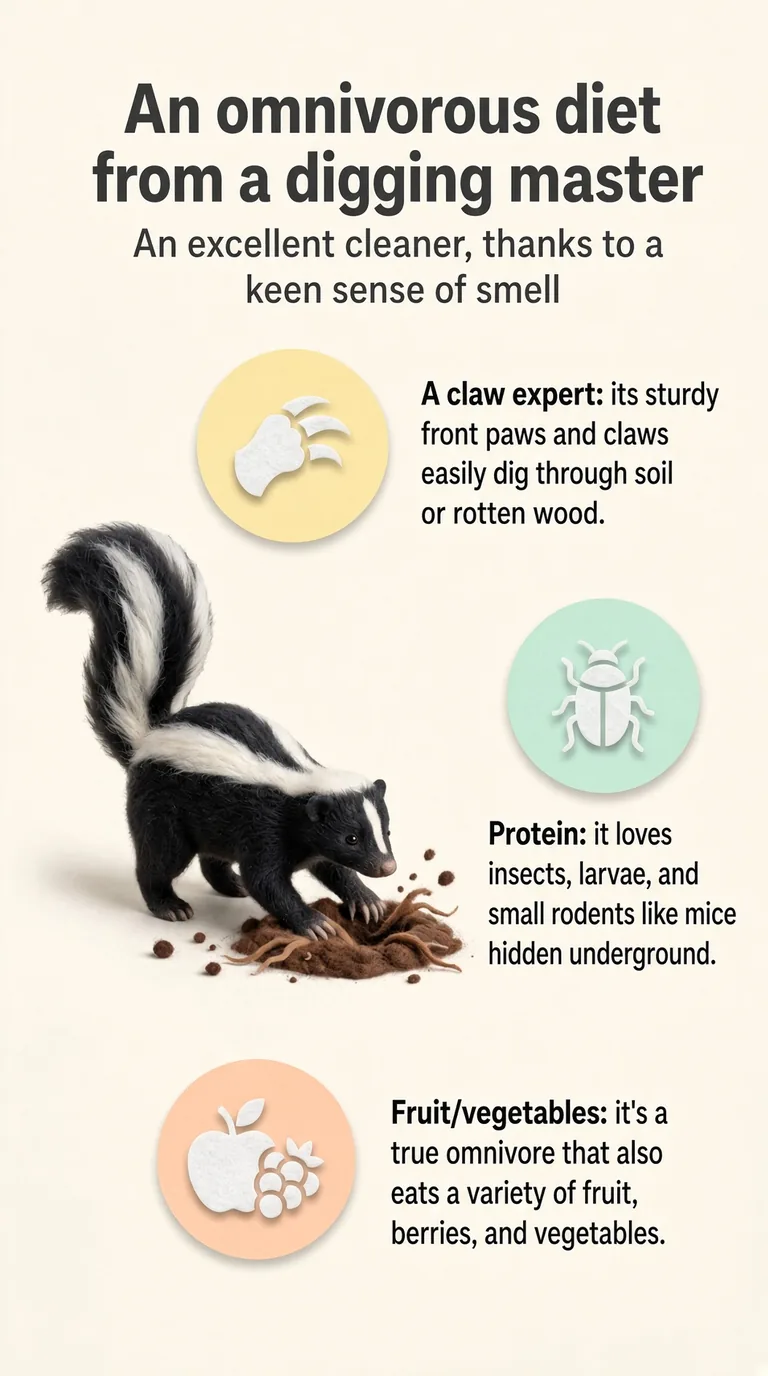
- A claw expert — its sturdy front paws and claws easily dig through soil or rotten wood.
- Protein — it loves insects, larvae, and small rodents like mice hidden underground.
- Fruit/vegetables — it's a true omnivore that also eats a variety of fruit, berries, and vegetables.