Arctic Fox
Polar Regions

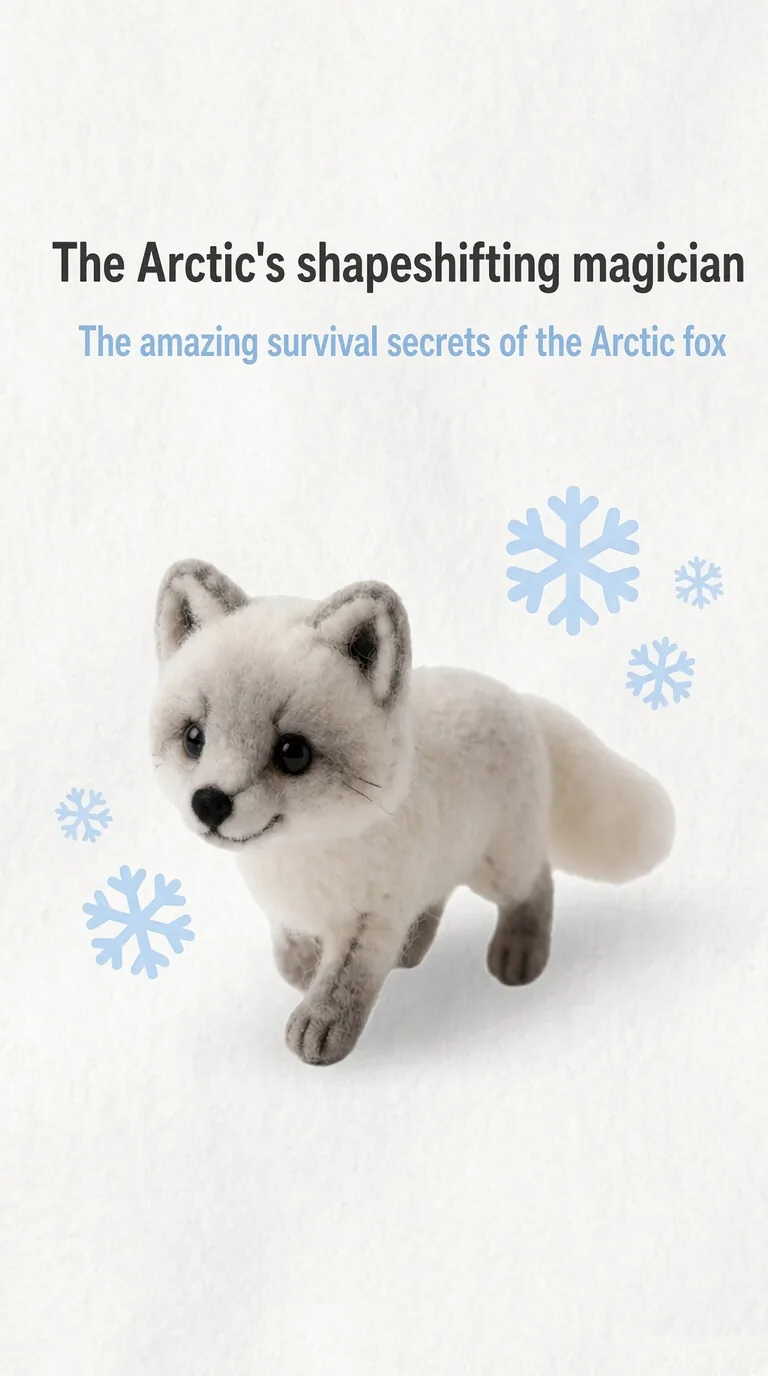
The Arctic fox is a small fox that stays warm in thick white fur. It changes with the seasons: snow-white in winter and brown in summer. Its small, round body is great at holding in heat.
Quick facts
- Habitat
- It lives on the Arctic tundra and icy plains.
- Diet
- It eats lemmings, birds, eggs, and frozen carcasses.
- Size and weight
- Length 50–75cm, weight 3–8kg.
- Lifespan
- 3–6 years in the wild
- Conservation status
- Least Concern
- Fun facts
- It can survive temperatures as low as -70°C!
It listens for prey moving under the snow, then pounces.
Learn more
The Arctic's shapeshifting magician
The amazing survival secrets of the Arctic fox
A little snow fairy
A small but tough Arctic hunter
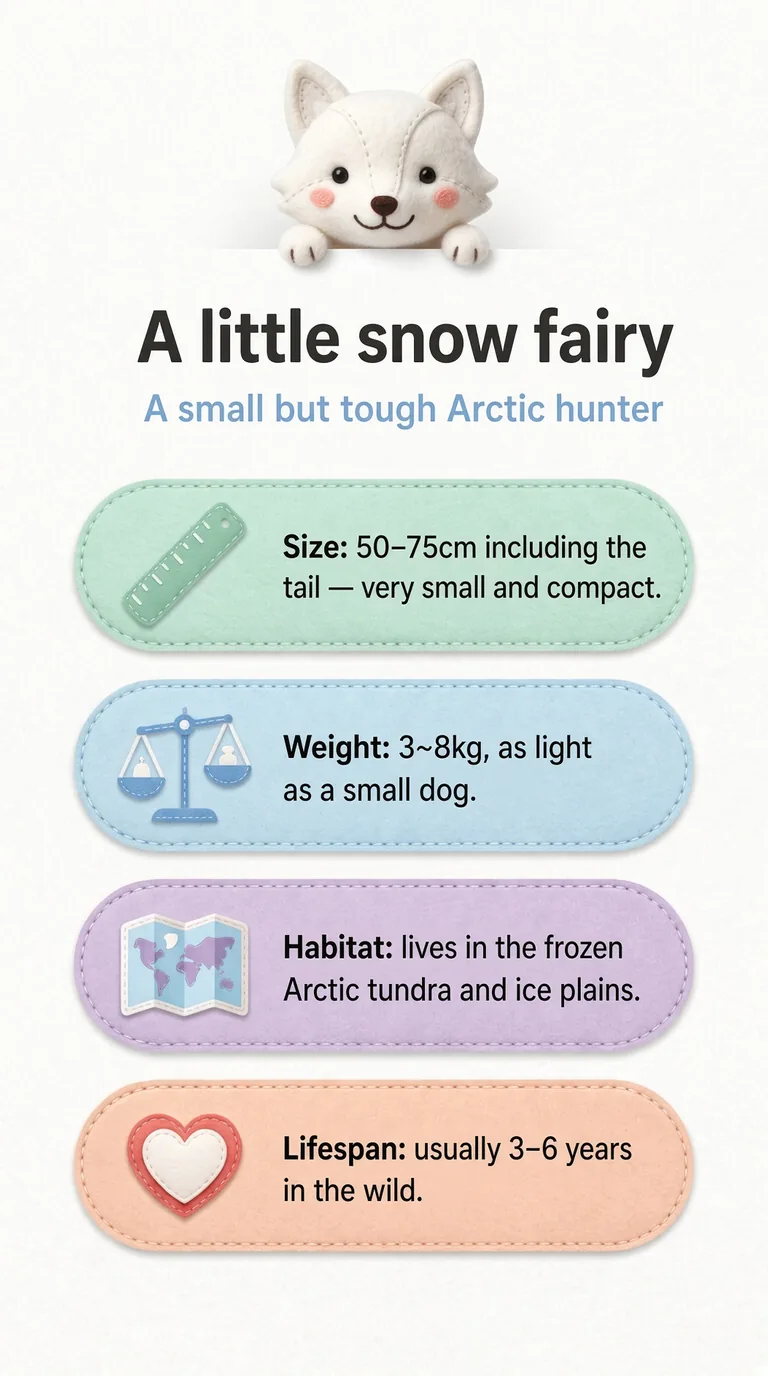
- Size — 50–75cm including the tail — very small and compact.
- Weight — 3–8kg, as light as a small dog.
- Habitat — lives in the frozen Arctic tundra and ice plains.
- Lifespan — usually 3–6 years in the wild.
Unfazed even at -70°C
The best warm fur coat in the animal kingdom
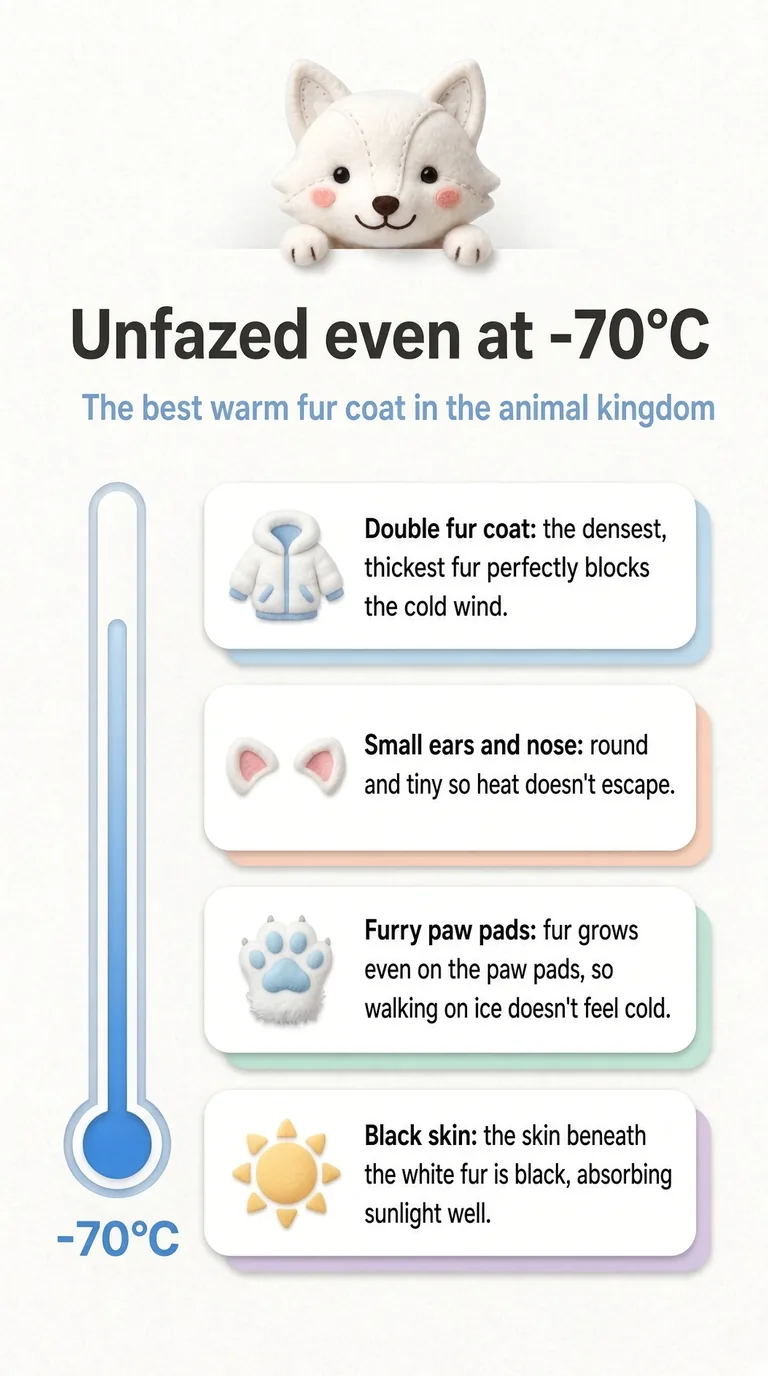
- Double fur coat — the densest, thickest fur perfectly blocks the cold wind.
- Small ears and nose — round and tiny so heat doesn't escape.
- Furry paw pads — fur grows even on the paw pads, so walking on ice doesn't feel cold.
- Black skin — the skin beneath the white fur is black, absorbing sunlight well.
Its color changes like magic
A master of perfect hide-and-seek
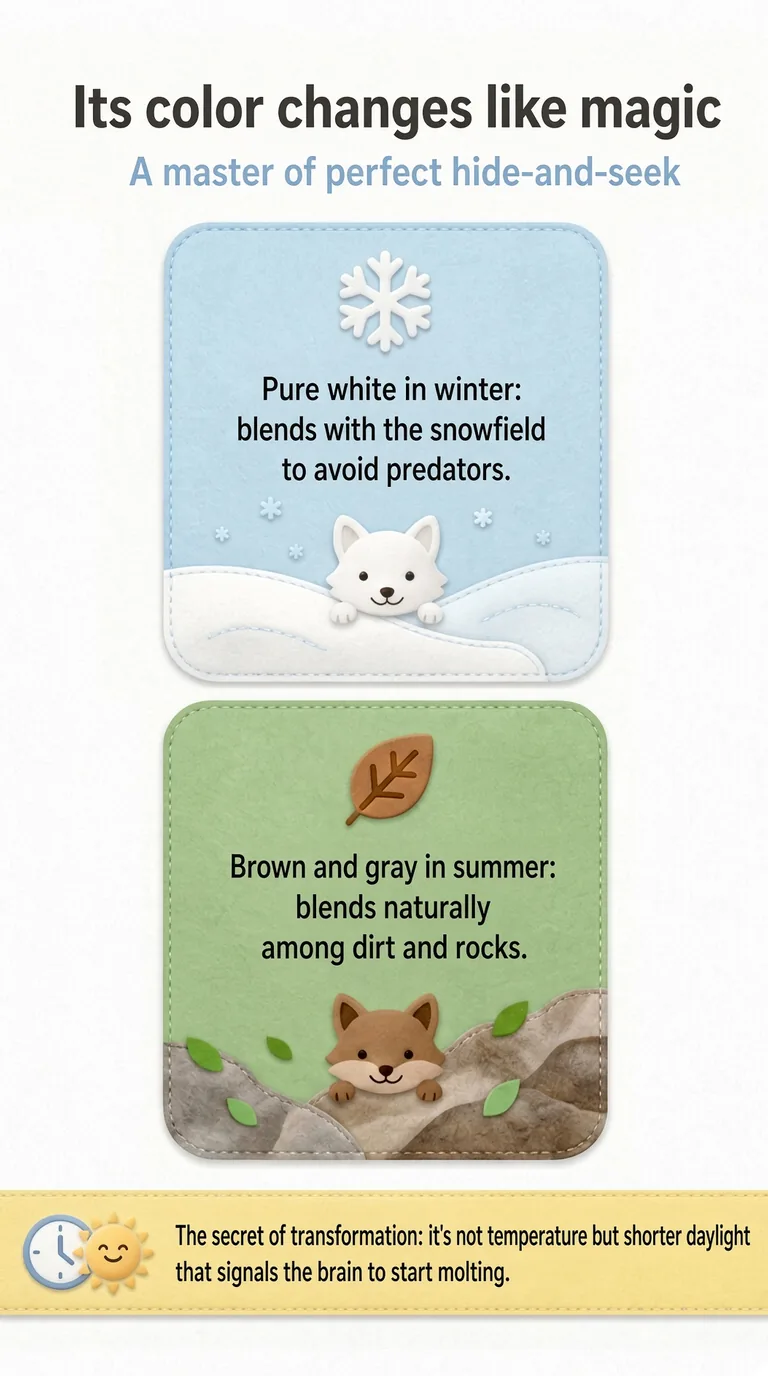
- Pure white in winter — blends with the snowfield to avoid predators.
- Brown and gray in summer — blends naturally among dirt and rocks.
- The secret of transformation — it's not temperature but shorter daylight that signals the brain to start molting.
A brilliant diver in the snowfield
A hunting method that dives into soft snow
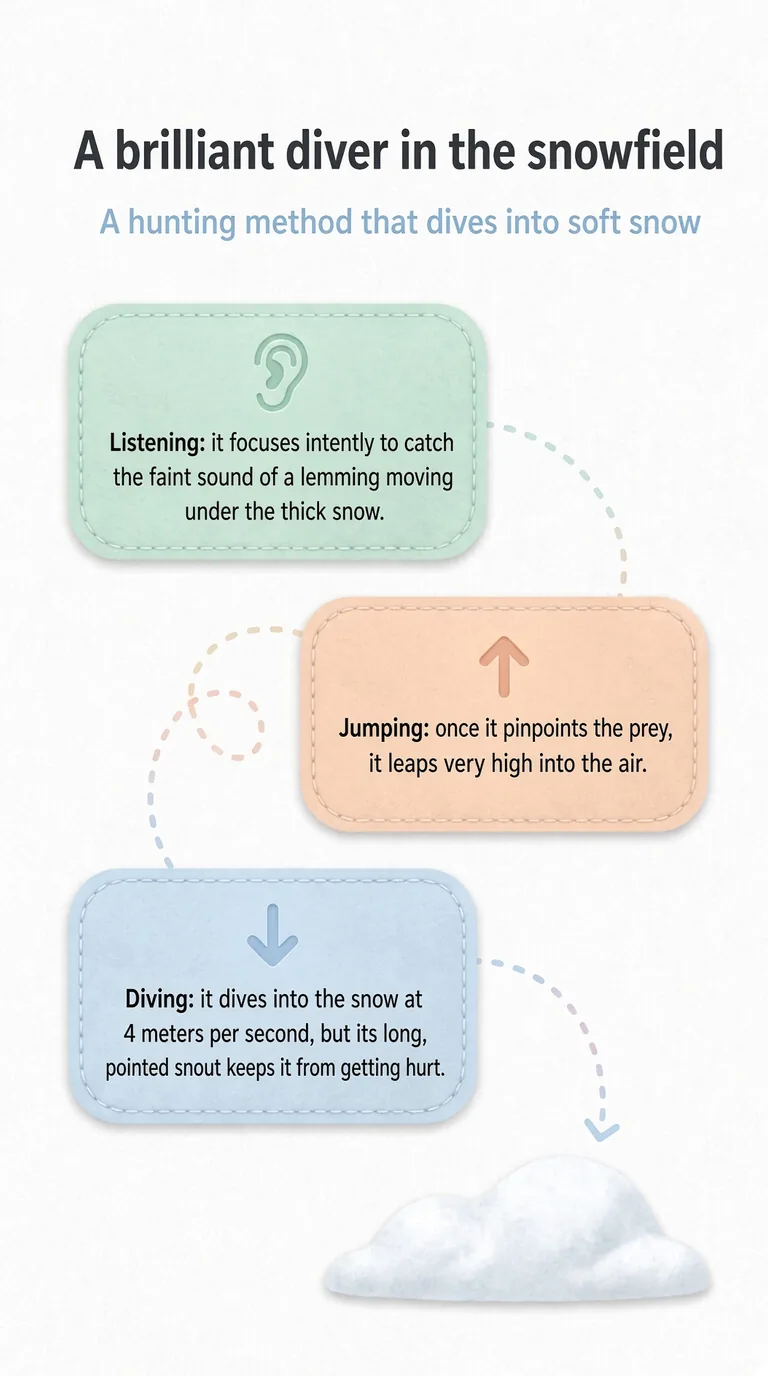
- Listening — it focuses intently to catch the faint sound of a lemming moving under the thick snow.
- Jumping — once it pinpoints the prey, it leaps very high into the air.
- Diving — it dives into the snow at 4 meters per second, but its long, pointed snout keeps it from getting hurt.
A great 76-day journey
An endless-walking Arctic traveler
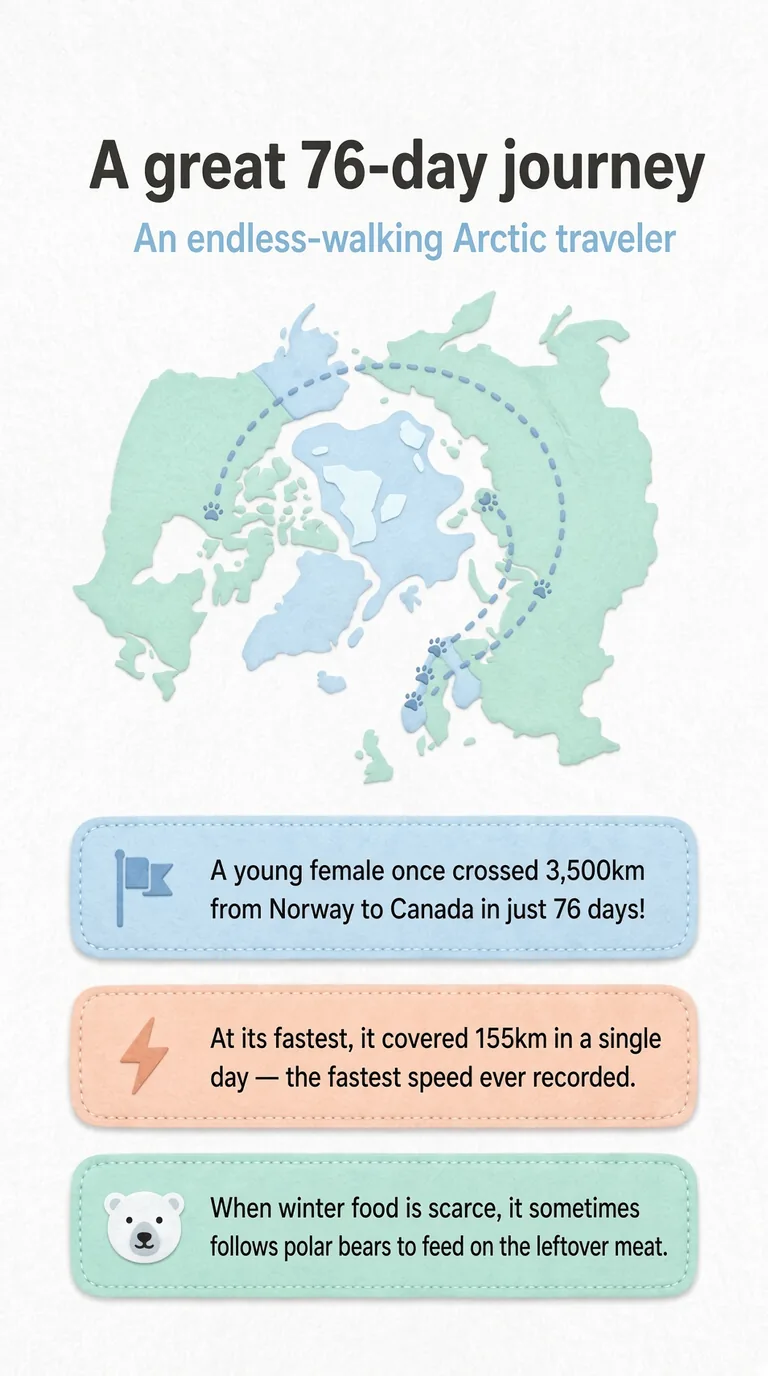
- A young female once crossed 3,500km from Norway to Canada in just 76 days!
- At its fastest, it covered 155km in a single day — the fastest speed ever recorded.
- When winter food is scarce, it sometimes follows polar bears to feed on the leftover meat.
A superhero in crisis
Red foxes and a warming planet
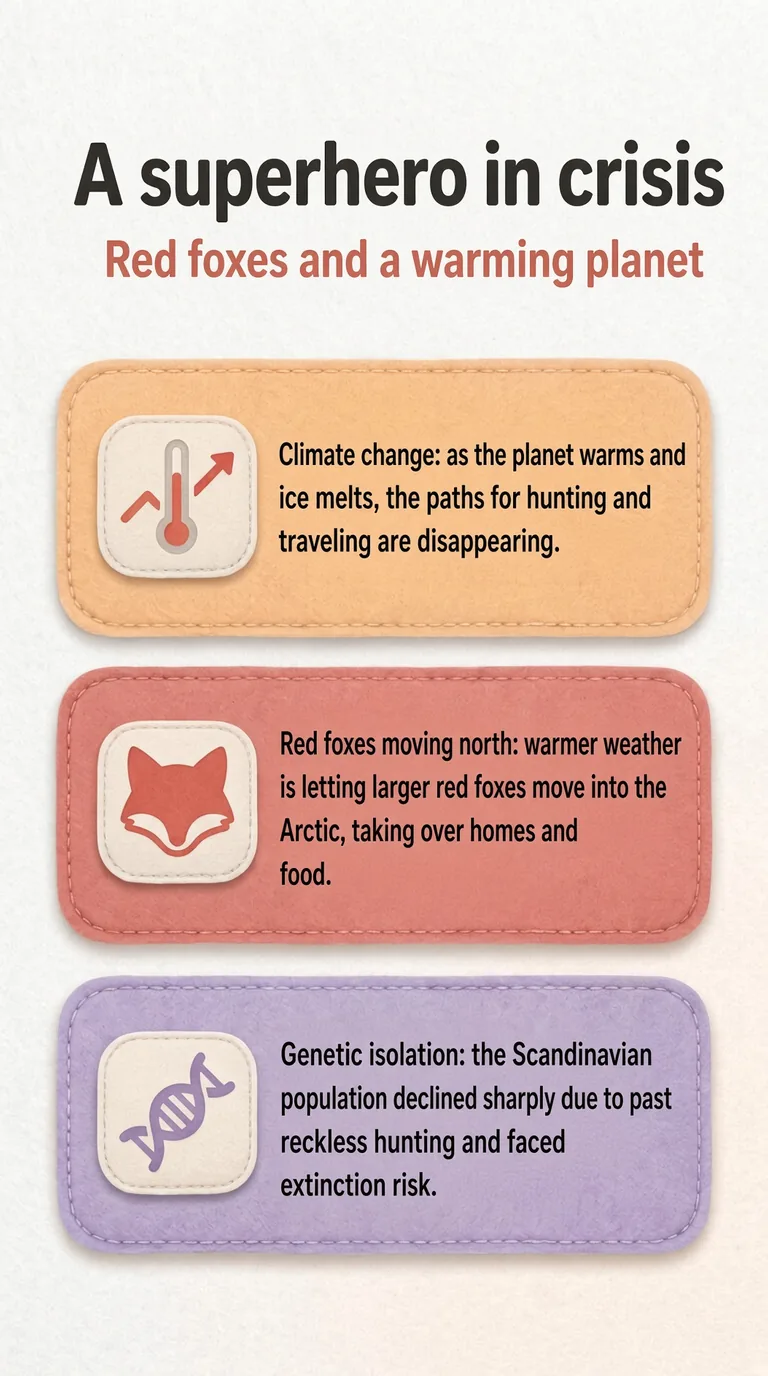
- Climate change — as the planet warms and ice melts, the paths for hunting and traveling are disappearing.
- Red foxes moving north — warmer weather is letting larger red foxes move into the Arctic, taking over homes and food.
- Genetic isolation — the Scandinavian population declined sharply due to past reckless hunting and faced extinction risk.