Beluga Whale
Polar Regions
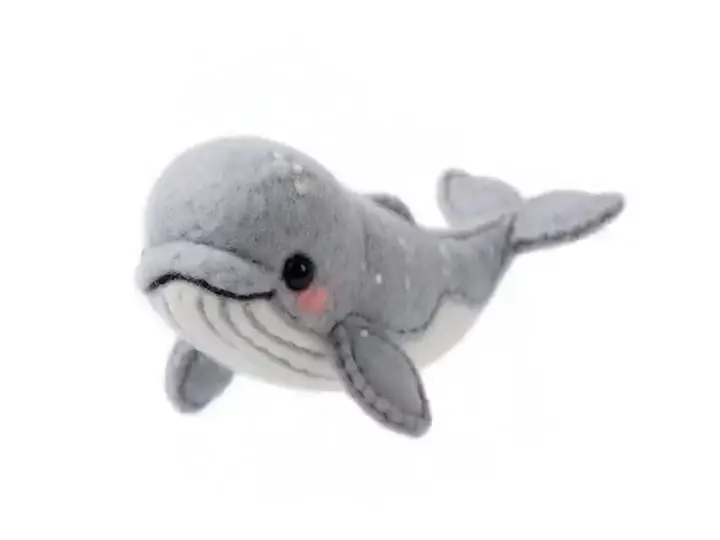
The beluga is a cute whale with a snow-white body and a round forehead. It makes so many different sounds that it's called the "canary of the sea." Unlike other whales, it can move its neck freely to nod and turn its head.
Quick facts
- Habitat
- It lives in the cold waters of the Arctic and subarctic.
- Diet
- It eats fish, squid, and shrimp.
- Size and weight
- Length 4–5.5m, weight 700–1,600kg.
- Lifespan
- 35–50 years
- Conservation status
- Least Concern
- Fun facts
- It talks with whistles, clicks, and squeaks, almost like singing!
It uses the bulging "melon" on its forehead to make sounds and find its way.
Learn more
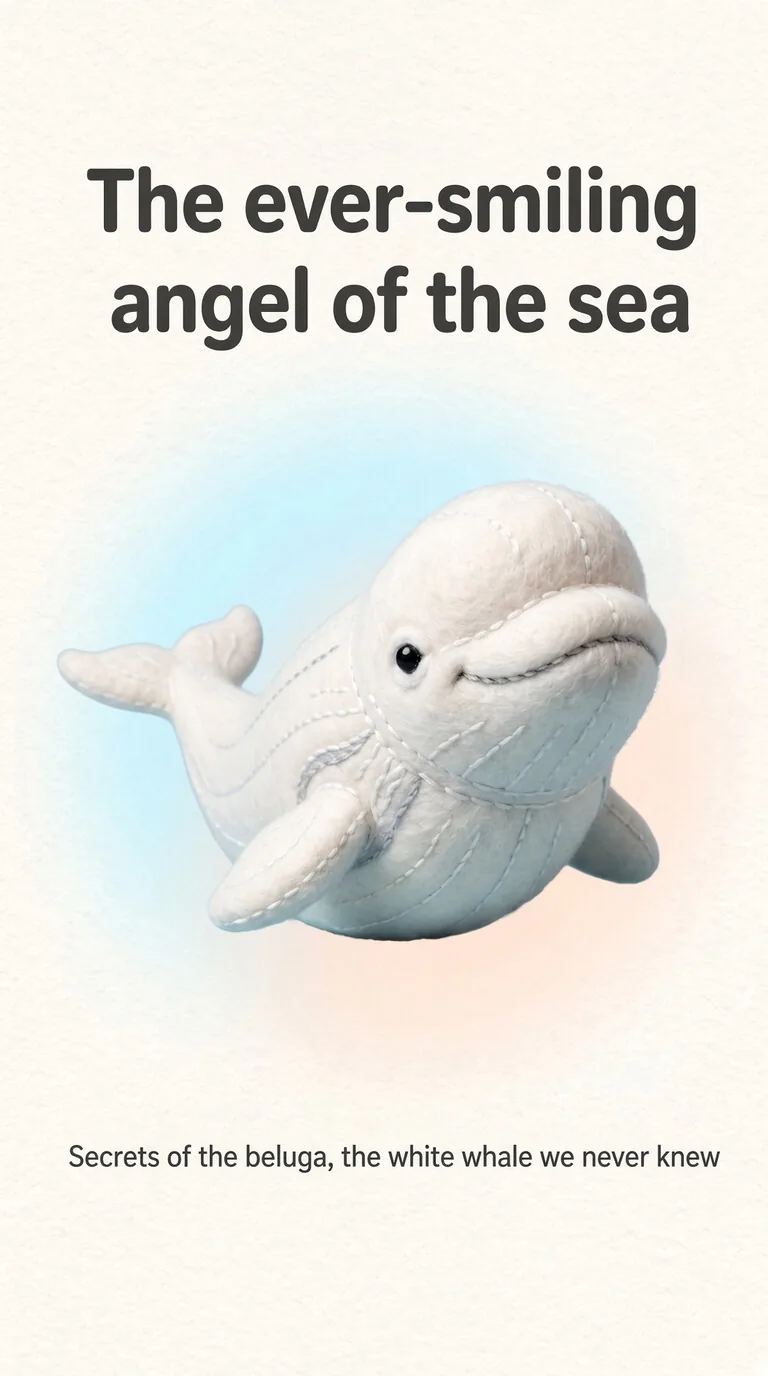
The ever-smiling angel of the sea
Secrets of the beluga, the white whale we never knew
What kind of animal is the beluga, the white fairy of the Arctic sea?
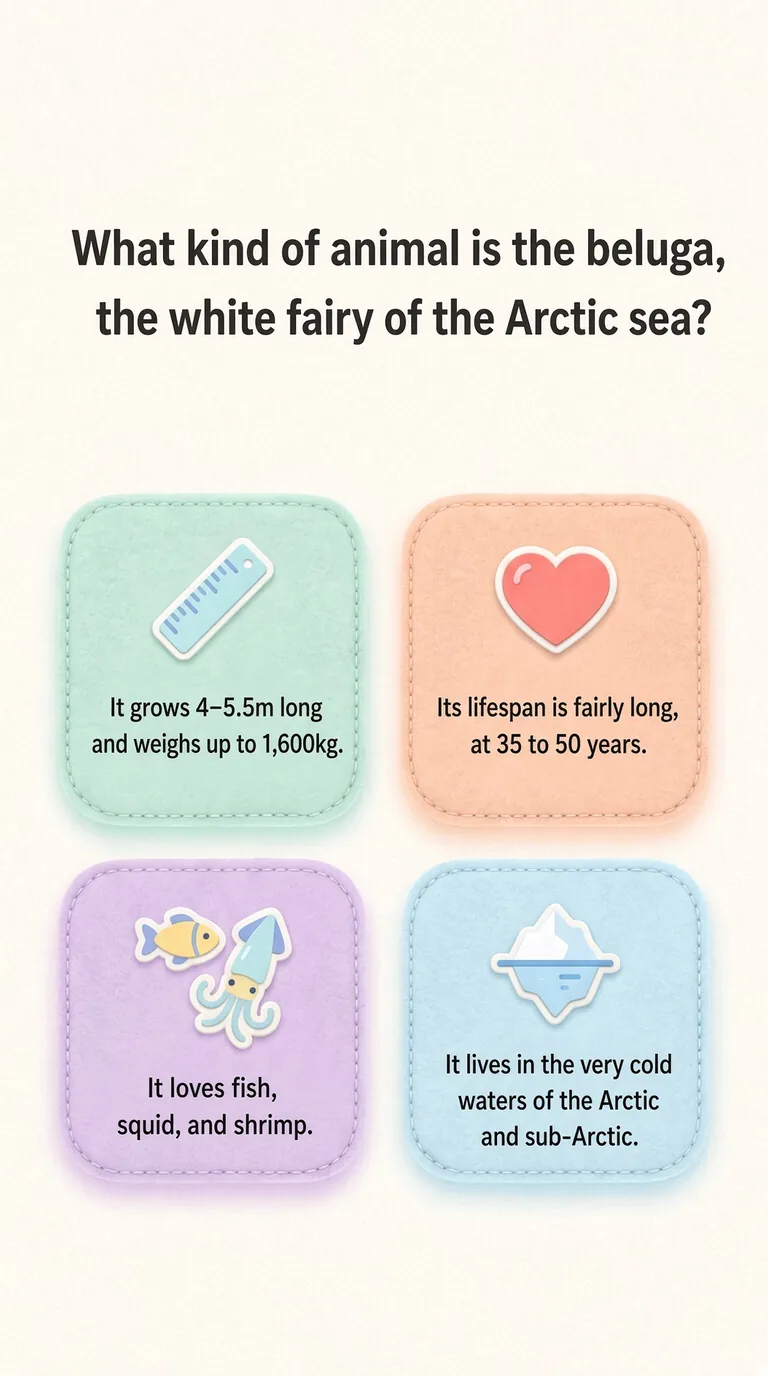
- It grows 4–5.5m long and weighs up to 1,600kg.
- Its lifespan is fairly long, at 35 to 50 years.
- It loves fish, squid, and shrimp.
- It lives in the very cold waters of the Arctic and sub-Arctic.
Was it gray as a baby?
The mysterious magic of changing color as it grows
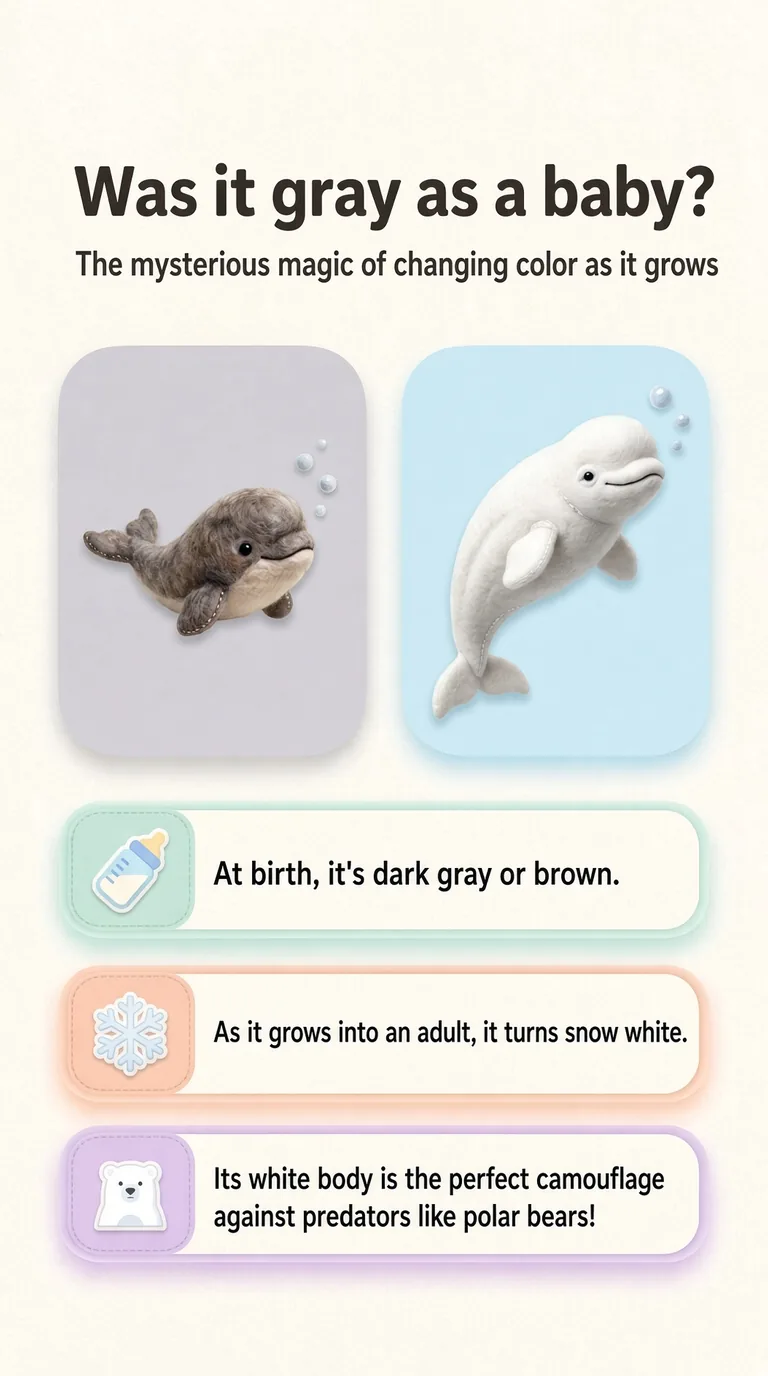
- At birth, it's dark gray or brown.
- As it grows into an adult, it turns snow white.
- Its white body is the perfect camouflage against predators like polar bears!
The only whale that can turn its head
The secret to weaving smoothly through the ice
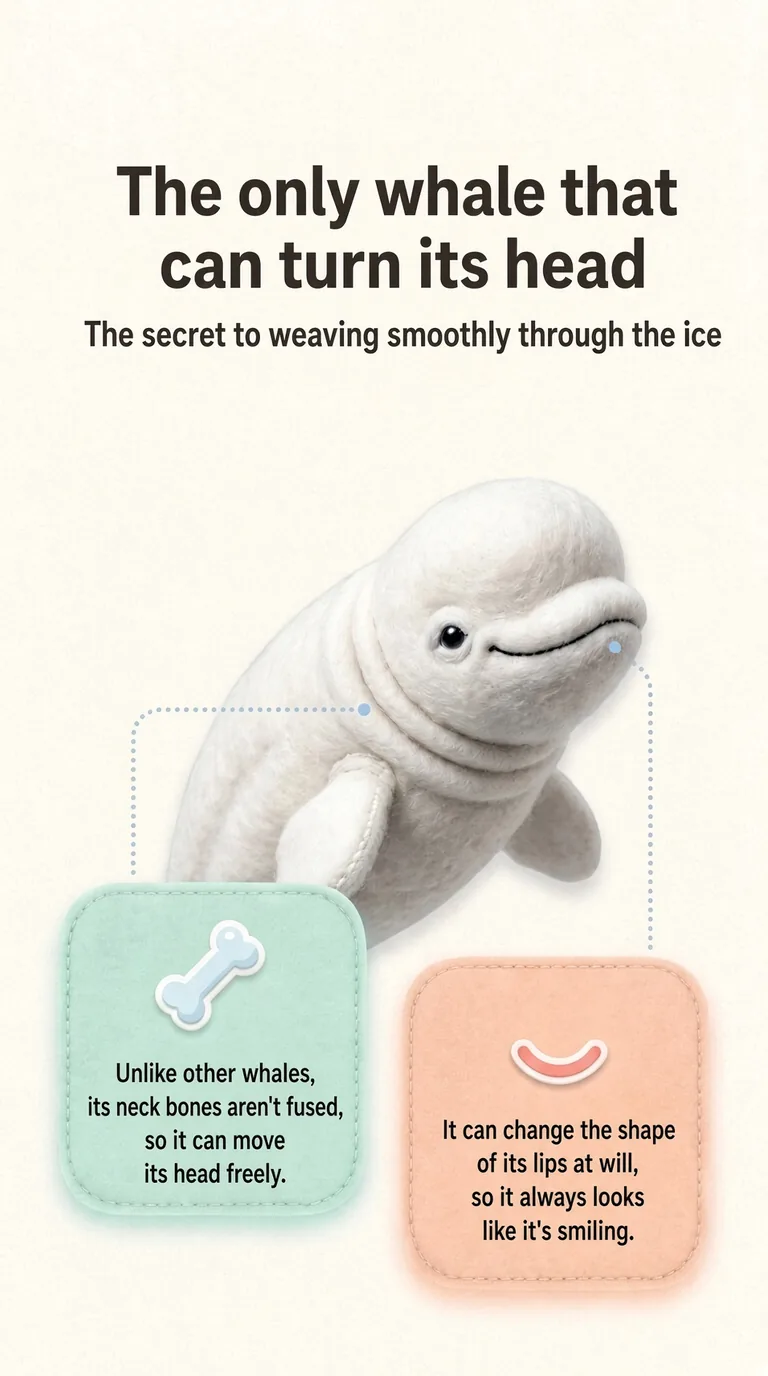
- Unlike other whales, its neck bones aren't fused, so it can move its head freely.
- It can change the shape of its lips at will, so it always looks like it's smiling.
Surviving the frozen Arctic sea
The beluga's body built to endure extreme cold
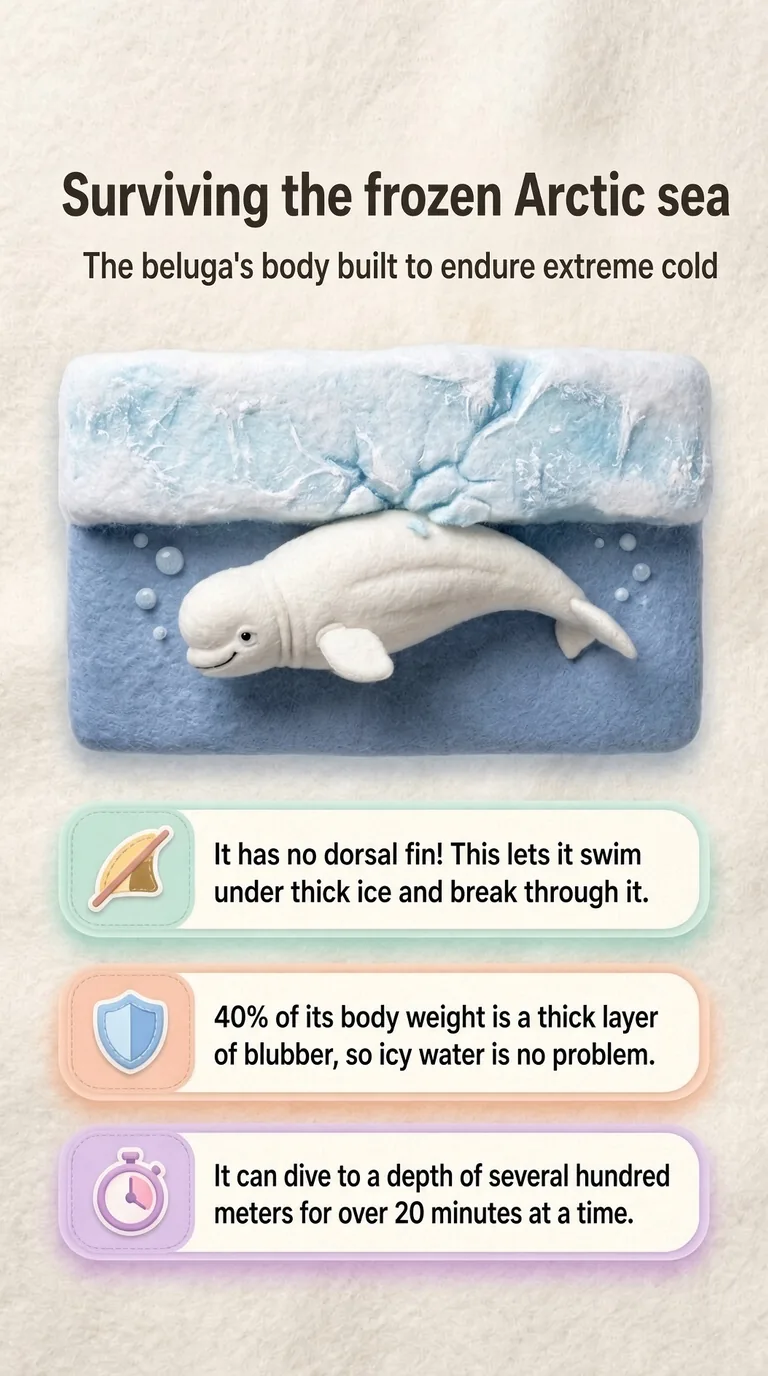
- It has no dorsal fin! This lets it swim under thick ice and break through it.
- 40% of its body weight is a thick layer of blubber, so icy water is no problem.
- It can dive to a depth of several hundred meters for over 20 minutes at a time.
A superpower to 'see' with its forehead
The secret of the soft forehead, the 'melon'
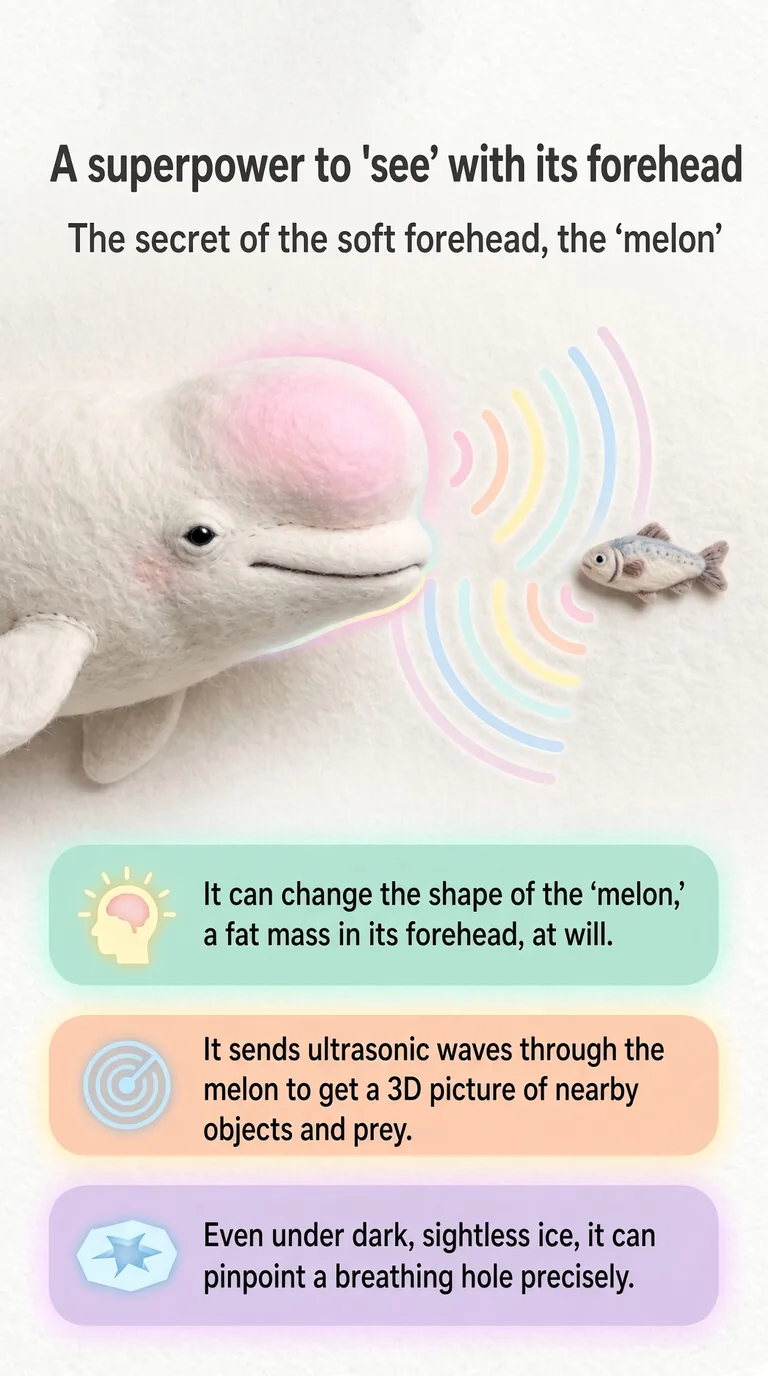
- It can change the shape of the 'melon,' a fat mass in its forehead, at will.
- It sends ultrasonic waves through the melon to get a 3D picture of nearby objects and prey.
- Even under dark, sightless ice, it can pinpoint a breathing hole precisely.
The chatty canary of the sea
The beluga's language, communicating like a song
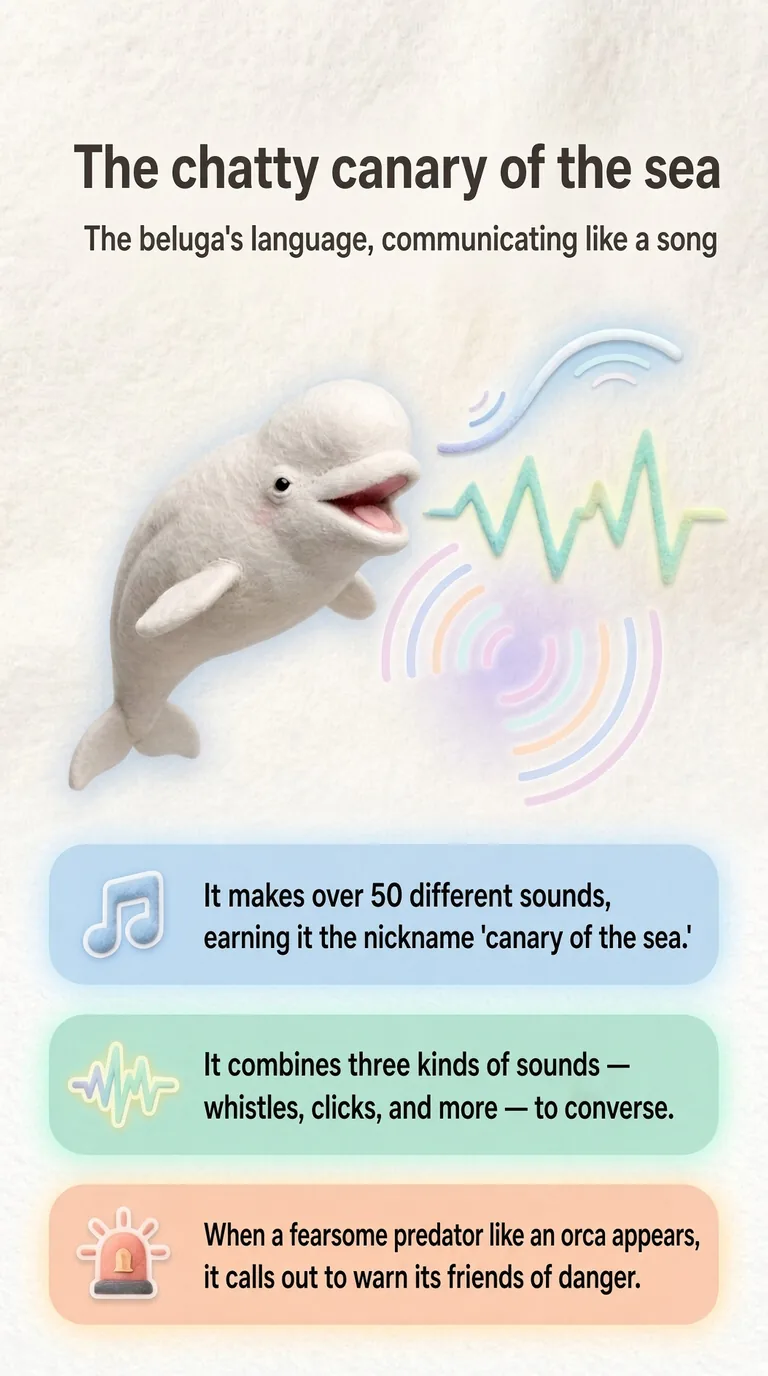
- It makes over 50 different sounds, earning it the nickname 'canary of the sea.'
- It combines three kinds of sounds — whistles, clicks, and more — to converse.
- When a fearsome predator like an orca appears, it calls out to warn its friends of danger.
An ocean friendship stronger than blood
Living in complex societies, much like humans
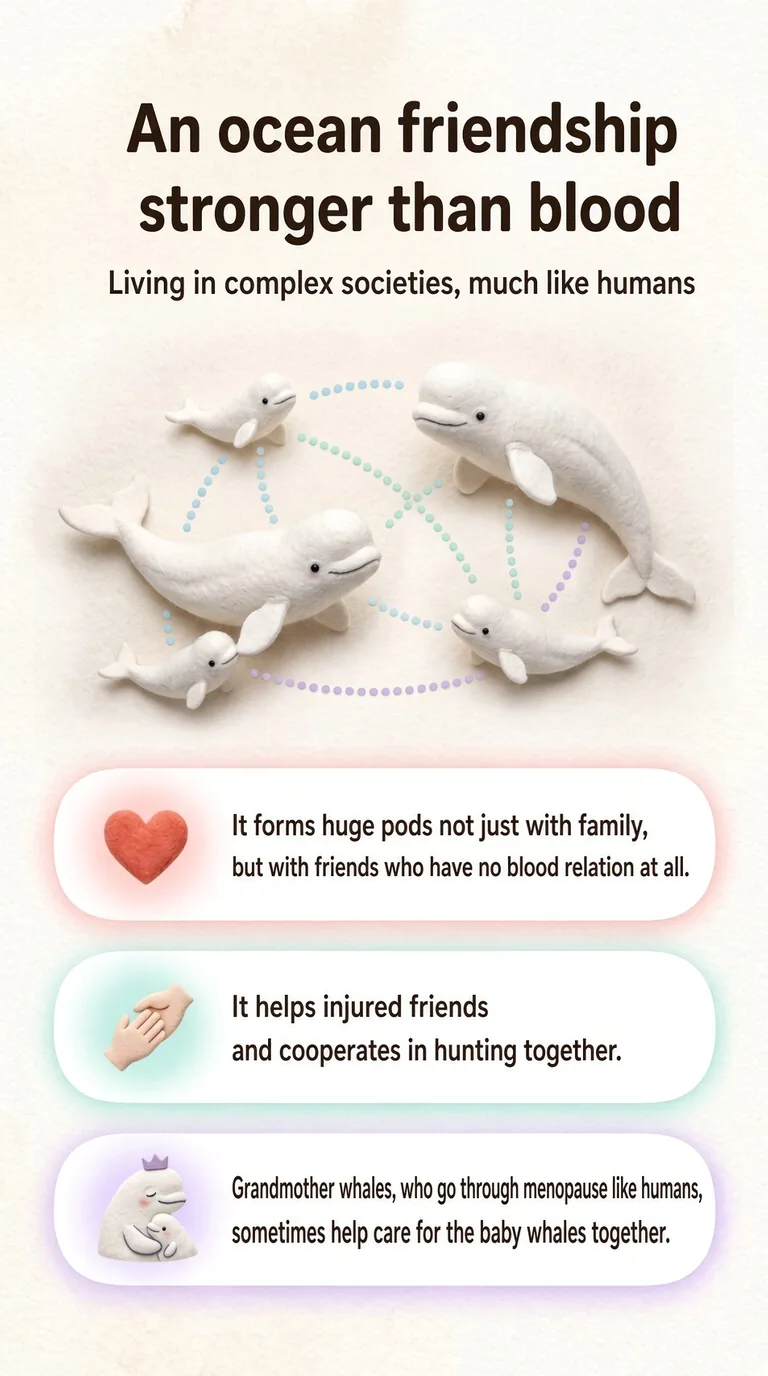
- It forms huge pods not just with family, but with friends who have no blood relation at all.
- It helps injured friends and cooperates in hunting together.
- Grandmother whales, who go through menopause like humans, sometimes help care for the baby whales together.
What if it fell in love with a narwhal?
A very rare ocean hybrid, the Narluga
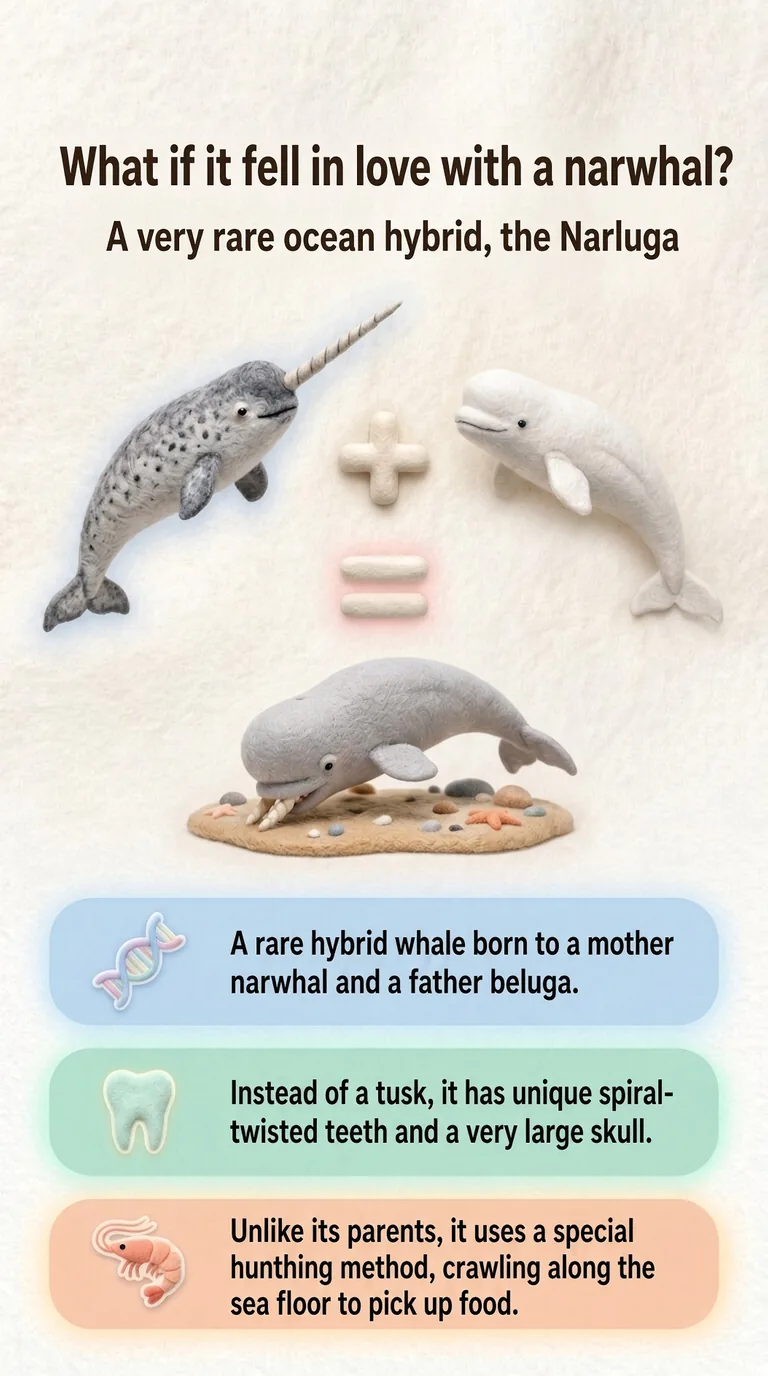
- A rare hybrid whale born to a mother narwhal and a father beluga.
- Instead of a tusk, it has unique spiral-twisted teeth and a very large skull.
- Unlike its parents, it uses a special hunting method, crawling along the sea floor to pick up food.
An unwelcome guest disrupting beluga conversations
Suffering from ocean noise pollution
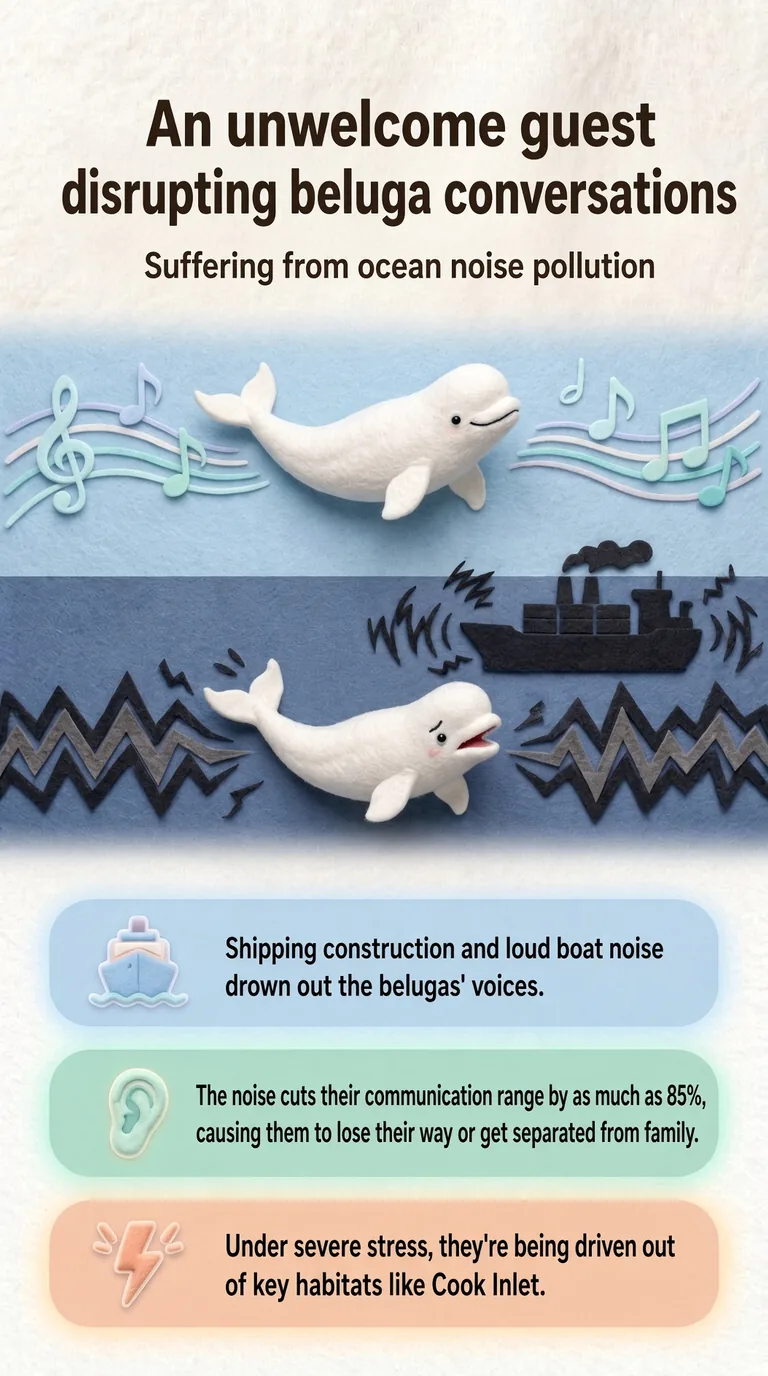
- Shipping construction and loud boat noise drown out the belugas' voices.
- The noise cuts their communication range by as much as 85%, causing them to lose their way or get separated from family.
- Under severe stress, they're being driven out of key habitats like Cook Inlet.
As the ice melts, belugas are also at risk
The Arctic crisis brought on by climate change
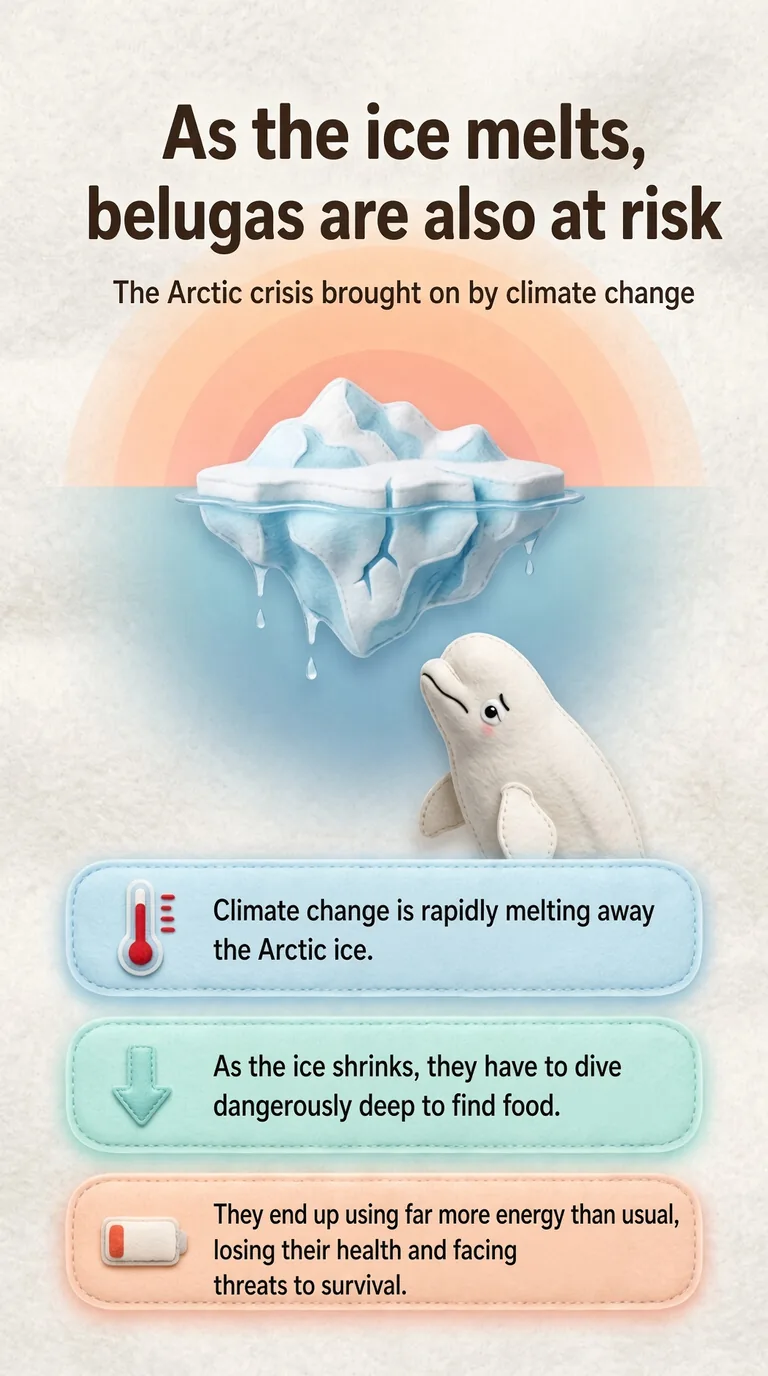
- Climate change is rapidly melting away the Arctic ice.
- As the ice shrinks, they have to dive dangerously deep to find food.
- They end up using far more energy than usual, losing their health and facing threats to survival.
Protect the beluga's smile
Our small care can save this fairy of the Arctic
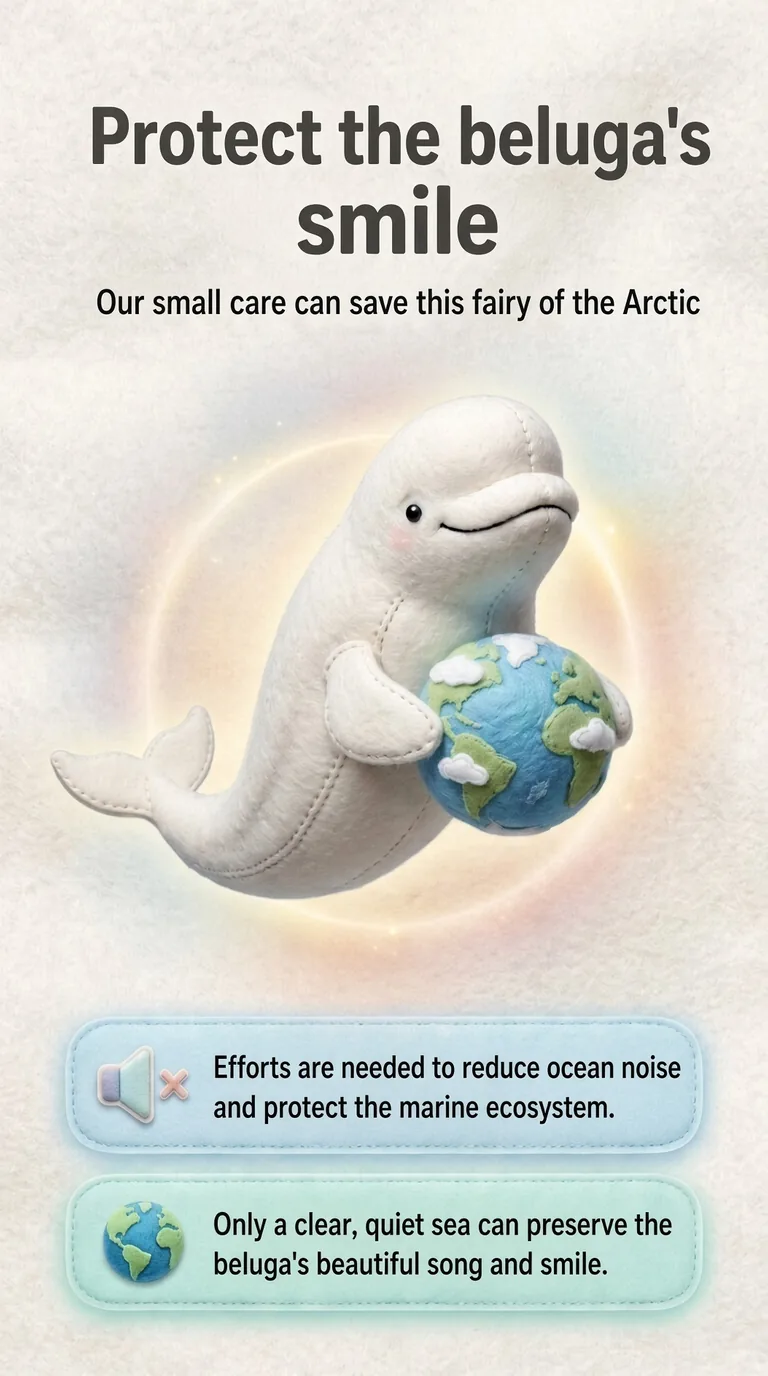
- Efforts are needed to reduce ocean noise and protect the marine ecosystem.
- Only a clear, quiet sea can preserve the beluga's beautiful song and smile.