Narwhal
Polar Regions
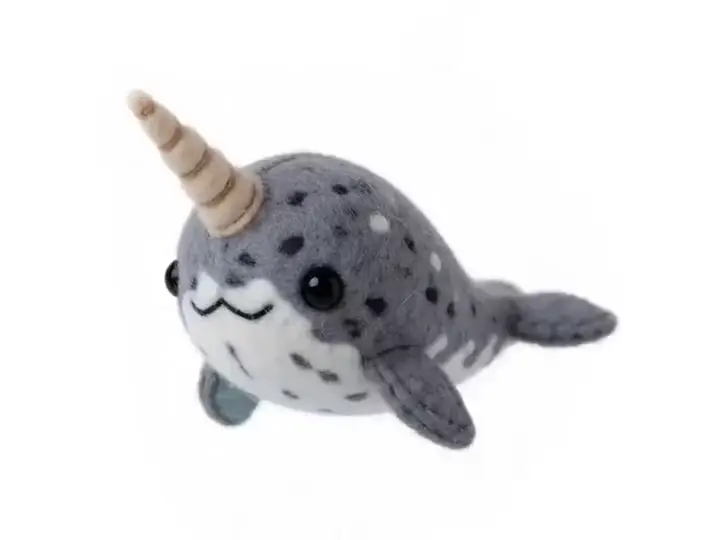
The narwhal is a mysterious whale with a long, spear-like horn sticking out of its head. It's called the "unicorn of the sea." The horn is actually a very long tooth that also works as a sensor to feel what's around it.
Quick facts
- Habitat
- It lives in the deep waters and among the ice of the Arctic Ocean.
- Diet
- It eats squid, shrimp, and fish.
- Size and weight
- Length 4–5m, weight 800–1,600kg.
- Lifespan
- About 50 years
- Conservation status
- Least Concern
- Fun facts
- Its horn is actually a long tooth! It can grow up to 3m.
It can dive as deep as 1,500m.
Learn more
An Arctic Sea explorer with a 3m antenna on its head!
The unicorn of the sea — the amazing secrets of the narwhal
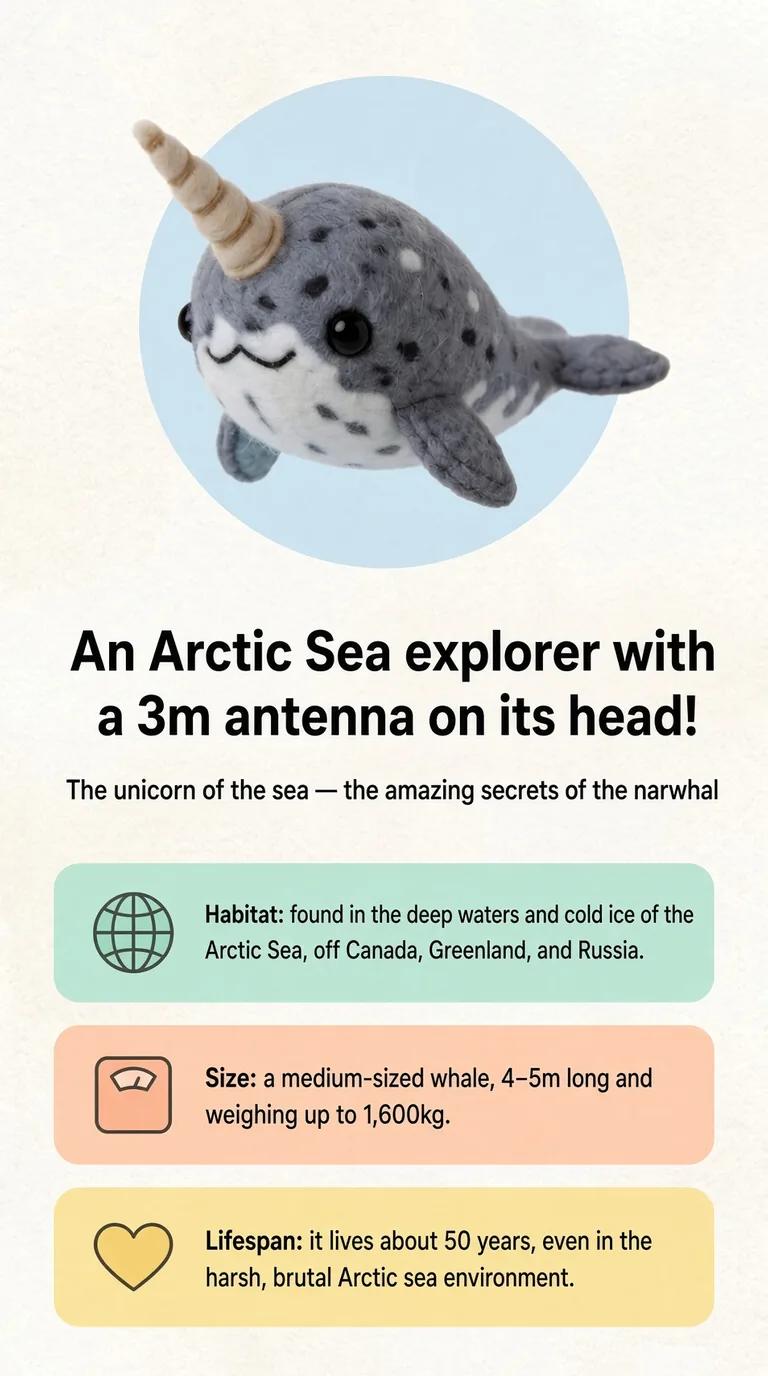
- Habitat — found in the deep waters and cold ice of the Arctic Sea, off Canada, Greenland, and Russia.
- Size — a medium-sized whale, 4–5m long and weighing up to 1,600kg.
- Lifespan — it lives about 50 years, even in the harsh, brutal Arctic sea environment.
Not a horn, but a "giant front tooth"
A cutting-edge sensory organ for survival, not the horn of a mythical creature
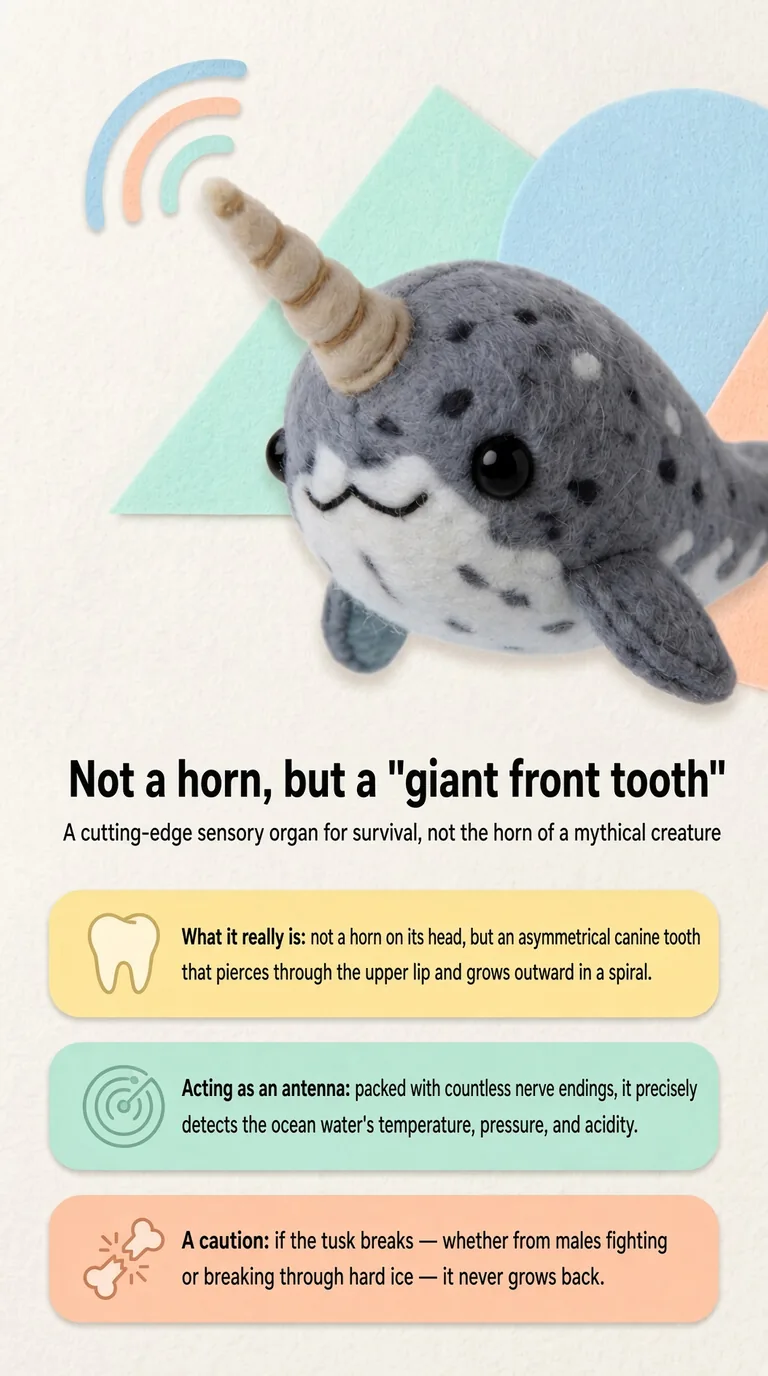
- What it really is — not a horn on its head, but an asymmetrical canine tooth that pierces through the upper lip and grows outward in a spiral.
- Acting as an antenna — packed with countless nerve endings, it precisely detects the ocean water's temperature, pressure, and salinity.
- A caution — if the tusk breaks — whether from males fighting or breaking through hard ice — it never grows back.
A diver that roams 1,500m underwater
Remarkable diving ability to find food in extreme conditions
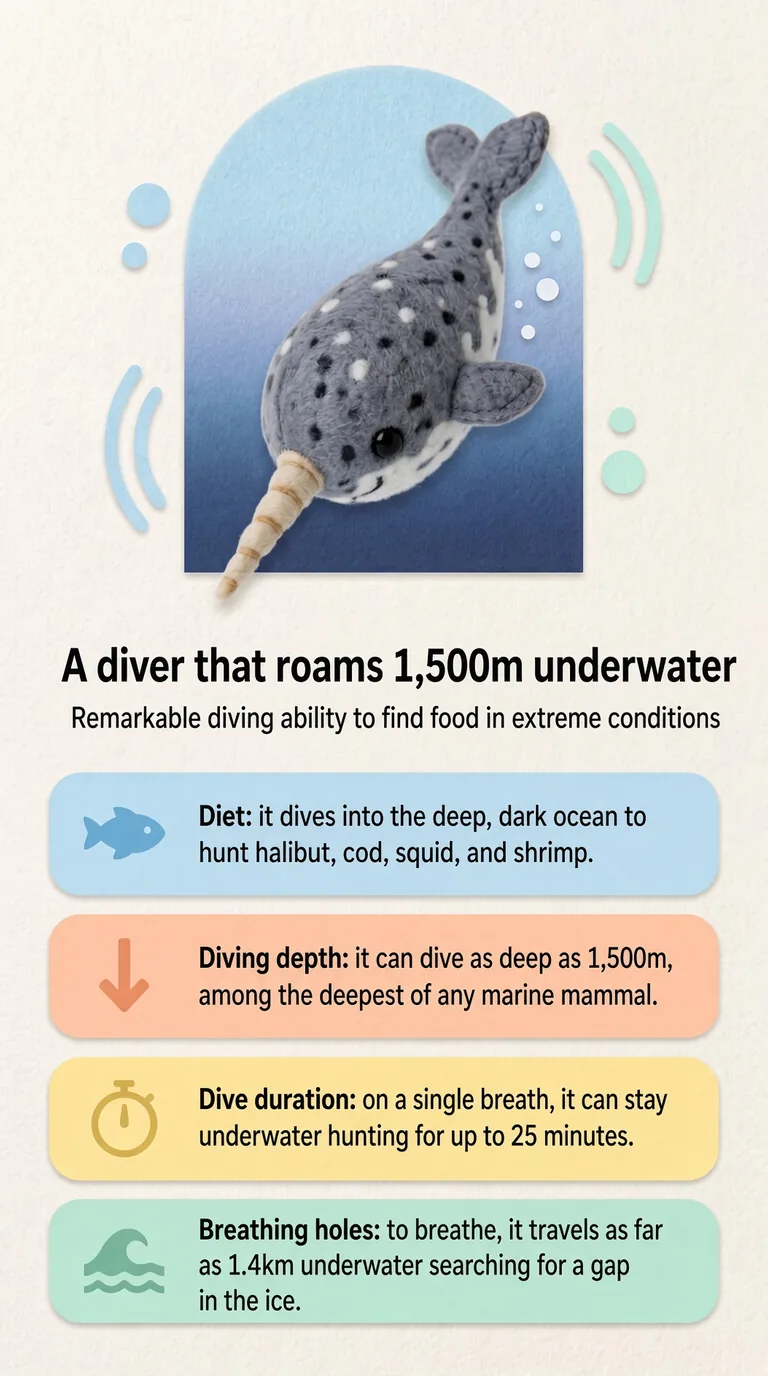
- Diet — it dives into the deep, dark ocean to hunt halibut, cod, squid, and shrimp.
- Diving depth — it can dive as deep as 1,500m, among the deepest of any marine mammal.
- Dive duration — on a single breath, it can stay underwater hunting for up to 25 minutes.
- Breathing holes — to breathe, it travels as far as 1.4km underwater searching for a gap in the ice.
Under the ice is its perfect hideout
Why the narwhal never leaves the cold, harsh icy sea
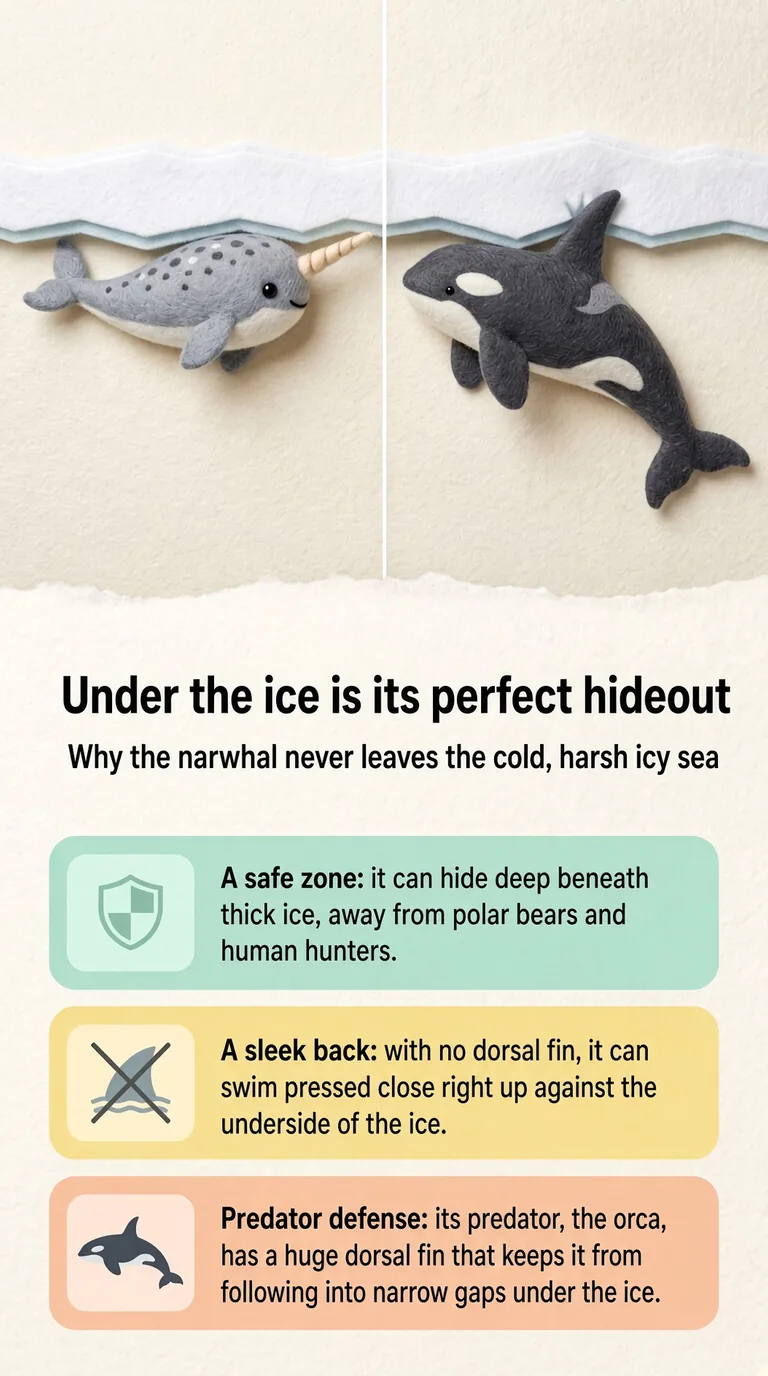
- A safe zone — it can hide deep beneath thick ice, away from polar bears and human hunters.
- A sleek back — with no dorsal fin, it can swim pressed close right up against the underside of the ice.
- Predator defense — its predator, the orca, has a huge dorsal fin that keeps it from following into narrow gaps under the ice.
"I'm right here!" — a voice that finds family
A special sound-based system that connects mother and calf

- A unique signal — each individual creates its own special "contact call."
- Mother and calf — when separated in the vast ocean, they make a specific sound to check each other's location.
- A name tag of the sea — this highly developed sound acts like a name tag, letting members recognize each other within the group.