Walrus
Polar Regions
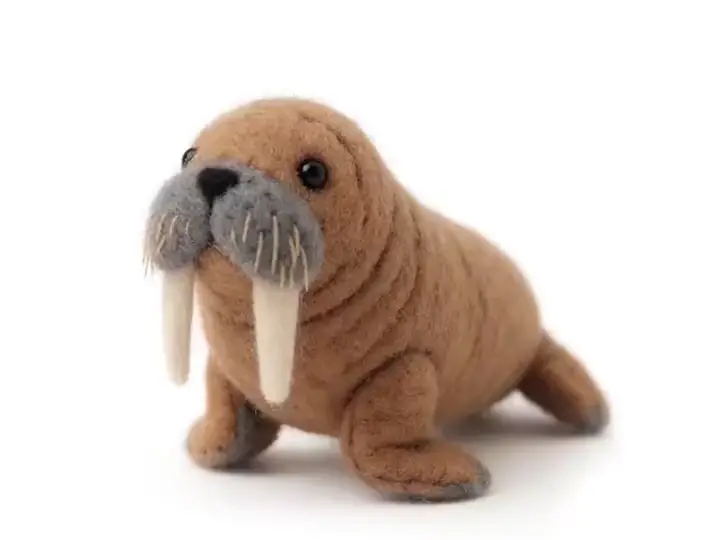
The walrus is a giant sea mammal with impressive long tusks. Its thick skin and blubber protect it from the icy water. It uses its tusks to haul itself onto the ice and feels along the seafloor to find clams.
Quick facts
- Habitat
- It lives on the Arctic ice and in cold seas.
- Diet
- It eats clams, shrimp, and crabs.
- Size and weight
- Length 3–4m, weight 800–1,700kg.
- Lifespan
- About 40 years
- Conservation status
- Vulnerable
- Fun facts
- Its tusks can grow up to 1m long! It even uses them to break ice.
It uses the whiskers around its mouth to find clams on the dark seafloor.
Learn more
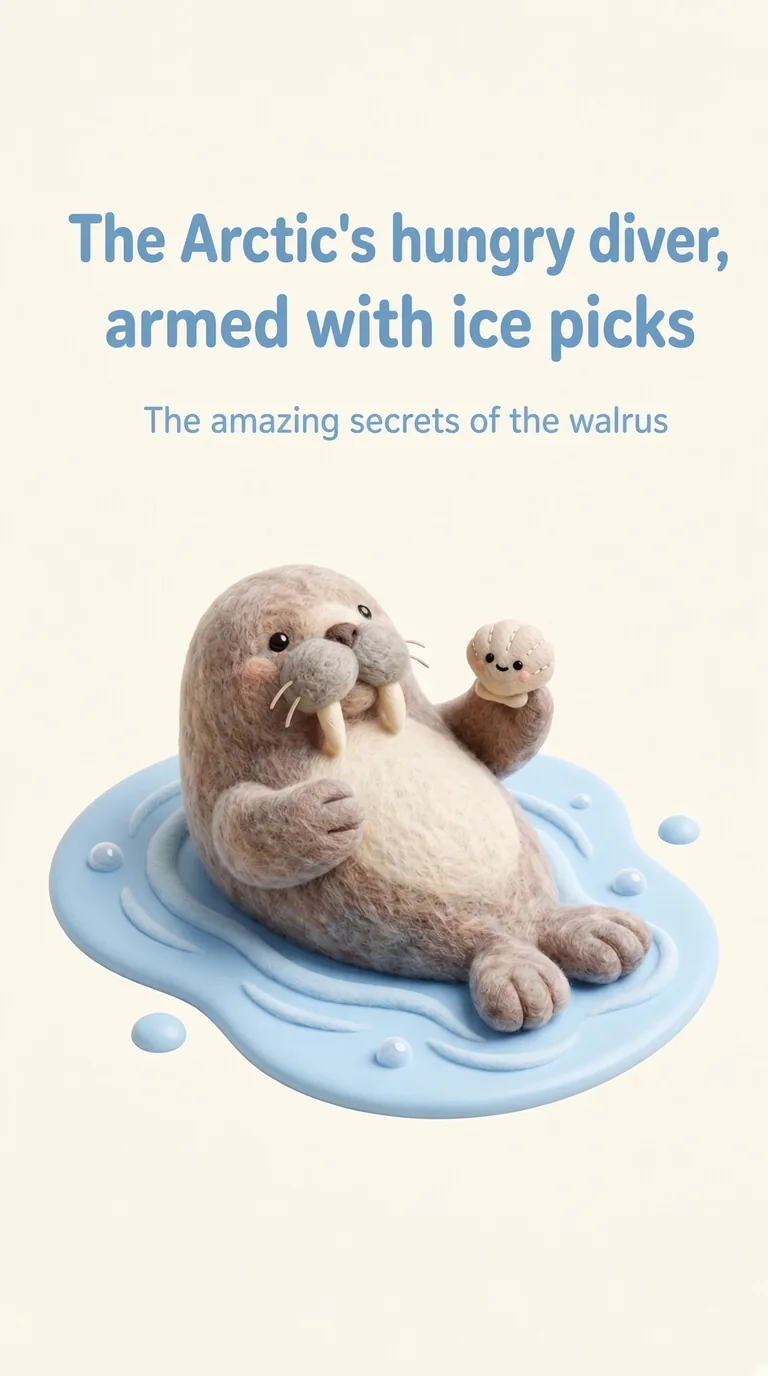
The Arctic's hungry diver, armed with ice picks
The amazing secrets of the walrus
A survival tool, not just a fashion statement
The truth behind its giant tusks, growing up to 1 meter
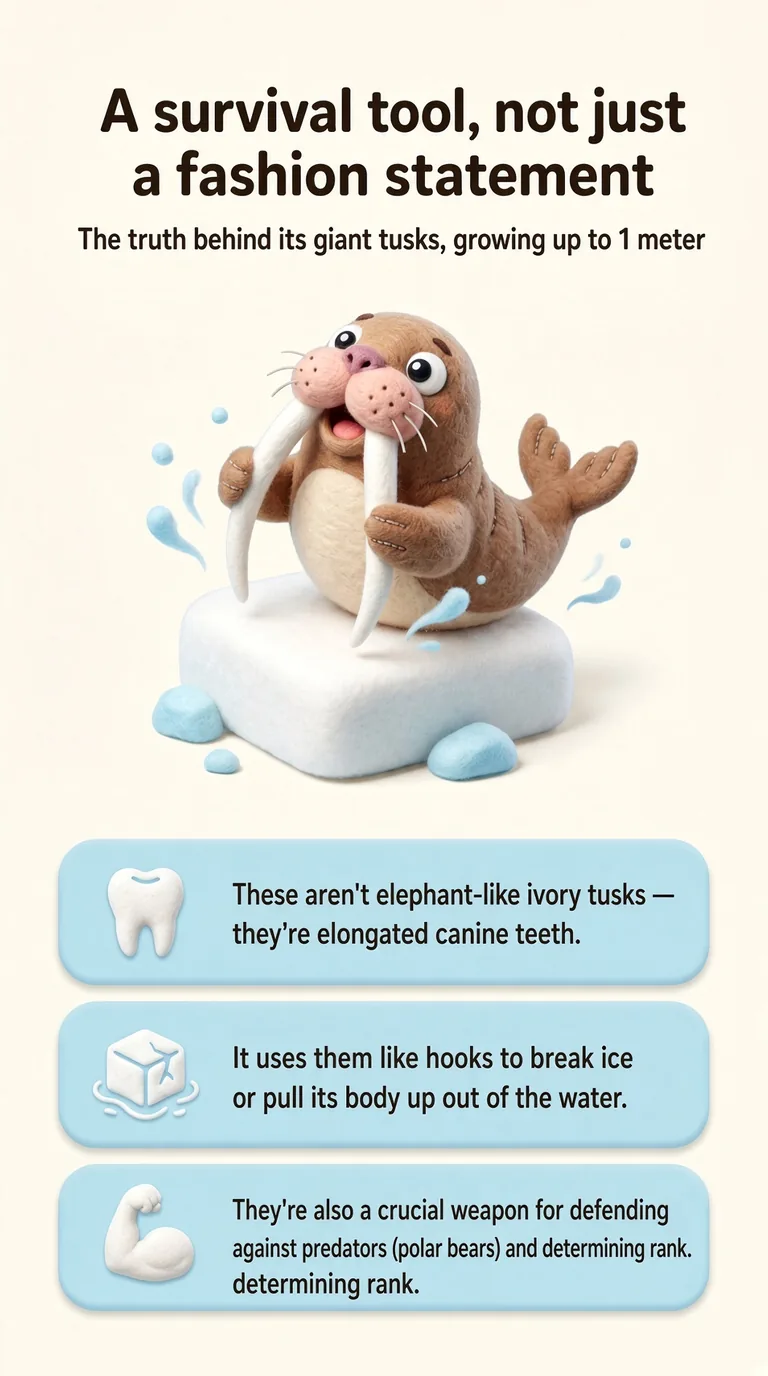
- These aren't elephant-like ivory tusks — they're elongated canine teeth.
- It uses them like hooks to break ice or pull its body up out of the water.
- They're also a crucial weapon for defending against predators (polar bears) and determining rank.
A high-performance radar in the dark
Over 700 highly sensitive whiskers
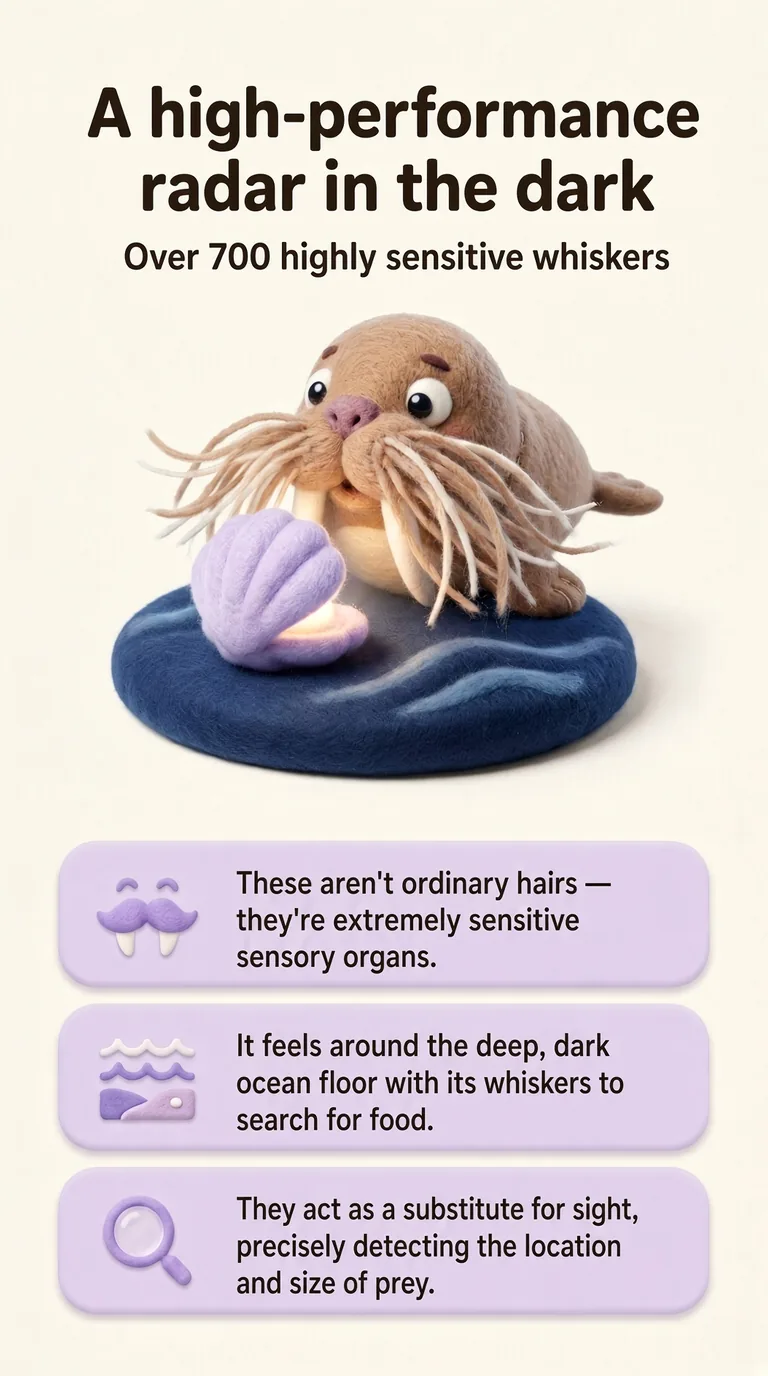
- These aren't ordinary hairs — they're extremely sensitive sensory organs.
- It feels around the deep, dark ocean floor with its whiskers to search for food.
- They act as a substitute for sight, precisely detecting the location and size of prey.
It doesn't chew — it sucks
A hearty eater consuming over 50kg a day
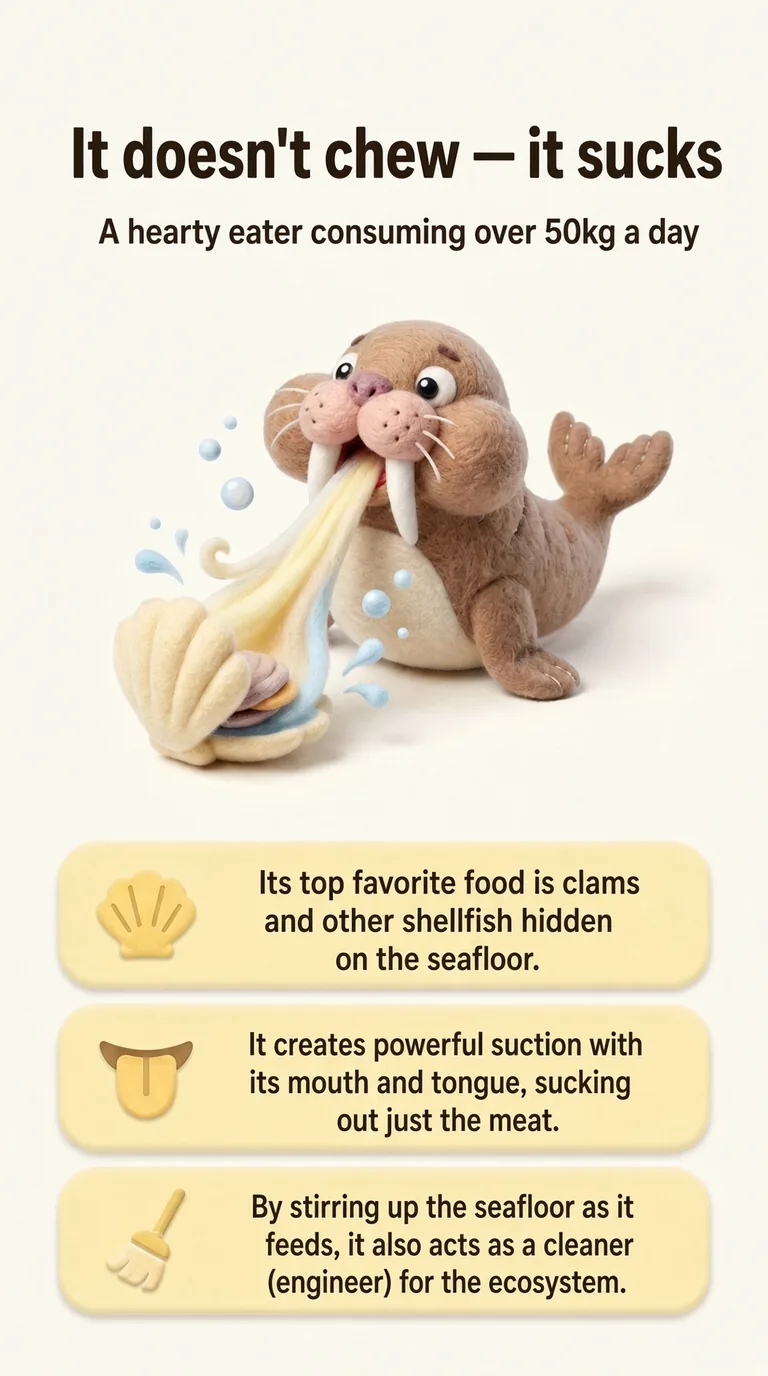
- Its top favorite food is clams and other shellfish hidden on the seafloor.
- It creates powerful suction with its mouth and tongue, sucking out just the meat.
- By stirring up the seafloor as it feeds, it also acts as a cleaner (engineer) for the ecosystem.
It turns pink when sunbathing
A perfect winter coat that endures extreme cold
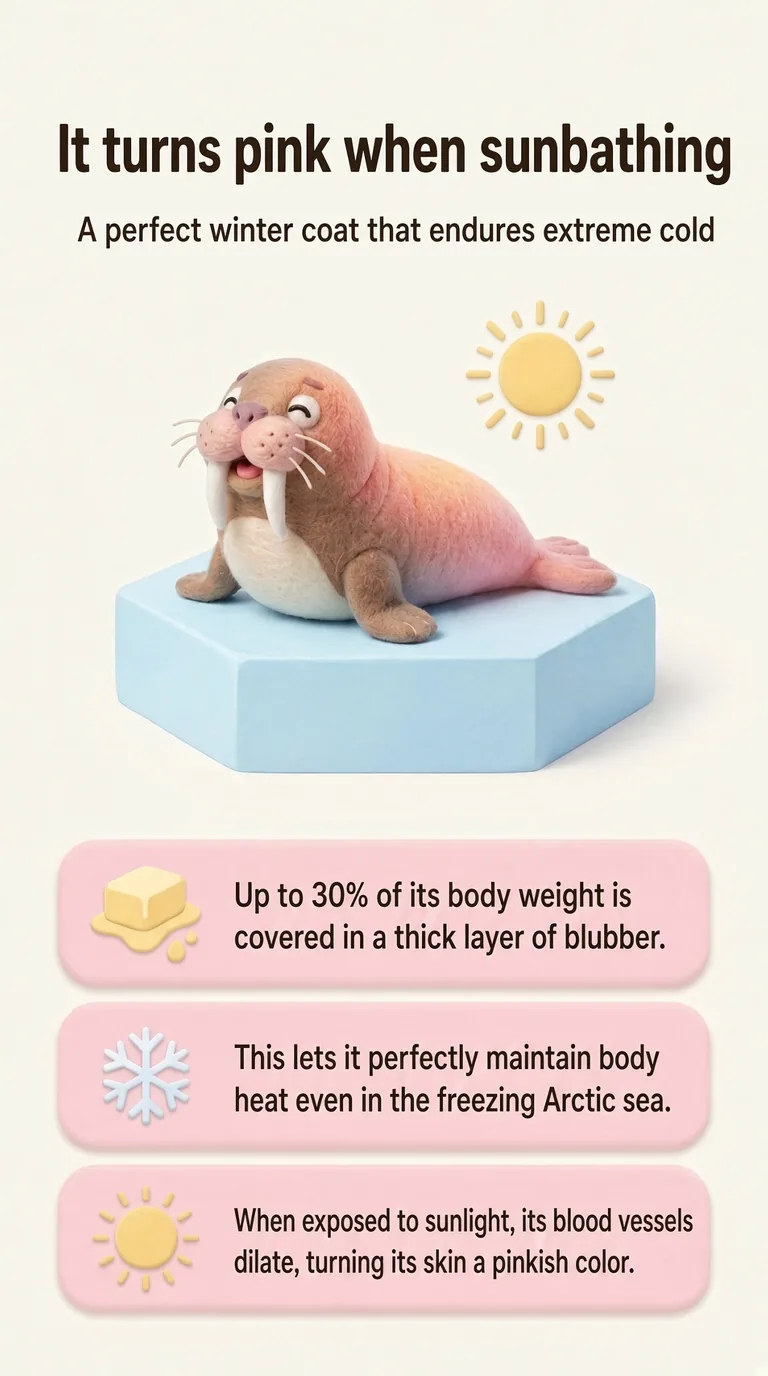
- Up to 30% of its body weight is covered in a thick layer of blubber.
- This lets it perfectly maintain body heat even in the freezing Arctic sea.
- When exposed to sunlight, its blood vessels dilate, turning its skin a pinkish color.
Slow on land, swift underwater!
A surprising twist shown by a creature weighing up to 2 tons
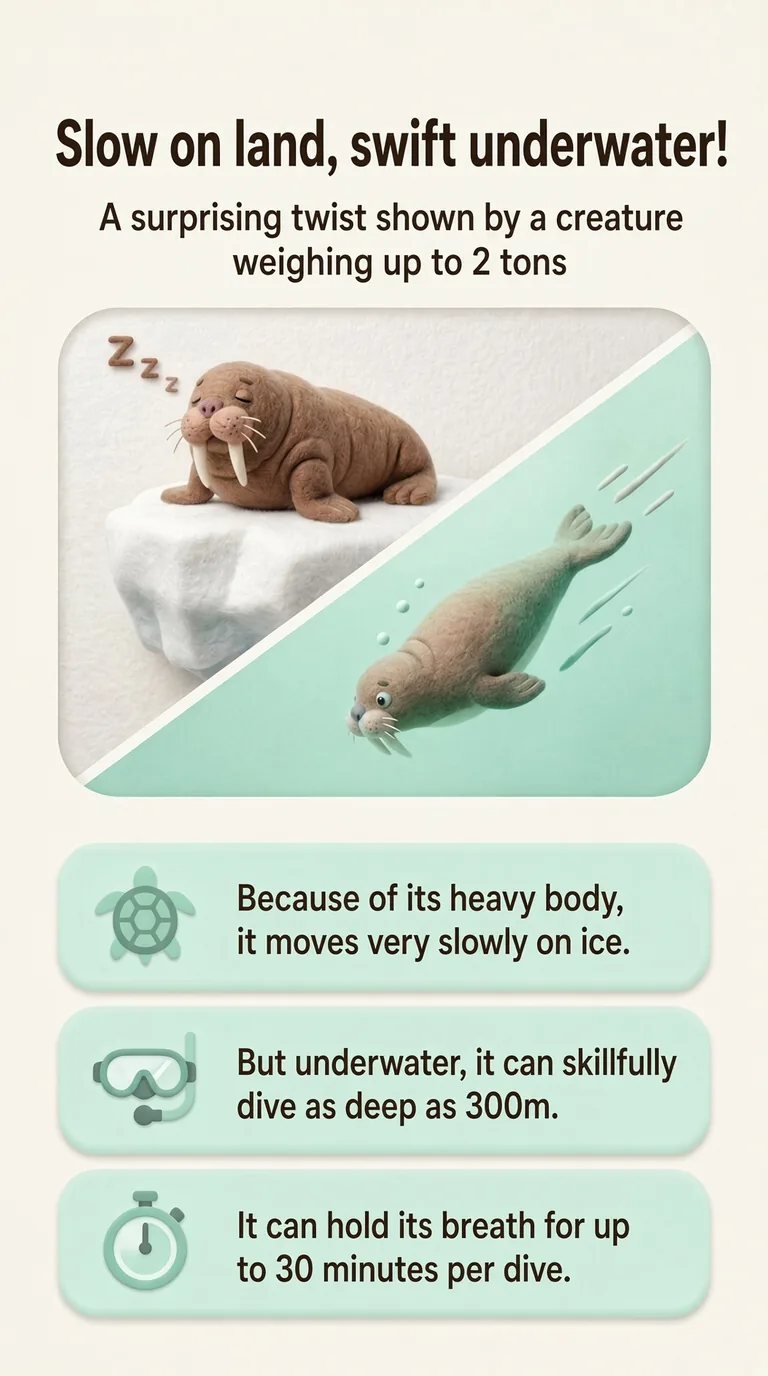
- Because of its heavy body, it moves very slowly on ice.
- But underwater, it can skillfully dive as deep as 300m.
- It can hold its breath for up to 30 minutes per dive.
A guide to telling pinnipeds apart
How are sea lions, seals, and walruses different?
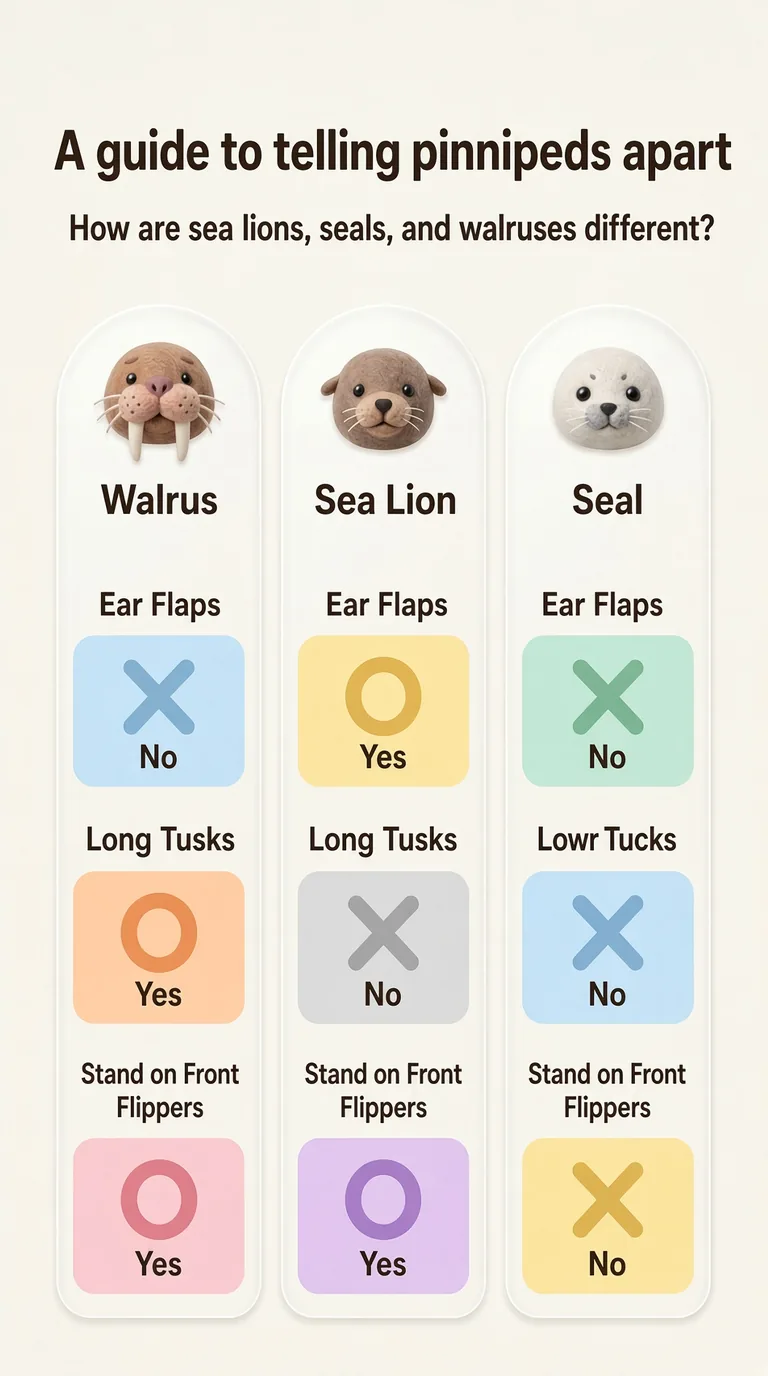
- Walrus
- Ear flaps — No
- Long tusks — Yes
- Standing upright on front flippers — Yes
- Sea lion
- Ear flaps — Yes
- Long tusks — No
- Standing upright on front flippers — Yes
- Seal
- Ear flaps — No
- Long tusks — No
- Standing upright on front flippers — No
A crowded ice apartment complex
A remarkably social animal
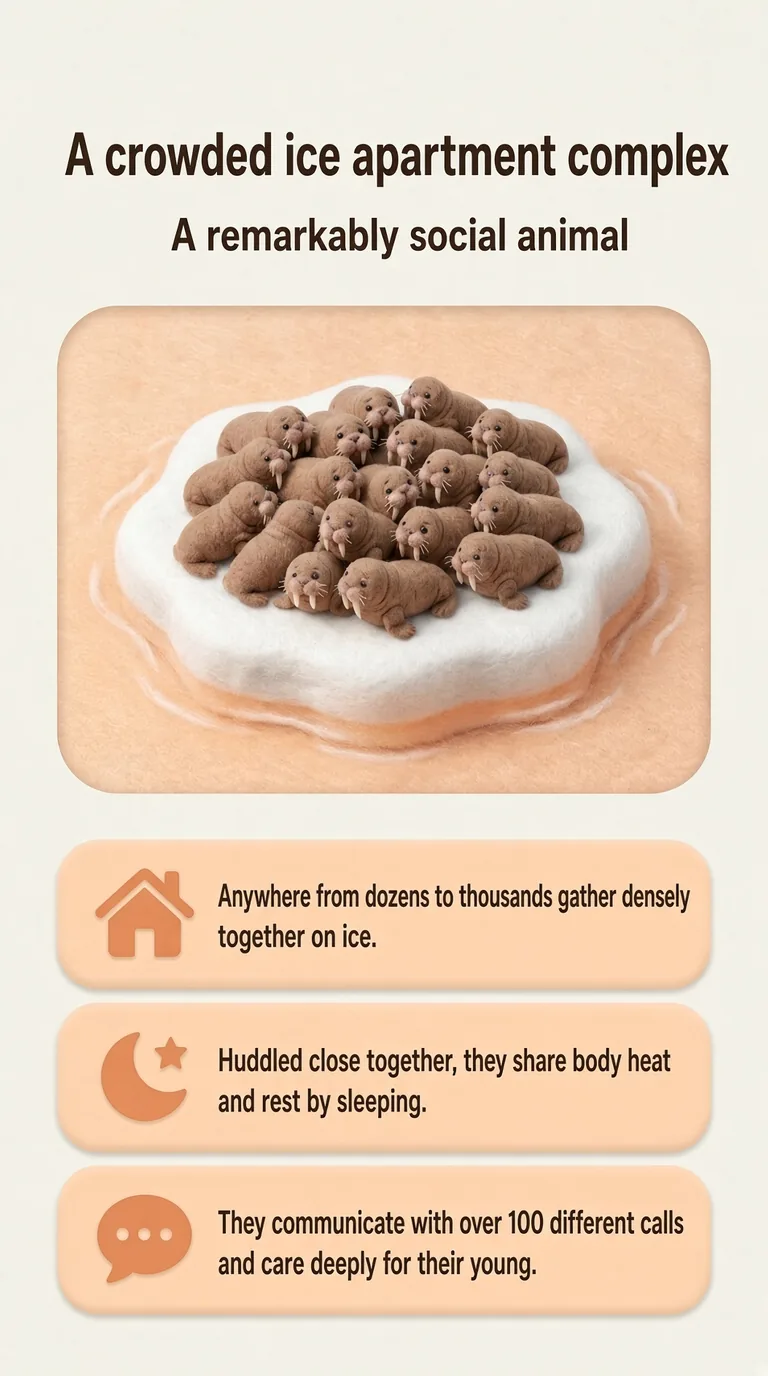
- Anywhere from dozens to thousands gather densely together on ice.
- Huddled close together, they share body heat and rest by sleeping.
- They communicate with over 100 different calls and care deeply for their young.