Emperor Penguin
Polar Regions
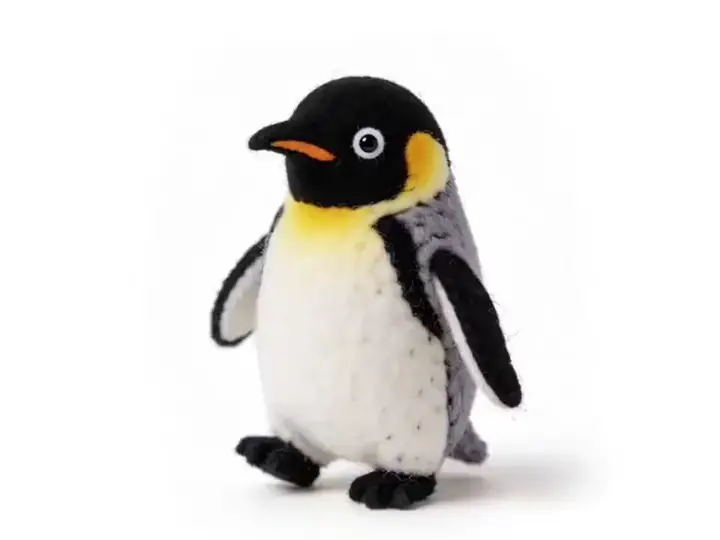
The emperor penguin is the largest of all penguins. It survives Antarctica's bitter cold by huddling close with others to share body heat. Dads are devoted parents that keep the egg warm on top of their feet.
Quick facts
- Habitat
- It lives on the ice and in the cold seas of Antarctica.
- Diet
- It eats fish, squid, and krill.
- Size and weight
- Height 1.1–1.3m, weight 22–45kg.
- Lifespan
- 15–20 years
- Conservation status
- Near Threatened
- Fun facts
- Emperor penguin dads keep the egg warm for two months at -60°C!
It dives as deep as 500m to catch food.
Learn more
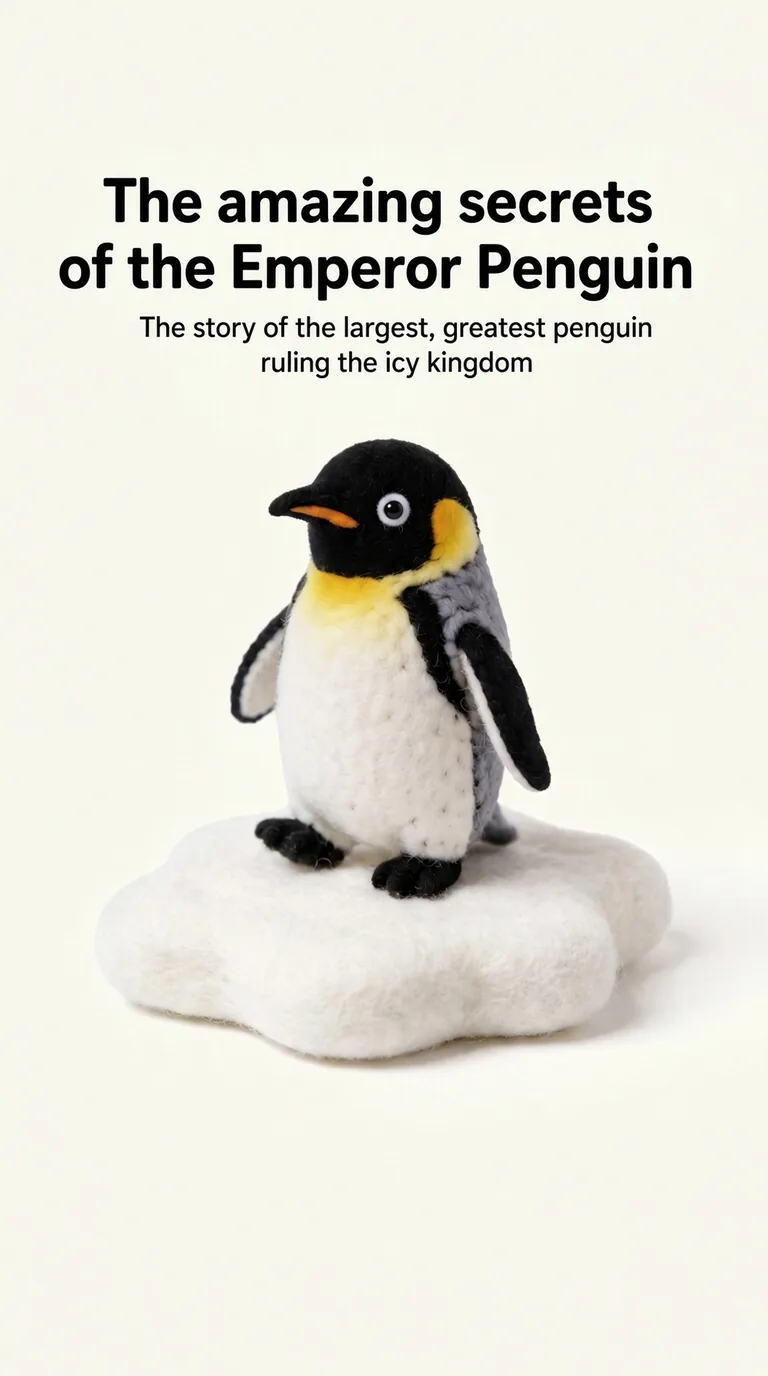
The amazing secrets of the Emperor Penguin
The story of the largest, greatest penguin ruling the icy kingdom
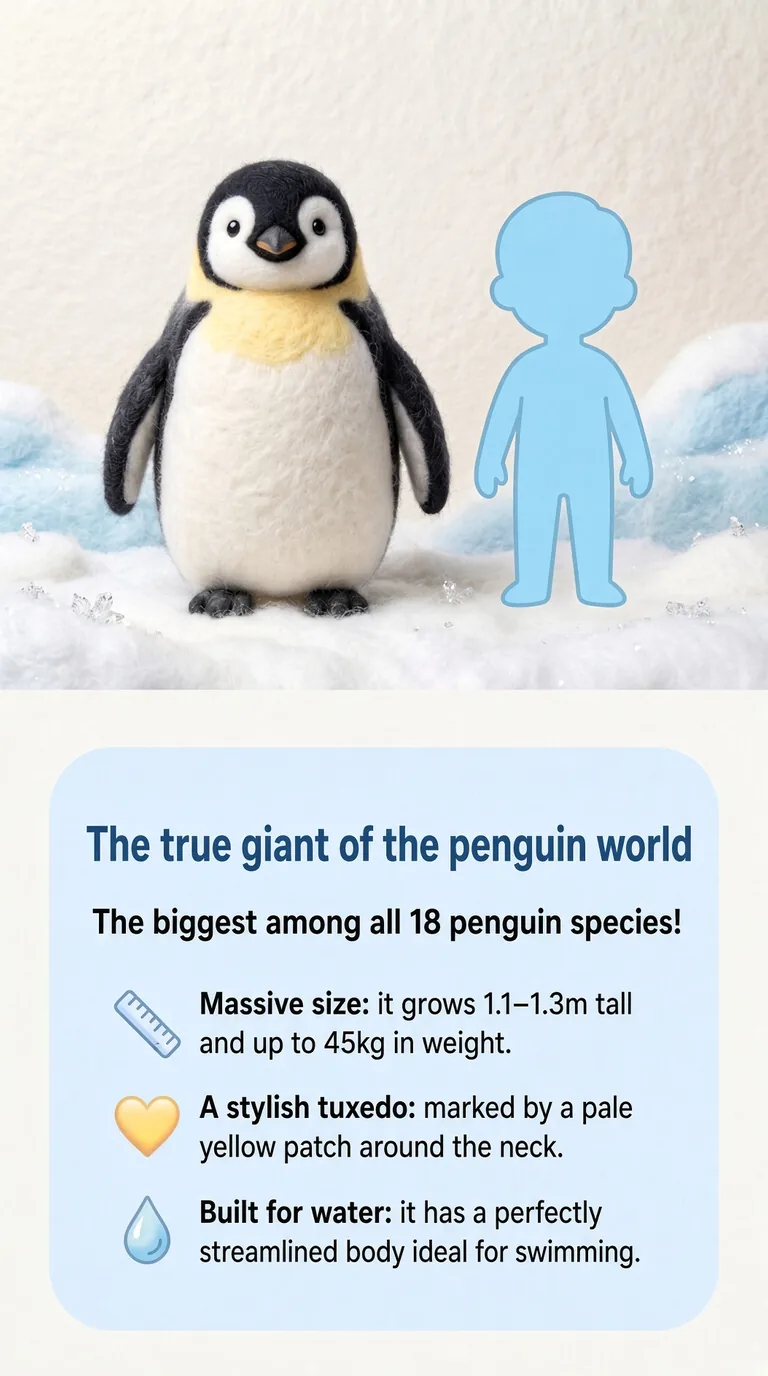
The true giant of the penguin world
The biggest among all 18 penguin species!
- Massive size — it grows 1.1–1.3m tall and up to 45kg in weight.
- A stylish tuxedo — marked by a pale yellow patch around the neck.
- Built for water — it has a perfectly streamlined body ideal for swimming.
It lives only in Antarctica
The frozen sea is its one and only home.
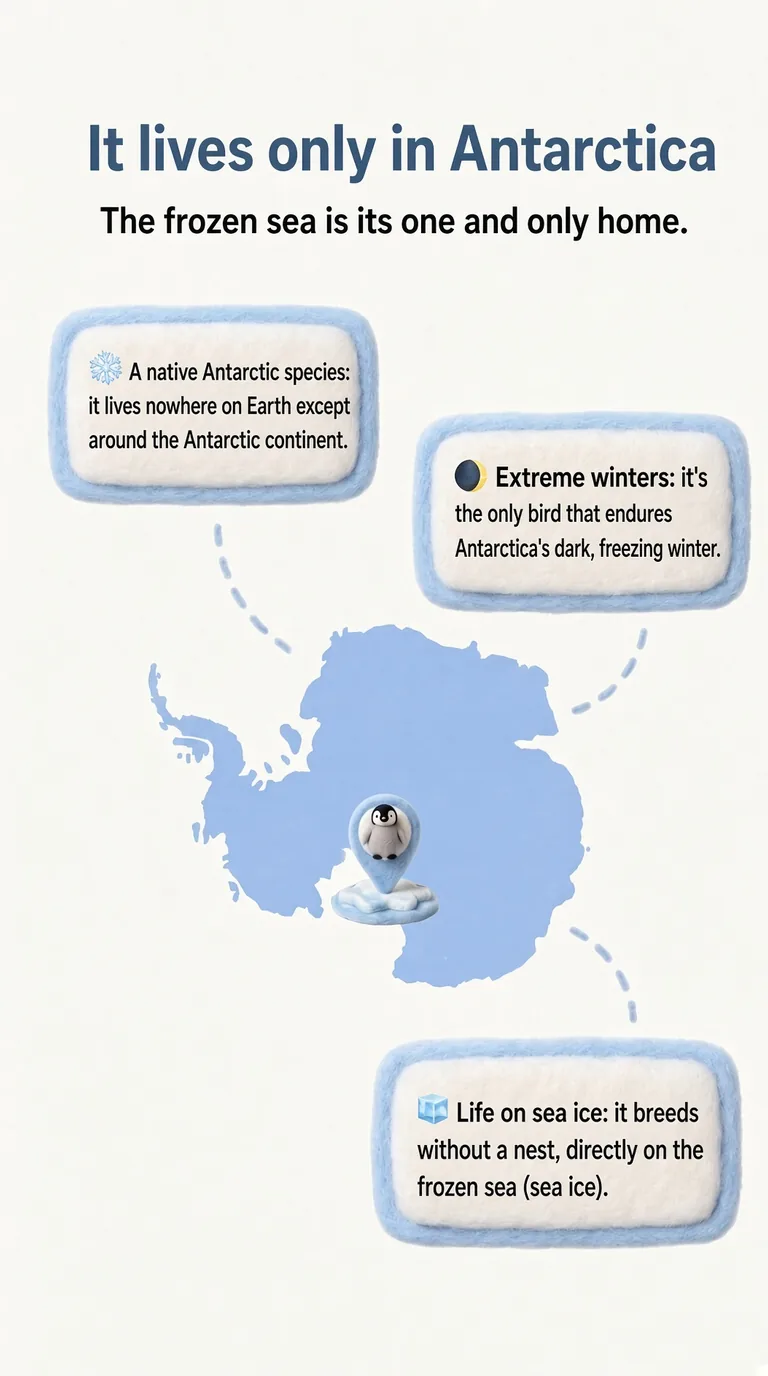
- A native Antarctic species — it lives nowhere on Earth except around the Antarctic continent.
- Extreme winters — it's the only bird that endures Antarctica's dark, freezing winter.
- Life on sea ice — it breeds without a nest, directly on the frozen sea (sea ice).
The most devoted father in the world
Guarding the egg in temperatures as low as -60°C.
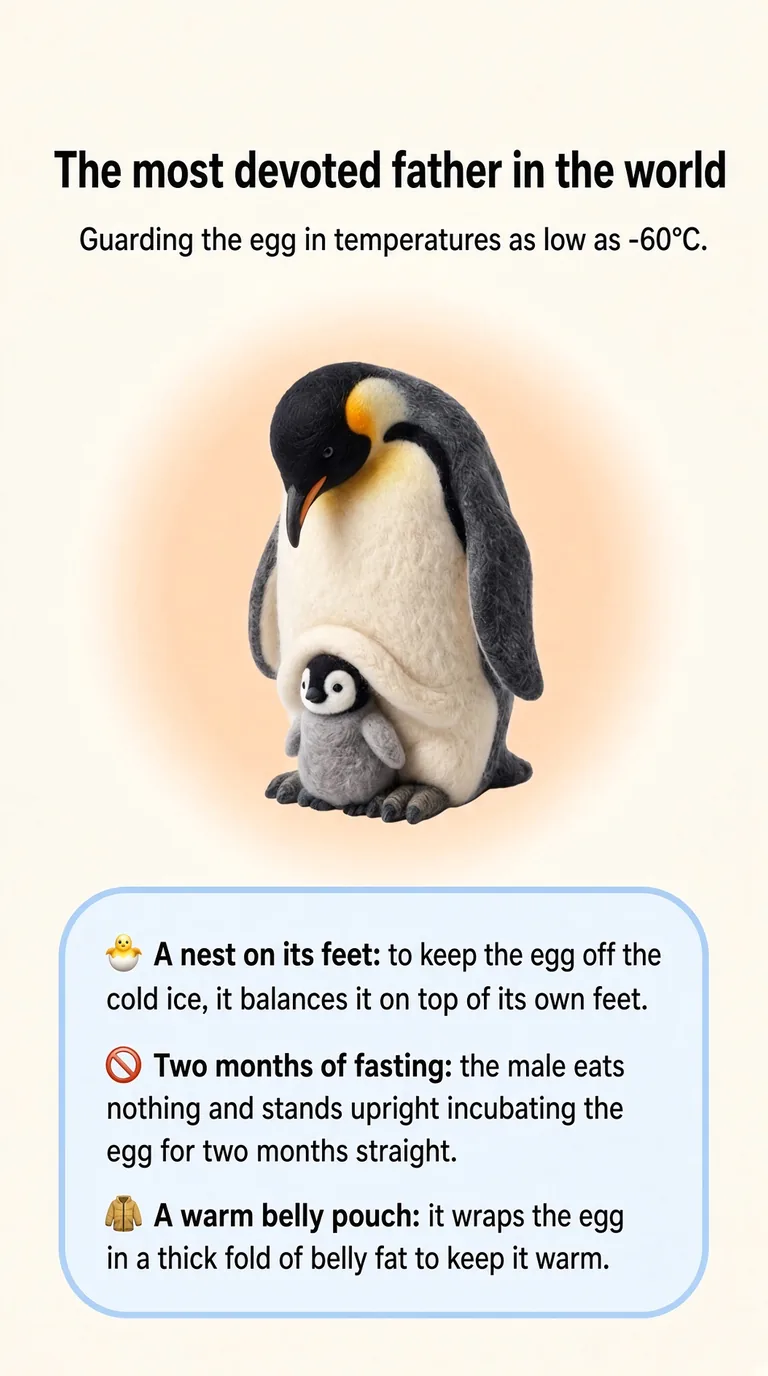
- A nest on its feet — to keep the egg off the cold ice, it balances it on top of its own feet.
- Two months of fasting — the male eats nothing and stands upright incubating the egg for two months straight.
- A warm belly pouch — it wraps the egg in a thick fold of belly fat to keep it warm.
The secret to enduring -40°C
It has a perfect gene and a perfect winter coat.
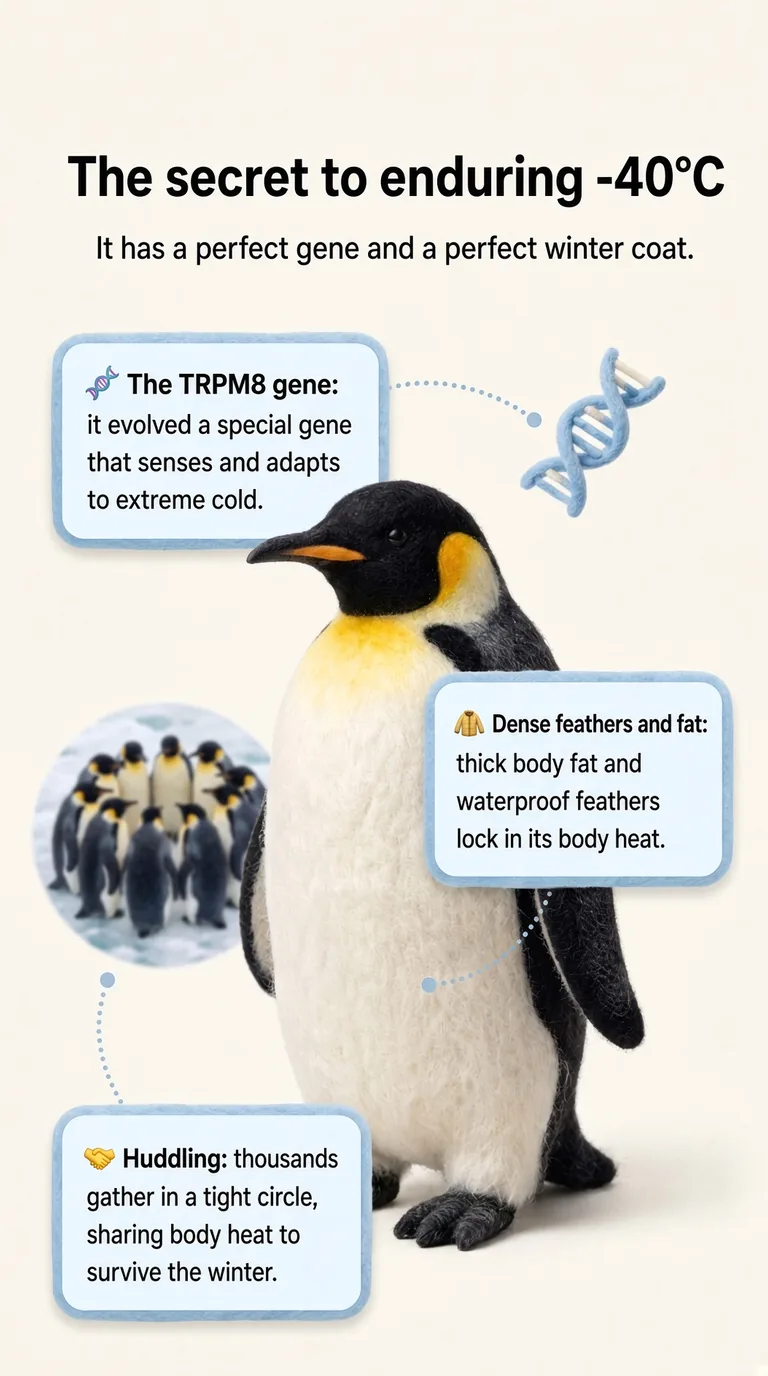
- The TRPM8 gene — it evolved a special gene that senses and adapts to extreme cold.
- Dense feathers and fat — thick body fat and waterproof feathers lock in its body heat.
- Huddling — thousands gather in a tight circle, sharing body heat to survive the winter.
A remarkable deep-sea diver
It dives deeper than any other bird!
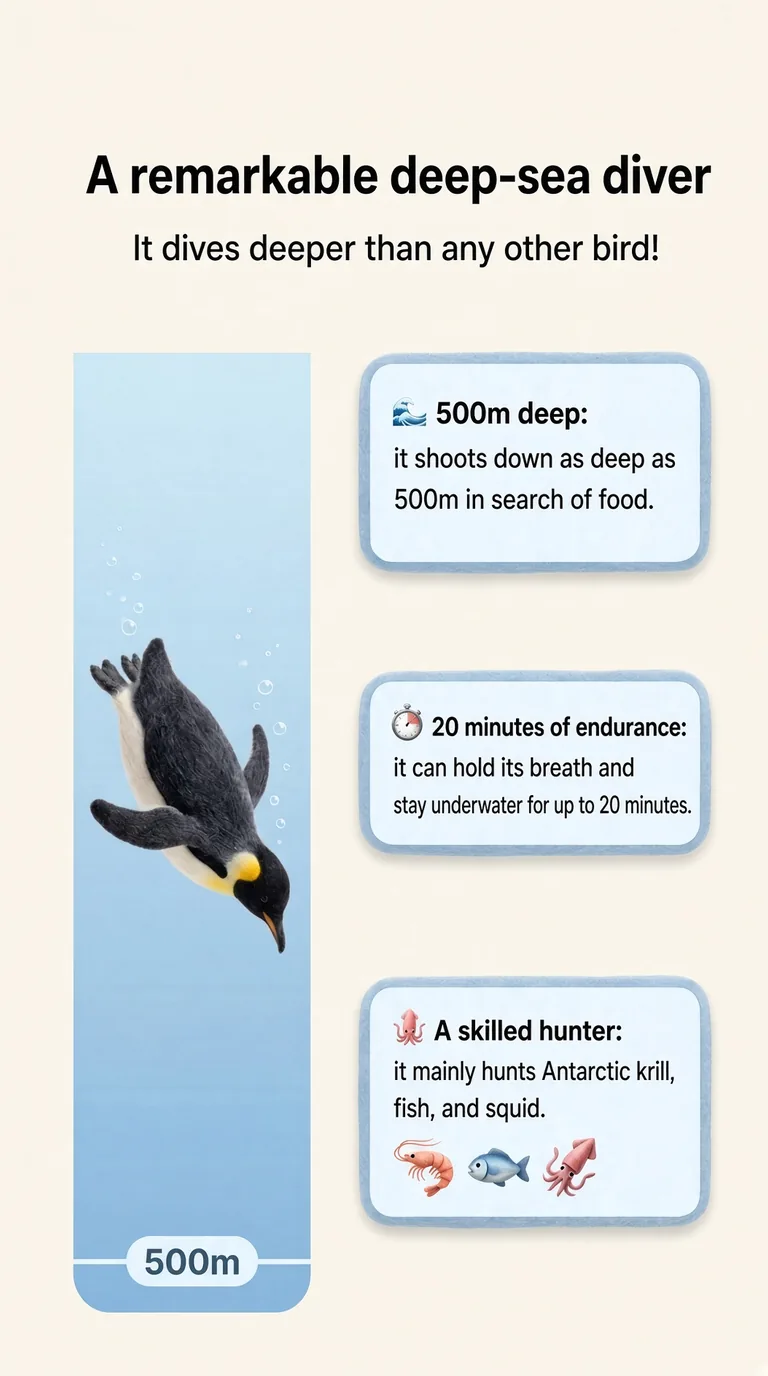
- 500m deep — it shoots down as deep as 500m in search of food.
- 20 minutes of endurance — it can hold its breath and stay underwater for up to 20 minutes.
- A skilled hunter — it mainly hunts Antarctic krill, fish, and squid.
Emperor penguin vs King penguin
Similar, but completely different!
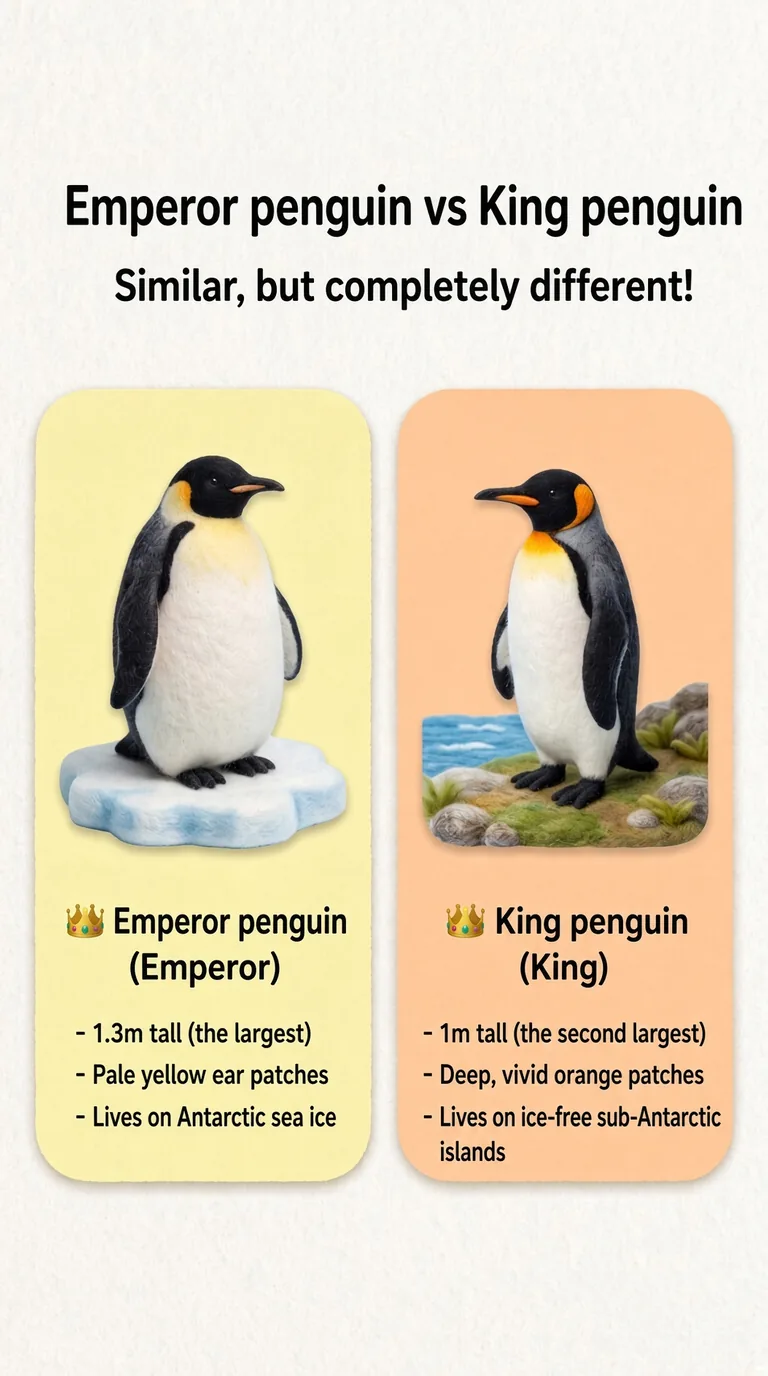
- Emperor penguin
- 1.3m tall (the largest)
- Pale yellow ear patches
- Lives on Antarctic sea ice
- King penguin
- 1m tall (the second largest)
- Deep, vivid orange patches
- Lives on ice-free sub-Antarctic islands