Musk Ox
Polar Regions
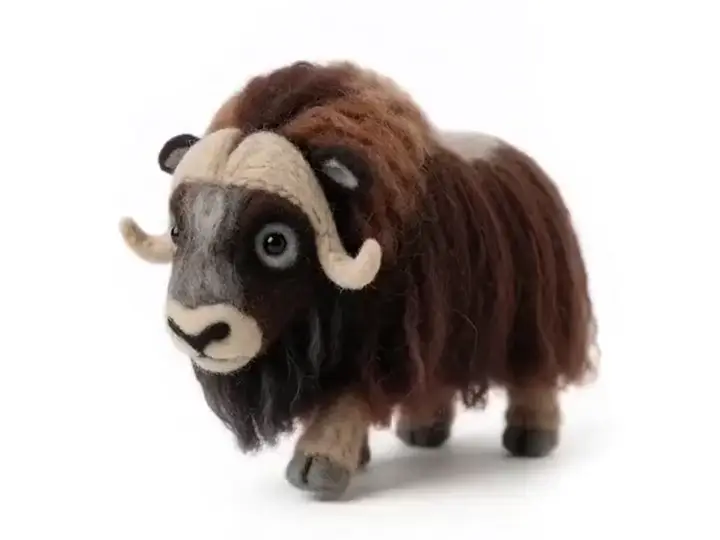
The musk ox is a shaggy animal that has been around since the Ice Age. Its fur is so long it reaches the ground, keeping out the bitter cold. When wolves come near, the adults form a circle around the calves and face them down with their horns.
Quick facts
- Habitat
- It lives on the frozen plains of the Arctic tundra.
- Diet
- It's a plant-eater that eats grass, moss, and roots.
- Size and weight
- Height 1.2–1.5m, weight 200–400kg.
- Lifespan
- 12–20 years
- Conservation status
- Least Concern
- Fun facts
- Its soft underwool, called "qiviut," is eight times warmer than sheep's wool!
It's an ancient animal that lived alongside Ice Age mammoths.
Learn more
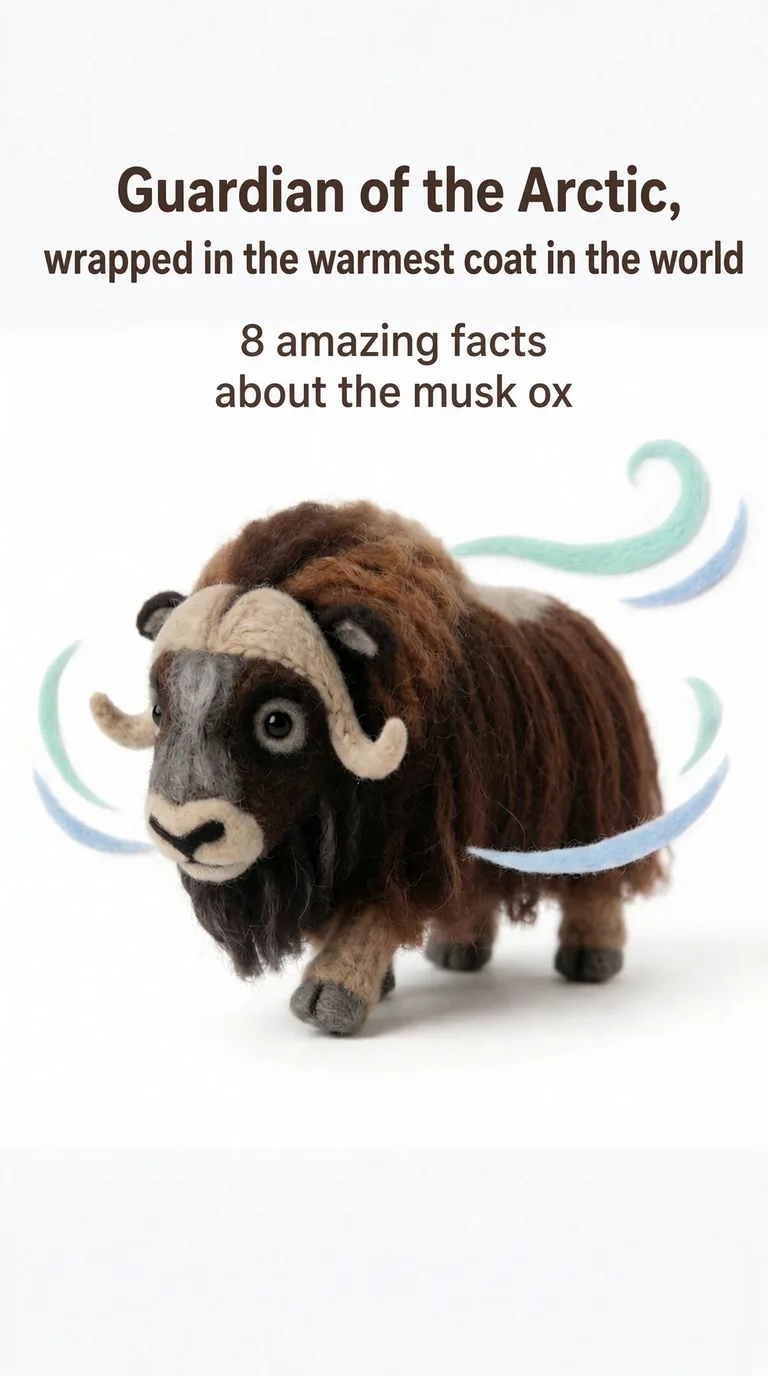
Guardian of the Arctic, wrapped in the warmest coat in the world
8 amazing facts about the musk ox
Not an ox, but a sheep?
A twist behind its name and looks
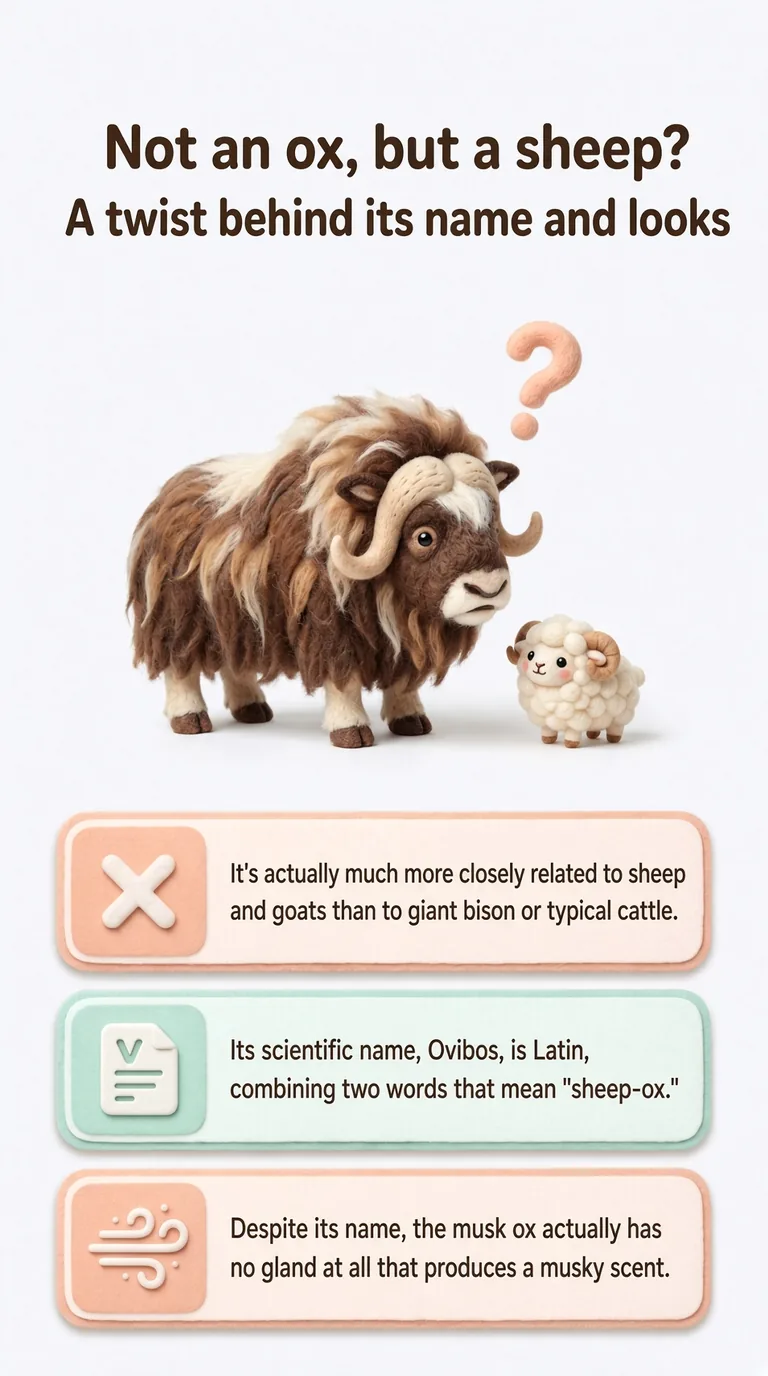
- It's actually much more closely related to sheep and goats than to giant bison or typical cattle.
- Its scientific name, Ovibos, is Latin, combining two words that mean "sheep-ox."
- Despite its name, the musk ox actually has no gland at all that produces a musky scent.
An optical illusion of size — a fluffy coat over a fairly modest build
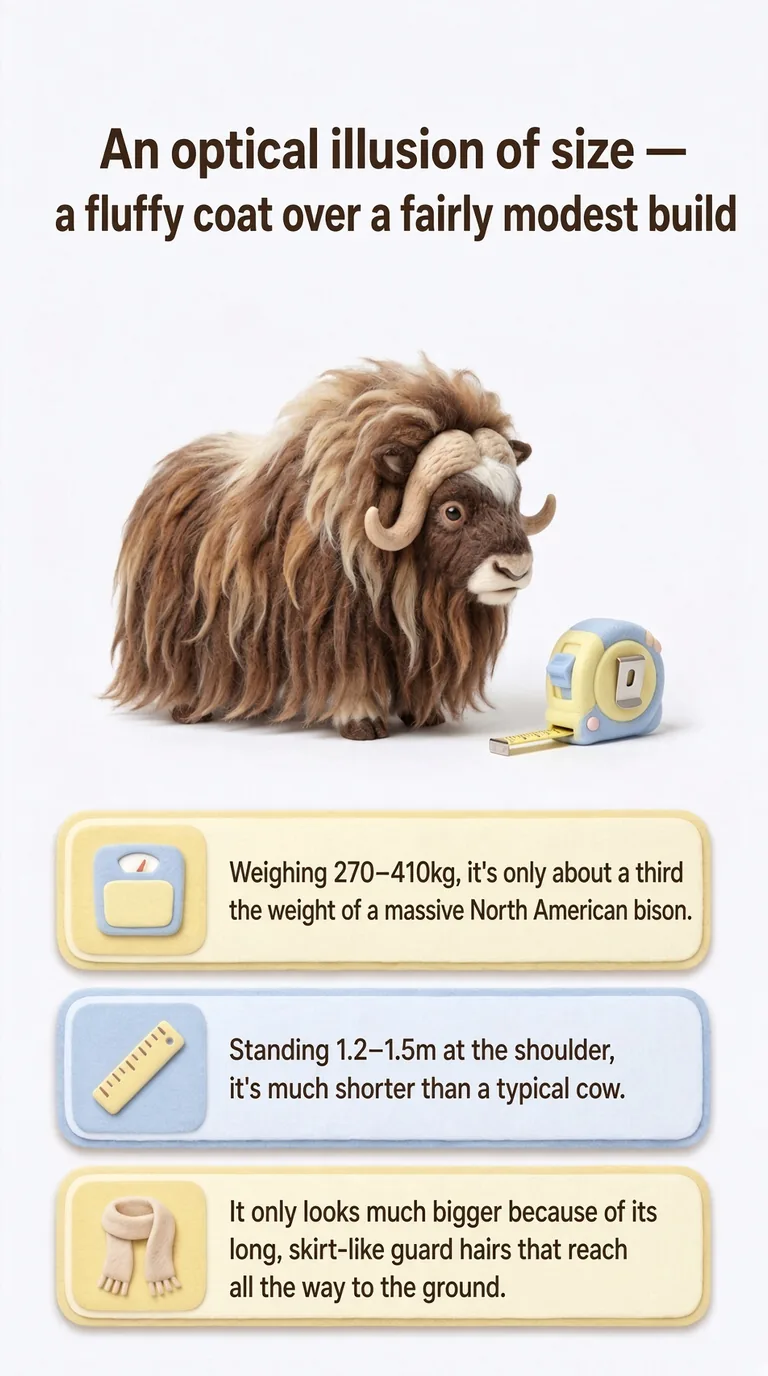
- Weighing 270–410kg, it's only about a third the weight of a massive North American bison.
- Standing 1.2–1.5m at the shoulder, it's much shorter than a typical cow.
- It only looks much bigger because of its long, skirt-like guard hairs that reach all the way to the ground.
The secret of qiviut, the warmest fiber on Earth
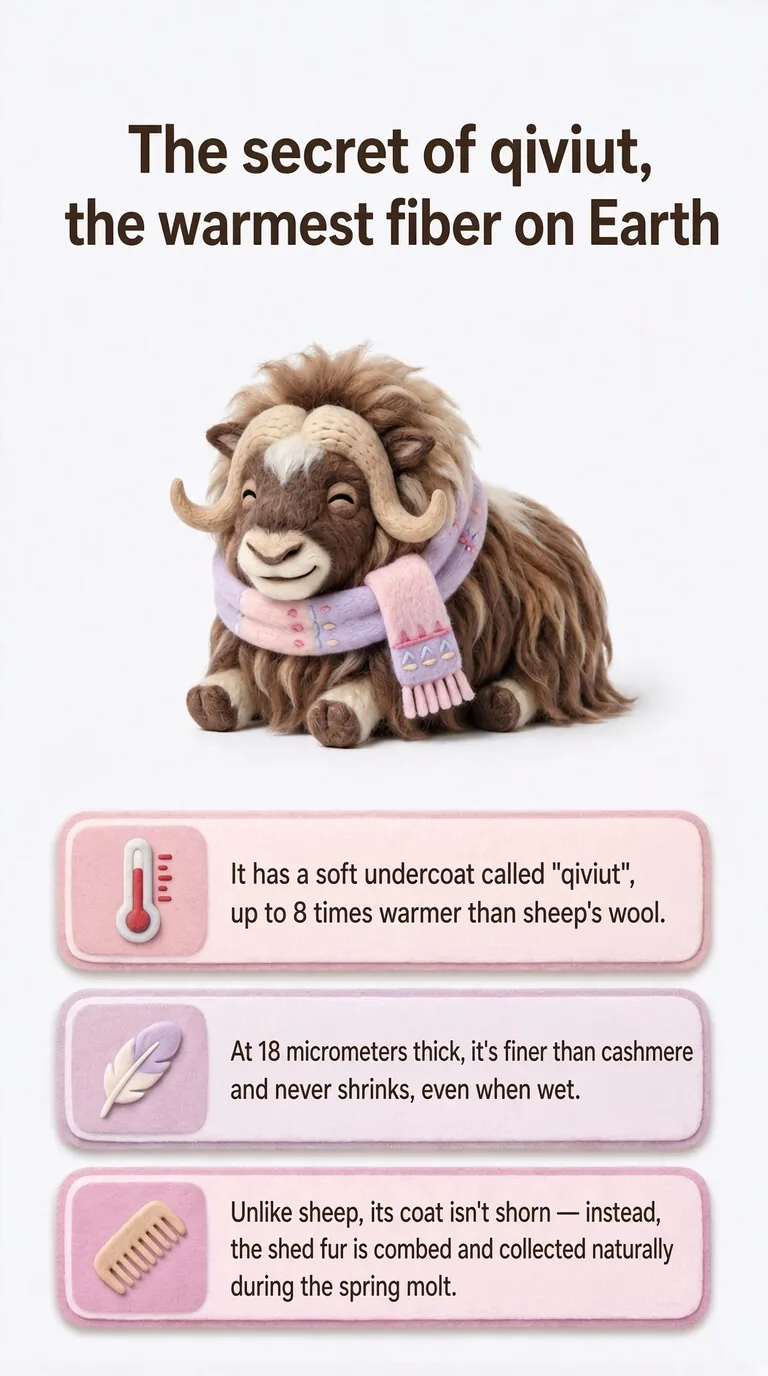
- It has a soft undercoat called "qiviut," up to 8 times warmer than sheep's wool.
- At 18 micrometers thick, it's finer than cashmere and never shrinks, even when wet.
- Unlike sheep, its coat isn't shorn — instead, the shed fur is combed and collected naturally during the spring molt.
An invincible defensive circle
The perfect strategy against Arctic wolves and bears
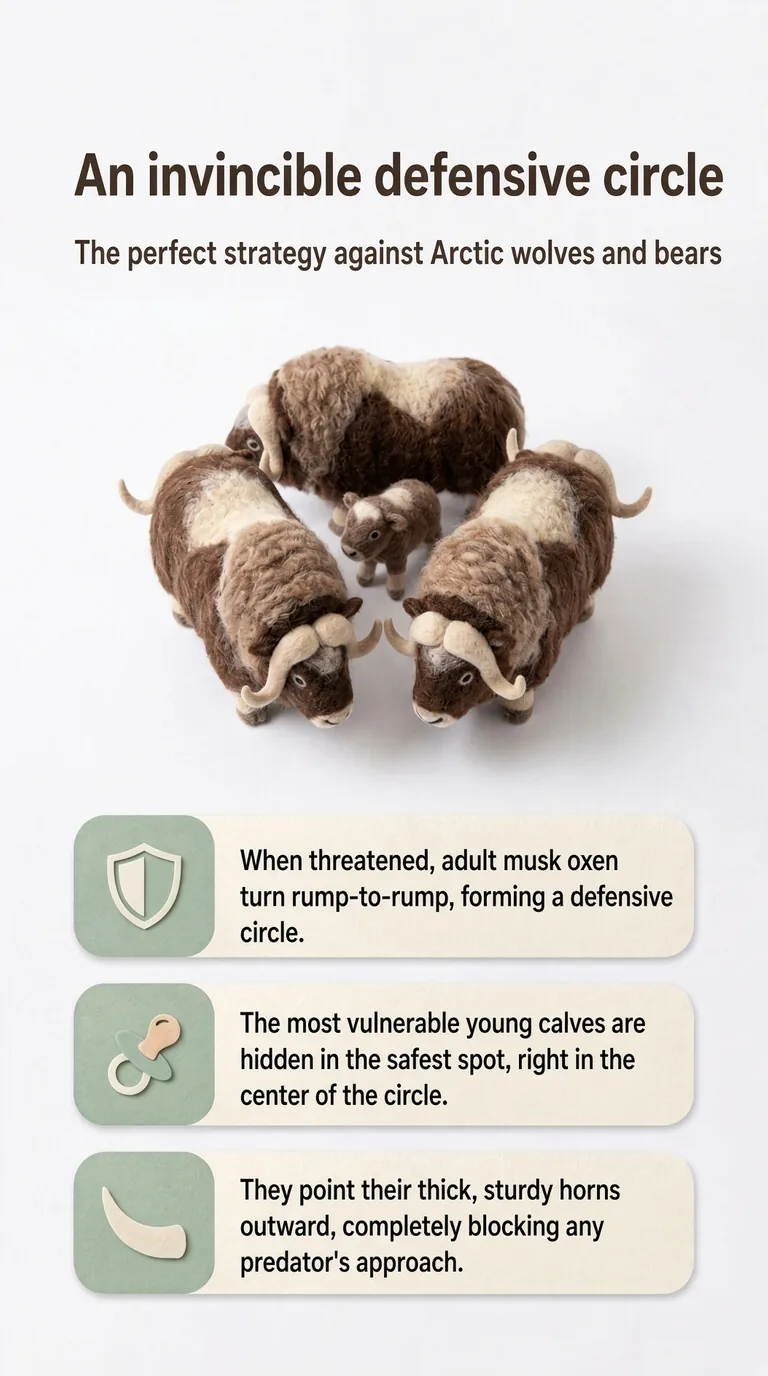
- When threatened, adult musk oxen turn rump-to-rump, forming a defensive circle.
- The most vulnerable young calves are hidden in the safest spot, right in the center of the circle.
- They point their thick, sturdy horns outward, completely blocking any predator's approach.
A slow-moving Arctic animal that can't run
A result of being insulated a little too well
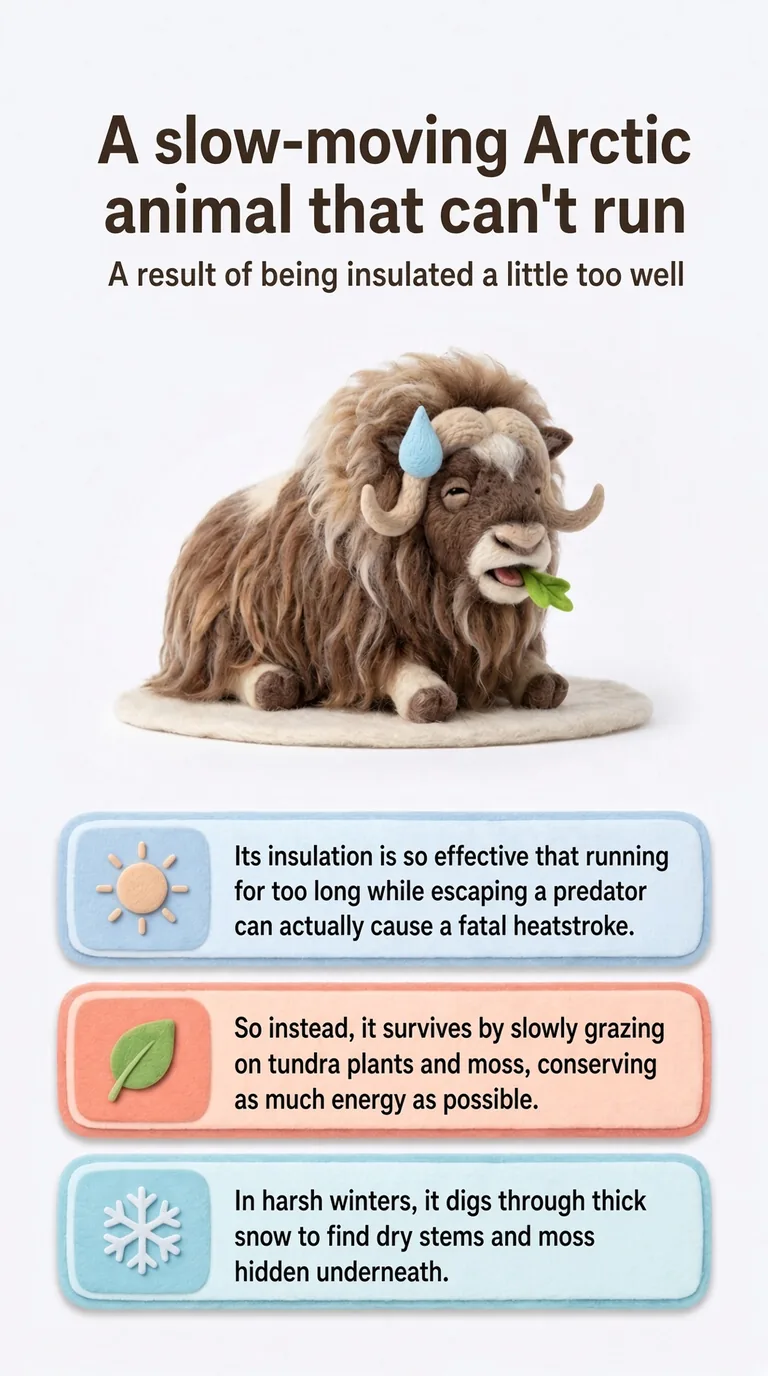
- Its insulation is so effective that running for too long while escaping a predator can actually cause a fatal heatstroke.
- So instead, it survives by slowly grazing on tundra plants and moss, conserving as much energy as possible.
- In harsh winters, it digs through thick snow to find dry stems and moss hidden underneath.
A survivor of the ice age
An animal that once roamed the tundra alongside mammoths
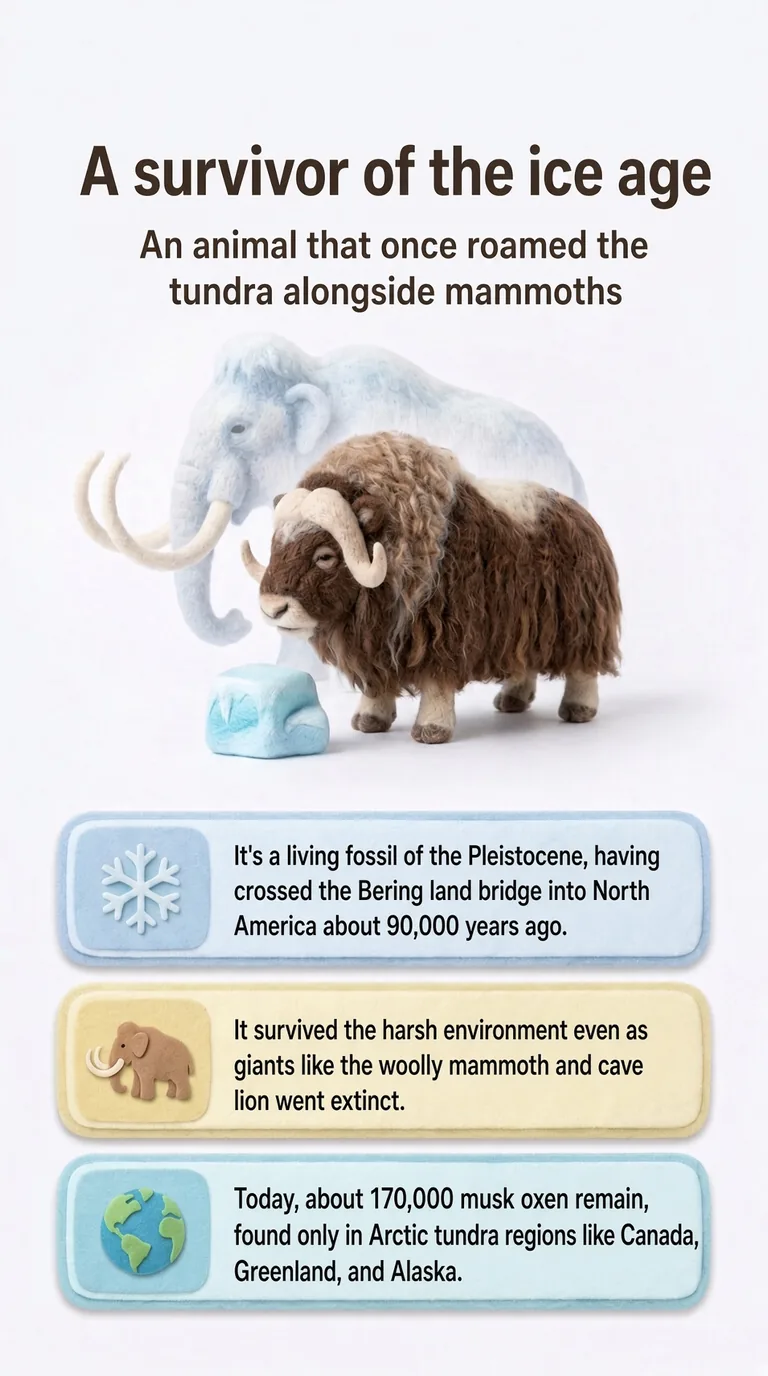
- It's a living fossil of the Pleistocene, having crossed the Bering land bridge into North America about 90,000 years ago.
- It survived the harsh environment even as giants like the woolly mammoth and cave lion went extinct.
- Today, about 170,000 musk oxen remain, found only in Arctic tundra regions like Canada, Greenland, and Alaska.
A diet diary written in its rump fur
Uncovering ecological secrets from the tip of its hair
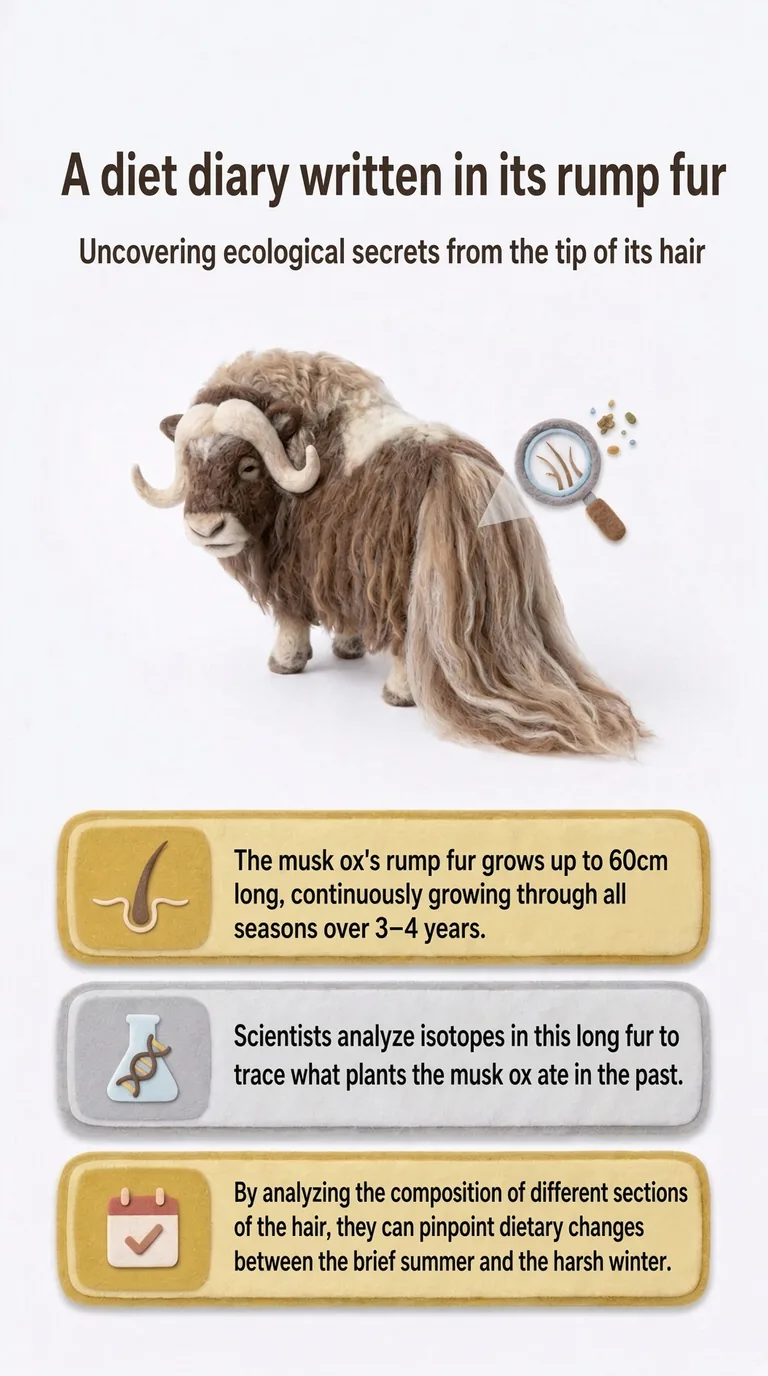
- The musk ox's rump fur grows up to 60cm long, continuously growing through all seasons over 3–4 years.
- Scientists analyze isotopes in this long fur to trace what plants the musk ox ate in the past.
- By analyzing the composition of different sections of the hair, they can pinpoint dietary changes between the brief summer and the harsh winter.