Polar Bear
Polar Regions
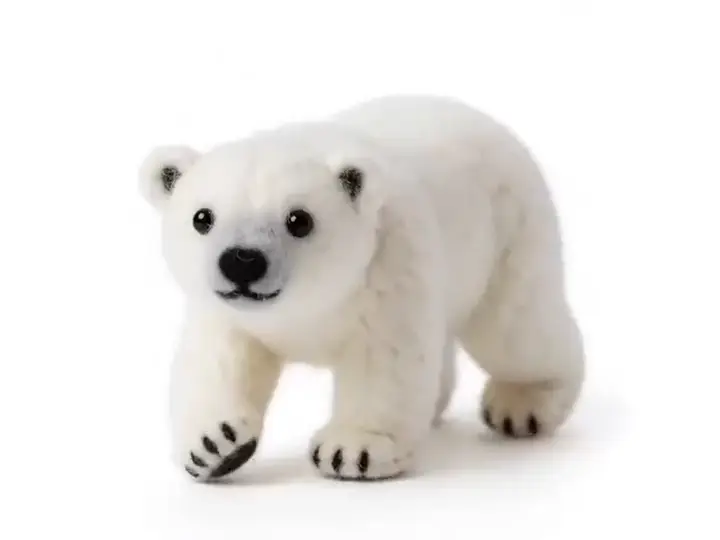
The polar bear is a giant bear with snow-white fur that lives on the freezing Arctic ice. It's a great swimmer and can swim in the ocean for days. A thick layer of fat and fur keeps it warm even in freezing temperatures.
Quick facts
- Habitat
- It lives on the sea ice and coasts of the Arctic Ocean.
- Diet
- It mainly hunts seals.
- Size and weight
- Height 2–3m, weight 300–700kg.
- Lifespan
- 20–25 years
- Conservation status
- Vulnerable
- Fun facts
- A polar bear's skin is actually black!
Its fur isn't really white. Each hair is a clear, hollow tube.
Learn more
The giant of the Arctic, wearing a coat of transparent fur
The amazing secrets of the polar bear we never knew
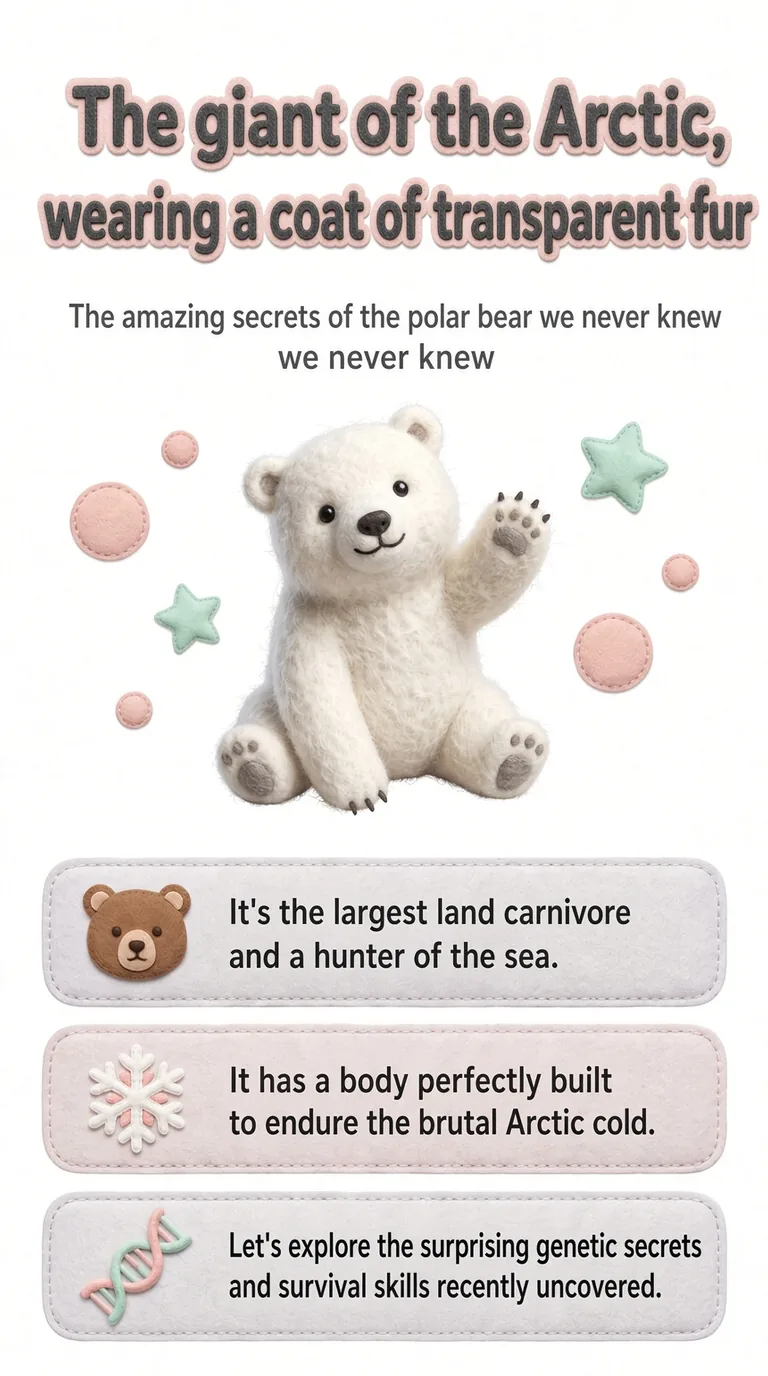
- It's the largest land carnivore and a hunter of the sea.
- It has a body perfectly built to endure the brutal Arctic cold.
- Let's explore the surprising genetic secrets and survival skills recently uncovered.
The white bear isn't actually white?
A surprising twist hidden in its fur and skin
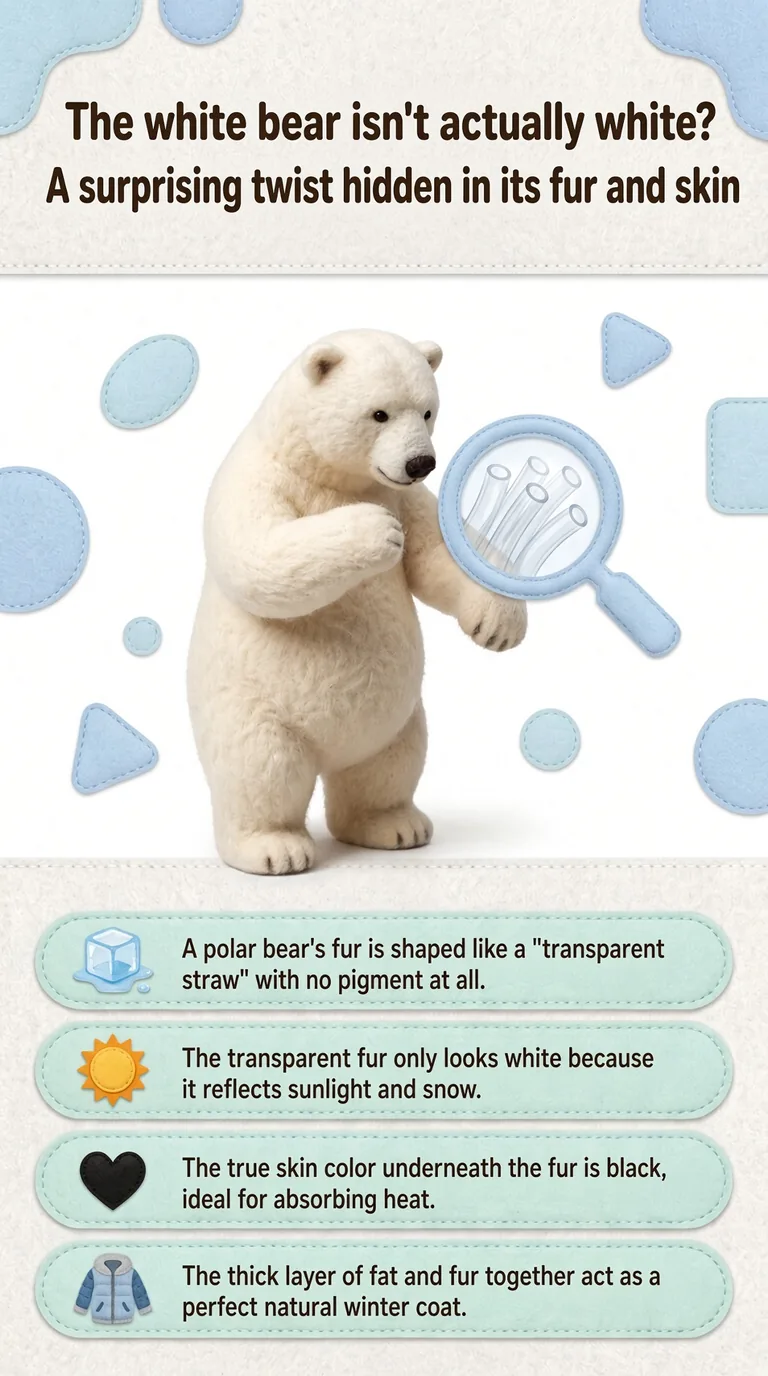
- A polar bear's fur is shaped like a "transparent straw" with no pigment at all.
- The transparent fur only looks white because it reflects sunlight and snow.
- The true skin color underneath the fur is black, ideal for absorbing heat.
- The thick layer of fat and fur together act as a perfect natural winter coat.
Anti-glare sunglasses, built in!
The body's secret to protecting its eyes from UV rays
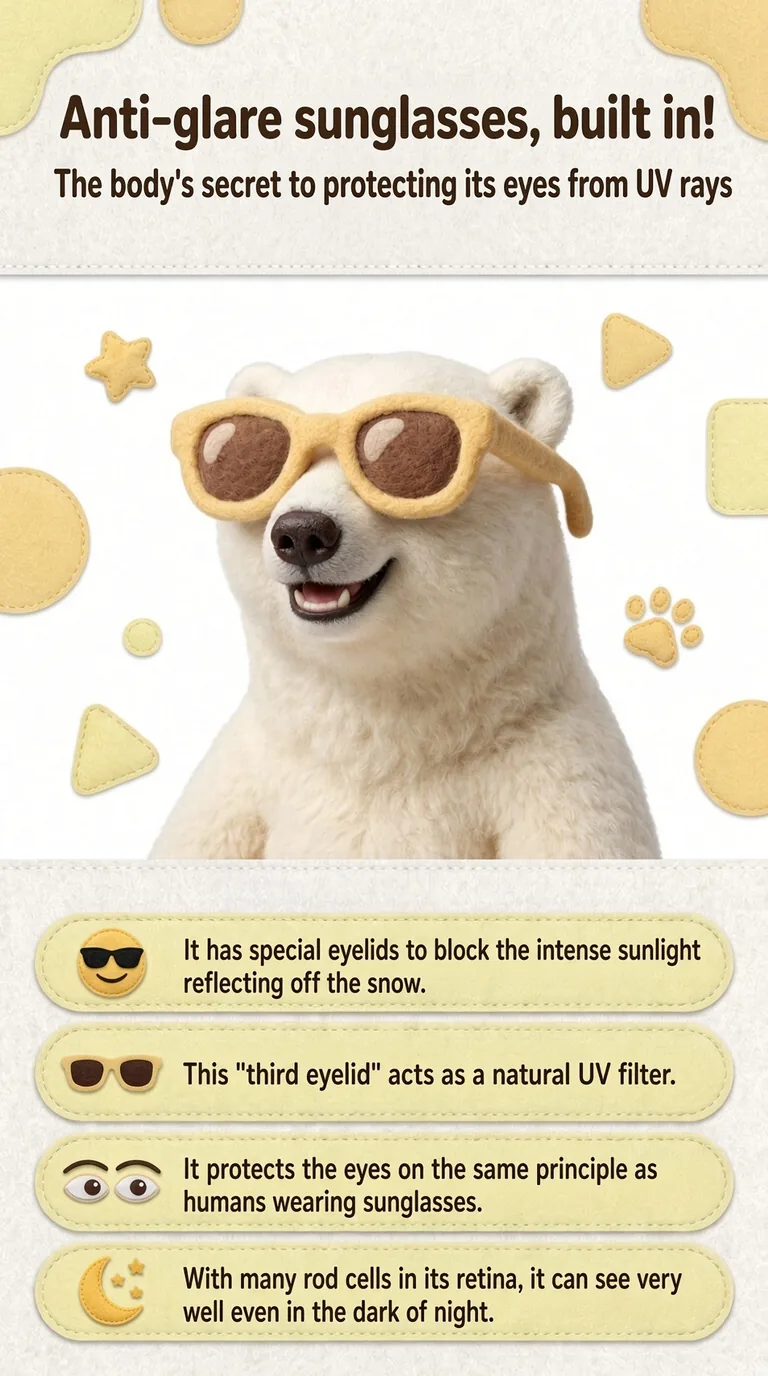
- It has special eyelids to block the intense sunlight reflecting off the snow.
- This "third eyelid" acts as a natural UV filter.
- It protects the eyes on the same principle as humans wearing sunglasses.
- With many rod cells in its retina, it can see very well even in the dark of night.
Giant paws the size of a dinner plate
A master swimmer of the sea, paddling at 10km/h
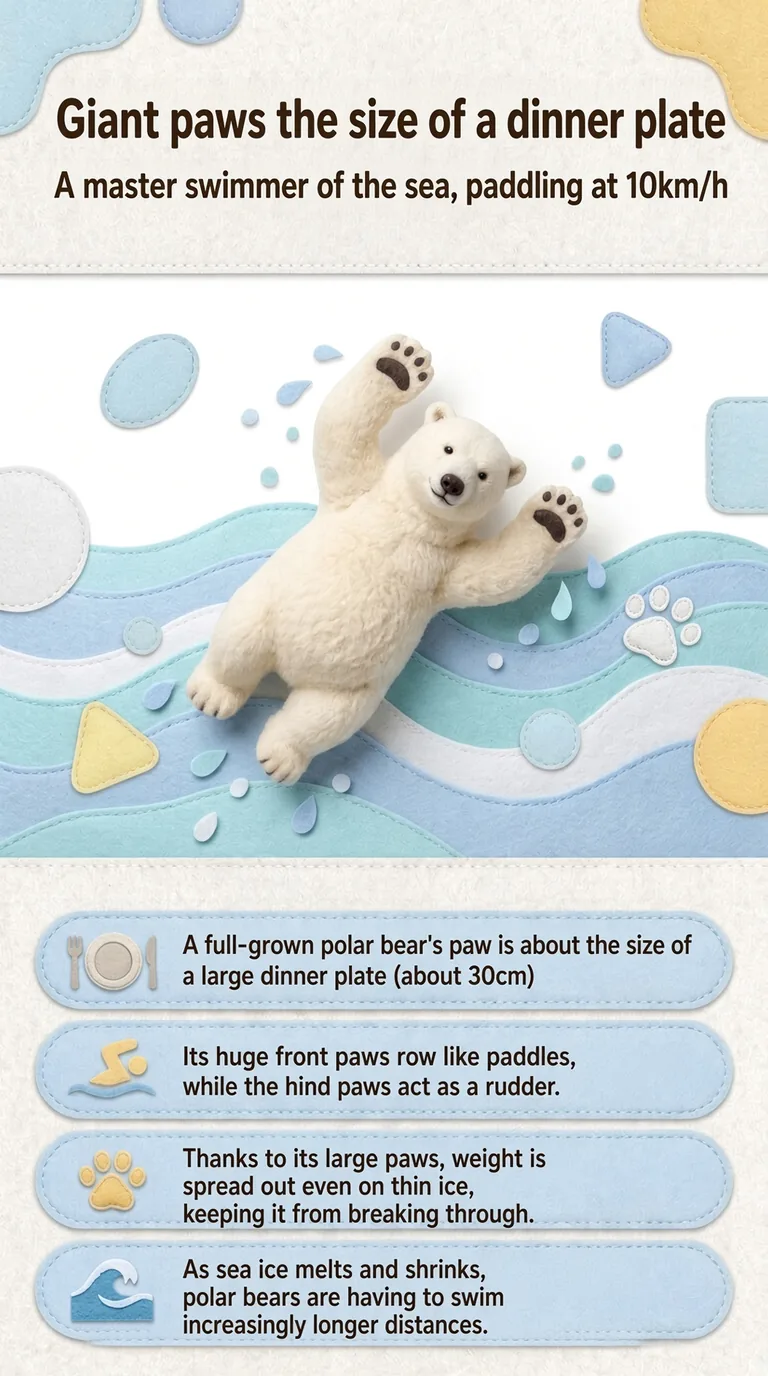
- A full-grown polar bear's paw is about the size of a large dinner plate (about 30cm).
- Its huge front paws row like paddles, while the hind paws act as a rudder.
- Thanks to its large paws, weight is spread out even on thin ice, keeping it from breaking through.
- As sea ice melts and shrinks, polar bears are having to swim increasingly longer distances.
A sense of smell that pierces through a meter of ice
The polar bear's most powerful hunting weapon
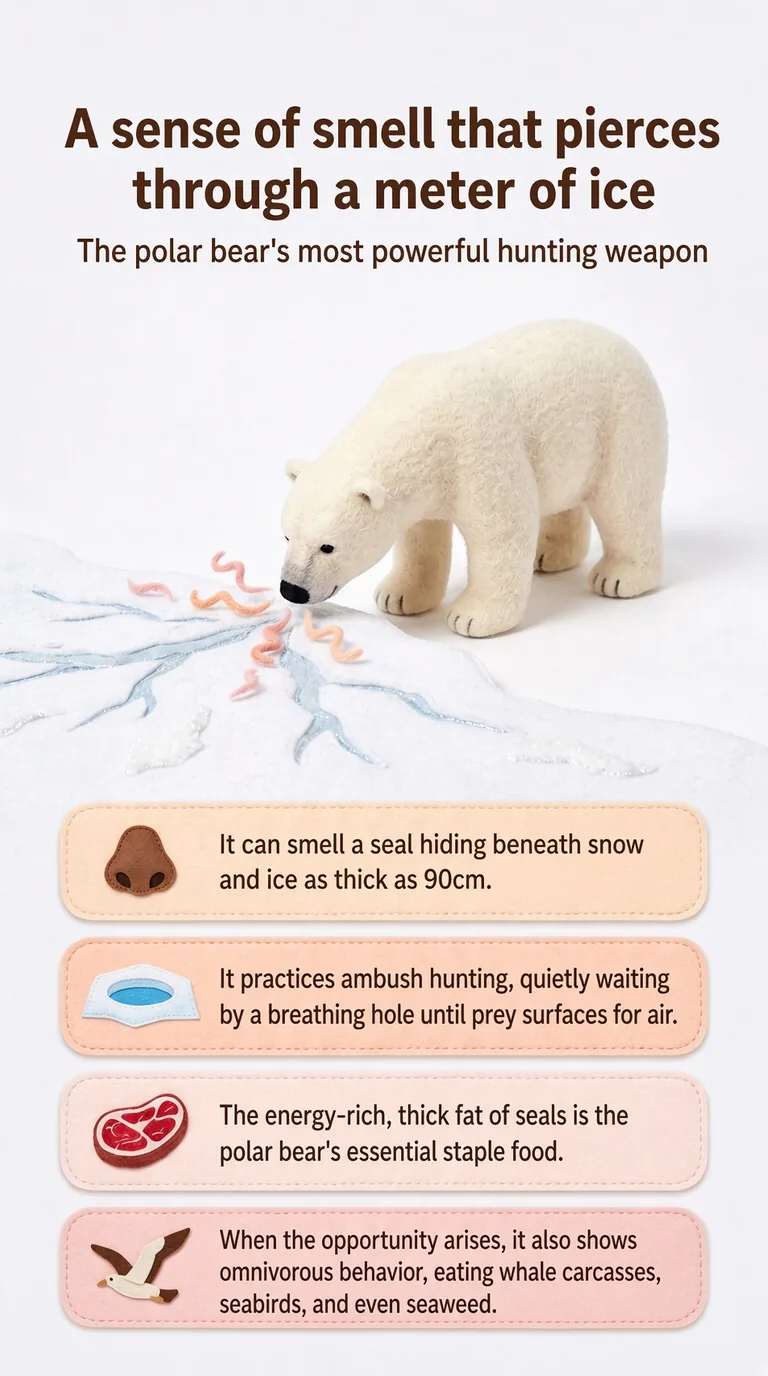
- It can smell a seal hiding beneath snow and ice as thick as 90cm.
- It practices ambush hunting, quietly waiting by a breathing hole until prey surfaces for air.
- The energy-rich, thick fat of seals is the polar bear's essential staple food.
- When the opportunity arises, it also shows omnivorous behavior, eating whale carcasses, seabirds, and even seaweed.
Was it a brown bear until recently?
The evolutionary secret revealed by the latest genetic research
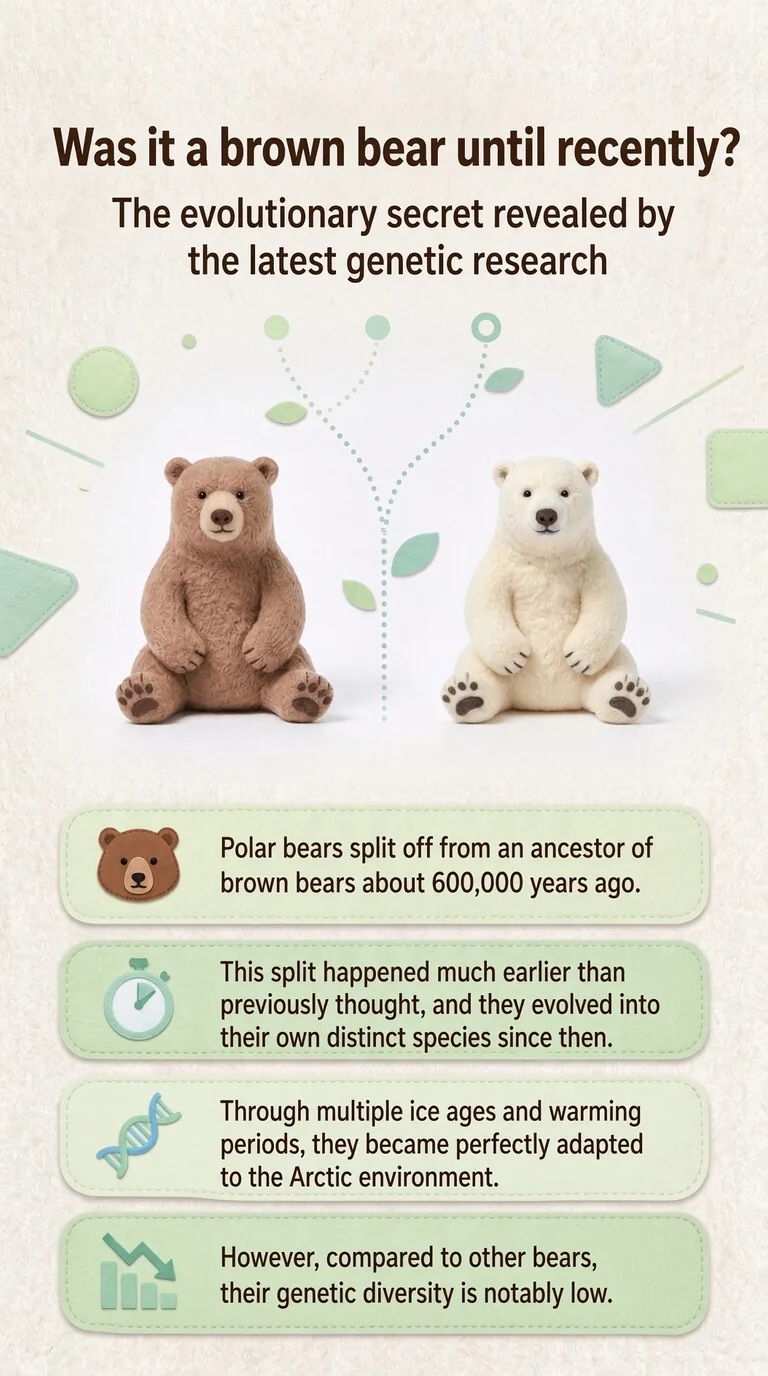
- Polar bears split off from an ancestor of brown bears about 600,000 years ago.
- This split happened much earlier than previously thought, and they evolved into their own distinct species since then.
- Through multiple ice ages and warming periods, they became perfectly adapted to the Arctic environment.
- However, compared to other bears, their genetic diversity is notably low.
A ceaseless change for survival
The polar bears of Svalbard, adapting to face climate change
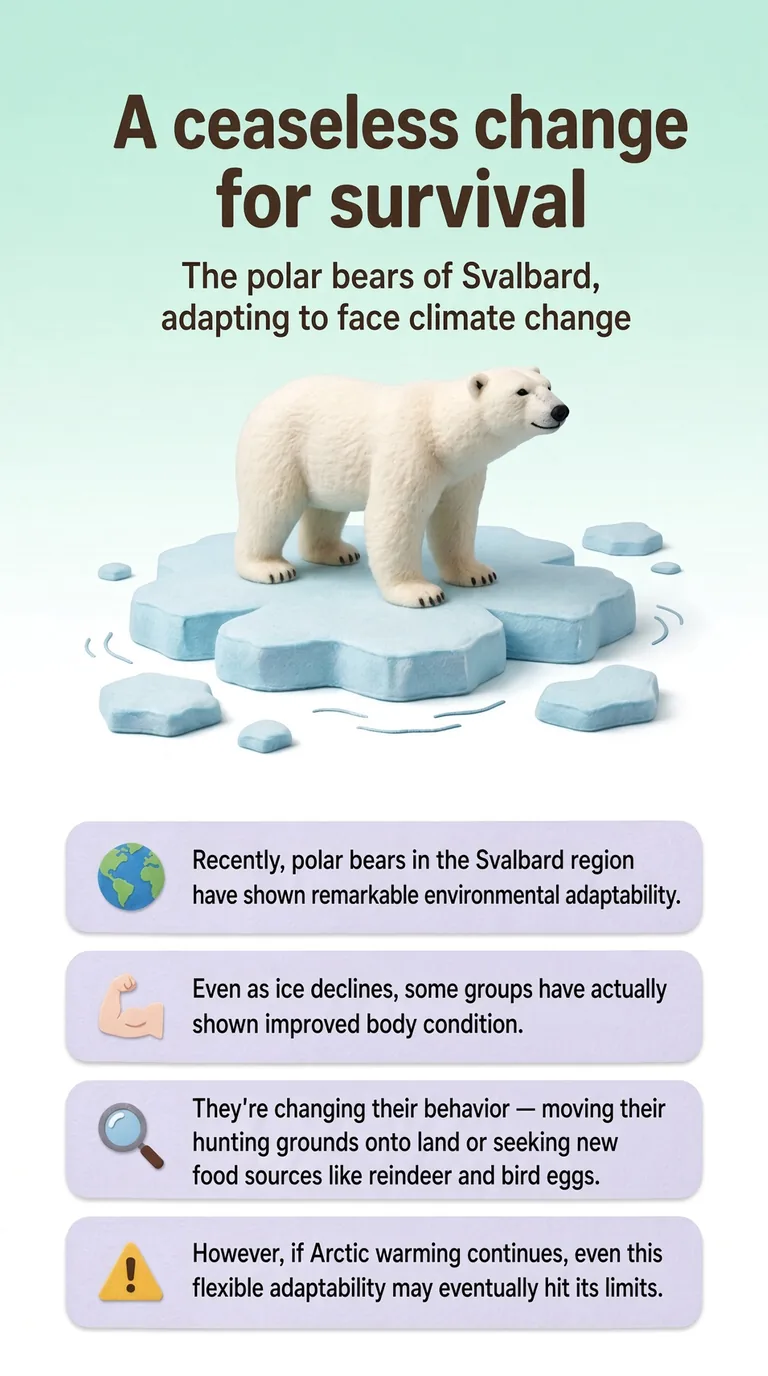
- Recently, polar bears in the Svalbard region have shown remarkable environmental adaptability.
- Even as ice declines, some groups have actually shown improved body condition.
- They're changing their behavior — moving their hunting grounds onto land or seeking new food sources like reindeer and bird eggs.
- However, if Arctic warming continues, even this flexible adaptability may eventually hit its limits.