Snowy Owl
Polar Regions
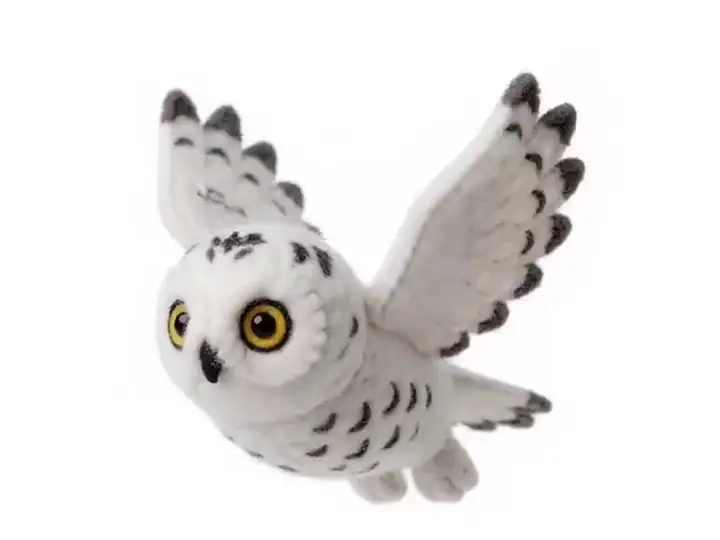
The snowy owl is a beautiful Arctic hunter with snow-white feathers. Unlike most owls, it also hunts during the day. Its soft feathers let it fly silently, so its prey never hears it coming.
Quick facts
- Habitat
- It lives on the open plains of the Arctic tundra.
- Diet
- It hunts small rodents like lemmings, as well as birds.
- Size and weight
- Height 52–71cm, wingspan 125–150cm.
- Lifespan
- About 10 years
- Conservation status
- Vulnerable
- Fun facts
- It can eat as many as 12 lemmings in a single day!
Feathers cover it all the way down to its toes to keep out the cold.
Learn more
The quiet white ghost of the snow-covered Arctic
The Snowy Owl, a captivating hunter ruling the cold tundra
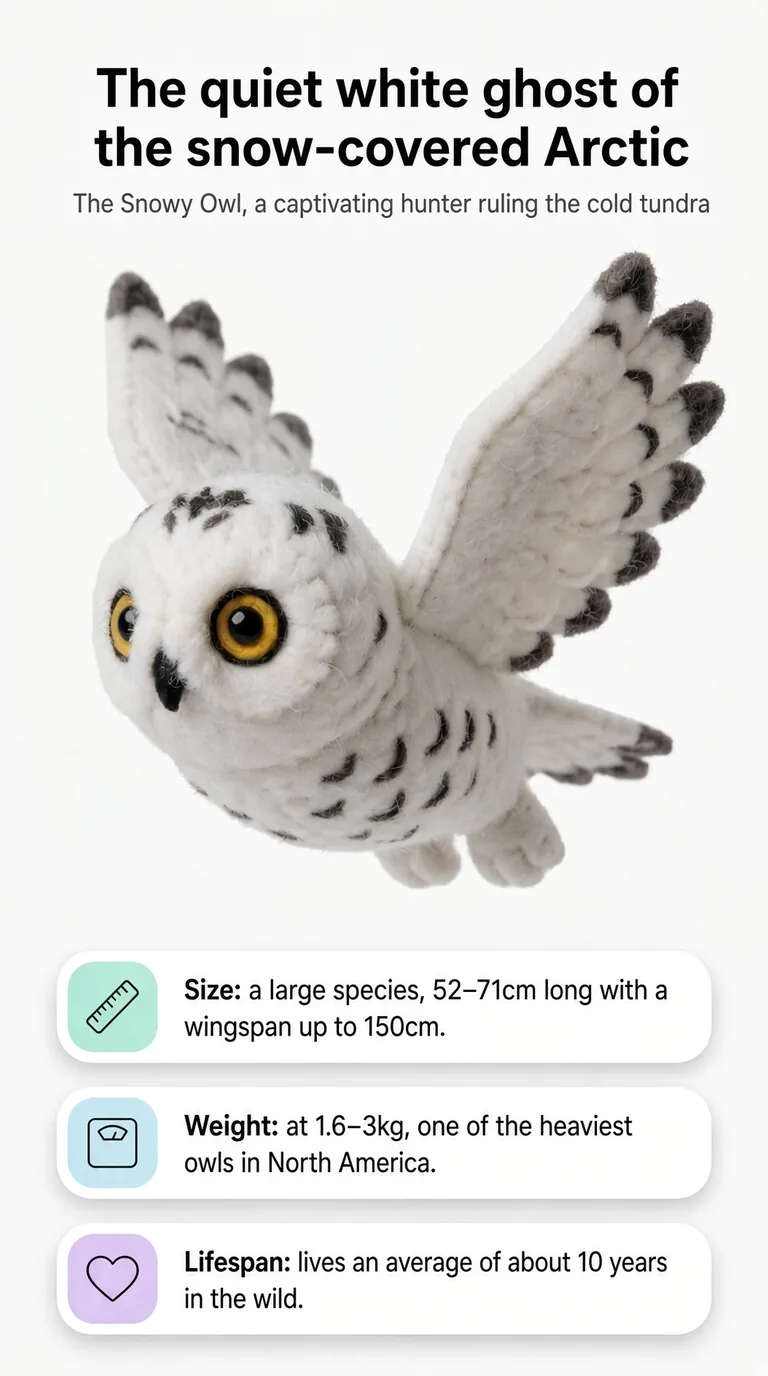
- Size — a large species, 52–71cm long with a wingspan up to 150cm.
- Weight — at 1.6–3kg, one of the heaviest owls in North America.
- Lifespan — lives an average of about 10 years in the wild.
The real secret behind "Hedwig" from the movies
Males and females look strikingly different in appearance and size.
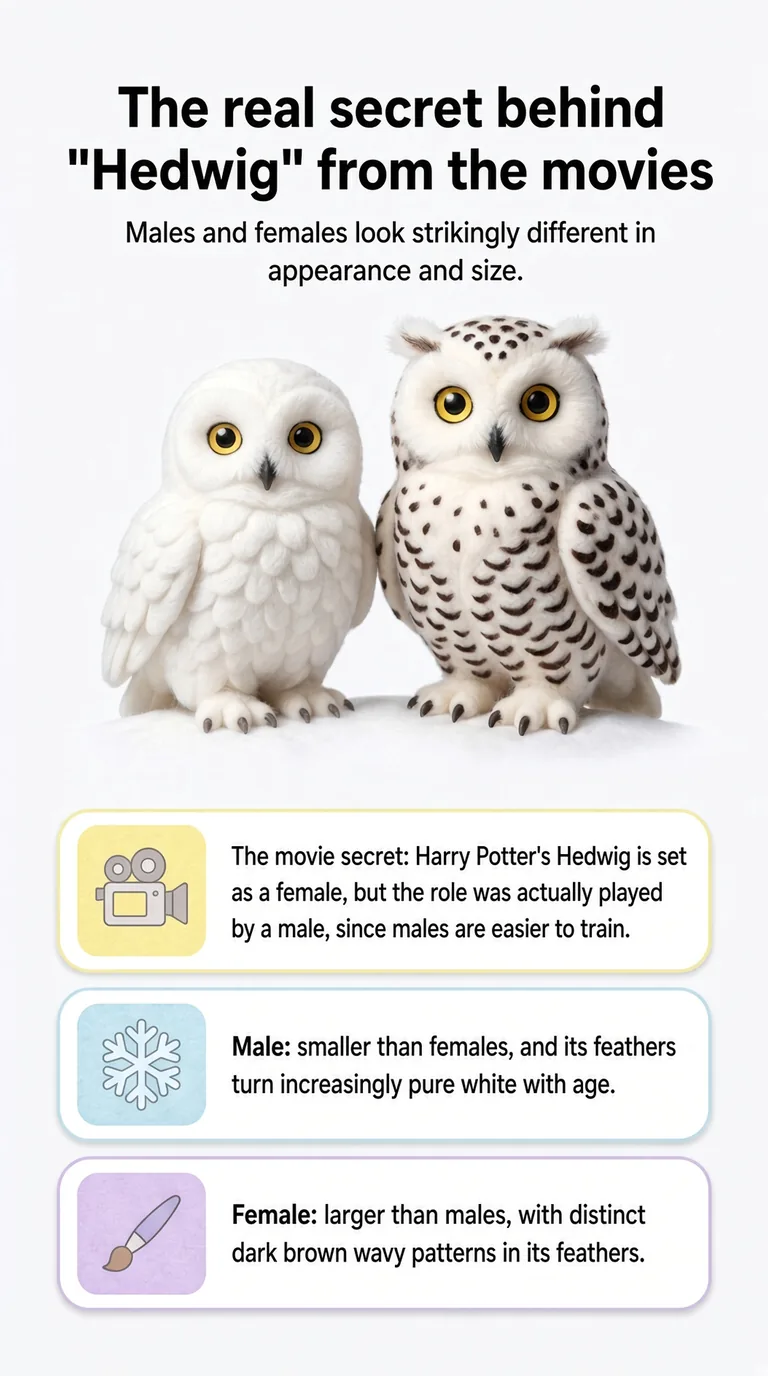
- The movie secret — Harry Potter's Hedwig is set as a female, but the role was actually played by a male, since males are easier to train.
- Male — smaller than females, and its feathers turn increasingly pure white with age.
- Female — larger than males, with distinct dark brown wavy patterns in its feathers.
Super senses that see through the midnight sun
It has perfect hunting ability regardless of day or night.
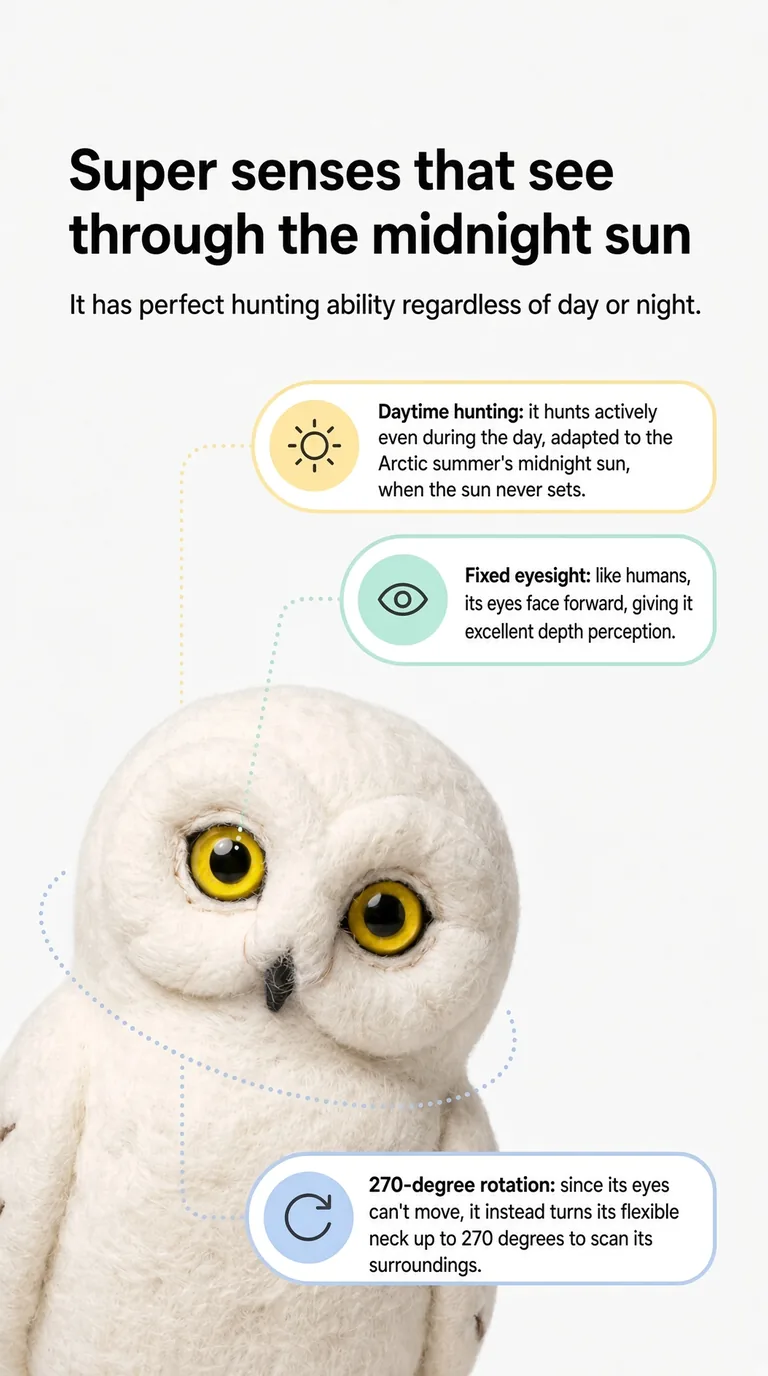
- Daytime hunting — it hunts actively even during the day, adapted to the Arctic summer's midnight sun, when the sun never sets.
- Fixed eyesight — like humans, its eyes face forward, giving it excellent depth perception.
- 270-degree rotation — since its eyes can't move, it instead turns its flexible neck up to 270 degrees to scan its surroundings.
How it survives the freezing tundra
Its body is perfectly adapted to the Arctic's extreme environment.
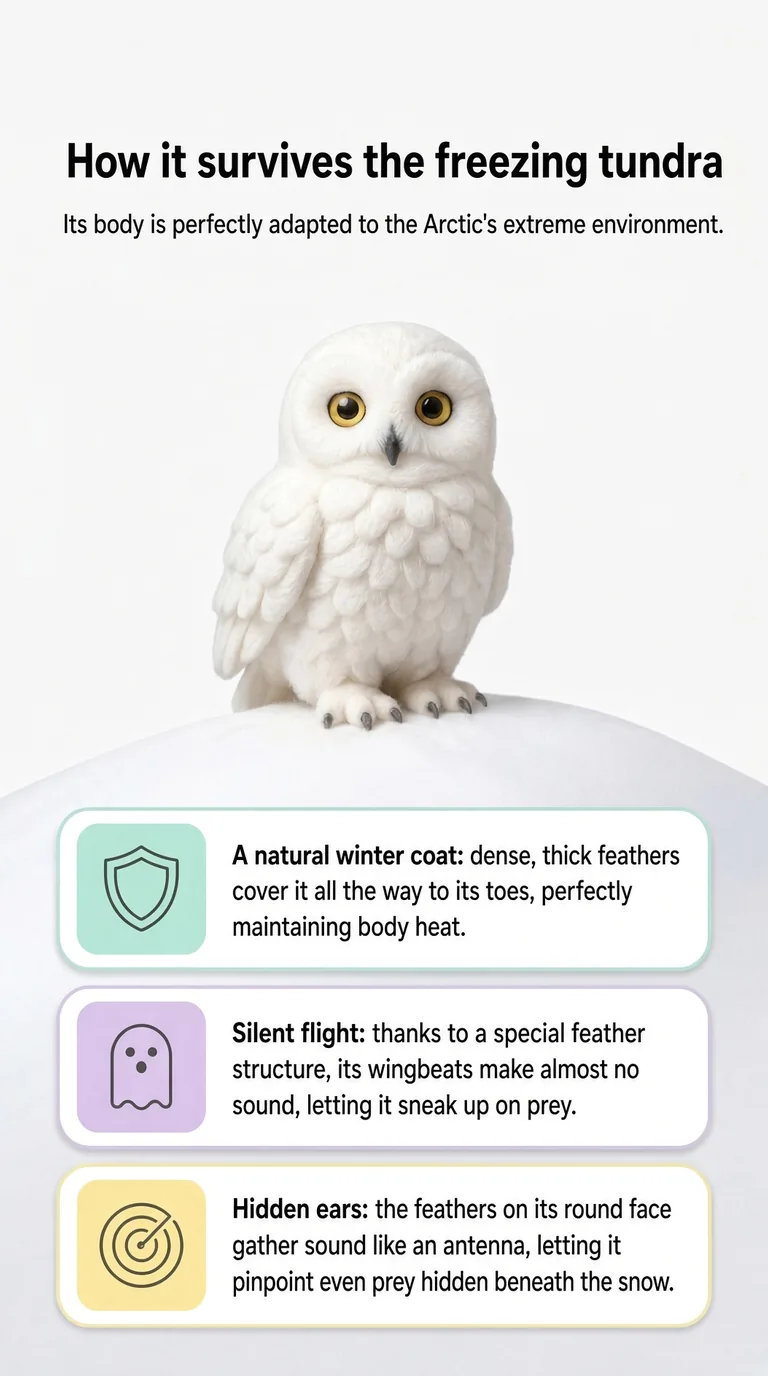
- A natural winter coat — dense, thick feathers cover it all the way to its toes, perfectly maintaining body heat.
- Silent flight — thanks to a special feather structure, its wingbeats make almost no sound, letting it sneak up on prey.
- Hidden ears — the feathers on its round face gather sound like an antenna, letting it pinpoint even prey hidden beneath the snow.
The snowy owl's favorite snack, the lemming
An owl's breeding and survival depend entirely on this tiny rodent.
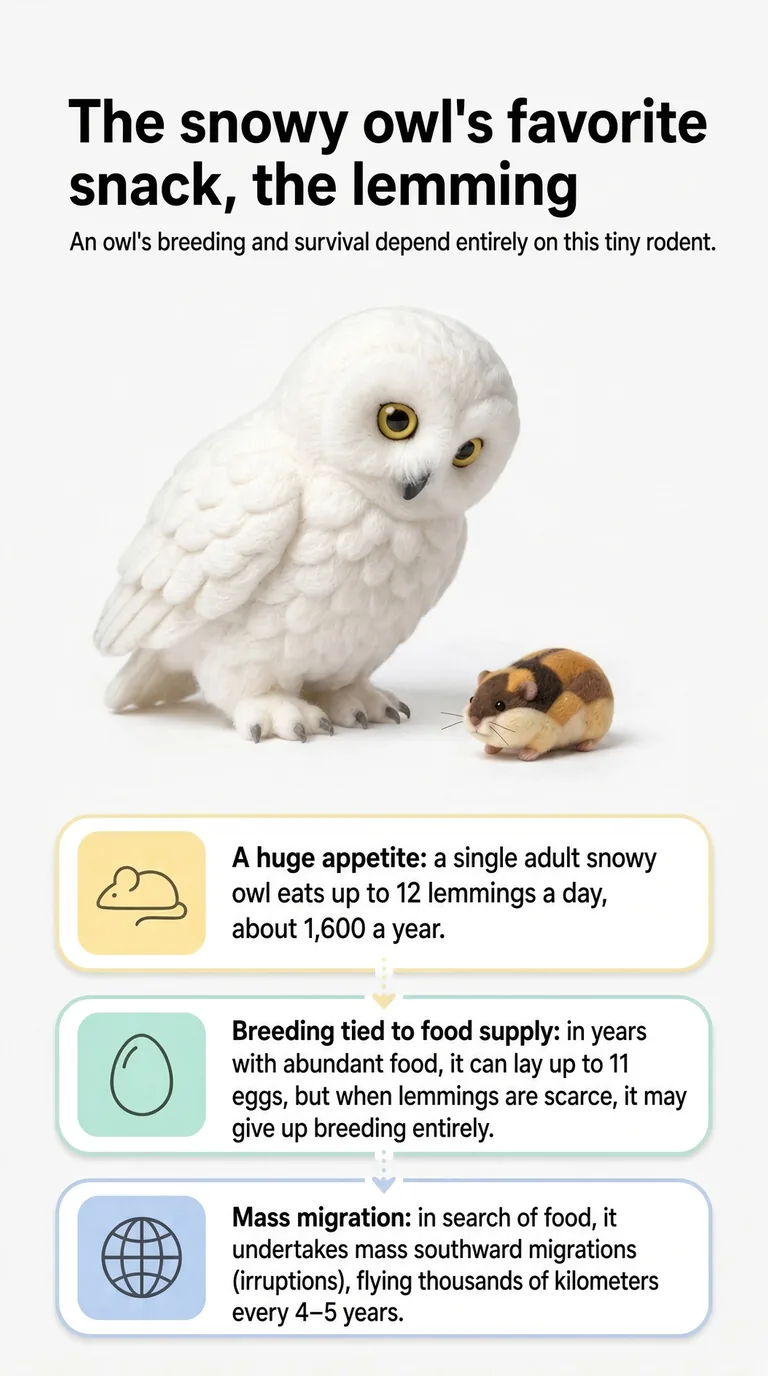
- A huge appetite — a single adult snowy owl eats up to 12 lemmings a day, about 1,600 a year.
- Breeding tied to food supply — in years with abundant food, it can lay up to 11 eggs, but when lemmings are scarce, it may give up breeding entirely.
- Mass migration — in search of food, it undertakes mass southward migrations (irruptions), flying thousands of kilometers every 4–5 years.
A nest built on bare ground instead of trees
A unique survival strategy for the treeless tundra.
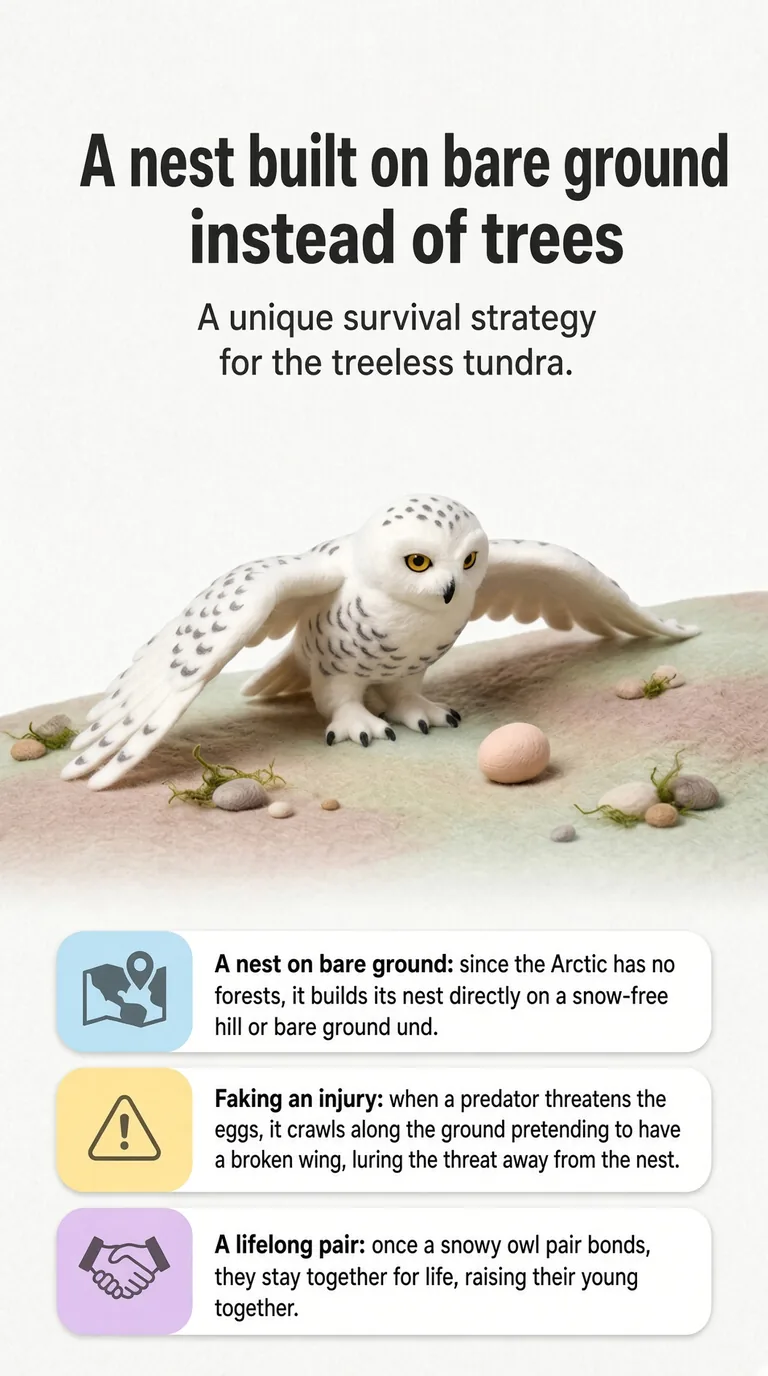
- A nest on bare ground — since the Arctic has no forests, it builds its nest directly on a snow-free hill or bare ground.
- Faking an injury — when a predator threatens the eggs, it crawls along the ground pretending to have a broken wing, luring the threat away from the nest.
- A lifelong pair — once a snowy owl pair bonds, they stay together for life, raising their young together.